
Muscular System Muscles Review Define the following words
- Slides: 27
Muscular System Muscles
Review • Define the following words: • • Inferior Superior Proximal Distal Deep Superficial Medial Lateral
Golden Rule of Skeletal Muscle Activity 1. With few exception, all muscles cross at least one joint 2. Typically, the bulk of muscles lies proximal to the joint crossed 3. All muscles have at least two attachments to muscle: the origin and the insertion 4. Muscles can only pull, they can never push 5. During contraction, the muscle insertion moves towards the origin
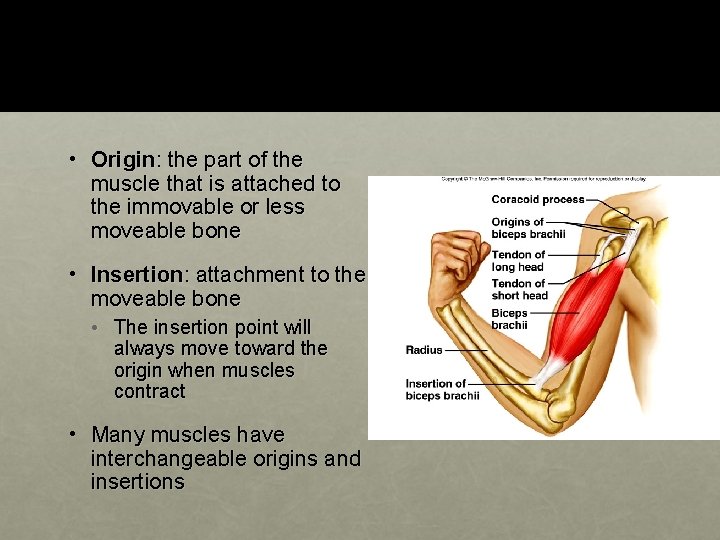
• Origin: the part of the muscle that is attached to the immovable or less moveable bone • Insertion: attachment to the moveable bone • The insertion point will always move toward the origin when muscles contract • Many muscles have interchangeable origins and insertions
Body Movements • They come in mostly opposite pairs • Be ready to move with me!
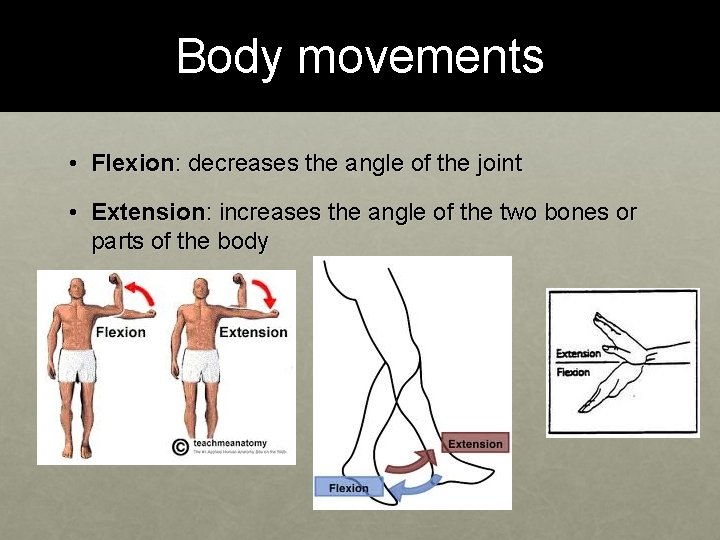
Body movements • Flexion: decreases the angle of the joint • Extension: increases the angle of the two bones or parts of the body
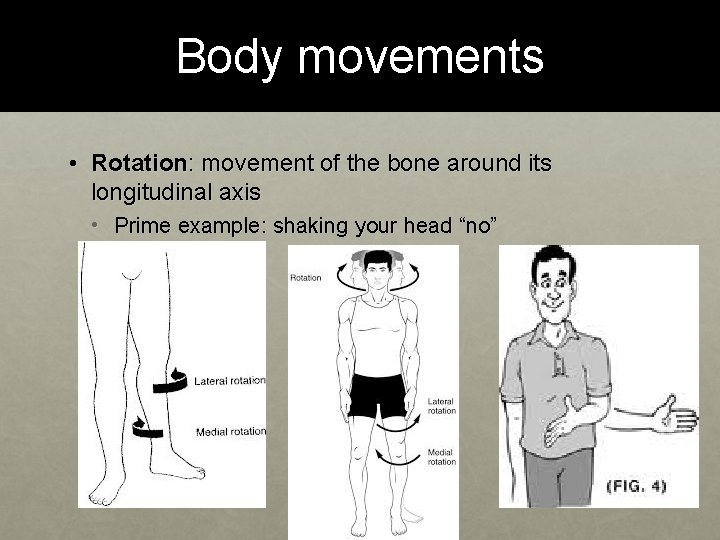
Body movements • Rotation: movement of the bone around its longitudinal axis • Prime example: shaking your head “no”
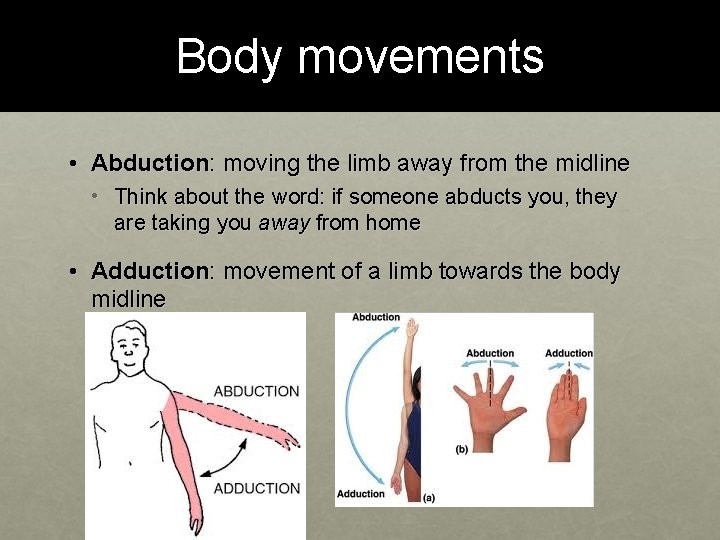
Body movements • Abduction: moving the limb away from the midline • Think about the word: if someone abducts you, they are taking you away from home • Adduction: movement of a limb towards the body midline
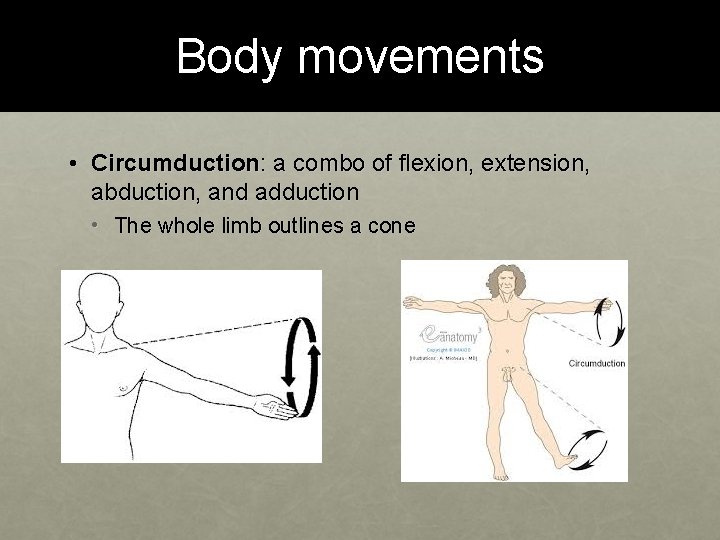
Body movements • Circumduction: a combo of flexion, extension, abduction, and adduction • The whole limb outlines a cone
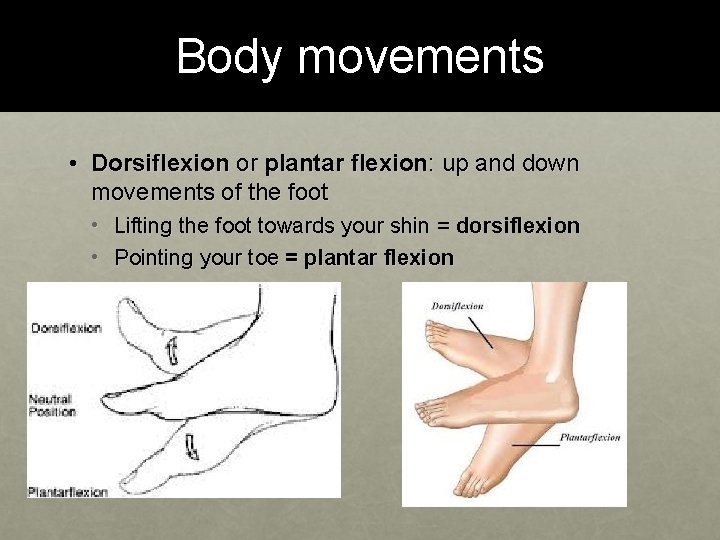
Body movements • Dorsiflexion or plantar flexion: up and down movements of the foot • Lifting the foot towards your shin = dorsiflexion • Pointing your toe = plantar flexion
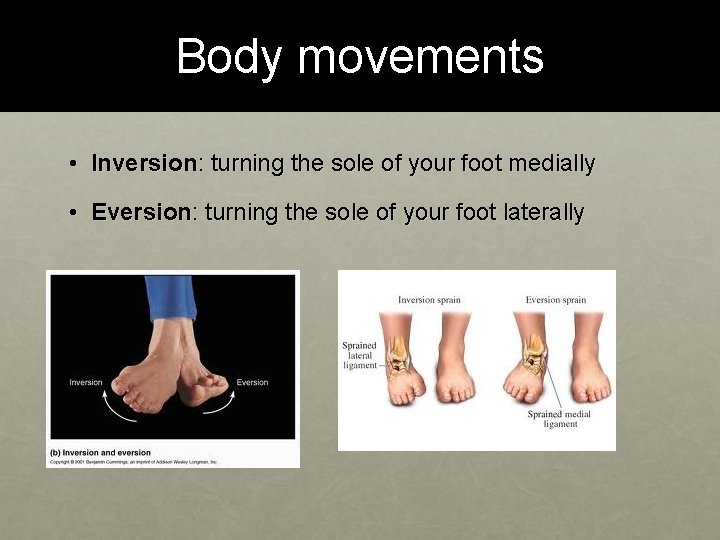
Body movements • Inversion: turning the sole of your foot medially • Eversion: turning the sole of your foot laterally
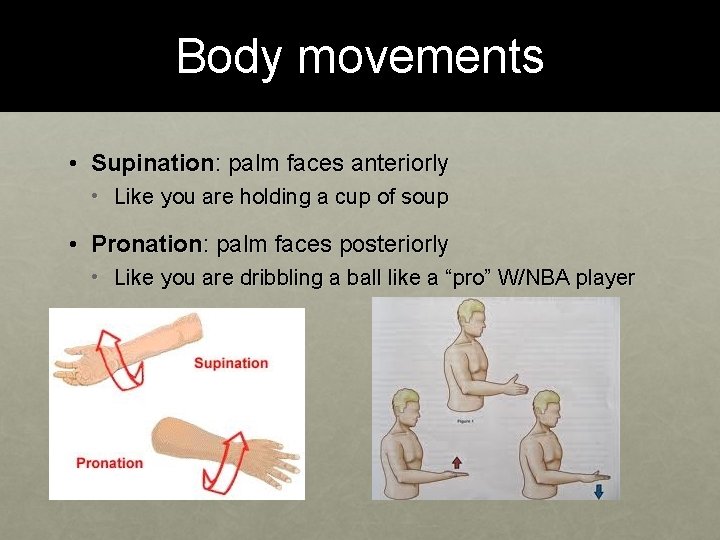
Body movements • Supination: palm faces anteriorly • Like you are holding a cup of soup • Pronation: palm faces posteriorly • Like you are dribbling a ball like a “pro” W/NBA player
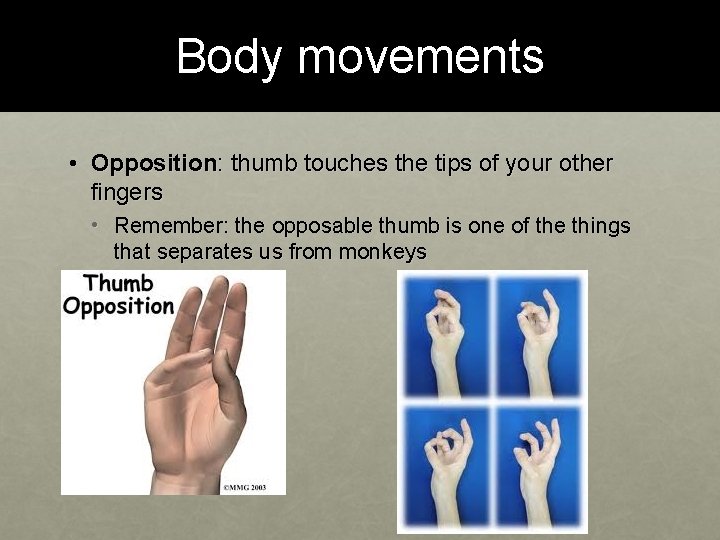
Body movements • Opposition: thumb touches the tips of your other fingers • Remember: the opposable thumb is one of the things that separates us from monkeys
Muscles to know • We will focus on agonist pairs • This means that they oppose each other • Ie one will flex and the other will extend • Let’s start from the head down!
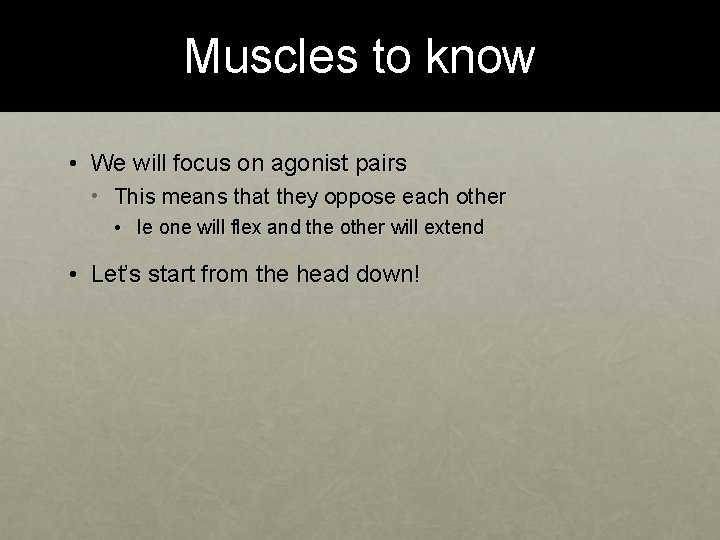
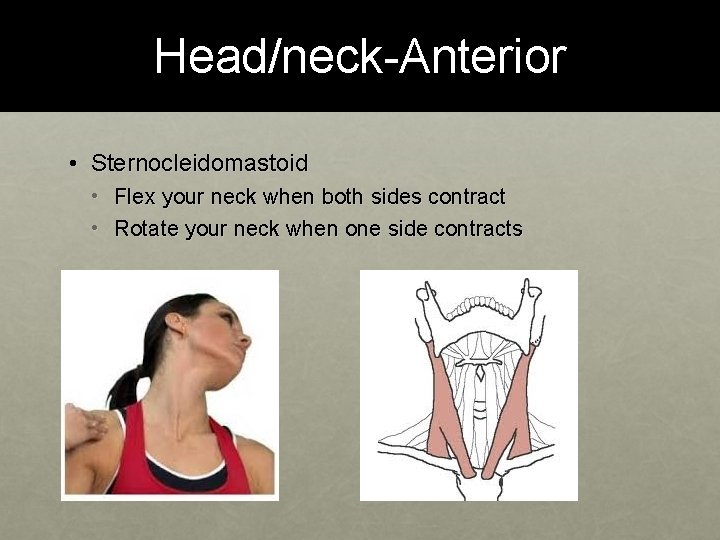
Head/neck-Anterior • Sternocleidomastoid • Flex your neck when both sides contract • Rotate your neck when one side contracts
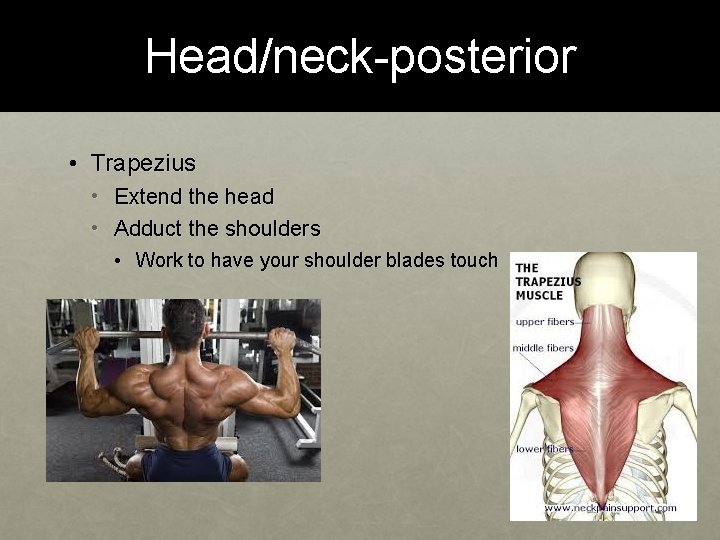
Head/neck-posterior • Trapezius • Extend the head • Adduct the shoulders • Work to have your shoulder blades touch
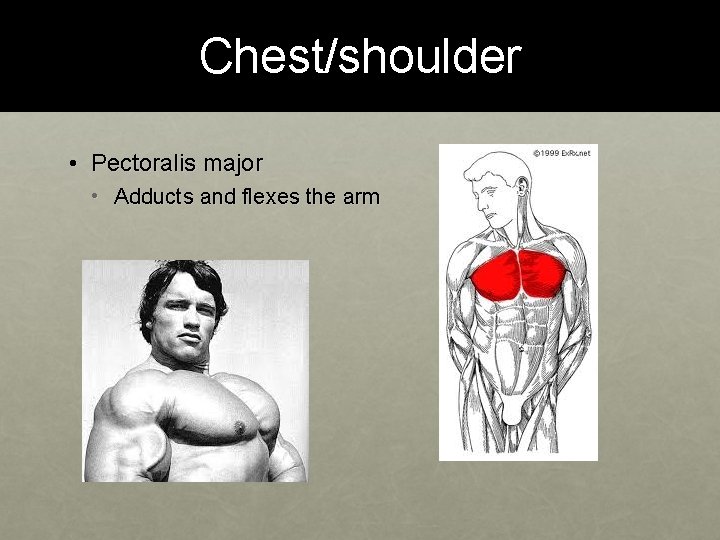
Chest/shoulder • Pectoralis major • Adducts and flexes the arm
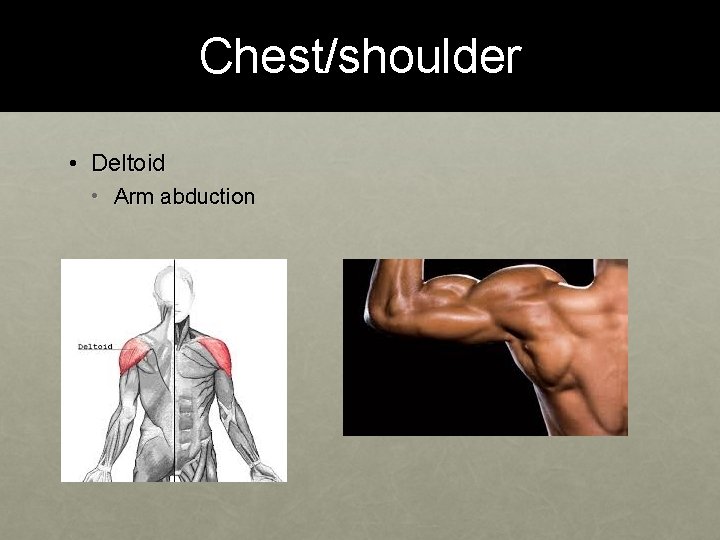
Chest/shoulder • Deltoid • Arm abduction
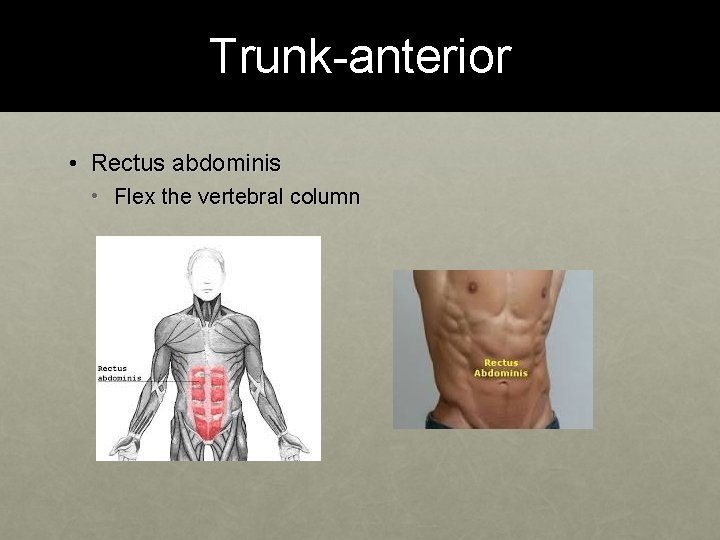
Trunk-anterior • Rectus abdominis • Flex the vertebral column
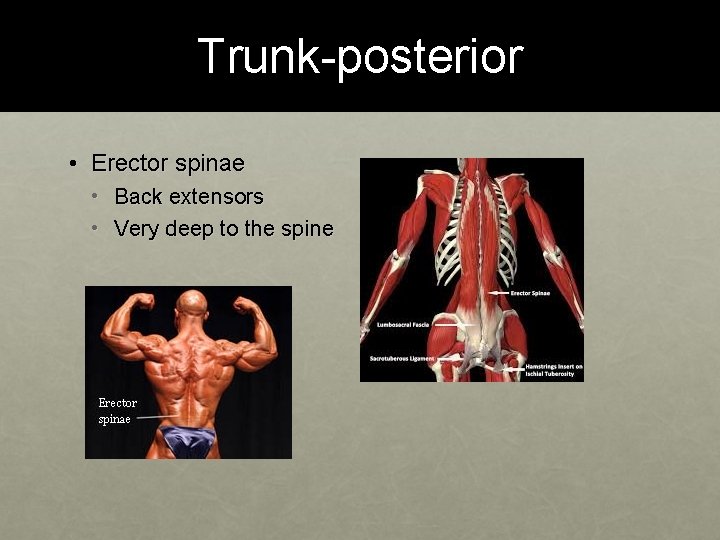
Trunk-posterior • Erector spinae • Back extensors • Very deep to the spine
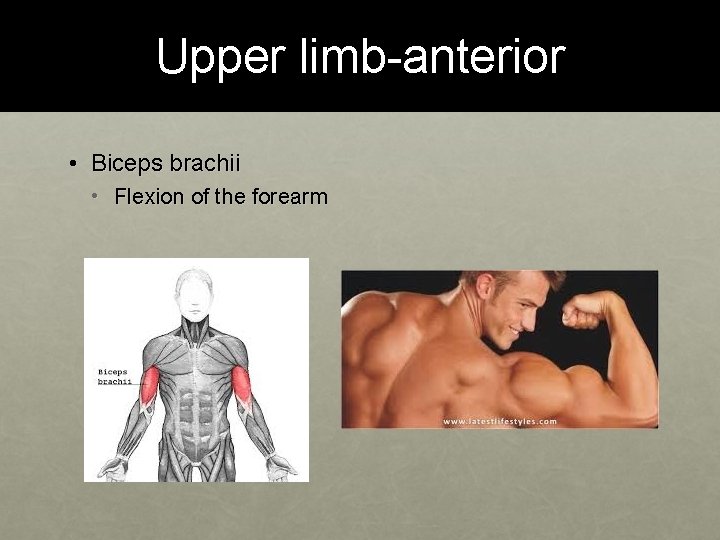
Upper limb-anterior • Biceps brachii • Flexion of the forearm
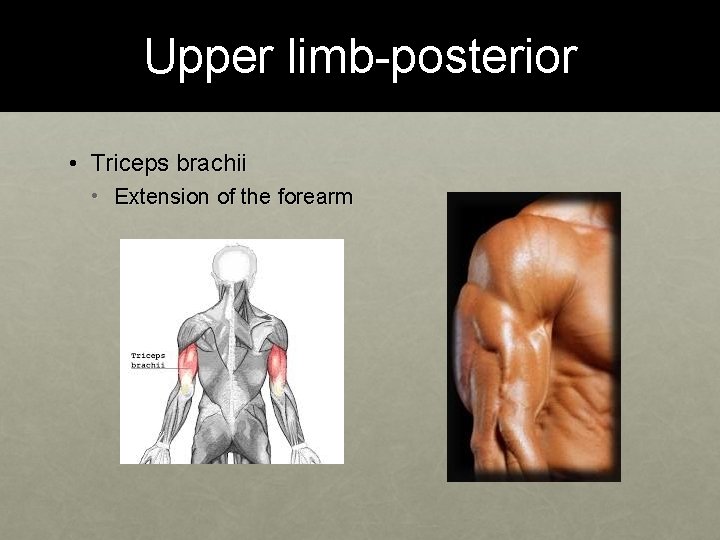
Upper limb-posterior • Triceps brachii • Extension of the forearm
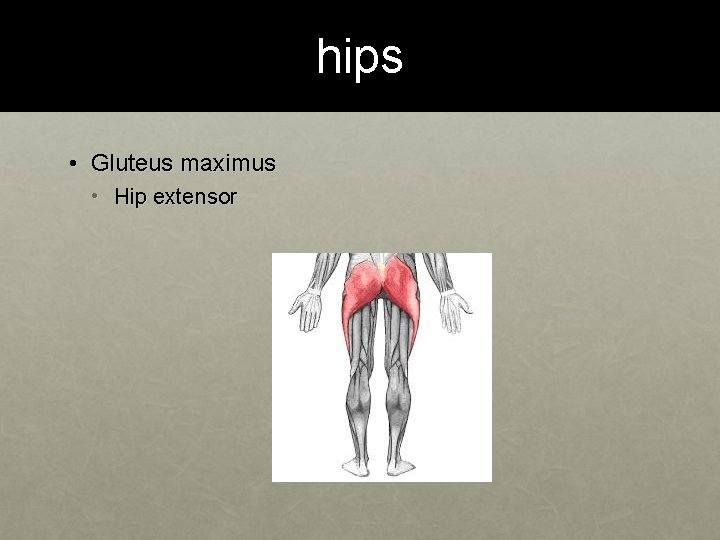
hips • Gluteus maximus • Hip extensor
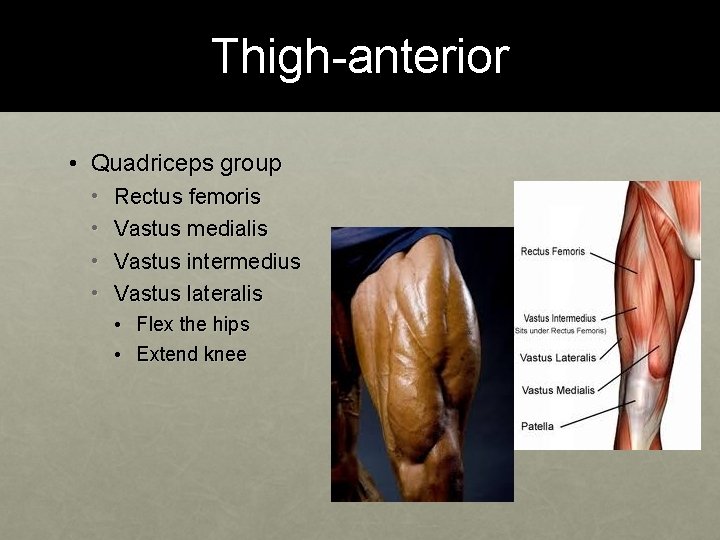
Thigh-anterior • Quadriceps group • • Rectus femoris Vastus medialis Vastus intermedius Vastus lateralis • Flex the hips • Extend knee
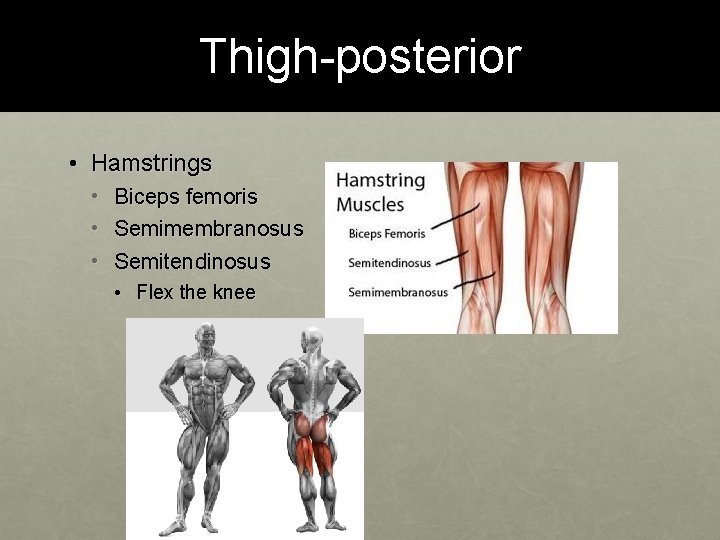
Thigh-posterior • Hamstrings • • • Biceps femoris Semimembranosus Semitendinosus • Flex the knee
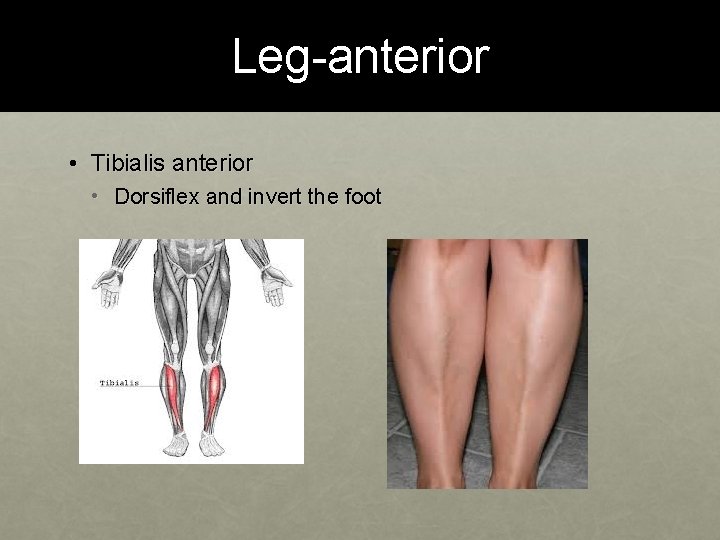
Leg-anterior • Tibialis anterior • Dorsiflex and invert the foot
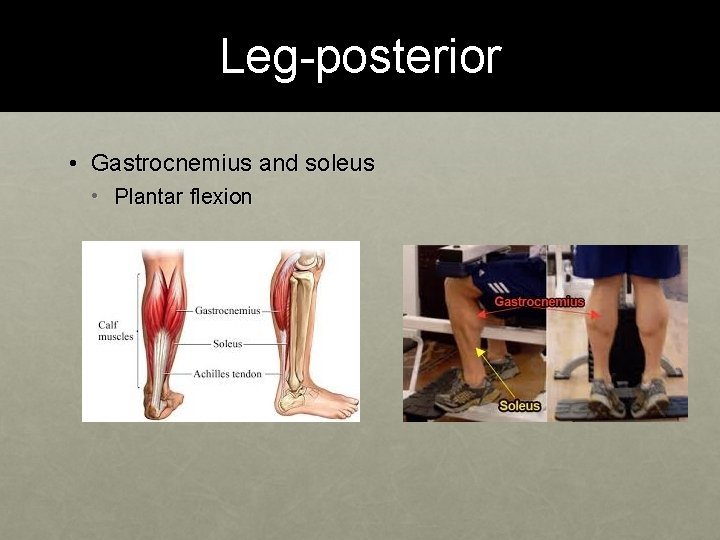
Leg-posterior • Gastrocnemius and soleus • Plantar flexion