
MUSCULAR SYSTEM GENERAL FUNCTIONS Movement Posture Heat Production

- Slides: 17
MUSCULAR SYSTEM
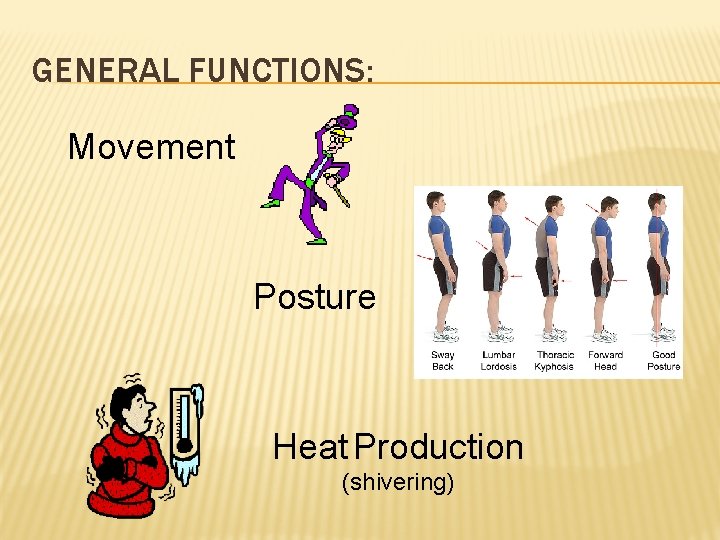
GENERAL FUNCTIONS: Movement Posture Heat Production (shivering)
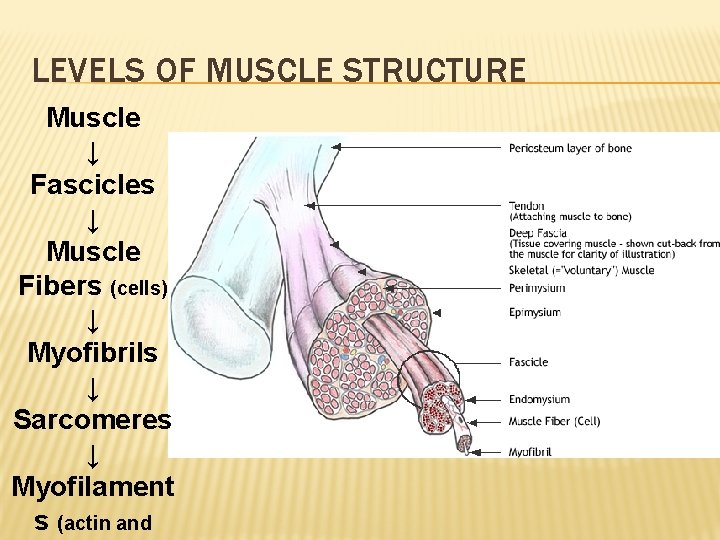
LEVELS OF MUSCLE STRUCTURE Muscle ↓ Fascicles ↓ Muscle Fibers (cells) ↓ Myofibrils ↓ Sarcomeres ↓ Myofilament s (actin and
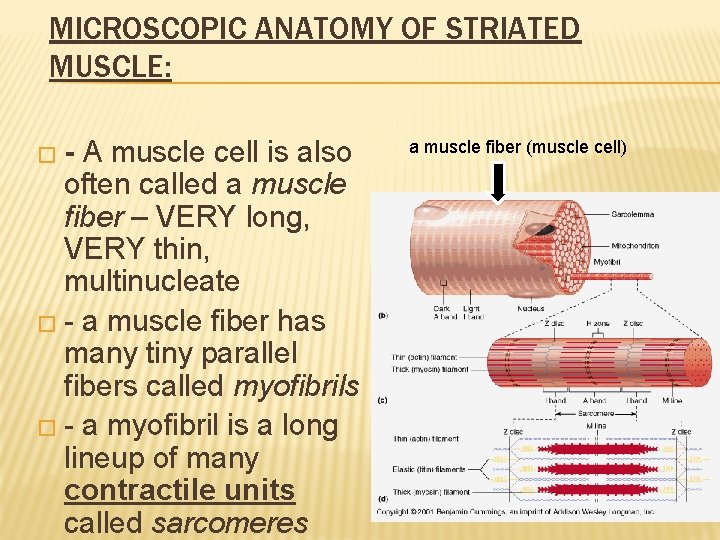
MICROSCOPIC ANATOMY OF STRIATED MUSCLE: �- A muscle cell is also often called a muscle fiber – VERY long, VERY thin, multinucleate � - a muscle fiber has many tiny parallel fibers called myofibrils � - a myofibril is a long lineup of many contractile units called sarcomeres a muscle fiber (muscle cell)
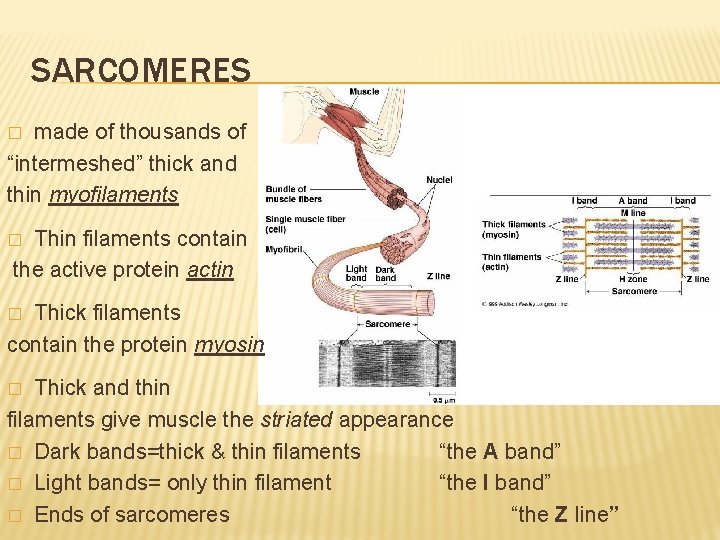
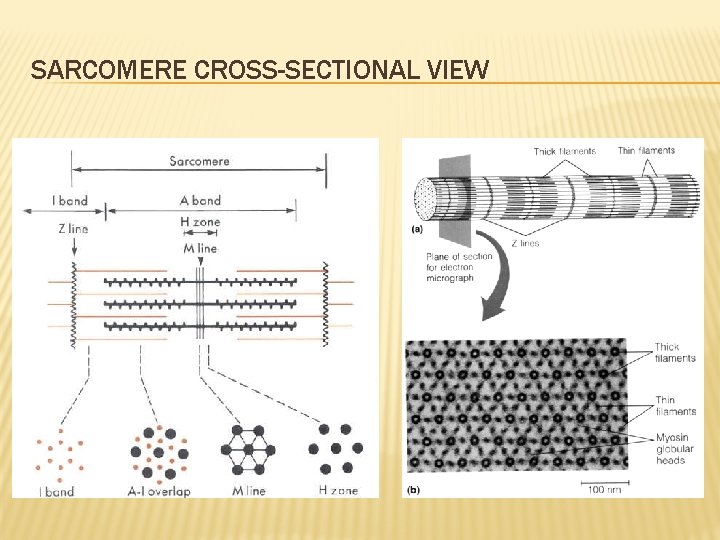
SARCOMERES made of thousands of “intermeshed” thick and thin myofilaments � Thin filaments contain the active protein actin � Thick filaments contain the protein myosin � Thick and thin filaments give muscle the striated appearance � Dark bands=thick & thin filaments “the A band” � Light bands= only thin filament “the I band” � Ends of sarcomeres “the Z line” �
SARCOMERE CROSS-SECTIONAL VIEW
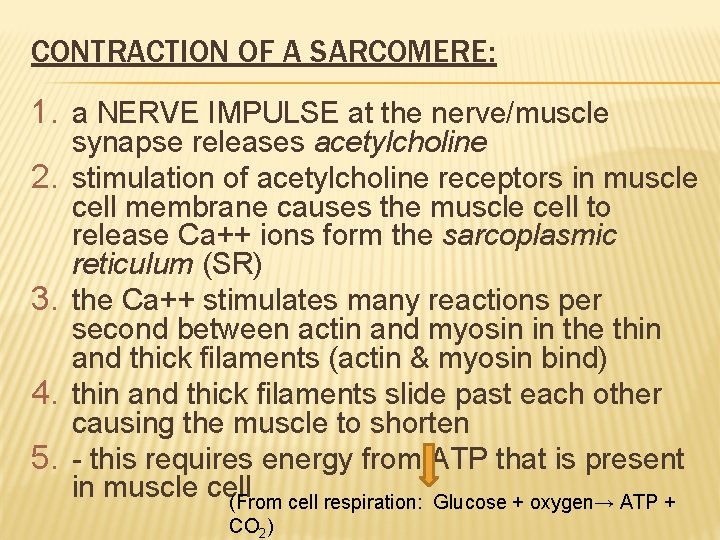
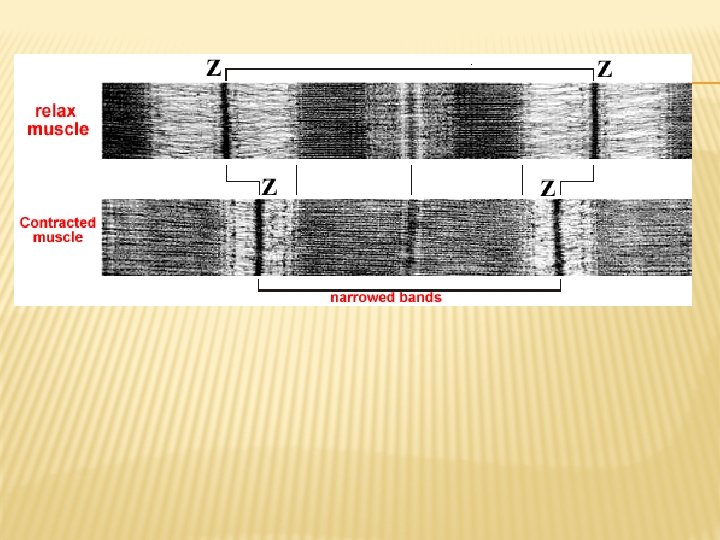
CONTRACTION OF A SARCOMERE: 1. a NERVE IMPULSE at the nerve/muscle 2. 3. 4. 5. synapse releases acetylcholine stimulation of acetylcholine receptors in muscle cell membrane causes the muscle cell to release Ca++ ions form the sarcoplasmic reticulum (SR) the Ca++ stimulates many reactions per second between actin and myosin in the thin and thick filaments (actin & myosin bind) thin and thick filaments slide past each other causing the muscle to shorten - this requires energy from ATP that is present in muscle cell (From cell respiration: Glucose + oxygen→ ATP + CO 2)
RELAXATION � -When nerve impulses are over, Ca++ is pumped back into SR � -actin & myosin are no longer bound together � -thin and thick filaments slide back to their original position
RESPIRATION IN MUSCLE CELLS� Aerobic (presence of plenty of oxygen): 1 Glucose 38 ATP + CO 2 ATP= the major energy currency of the cell, used in most energy consuming activities of the cell � Anaerobic (no oxygen): 1 Glucose 2 ATP + lactic acid (ouchie!) very inefficient (only 2 ATP) and lactic acid causes muscle soreness
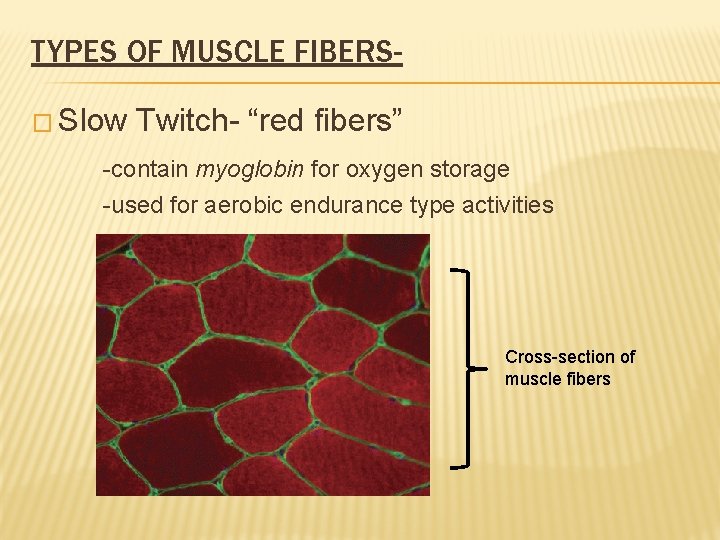
TYPES OF MUSCLE FIBERS� Slow Twitch- “red fibers” -contain myoglobin for oxygen storage -used for aerobic endurance type activities Cross-section of muscle fibers
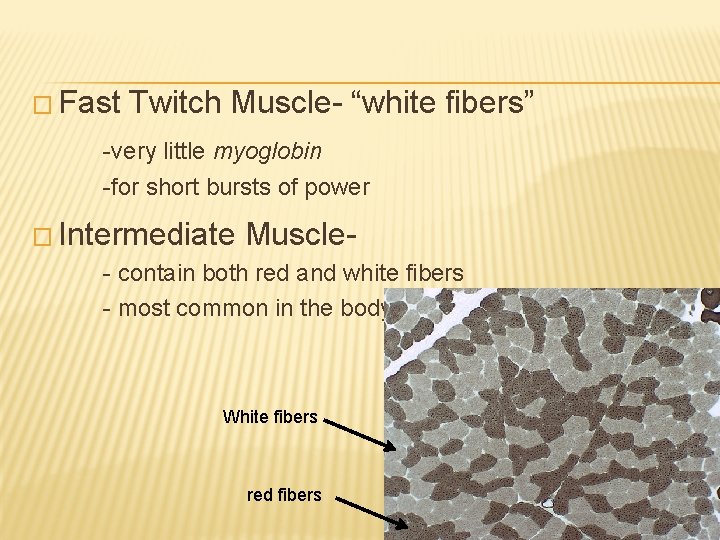
� Fast Twitch Muscle- “white fibers” -very little myoglobin -for short bursts of power � Intermediate Muscle- - contain both red and white fibers - most common in the body White fibers red fibers
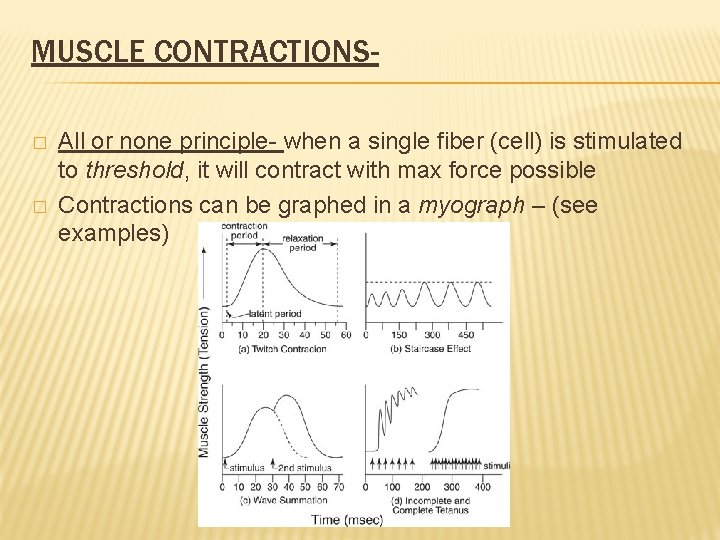
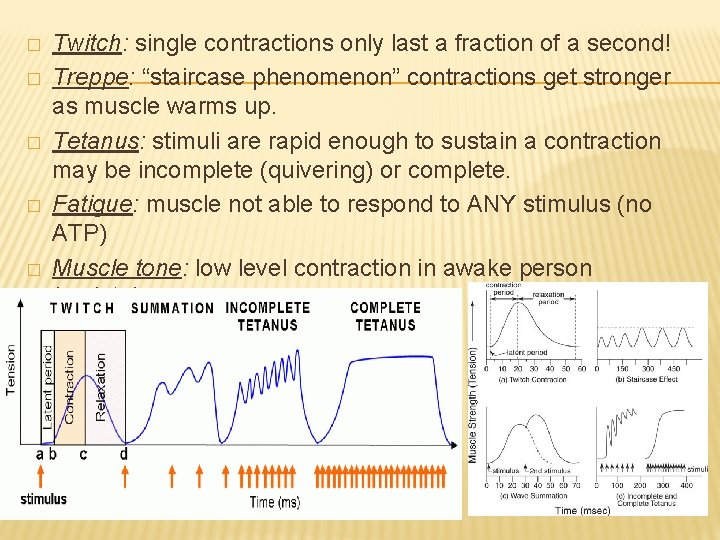
MUSCLE CONTRACTIONS� � All or none principle- when a single fiber (cell) is stimulated to threshold, it will contract with max force possible Contractions can be graphed in a myograph – (see examples)
� � � Twitch: single contractions only last a fraction of a second! Treppe: “staircase phenomenon” contractions get stronger as muscle warms up. Tetanus: stimuli are rapid enough to sustain a contraction may be incomplete (quivering) or complete. Fatigue: muscle not able to respond to ANY stimulus (no ATP) Muscle tone: low level contraction in awake person (maintains posture)
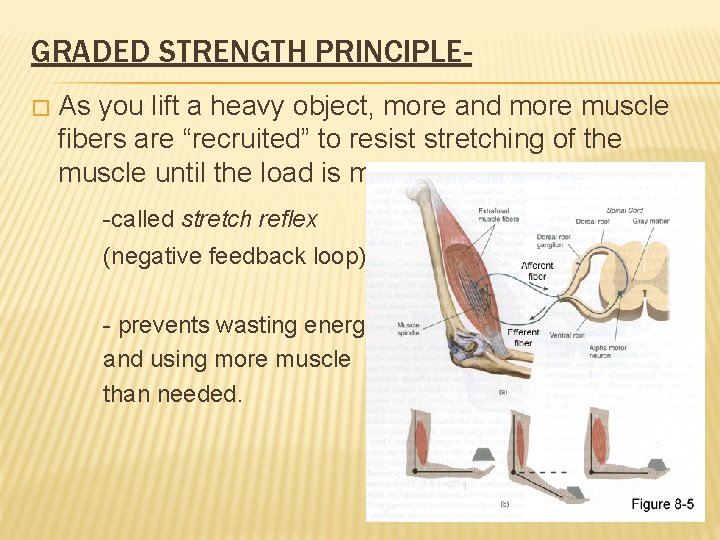
GRADED STRENGTH PRINCIPLE� As you lift a heavy object, more and more muscle fibers are “recruited” to resist stretching of the muscle until the load is matched. -called stretch reflex (negative feedback loop) - prevents wasting energy and using more muscle than needed.
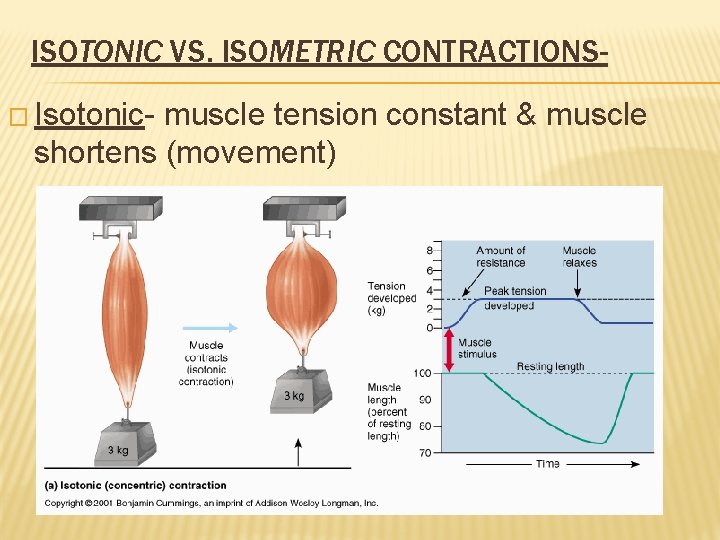
ISOTONIC VS. ISOMETRIC CONTRACTIONS� Isotonic- muscle tension constant & muscle shortens (movement)
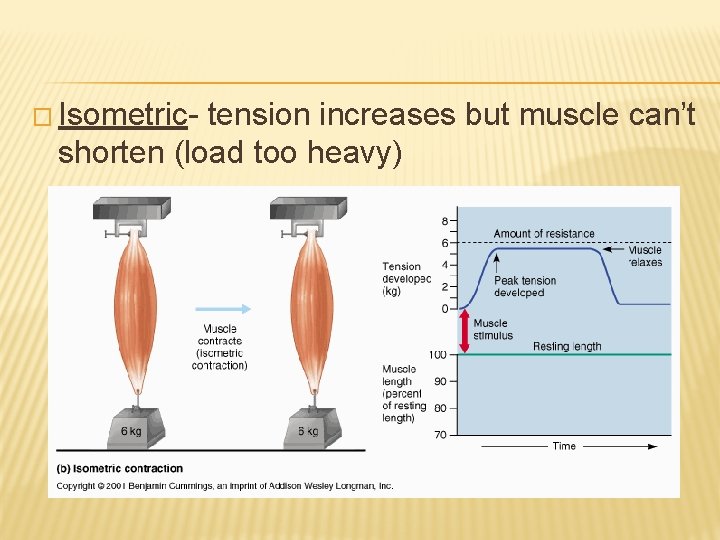
� Isometric- tension increases but muscle can’t shorten (load too heavy)