
Muscular system FACTS Your Body has over 600
Muscular system
FACTS Your Body has over 600 muscles Muscle contracts to move bones and body parts Muscle makes up approx half your body weight Three different types of Muscle
Three types of Muscle • Heart (cardiac) Muscle • Involuntary Muscle • Voluntary Structure and function of these muscle tissues are very different and controlled by very different methods
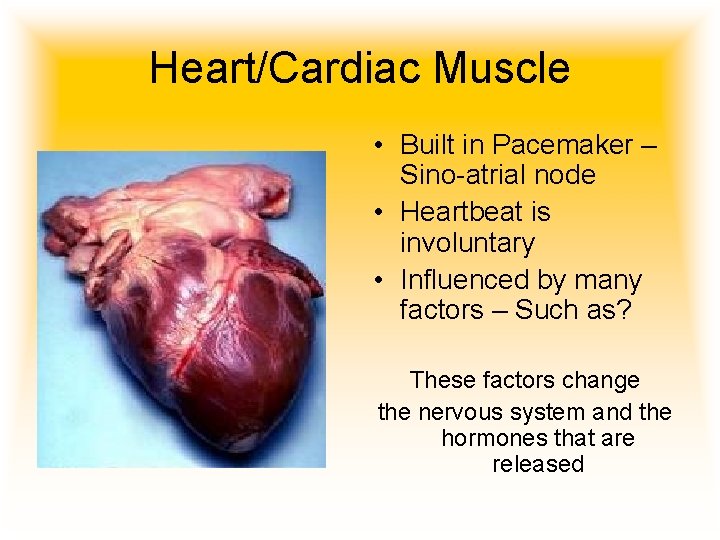
Heart/Cardiac Muscle • Built in Pacemaker – Sino-atrial node • Heartbeat is involuntary • Influenced by many factors – Such as? These factors change the nervous system and the hormones that are released
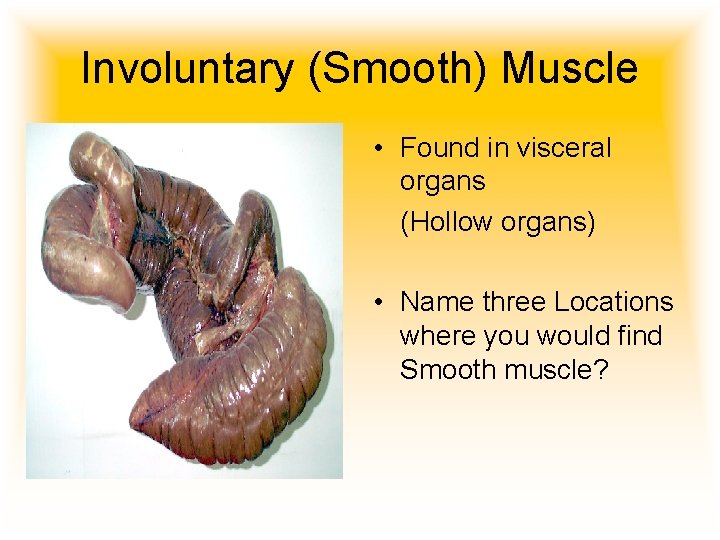
Involuntary (Smooth) Muscle • Found in visceral organs (Hollow organs) • Name three Locations where you would find Smooth muscle?
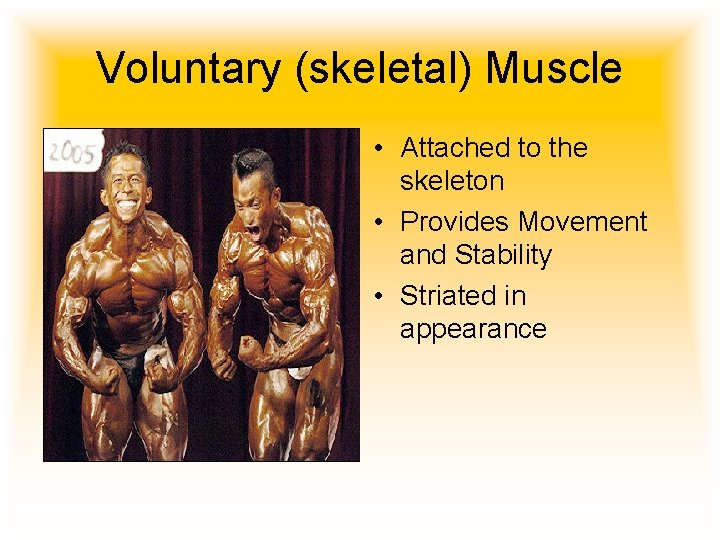
Voluntary (skeletal) Muscle • Attached to the skeleton • Provides Movement and Stability • Striated in appearance
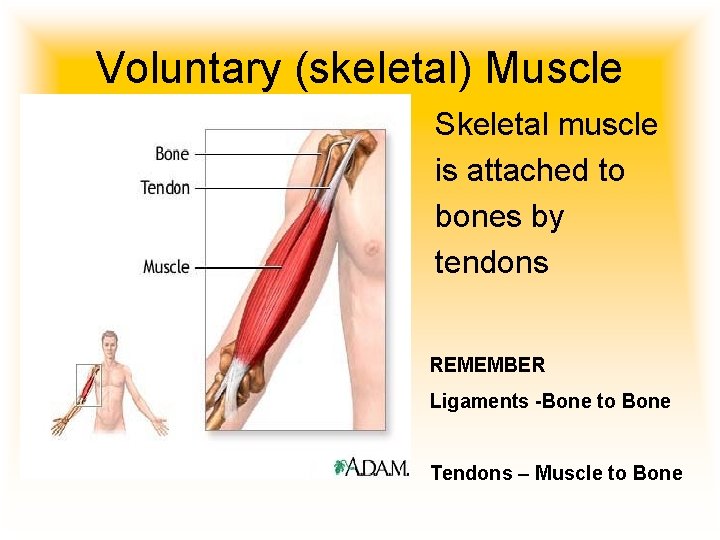
Voluntary (skeletal) Muscle Skeletal muscle is attached to bones by tendons REMEMBER Ligaments -Bone to Bone Tendons – Muscle to Bone
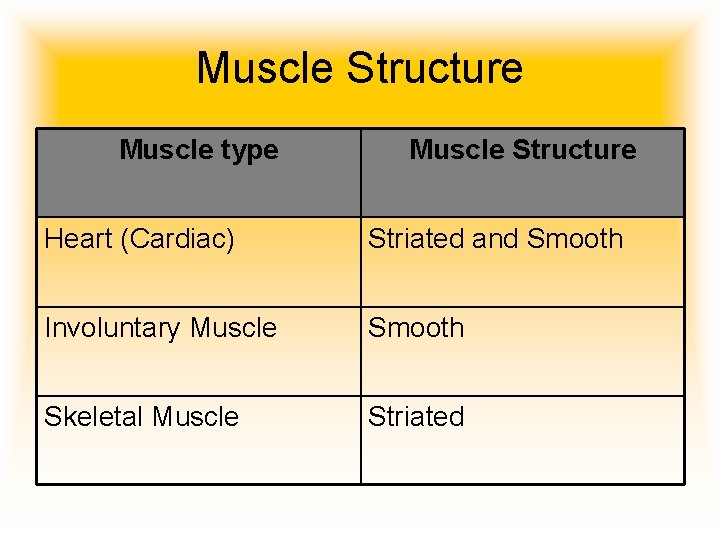
Muscle Structure Muscle type Muscle Structure Heart (Cardiac) Striated and Smooth Involuntary Muscle Smooth Skeletal Muscle Striated
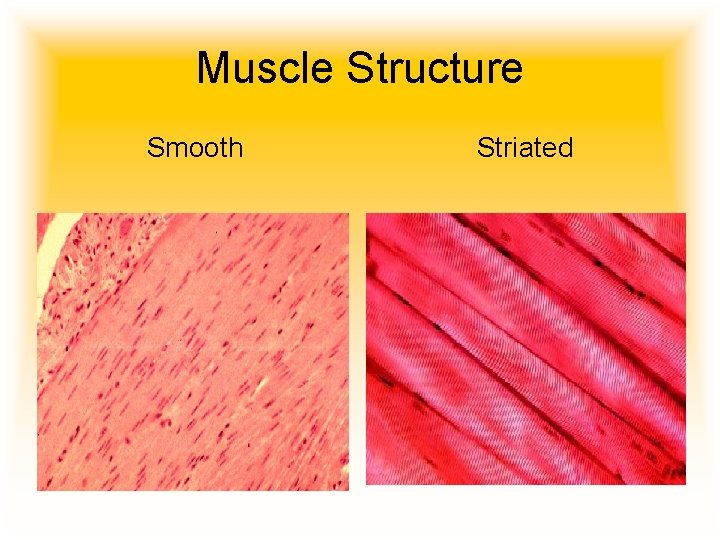
Muscle Structure Smooth Striated
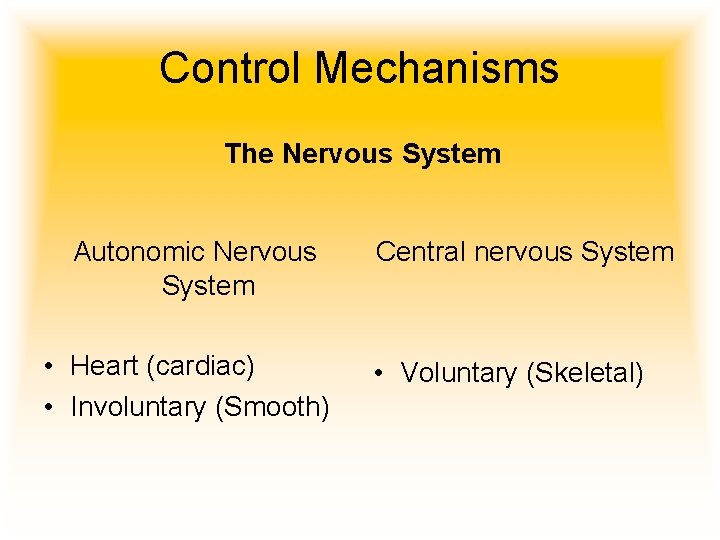
Control Mechanisms The Nervous System Autonomic Nervous System • Heart (cardiac) • Involuntary (Smooth) Central nervous System • Voluntary (Skeletal)
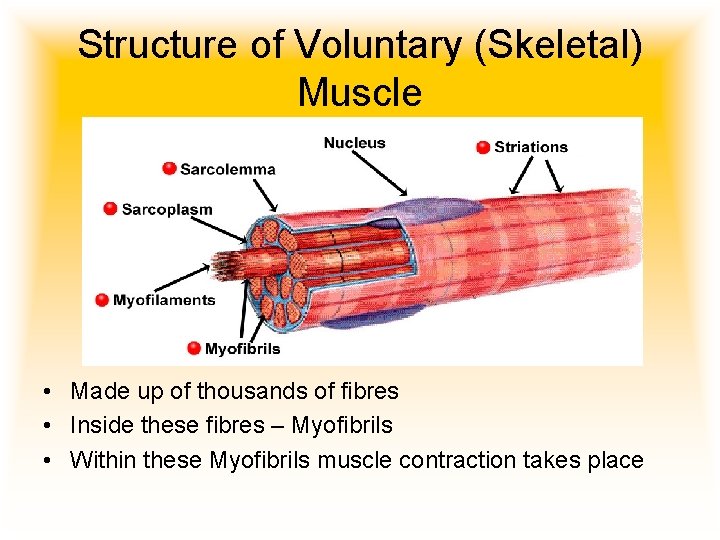
Structure of Voluntary (Skeletal) Muscle • Made up of thousands of fibres • Inside these fibres – Myofibrils • Within these Myofibrils muscle contraction takes place
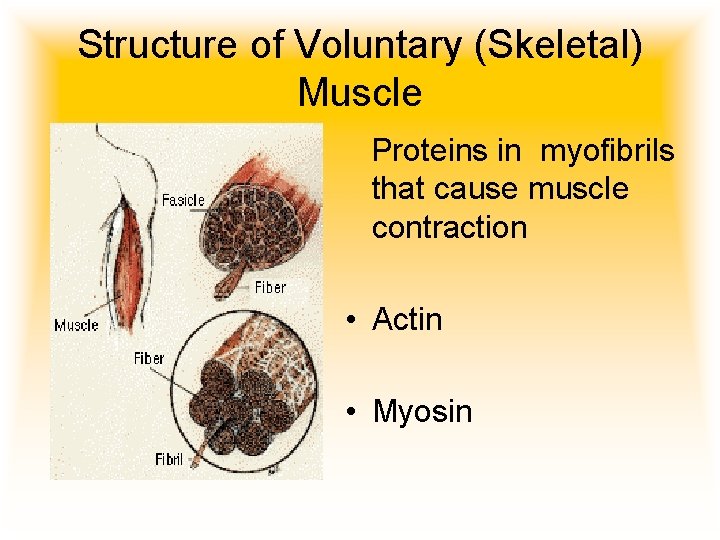
Structure of Voluntary (Skeletal) Muscle Proteins in myofibrils that cause muscle contraction • Actin • Myosin
Activity • You should now be able to complete the following table Muscle Type Muscle Structure Primary Control Location Function Mechanism of the muscle
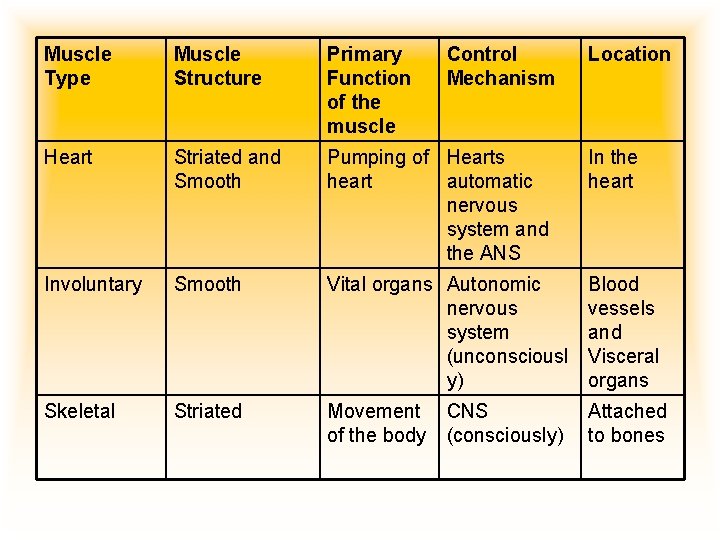
Muscle Type Muscle Structure Primary Function of the muscle Control Mechanism Heart Striated and Smooth Pumping of Hearts heart automatic nervous system and the ANS In the heart Involuntary Smooth Vital organs Autonomic nervous system (unconsciousl y) Blood vessels and Visceral organs Skeletal Striated Movement of the body Attached to bones CNS (consciously) Location
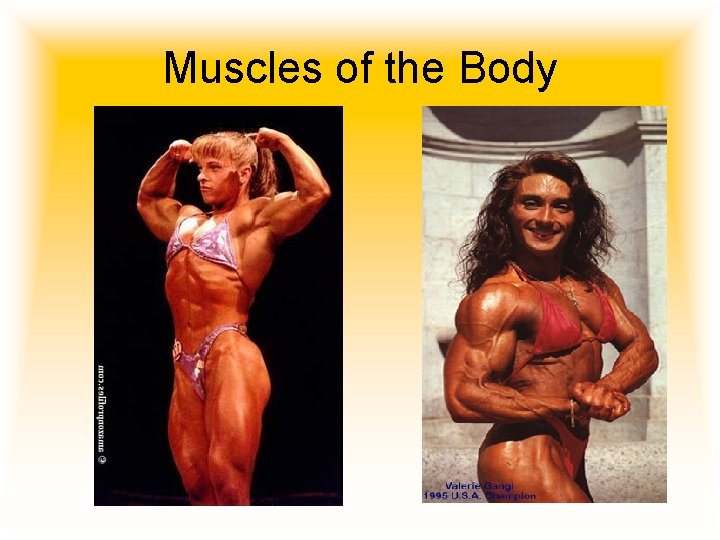
Muscles of the Body
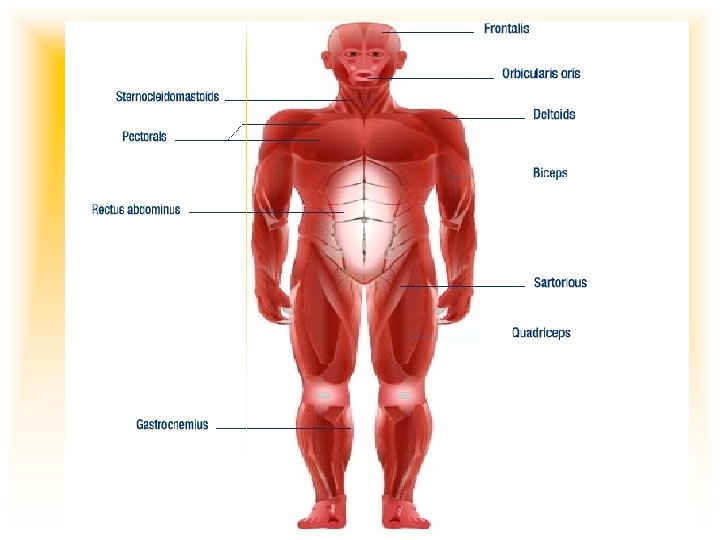
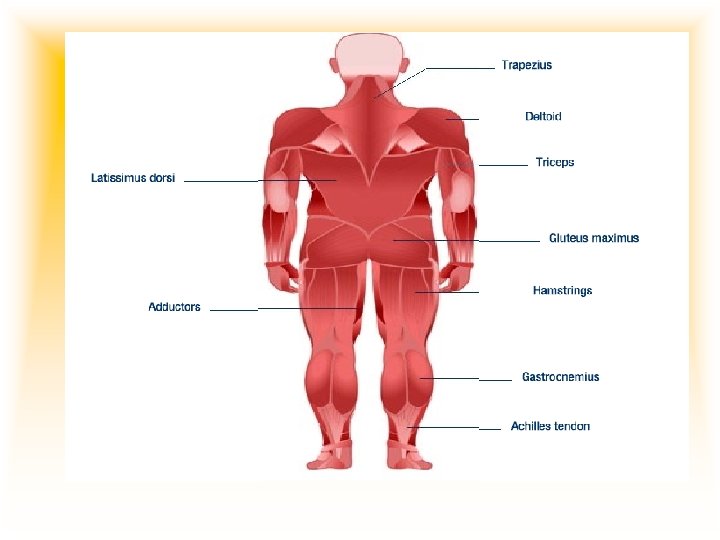
Muscle Facts Smallest muscle in the body? • Stapedius: the muscle that activates the stirrup, the small bone that sends vibrations from the eardrum to the inner ear. It measures just 0. 05 inch (0. 13 centimeter) in length. Largest muscle in the body? • Latissimus dorsi: the large, flat muscle pair that covers the middle and lower back. Longest muscle in the body? • Sartorius: the straplike muscle that runs diagonally from the waist down across the front of the thigh to the knee.
Muscle Facts Strongest muscle in the body? • Gluteus maximus: the muscle pair of the hip that form most of the flesh of the buttocks. Fastest-reacting muscle in the body? • Orbicularis oculi: the muscle that encircles the eye and closes the eyelid. It contracts in less than 0. 01 second. Number of muscles used to make a smile? • Seventeen. Number of muscles used to make a frown? • Forty-three.
Muscles
Robobuilder Skeletal muscle performs any visible movement that your body makes. Movements that are not visible are the result of other muscular tissues performing a job that you do not have to think about.
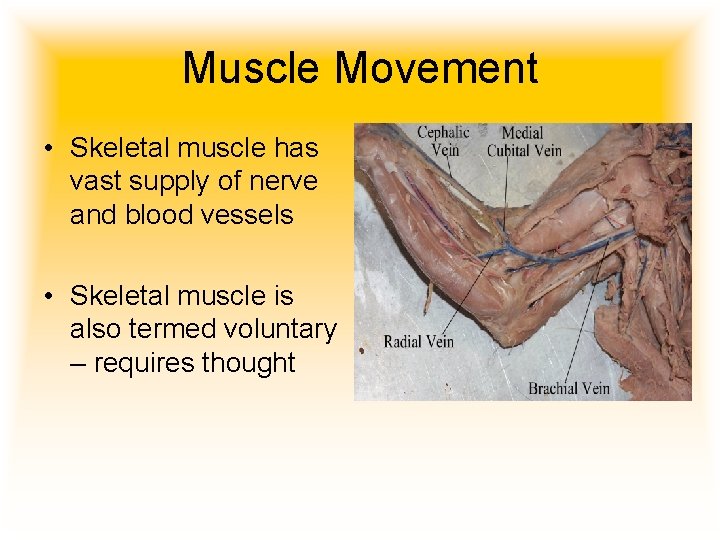
Muscle Movement • Skeletal muscle has vast supply of nerve and blood vessels • Skeletal muscle is also termed voluntary – requires thought
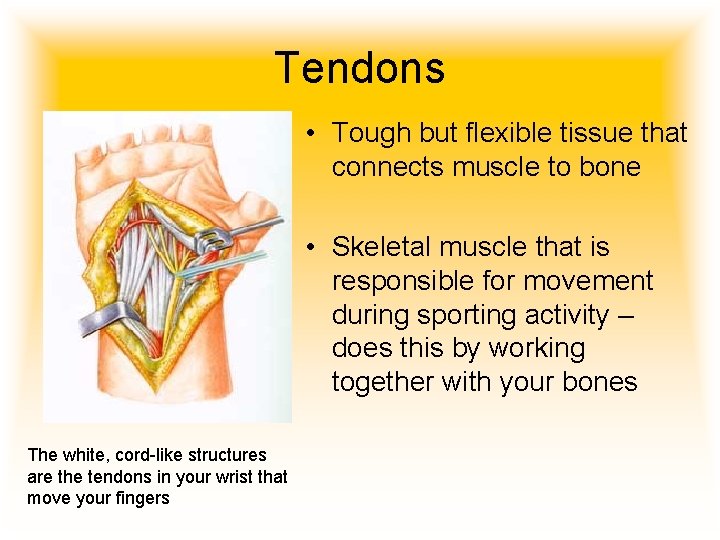
Tendons • Tough but flexible tissue that connects muscle to bone • Skeletal muscle that is responsible for movement during sporting activity – does this by working together with your bones The white, cord-like structures are the tendons in your wrist that move your fingers
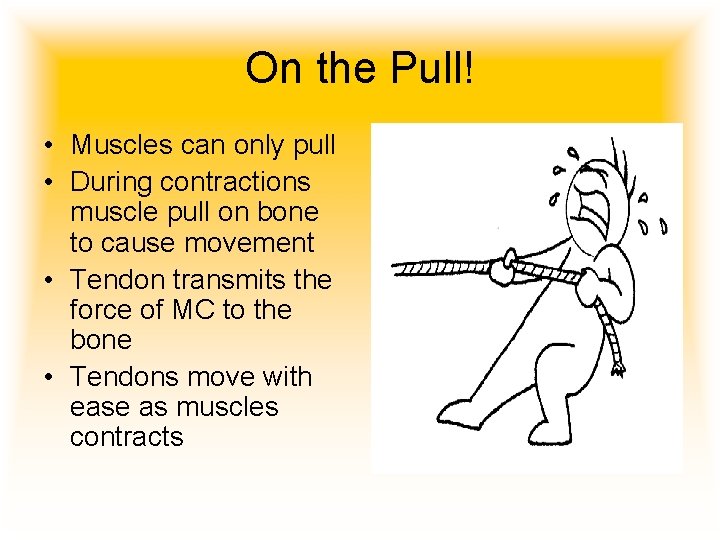
On the Pull! • Muscles can only pull • During contractions muscle pull on bone to cause movement • Tendon transmits the force of MC to the bone • Tendons move with ease as muscles contracts
Many Factors!! There are many factors that help produce MC (muscle contraction). Can you name three? Nutrition is often overlooked – the muscles contract and relax and these cells need chemical energy to work. We get this from the foods we eat. Carbohydrates are the main fuel provider for muscle contraction. Minerals are also essential.
Antagonistic pairs Prime mover (agonistic) Antagonistic • This muscle determines the movement of an action –by Contracting • This muscle works with the prime mover but creates an opposing action – by relaxing
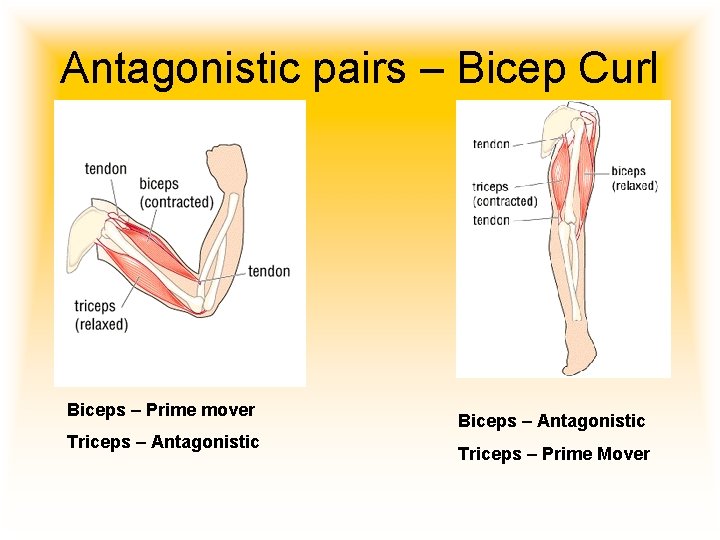
Antagonistic pairs – Bicep Curl Biceps – Prime mover Triceps – Antagonistic Biceps – Antagonistic Triceps – Prime Mover
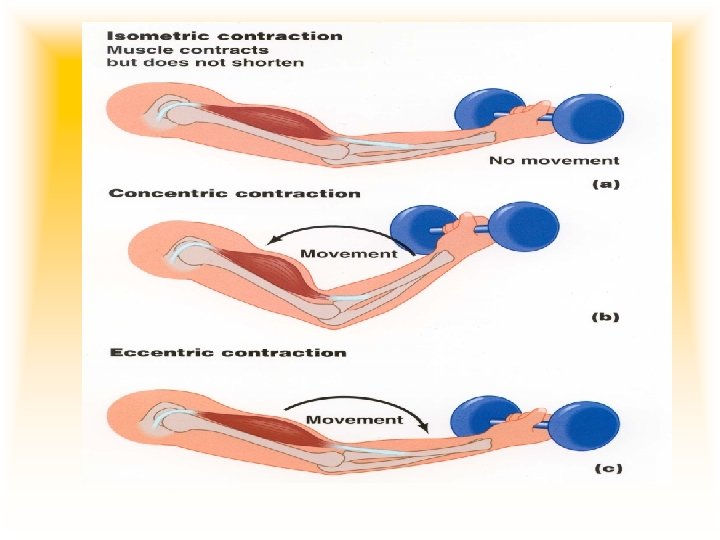
Muscle contraction Three types • Isometric • Concentric • Eccentric
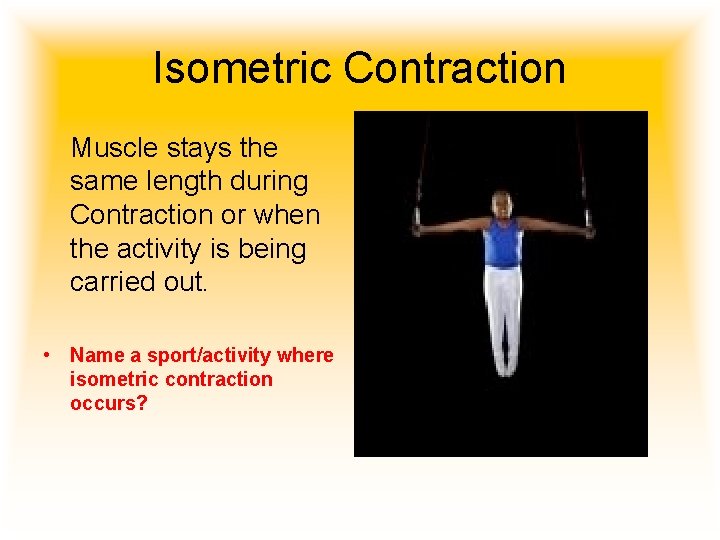
Isometric Contraction Muscle stays the same length during Contraction or when the activity is being carried out. • Name a sport/activity where isometric contraction occurs?
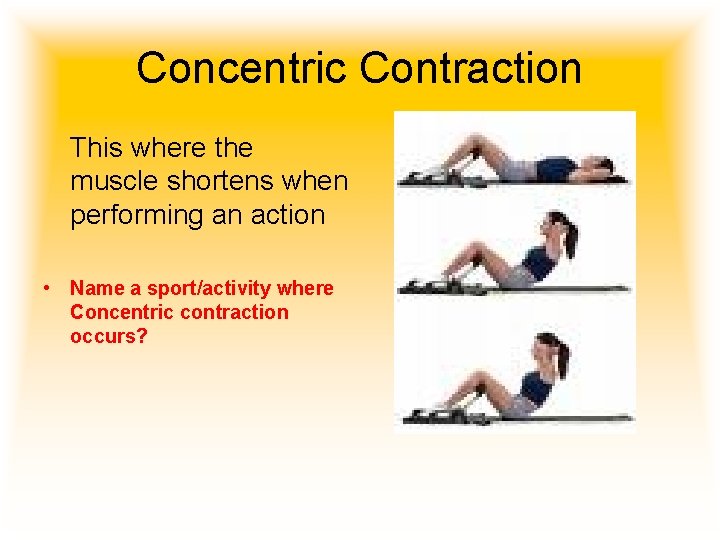
Concentric Contraction This where the muscle shortens when performing an action • Name a sport/activity where Concentric contraction occurs?
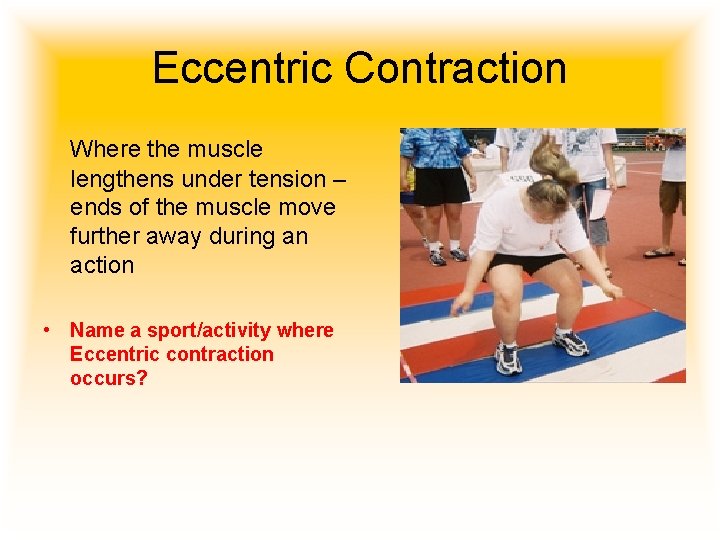
Eccentric Contraction Where the muscle lengthens under tension – ends of the muscle move further away during an action • Name a sport/activity where Eccentric contraction occurs?
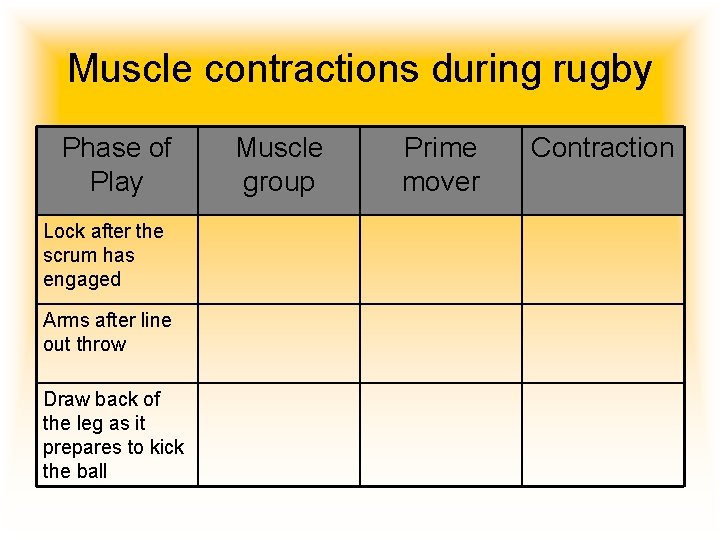
Muscle contractions during rugby Phase of Play Lock after the scrum has engaged Arms after line out throw Draw back of the leg as it prepares to kick the ball Muscle group Prime mover Contraction
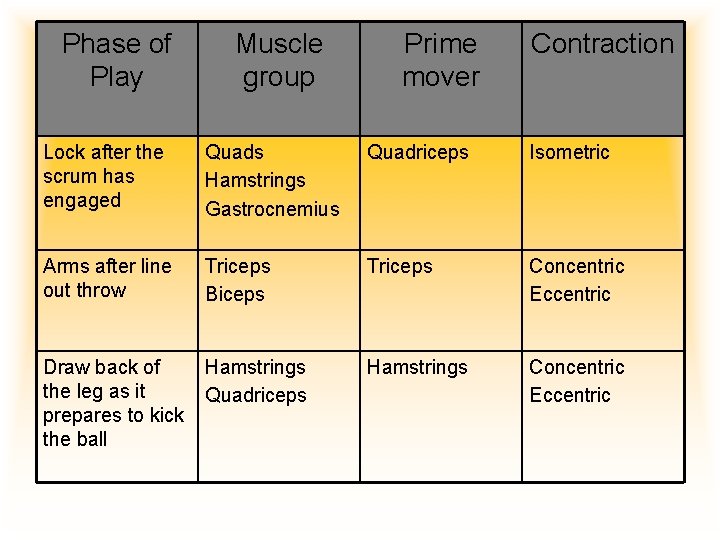
Phase of Play Muscle group Prime mover Contraction Lock after the scrum has engaged Quads Hamstrings Gastrocnemius Quadriceps Isometric Arms after line out throw Triceps Biceps Triceps Concentric Eccentric Draw back of the leg as it prepares to kick the ball Hamstrings Quadriceps Hamstrings Concentric Eccentric
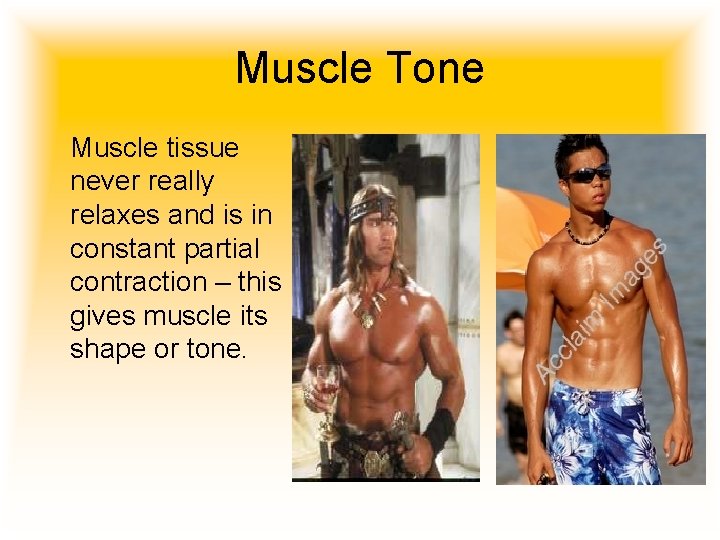
Muscle Tone Muscle tissue never really relaxes and is in constant partial contraction – this gives muscle its shape or tone.
Effects of exercise Activity • In groups come up what effects you think that exercise has on the muscular system in the short and long term?
Effects of exercise Short term • Increase in blood flow to the muscles exercising – increase demand for O 2 • Increase in demand for fuel by the muscles exercising • Increase in waste products – such as? ? Lactic acid, carbon dioxide • Increase in body temperature
Effects of exercise Long term • Muscles become bigger and stronger – depending on type of exercise that has been undertaken 6 weeks for changes to be seen – 2 weeks for the changes to be lost if not maintained • Size and strength of muscle tissue can increase. This muscle tissue allows for fast movements to be carried out – sprint or power type activities (participation in strength type exercises)
- Slides: 39