
Muscular System 11 th Grade Health Purpose n
- Slides: 16
Muscular System 11 th Grade Health
Purpose n n Provides bodily movements Moves blood, air, food and waste through our body
Structures and Functions n Voluntary Muscles – muscles that are under your control (skeletal muscles) n Involuntary Muscles – muscles that function automatically (heart, etc)
Types of Muscles n Skeletal – muscles attached to bones in the n Cardiac – the heart muscle; involuntary n Smooth – involuntary muscles that help with skeletal system; voluntary movements of internal organs, such as digestive (peristalsis) and circulatory (lining of blood vessels).
Major Muscles in Body n Quadriceps – front thigh n Hamstrings – back thigh n Gastrocnemius – calf n Gluteals – buttocks n Pectoralis – chest n Latissimus dorsi – back n Trapezius – upper back/neck n Deltoids – shoulders n Biceps – front upper arm n Triceps – back upper arm
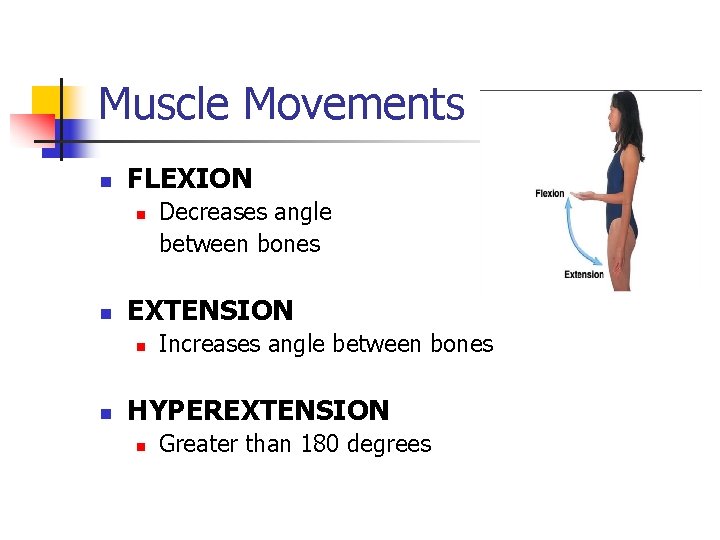
Muscle Movements n FLEXION n n EXTENSION n n Decreases angle between bones Increases angle between bones HYPEREXTENSION n Greater than 180 degrees
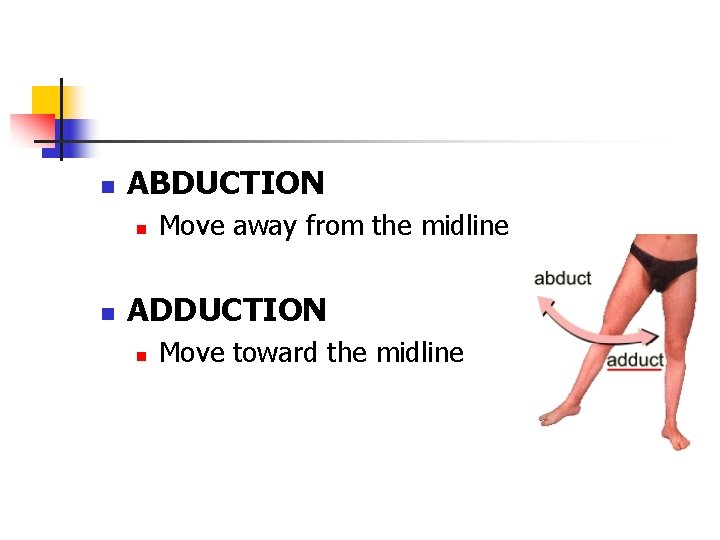
n ABDUCTION n n Move away from the midline ADDUCTION n Move toward the midline
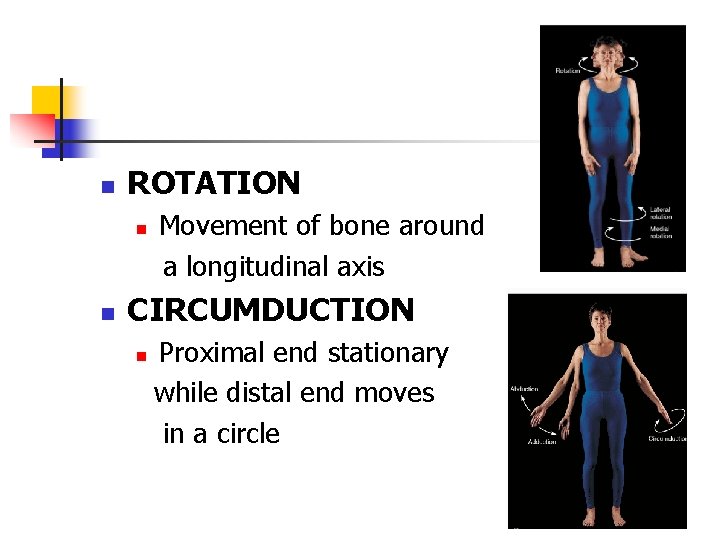
n ROTATION n n Movement of bone around a longitudinal axis CIRCUMDUCTION n Proximal end stationary while distal end moves in a circle
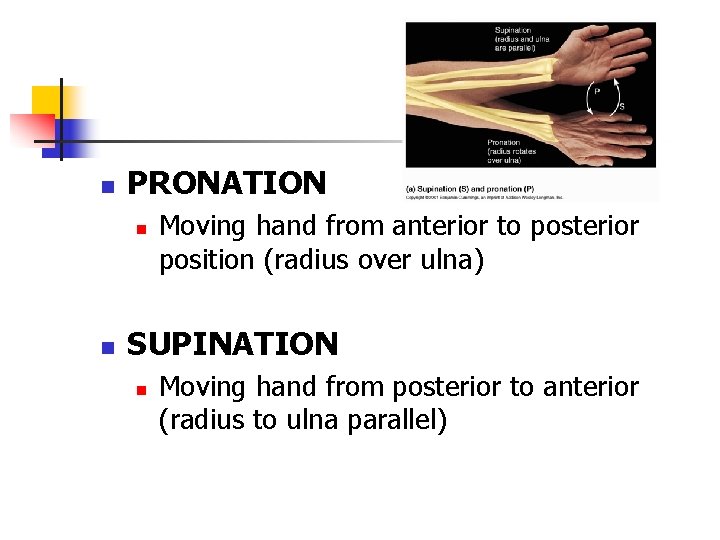
n PRONATION n n Moving hand from anterior to posterior position (radius over ulna) SUPINATION n Moving hand from posterior to anterior (radius to ulna parallel)
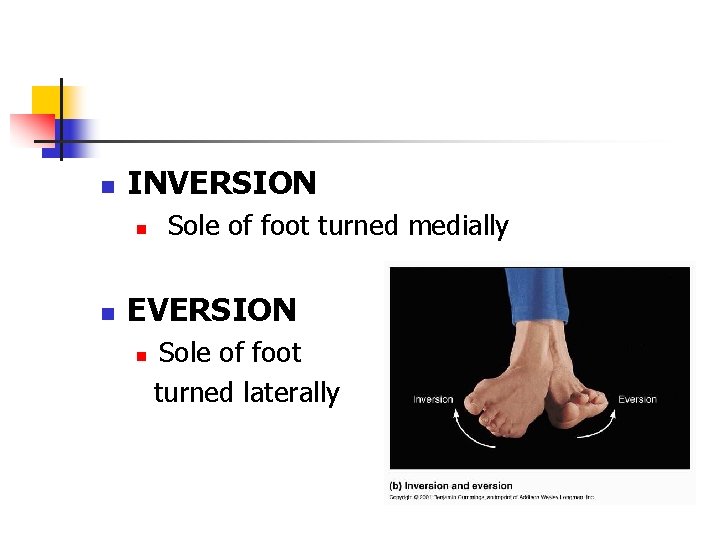
n INVERSION n n Sole of foot turned medially EVERSION n Sole of foot turned laterally
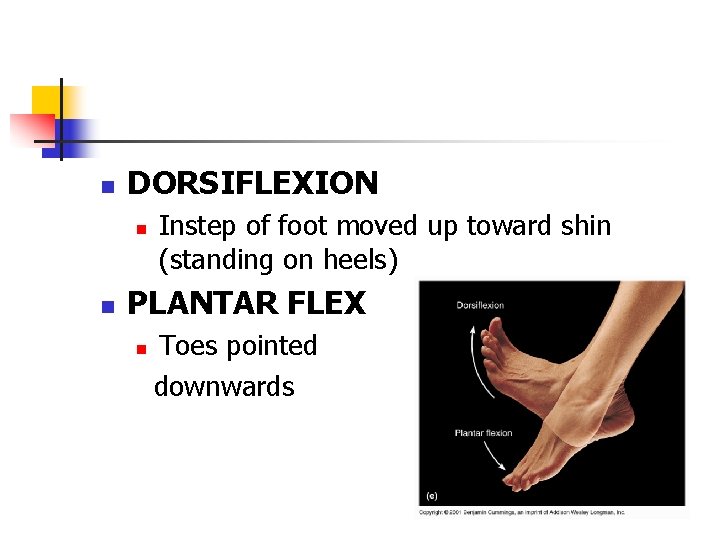
n DORSIFLEXION n n Instep of foot moved up toward shin (standing on heels) PLANTAR FLEX n Toes pointed downwards
Types of Muscle Contractions n Muscle Contractions can be divided into: n n n Isotonic (meaning same tension) Isometric (meaning same distance or not moving) Isokinetic (meaning same speed)
Isotonic Contractions n Concentric Contraction n n contraction in which the muscle decreases in length (shortens) against an opposing load Example: pulling up portion of bicep curl
n Eccentric Contraction n n contraction in which the muscle increases in length (lengthens) as it resists a load Example: downward portion of the bicep curl, when the arm returns to its starting position
Isometric Contraction n n Contraction in which no movement takes place, because the load on the muscle exceeds the tension generated by the contracting muscle. Example: carrying an object in front of you as the weight of the object is pulling your arms down but your muscles are contracting to hold the object at the same level.
Isokinetic Contraction n n The muscle contracts and shortens at the same speed throughout the entire range of motion. A special piece of equipment known as an Isokinetic Dynamometer is usually required.