
Muscles The human body is composed of over
Muscles

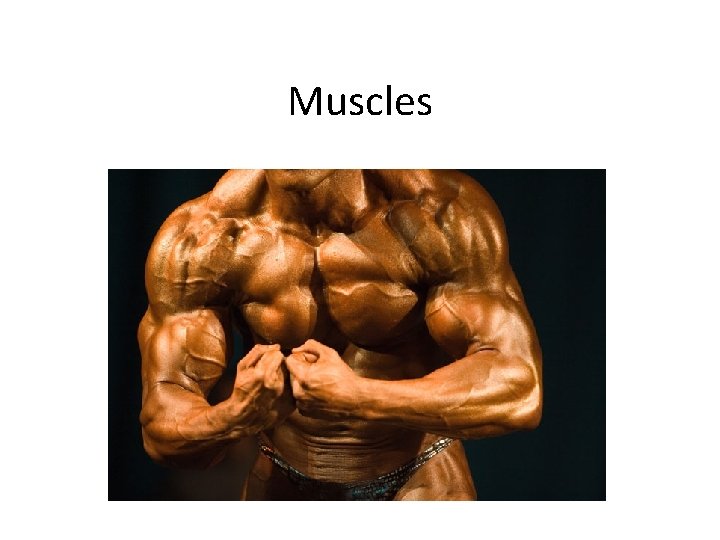
• The human body is composed of over 600 muscles – Made up of bundle of tiny fibers (actin & myosin) – Fibers initiate movement when stimulated by nerves – Muscle fibers become short and think to cause movement
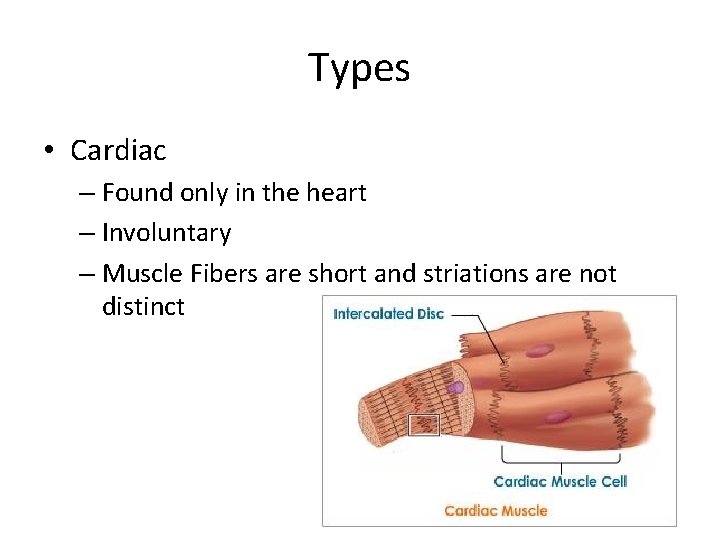
Types • Cardiac – Found only in the heart – Involuntary – Muscle Fibers are short and striations are not distinct
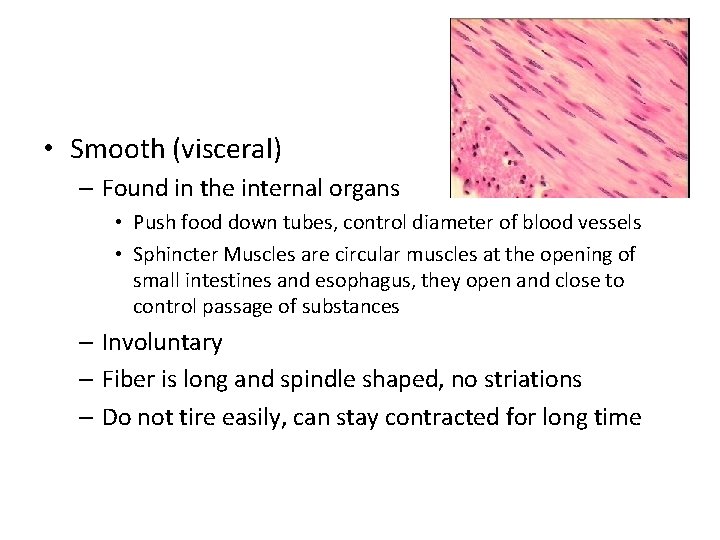
• Smooth (visceral) – Found in the internal organs • Push food down tubes, control diameter of blood vessels • Sphincter Muscles are circular muscles at the opening of small intestines and esophagus, they open and close to control passage of substances – Involuntary – Fiber is long and spindle shaped, no striations – Do not tire easily, can stay contracted for long time

• Skeletal (Striated) – Attach to bones – Voluntary – Fiber is long, cylindrical and have distinct striations
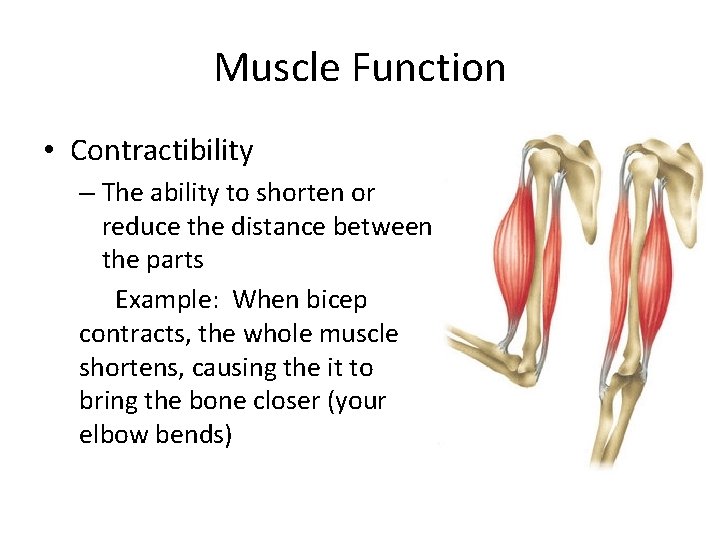
Muscle Function • Contractibility – The ability to shorten or reduce the distance between the parts Example: When bicep contracts, the whole muscle shortens, causing the it to bring the bone closer (your elbow bends)
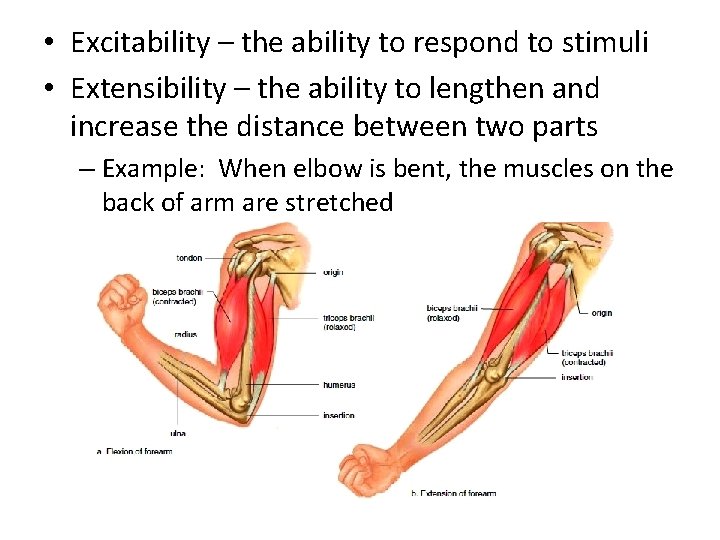
• Excitability – the ability to respond to stimuli • Extensibility – the ability to lengthen and increase the distance between two parts – Example: When elbow is bent, the muscles on the back of arm are stretched
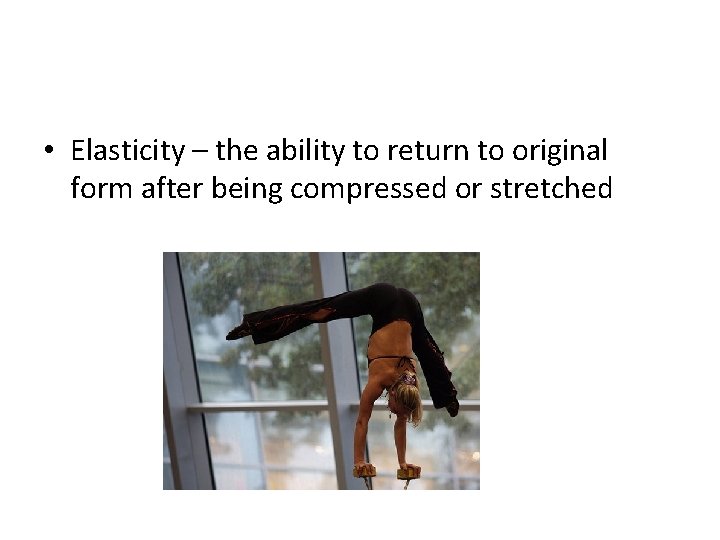
• Elasticity – the ability to return to original form after being compressed or stretched
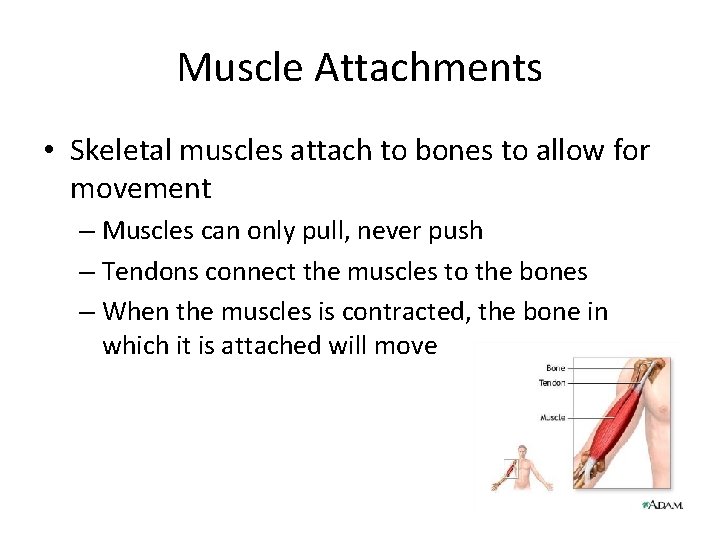
Muscle Attachments • Skeletal muscles attach to bones to allow for movement – Muscles can only pull, never push – Tendons connect the muscles to the bones – When the muscles is contracted, the bone in which it is attached will move
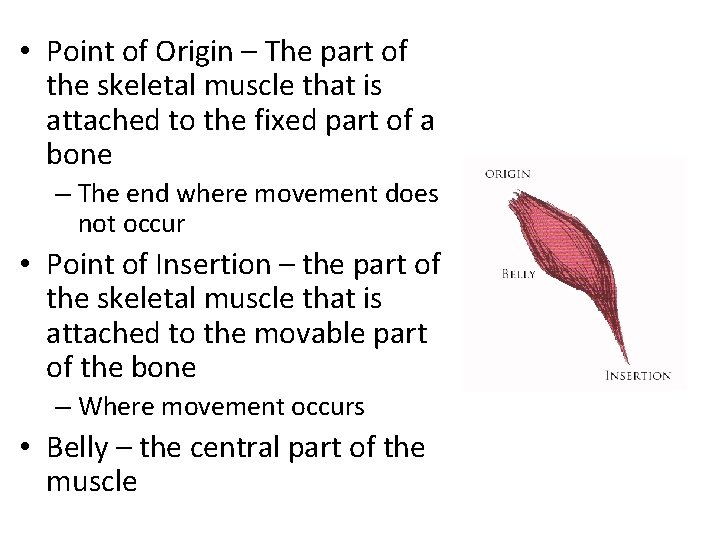
• Point of Origin – The part of the skeletal muscle that is attached to the fixed part of a bone – The end where movement does not occur • Point of Insertion – the part of the skeletal muscle that is attached to the movable part of the bone – Where movement occurs • Belly – the central part of the muscle
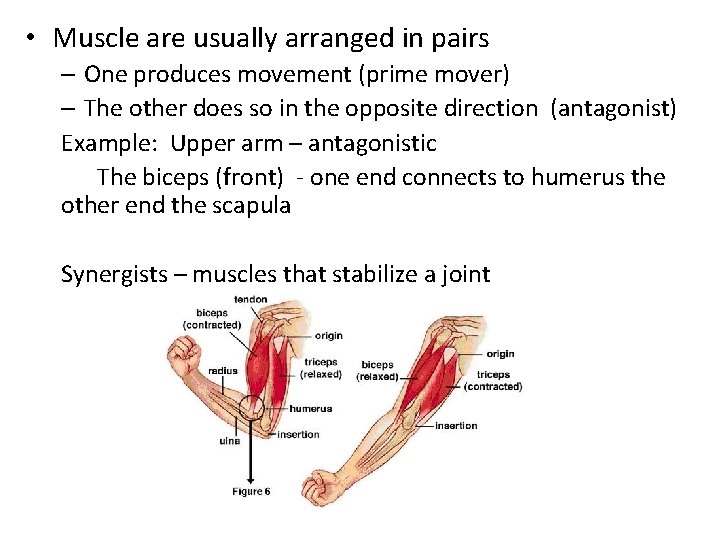
• Muscle are usually arranged in pairs – One produces movement (prime mover) – The other does so in the opposite direction (antagonist) Example: Upper arm – antagonistic The biceps (front) - one end connects to humerus the other end the scapula Synergists – muscles that stabilize a joint
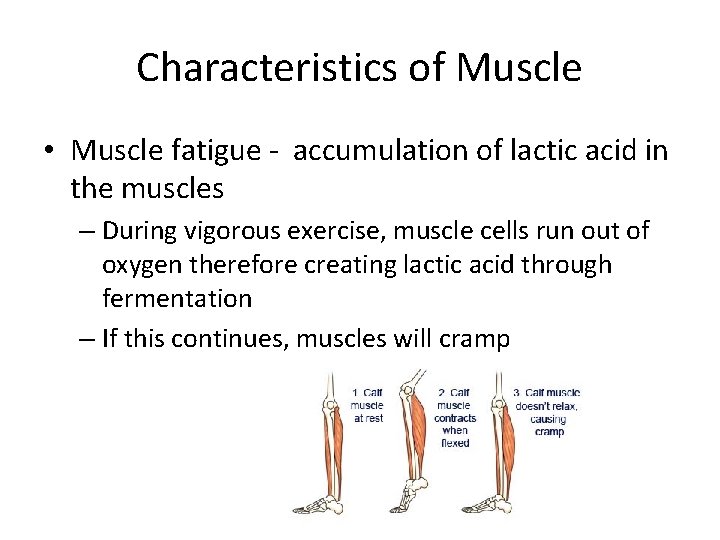
Characteristics of Muscle • Muscle fatigue - accumulation of lactic acid in the muscles – During vigorous exercise, muscle cells run out of oxygen therefore creating lactic acid through fermentation – If this continues, muscles will cramp
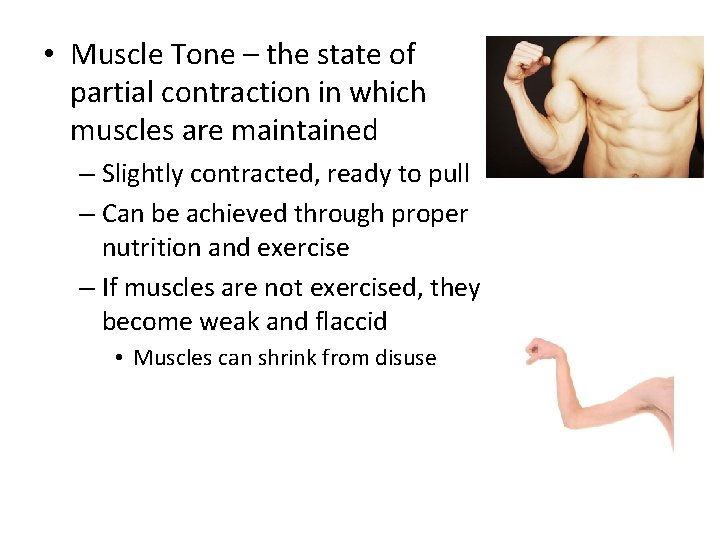
• Muscle Tone – the state of partial contraction in which muscles are maintained – Slightly contracted, ready to pull – Can be achieved through proper nutrition and exercise – If muscles are not exercised, they become weak and flaccid • Muscles can shrink from disuse
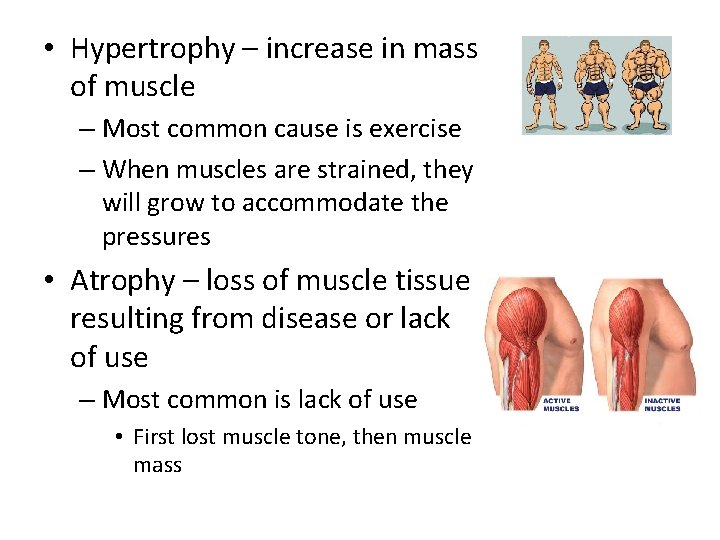
• Hypertrophy – increase in mass of muscle – Most common cause is exercise – When muscles are strained, they will grow to accommodate the pressures • Atrophy – loss of muscle tissue resulting from disease or lack of use – Most common is lack of use • First lost muscle tone, then muscle mass
- Slides: 14