
Muscles pairs And other things Muscles have opposing



- Slides: 11
Muscles pairs And other things
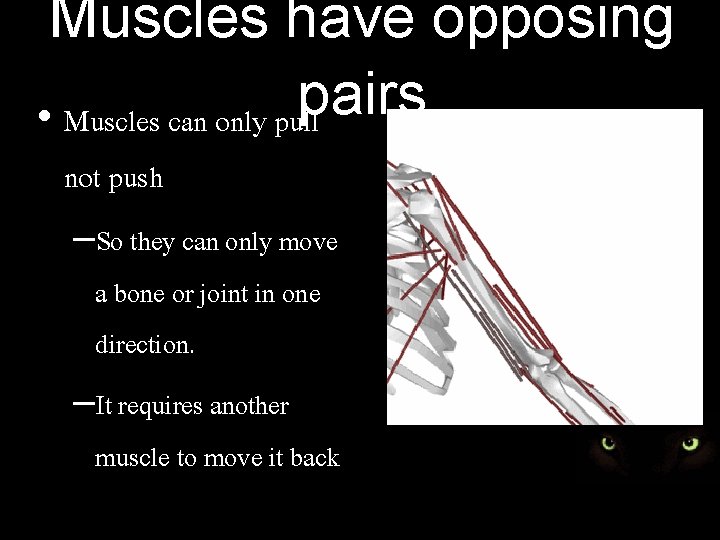
Muscles have opposing pairs • Muscles can only pull not push –So they can only move a bone or joint in one direction. –It requires another muscle to move it back
Who are some common pairs? • Triceps and Biceps -bending and straightening the elbow • deltoids and lattisimus dorsi - lifting the arm and lowering the arm • abdominals and erector spinae- bending the spine forward and backward
A few more groups • hip abductors and adductors - moving the legs apart and together • quadriceps and hamstrings - bending and straightening of the knee • gastrocnemius and tibialis anterior - standing on your toes or pulling your toes up toward your shin
A couple more • pectorals and trapezius - moving the arms/shoulders forward and backward (arms are held horizontal and shoulder high for this movement) • iliopsoas and gluteals- lifting the knee or moving the knee backward
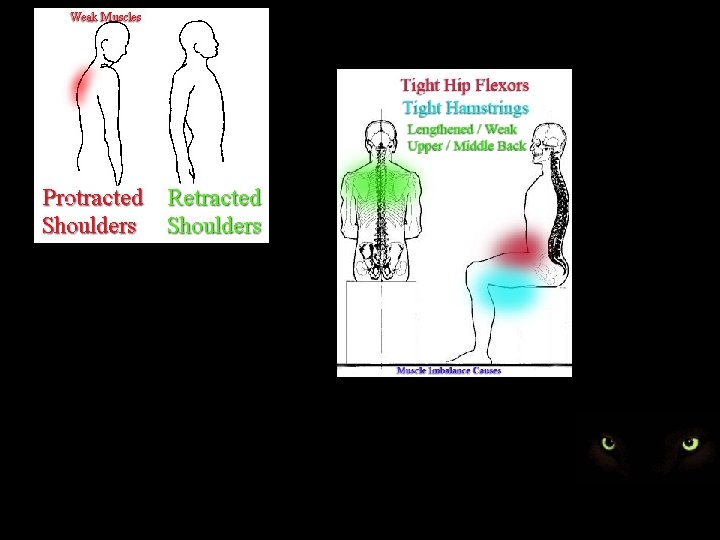
Natural muscle imbalances • Daily use tends to strengthen one part of the pair more than the other –Ex: • Biceps – lift against gravity, therefore they are stronger than triceps. • Turning your head in one direction, or using one arm more strengthens one set of muscles, but can weaken or shorten others
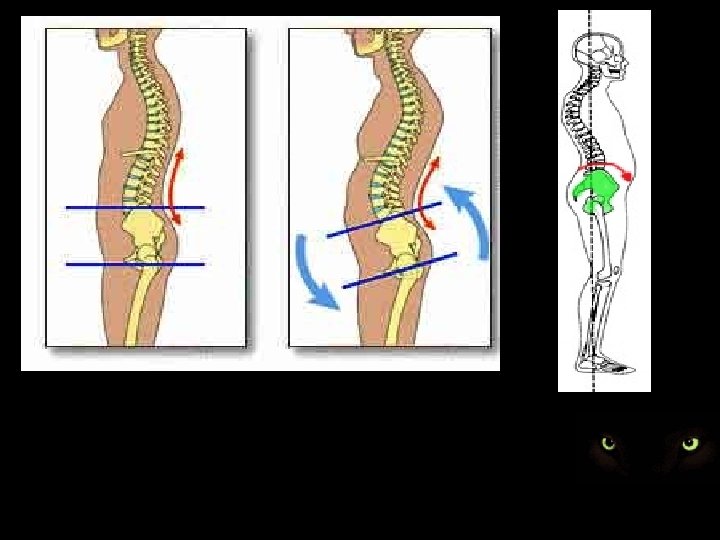
How can this hurt us? • Imbalances can lead to muscle pain –Most lower back problems are from muscle imbalances • one way is abdominal muscles become weak but erector spinae becomes too strong, pulling the pelvis into the wrong position
So, let's work those muscles. . . • But don't forget to work both parts of the pair. –You might also need to work a weaker member of a pair to strengthen it or to stretch it. • If you carry heavy groceries or kids, you might need to work on your triceps.