
Muscles of the Spinal Column Chapter 12 Cervical
- Slides: 51
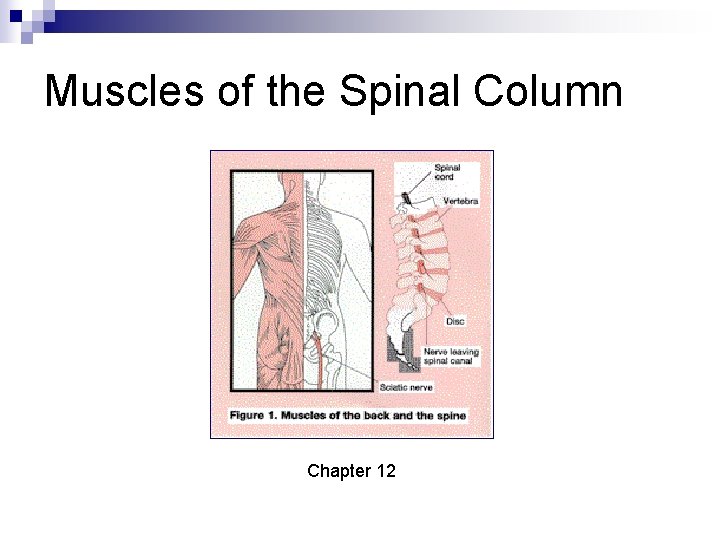
Muscles of the Spinal Column Chapter 12
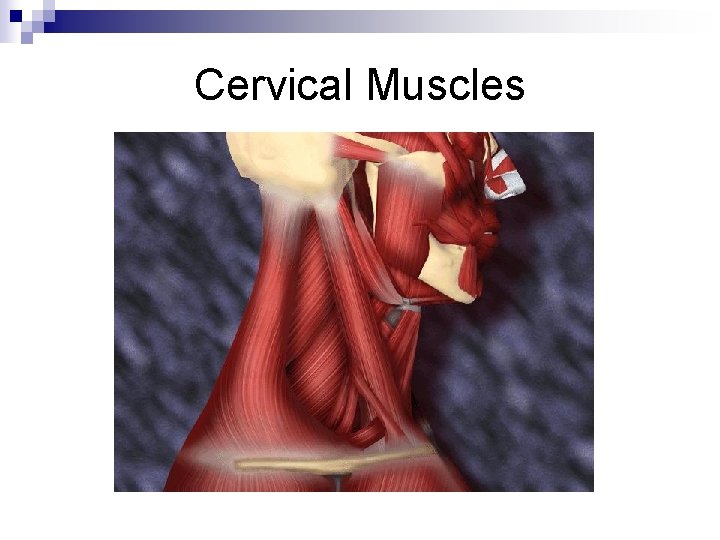
Cervical Muscles
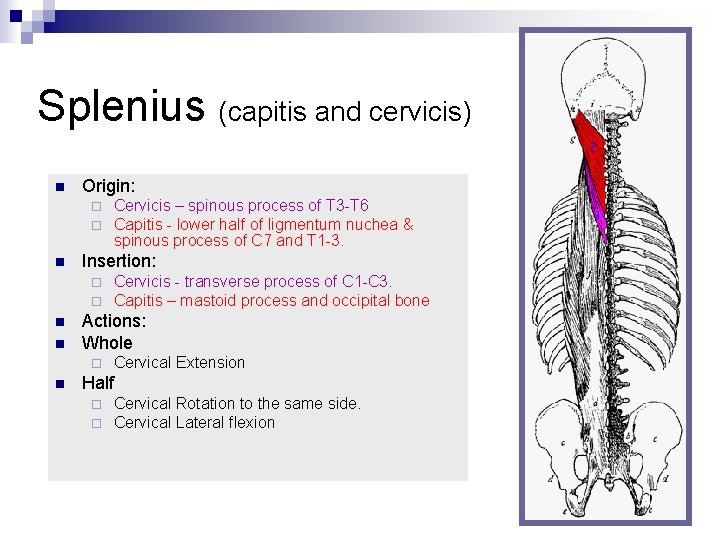
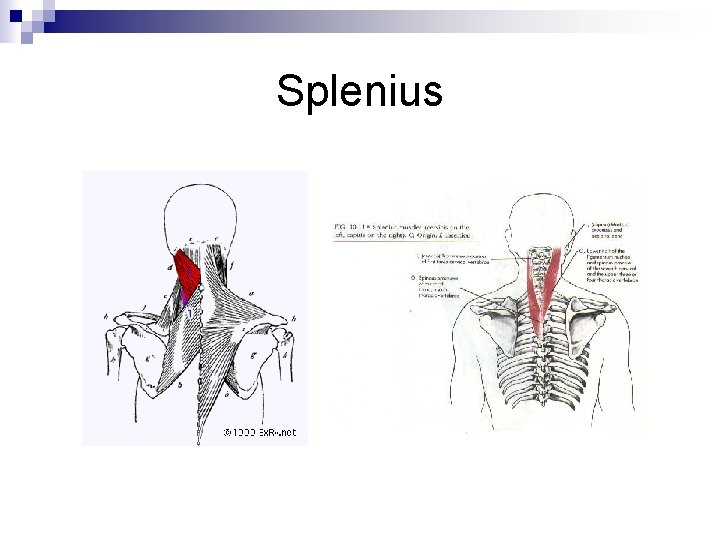
Splenius (capitis and cervicis) n Origin: ¨ ¨ n Insertion: ¨ ¨ n n Cervicis - transverse process of C 1 -C 3. Capitis – mastoid process and occipital bone Actions: Whole ¨ n Cervicis – spinous process of T 3 -T 6 Capitis - lower half of ligmentum nuchea & spinous process of C 7 and T 1 -3. Cervical Extension Half ¨ ¨ Cervical Rotation to the same side. Cervical Lateral flexion
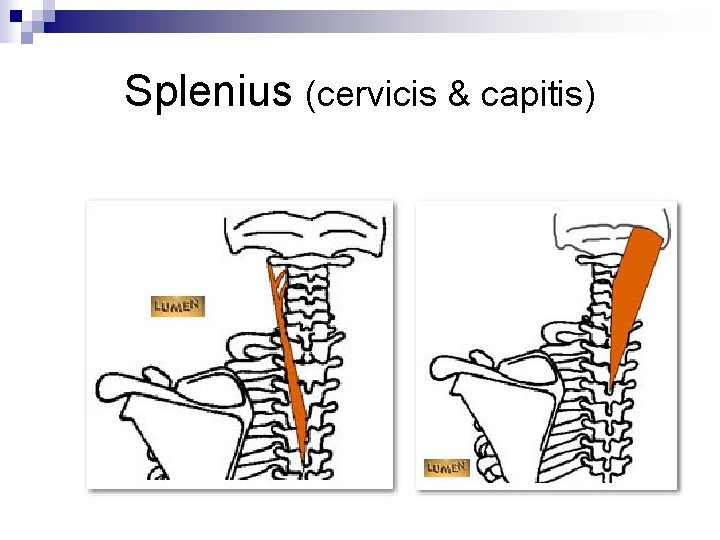
Splenius (cervicis & capitis)
Splenius
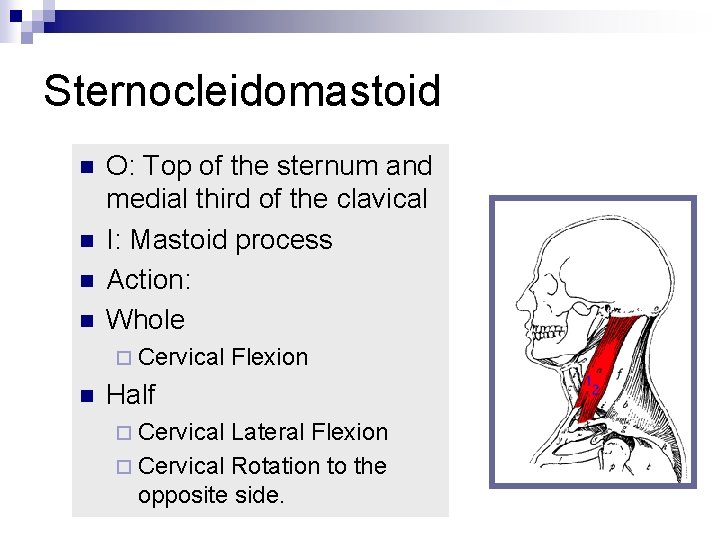
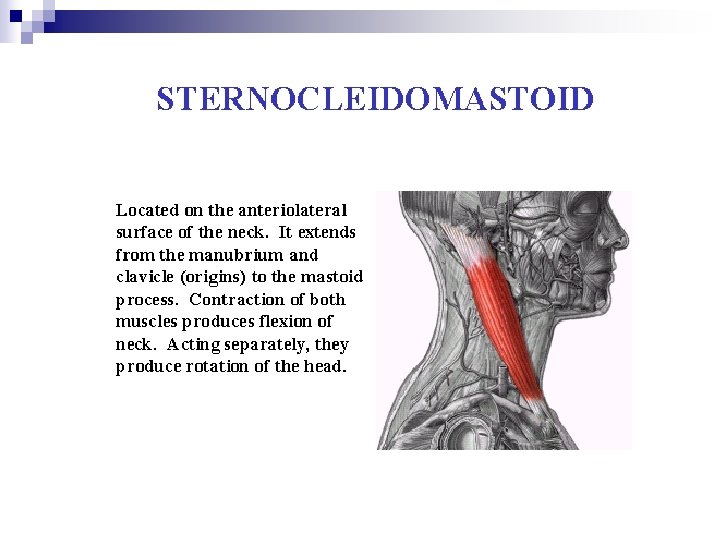
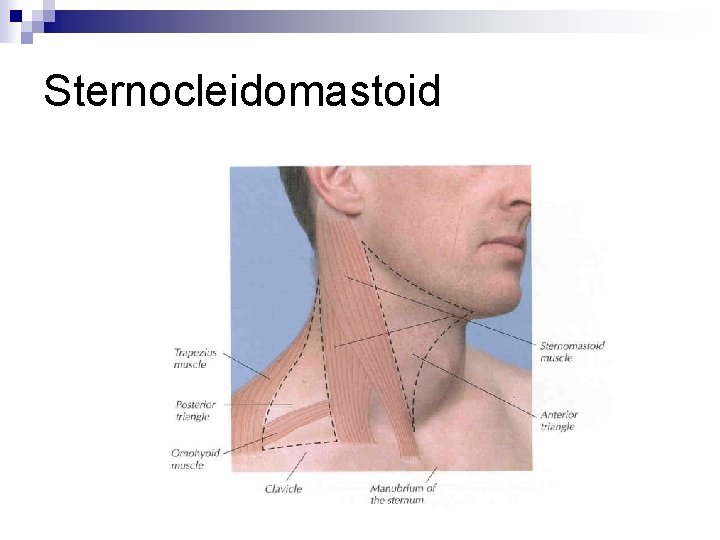
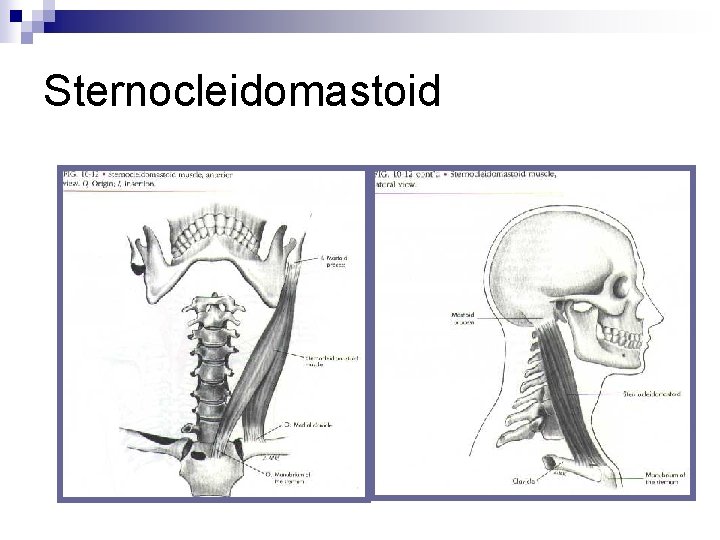
Sternocleidomastoid n n O: Top of the sternum and medial third of the clavical I: Mastoid process Action: Whole ¨ Cervical n Flexion Half ¨ Cervical Lateral Flexion ¨ Cervical Rotation to the opposite side.
Sternocleidomastoid
Sternocleidomastoid
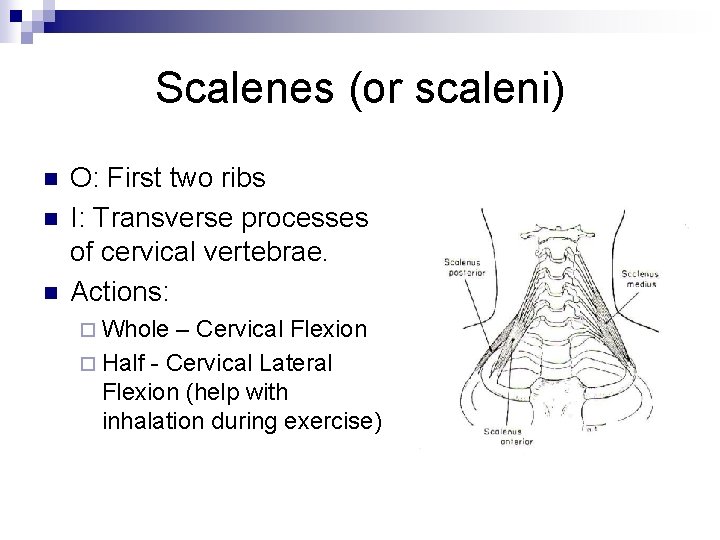
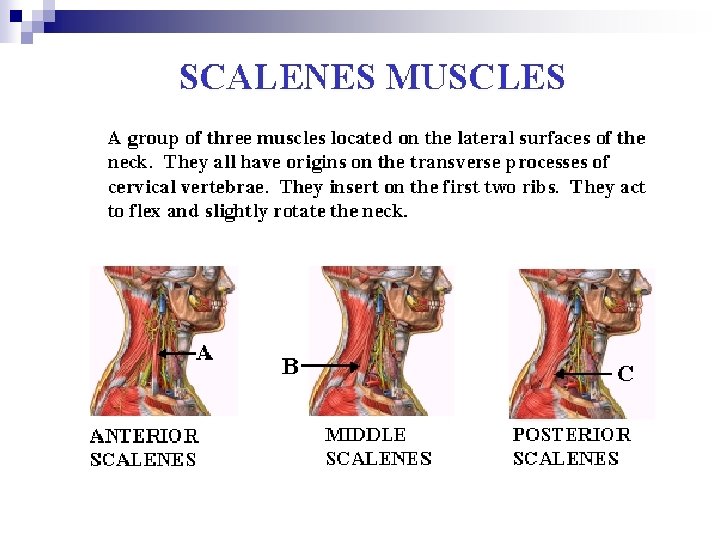
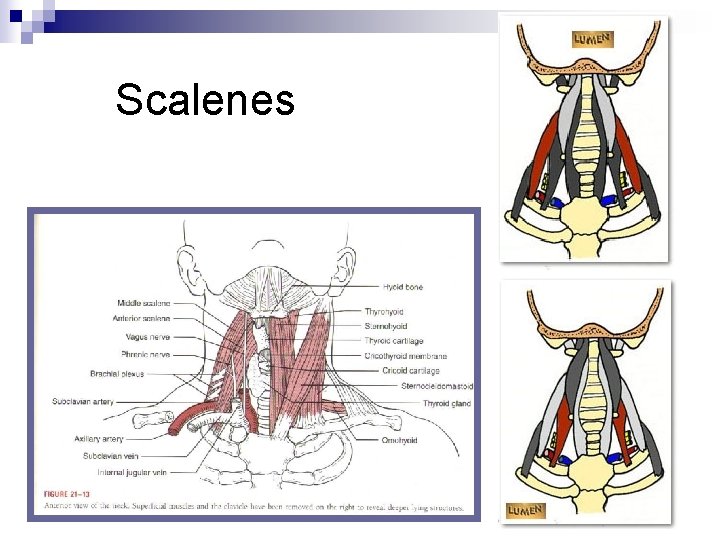
Scalenes (or scaleni) n n n O: First two ribs I: Transverse processes of cervical vertebrae. Actions: ¨ Whole – Cervical Flexion ¨ Half - Cervical Lateral Flexion (help with inhalation during exercise)
Scalenes
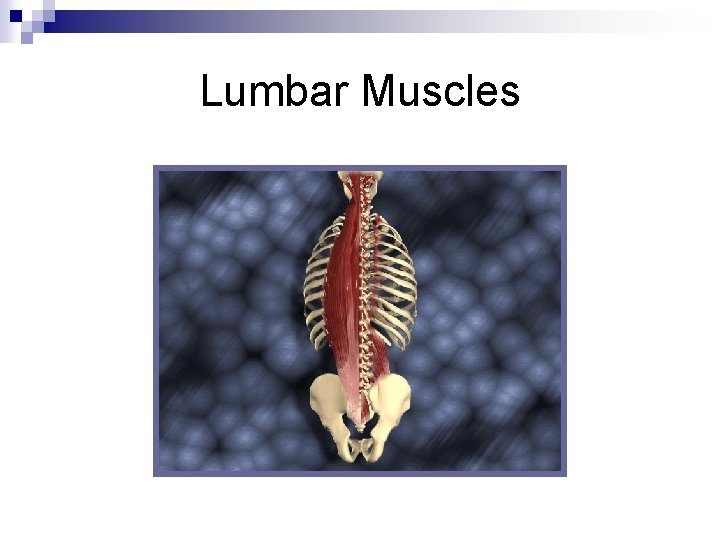
Lumbar Muscles
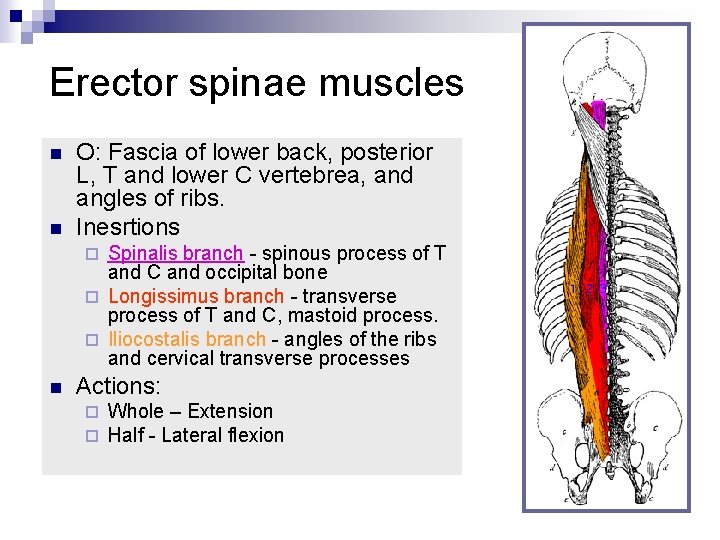
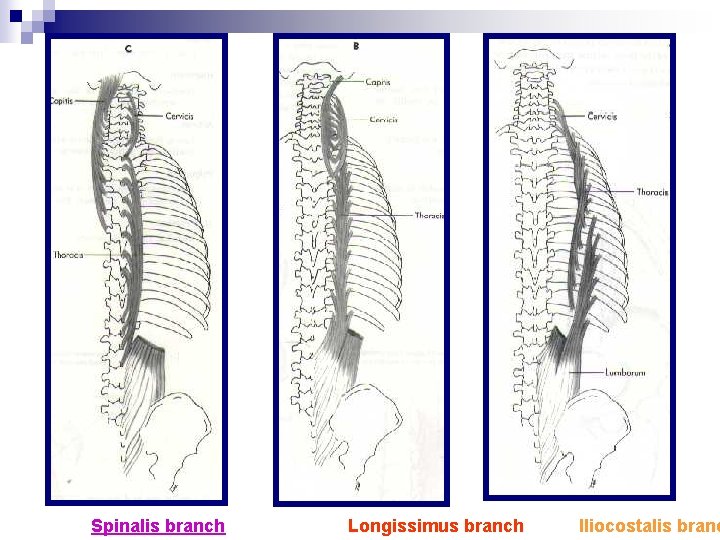
Erector spinae muscles n n O: Fascia of lower back, posterior L, T and lower C vertebrea, and angles of ribs. Inesrtions Spinalis branch - spinous process of T and C and occipital bone ¨ Longissimus branch - transverse process of T and C, mastoid process. ¨ Iliocostalis branch - angles of the ribs and cervical transverse processes ¨ n Actions: ¨ ¨ Whole – Extension Half - Lateral flexion
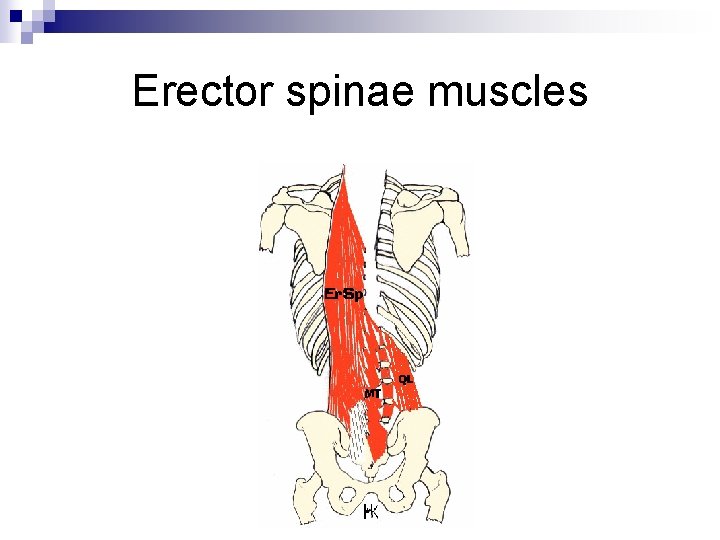
Erector spinae muscles
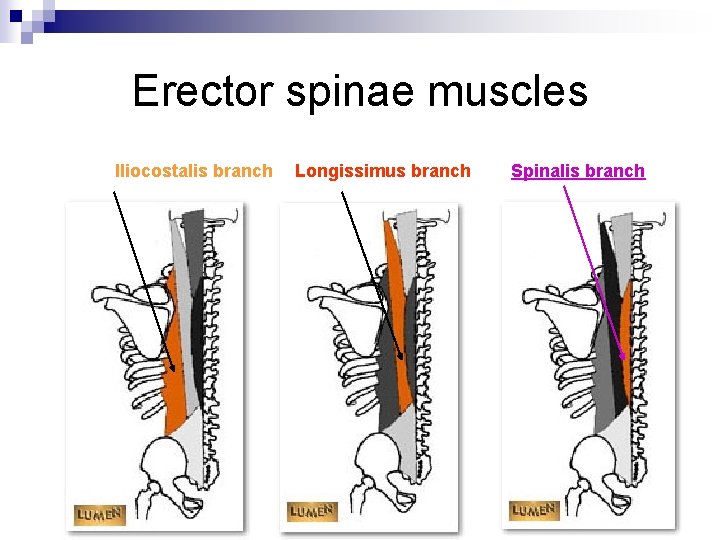
Erector spinae muscles Iliocostalis branch Longissimus branch Spinalis branch
Spinalis branch Longissimus branch Iliocostalis branc
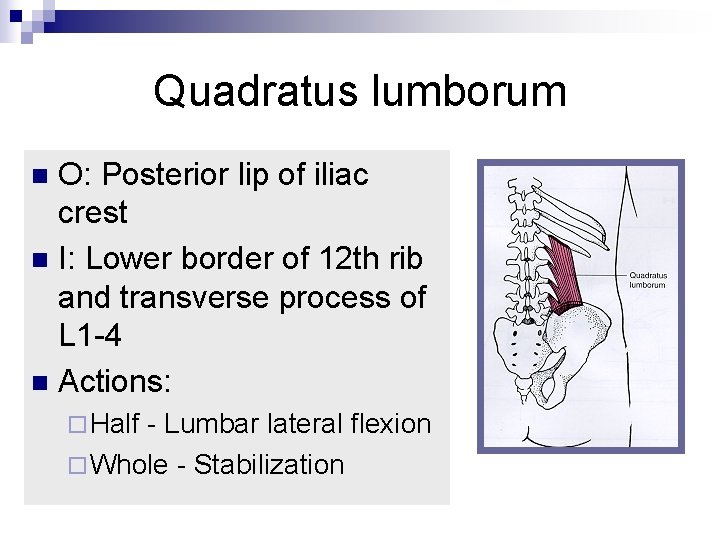
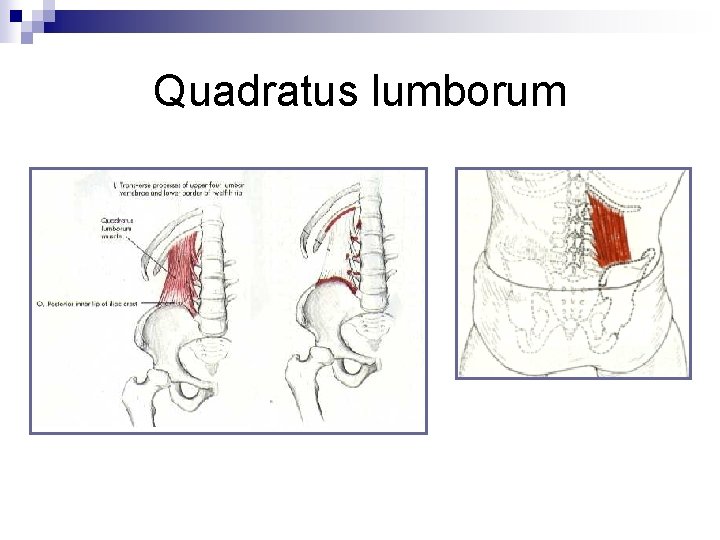
Quadratus lumborum O: Posterior lip of iliac crest n I: Lower border of 12 th rib and transverse process of L 1 -4 n Actions: n ¨ Half - Lumbar lateral flexion ¨ Whole - Stabilization
Quadratus lumborum
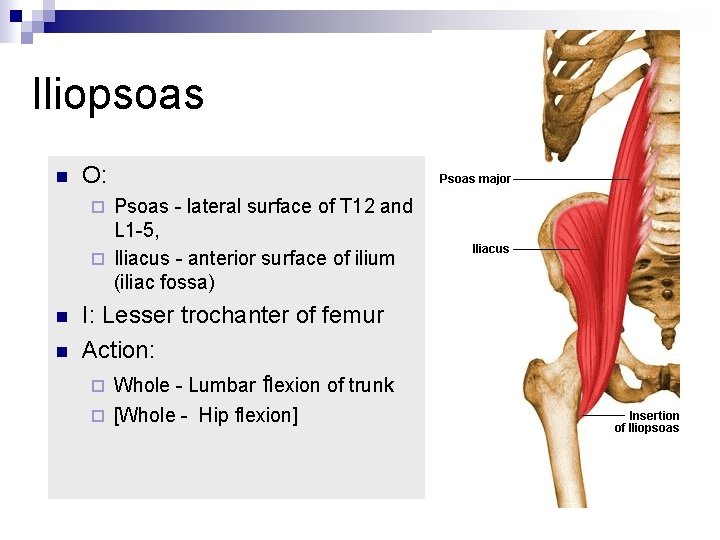
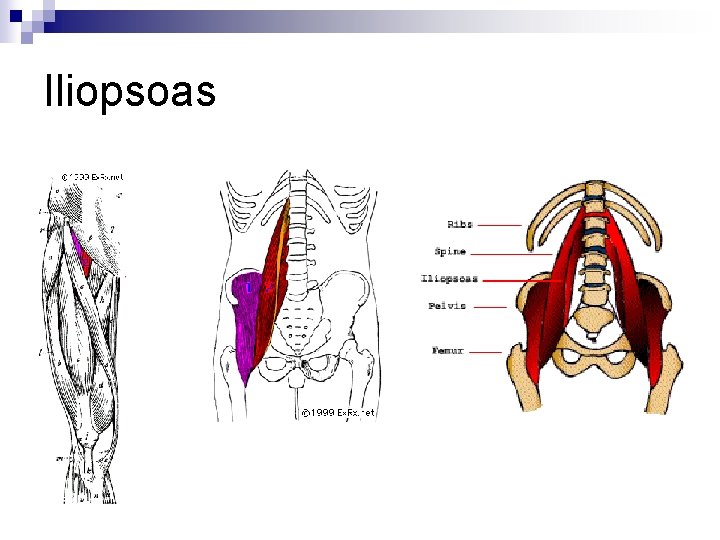
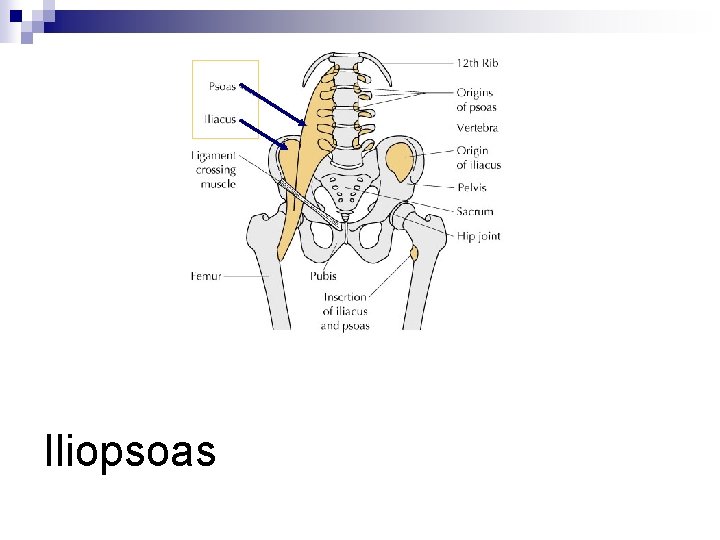
Iliopsoas n O: Psoas - lateral surface of T 12 and L 1 -5, ¨ Iliacus - anterior surface of ilium (iliac fossa) ¨ n n I: Lesser trochanter of femur Action: ¨ Whole - Lumbar flexion of trunk ¨ [Whole - Hip flexion]
Iliopsoas
Iliopsoas
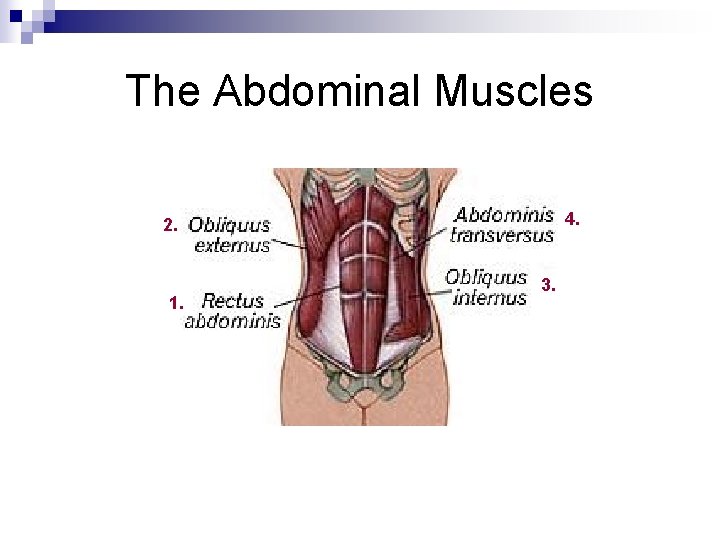
The Abdominal Muscles 4. 2. 1. 3.
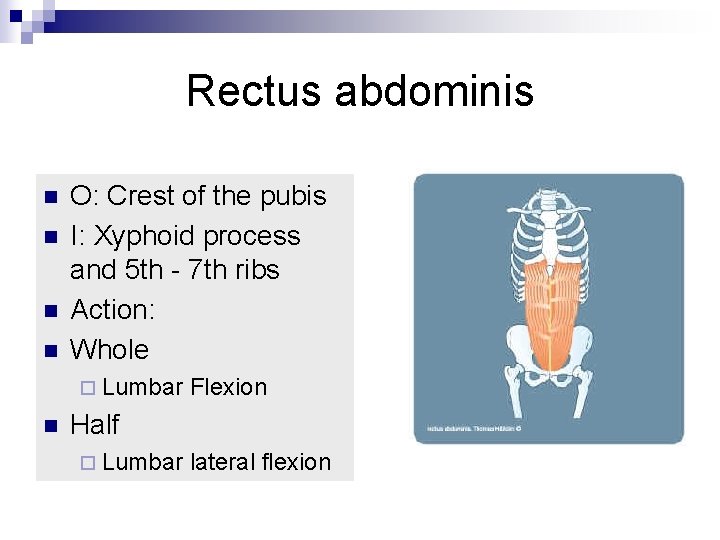
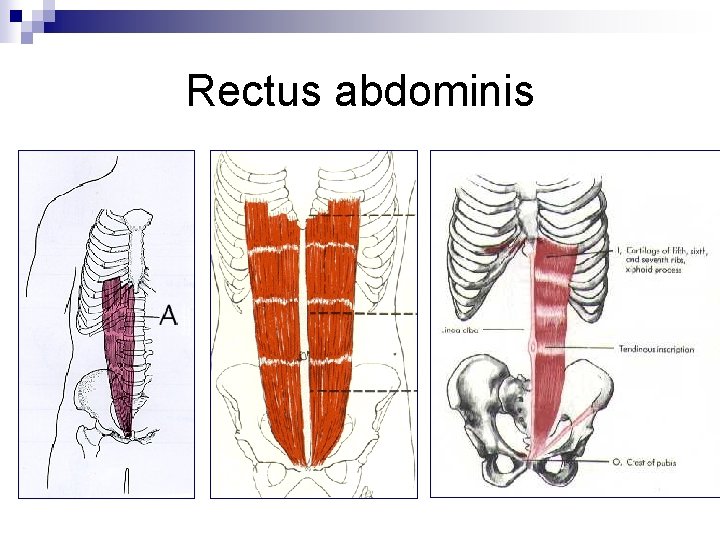
Rectus abdominis n n O: Crest of the pubis I: Xyphoid process and 5 th - 7 th ribs Action: Whole ¨ Lumbar n Flexion Half ¨ Lumbar lateral flexion
Rectus abdominis
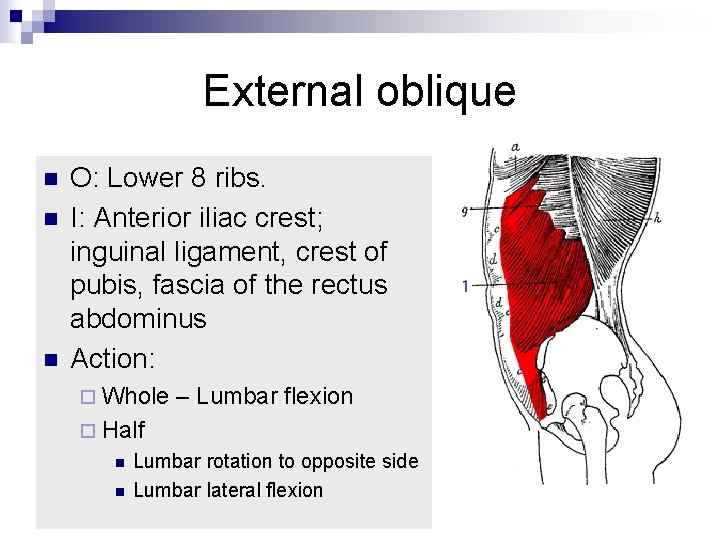
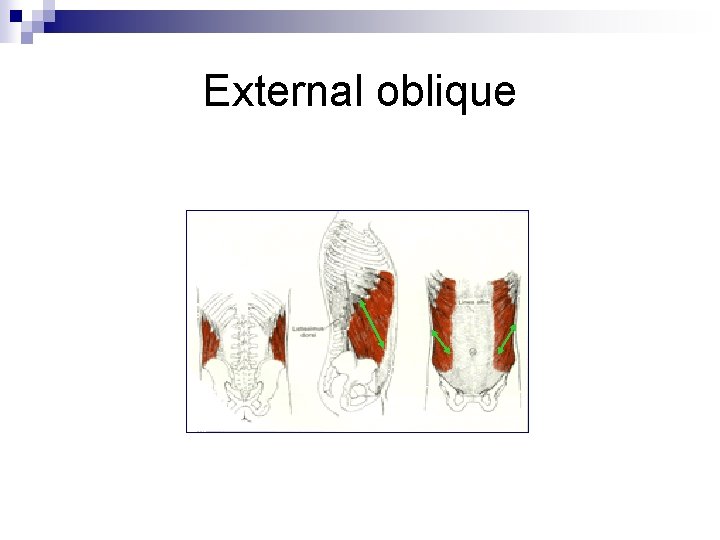
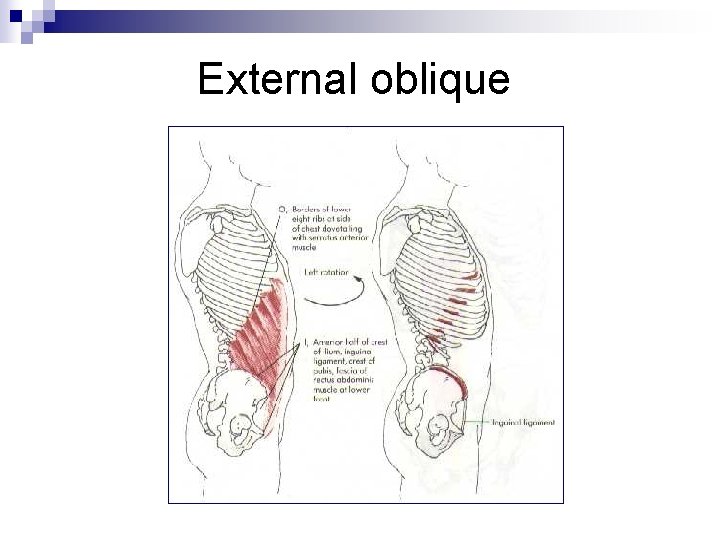
External oblique n n n O: Lower 8 ribs. I: Anterior iliac crest; inguinal ligament, crest of pubis, fascia of the rectus abdominus Action: ¨ Whole – Lumbar flexion ¨ Half n n Lumbar rotation to opposite side Lumbar lateral flexion
External oblique
External oblique
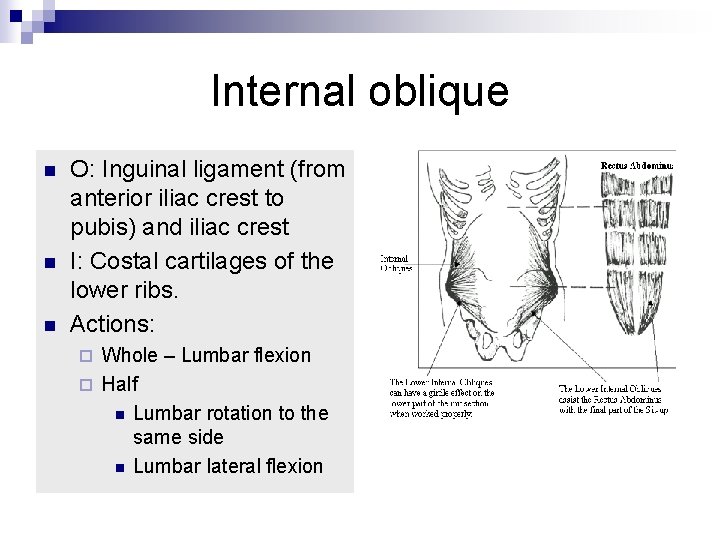
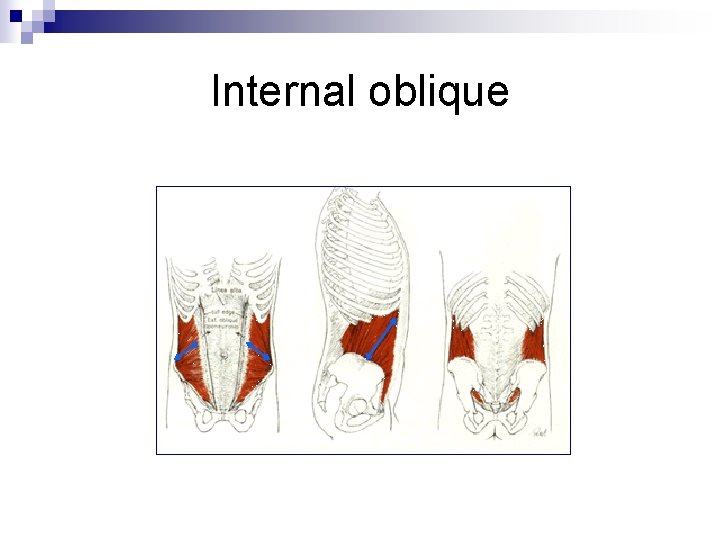
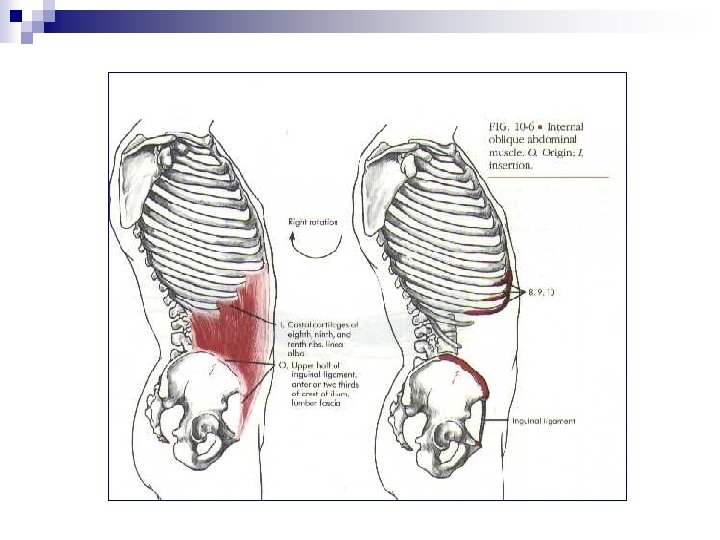
Internal oblique n n n O: Inguinal ligament (from anterior iliac crest to pubis) and iliac crest I: Costal cartilages of the lower ribs. Actions: Whole – Lumbar flexion ¨ Half n Lumbar rotation to the same side n Lumbar lateral flexion ¨
Internal oblique
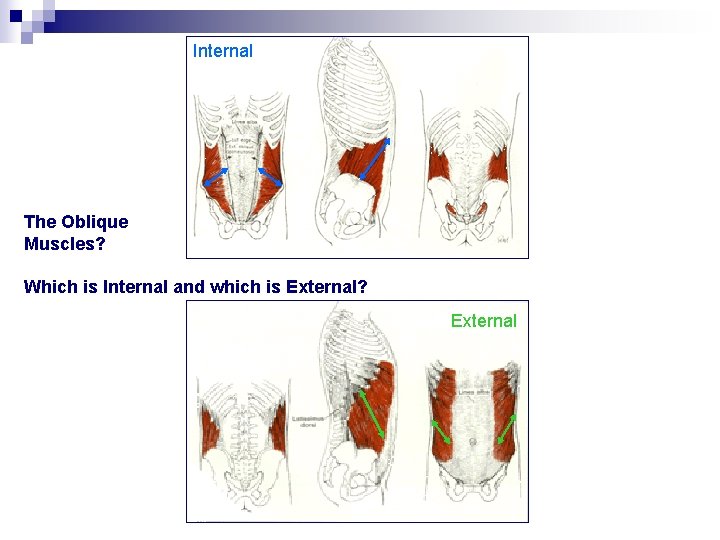
Internal The Oblique Muscles? Which is Internal and which is External? External
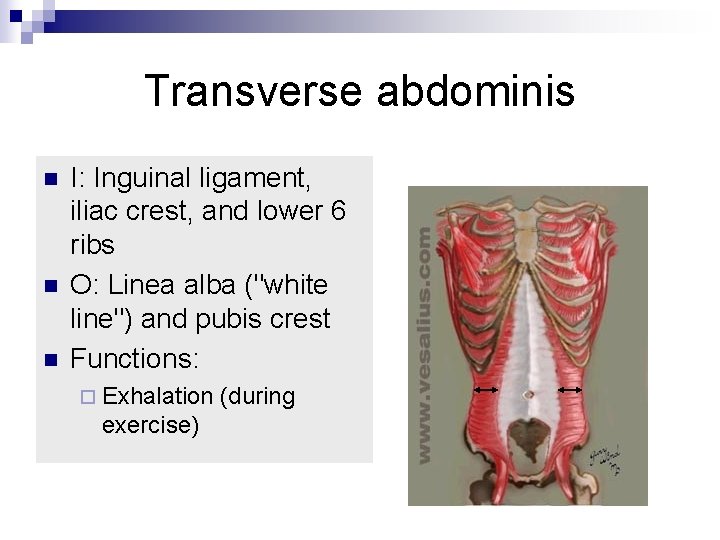
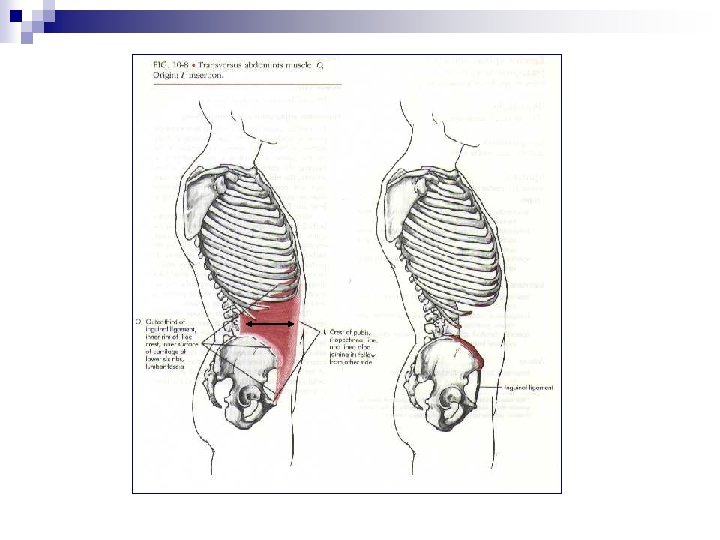
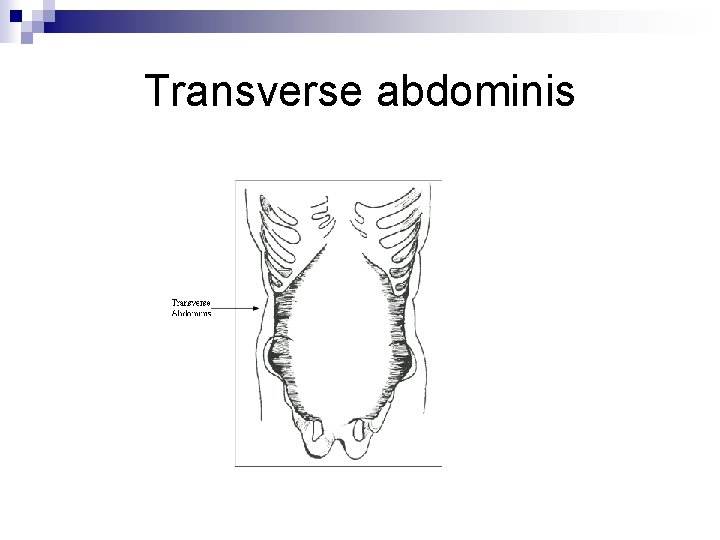
Transverse abdominis n n n I: Inguinal ligament, iliac crest, and lower 6 ribs O: Linea alba ("white line") and pubis crest Functions: ¨ Exhalation exercise) (during
Transverse abdominis
MUSCLES OF RESPIRATION Rib actions n Respiration n
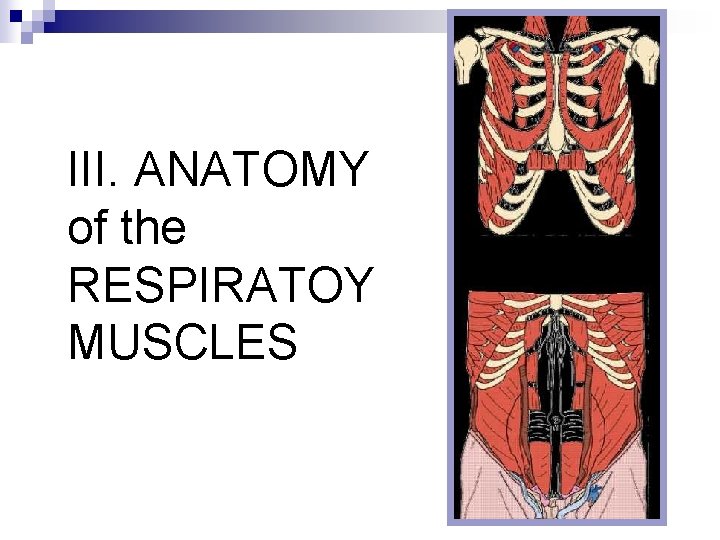
III. ANATOMY of the RESPIRATOY MUSCLES
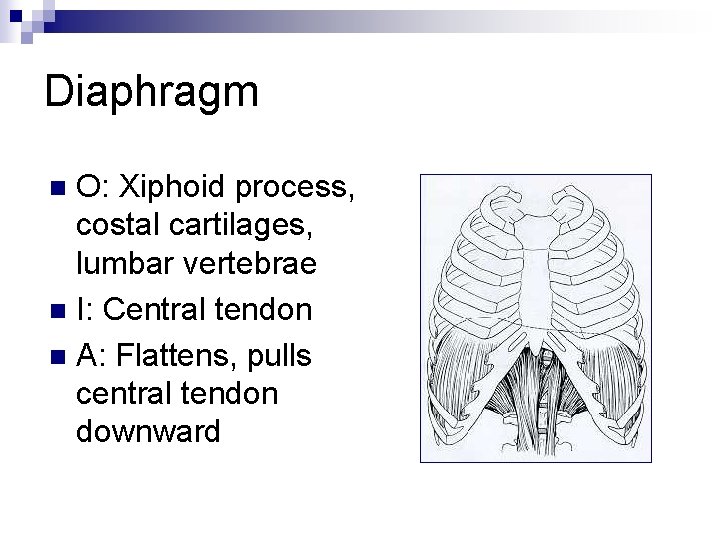
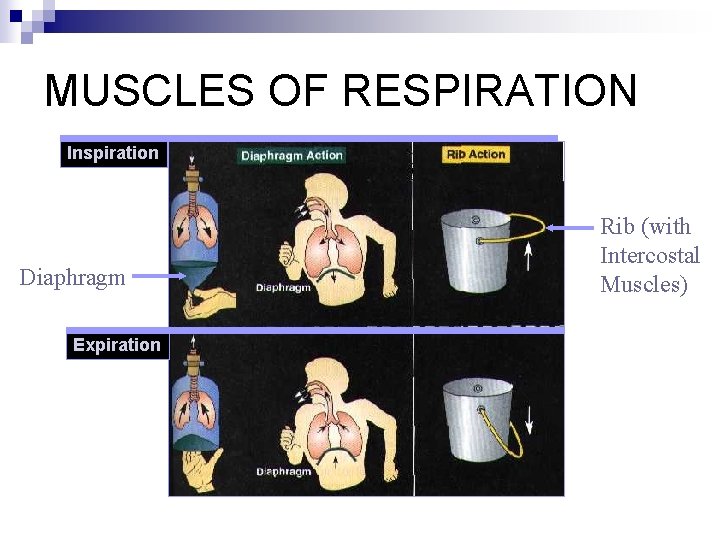
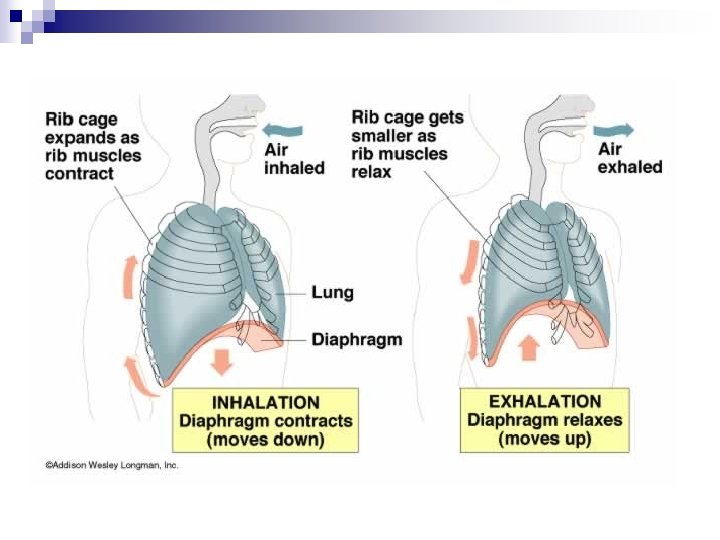
Diaphragm O: Xiphoid process, costal cartilages, lumbar vertebrae n I: Central tendon n A: Flattens, pulls central tendon downward n
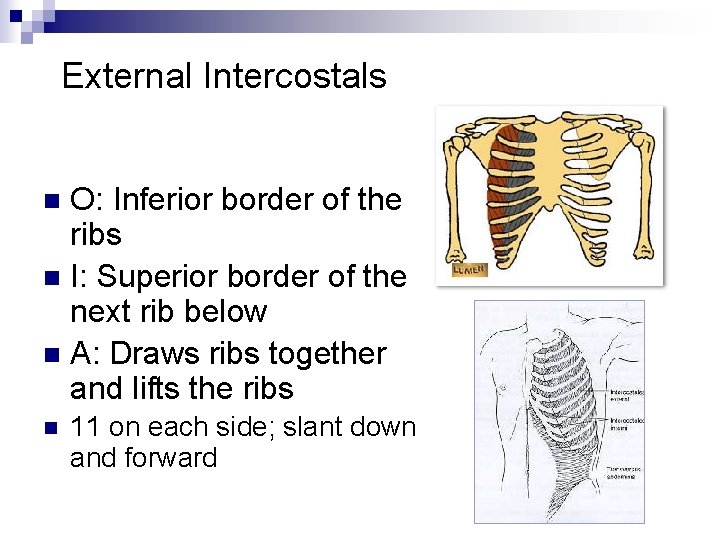
External Intercostals O: Inferior border of the ribs n I: Superior border of the next rib below n A: Draws ribs together and lifts the ribs n n 11 on each side; slant down and forward
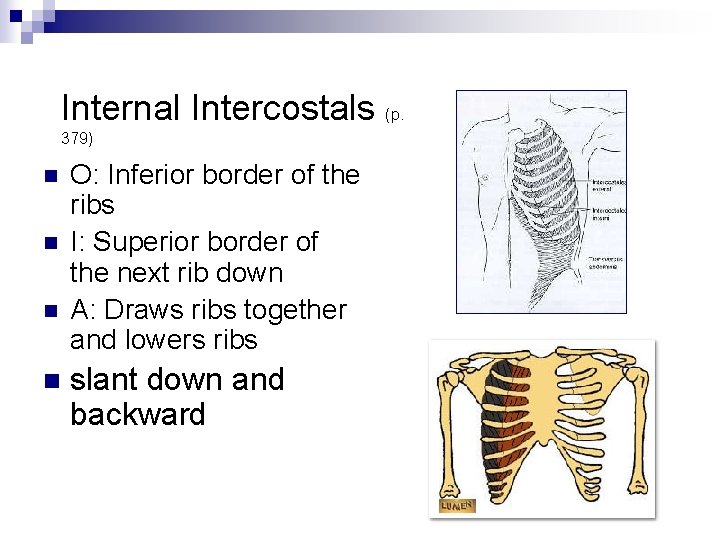
Internal Intercostals (p. 379) n n O: Inferior border of the ribs I: Superior border of the next rib down A: Draws ribs together and lowers ribs slant down and backward
MUSCLES OF RESPIRATION Inspiration Diaphragm Expiration Rib (with Intercostal Muscles)
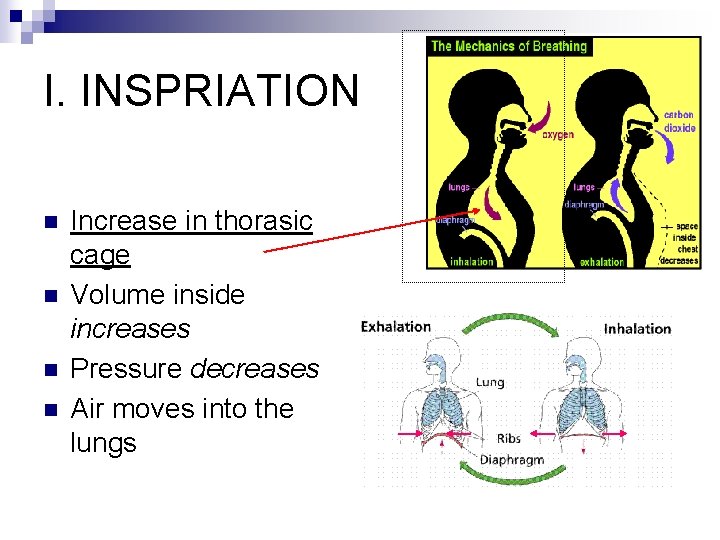
I. INSPRIATION n n Increase in thorasic cage Volume inside increases Pressure decreases Air moves into the lungs
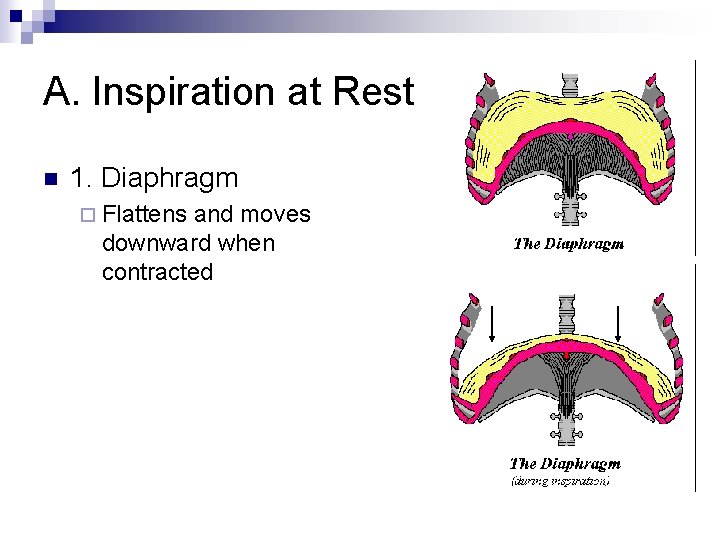
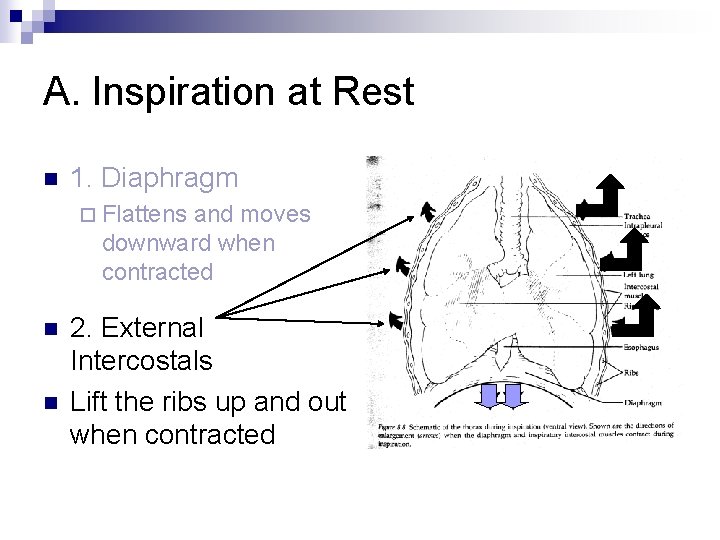
A. Inspiration at Rest n 1. Diaphragm ¨ Flattens and moves downward when contracted
A. Inspiration at Rest n 1. Diaphragm ¨ Flattens and moves downward when contracted n n 2. External Intercostals Lift the ribs up and out when contracted
B. Inspiration During Exercise 1. Scalenes – elevate upper ribs n 2. Sternoceidomastoid – elevate clavical and upper ribs n 3. External intercostal muscles n
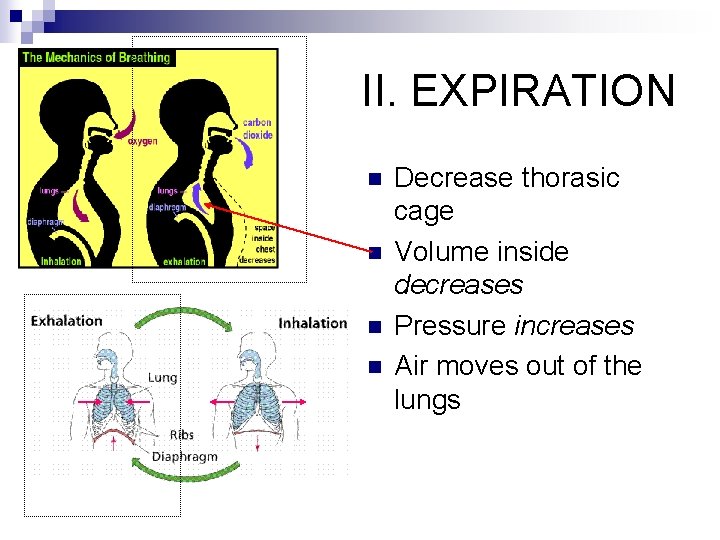
II. EXPIRATION n n Decrease thorasic cage Volume inside decreases Pressure increases Air moves out of the lungs
A. Expiration at Rest. No muscles are involved n Passive recoil action at rest will decrease thorasic cage n
B. Expiration During Exercise n n n Internal Intercostals Rectus Abdominus – help push the diaphragm upward. External obliques– help push the diaphragm upward. Internal obliques– help push the diaphragm upward. Transverse abdominus– help push the diaphragm upward.
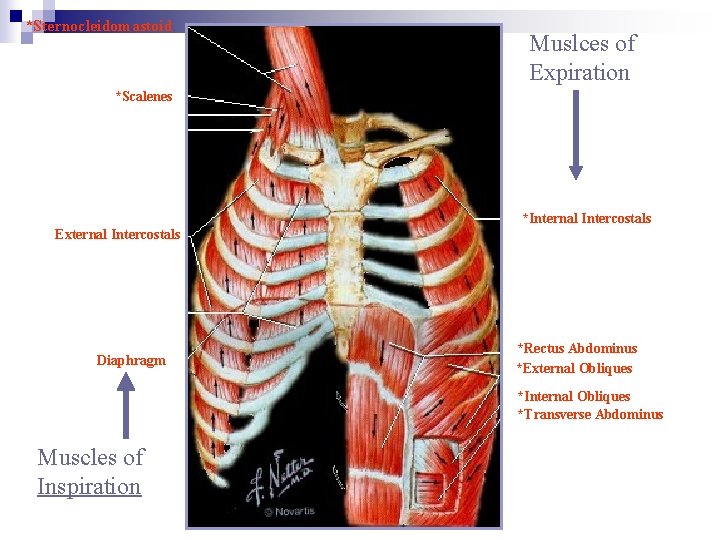
*Sternocleidomastoid Muslces of Expiration *Scalenes *Internal Intercostals External Intercostals Diaphragm *Rectus Abdominus *External Obliques *Internal Obliques *Transverse Abdominus Muscles of Inspiration
Note: These muscles need to trained with exercise as any other muscle does. n Early limitations (side aches and breathlessness) felt during exercise may involve the untrained state of these muscles. n