
Muscles of the lower extremities Dr Nabil khouri
Muscles of the lower extremities Dr. Nabil khouri MD, MSc, Ph. D
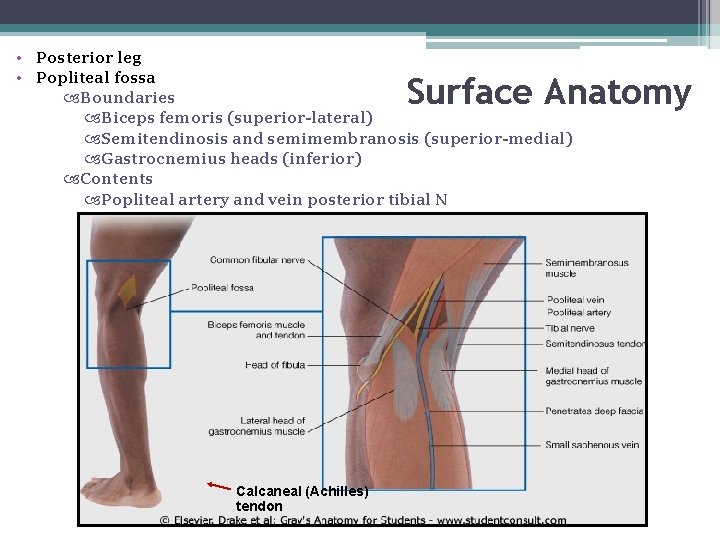
• Posterior leg • Popliteal fossa Boundaries Biceps femoris (superior-lateral) Semitendinosis and semimembranosis (superior-medial) Gastrocnemius heads (inferior) Contents Popliteal artery and vein posterior tibial N Surface Anatomy Calcaneal (Achilles) tendon
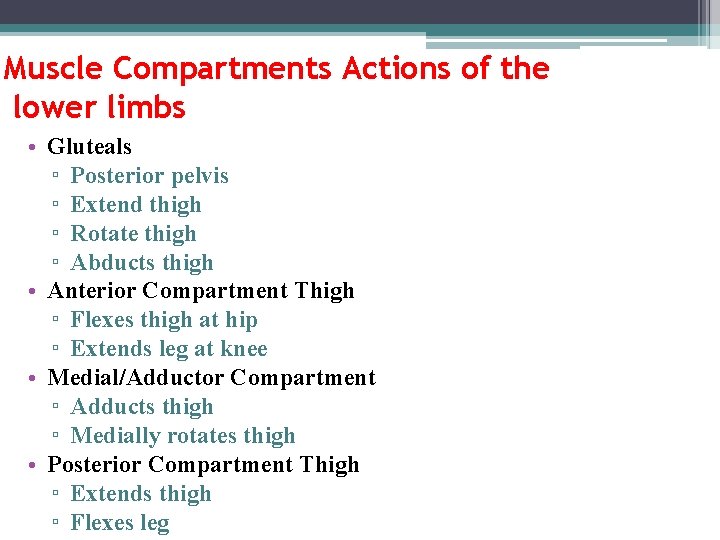
Muscle Compartments Actions of the lower limbs • Gluteals ▫ Posterior pelvis ▫ Extend thigh ▫ Rotate thigh ▫ Abducts thigh • Anterior Compartment Thigh ▫ Flexes thigh at hip ▫ Extends leg at knee • Medial/Adductor Compartment ▫ Adducts thigh ▫ Medially rotates thigh • Posterior Compartment Thigh ▫ Extends thigh ▫ Flexes leg
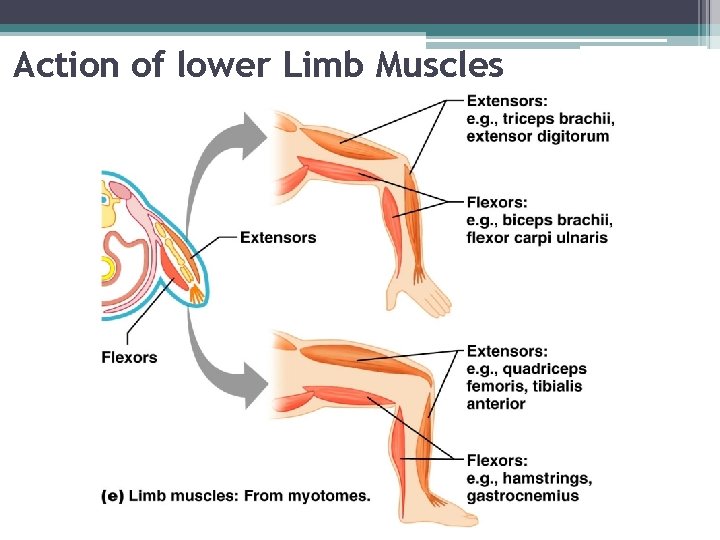
Action of lower Limb Muscles
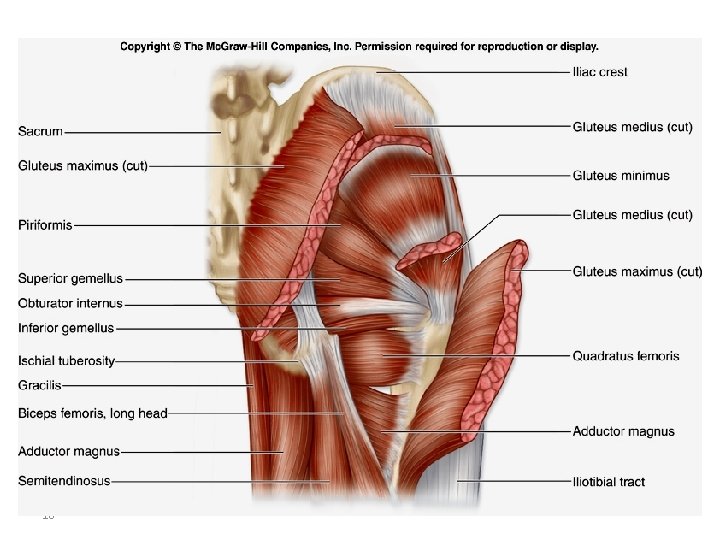
Muscles of the Hip The gluteal region • The gluteus maximus. – the largest and heaviest of the three gluteal muscles – one of the largest muscles in the body – is the chief extensor of the thigh – laterally rotates the thigh • Deep to the gluteus maximus is the gluteus medius. – a powerful abductor of the thigh – medially rotates the thigh – intramuscular injections are often given here • The smallest of the gluteal muscles is the gluteus minimus. – lies deep to the gluteus medius – works with the gluteus medius to abduct and medially rotate thigh
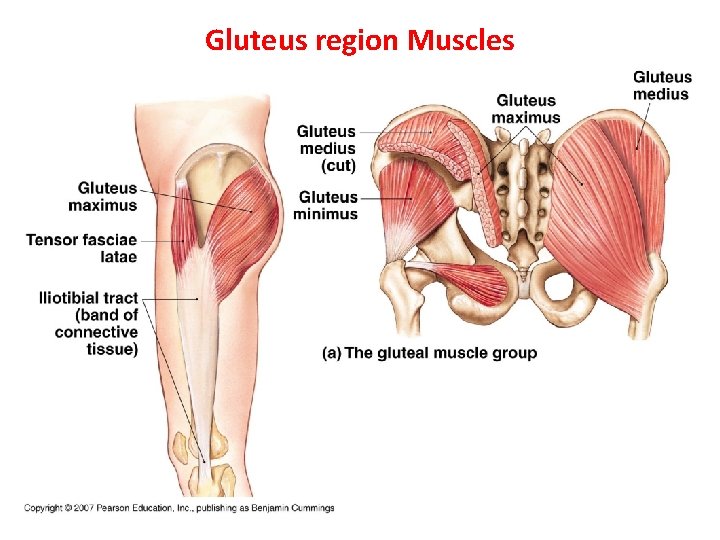
Gluteus region Muscles
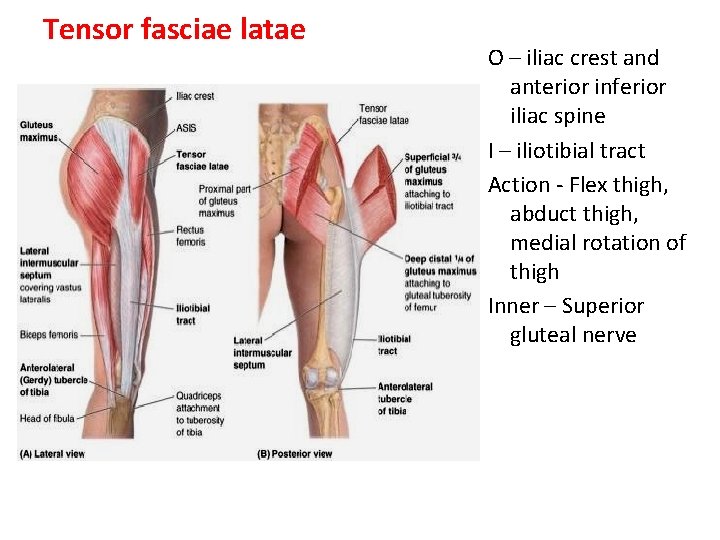
Tensor fasciae latae O – iliac crest and anterior inferior iliac spine I – iliotibial tract Action - Flex thigh, abduct thigh, medial rotation of thigh Inner – Superior gluteal nerve
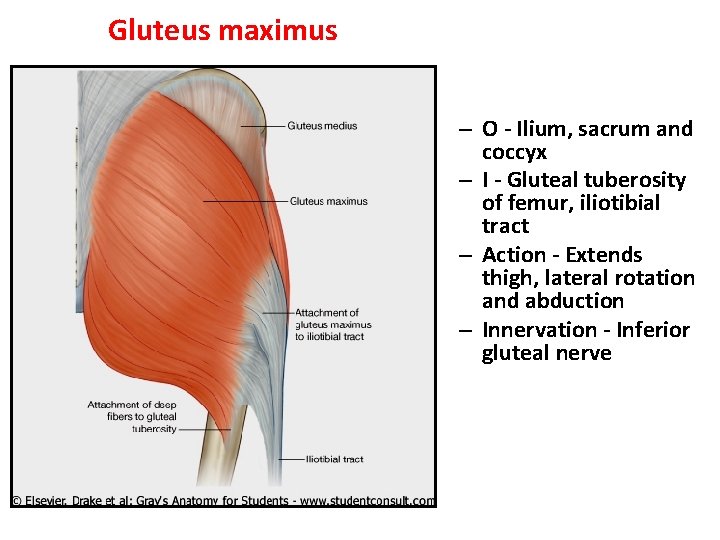
Gluteus maximus – O - Ilium, sacrum and coccyx – I - Gluteal tuberosity of femur, iliotibial tract – Action - Extends thigh, lateral rotation and abduction – Innervation - Inferior gluteal nerve
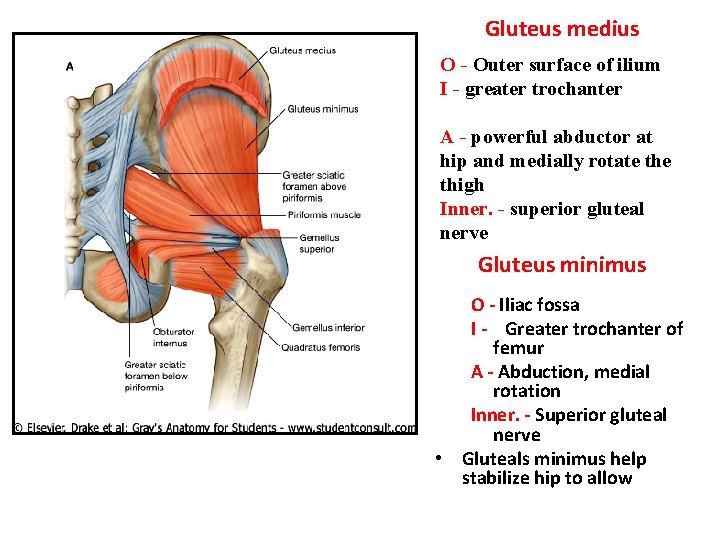
Gluteus medius O - Outer surface of ilium I - greater trochanter A - powerful abductor at hip and medially rotate thigh Inner. - superior gluteal nerve Gluteus minimus O - Iliac fossa I - Greater trochanter of femur A - Abduction, medial rotation Inner. - Superior gluteal nerve • Gluteals minimus help stabilize hip to allow
10
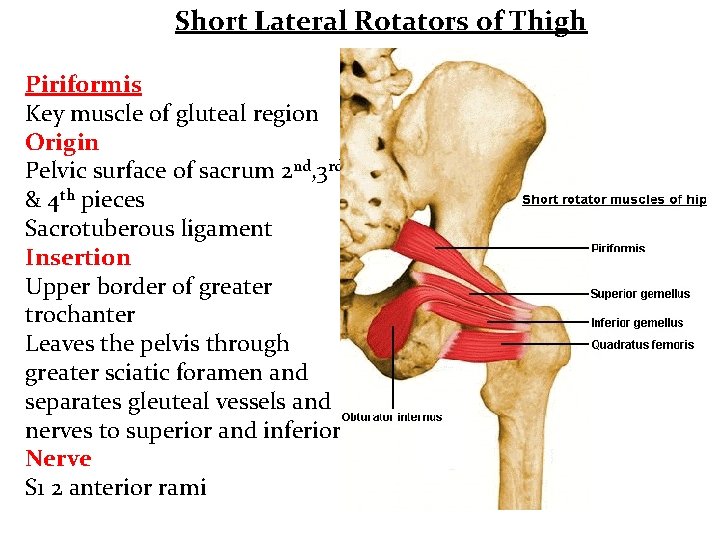
Short Lateral Rotators of Thigh Piriformis Key muscle of gluteal region Origin Pelvic surface of sacrum 2 nd, 3 rd & 4 th pieces Sacrotuberous ligament Insertion Upper border of greater trochanter Leaves the pelvis through greater sciatic foramen and separates gleuteal vessels and nerves to superior and inferior Nerve S 1 2 anterior rami
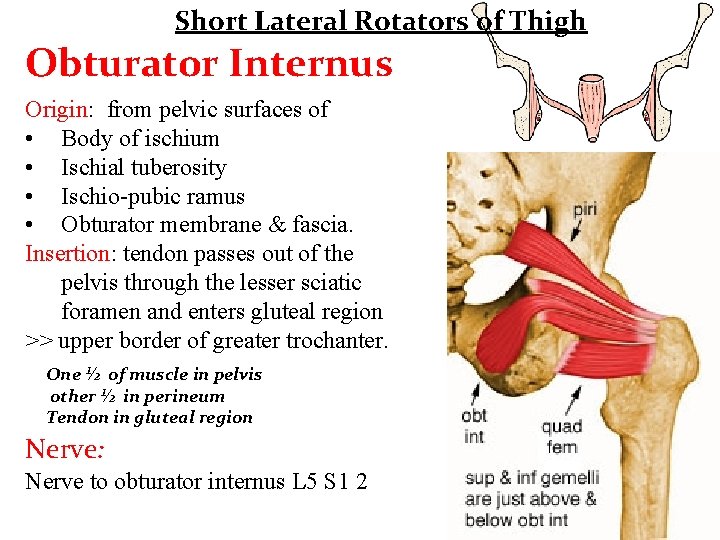
Short Lateral Rotators of Thigh Obturator Internus Origin: from pelvic surfaces of • Body of ischium • Ischial tuberosity • Ischio-pubic ramus • Obturator membrane & fascia. Insertion: tendon passes out of the pelvis through the lesser sciatic foramen and enters gluteal region >> upper border of greater trochanter. One ½ of muscle in pelvis other ½ in perineum Tendon in gluteal region Nerve: Nerve to obturator internus L 5 S 1 2
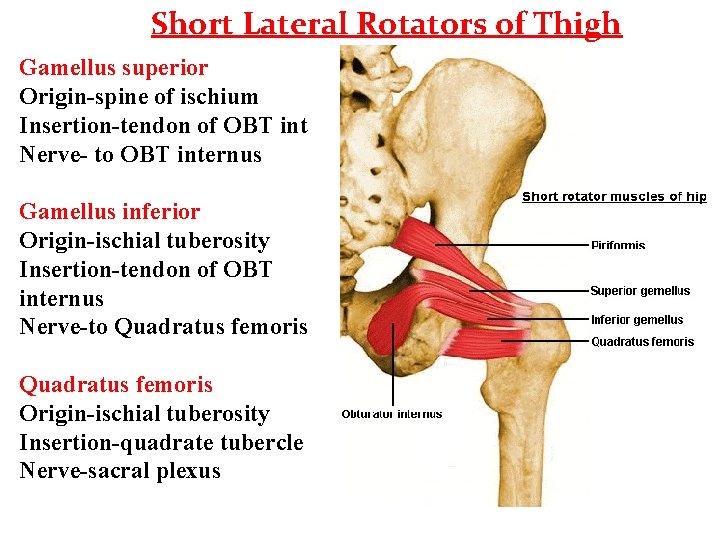
Short Lateral Rotators of Thigh Gamellus superior Origin-spine of ischium Insertion-tendon of OBT int Nerve- to OBT internus Gamellus inferior Origin-ischial tuberosity Insertion-tendon of OBT internus Nerve-to Quadratus femoris Origin-ischial tuberosity Insertion-quadrate tubercle Nerve-sacral plexus
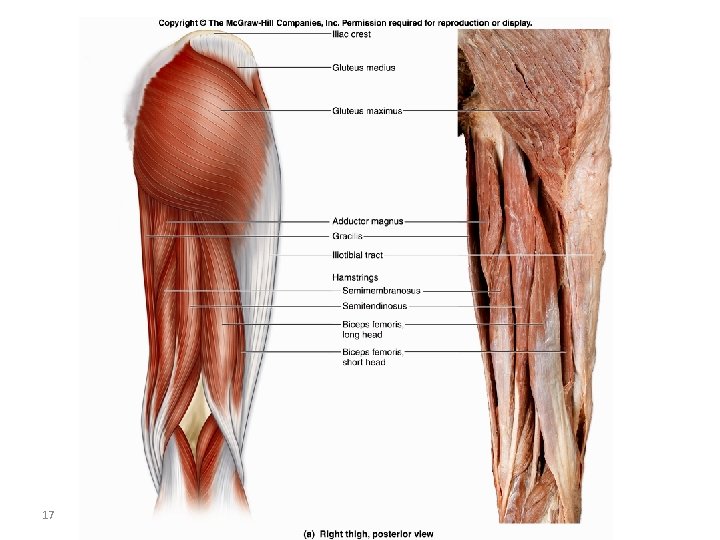
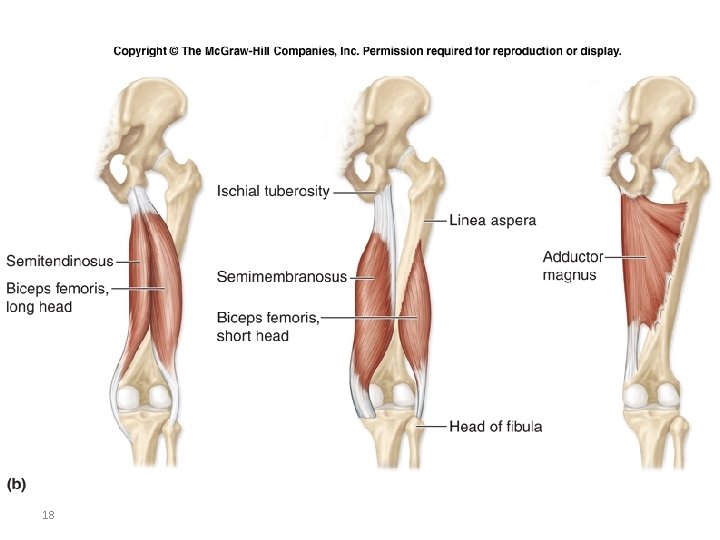
Muscles of the Hip and Thigh • The posterior thigh contains a group of muscles that are collectively referred to as the hamstrings. – biceps femoris – semimembranosus – semitendinosus • Share a common origin on the ischial tuberosity of the os coxae. • Insert on the leg. • Move both the thigh and the knee. • Primary thigh movement is extension. 12 -15
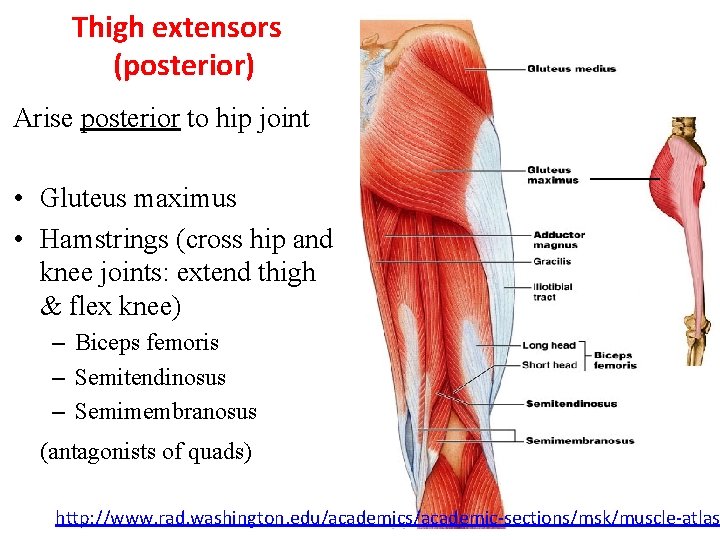
Thigh extensors (posterior) Arise posterior to hip joint _______ • Gluteus maximus • Hamstrings (cross hip and knee joints: extend thigh & flex knee) – Biceps femoris – Semitendinosus – Semimembranosus (antagonists of quads) http: //www. rad. washington. edu/academics/academic-sections/msk/muscle-atlas
17
18
Muscles of the Hip and Thigh • Multiple muscles insert on the anterior thigh and flex the coxal joint. – the psoas major and the iliacus have different origins, but they share the common insertion at the lesser trochanter of the femur – they merge and insert on the femur as the iliopsoas – work synergistically to flex and laterally rotate thigh – the sartorius crosses over the anterior thigh and helps flex the thigh
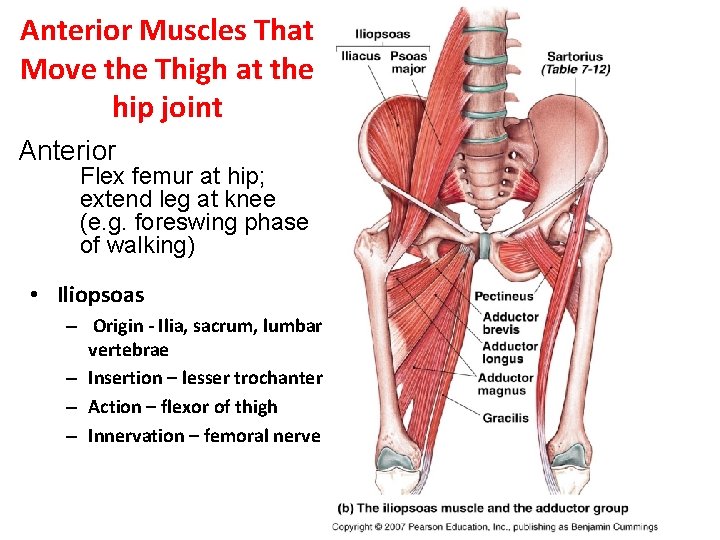
Anterior Muscles That Move the Thigh at the hip joint Anterior Flex femur at hip; extend leg at knee (e. g. foreswing phase of walking) • Iliopsoas – Origin - Ilia, sacrum, lumbar vertebrae – Insertion – lesser trochanter – Action – flexor of thigh – Innervation – femoral nerve
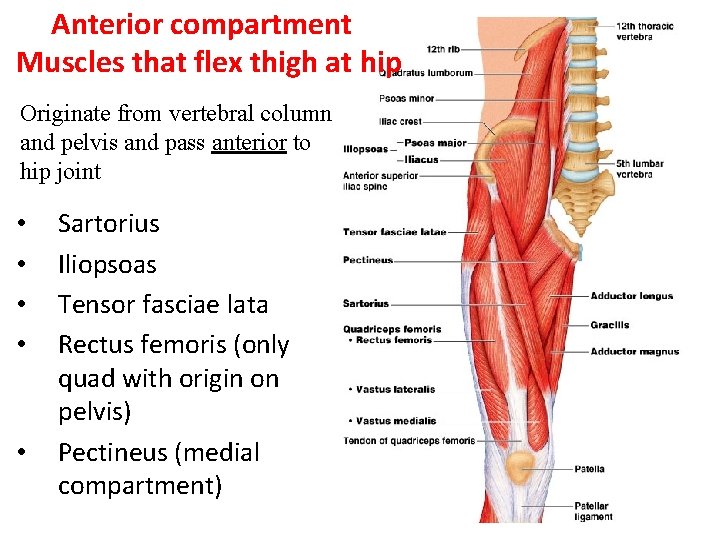
Anterior compartment Muscles that flex thigh at hip Originate from vertebral column and pelvis and pass anterior to hip joint • • • Sartorius Iliopsoas Tensor fasciae lata Rectus femoris (only quad with origin on pelvis) Pectineus (medial compartment)
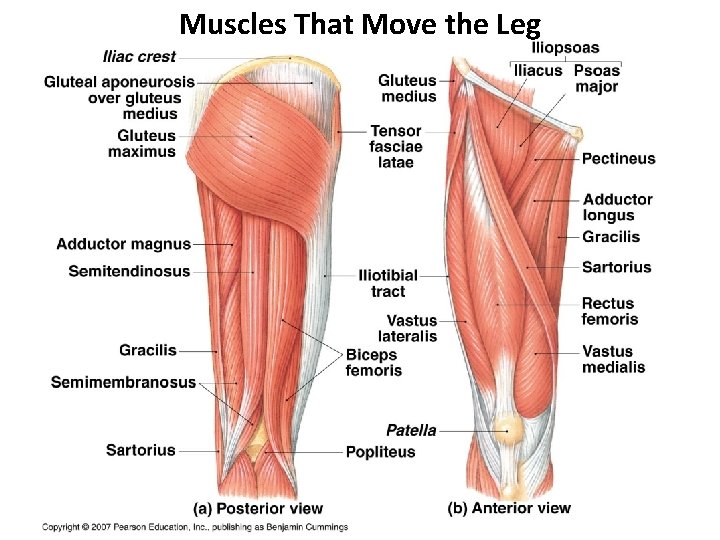
Muscles That Move the Leg
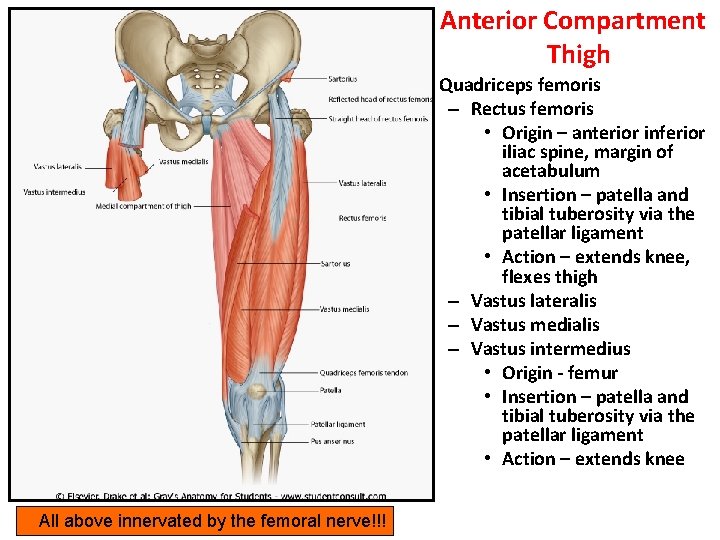
Anterior Compartment Thigh • Quadriceps femoris – Rectus femoris • Origin – anterior inferior iliac spine, margin of acetabulum • Insertion – patella and tibial tuberosity via the patellar ligament • Action – extends knee, flexes thigh – Vastus lateralis – Vastus medialis – Vastus intermedius • Origin - femur • Insertion – patella and tibial tuberosity via the patellar ligament • Action – extends knee All above innervated by the femoral nerve!!!
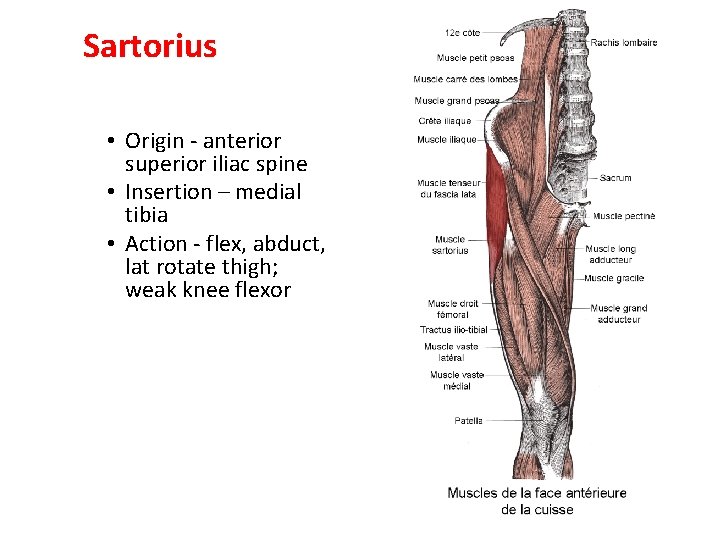
Sartorius • Origin - anterior superior iliac spine • Insertion – medial tibia • Action - flex, abduct, lat rotate thigh; weak knee flexor
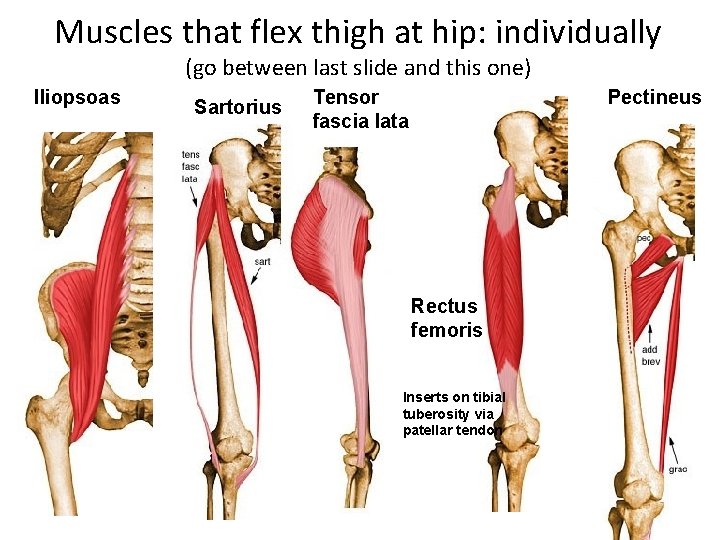
Muscles that flex thigh at hip: individually (go between last slide and this one) Iliopsoas Sartorius Tensor fascia lata Pectineus Rectus femoris Inserts on tibial tuberosity via patellar tendon
Muscles of the Hip and Thigh • Five muscles are located in the medial compartment of the thigh. • Adduct the thigh and perform additional functions. • Adductor longus, adductor brevis, gracilis, and pectineus also flex the thigh. • Adductor magnus extends and laterally rotates the thigh. 12 -26
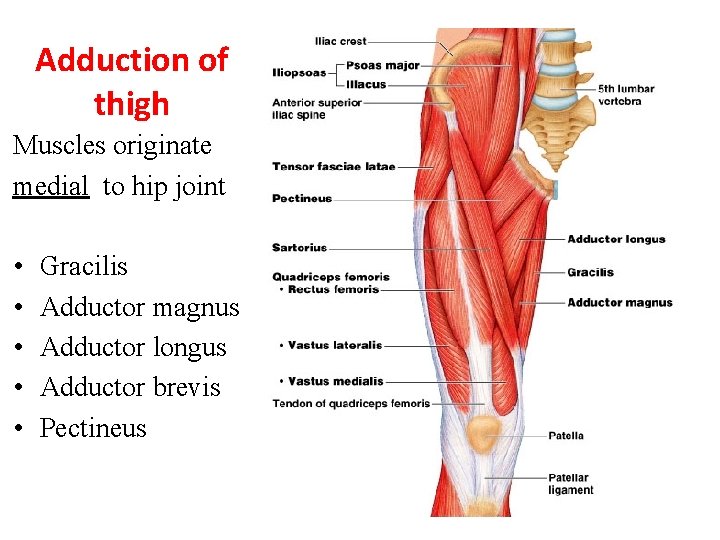
Adduction of thigh Muscles originate medial to hip joint • • • Gracilis Adductor magnus Adductor longus Adductor brevis Pectineus
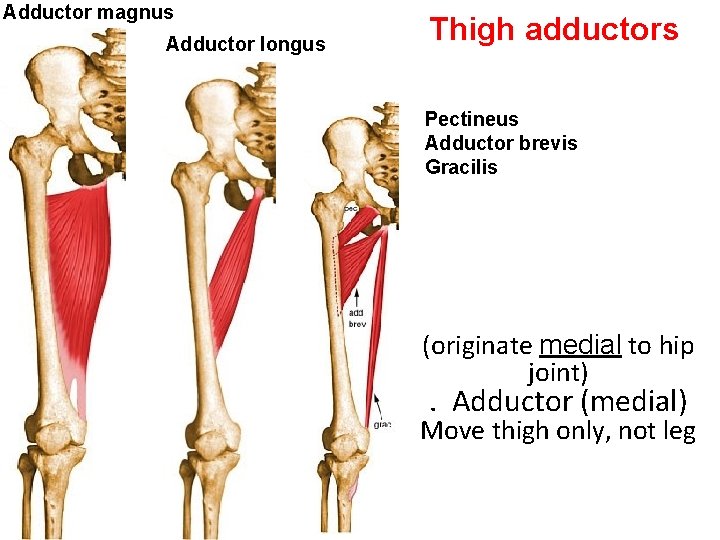
Adductor magnus Adductor longus Thigh adductors Pectineus Adductor brevis Gracilis (originate medial to hip joint) . Adductor (medial) Move thigh only, not leg
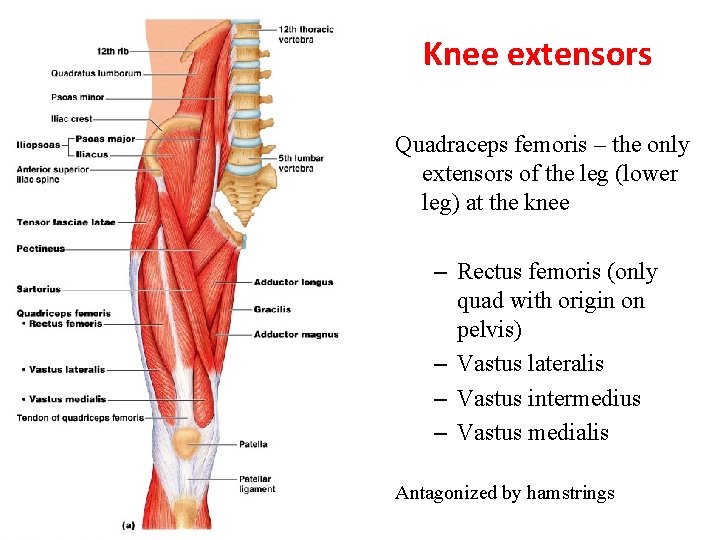
Knee extensors Quadraceps femoris – the only extensors of the leg (lower leg) at the knee – Rectus femoris (only quad with origin on pelvis) – Vastus lateralis – Vastus intermedius – Vastus medialis Antagonized by hamstrings
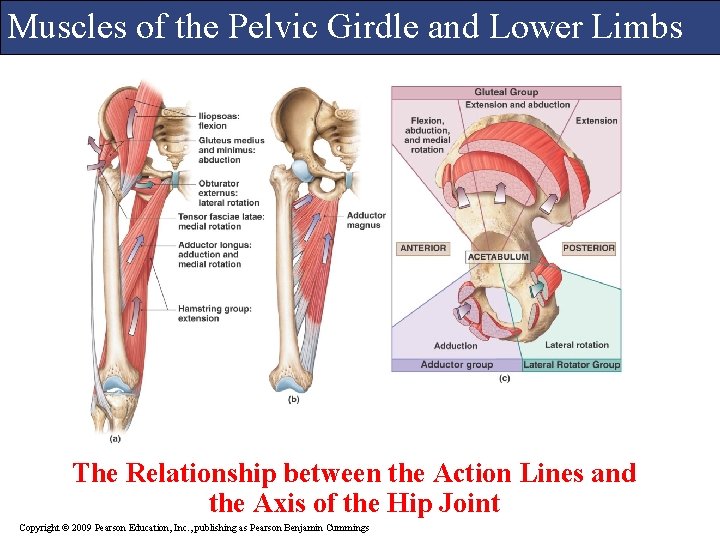
Muscles of the Pelvic Girdle and Lower Limbs The Relationship between the Action Lines and the Axis of the Hip Joint Copyright © 2009 Pearson Education, Inc. , publishing as Pearson Benjamin Cummings
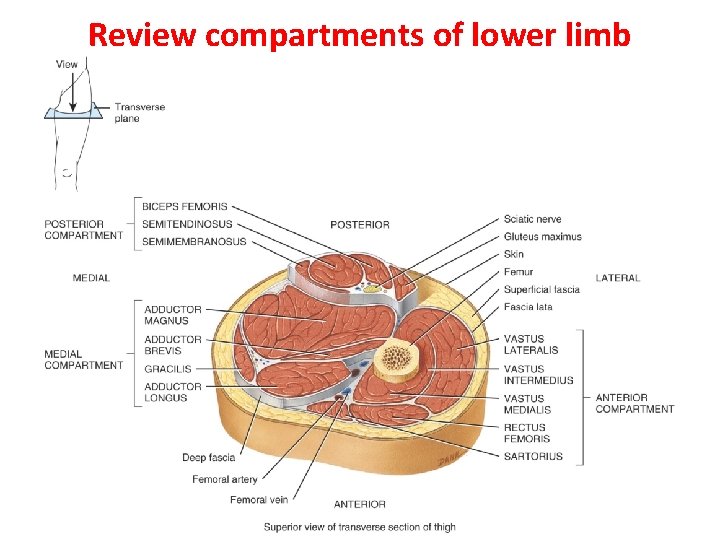
Review compartments of lower limb
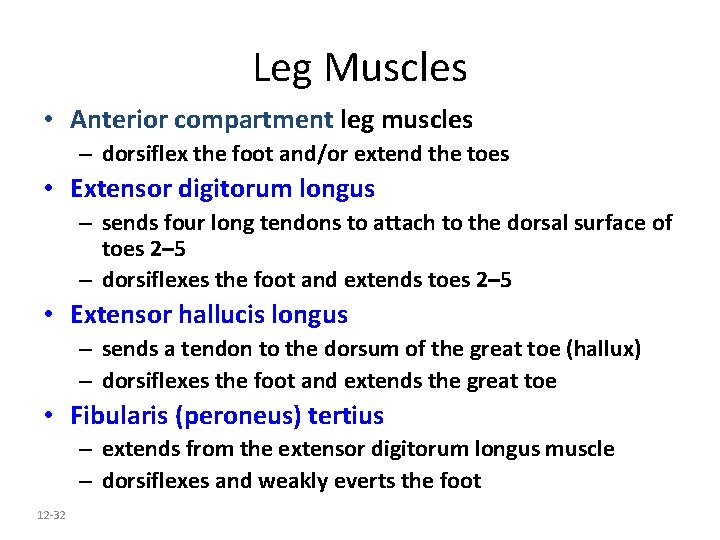
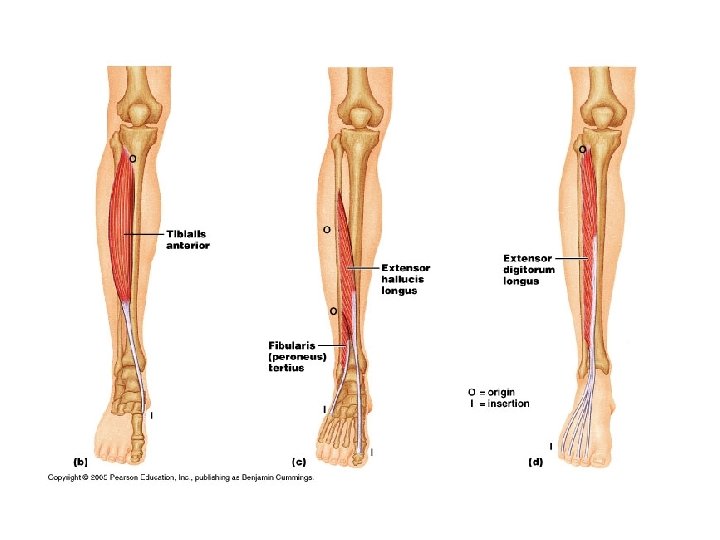
Leg Muscles • Anterior compartment leg muscles – dorsiflex the foot and/or extend the toes • Extensor digitorum longus – sends four long tendons to attach to the dorsal surface of toes 2– 5 – dorsiflexes the foot and extends toes 2– 5 • Extensor hallucis longus – sends a tendon to the dorsum of the great toe (hallux) – dorsiflexes the foot and extends the great toe • Fibularis (peroneus) tertius – extends from the extensor digitorum longus muscle – dorsiflexes and weakly everts the foot 12 -32
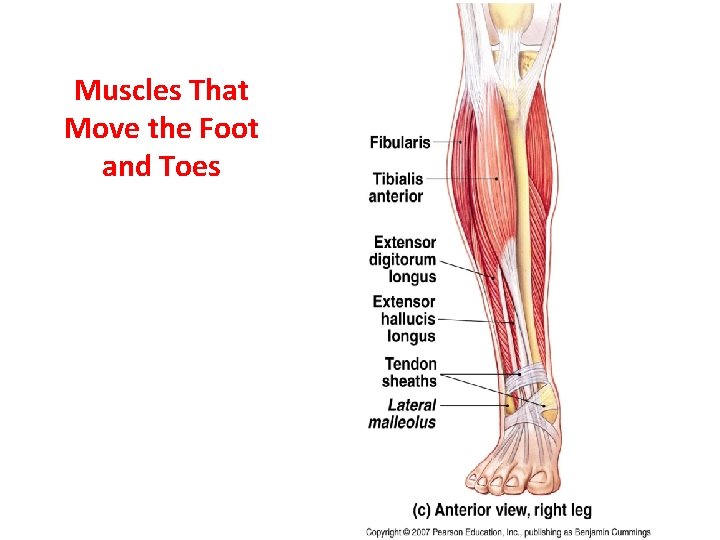
Muscles That Move the Foot and Toes
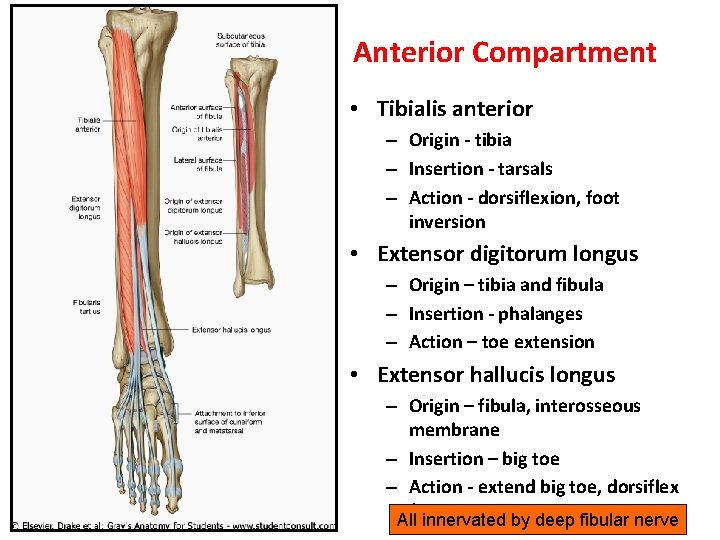
Anterior Compartment • Tibialis anterior – Origin - tibia – Insertion - tarsals – Action - dorsiflexion, foot inversion • Extensor digitorum longus – Origin – tibia and fibula – Insertion - phalanges – Action – toe extension • Extensor hallucis longus – Origin – fibula, interosseous membrane – Insertion – big toe – Action - extend big toe, dorsiflex Allfoot innervated by deep fibular nerve
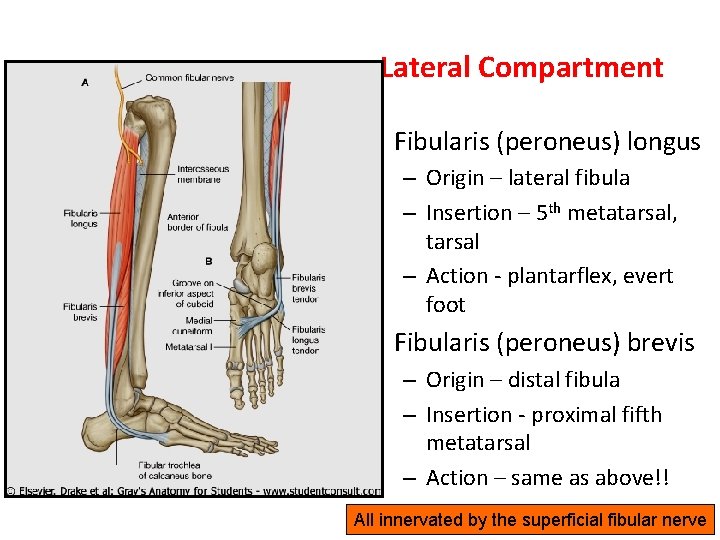
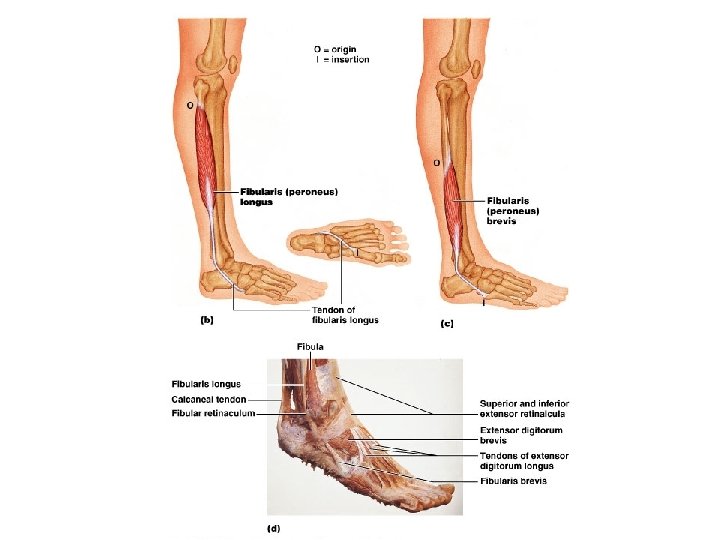
Lateral Compartment • Fibularis (peroneus) longus – Origin – lateral fibula – Insertion – 5 th metatarsal, tarsal – Action - plantarflex, evert foot • Fibularis (peroneus) brevis – Origin – distal fibula – Insertion - proximal fifth metatarsal – Action – same as above!! All innervated by the superficial fibular nerve
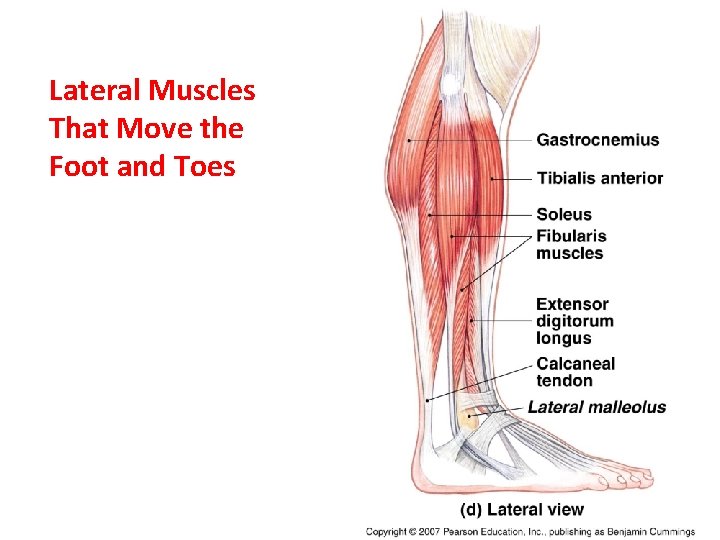
Lateral Muscles That Move the Foot and Toes
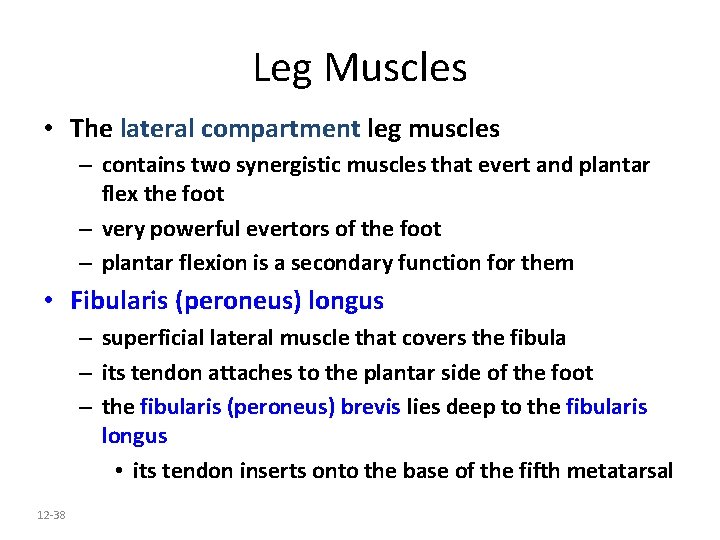
Leg Muscles • The lateral compartment leg muscles – contains two synergistic muscles that evert and plantar flex the foot – very powerful evertors of the foot – plantar flexion is a secondary function for them • Fibularis (peroneus) longus – superficial lateral muscle that covers the fibula – its tendon attaches to the plantar side of the foot – the fibularis (peroneus) brevis lies deep to the fibularis longus • its tendon inserts onto the base of the fifth metatarsal 12 -38
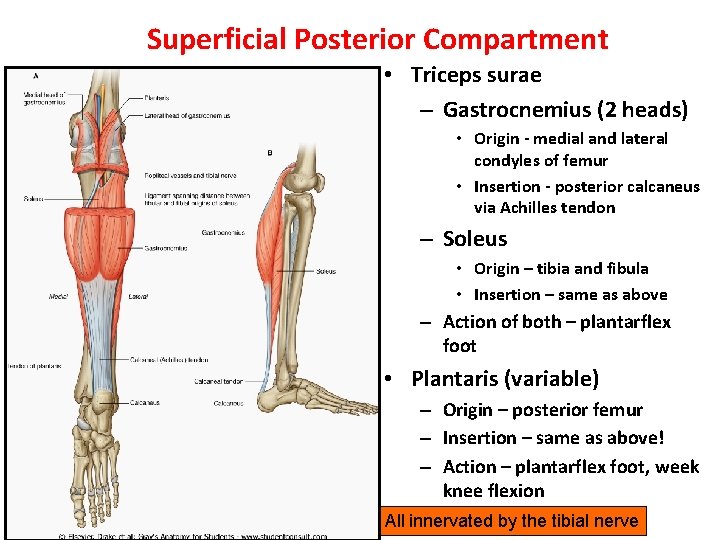
Superficial Posterior Compartment • Triceps surae – Gastrocnemius (2 heads) • Origin - medial and lateral condyles of femur • Insertion - posterior calcaneus via Achilles tendon – Soleus • Origin – tibia and fibula • Insertion – same as above – Action of both – plantarflex foot • Plantaris (variable) – Origin – posterior femur – Insertion – same as above! – Action – plantarflex foot, week knee flexion All innervated by the tibial nerve
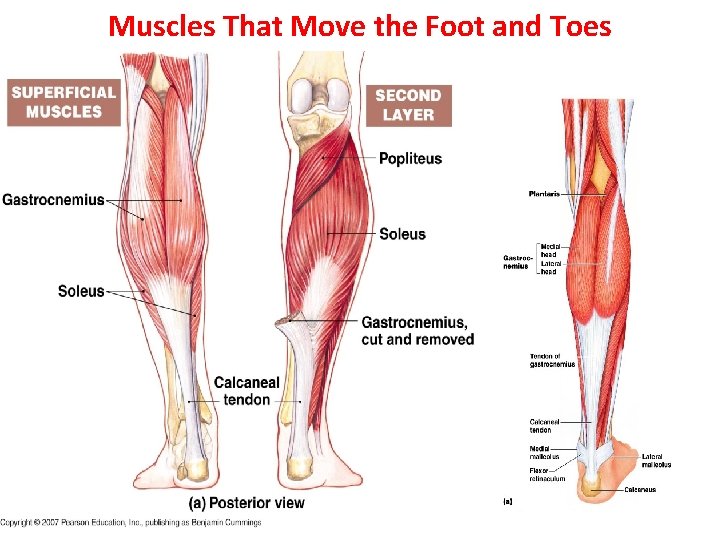
Muscles That Move the Foot and Toes
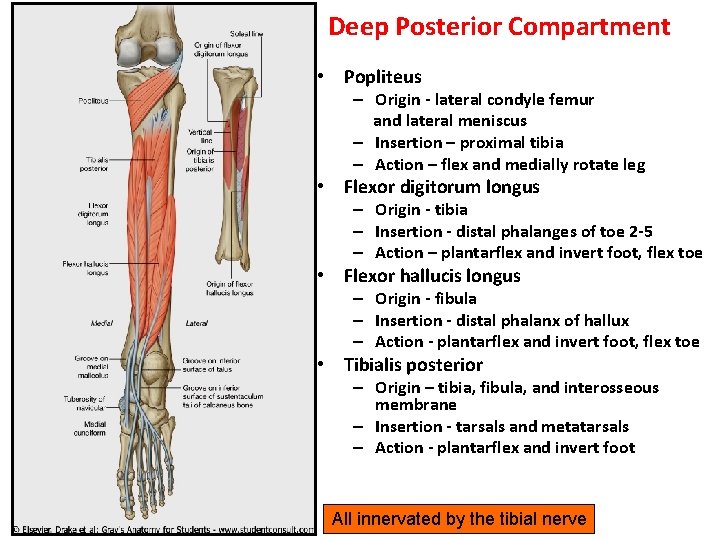
Deep Posterior Compartment • Popliteus – Origin - lateral condyle femur and lateral meniscus – Insertion – proximal tibia – Action – flex and medially rotate leg • Flexor digitorum longus – Origin - tibia – Insertion - distal phalanges of toe 2 -5 – Action – plantarflex and invert foot, flex toe • Flexor hallucis longus – Origin - fibula – Insertion - distal phalanx of hallux – Action - plantarflex and invert foot, flex toe • Tibialis posterior – Origin – tibia, fibula, and interosseous membrane – Insertion - tarsals and metatarsals – Action - plantarflex and invert foot All innervated by the tibial nerve
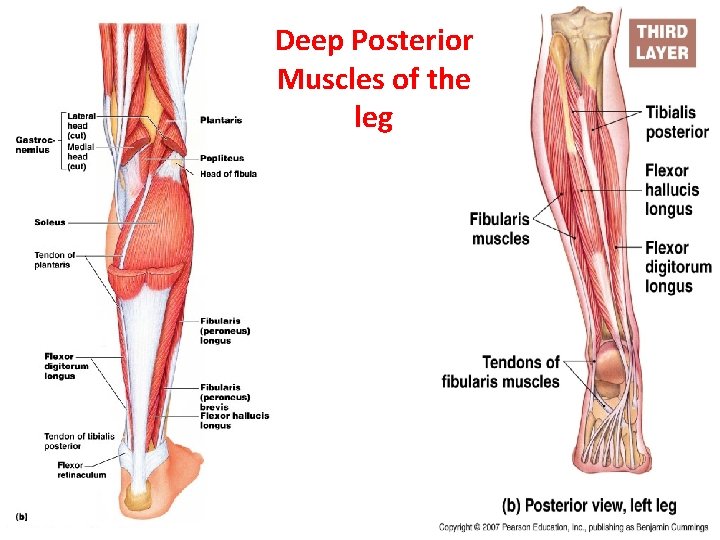
Deep Posterior Muscles of the leg
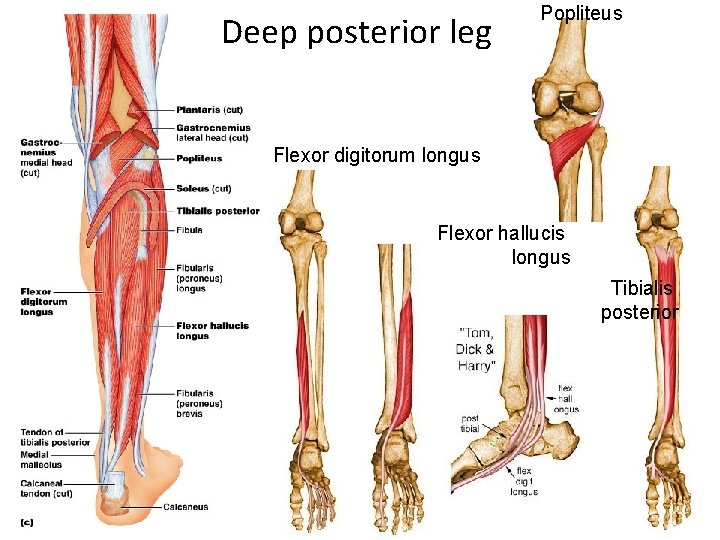
Deep posterior leg Popliteus Flexor digitorum longus Flexor hallucis longus Tibialis posterior
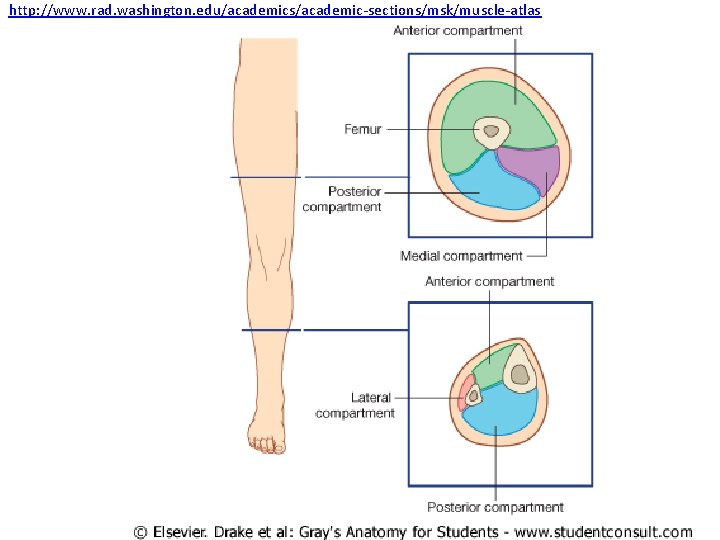
http: //www. rad. washington. edu/academics/academic-sections/msk/muscle-atlas
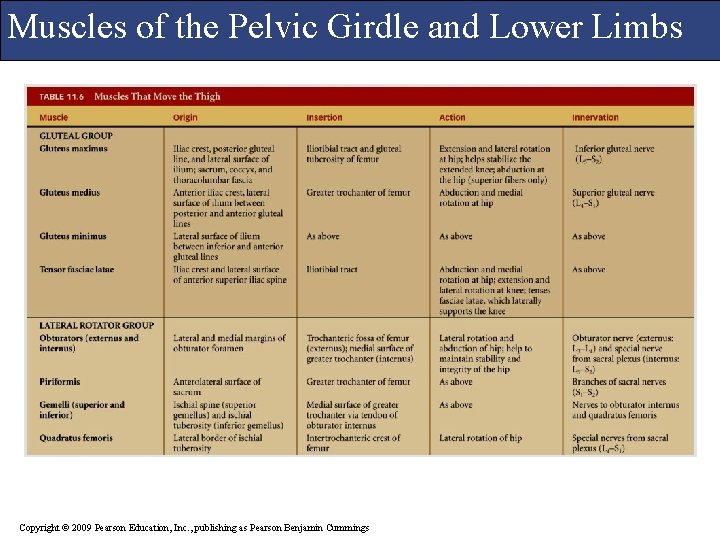
Muscles of the Pelvic Girdle and Lower Limbs Copyright © 2009 Pearson Education, Inc. , publishing as Pearson Benjamin Cummings
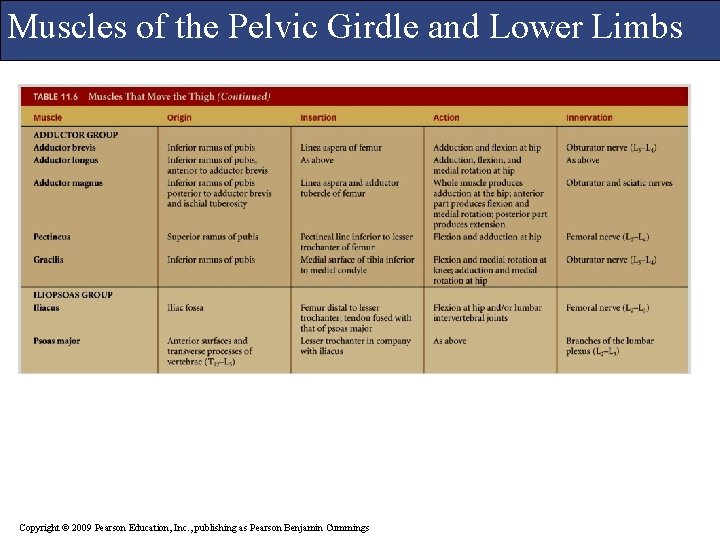
Muscles of the Pelvic Girdle and Lower Limbs Copyright © 2009 Pearson Education, Inc. , publishing as Pearson Benjamin Cummings
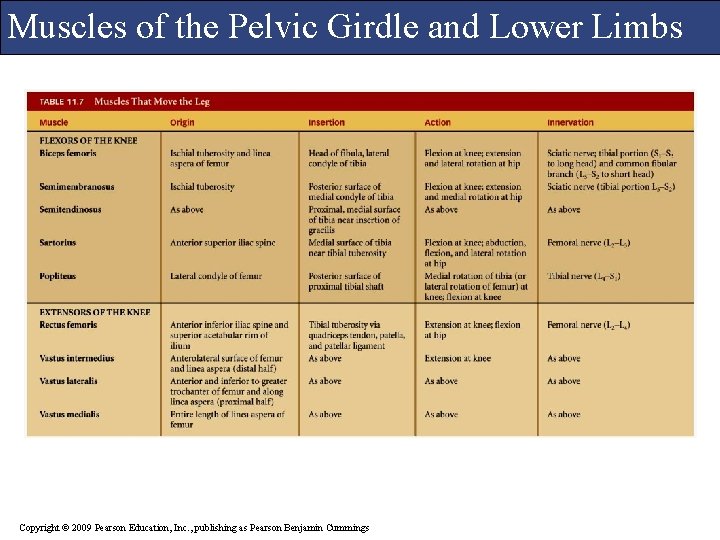
Muscles of the Pelvic Girdle and Lower Limbs Copyright © 2009 Pearson Education, Inc. , publishing as Pearson Benjamin Cummings
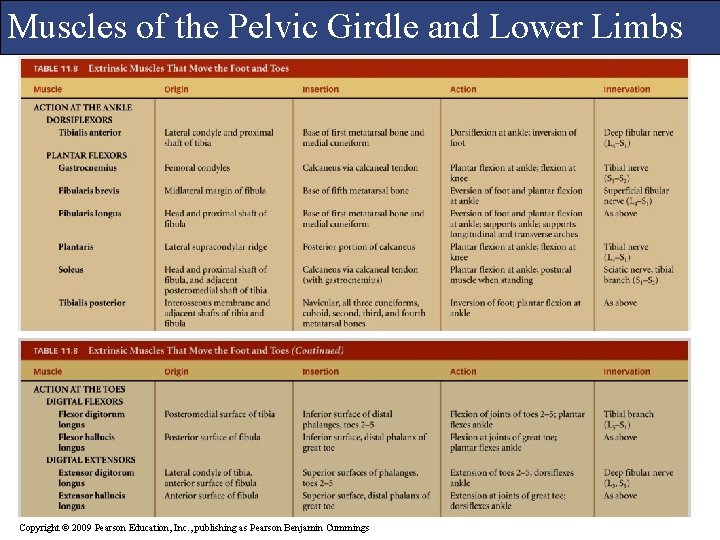
Muscles of the Pelvic Girdle and Lower Limbs Copyright © 2009 Pearson Education, Inc. , publishing as Pearson Benjamin Cummings
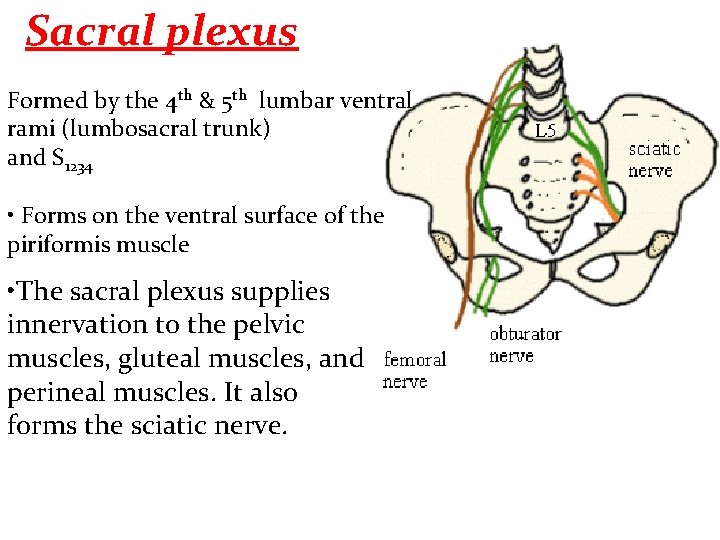
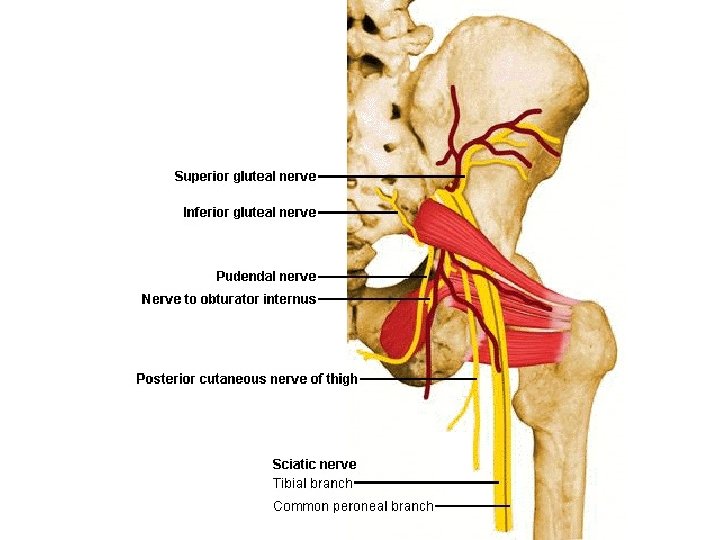
Sacral plexus Formed by the 4 th & 5 th lumbar ventral rami (lumbosacral trunk) and S 1234 • Forms on the ventral surface of the piriformis muscle • The sacral plexus supplies innervation to the pelvic muscles, gluteal muscles, and perineal muscles. It also forms the sciatic nerve.
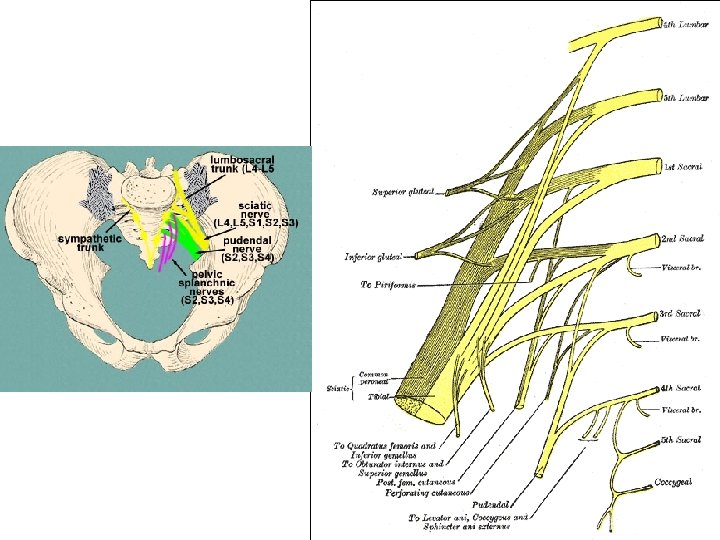
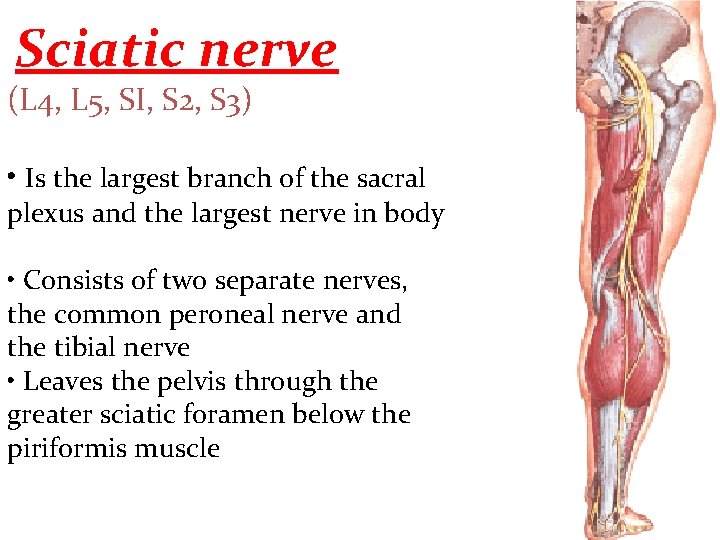
Sciatic nerve (L 4, L 5, SI, S 2, S 3) • Is the largest branch of the sacral plexus and the largest nerve in body • Consists of two separate nerves, the common peroneal nerve and the tibial nerve • Leaves the pelvis through the greater sciatic foramen below the piriformis muscle

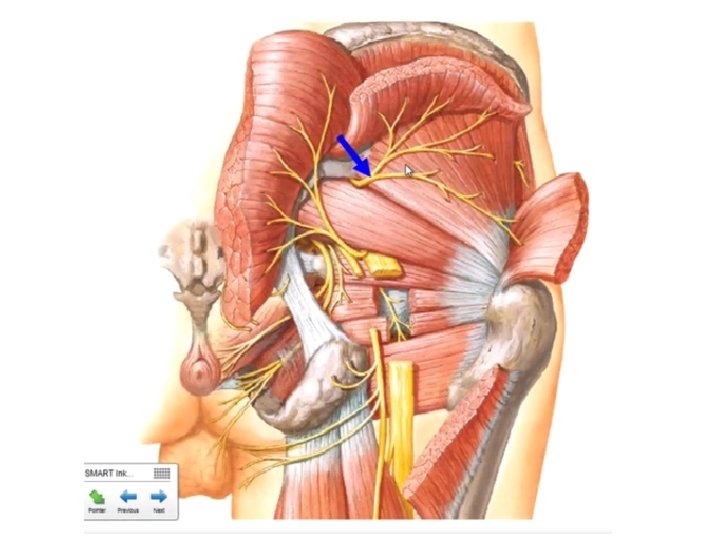
Superior gluteal nerve (L 4, L 5, S 1) • Leaves the pelvis through the greater sciatic foramen above the piriformis muscle with the superior gluteal artery and vein • In the gluteal region supplies the gluteus medius, the gluteus minimus, the tensor fasciae latae, and the hip joint Inferior gluteal nerve (L 5, S 1, S 2) • Leaves the pelvis through the greater sciatic foramen below the piriformis muscle with the inferior gluteal artery and vein • In the gluteal region supplies the gluteus maximus muscle
Posterior cutaneous nerve (SI, S 2, S 3) • Leaves the pelvis through the greater sciatic foramen inferior to the piriformis • In the gluteal region descends on the posterior surface of the sciatic nerve • Supplies the skin of the buttocks, posterior thigh, popliteal fossa, and external genitalia
Nerve to the obturator internus (L 5, S 1, S 2) • Leaves the pelvis through the greater sciatic foramen below the piriformis muscle • In the gluteal region descends on the superior gemellus muscle to pass below the ischial spine and enter the lesser sciatic foramen. Supplies the superior gemellus and obturator internus muscles Nerve to the quadratus femoris (L 4, L 5, SI) • • Leaves the pelvis through the greater sciatic foramen below the piriformis muscle and deep to the sciatic nerve • In the gluteal region runs anterior to the superior and inferior gemellus and obturator internus muscles • Supplies the inferior gemellus and quadratus femoris muscles
Pudendal nerve (S 2, S 3, S 4) • Leaves the pelvis through the greater sciatic foramen inferior to the piriformis muscle along with the internal pudendal artery and vein • In the gluteal region descends posterior to the ischial spine and enters the lesser sciatic foramen • Is distributed to the perineum and has no branches in the gluteal region
- Slides: 58