
Muscles Muscle Tissue Chapter 9 Function of Muscles
- Slides: 53
Muscles &Muscle Tissue Chapter 9
Function of Muscles • • Movement Posture Stabilization of Joints Thermogenesis (heat production)
Functional Characteristics of Muscle • Excitability (irritability) – Can receive and respond to stimuli. • Stimuli can include nerve impulses, stretch, hormones or changes in the chemical environment. • Contractility – the ability to shorten with increasing tension. • Extensibility – the ability to stretch. • Elasticity – the ability to snap back (recoil) to their resting length after being stretched.
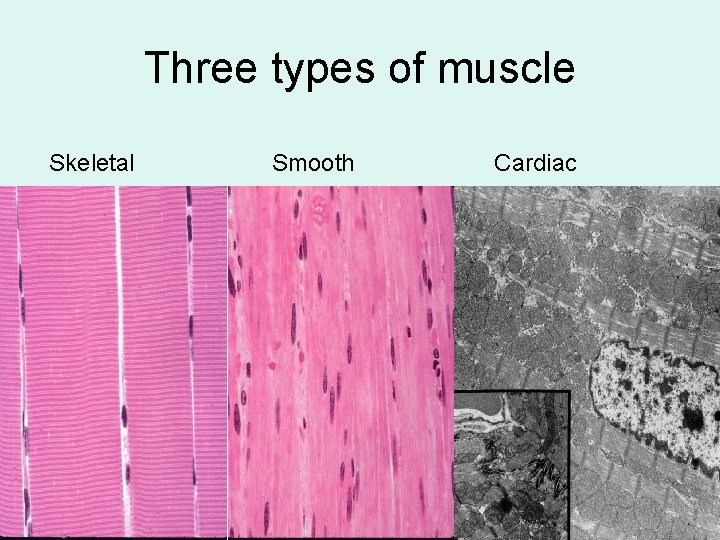
Three types of muscle Skeletal Smooth Cardiac
Characteristics of Skeletal Muscle • • Striated Multinucleate (it is a syncytium) Voluntary Parallel fibers
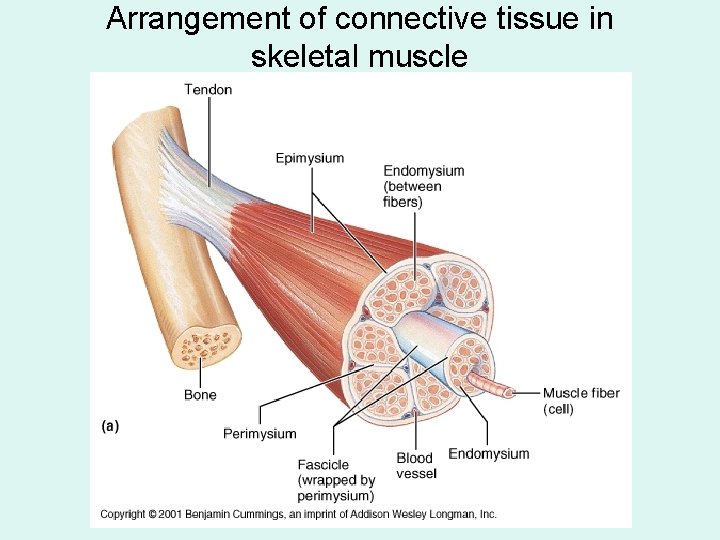
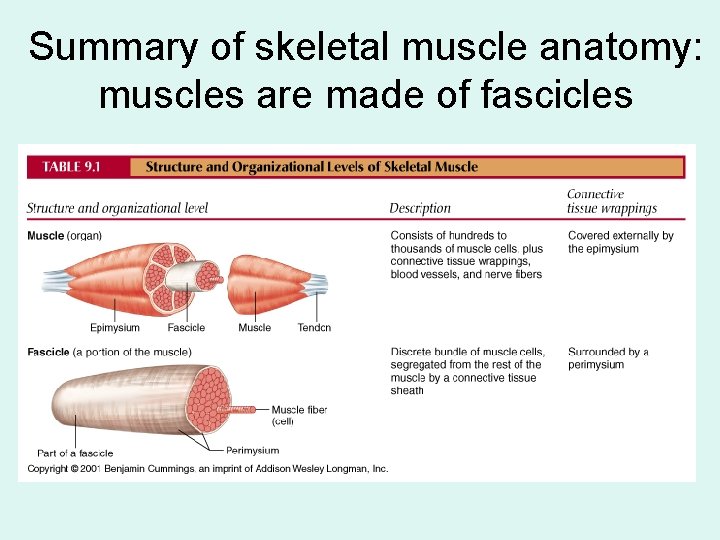
Arrangement of connective tissue in skeletal muscle
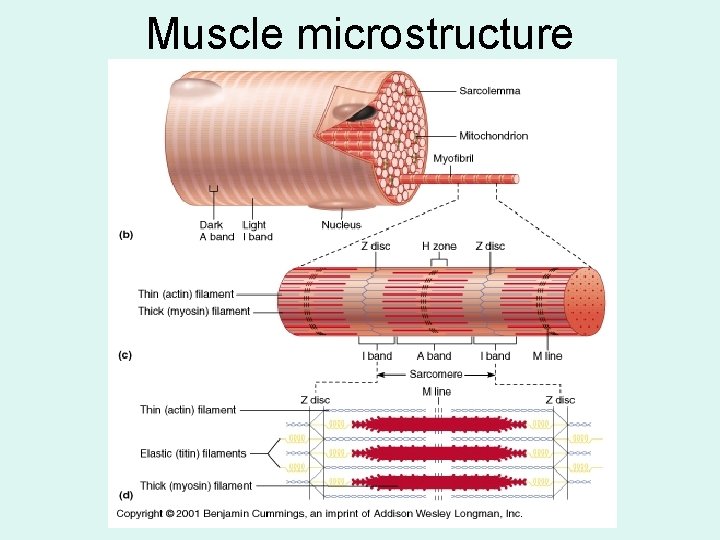
Muscle microstructure
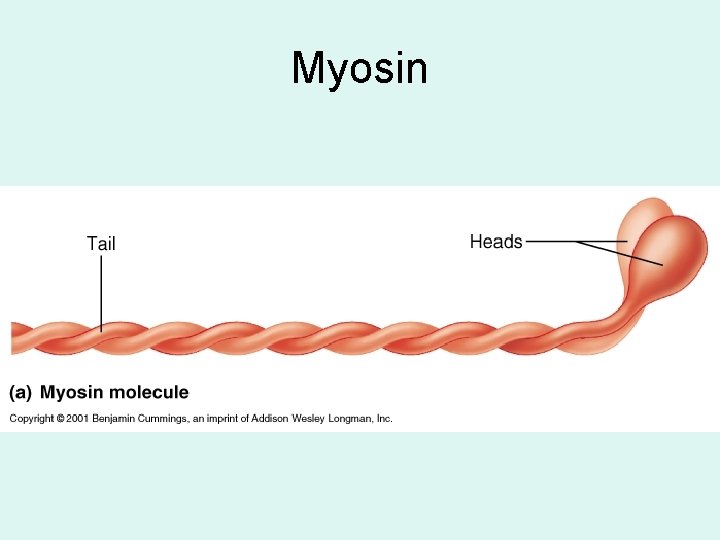
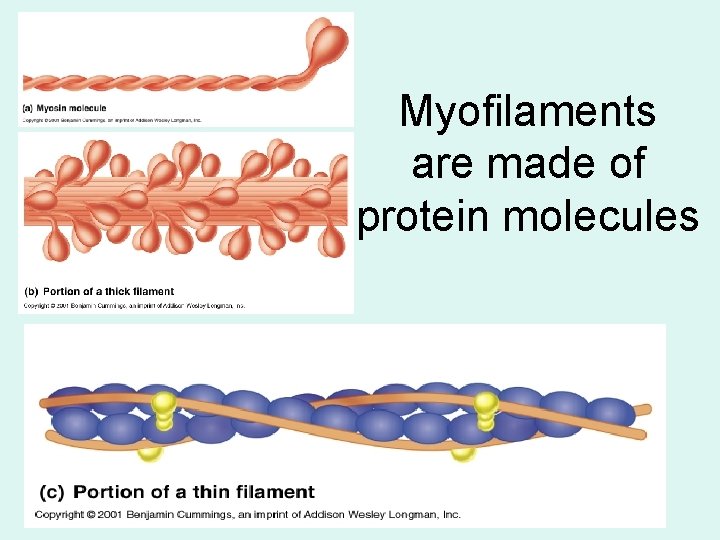
Myosin
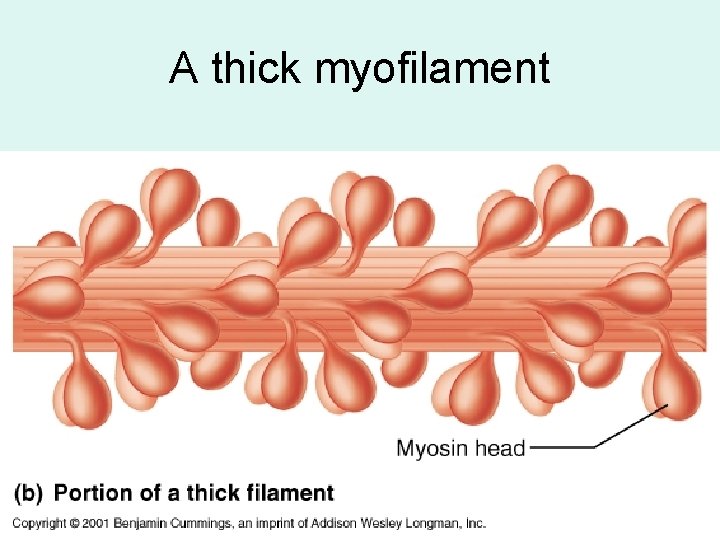
A thick myofilament
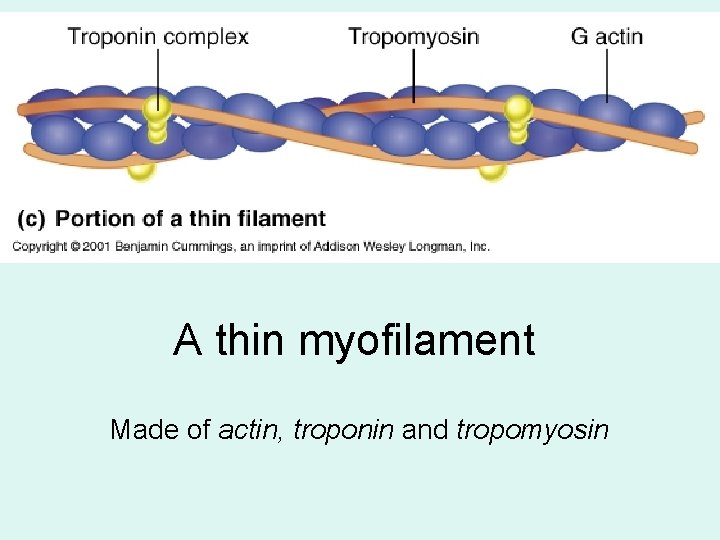
A thin myofilament Made of actin, troponin and tropomyosin
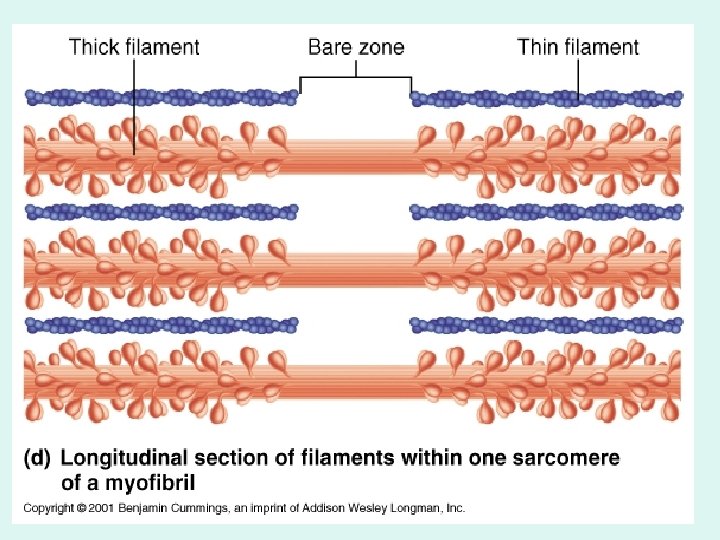
Arrangement of myofilaments
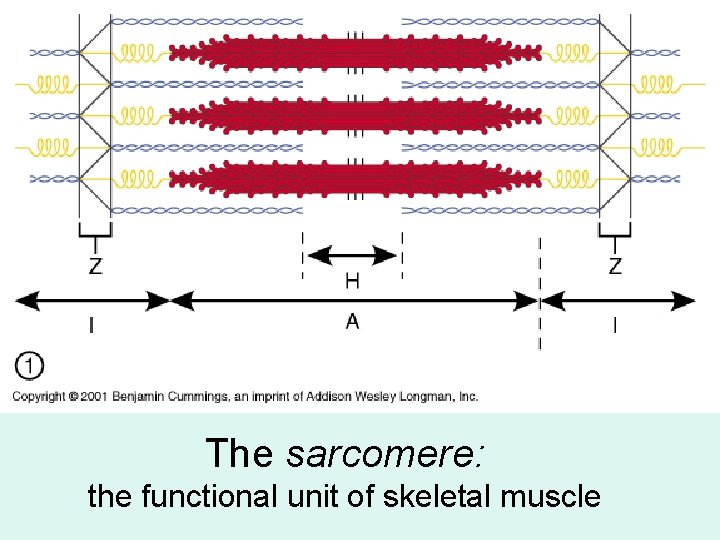
The sarcomere: the functional unit of skeletal muscle
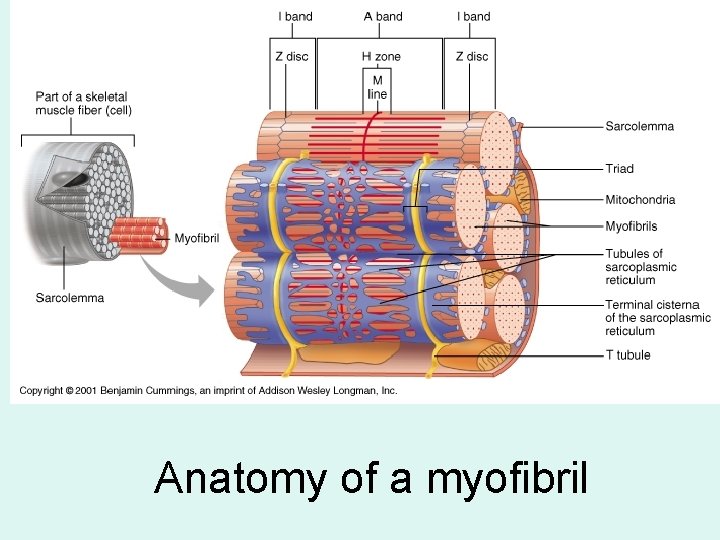
Anatomy of a myofibril
Summary of skeletal muscle anatomy: muscles are made of fascicles
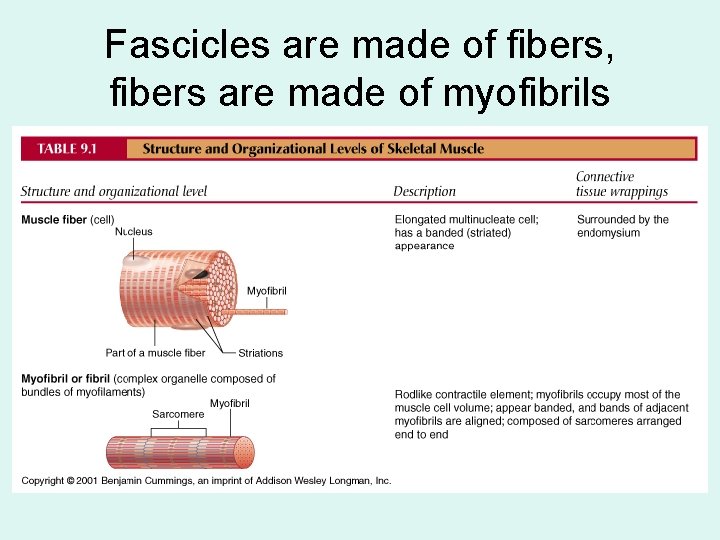
Fascicles are made of fibers, fibers are made of myofibrils
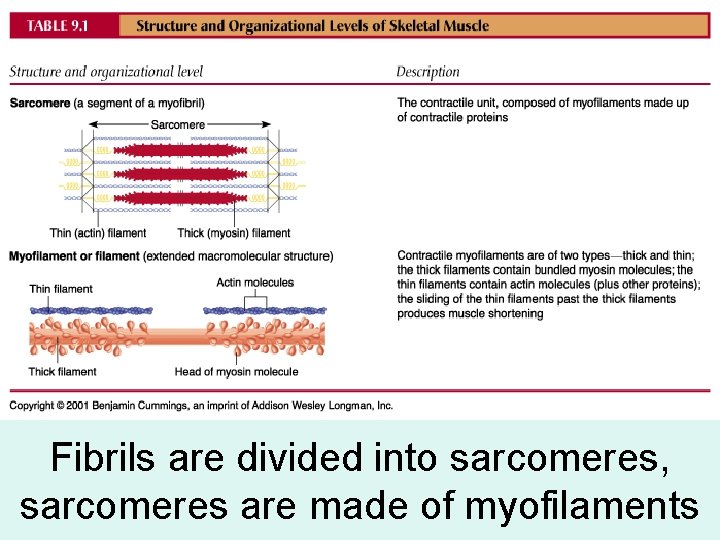
Fibrils are divided into sarcomeres, sarcomeres are made of myofilaments
Myofilaments are made of protein molecules
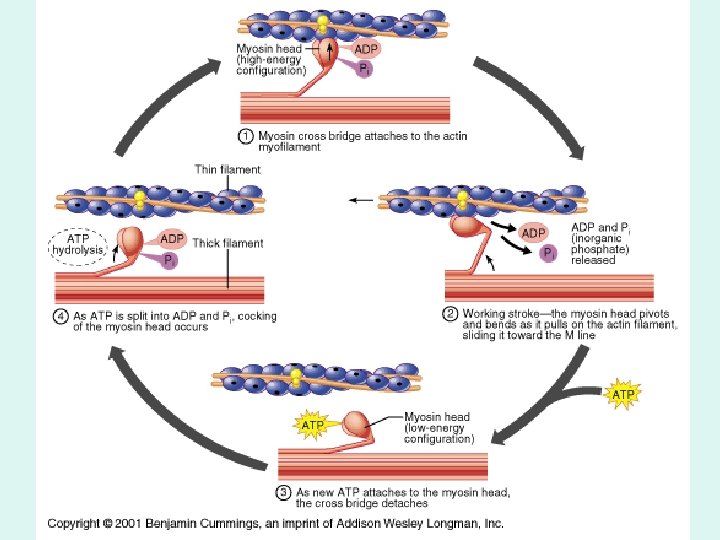
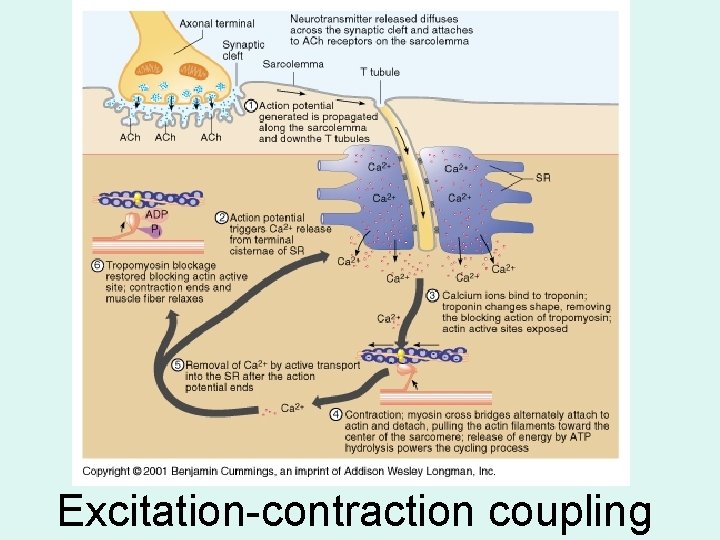
Muscle Contraction: the Sliding Filament Theory • Muscle contraction requires: – Stimulus – the generation of an action potential. – Crossbridge formation – interaction between the thick and thin myofilaments. This is triggered by Ca++ ions released from the sarcoplasmic reticulum. – Energy – ATP to energize the myosin molecules.
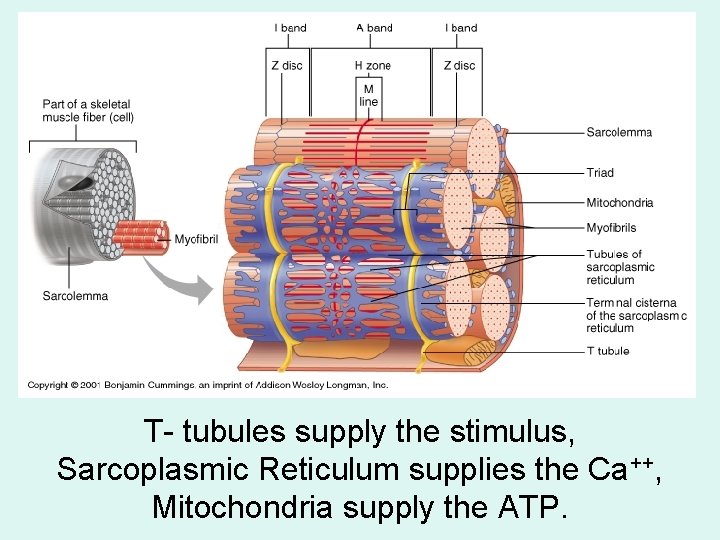
T- tubules supply the stimulus, Sarcoplasmic Reticulum supplies the Ca++, Mitochondria supply the ATP.
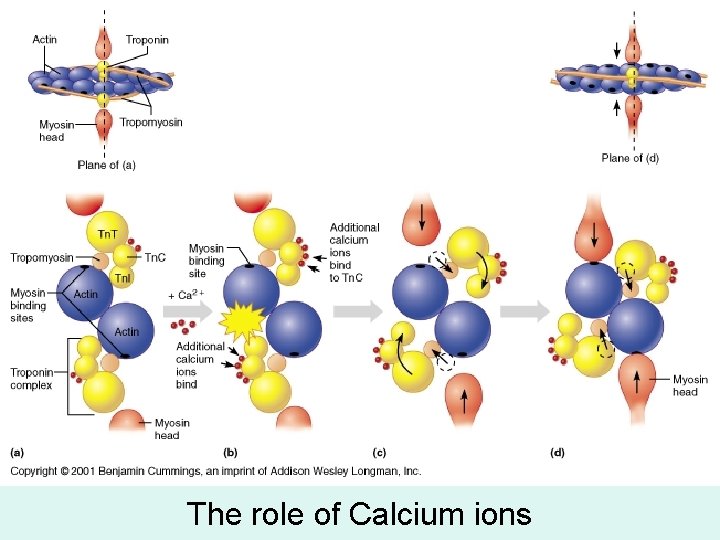
The role of Calcium ions
Muscle contraction
Show the animation
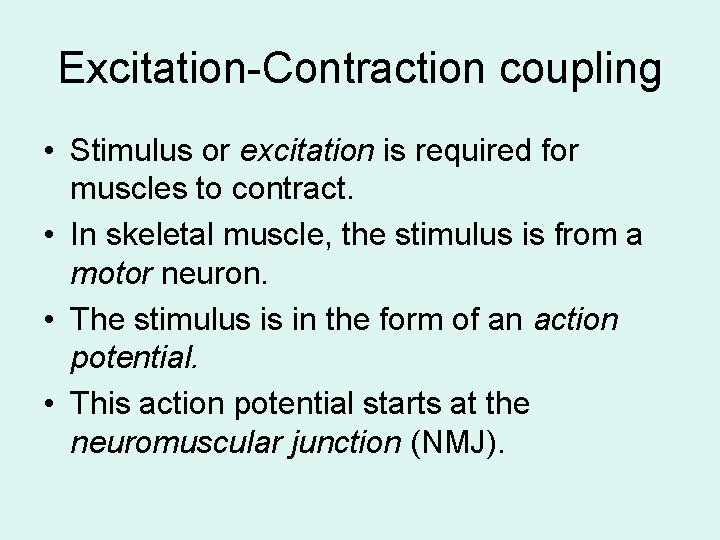
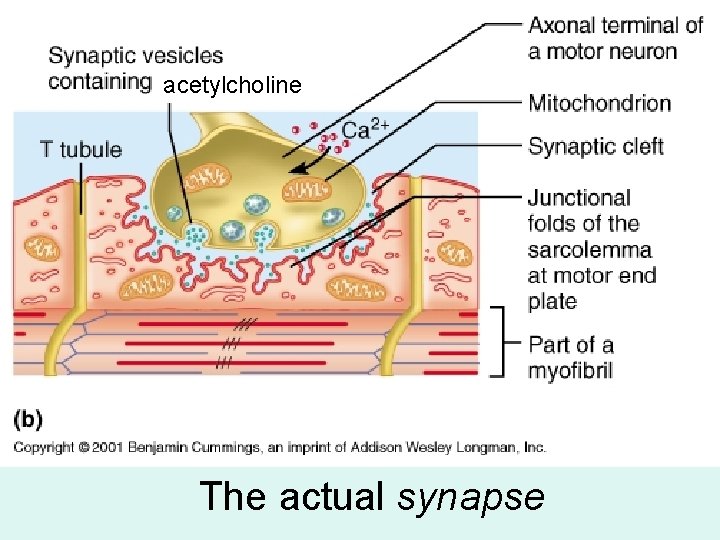
Excitation-Contraction coupling • Stimulus or excitation is required for muscles to contract. • In skeletal muscle, the stimulus is from a motor neuron. • The stimulus is in the form of an action potential. • This action potential starts at the neuromuscular junction (NMJ).
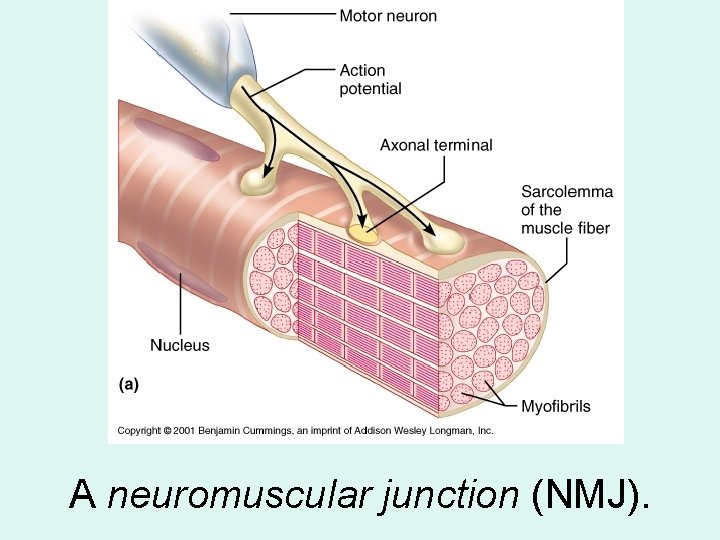
A neuromuscular junction (NMJ).
acetylcholine The actual synapse
Excitation-contraction coupling
Show NMJ animation
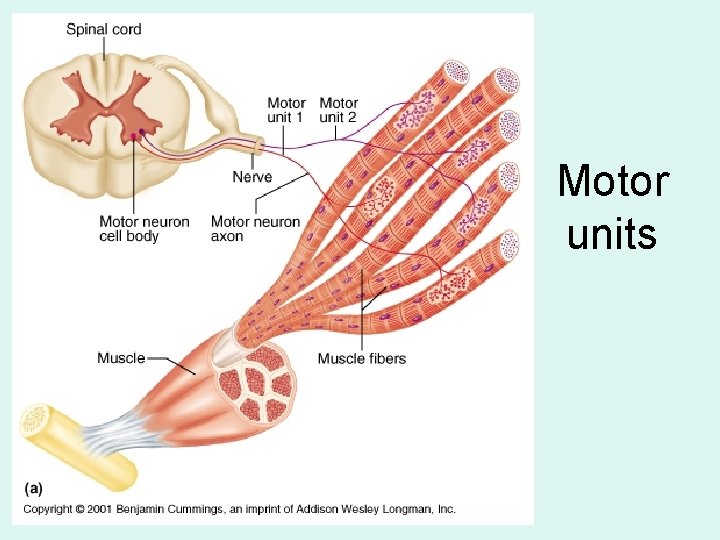
Motor units
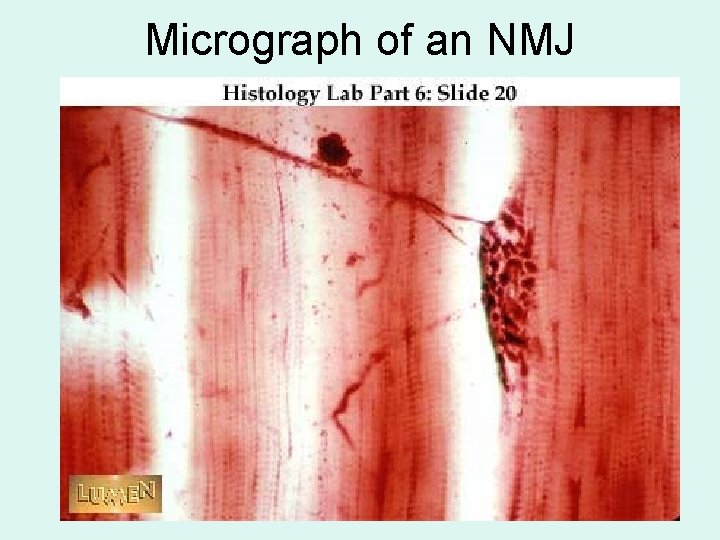
Micrograph of an NMJ
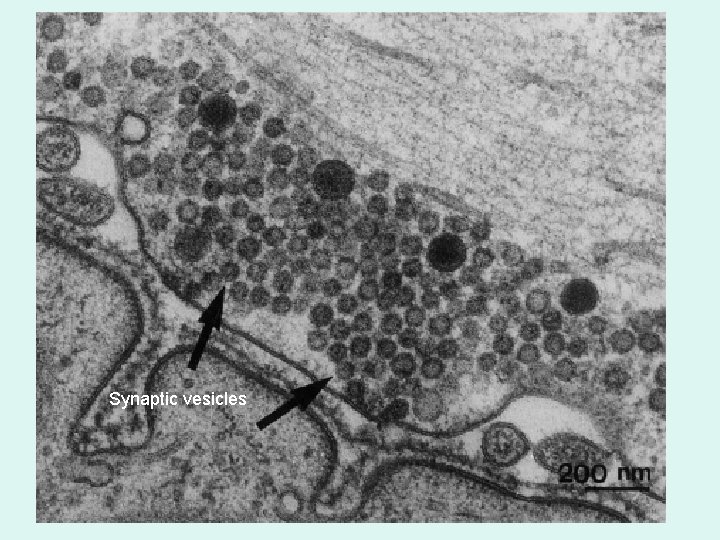
A Synapse Synaptic vesicles
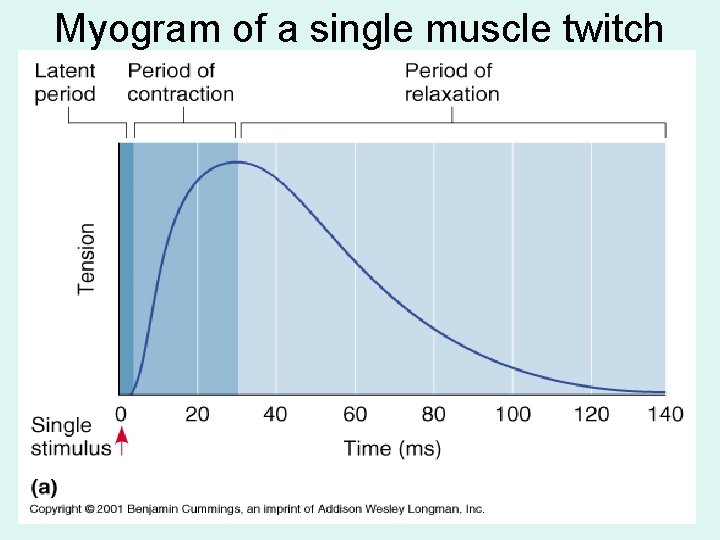
Myogram of a single muscle twitch
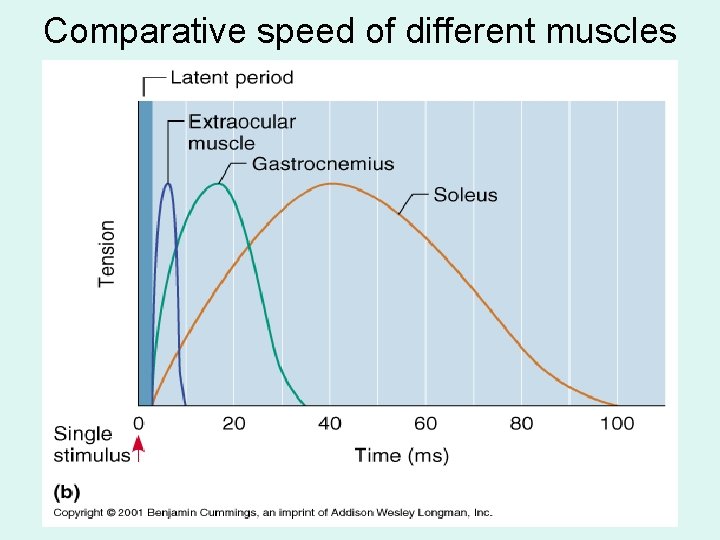
Comparative speed of different muscles
Graded Muscle Responses • The “twitch” describes just one fiber, it really isn’t how muscles normally work. • Muscles contract smoothly and respond to different levels of demand. • This is accomplished through “graded responses”. There are two ways muscle responses are “graded”
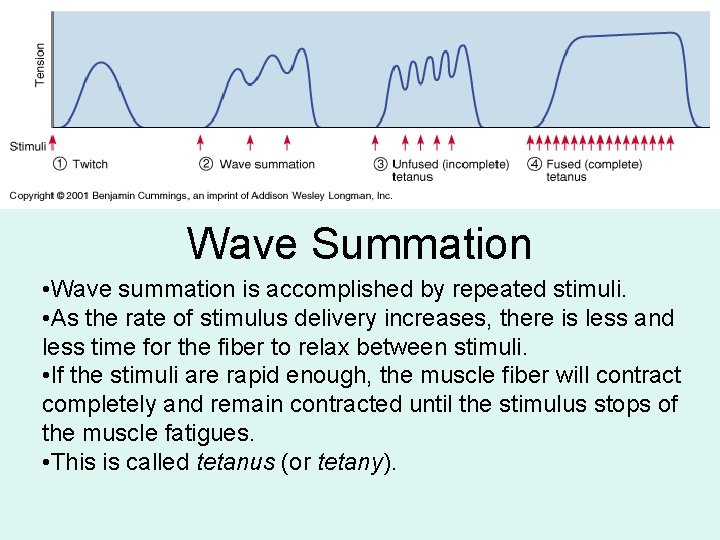
Wave Summation • Wave summation is accomplished by repeated stimuli. • As the rate of stimulus delivery increases, there is less and less time for the fiber to relax between stimuli. • If the stimuli are rapid enough, the muscle fiber will contract completely and remain contracted until the stimulus stops of the muscle fatigues. • This is called tetanus (or tetany).
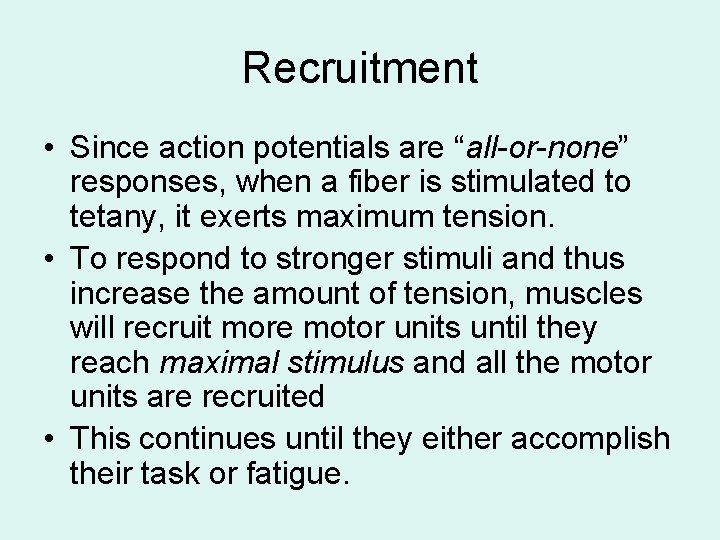
Recruitment • Since action potentials are “all-or-none” responses, when a fiber is stimulated to tetany, it exerts maximum tension. • To respond to stronger stimuli and thus increase the amount of tension, muscles will recruit more motor units until they reach maximal stimulus and all the motor units are recruited • This continues until they either accomplish their task or fatigue.
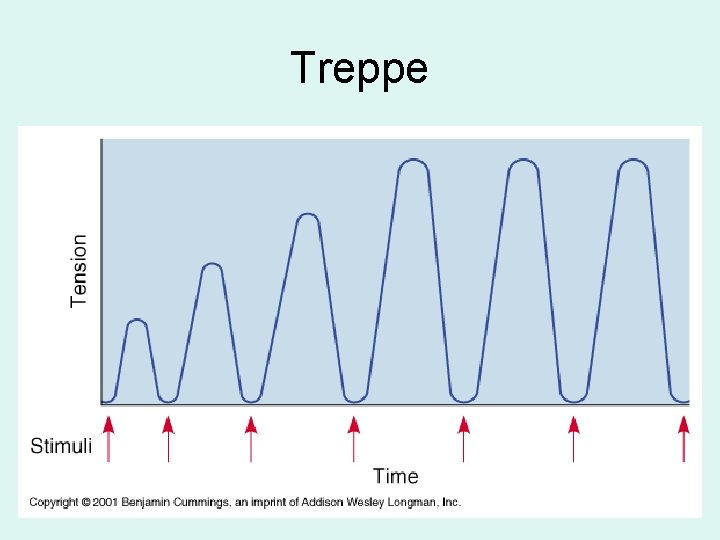
Treppe
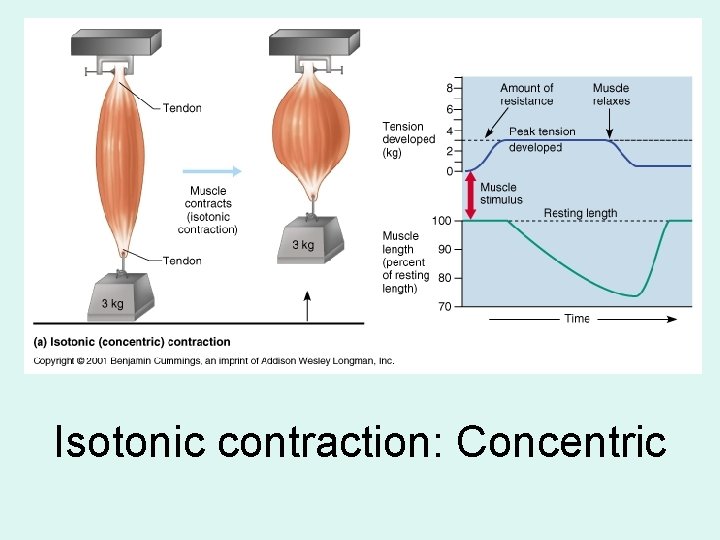
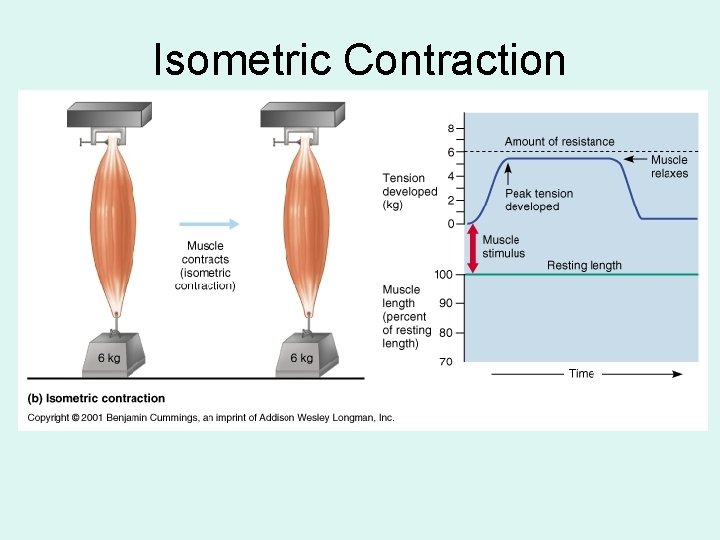
Types of contractions • Isometric – means “same length”. Force is developed without measurable movement. • Isotonic – means “same tension” movement is achieved with force or “tension” remaining constant.
Isotonic contraction: Concentric
Eccentric Contraction This refers to the tension that is applied on a muscle as it lengthens. Example: When you lower the dumbbell you just lifted, you don’t do so by allowing the muscle to just relax. Think about the consequences of that! Eccentric contractions are about 50% more forceful than concentric ones.
Isometric Contraction
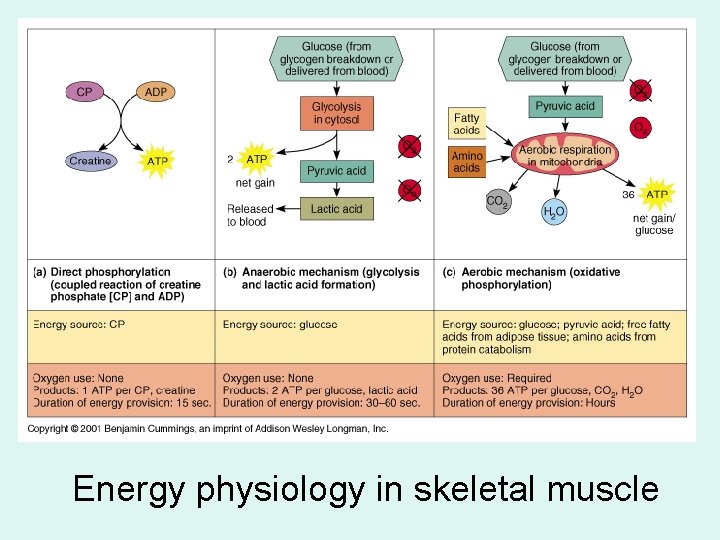
Energy physiology in skeletal muscle
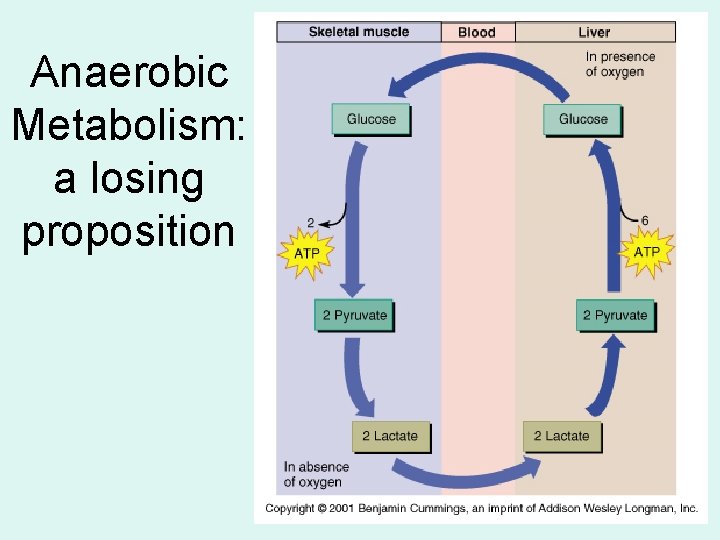
Anaerobic Metabolism: a losing proposition
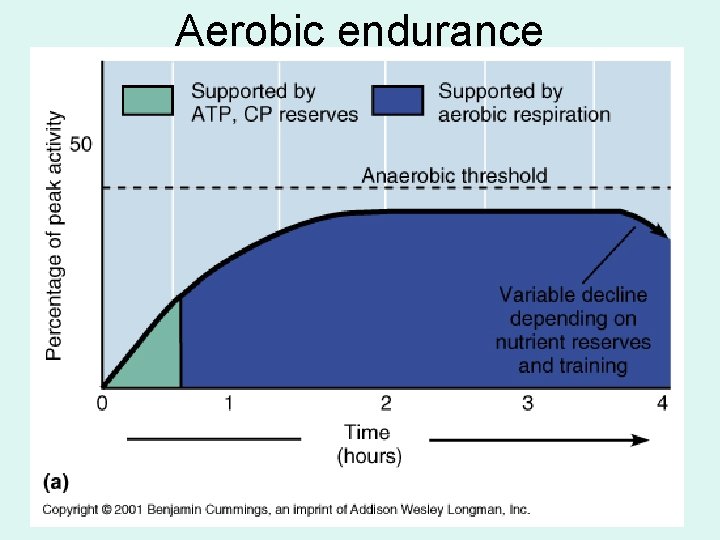
Aerobic endurance
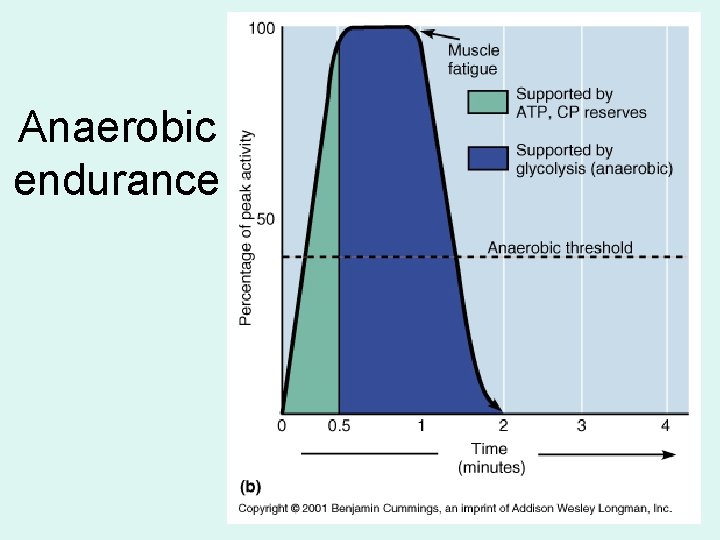
Anaerobic endurance
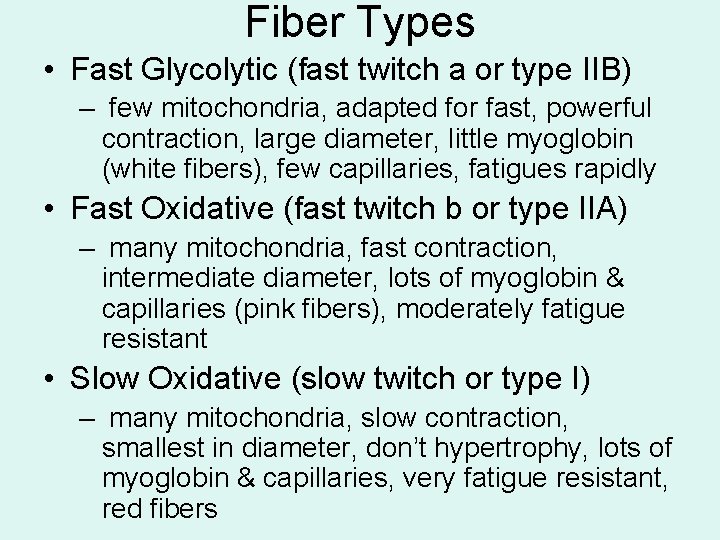
Fiber Types • Fast Glycolytic (fast twitch a or type IIB) – few mitochondria, adapted for fast, powerful contraction, large diameter, little myoglobin (white fibers), few capillaries, fatigues rapidly • Fast Oxidative (fast twitch b or type IIA) – many mitochondria, fast contraction, intermediate diameter, lots of myoglobin & capillaries (pink fibers), moderately fatigue resistant • Slow Oxidative (slow twitch or type I) – many mitochondria, slow contraction, smallest in diameter, don’t hypertrophy, lots of myoglobin & capillaries, very fatigue resistant, red fibers
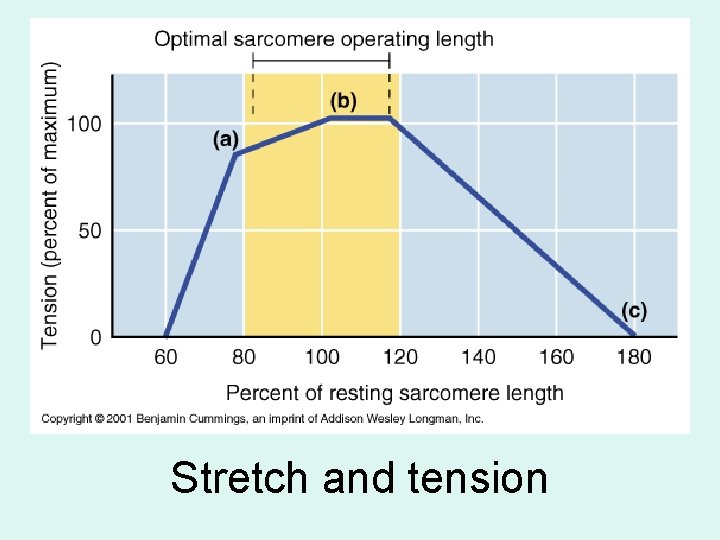
Stretch and tension
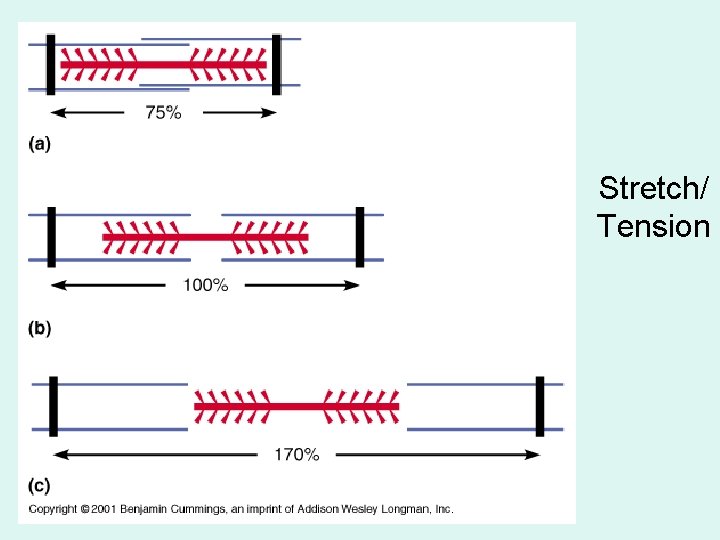
Stretch/ Tension
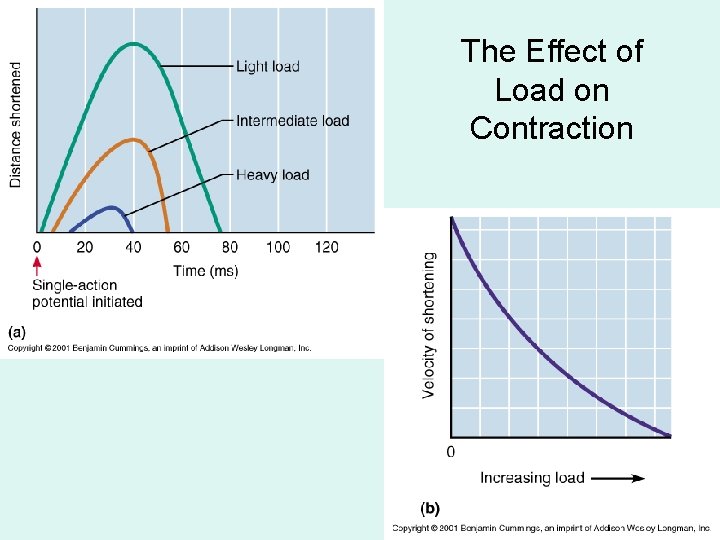
The Effect of Load on Contraction
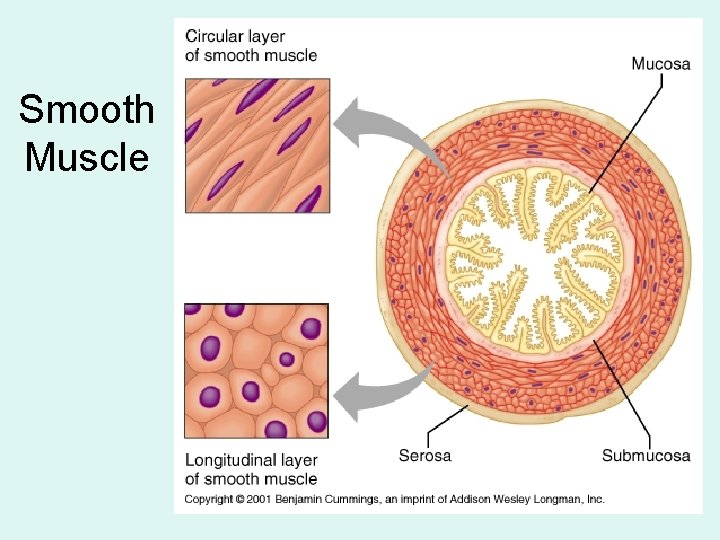
Smooth Muscle
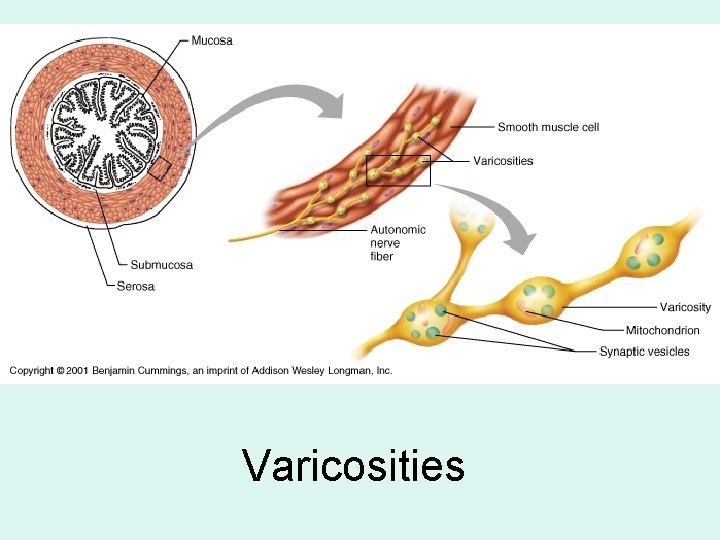
Varicosities
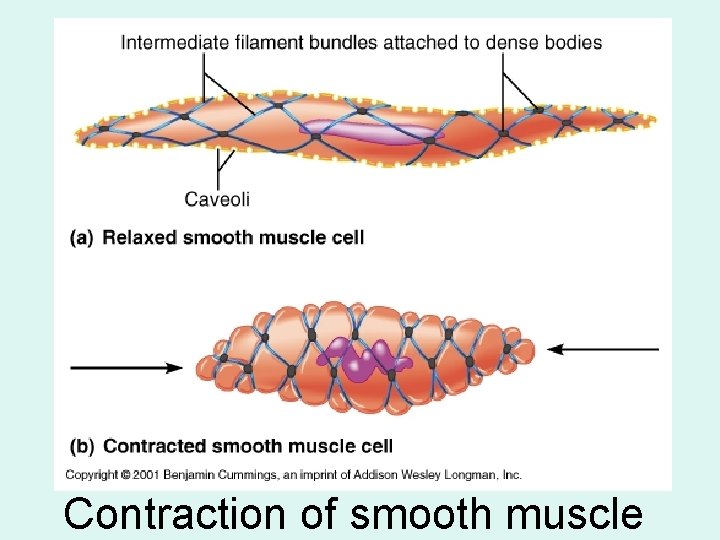
Contraction of smooth muscle
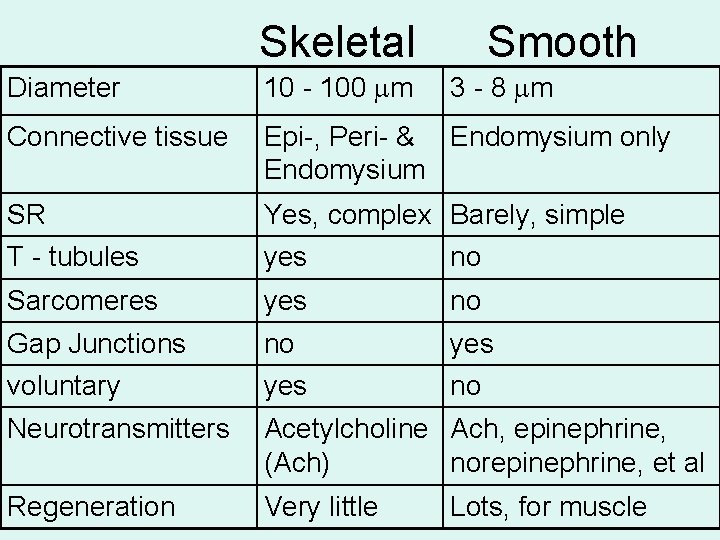
Skeletal Smooth Diameter 10 - 100 m 3 - 8 m Connective tissue Epi-, Peri- & Endomysium only Endomysium SR Yes, complex Barely, simple T - tubules yes no Sarcomeres yes no Gap Junctions no yes voluntary yes no Neurotransmitters Acetylcholine Ach, epinephrine, (Ach) norepinephrine, et al Regeneration Very little Lots, for muscle
Future governors of Califorina?