
Muscles Crossing Hip and Knee Joints Include flexion


- Slides: 36
Muscles Crossing Hip and Knee Joints • Include flexion, extension, abduction, adduction, circumduction, and rotation • Most anterior muscles flex the femur at the hip and extend the leg at the knee (foreswing of walking) • Most posterior muscles extend the thigh and flex the leg (backswing of walking) • Medial muscles all adduct the thigh Copyright © 2010 Pearson Education, Inc.
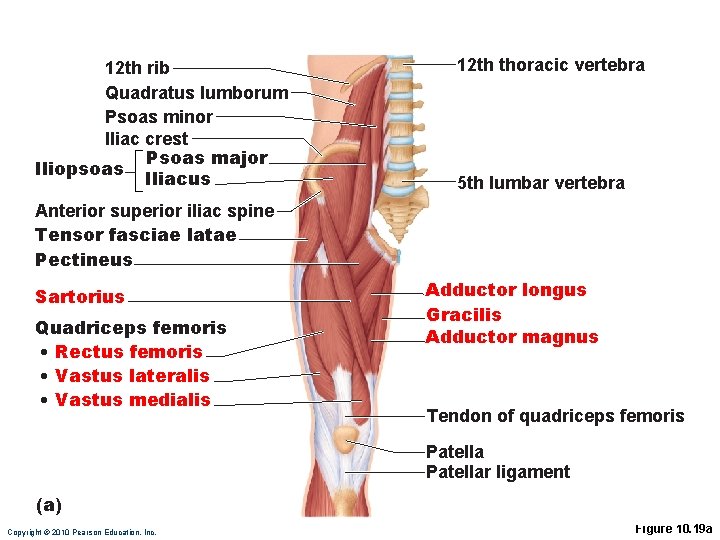
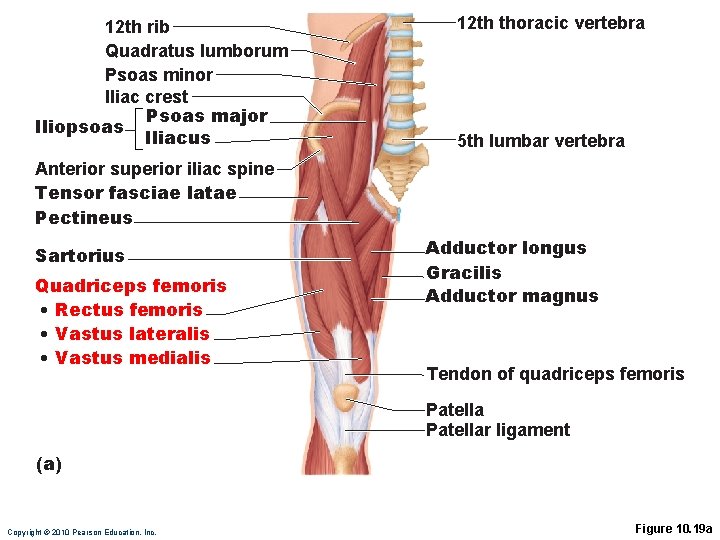
12 th rib Quadratus lumborum Psoas minor Iliac crest Psoas major Iliopsoas Iliacus 12 th thoracic vertebra 5 th lumbar vertebra Anterior superior iliac spine Tensor fasciae latae Pectineus Sartorius Quadriceps femoris • Rectus femoris • Vastus lateralis • Vastus medialis Adductor longus Gracilis Adductor magnus Tendon of quadriceps femoris Patellar ligament (a) Copyright © 2010 Pearson Education, Inc. Figure 10. 19 a
Movements of the Thigh • Thigh extensors • Hamstring muscles (prime movers of extension) • Biceps femoris • Semitendinosus • Semimembranosus • Gluteus maximus (prime mover during forceful extension) Copyright © 2010 Pearson Education, Inc.
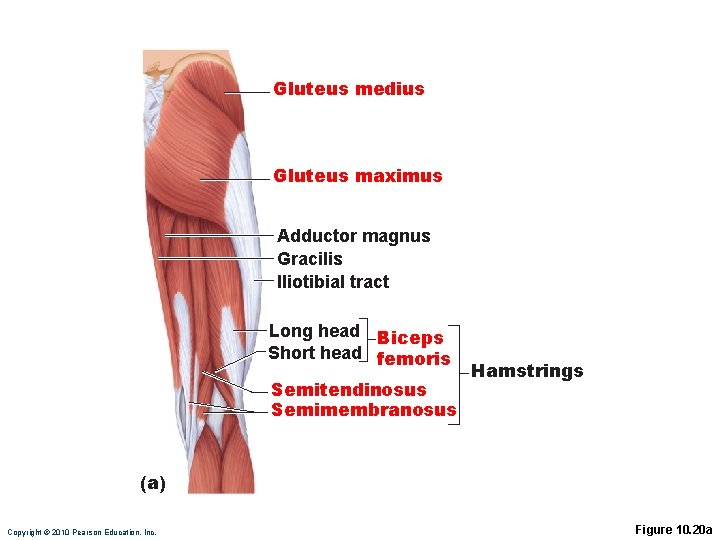
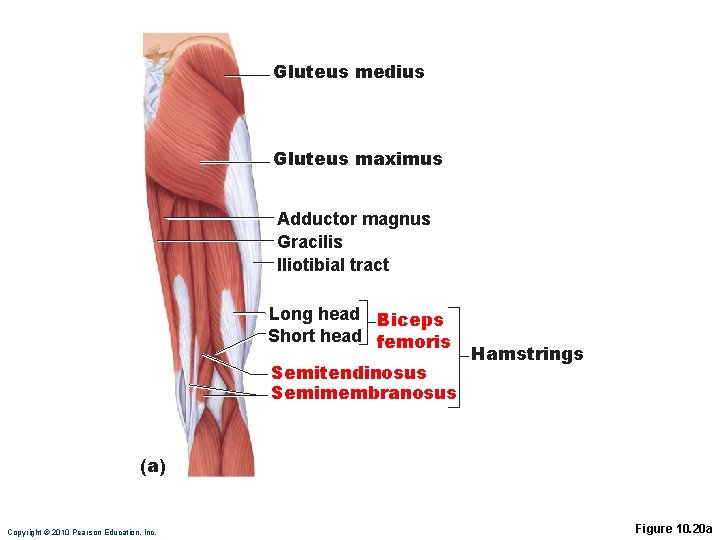
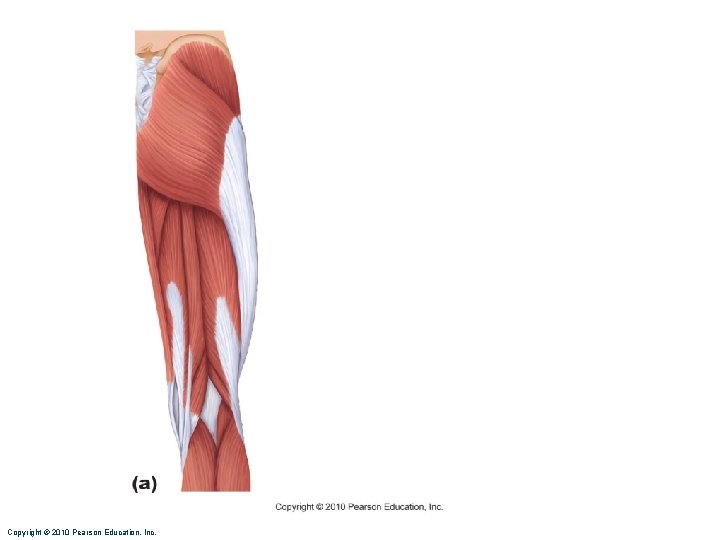
Gluteus medius Gluteus maximus Adductor magnus Gracilis Iliotibial tract Long head Biceps Short head femoris Semitendinosus Semimembranosus Hamstrings (a) Copyright © 2010 Pearson Education, Inc. Figure 10. 20 a
Movements of the Thigh • Adductors (also medially rotate thigh) • Adductor magnus • Adductor longus • Adductor brevis • Gracilis Copyright © 2010 Pearson Education, Inc.
Pectineus (cut) Adductor brevis Adductor longus Adductor magnus Femur (b) Copyright © 2010 Pearson Education, Inc. O = origin I = insertion Figure 10. 19 b
Movements of the Thigh • Abductors • Gluteus maximus (also laterally rotates thigh) • Gluteus medius (also medially rotates thigh) • Gluteus minimus (also medially rotates thigh) Copyright © 2010 Pearson Education, Inc.
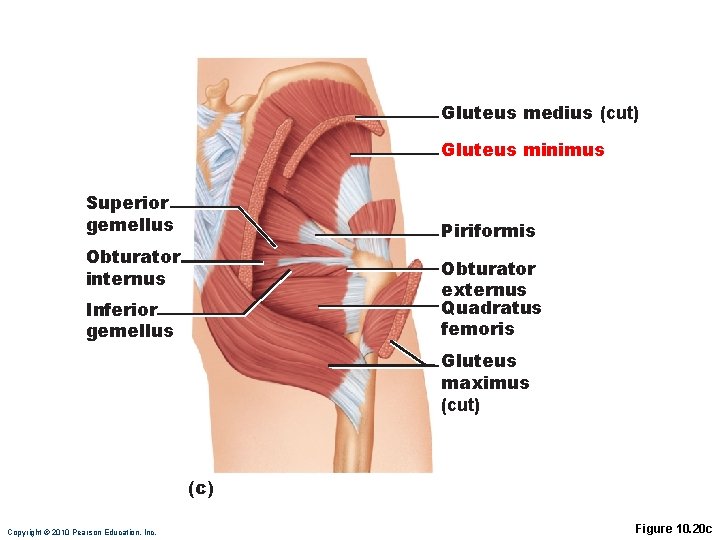
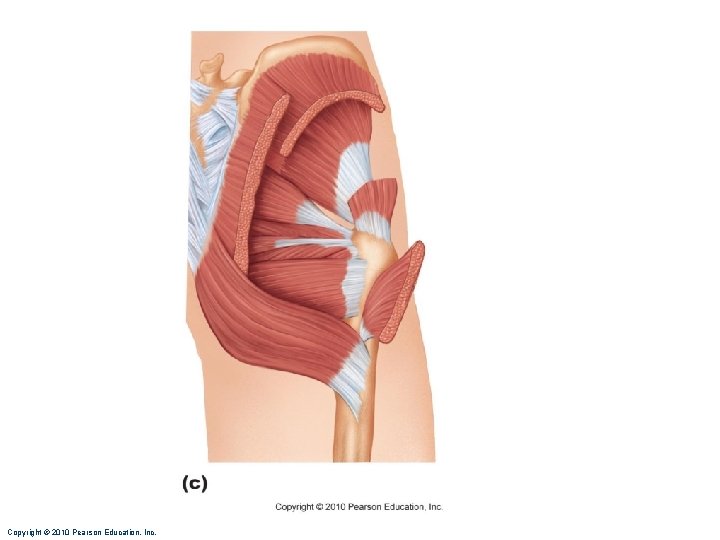
Gluteus medius (cut) Gluteus minimus Superior gemellus Piriformis Obturator internus Obturator externus Quadratus femoris Inferior gemellus Gluteus maximus (cut) (c) Copyright © 2010 Pearson Education, Inc. Figure 10. 20 c
Muscles of the Thigh that Move the Knee Joint • Quadriceps femoris—sole extensor of the knee • Hamstring muscles—flex the knee, and are antagonists to the quadriceps femoris Copyright © 2010 Pearson Education, Inc.
12 th rib Quadratus lumborum Psoas minor Iliac crest Psoas major Iliopsoas Iliacus 12 th thoracic vertebra 5 th lumbar vertebra Anterior superior iliac spine Tensor fasciae latae Pectineus Sartorius Quadriceps femoris • Rectus femoris • Vastus lateralis • Vastus medialis Adductor longus Gracilis Adductor magnus Tendon of quadriceps femoris Patellar ligament (a) Copyright © 2010 Pearson Education, Inc. Figure 10. 19 a
Gluteus medius Gluteus maximus Adductor magnus Gracilis Iliotibial tract Long head Biceps Short head femoris Semitendinosus Semimembranosus Hamstrings (a) Copyright © 2010 Pearson Education, Inc. Figure 10. 20 a
Muscles of the Leg: Movements • Various leg muscles produce the following movements • Ankle—dorsiflexion and plantar flexion • Intertarsal joints—inversion and eversion of the foot • Toes—flexion and extension Copyright © 2010 Pearson Education, Inc.
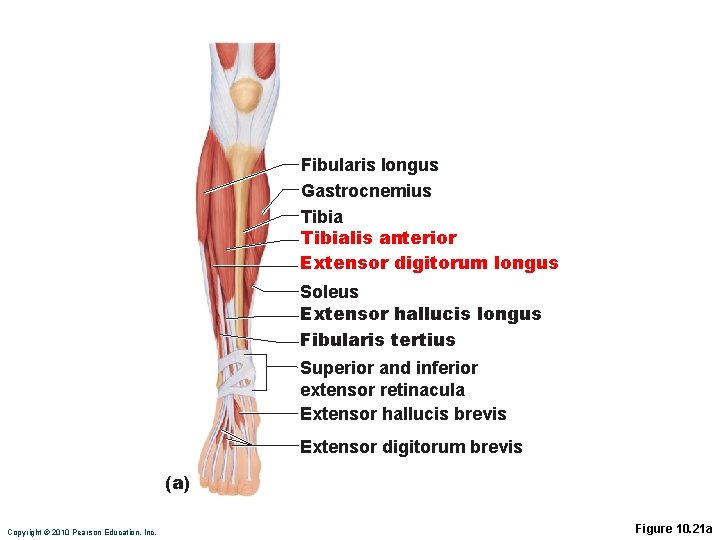
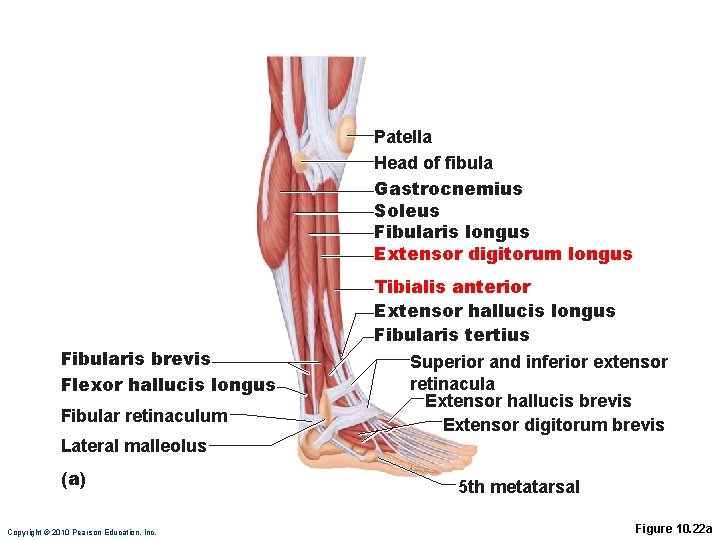
Muscles of the Anterior Compartment of the Leg • Primary toe extensors and ankle dorsiflexors • Tibialis anterior • Extensor digitorum longus Copyright © 2010 Pearson Education, Inc.
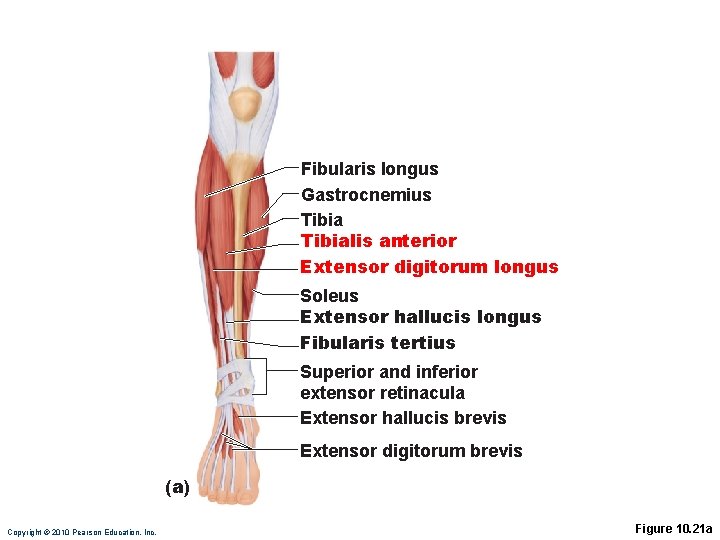
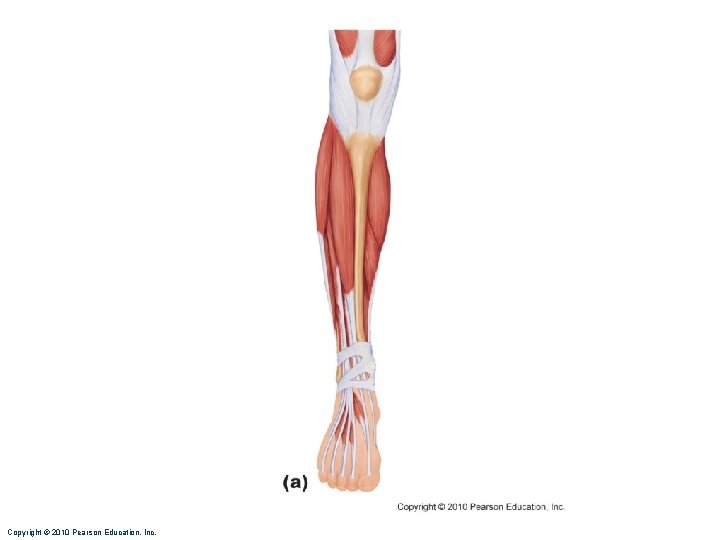
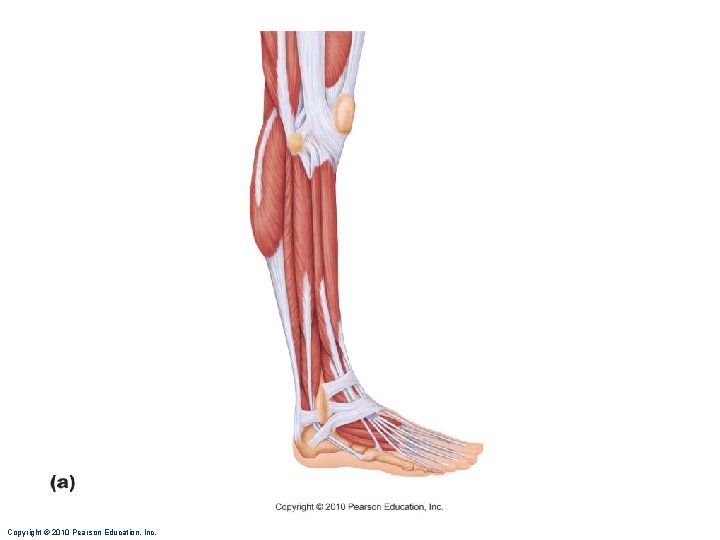
Fibularis longus Gastrocnemius Tibialis anterior Extensor digitorum longus Soleus Extensor hallucis longus Fibularis tertius Superior and inferior extensor retinacula Extensor hallucis brevis Extensor digitorum brevis (a) Copyright © 2010 Pearson Education, Inc. Figure 10. 21 a
Patella Head of fibula Gastrocnemius Soleus Fibularis longus Extensor digitorum longus Fibularis brevis Flexor hallucis longus Fibular retinaculum Tibialis anterior Extensor hallucis longus Fibularis tertius Superior and inferior extensor retinacula Extensor hallucis brevis Extensor digitorum brevis Lateral malleolus (a) Copyright © 2010 Pearson Education, Inc. 5 th metatarsal Figure 10. 22 a
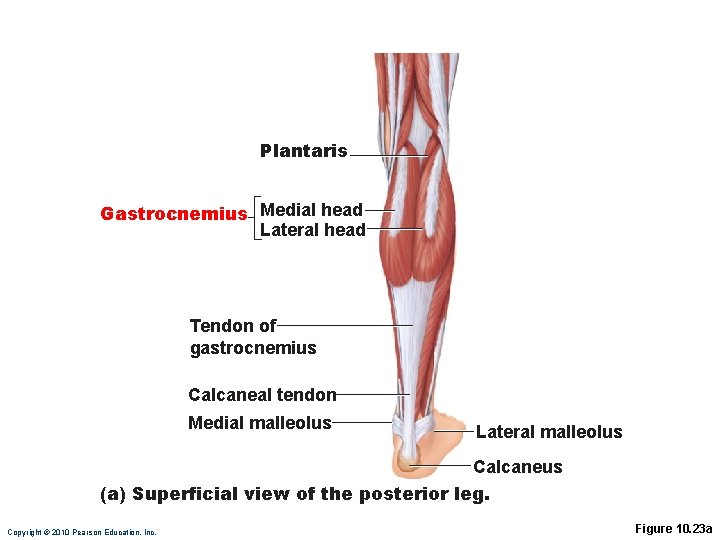
Muscles of the Posterior Compartment of the Leg • Flexors of the foot and the toes • Gastrocnemius • Soleus Copyright © 2010 Pearson Education, Inc.
Plantaris Gastrocnemius Medial head Lateral head Tendon of gastrocnemius Calcaneal tendon Medial malleolus Lateral malleolus Calcaneus (a) Superficial view of the posterior leg. Copyright © 2010 Pearson Education, Inc. Figure 10. 23 a
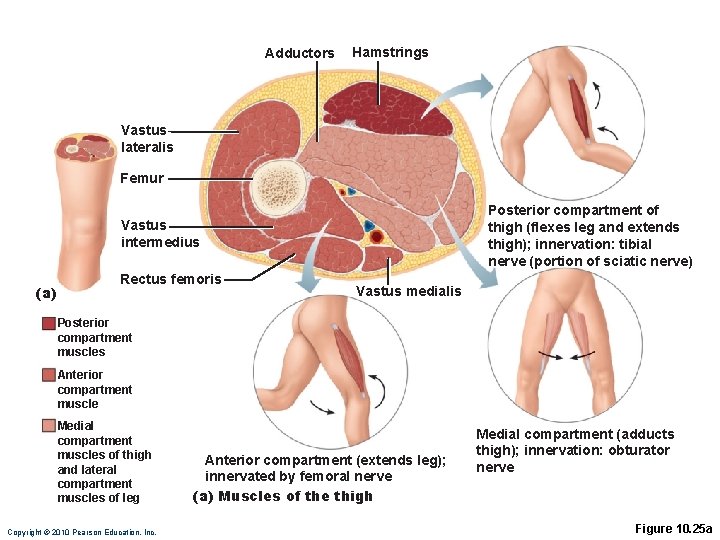
Adductors Hamstrings Vastus lateralis Femur Posterior compartment of thigh (flexes leg and extends thigh); innervation: tibial nerve (portion of sciatic nerve) Vastus intermedius (a) Rectus femoris Vastus medialis Posterior compartment muscles Anterior compartment muscle Medial compartment muscles of thigh and lateral compartment muscles of leg Copyright © 2010 Pearson Education, Inc. Anterior compartment (extends leg); innervated by femoral nerve (a) Muscles of the thigh Medial compartment (adducts thigh); innervation: obturator nerve Figure 10. 25 a
Posterior compartment muscles Triceps surae Anterior compartment muscle Fibula Medial compartment muscles of thigh and lateral compartment muscles of leg Fibularis muscles Posterior compartment of leg (plantar flexes foot, flexes toes); innervated by tibial nerve (b) Tibialis anterior Tibia Lateral compartment of leg (plantar flexes and everts foot); innervation: superficial fibular nerve (b) Muscles of the leg Copyright © 2010 Pearson Education, Inc. Anterior compartment of leg (dorsiflexes foot, extends toes); innervated by deep fibular nerve Figure 10. 25 b
Fibularis longus Gastrocnemius Tibialis anterior Extensor digitorum longus Soleus Extensor hallucis longus Fibularis tertius Superior and inferior extensor retinacula Extensor hallucis brevis Extensor digitorum brevis (a) Copyright © 2010 Pearson Education, Inc. Figure 10. 21 a
Question: Which kite shaped muscle pair stabilizes, raises, retracts, and rotates the scapula? Answer: Trapesius Copyright © 2010 Pearson Education, Inc.
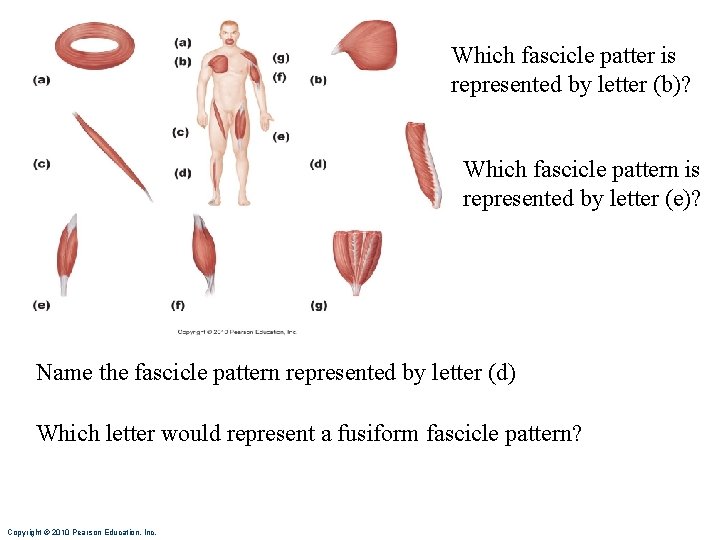
Which fascicle patter is represented by letter (b)? Which fascicle pattern is represented by letter (e)? Name the fascicle pattern represented by letter (d) Which letter would represent a fusiform fascicle pattern? Copyright © 2010 Pearson Education, Inc.
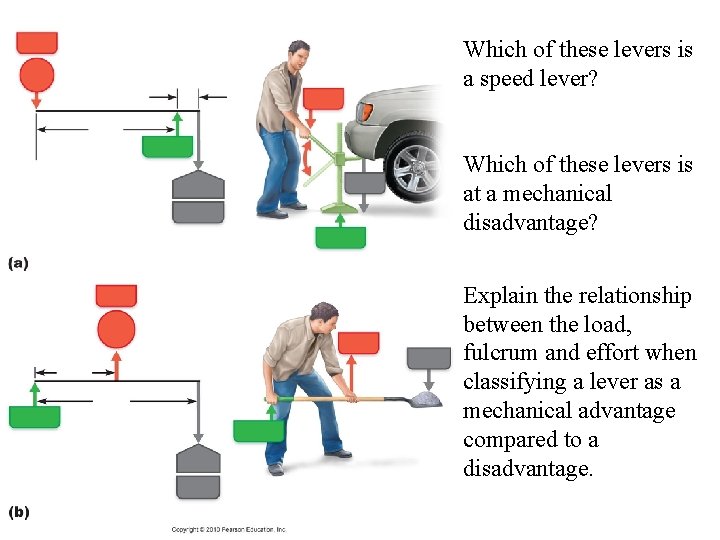
Which of these levers is a speed lever? Which of these levers is at a mechanical disadvantage? Explain the relationship between the load, fulcrum and effort when classifying a lever as a mechanical advantage compared to a disadvantage. Copyright © 2010 Pearson Education, Inc.
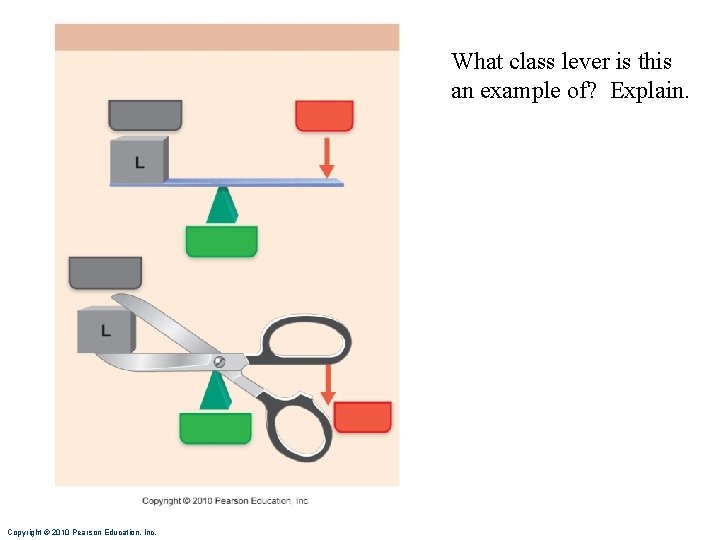
What class lever is this an example of? Explain. Copyright © 2010 Pearson Education, Inc.
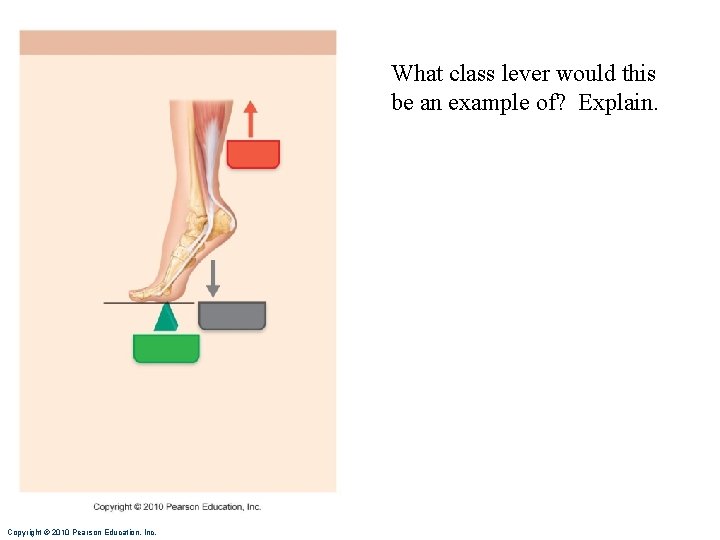
What class lever would this be an example of? Explain. Copyright © 2010 Pearson Education, Inc.
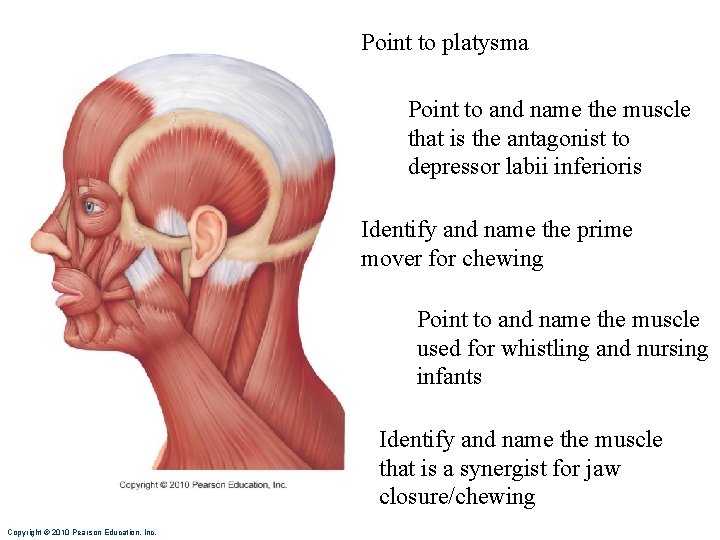
Point to platysma Point to and name the muscle that is the antagonist to depressor labii inferioris Identify and name the prime mover for chewing Point to and name the muscle used for whistling and nursing infants Identify and name the muscle that is a synergist for jaw closure/chewing Copyright © 2010 Pearson Education, Inc.
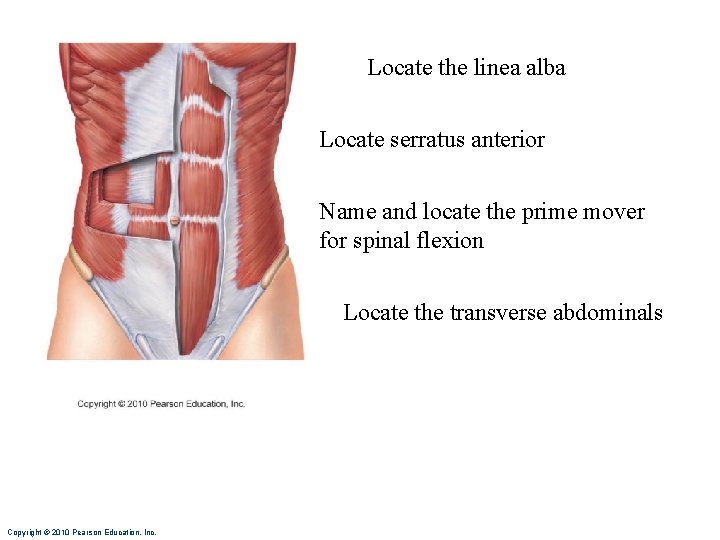
Locate the linea alba Locate serratus anterior Name and locate the prime mover for spinal flexion Locate the transverse abdominals Copyright © 2010 Pearson Education, Inc.
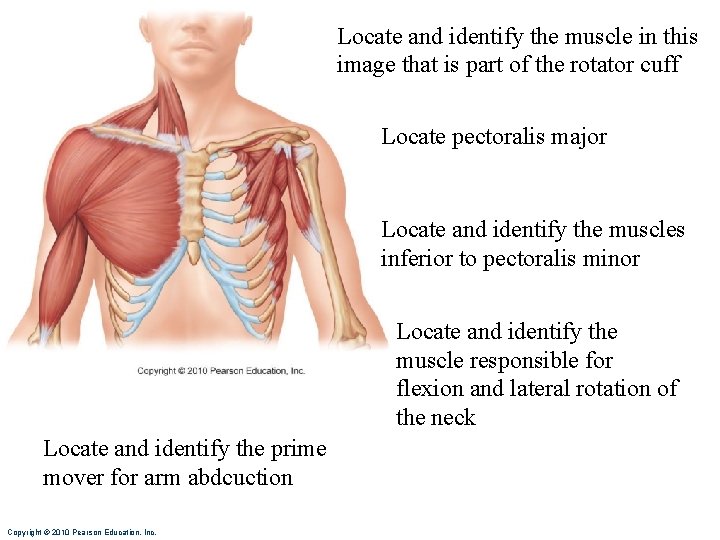
Locate and identify the muscle in this image that is part of the rotator cuff Locate pectoralis major Locate and identify the muscles inferior to pectoralis minor Locate and identify the muscle responsible for flexion and lateral rotation of the neck Locate and identify the prime mover for arm abdcuction Copyright © 2010 Pearson Education, Inc.
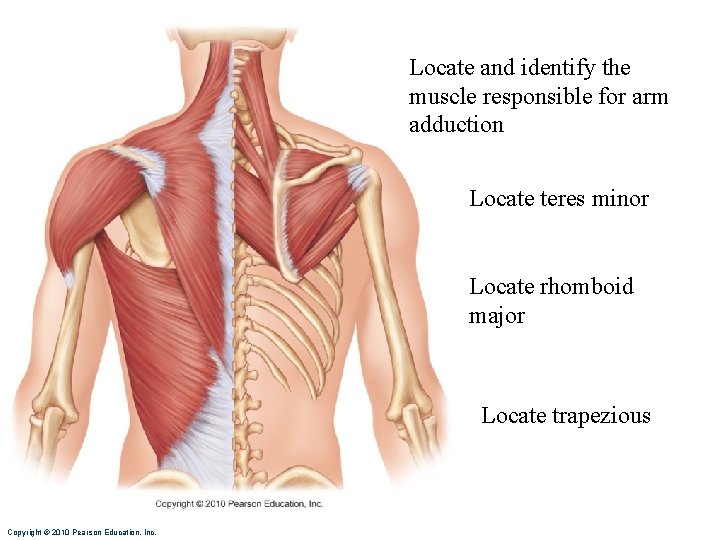
Locate and identify the muscle responsible for arm adduction Locate teres minor Locate rhomboid major Locate trapezious Copyright © 2010 Pearson Education, Inc.
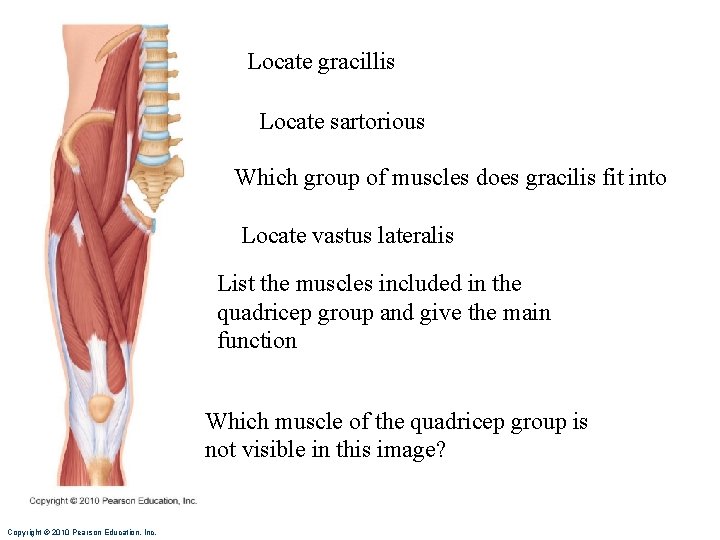
Locate gracillis Locate sartorious Which group of muscles does gracilis fit into Locate vastus lateralis List the muscles included in the quadricep group and give the main function Which muscle of the quadricep group is not visible in this image? Copyright © 2010 Pearson Education, Inc.
Copyright © 2010 Pearson Education, Inc.
Copyright © 2010 Pearson Education, Inc.
Copyright © 2010 Pearson Education, Inc.
Copyright © 2010 Pearson Education, Inc.
Copyright © 2010 Pearson Education, Inc.
Copyright © 2010 Pearson Education, Inc.