
Muscles and Movements of Lower Extremity Ch 8
- Slides: 35
Muscles and Movements of Lower Extremity – Ch 8 Objectives • Explain how anatomical structure affects movement capabilities of lower extremity articulations. • Identify factors influencing the relative mobility and stability of lower extremity articulations. • Explain the ways in which the lower extremity is adapted to its weightbearing function. • Identify muscles that are active during specific lower extremity movements. • Describe the biomechanical contributions to common injuries of the lower extremity.
Lower Extremity Outline • Hip Joint – Structure , Loads, and Muscles and Movements • Knee Joint – Structure, Loads, Muscles and Movements – Common knee injuries – patellar chondromalacia (a. k. a. runners knee) and anterior cruciate tear • Ankle Joint – Structure, Muscles and Movements – Common ankle and foot injuries - plantar fascitis, pronated feet • Misalignment problems of lower extremity • Websites • Homework
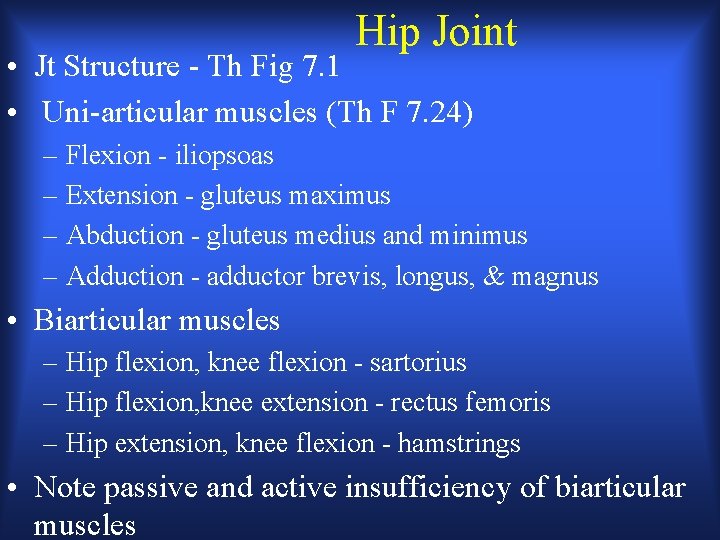
Hip Joint • Jt Structure - Th Fig 7. 1 • Uni-articular muscles (Th F 7. 24) – Flexion - iliopsoas – Extension - gluteus maximus – Abduction - gluteus medius and minimus – Adduction - adductor brevis, longus, & magnus • Biarticular muscles – Hip flexion, knee flexion - sartorius – Hip flexion, knee extension - rectus femoris – Hip extension, knee flexion - hamstrings • Note passive and active insufficiency of biarticular muscles
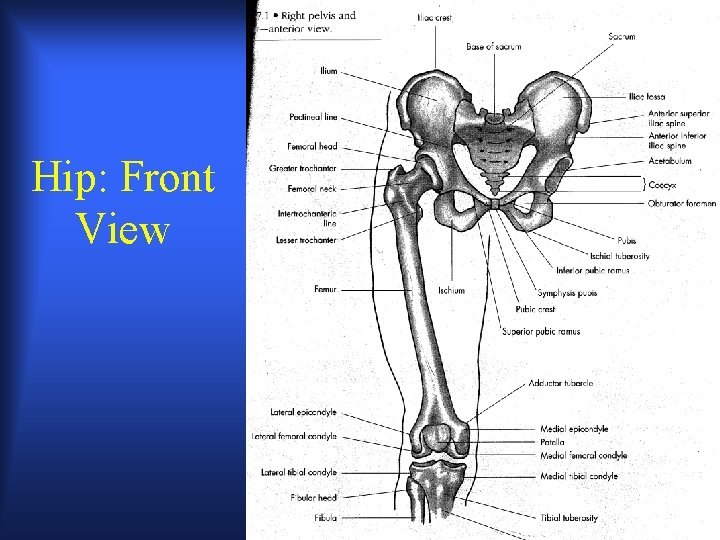
Hip: Front View
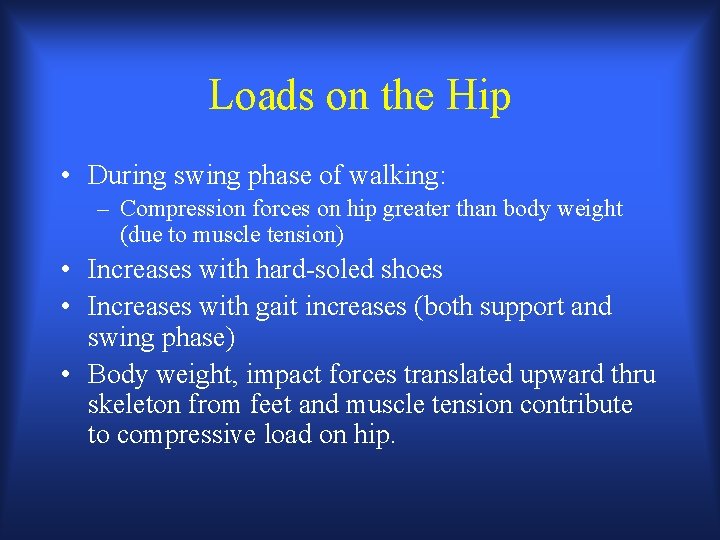
Loads on the Hip • During swing phase of walking: – Compression forces on hip greater than body weight (due to muscle tension) • Increases with hard-soled shoes • Increases with gait increases (both support and swing phase) • Body weight, impact forces translated upward thru skeleton from feet and muscle tension contribute to compressive load on hip.
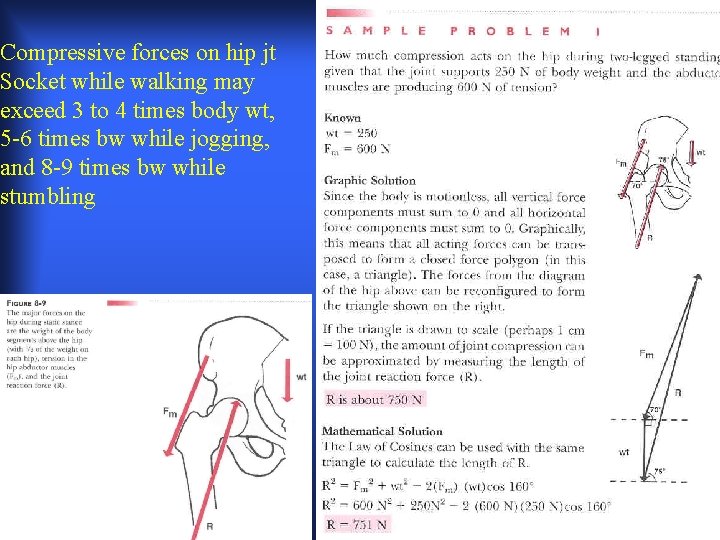
Compressive forces on hip jt Socket while walking may exceed 3 to 4 times body wt, 5 -6 times bw while jogging, and 8 -9 times bw while stumbling
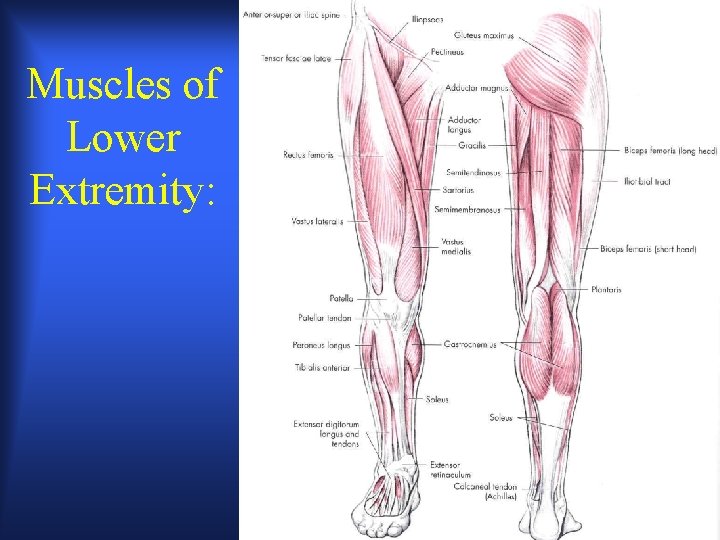
Muscles of Lower Extremity:
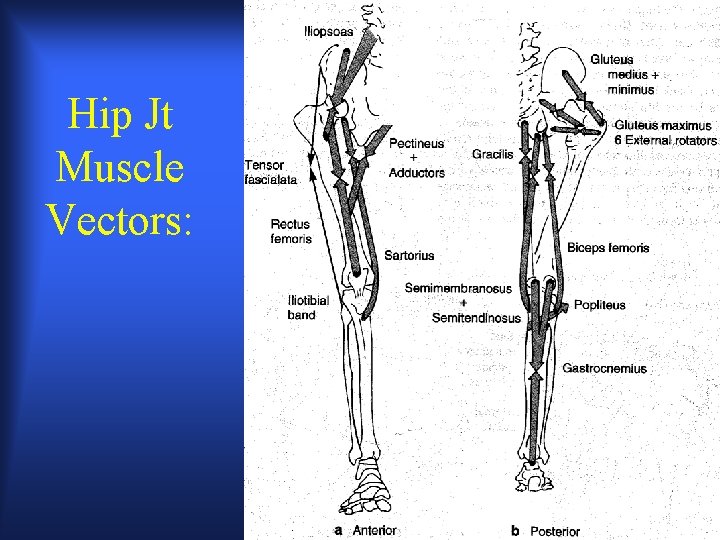
Hip Jt Muscle Vectors:
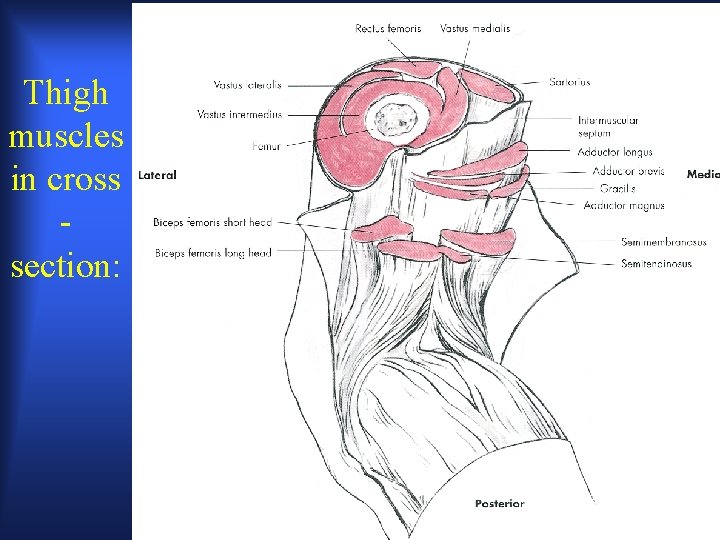
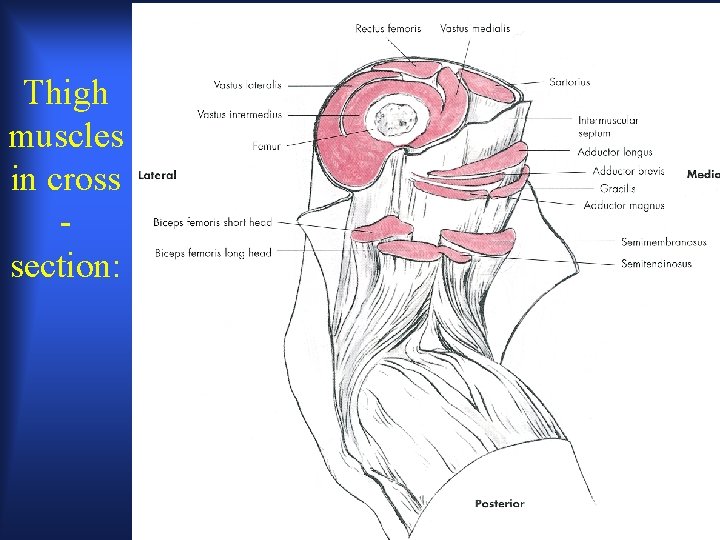
Thigh muscles in cross section:
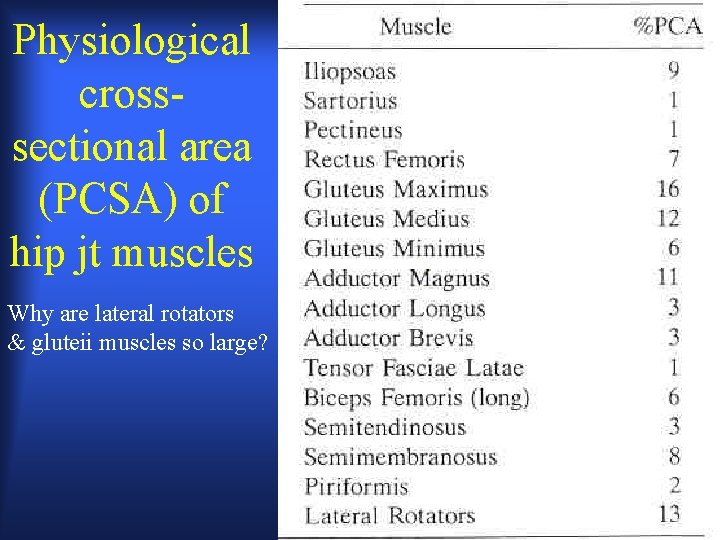
Physiological crosssectional area (PCSA) of hip jt muscles Why are lateral rotators & gluteii muscles so large?
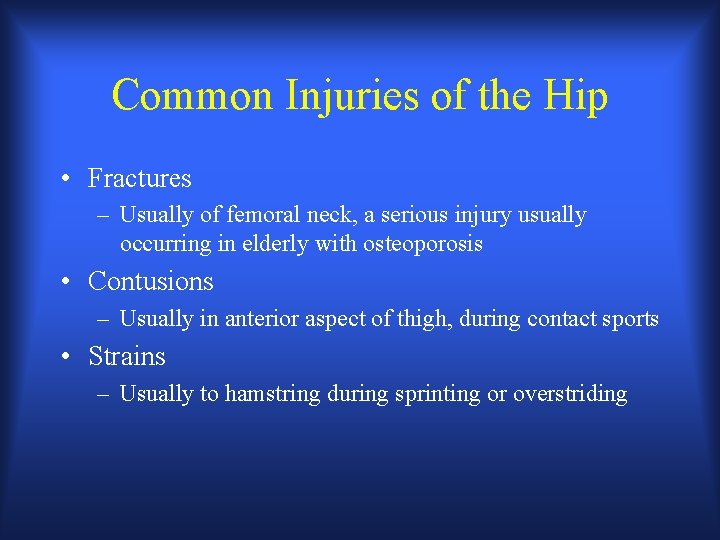
Common Injuries of the Hip • Fractures – Usually of femoral neck, a serious injury usually occurring in elderly with osteoporosis • Contusions – Usually in anterior aspect of thigh, during contact sports • Strains – Usually to hamstring during sprinting or overstriding
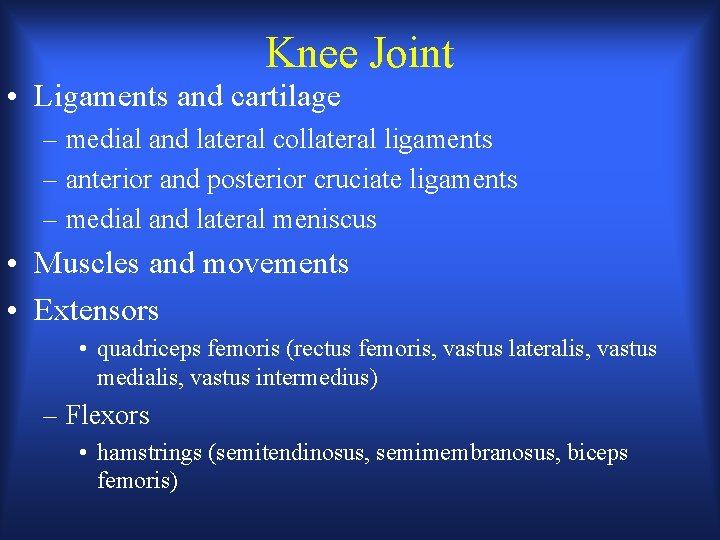
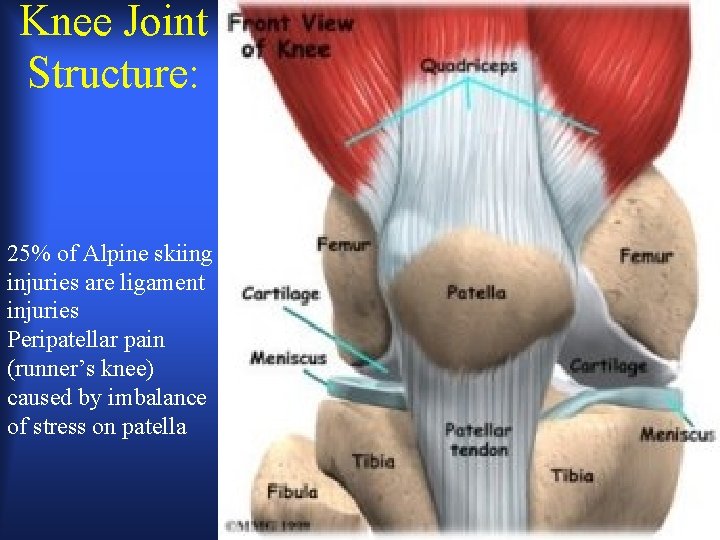
Knee Joint • Ligaments and cartilage – medial and lateral collateral ligaments – anterior and posterior cruciate ligaments – medial and lateral meniscus • Muscles and movements • Extensors • quadriceps femoris (rectus femoris, vastus lateralis, vastus medialis, vastus intermedius) – Flexors • hamstrings (semitendinosus, semimembranosus, biceps femoris)
Knee Joint Structure: 25% of Alpine skiing injuries are ligament injuries Peripatellar pain (runner’s knee) caused by imbalance of stress on patella
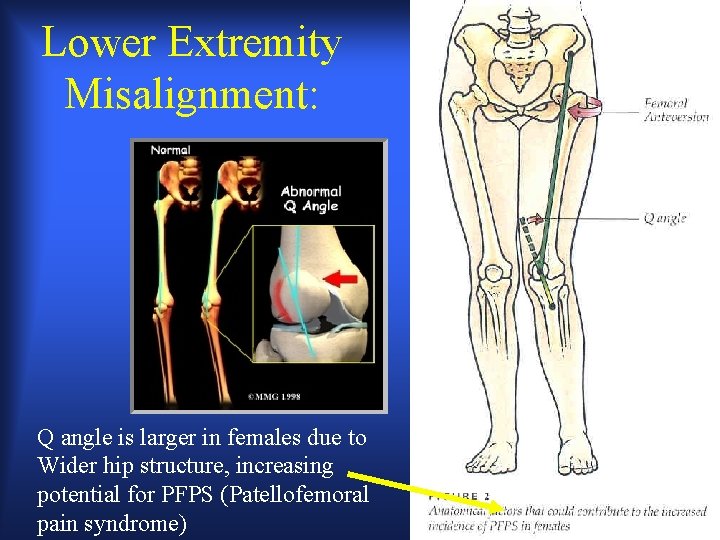
Lower Extremity Misalignment: Q angle is larger in females due to Wider hip structure, increasing potential for PFPS (Patellofemoral pain syndrome)
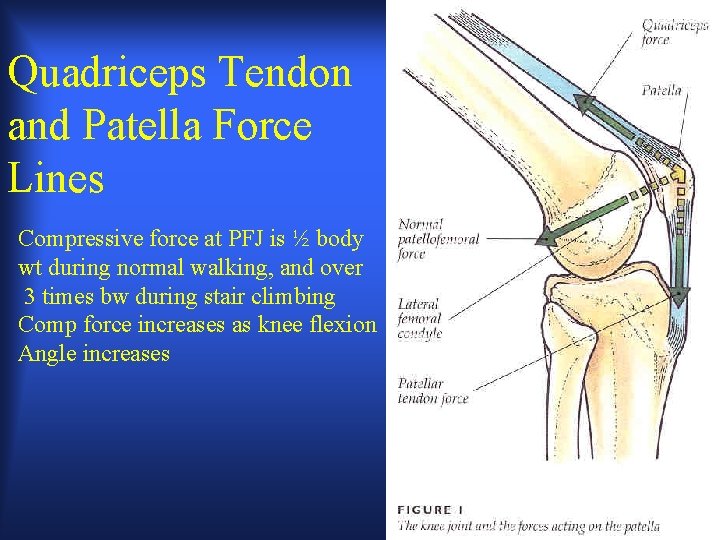
Quadriceps Tendon and Patella Force Lines Compressive force at PFJ is ½ body wt during normal walking, and over 3 times bw during stair climbing Comp force increases as knee flexion Angle increases
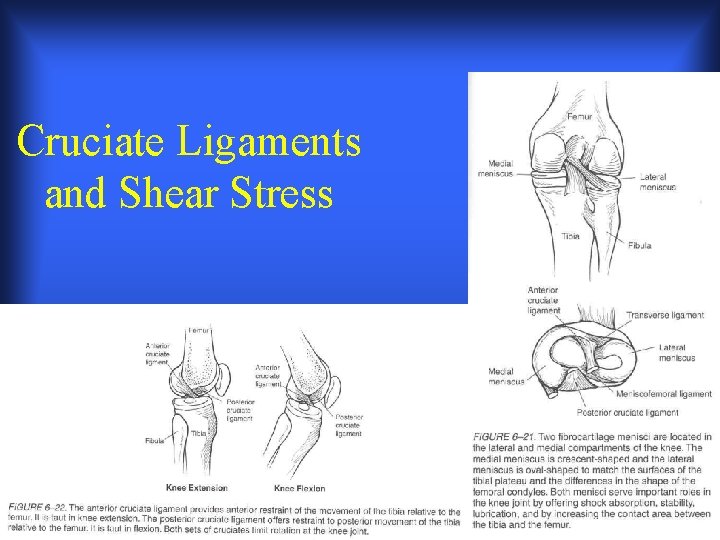
Cruciate Ligaments and Shear Stress
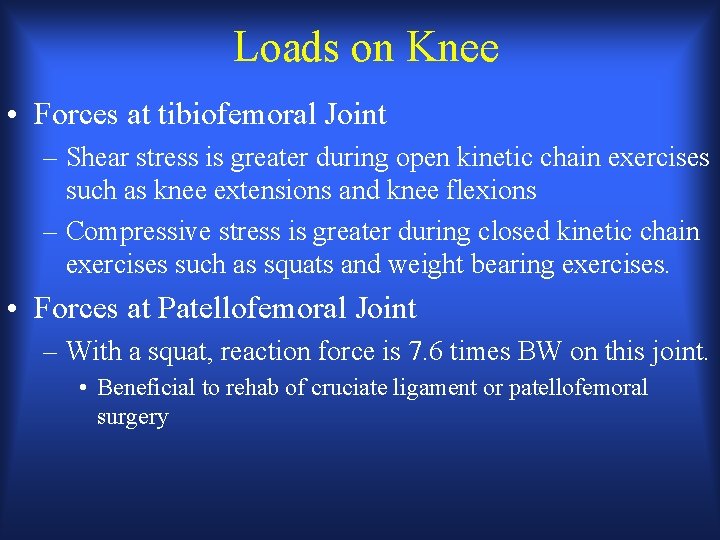
Loads on Knee • Forces at tibiofemoral Joint – Shear stress is greater during open kinetic chain exercises such as knee extensions and knee flexions – Compressive stress is greater during closed kinetic chain exercises such as squats and weight bearing exercises. • Forces at Patellofemoral Joint – With a squat, reaction force is 7. 6 times BW on this joint. • Beneficial to rehab of cruciate ligament or patellofemoral surgery
Thigh muscles in cross section:
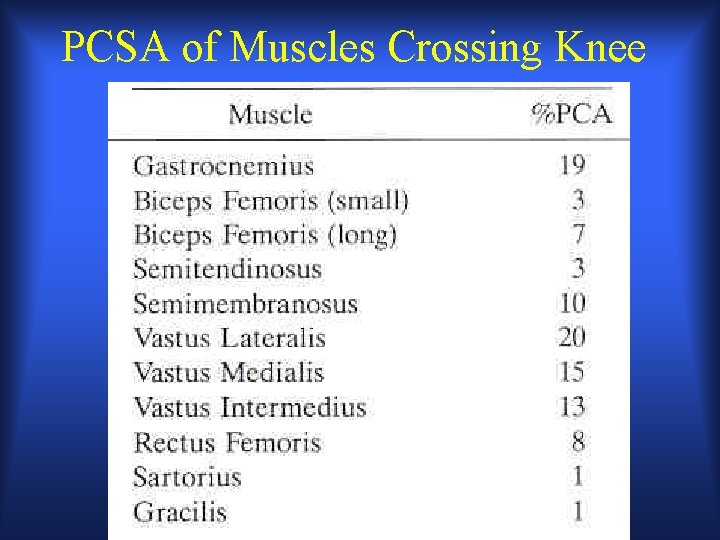
PCSA of Muscles Crossing Knee
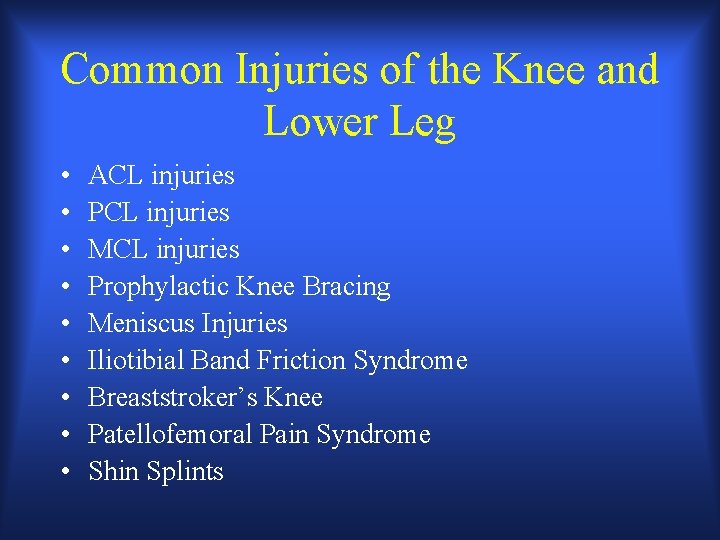
Common Injuries of the Knee and Lower Leg • • • ACL injuries PCL injuries MCL injuries Prophylactic Knee Bracing Meniscus Injuries Iliotibial Band Friction Syndrome Breaststroker’s Knee Patellofemoral Pain Syndrome Shin Splints
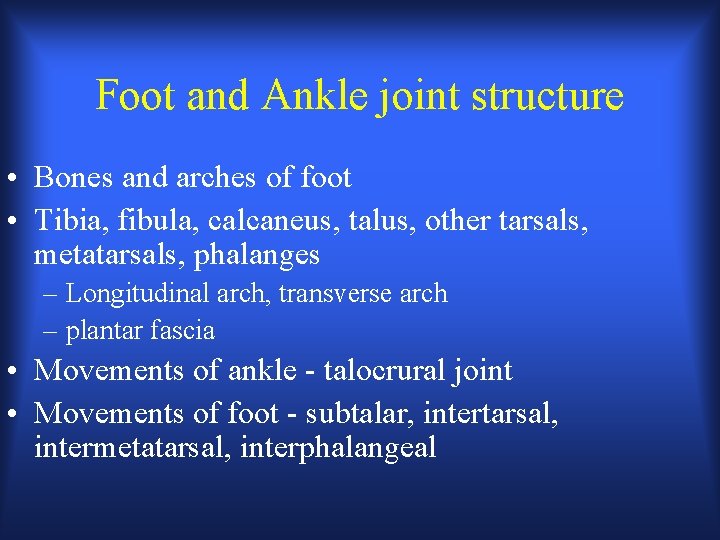
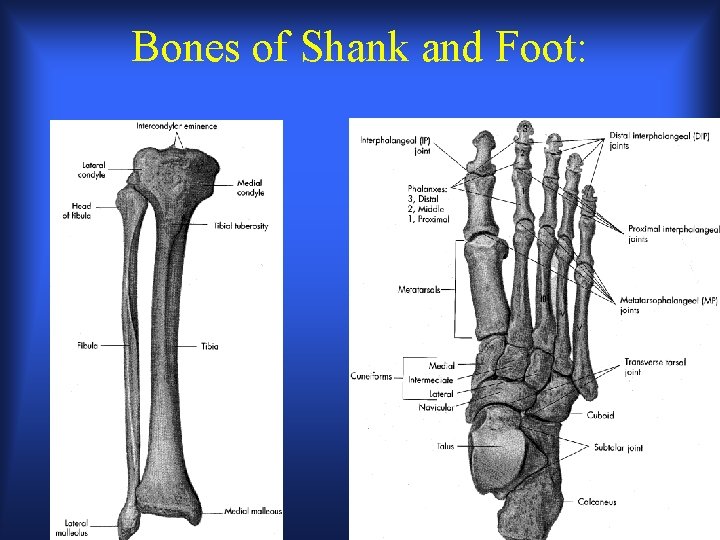
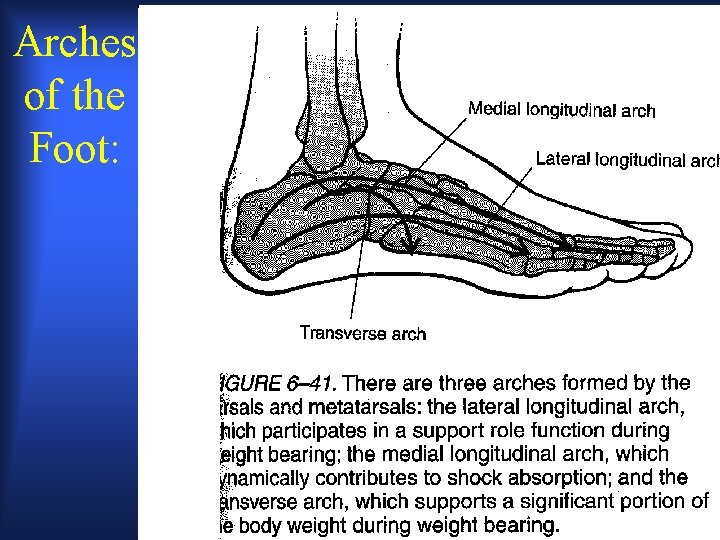
Foot and Ankle joint structure • Bones and arches of foot • Tibia, fibula, calcaneus, talus, other tarsals, metatarsals, phalanges – Longitudinal arch, transverse arch – plantar fascia • Movements of ankle - talocrural joint • Movements of foot - subtalar, intertarsal, intermetatarsal, interphalangeal
Bones of Shank and Foot:
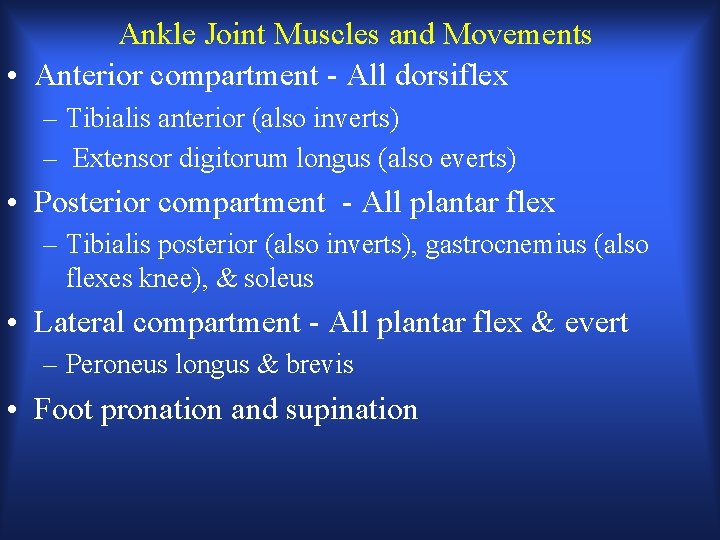
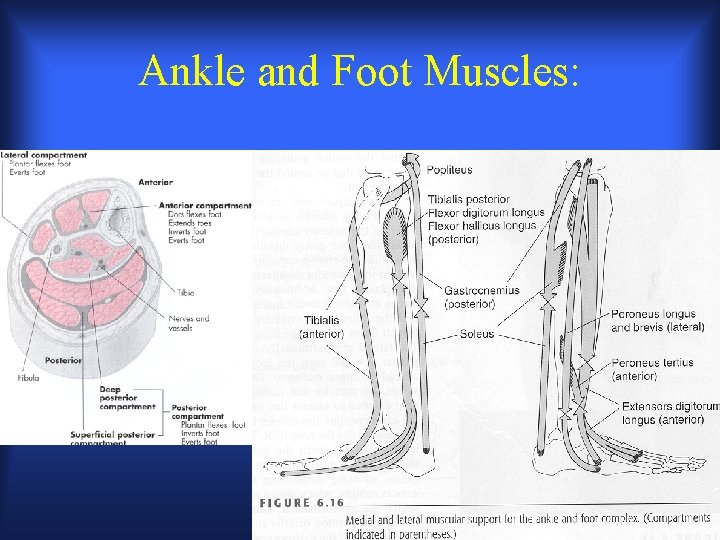
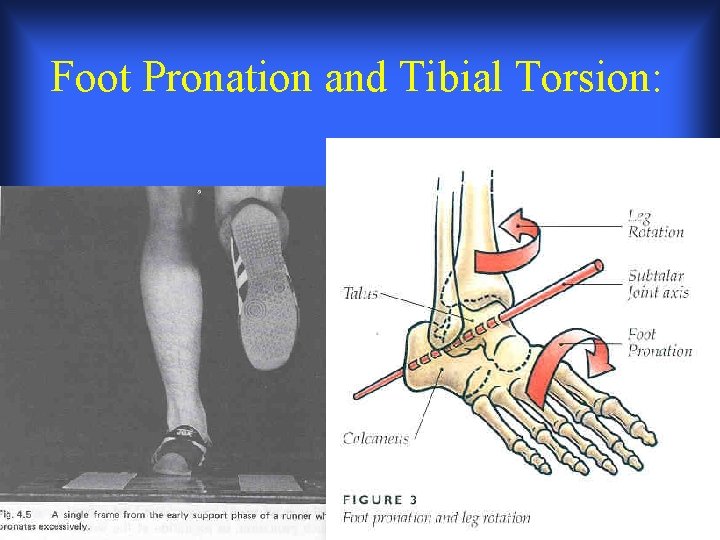
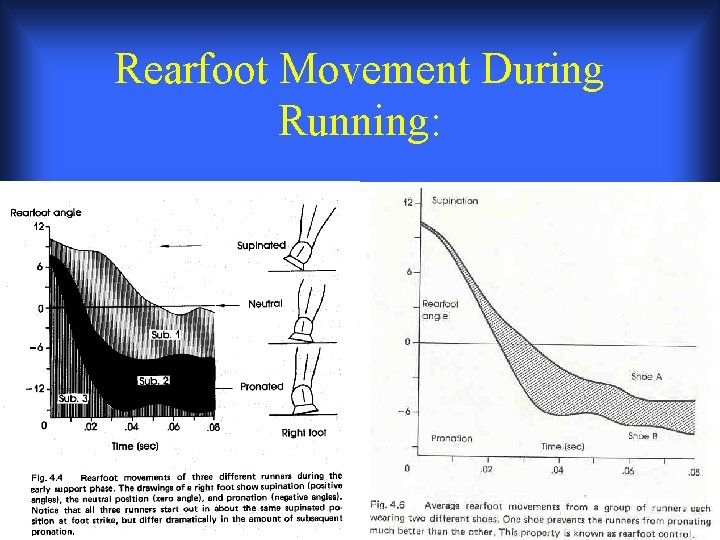
Ankle Joint Muscles and Movements • Anterior compartment - All dorsiflex – Tibialis anterior (also inverts) – Extensor digitorum longus (also everts) • Posterior compartment - All plantar flex – Tibialis posterior (also inverts), gastrocnemius (also flexes knee), & soleus • Lateral compartment - All plantar flex & evert – Peroneus longus & brevis • Foot pronation and supination
Ankle and Foot Muscles:
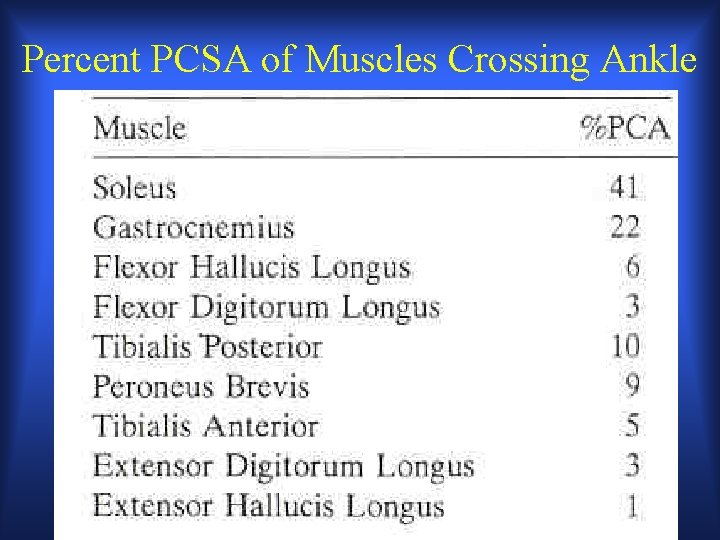
Percent PCSA of Muscles Crossing Ankle
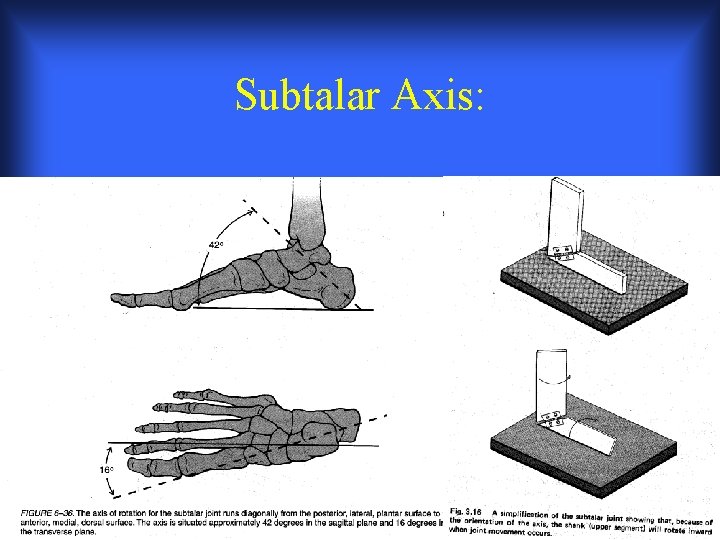
Subtalar Axis:
Foot Pronation and Tibial Torsion:
Rearfoot Movement During Running:
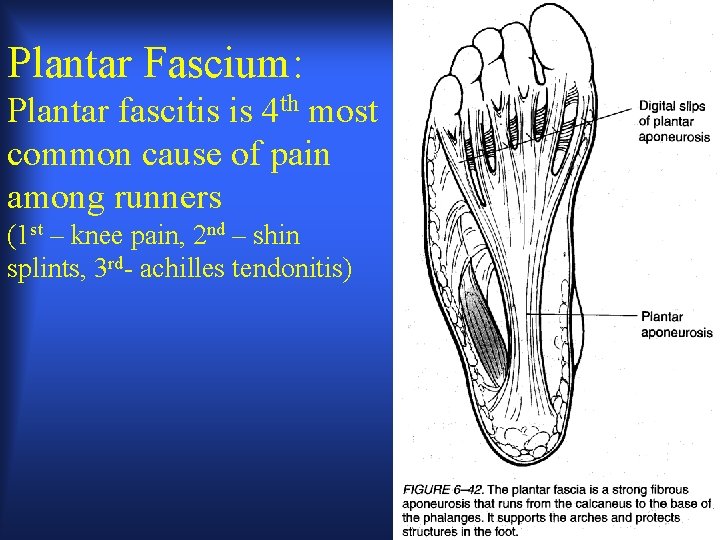
Plantar Fascium • What is the plantar fascium? - attaches to calcaneus posteriorly and to the first row of phalanges anteriorly • What is its function? – passive intertarsal stabilization
Arches of the Foot:
Plantar Fascium: Plantar fascitis is 4 th most common cause of pain among runners (1 st – knee pain, 2 nd – shin splints, 3 rd- achilles tendonitis)
Plantar Fascitis – 4 th leading cause of pain in runners • What causes plantar fascitis(inflamation of plantar fascium)? – anatomic anomalies • • microtears in fascium and bone spurs inadequate flexibility of plantar flexors inadequate strength of plantar flexors functional pronation (eversion and abduction) – overuse • • overweight poorly designed and poorly fitted shoes running and jumping on hard surfaces sudden increase in stress • Treatment – remove the cause(s) – Therapeutic treatment to promote body’s natural healing • NSAIDS • Intermittent ice and heat • Ultrasound, diathermy, massage
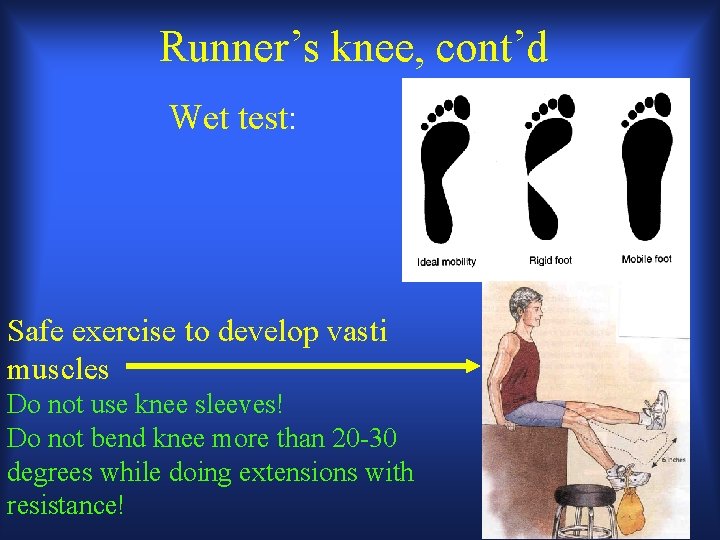
Patellar Chrondomalacia (a. k. a. Runner’s Knee) – leading cause of pain in runners) • Primary cause is imbalance in forces on patella – Increased Q angle – Pronated feet • Tissues affected – Degrading of articular cartilage of patella & femoral condyles – Fluid collection, causing joint stiffness • Symptoms – Pain around patella with no particular injury causing it – Worse going upstairs and downstairs, or after sitting awhile – Feels like knee needs to be stretched • Prevention/treatment – Surgery is seldom beneficial – Wet test – walk with wet feet on floor and determine if you have a hypermobile foot. If so, purchase shoes and/or orthotics to decrease degree of foot pronation – Exercises to increase strength/endurance of vastus medialis
Runner’s knee, cont’d Wet test: Safe exercise to develop vasti muscles Do not use knee sleeves! Do not bend knee more than 20 -30 degrees while doing extensions with resistance!
Websites for Muscles, Movements, & Problems of Lower Extremity • MMG - Patient Education Foot and Ankle TOC • MMG - Patient Education Knee TOC Homework on lower extremity: Introductory problems, p 263: 9, 10 Additional problems, p 263 -264: 6