
Muscles and Body Movements Movement results when a
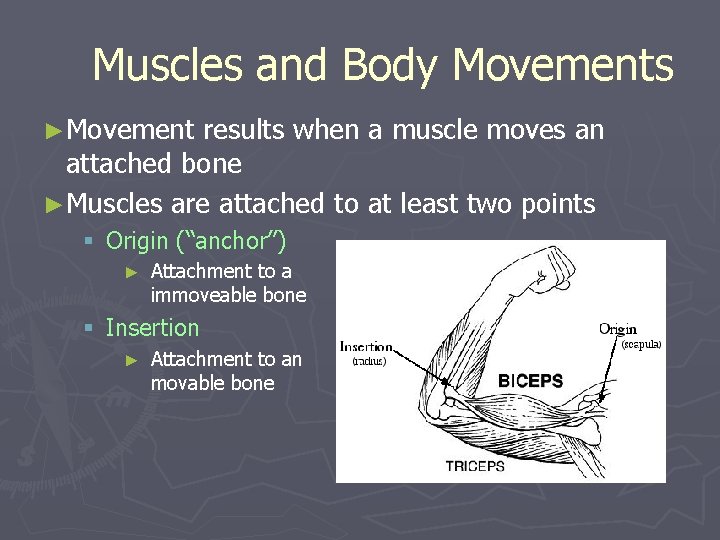
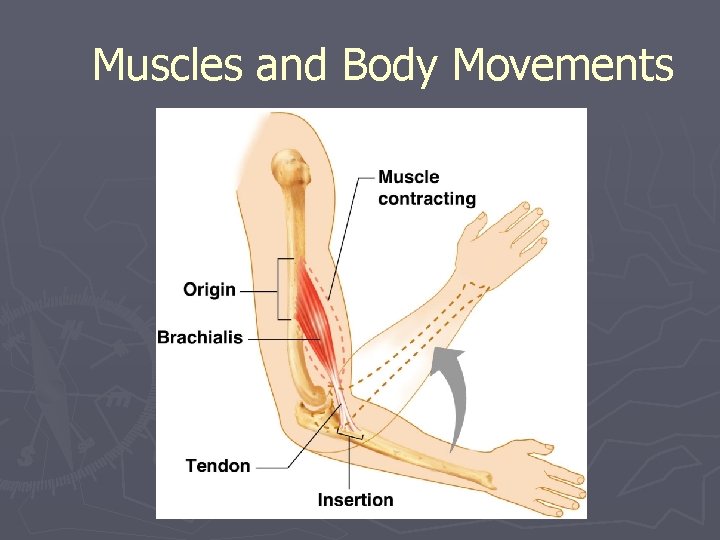
Muscles and Body Movements ►Movement results when a muscle moves an attached bone ►Muscles are attached to at least two points § Origin (“anchor”) ► Attachment to a immoveable bone § Insertion ► Attachment to an movable bone
Muscles and Body Movements
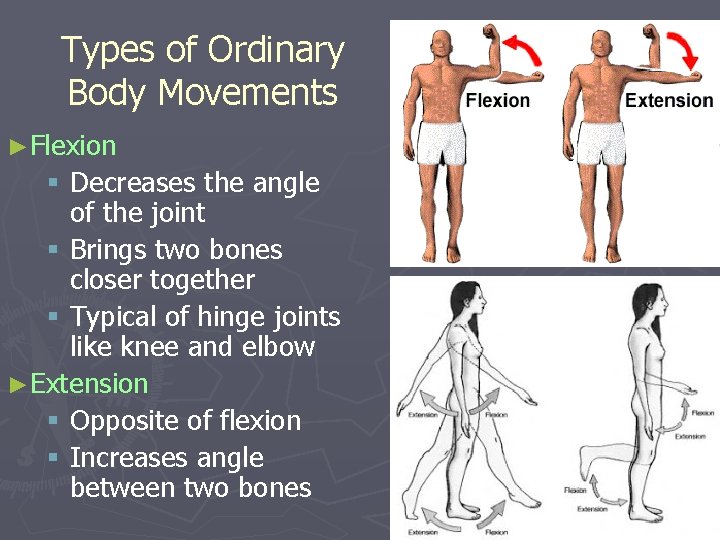
Types of Ordinary Body Movements ►Flexion § Decreases the angle of the joint § Brings two bones closer together § Typical of hinge joints like knee and elbow ►Extension § Opposite of flexion § Increases angle between two bones
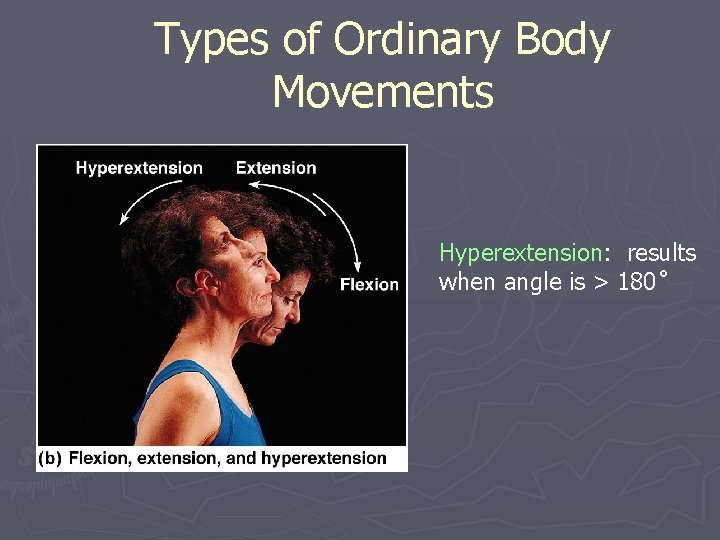
Types of Ordinary Body Movements Hyperextension: results when angle is > 180
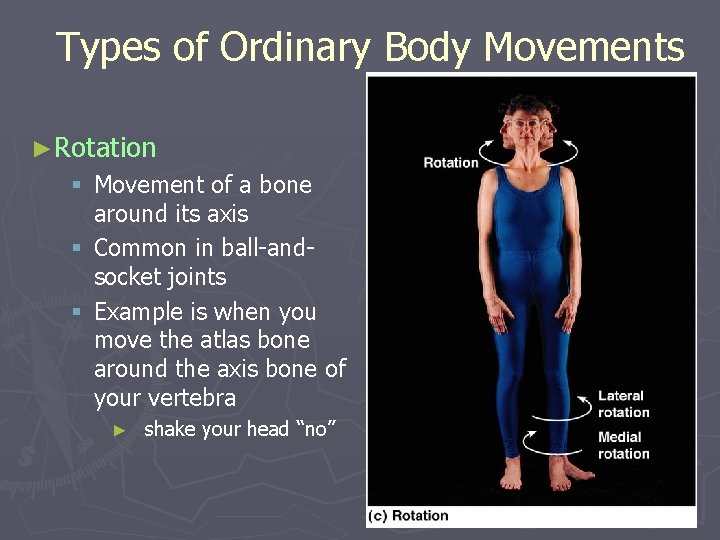
Types of Ordinary Body Movements ►Rotation § Movement of a bone around its axis § Common in ball-andsocket joints § Example is when you move the atlas bone around the axis bone of your vertebra ► shake your head “no”
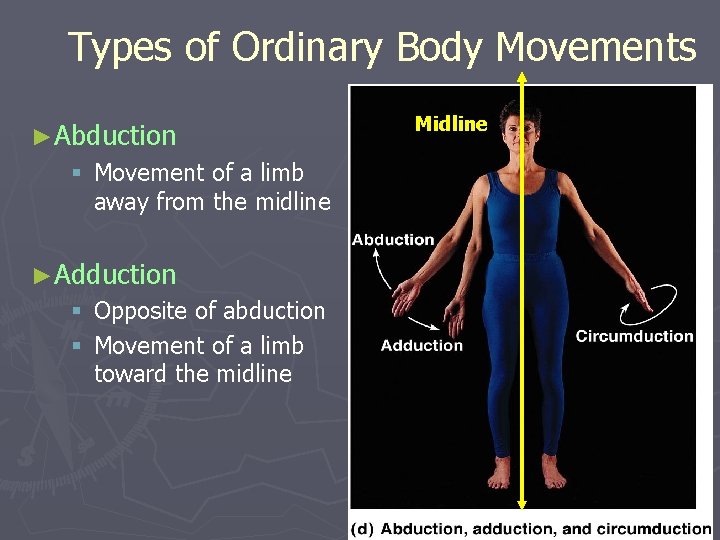
Types of Ordinary Body Movements ►Abduction § Movement of a limb away from the midline ►Adduction § Opposite of abduction § Movement of a limb toward the midline Midline

Types of Ordinary Body Movements ►Circumduction § Combination of flexion, extension, abduction, and adduction § Common in ball-and -socket joints
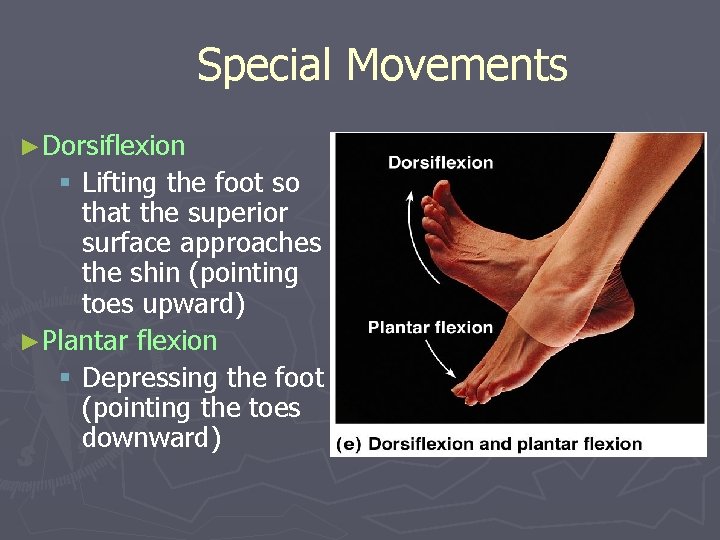
Special Movements ►Dorsiflexion § Lifting the foot so that the superior surface approaches the shin (pointing toes upward) ►Plantar flexion § Depressing the foot (pointing the toes downward)
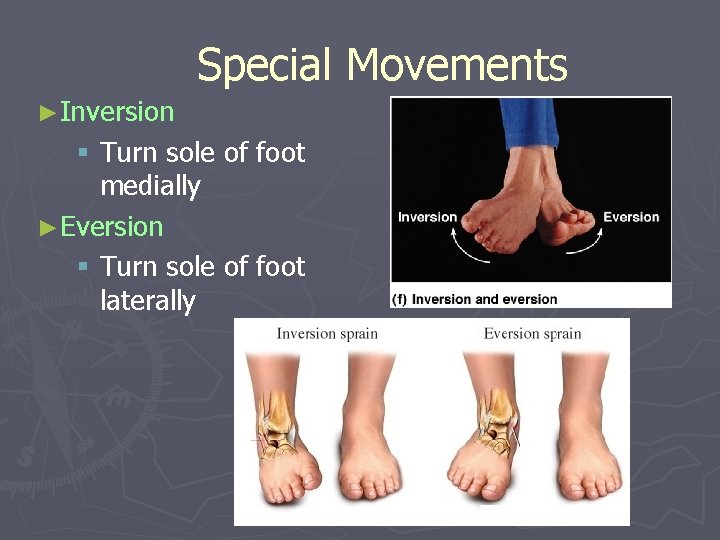
Special Movements ►Inversion § Turn sole of foot medially ►Eversion § Turn sole of foot laterally
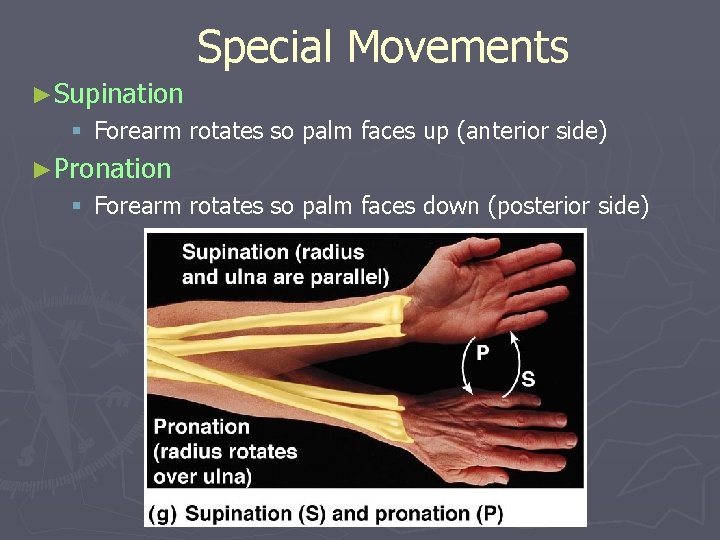
Special Movements ►Supination § Forearm rotates so palm faces up (anterior side) ►Pronation § Forearm rotates so palm faces down (posterior side)
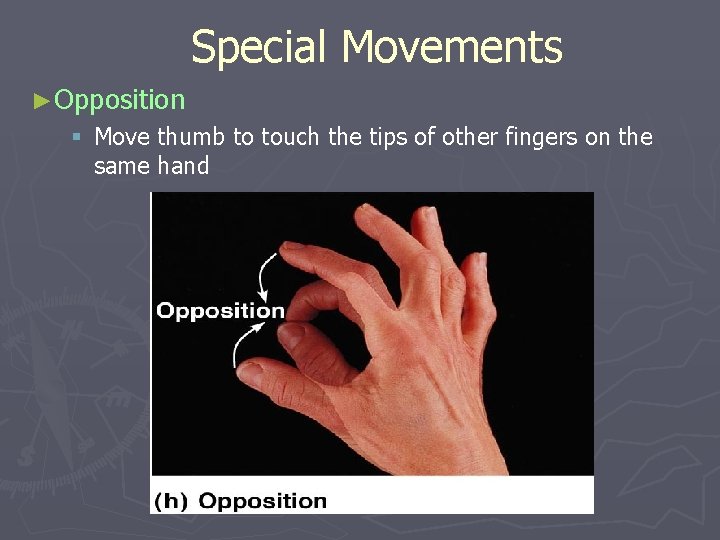
Special Movements ►Opposition § Move thumb to touch the tips of other fingers on the same hand
- Slides: 11