
Muscle tissue Specialized for contractility Classification of muscle
- Slides: 24
Muscle tissue Specialized for contractility
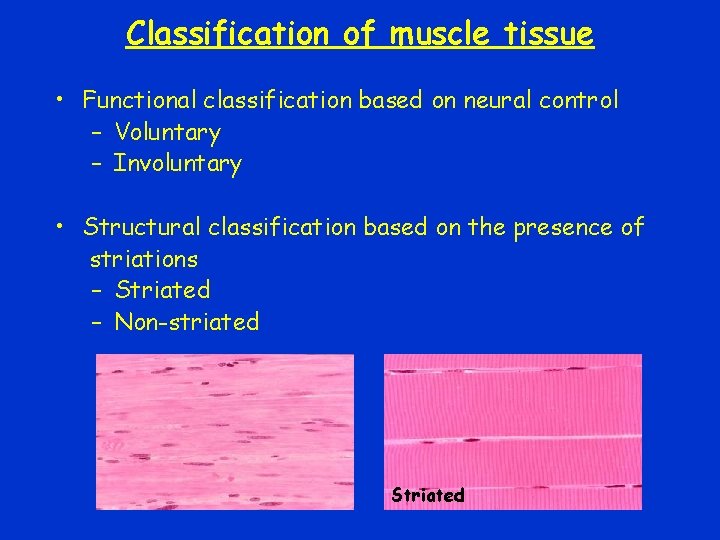
Classification of muscle tissue • Functional classification based on neural control – Voluntary – Involuntary • Structural classification based on the presence of striations – Striated – Non-striated Striated
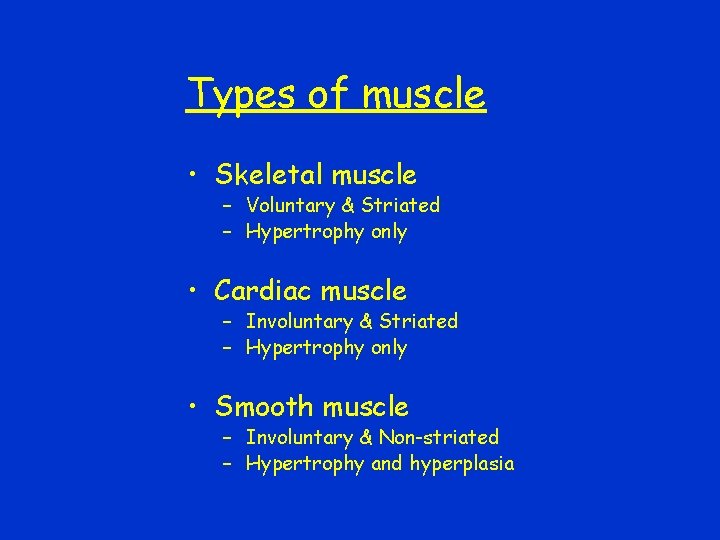
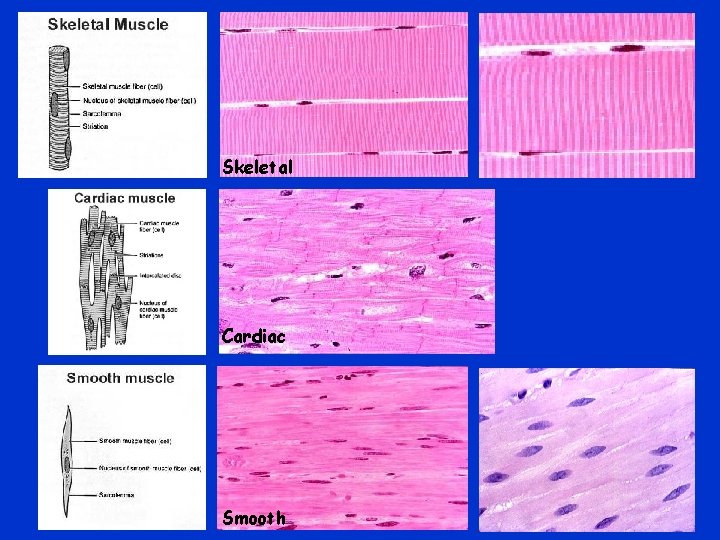
Types of muscle • Skeletal muscle – Voluntary & Striated – Hypertrophy only • Cardiac muscle – Involuntary & Striated – Hypertrophy only • Smooth muscle – Involuntary & Non-striated – Hypertrophy and hyperplasia
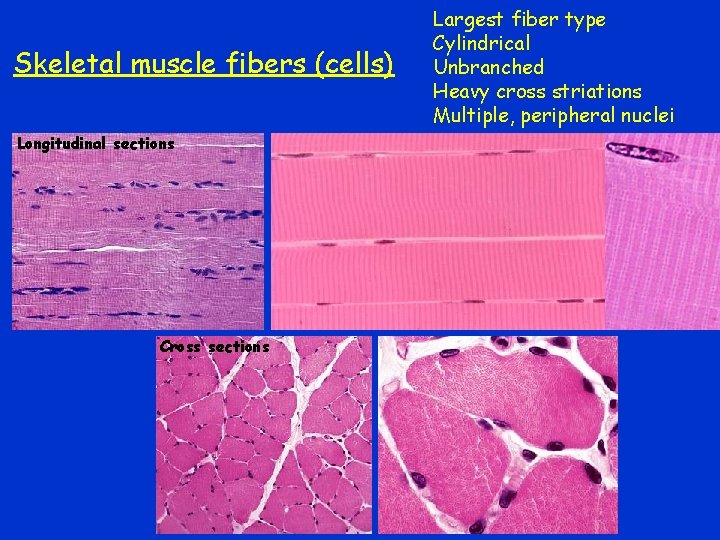
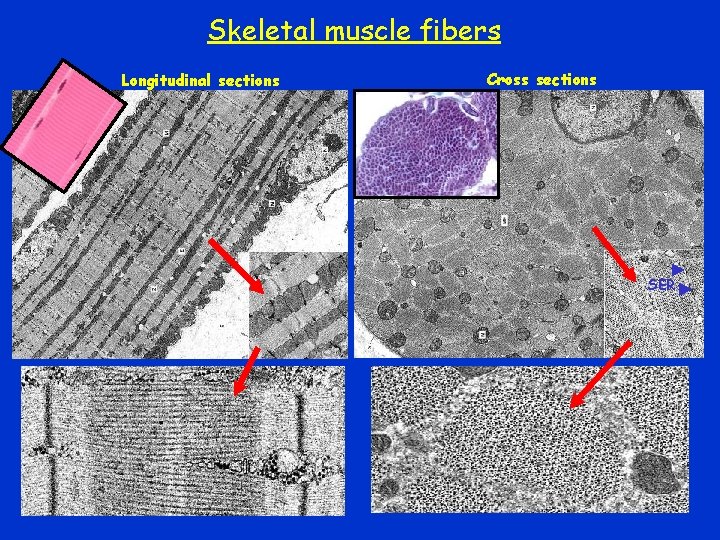
Skeletal muscle fibers (cells) Longitudinal sections Cross sections Largest fiber type Cylindrical Unbranched Heavy cross striations Multiple, peripheral nuclei
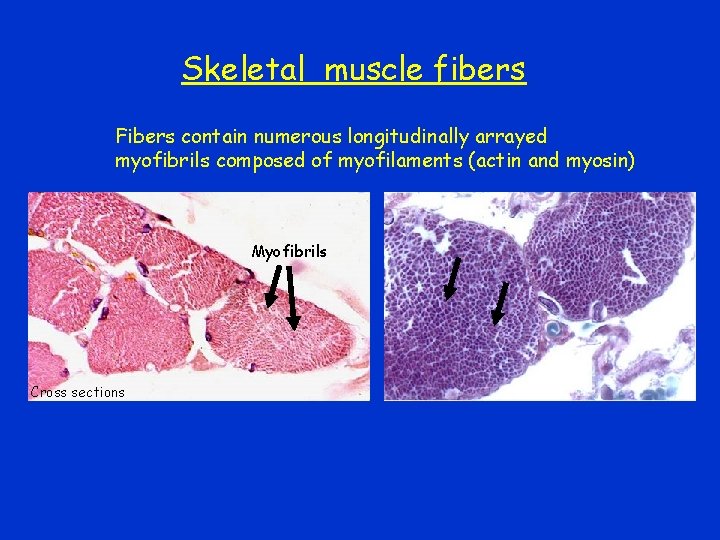
Skeletal muscle fibers Fibers contain numerous longitudinally arrayed myofibrils composed of myofilaments (actin and myosin) Myofibrils Cross sections
Skeletal muscle fibers Longitudinal sections Cross sections SER
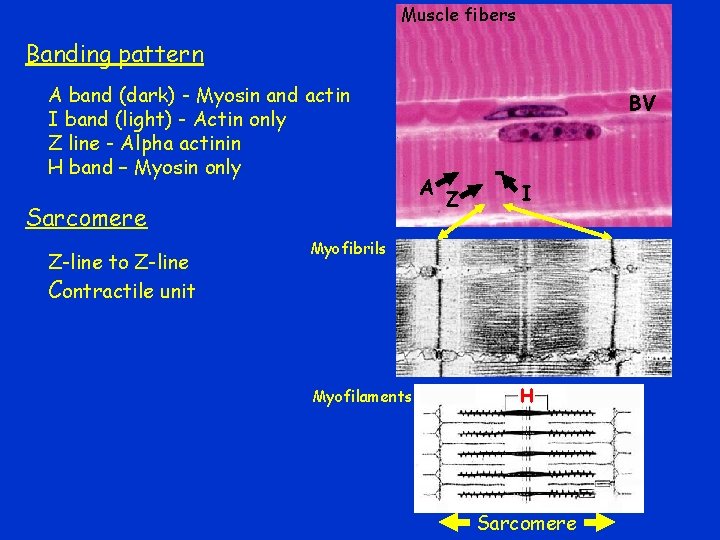
Muscle fibers Banding pattern A band (dark) - Myosin and actin I band (light) - Actin only Z line - Alpha actinin H band – Myosin only BV A Sarcomere Z-line to Z-line Contractile unit I Z Myofibrils Z Myofilaments I A H Sarcomere
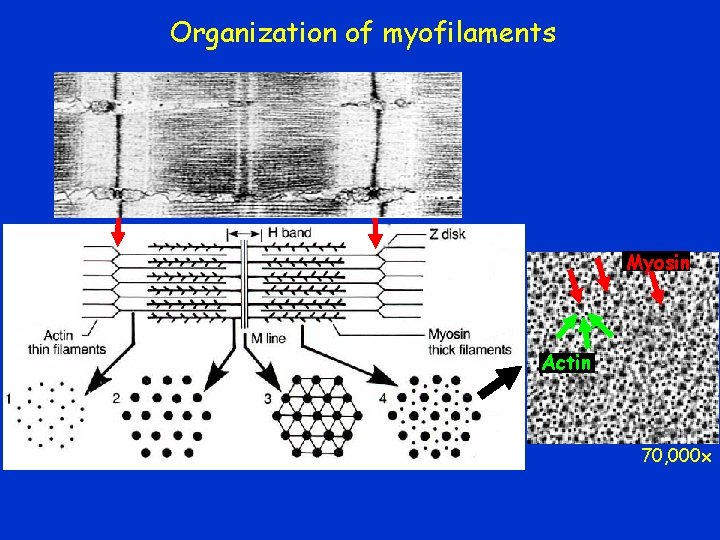
Organization of myofilaments Myosin Actin 70, 000 x
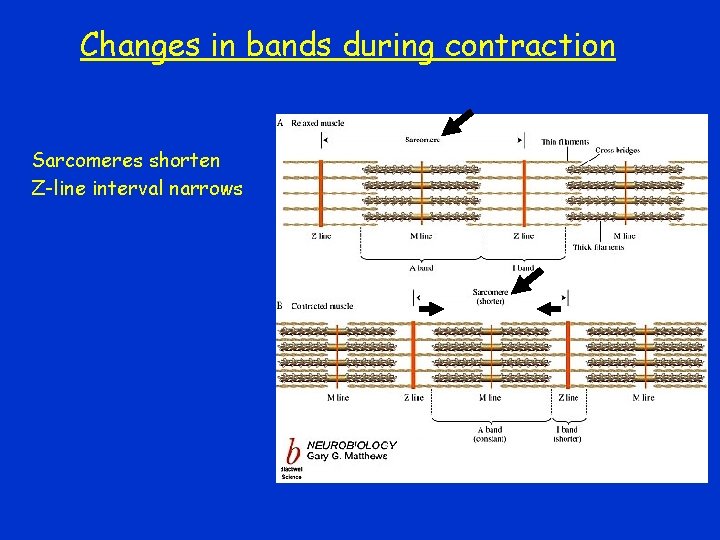
Changes in bands during contraction Sarcomeres shorten Z-line interval narrows
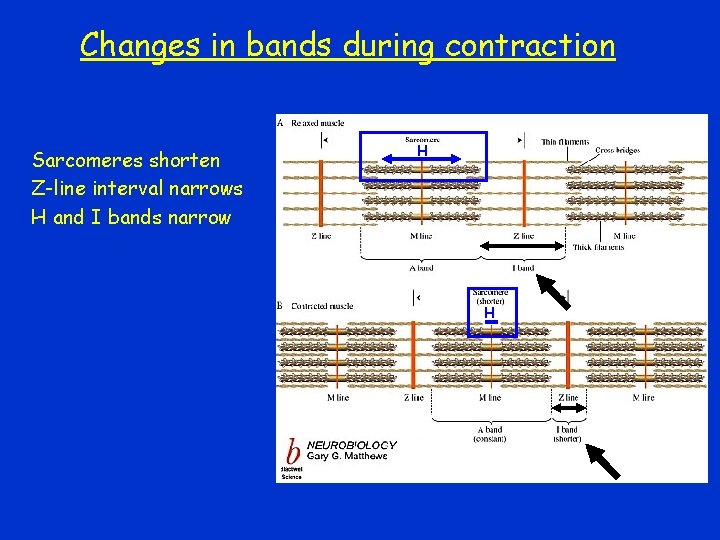
Changes in bands during contraction Sarcomeres shorten Z-line interval narrows H and I bands narrow H H
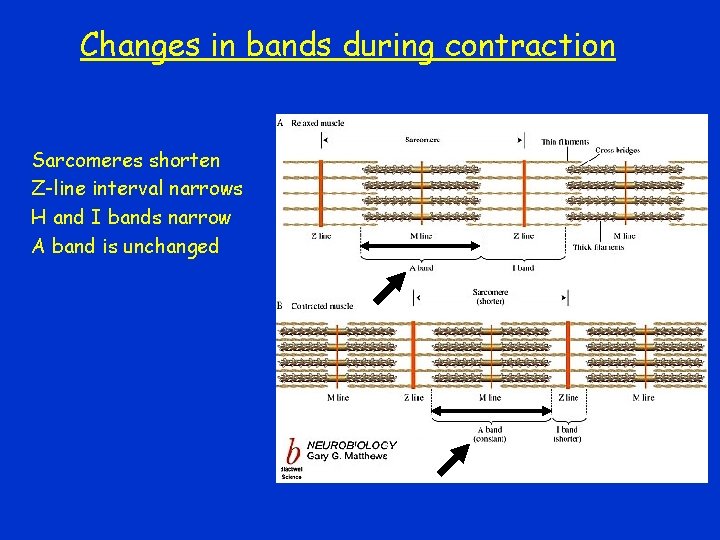
Changes in bands during contraction Sarcomeres shorten Z-line interval narrows H and I bands narrow A band is unchanged
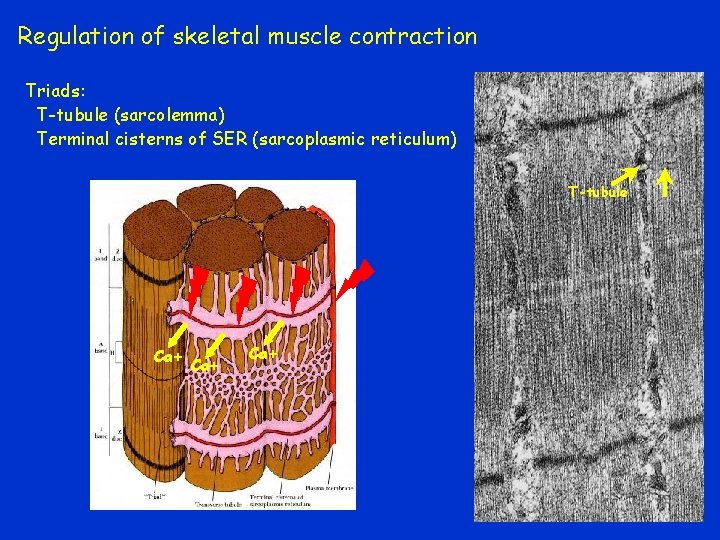
Regulation of skeletal muscle contraction Triads: T-tubule (sarcolemma) Terminal cisterns of SER (sarcoplasmic reticulum) T-tubule Ca+ Ca+
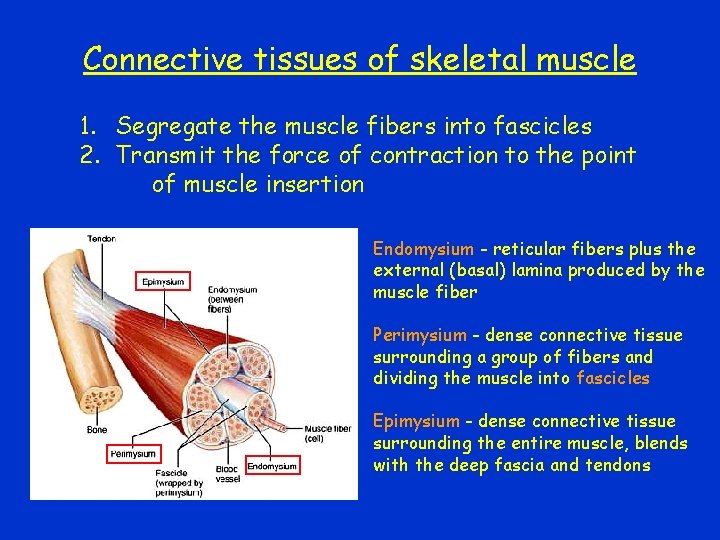
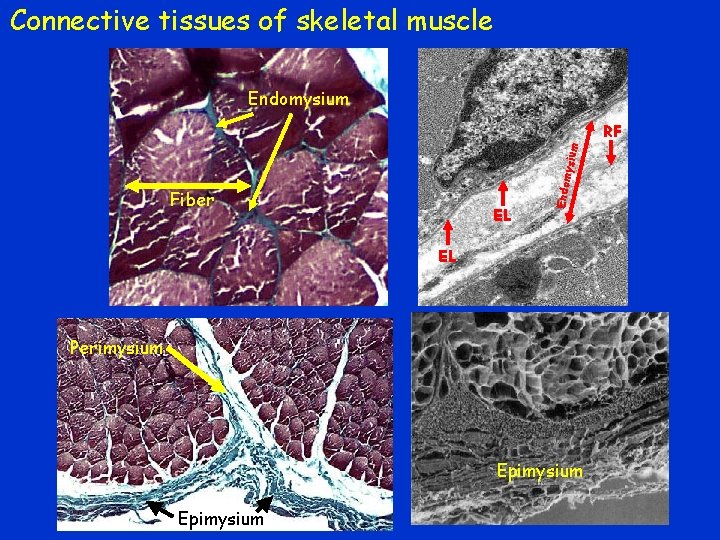
Connective tissues of skeletal muscle 1. Segregate the muscle fibers into fascicles 2. Transmit the force of contraction to the point of muscle insertion Endomysium - reticular fibers plus the external (basal) lamina produced by the muscle fiber Perimysium - dense connective tissue surrounding a group of fibers and dividing the muscle into fascicles Epimysium - dense connective tissue surrounding the entire muscle, blends with the deep fascia and tendons
Connective tissues of skeletal muscle Endomysium Fiber EL Endom ysium RF EL Perimysium Epimysium
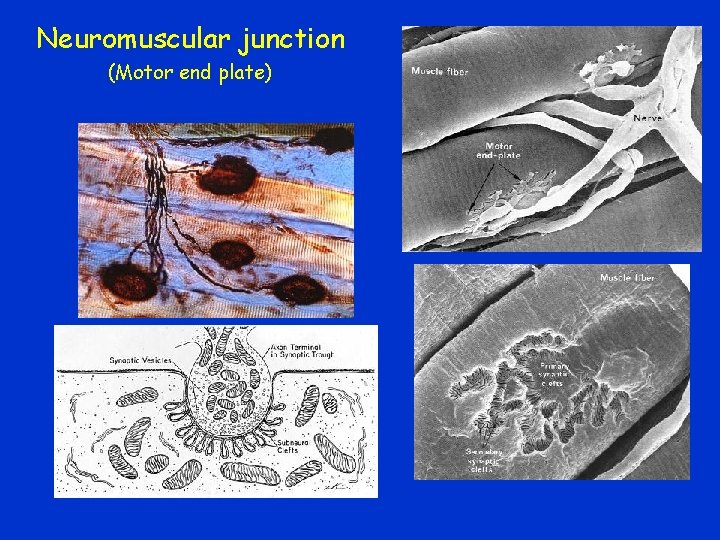
Neuromuscular junction (Motor end plate)
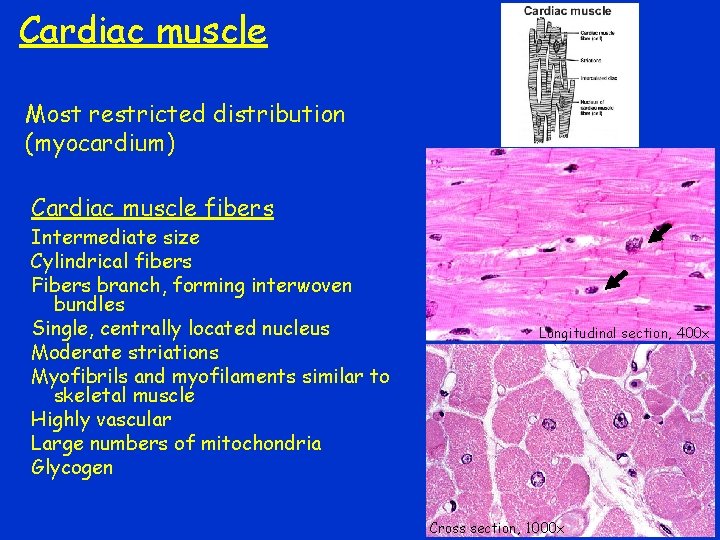
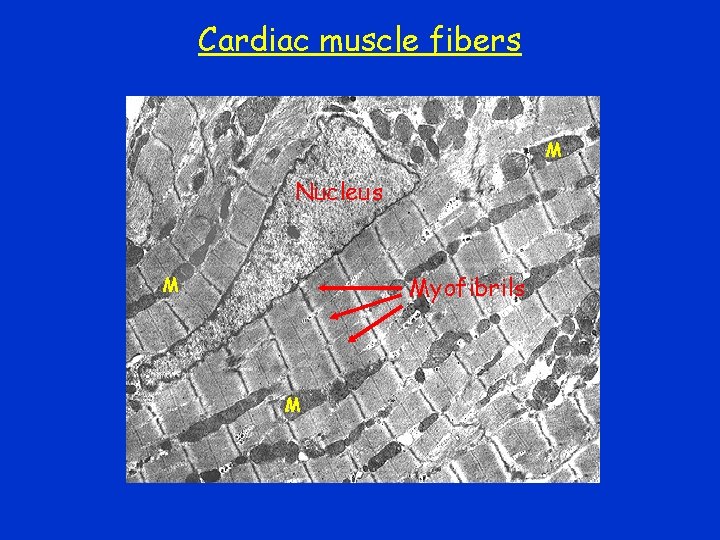
Cardiac muscle Most restricted distribution (myocardium) Cardiac muscle fibers Intermediate size Cylindrical fibers Fibers branch, forming interwoven bundles Single, centrally located nucleus Moderate striations Myofibrils and myofilaments similar to skeletal muscle Highly vascular Large numbers of mitochondria Glycogen Longitudinal section, 400 x Cross section, 1000 x
Cardiac muscle fibers M Nucleus Myofibrils M M
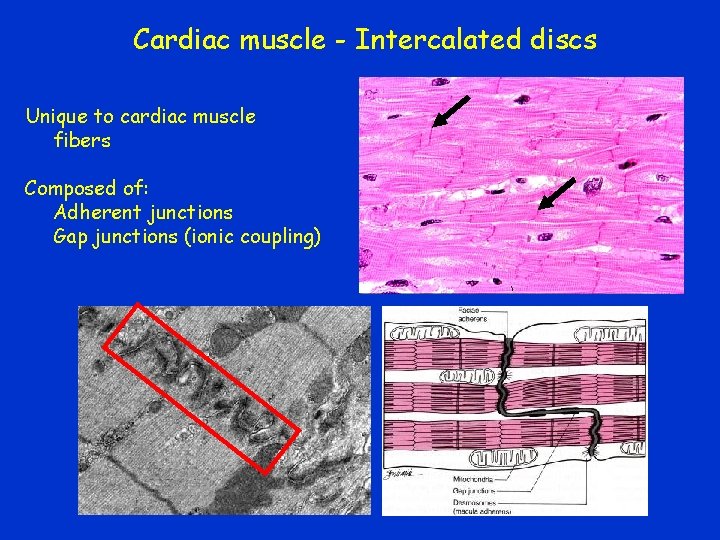
Cardiac muscle - Intercalated discs Unique to cardiac muscle fibers Composed of: Adherent junctions Gap junctions (ionic coupling)
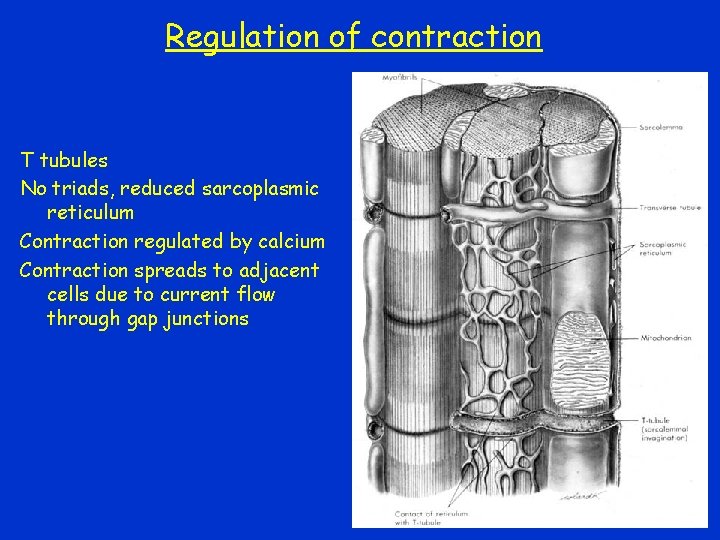
Regulation of contraction T tubules No triads, reduced sarcoplasmic reticulum Contraction regulated by calcium Contraction spreads to adjacent cells due to current flow through gap junctions
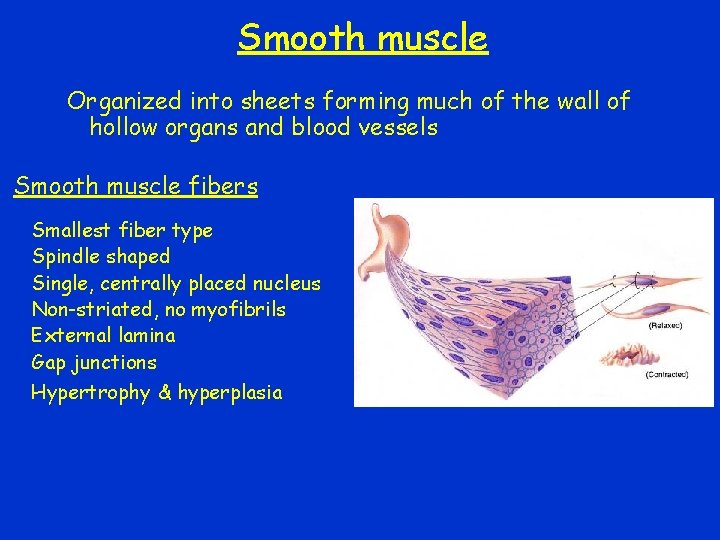
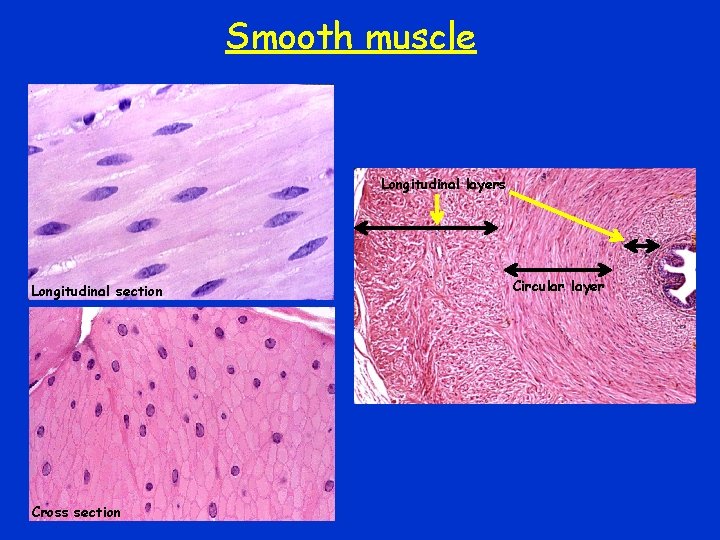
Smooth muscle Organized into sheets forming much of the wall of hollow organs and blood vessels Smooth muscle fibers Smallest fiber type Spindle shaped Single, centrally placed nucleus Non-striated, no myofibrils External lamina Gap junctions Hypertrophy & hyperplasia
Smooth muscle Longitudinal layers Longitudinal section Cross section Circular layer
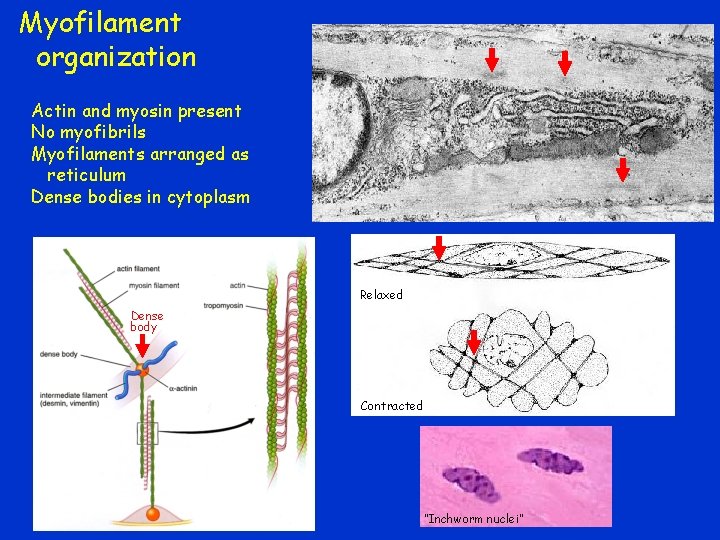
Myofilament organization Actin and myosin present No myofibrils Myofilaments arranged as reticulum Dense bodies in cytoplasm Relaxed Dense body Contracted “Inchworm nuclei”
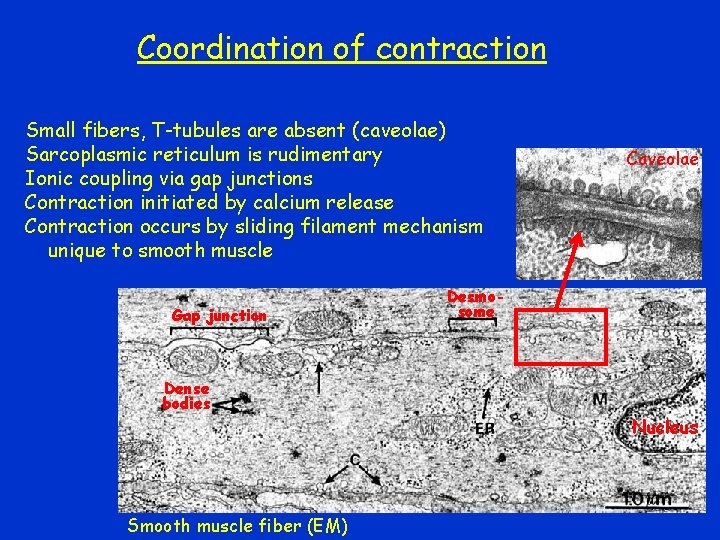
Coordination of contraction Small fibers, T-tubules are absent (caveolae) Sarcoplasmic reticulum is rudimentary Ionic coupling via gap junctions Contraction initiated by calcium release Contraction occurs by sliding filament mechanism unique to smooth muscle Gap junction Dense bodies Smooth muscle fiber (EM) Caveolae Desmosome Nucleus
Skeletal Cardiac Smooth