
Muscle Tissue Cont Muscle Metabolism Chapter 10 Skeletal
Muscle Tissue Cont. Muscle Metabolism Chapter 10
Skeletal Muscle Metabolism 3 ways to replenish ATP: 1. Creatine phosphate energy storage system 2. Aerobic respiration 3. Anaerobic respiration = lactic acid system
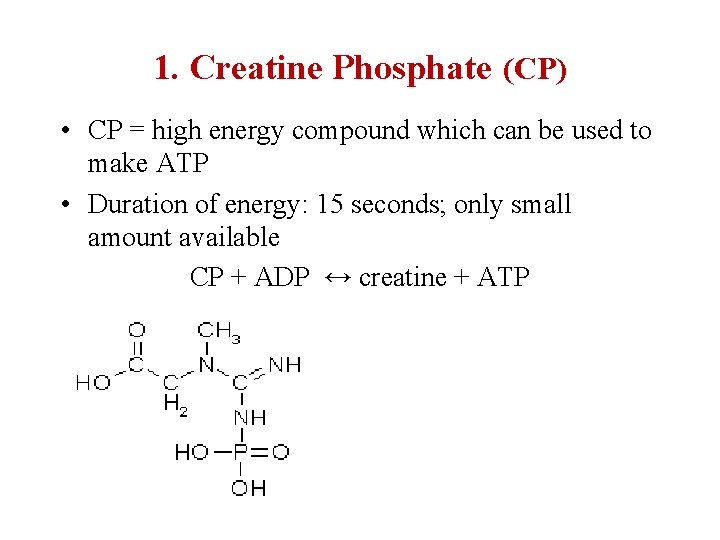
1. Creatine Phosphate (CP) • CP = high energy compound which can be used to make ATP • Duration of energy: 15 seconds; only small amount available CP + ADP ↔ creatine + ATP
2. Aerobic Respiration • • Uses oxygen for ATP production Uses many substrates: carbohydrates, lipids, proteins Good for long term exercise Duration of energy: hours
3. Anaerobic Respiration • • When O 2 is unavailable Very inefficient, does not create much ATP Produces lactic acid as a by-product – ouch! Duration of energy: 30 – 60 seconds
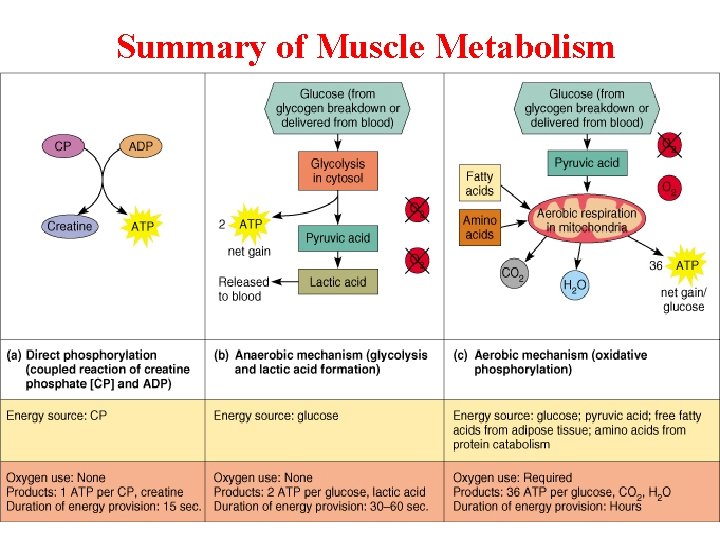
Summary of Muscle Metabolism
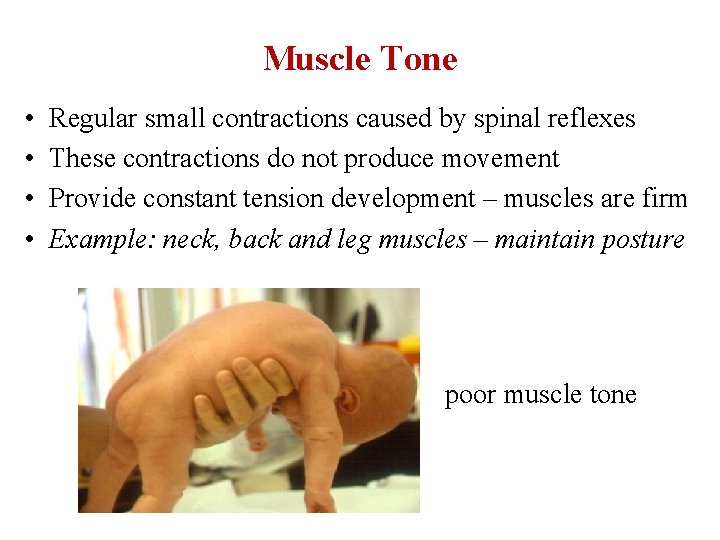
Muscle Tone • • Regular small contractions caused by spinal reflexes These contractions do not produce movement Provide constant tension development – muscles are firm Example: neck, back and leg muscles – maintain posture poor muscle tone
Other Muscle Terminology • Muscle fatigue = muscle can no longer contract despite neural stimulation • Muscle hypertrophy = enlargement of muscle due to repeated stimulation; muscle fibers develop more mitochondria, more enzymes for aerobic respiration, more glycogen reserves & grow in size • Muscle atrophy = loss of muscle tone & mass due to lack of stimulation
Types of Muscle Fibers • Fast fibers = white muscles; most skeletal fibers; can contract in 0. 01 sec or less after stimulation • Slow fibers = red muscles; take three times as long to contract after stimulation; contain lots of myoglobin • Intermediate fibers • It is genetically determined which types of fiber you have (exercise can change it somewhat)
- Slides: 9