
Muscle Physiology Muscular System Functions Body movement n
Muscle Physiology:

Muscular System Functions Body movement n Maintenance of posture n Respiration n Production of body heat n Communication n Constriction of organs and vessels n Heart beat n

Properties of Muscle n Contractility n n Excitability n n Capacity of muscle to respond to a stimulus Extensibility n n Ability of a muscle to shorten with force Muscle can be stretched to its normal resting length and beyond to a limited degree Elasticity n Ability of muscle to recoil to original resting length after stretched
Muscle Tissue Types n Skeletal n n Smooth n n Attached to bones Nuclei multiple and peripherally located Striated, Voluntary and involuntary (reflexes) Walls of hollow organs, blood vessels, eye, glands, skin Single nucleus centrally located Not striated, involuntary, gap junctions in visceral smooth Cardiac n n n Heart Single nucleus centrally located Striations, involuntary, intercalated disks
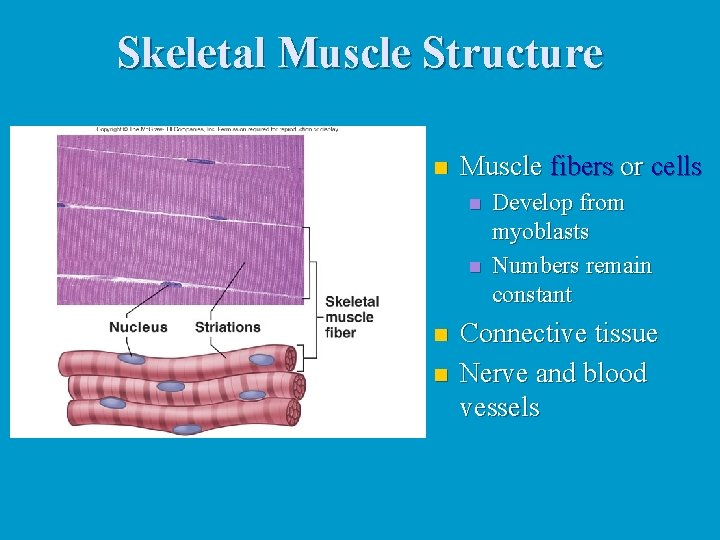
Skeletal Muscle Structure n Muscle fibers or cells n n Develop from myoblasts Numbers remain constant Connective tissue Nerve and blood vessels
Organization I:
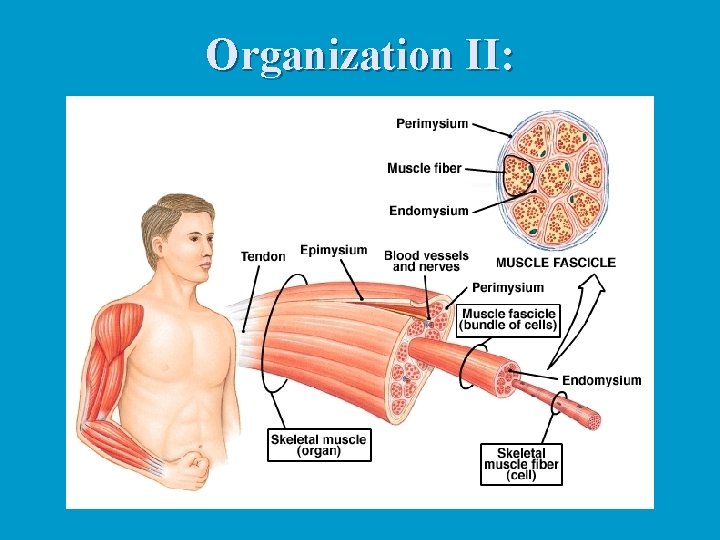
Organization II:
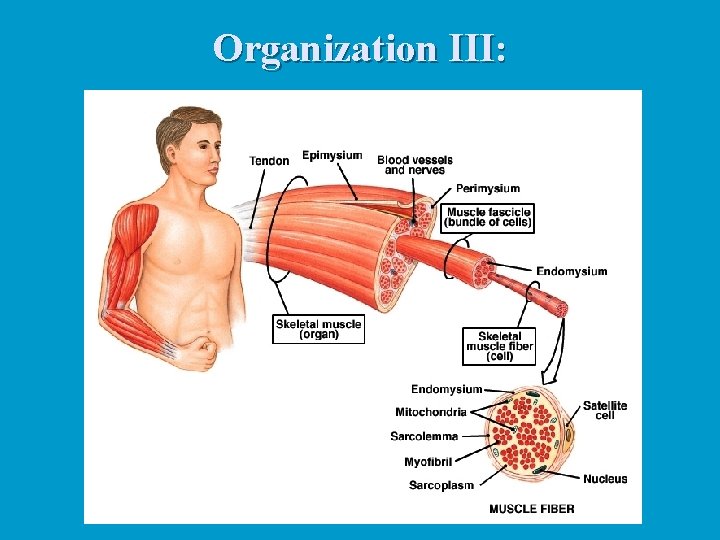
Organization III:
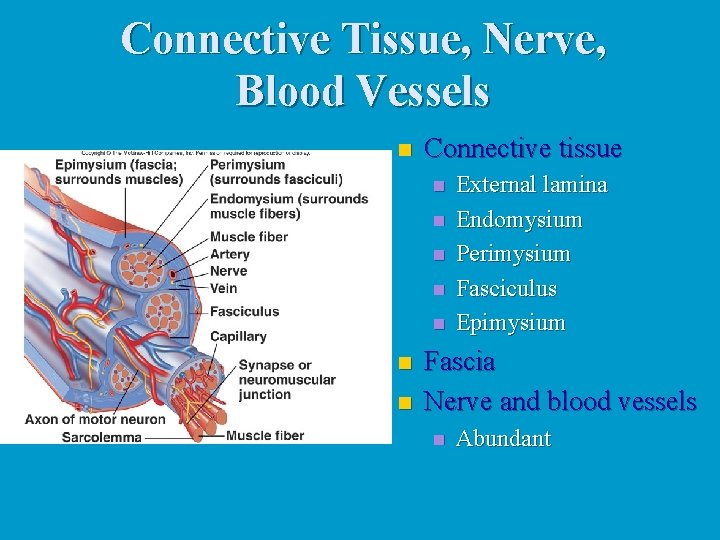
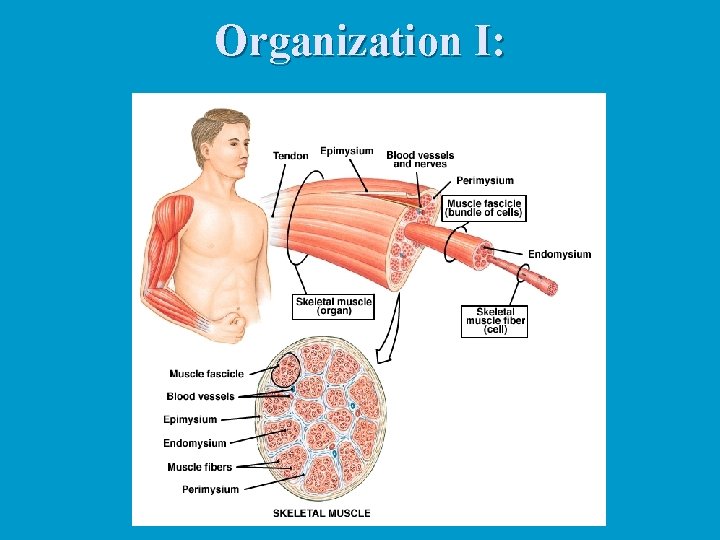
Connective Tissue, Nerve, Blood Vessels n Connective tissue n n n n External lamina Endomysium Perimysium Fasciculus Epimysium Fascia Nerve and blood vessels n Abundant

Embryologic origin:
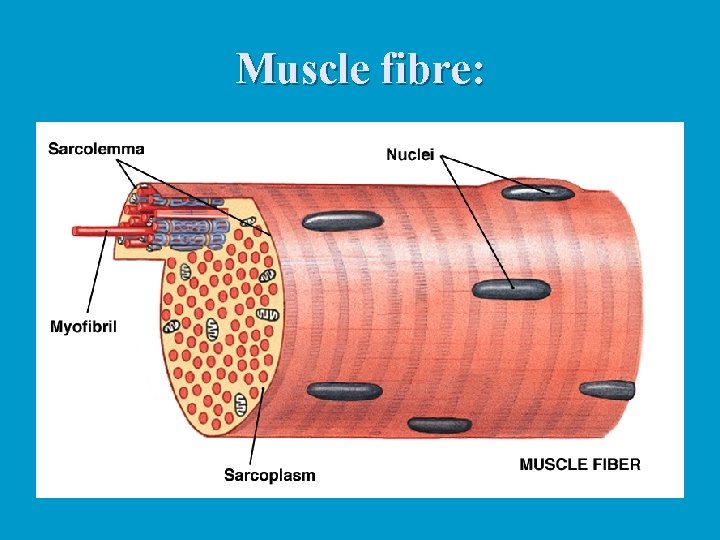
Muscle fibre:

Internal organization:
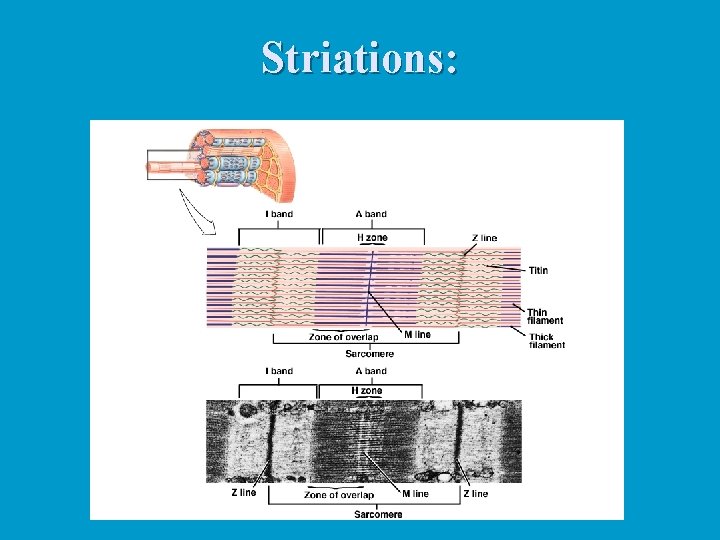
Striations:
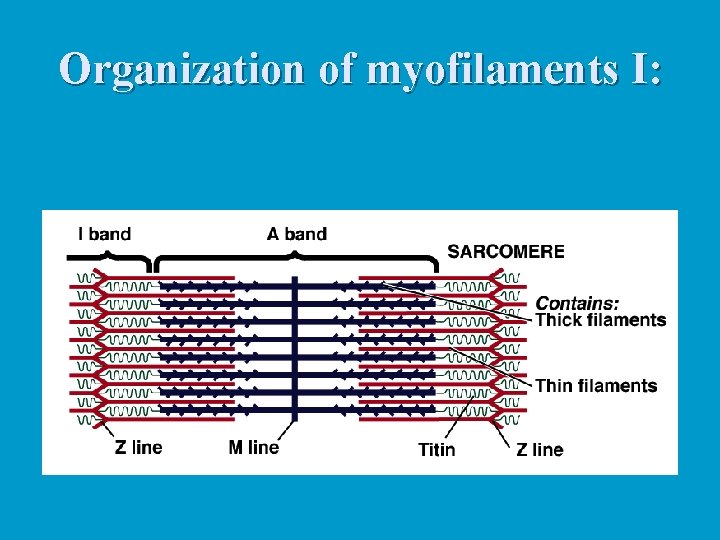
Organization of myofilaments I:
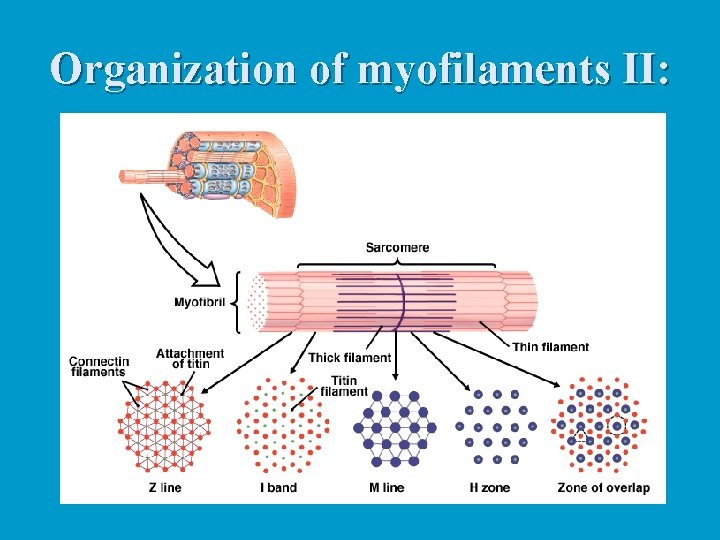
Organization of myofilaments II:
Sliding Filament Model I: n Actin myofilaments sliding over myosin to shorten sarcomeres Actin and myosin do not change length n Shortening sarcomeres responsible for skeletal muscle contraction n n During relaxation, sarcomeres lengthen
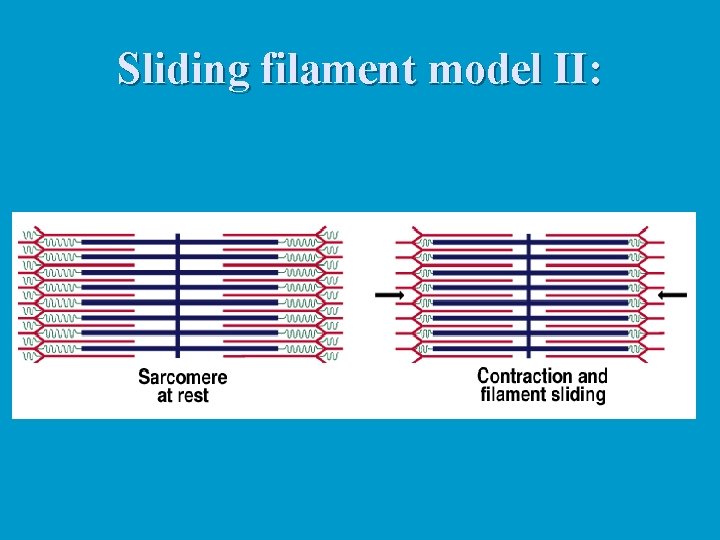
Sliding filament model II:
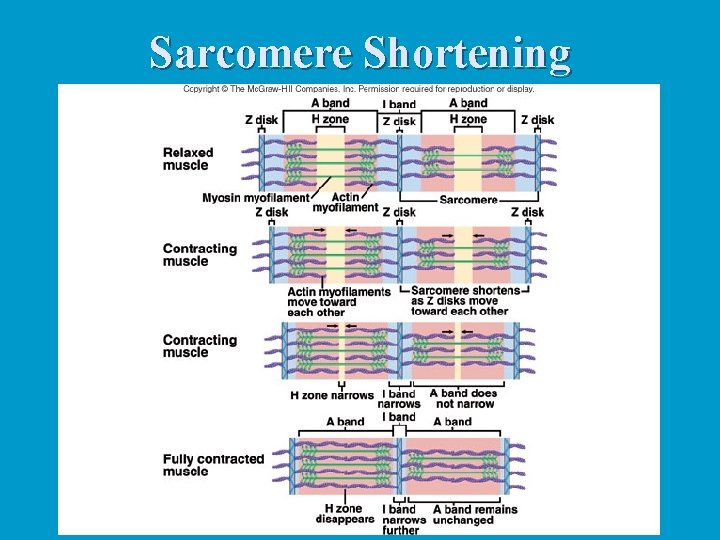
Sarcomere Shortening

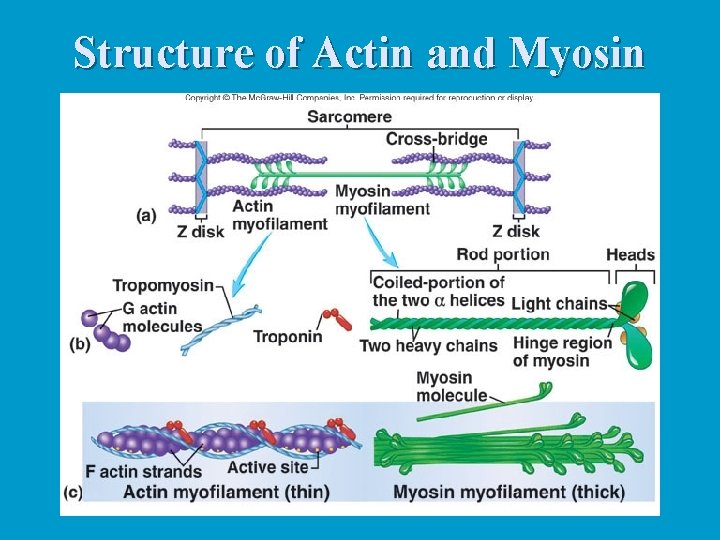
Structure of Actin and Myosin
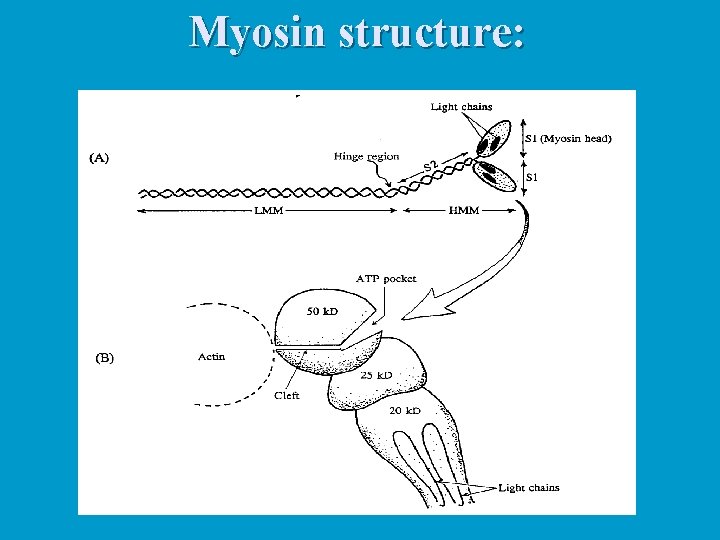
Myosin structure:
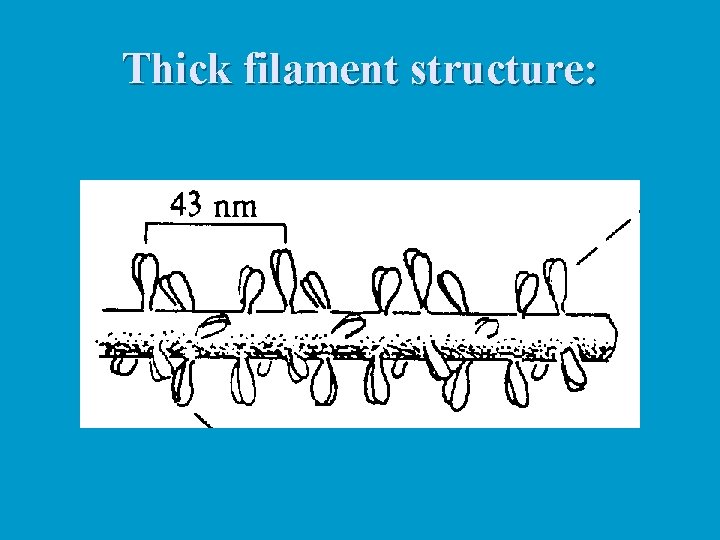
Thick filament structure:
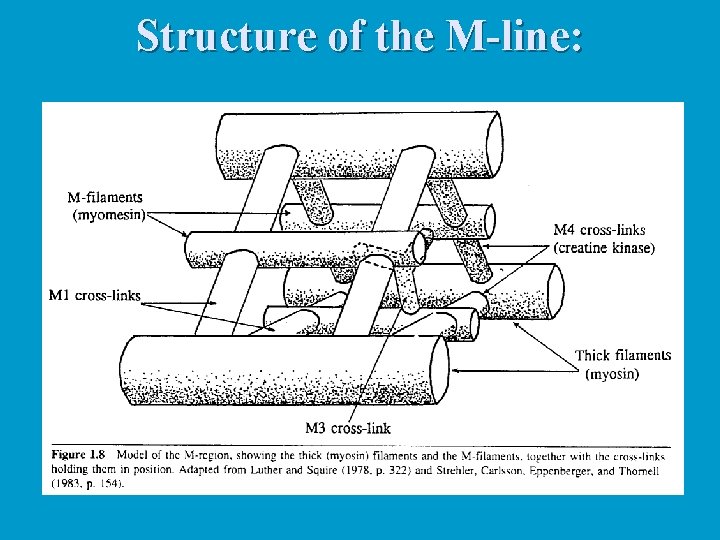
Structure of the M-line:
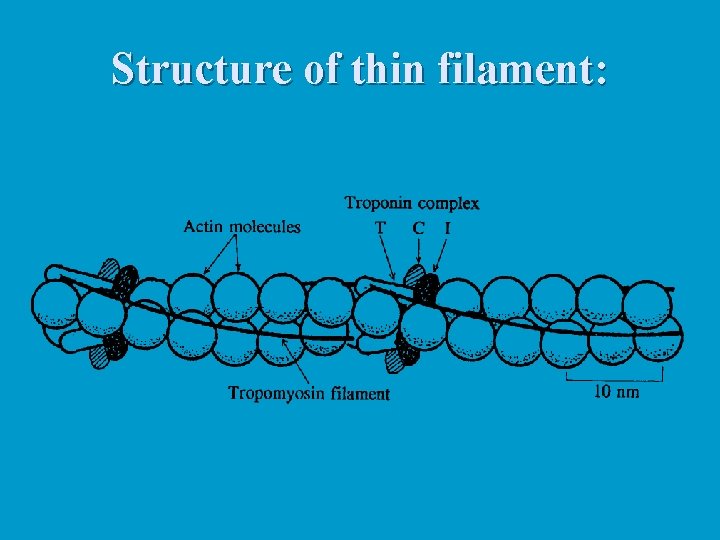
Structure of thin filament:

Cross-bridge formation:
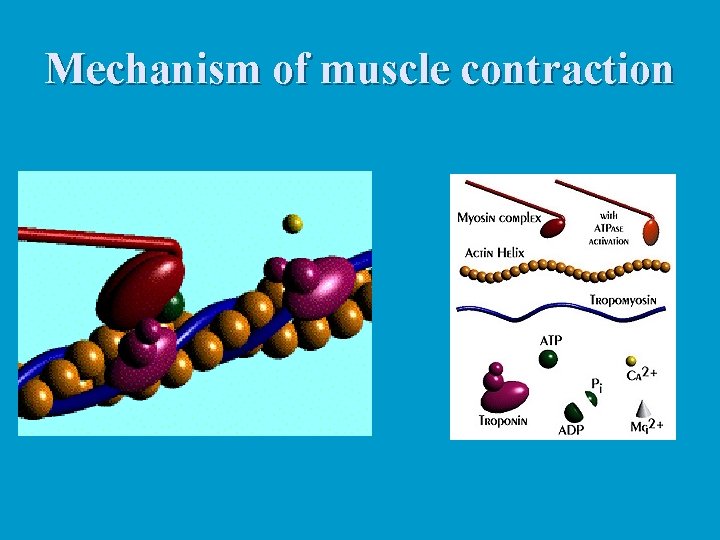
Mechanism of muscle contraction
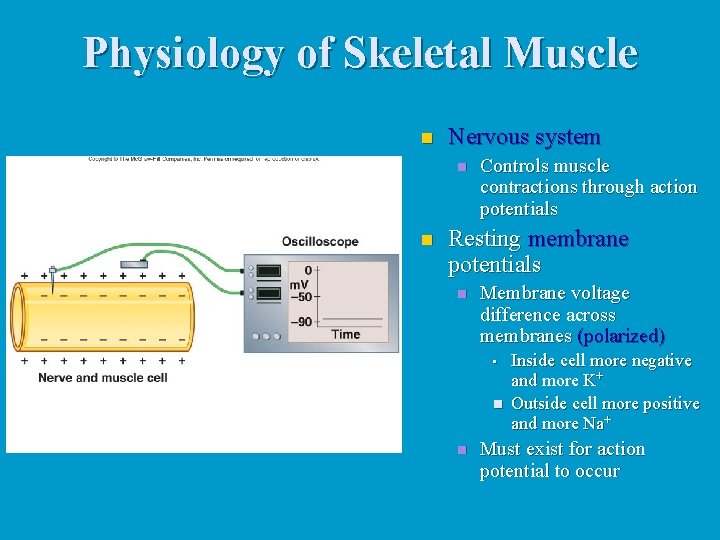
Physiology of Skeletal Muscle n Nervous system n n Controls muscle contractions through action potentials Resting membrane potentials n Membrane voltage difference across membranes (polarized) • n n Inside cell more negative and more K+ Outside cell more positive and more Na+ Must exist for action potential to occur
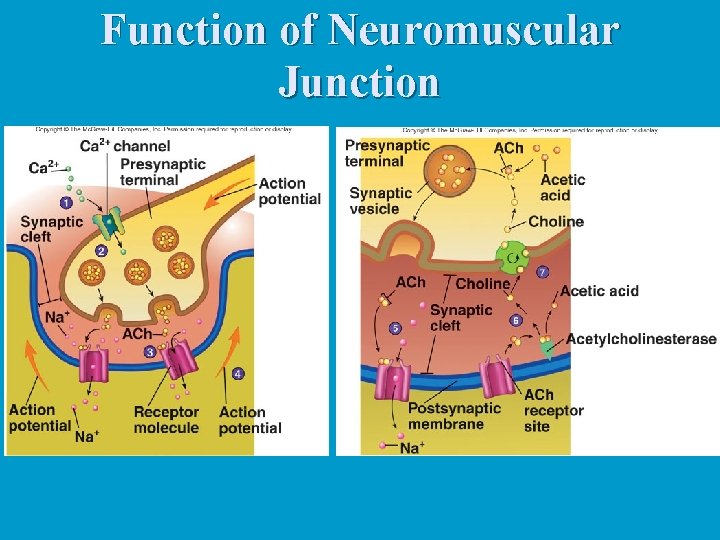
Function of Neuromuscular Junction
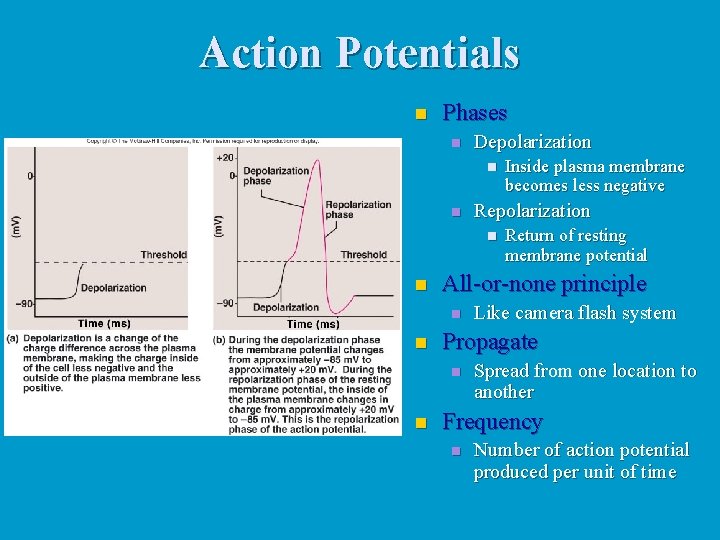
Action Potentials n Phases n Depolarization n n Repolarization n n Like camera flash system Propagate n n Return of resting membrane potential All-or-none principle n n Inside plasma membrane becomes less negative Spread from one location to another Frequency n Number of action potential produced per unit of time
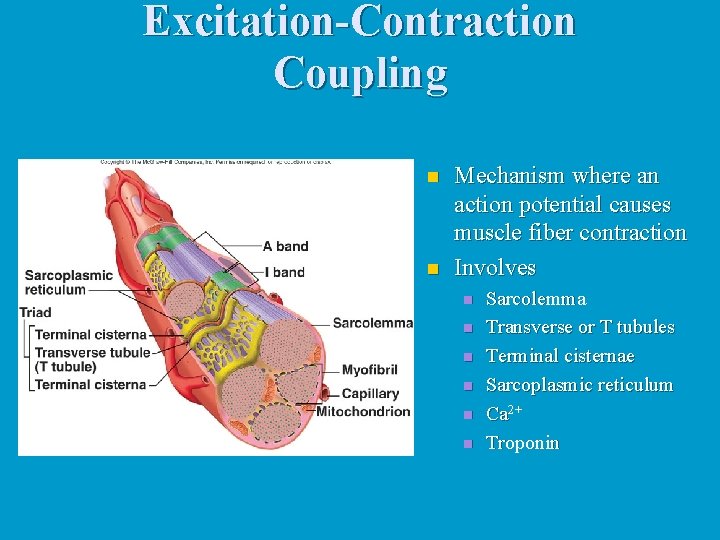
Excitation-Contraction Coupling n n Mechanism where an action potential causes muscle fiber contraction Involves n n n Sarcolemma Transverse or T tubules Terminal cisternae Sarcoplasmic reticulum Ca 2+ Troponin
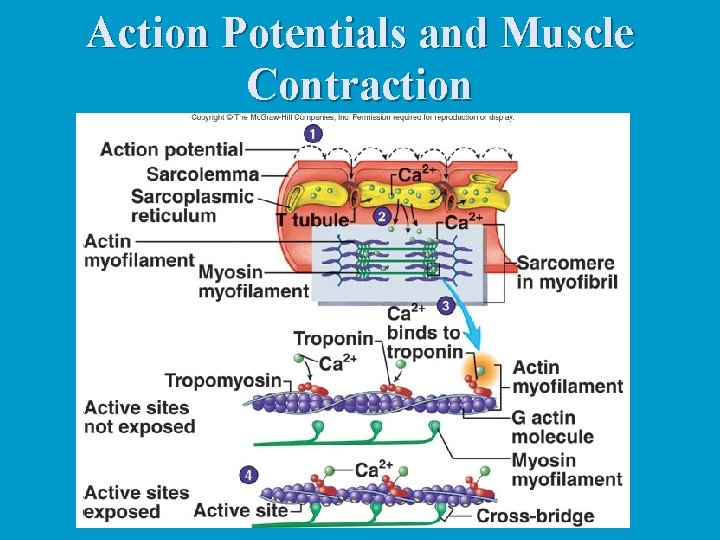
Action Potentials and Muscle Contraction
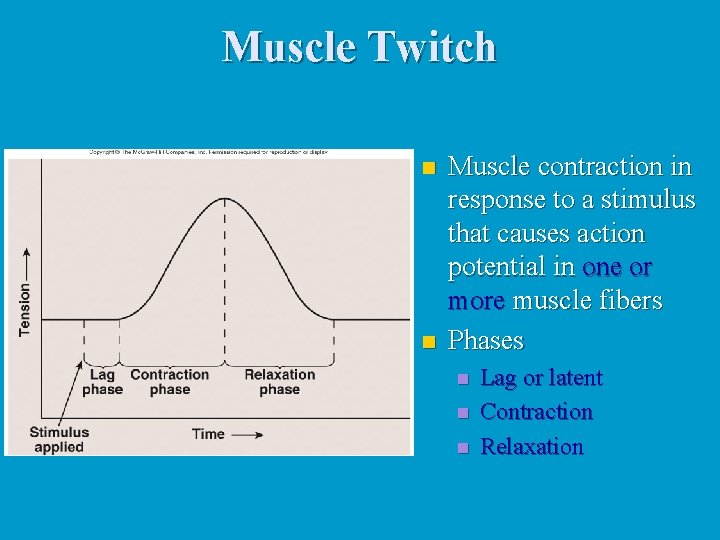
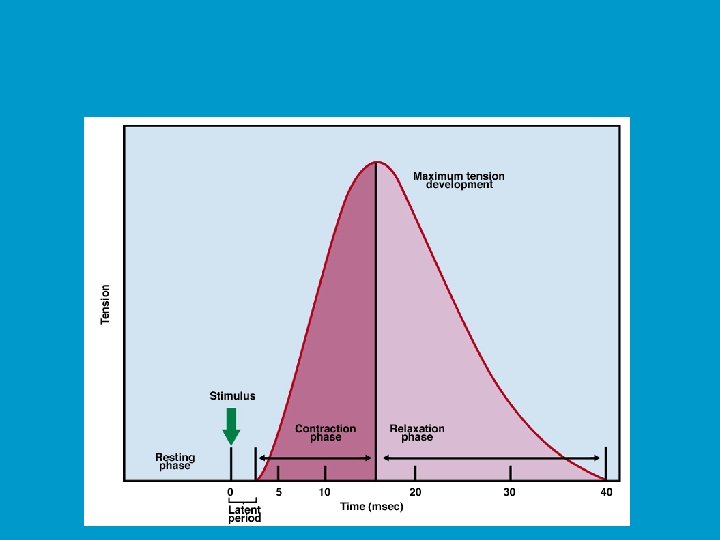
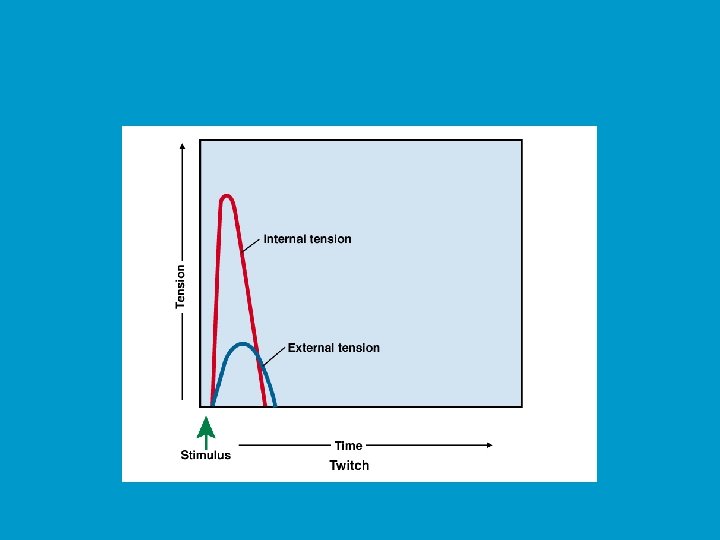
Muscle Twitch n n Muscle contraction in response to a stimulus that causes action potential in one or more muscle fibers Phases n n n Lag or latent Contraction Relaxation
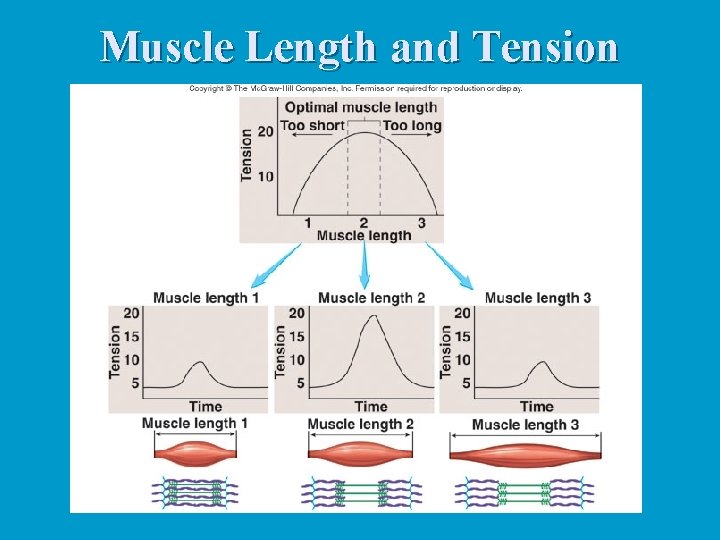
Muscle Length and Tension
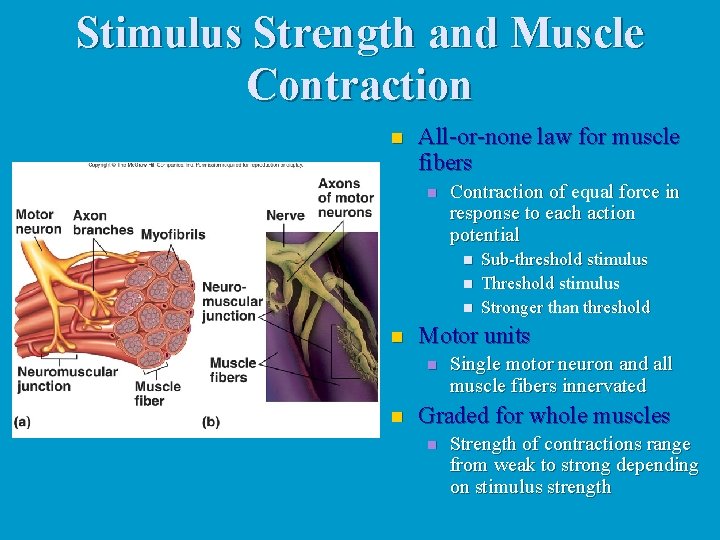
Stimulus Strength and Muscle Contraction n All-or-none law for muscle fibers n Contraction of equal force in response to each action potential n n Motor units n n Sub-threshold stimulus Threshold stimulus Stronger than threshold Single motor neuron and all muscle fibers innervated Graded for whole muscles n Strength of contractions range from weak to strong depending on stimulus strength
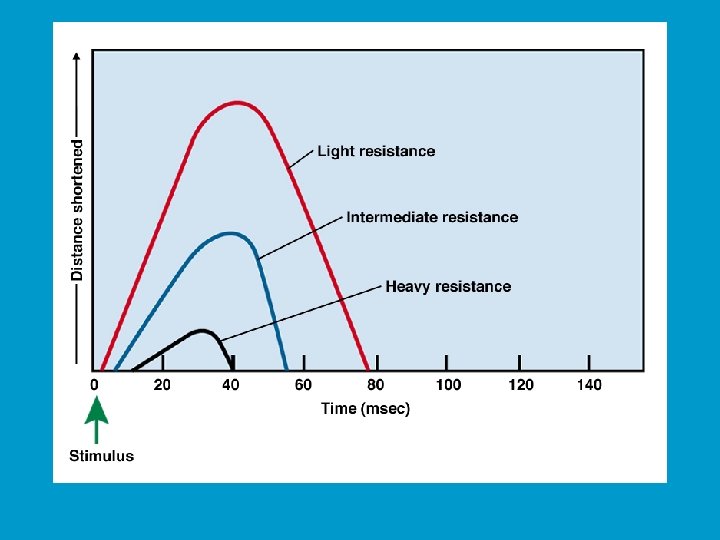
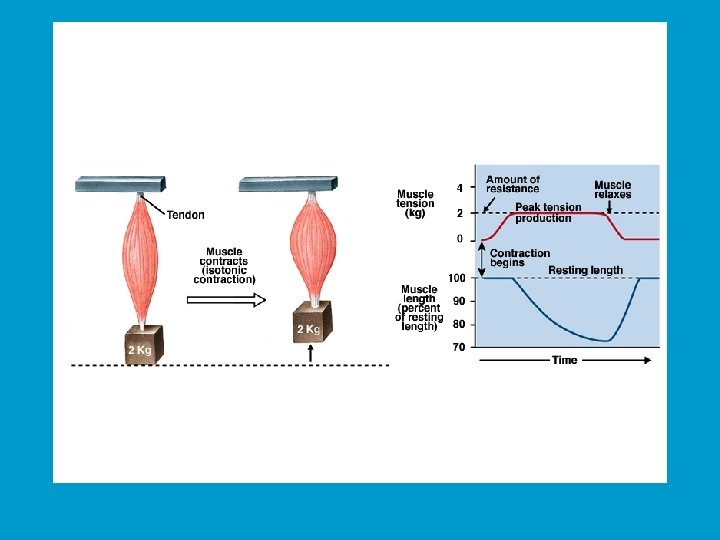
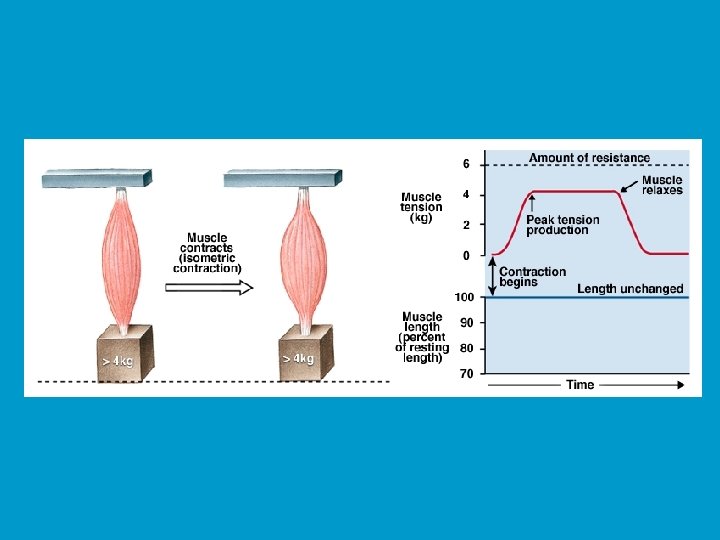
Types of Muscle Contractions n Isometric: No change in length but tension increases n n Isotonic: Change in length but tension constant n n n Postural muscles of body Concentric: Overcomes opposing resistance and muscle shortens Eccentric: Tension maintained but muscle lengthens Muscle tone: Constant tension by muscles for long periods of time
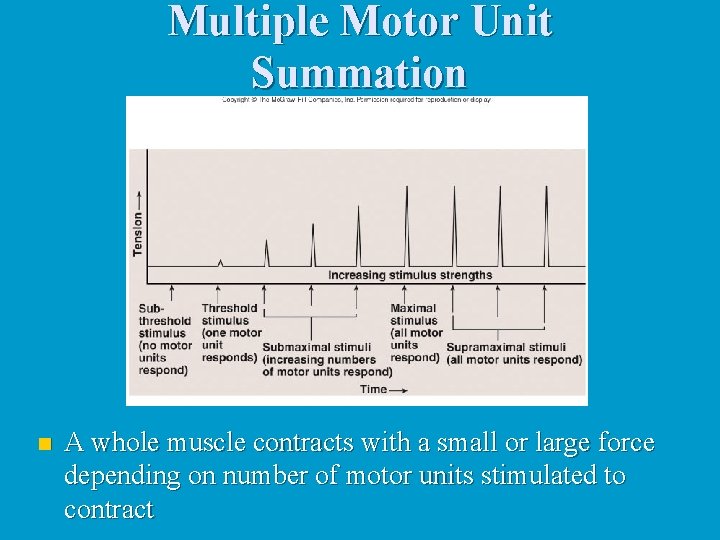
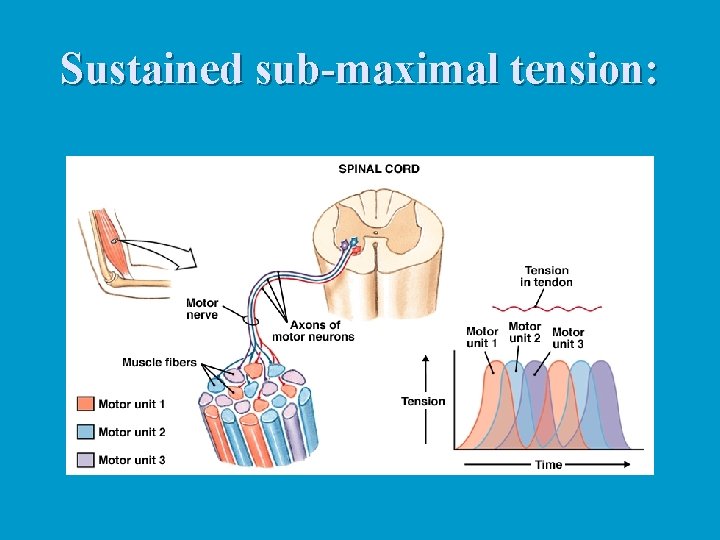
Multiple Motor Unit Summation n A whole muscle contracts with a small or large force depending on number of motor units stimulated to contract
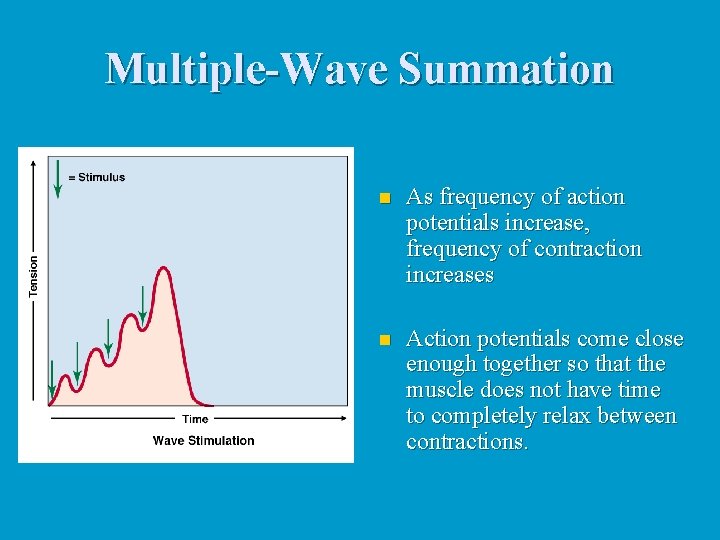
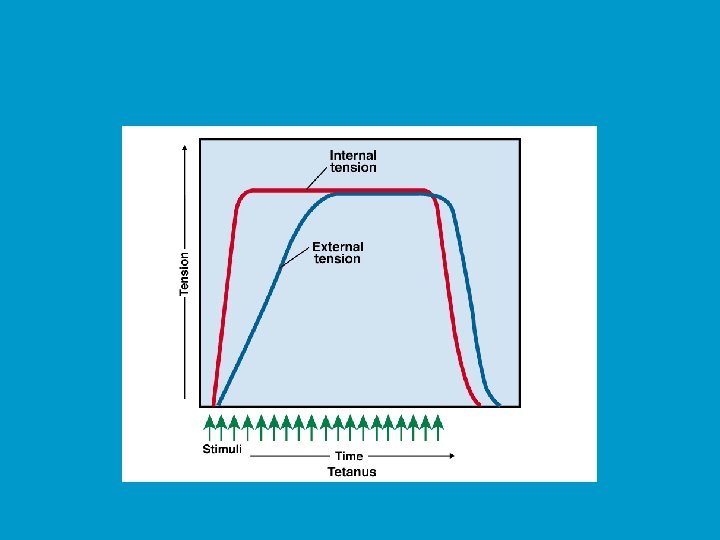
Multiple-Wave Summation n As frequency of action potentials increase, frequency of contraction increases n Action potentials come close enough together so that the muscle does not have time to completely relax between contractions.
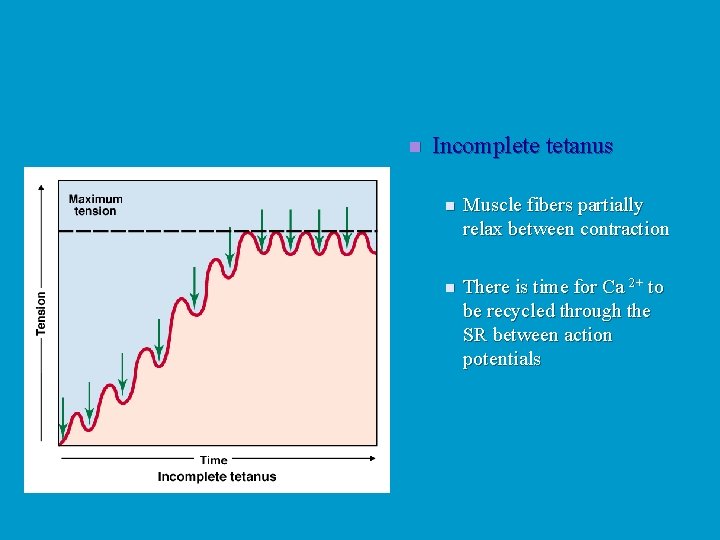
n Incomplete tetanus n Muscle fibers partially relax between contraction n There is time for Ca 2+ to be recycled through the SR between action potentials
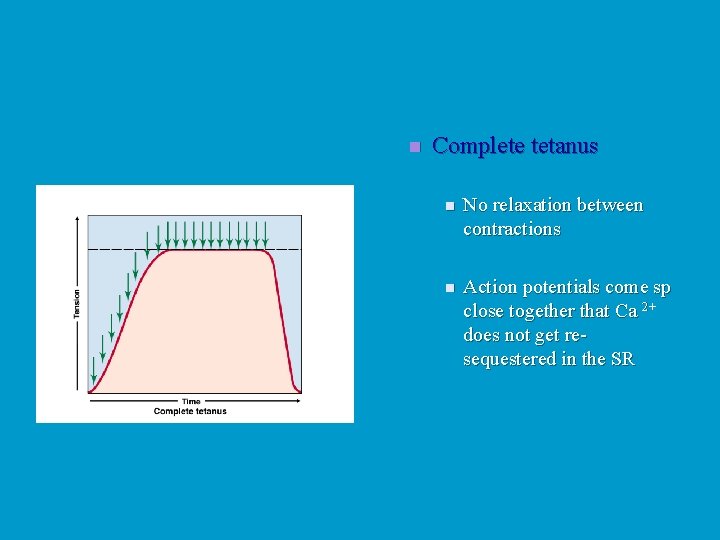
n Complete tetanus n No relaxation between contractions n Action potentials come sp close together that Ca 2+ does not get resequestered in the SR
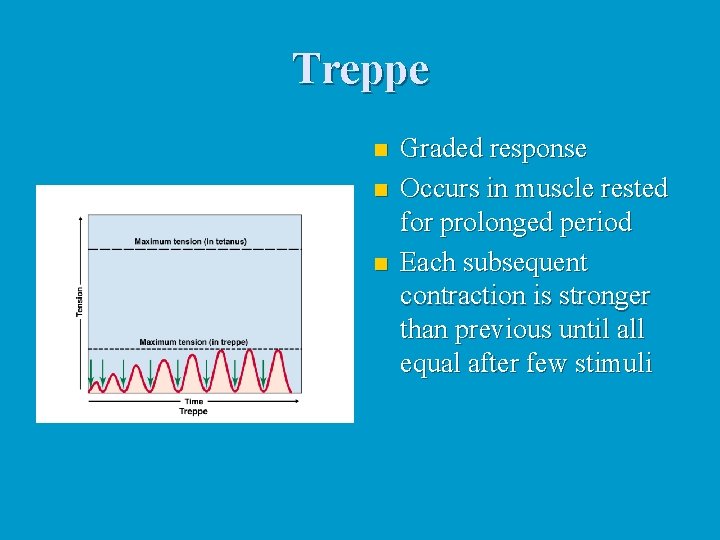
Treppe n n n Graded response Occurs in muscle rested for prolonged period Each subsequent contraction is stronger than previous until all equal after few stimuli
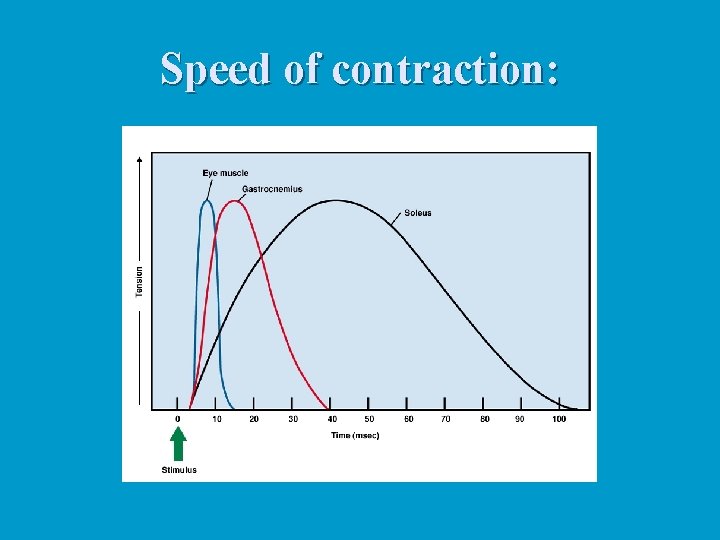
Speed of contraction:
Sustained sub-maximal tension:
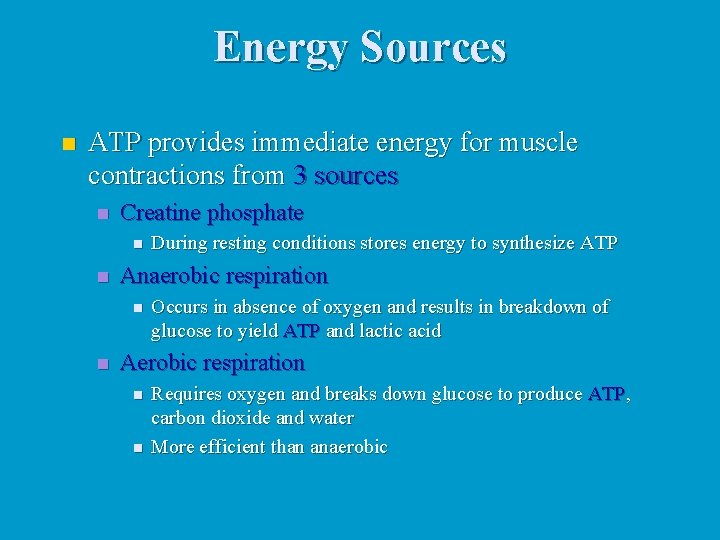
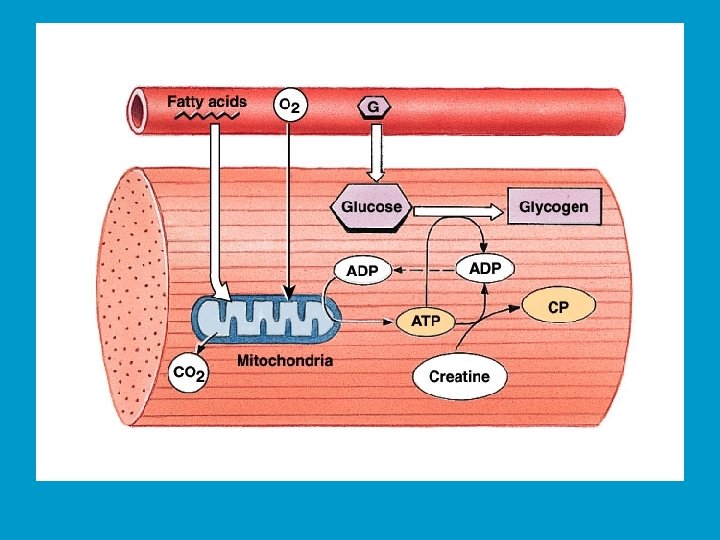
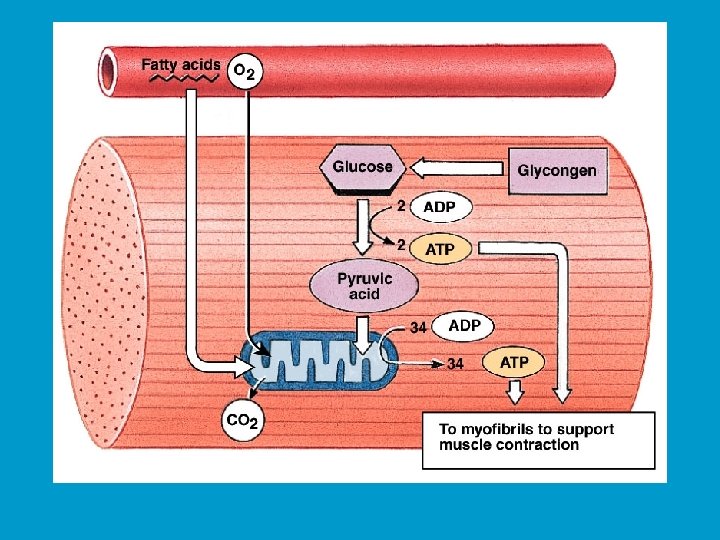
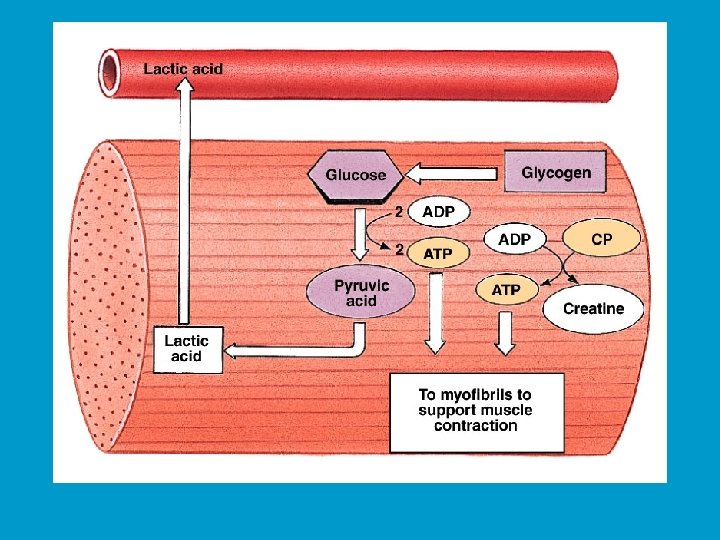
Energy Sources n ATP provides immediate energy for muscle contractions from 3 sources n Creatine phosphate n n Anaerobic respiration n n During resting conditions stores energy to synthesize ATP Occurs in absence of oxygen and results in breakdown of glucose to yield ATP and lactic acid Aerobic respiration n n Requires oxygen and breaks down glucose to produce ATP, carbon dioxide and water More efficient than anaerobic
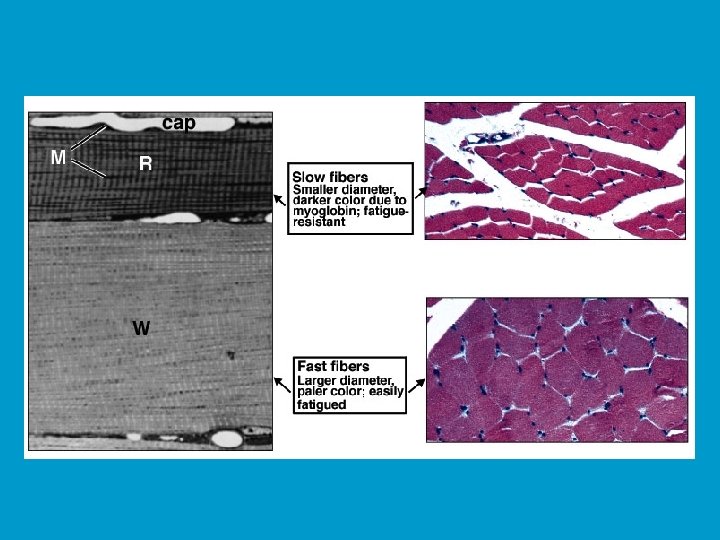
Slow and Fast Fibers n Slow-twitch or high-oxidative n n Fast-twitch or low-oxidative n n Respond rapidly to nervous stimulation, contain myosin to break down ATP more rapidly, less blood supply, fewer and smaller mitochondria than slow-twitch Distribution of fast-twitch and slow twitch n n Contract more slowly, smaller in diameter, better blood supply, more mitochondria, more fatigue-resistant than fast-twitch Most muscles have both but varies for each muscle Effects of exercise n n Hypertrophies: Increases in muscle size Atrophies: Decreases in muscle size
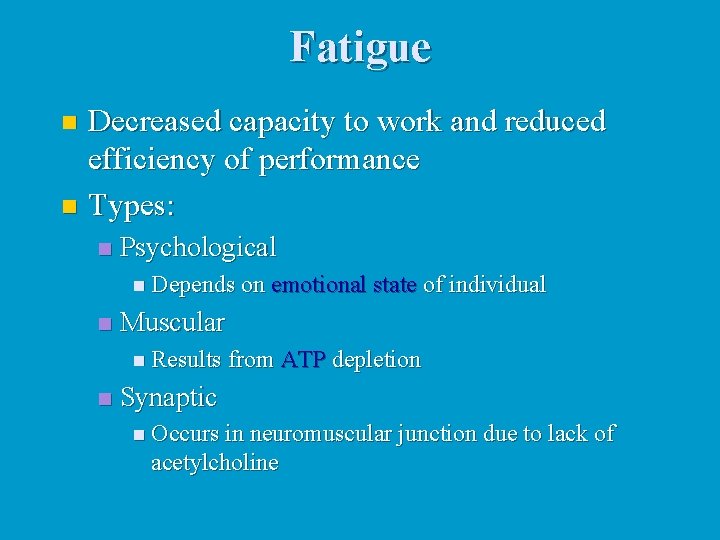
Fatigue Decreased capacity to work and reduced efficiency of performance n Types: n n Psychological n Depends on emotional state n of individual Muscular n Results from ATP depletion n Synaptic n Occurs in neuromuscular junction due to lack of acetylcholine
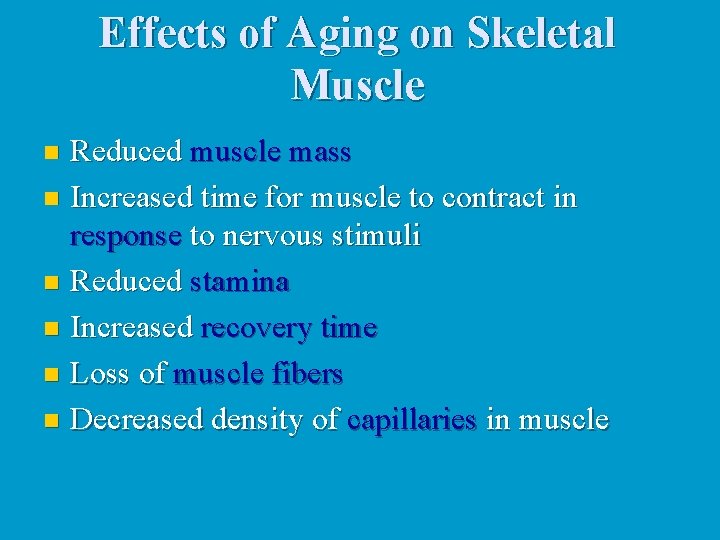
Effects of Aging on Skeletal Muscle Reduced muscle mass n Increased time for muscle to contract in response to nervous stimuli n Reduced stamina n Increased recovery time n Loss of muscle fibers n Decreased density of capillaries in muscle n
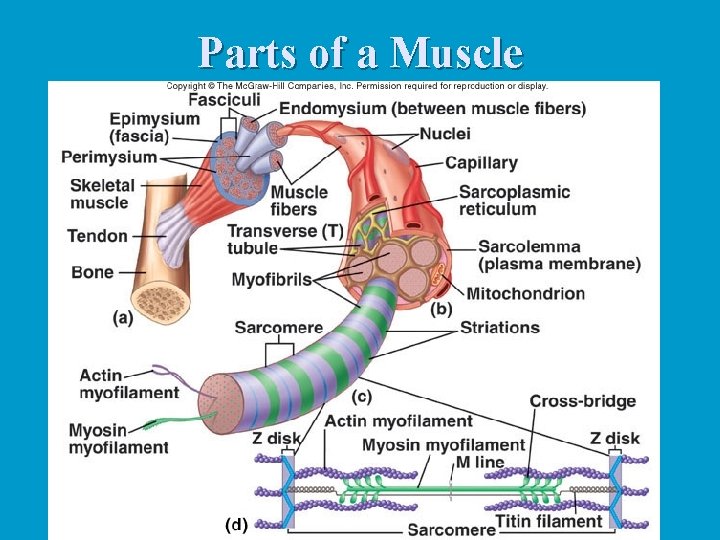
Parts of a Muscle
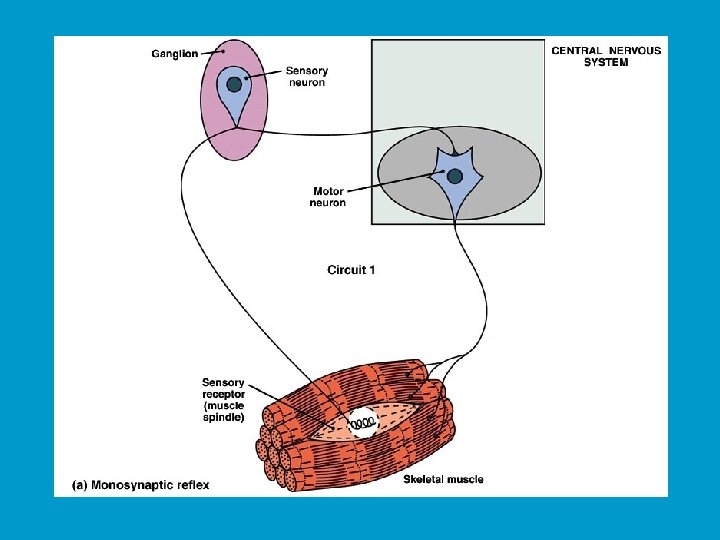
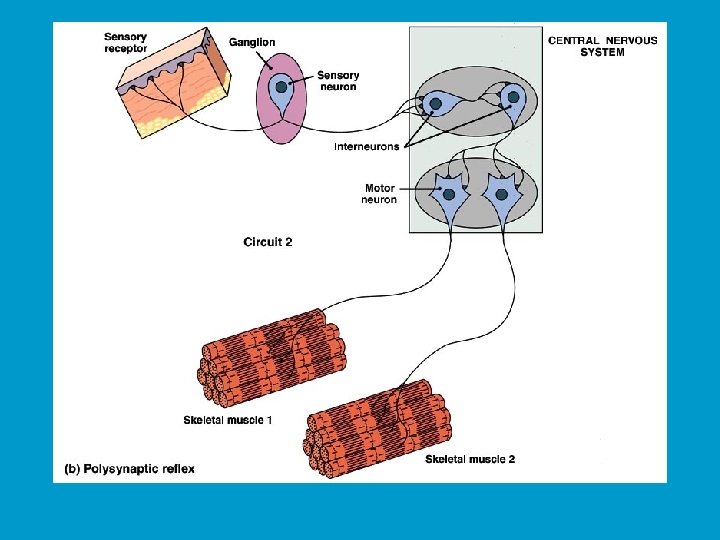
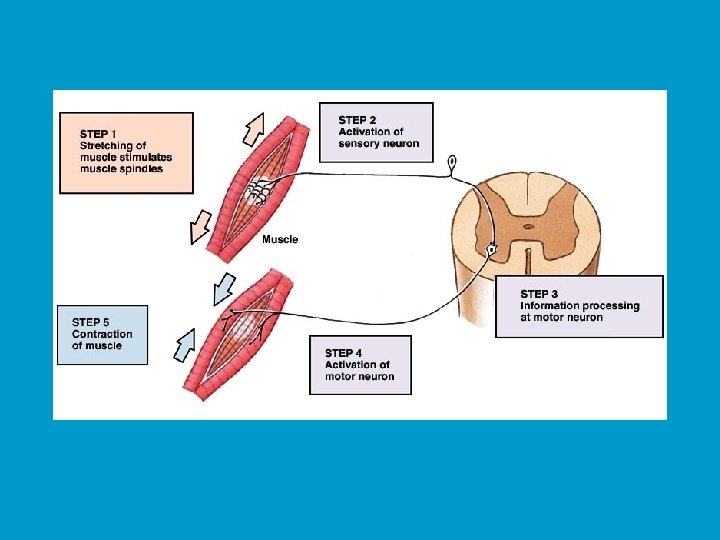
Reflexes:
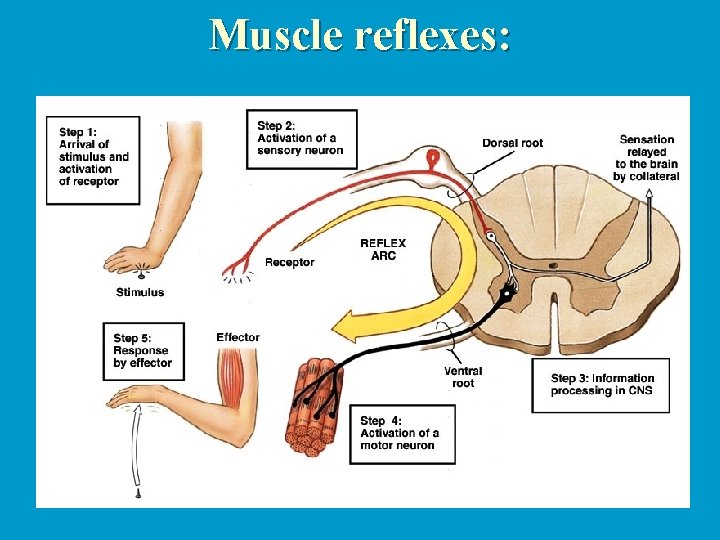
Muscle reflexes:
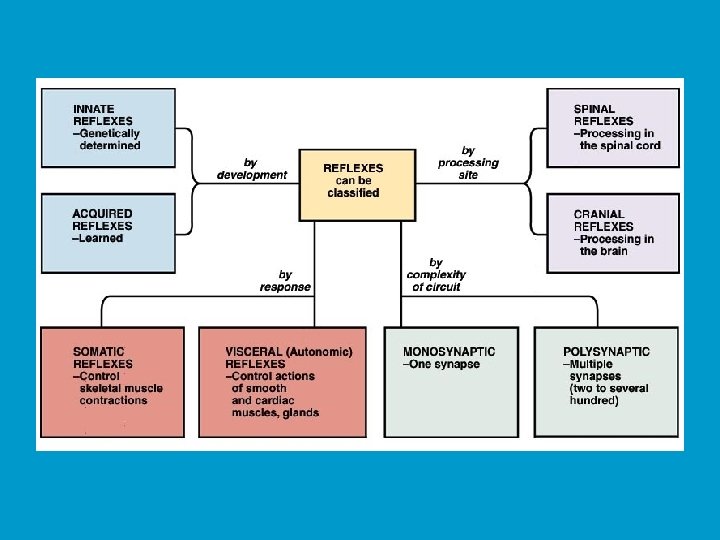
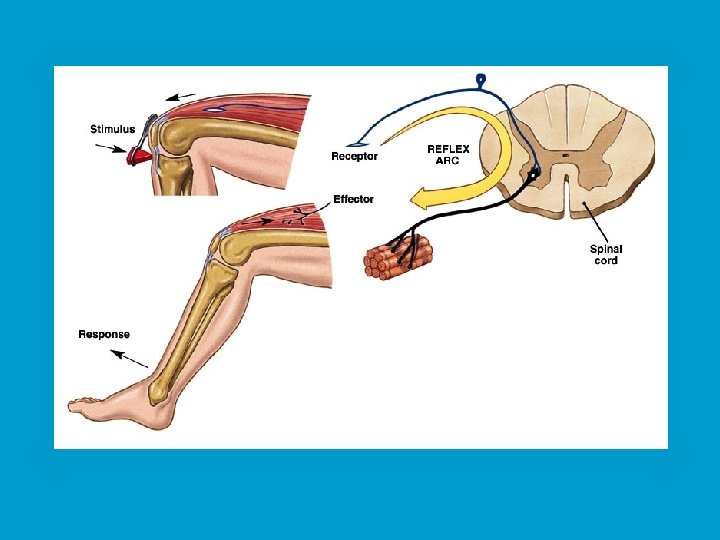
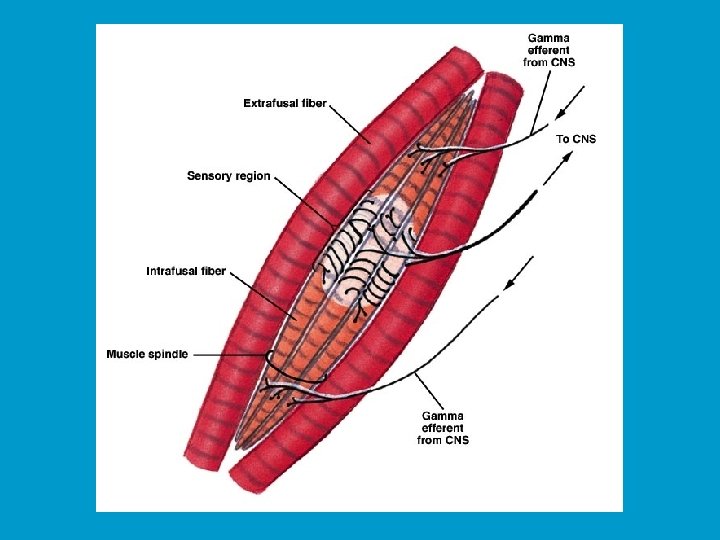
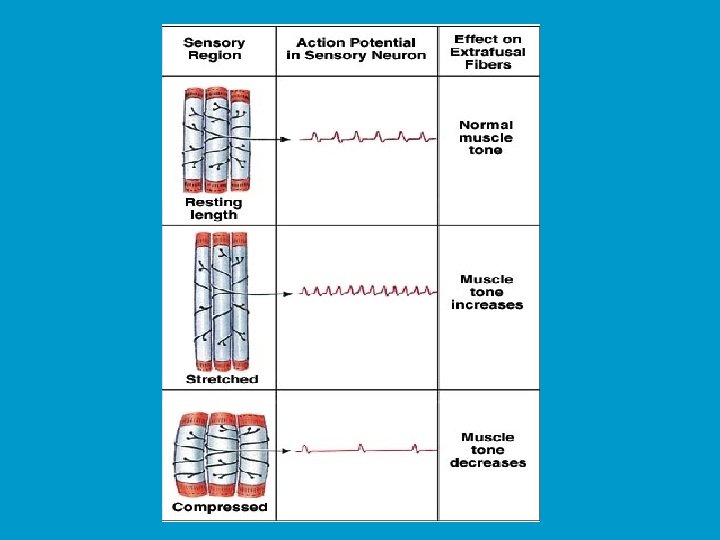
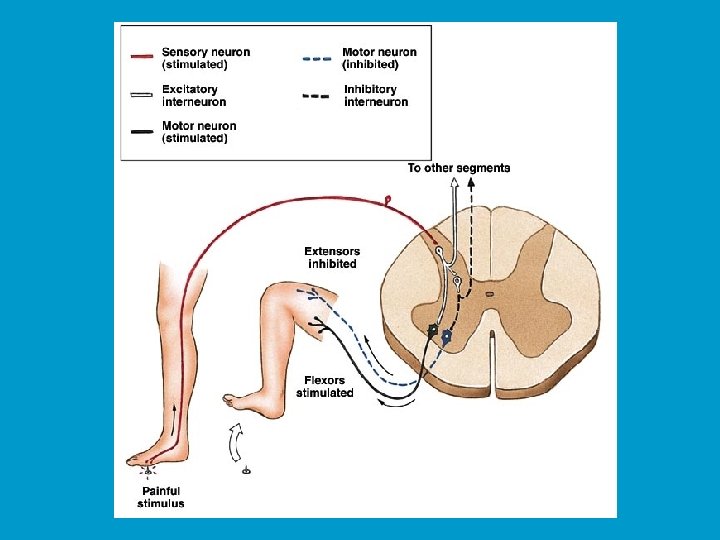
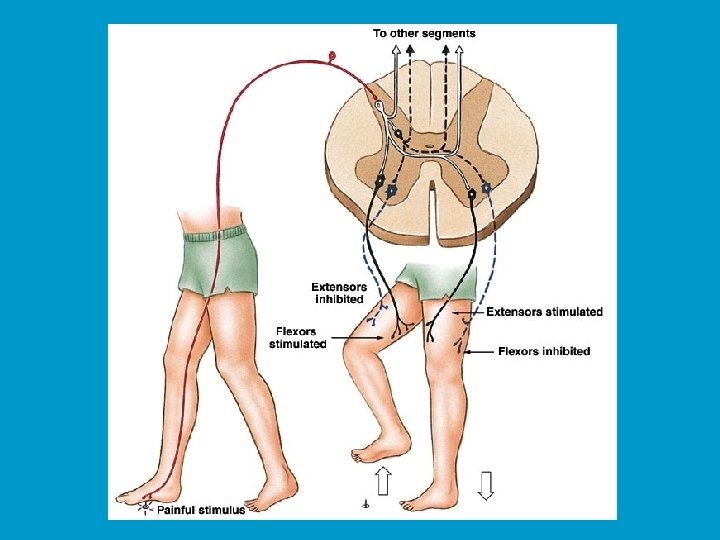
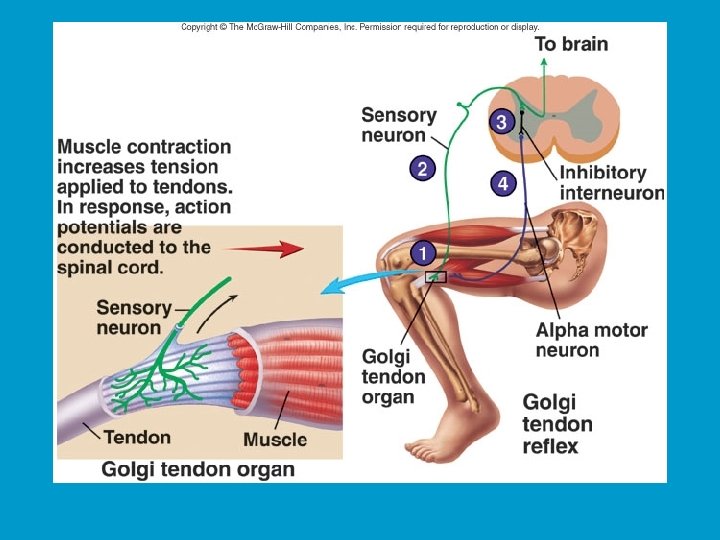
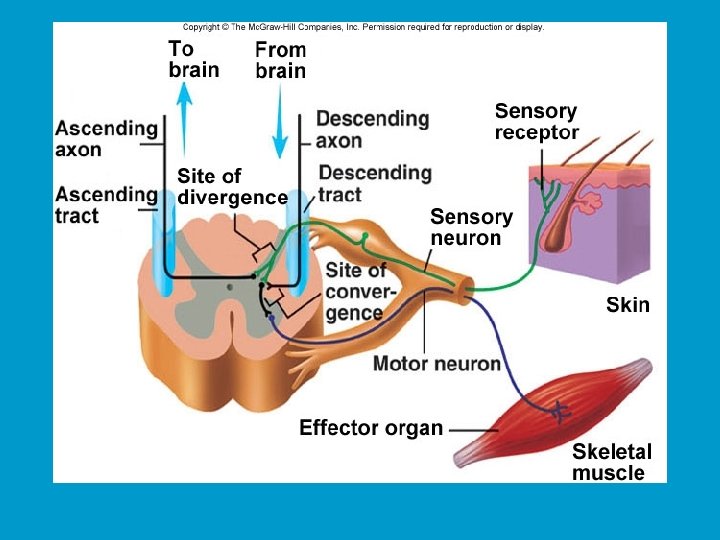
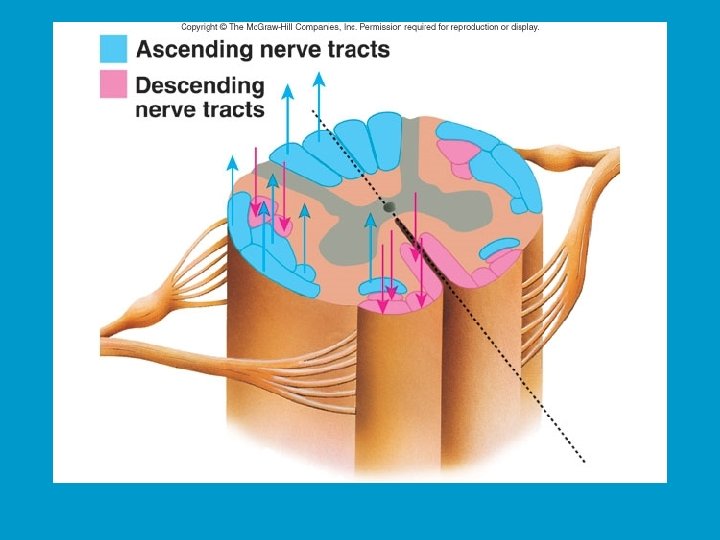
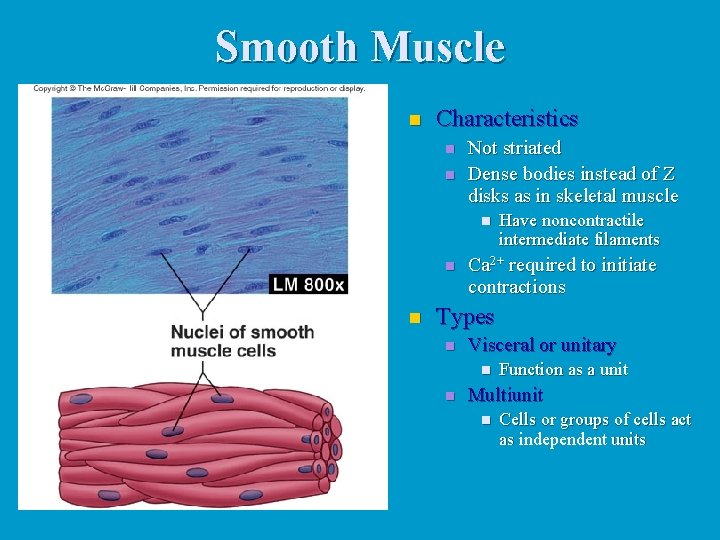
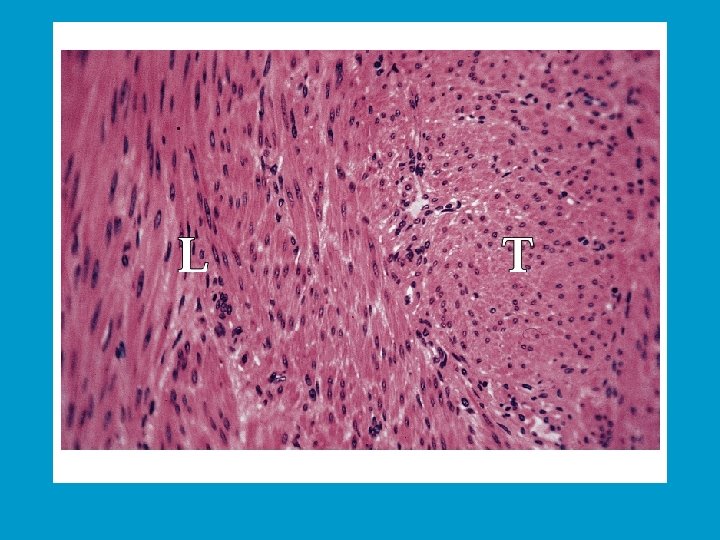
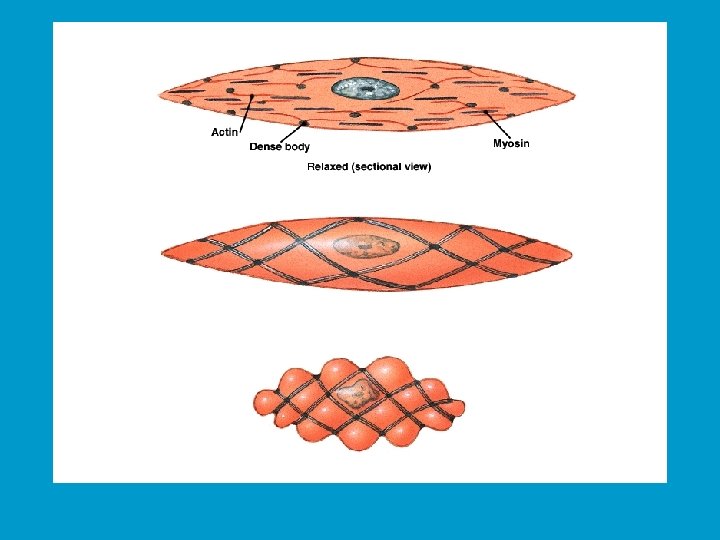
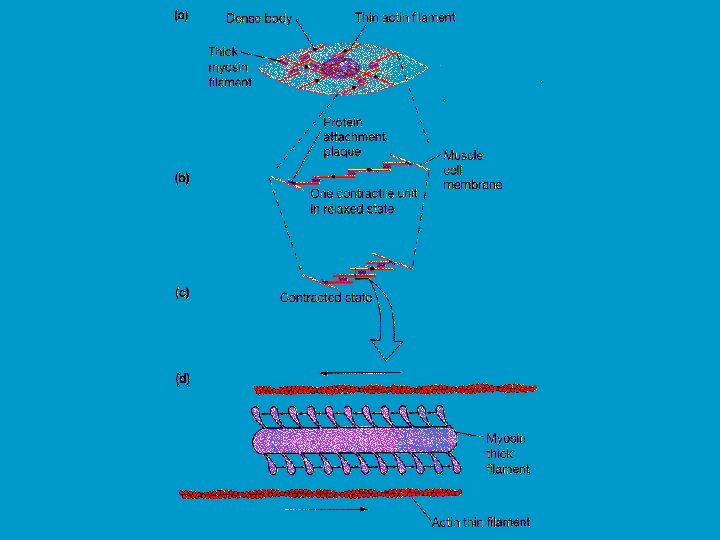
Smooth Muscle n Characteristics n n Not striated Dense bodies instead of Z disks as in skeletal muscle n n n Have noncontractile intermediate filaments Ca 2+ required to initiate contractions Types n Visceral or unitary n n Function as a unit Multiunit n Cells or groups of cells act as independent units
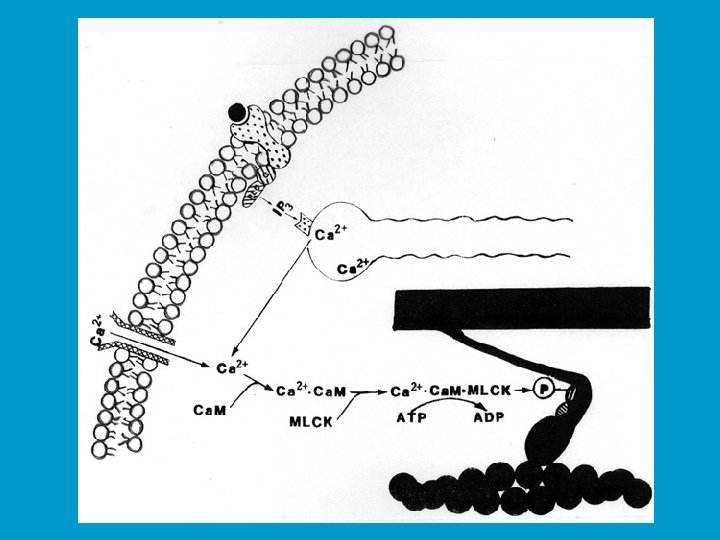
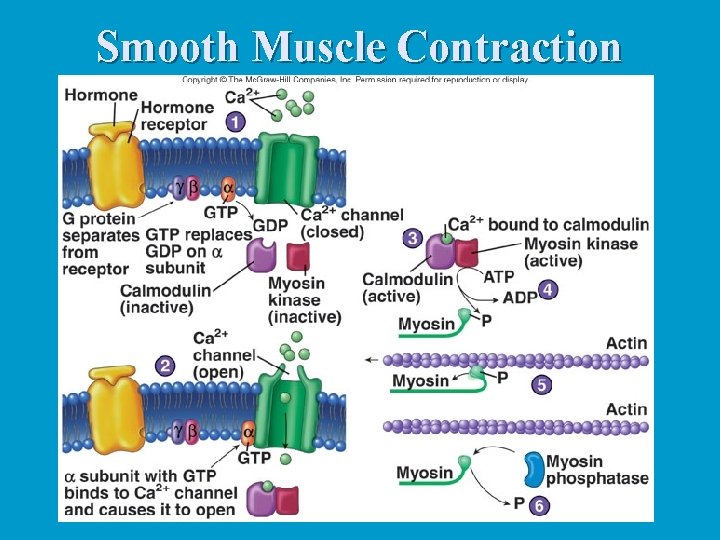
Smooth Muscle Contraction
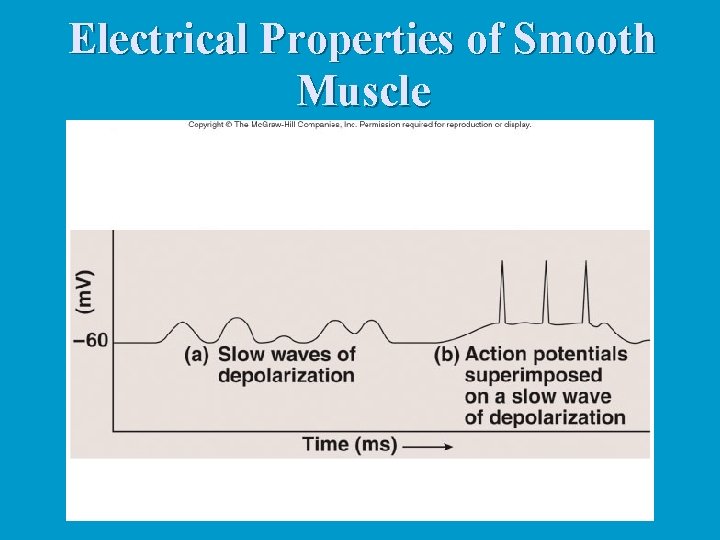
Electrical Properties of Smooth Muscle
Functional Properties of Smooth Muscle Some visceral muscle exhibits autorhythmic contractions n Tends to contract in response to sudden stretch but no to slow increase in length n Exhibits relatively constant tension: Smooth muscle tone n Amplitude of contraction remains constant although muscle length varies n
Smooth Muscle Regulation Innervated by autonomic nervous system n Neurotransmitter are acetylcholine and norepinephrine n Hormones important as epinephrine and oxytocin n Receptors present on plasma membrane which neurotransmitters or hormones bind determines response n
- Slides: 87