
Muscle Physiology Dr Aisha Riaz Muscle Tissue Skeletal

- Slides: 61
Muscle Physiology Dr. Aisha Riaz
Muscle Tissue • Skeletal Muscle • Cardiac Muscle • Smooth Muscle
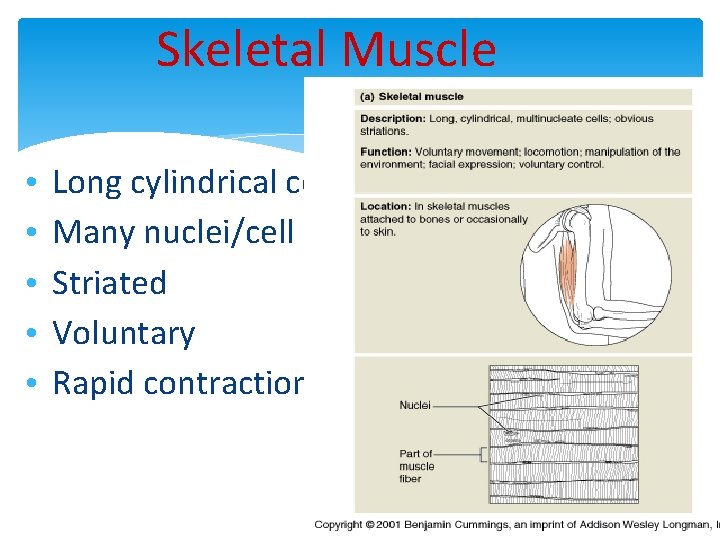
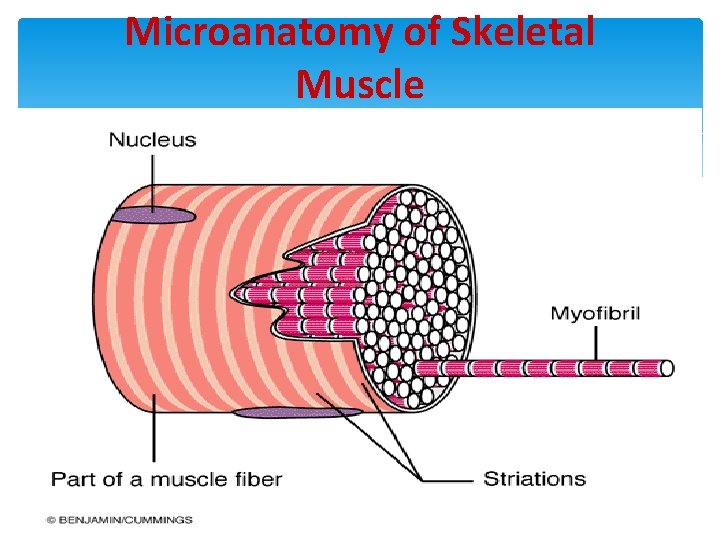
Skeletal Muscle • • • Long cylindrical cells Many nuclei/cell Striated Voluntary Rapid contractions
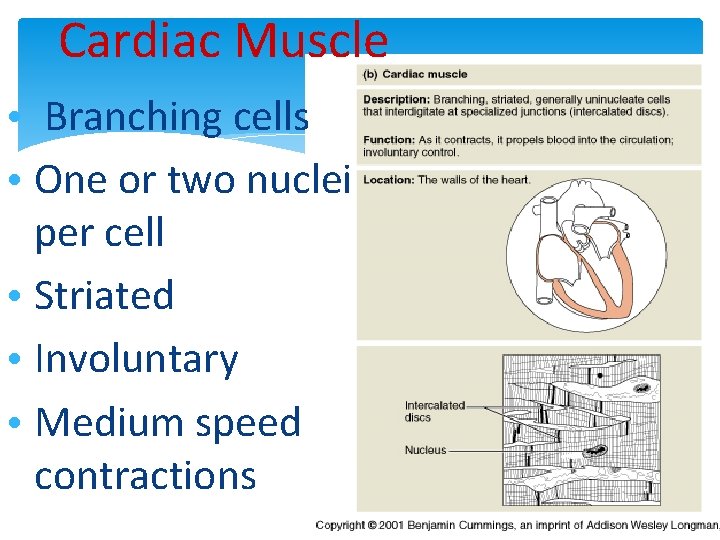
Cardiac Muscle • Branching cells • One or two nuclei per cell • Striated • Involuntary • Medium speed contractions
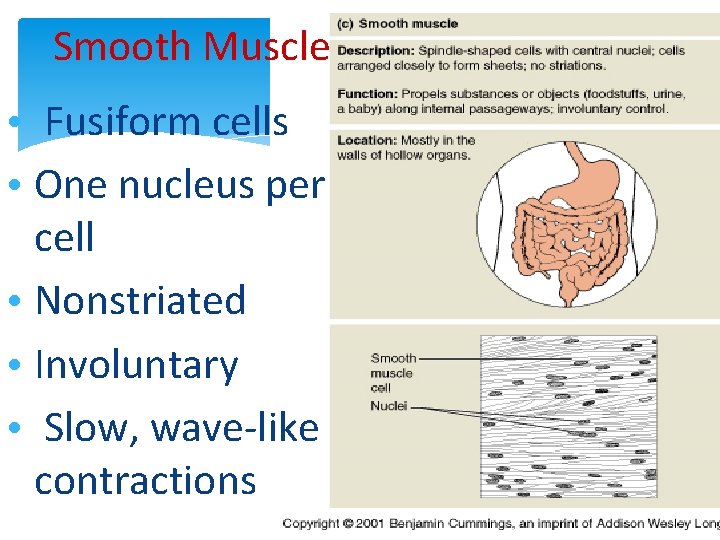
Smooth Muscle • Fusiform cells • One nucleus per cell • Nonstriated • Involuntary • Slow, wave-like contractions
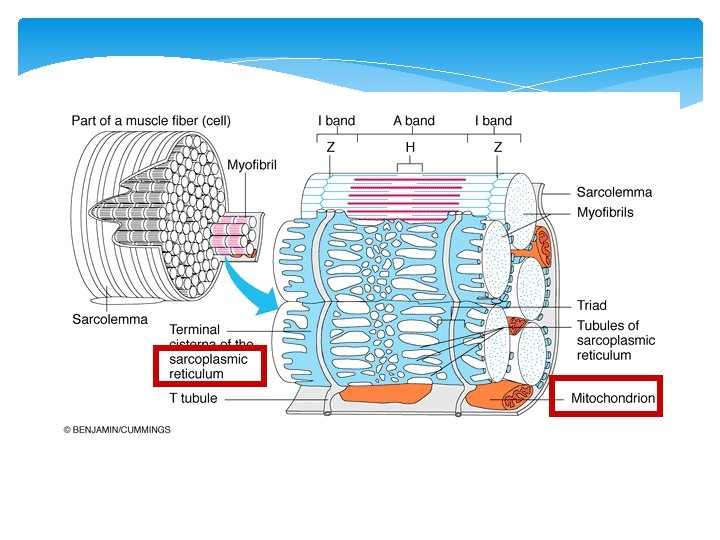
Microanatomy of Skeletal Muscle
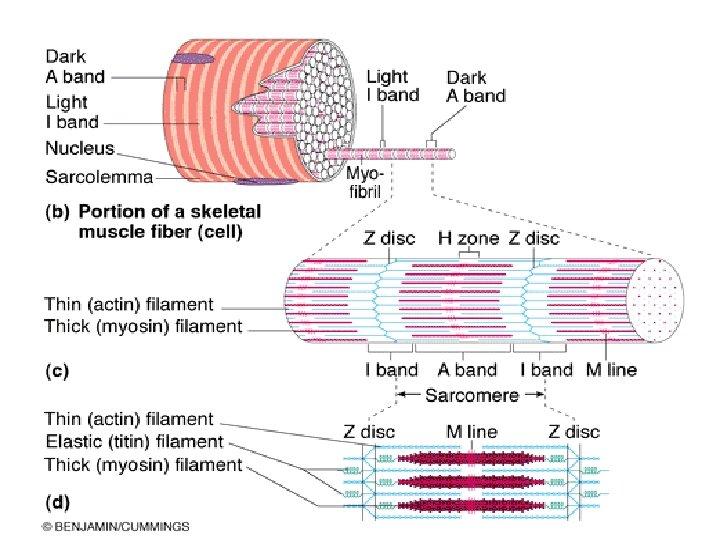
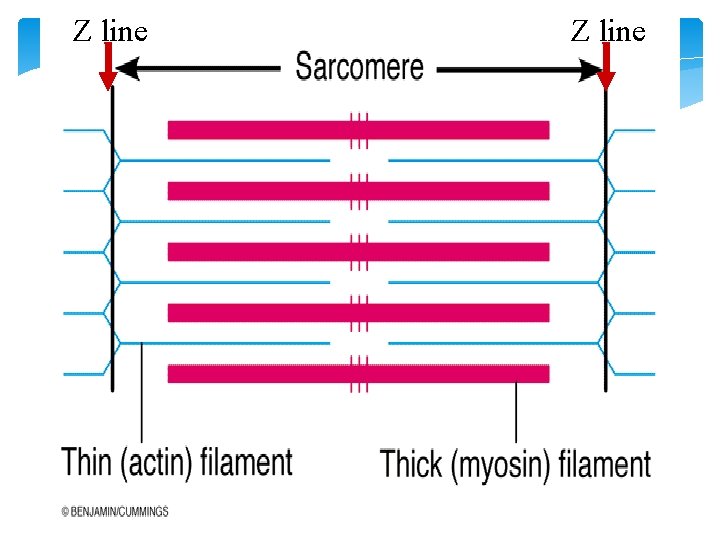
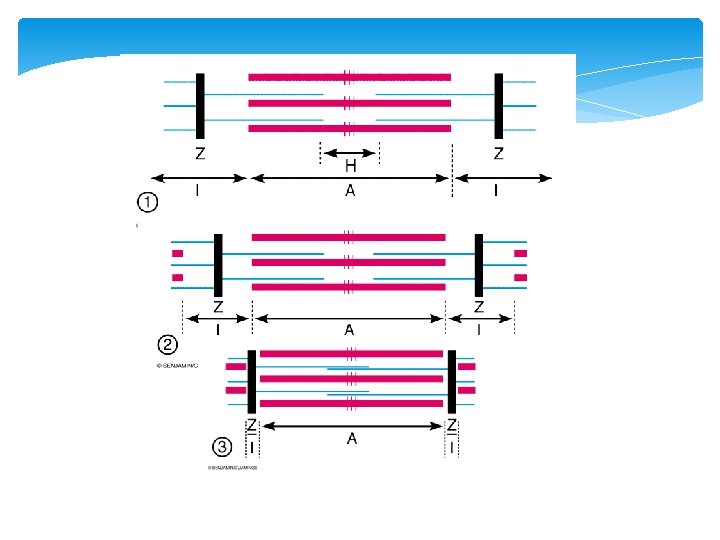
Z line
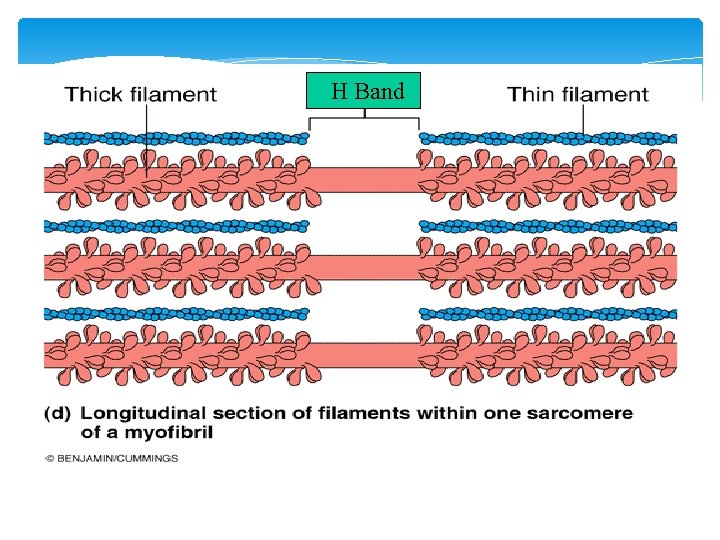
H Band
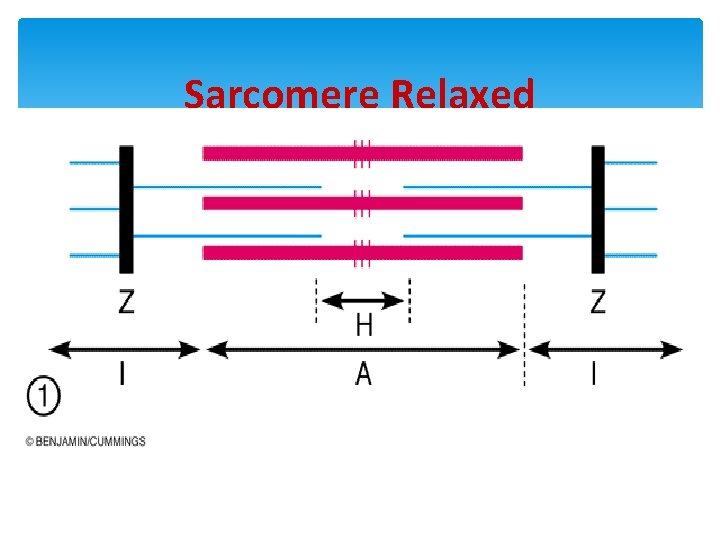
Sarcomere Relaxed
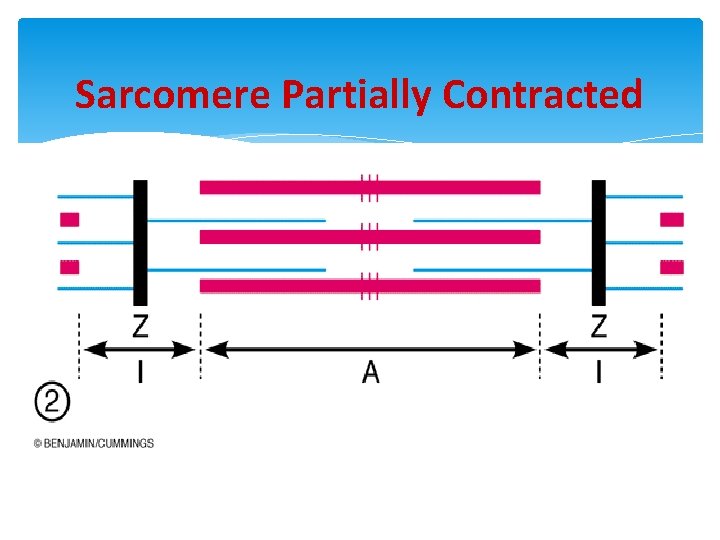
Sarcomere Partially Contracted
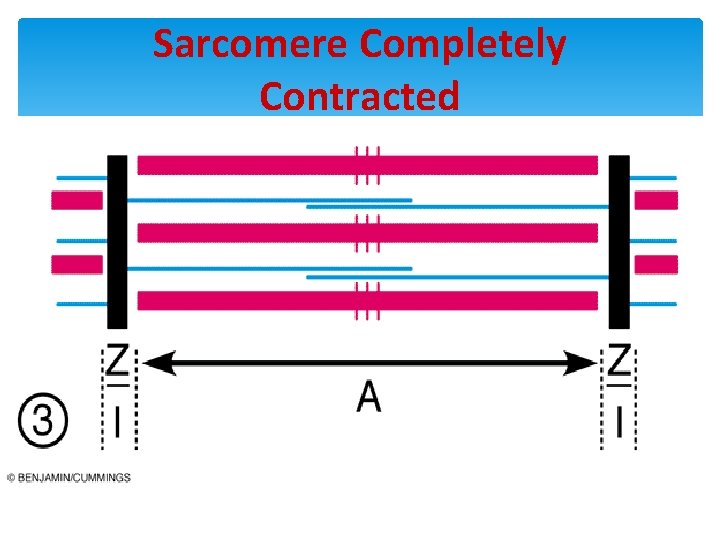
Sarcomere Completely Contracted
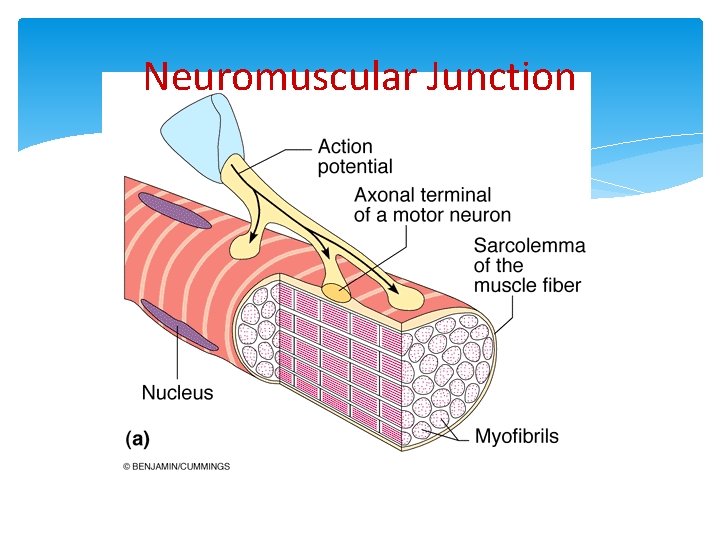
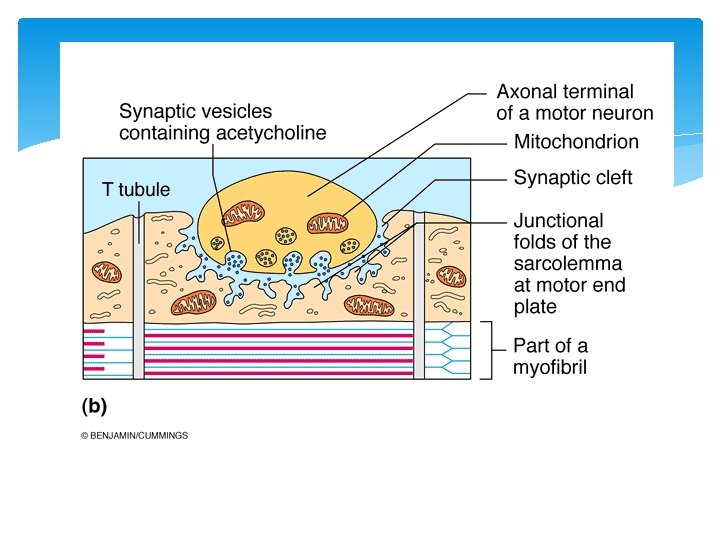
Neuromuscular Junction
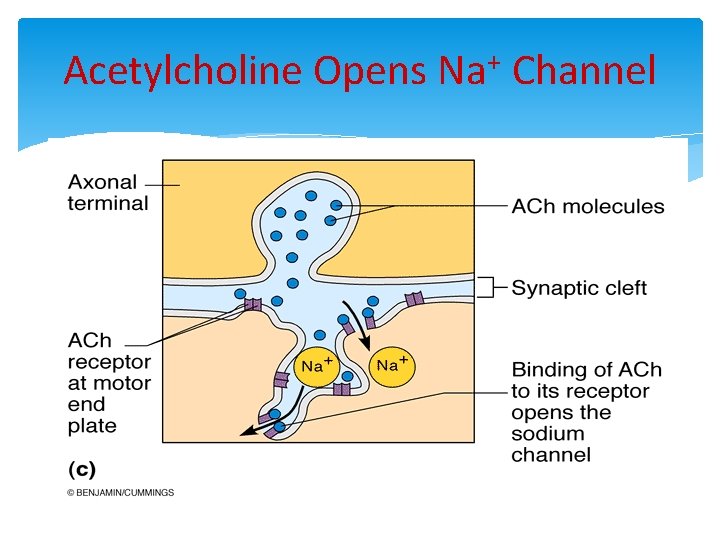
Acetylcholine Opens Na+ Channel
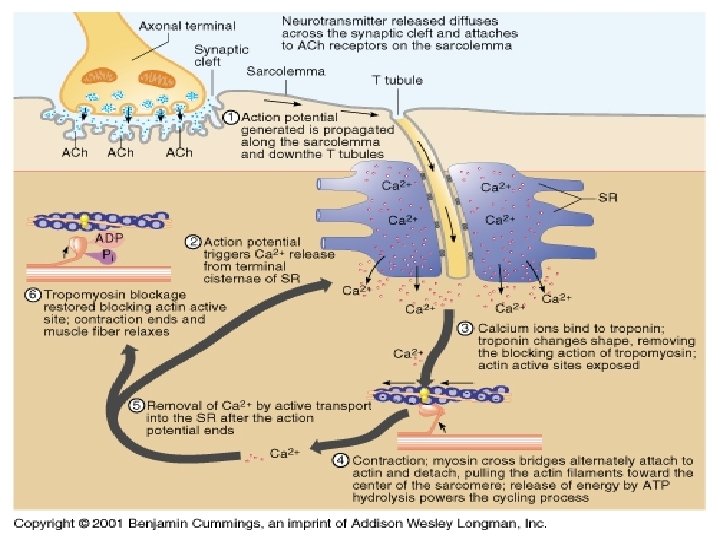
Muscle Contraction Summary • Nerve impulse reaches myoneural junction • Acetylcholine is released from motor neuron • Ach binds with receptors in the muscle membrane to allow sodium to enter • Sodium influx will generate an action potential in the sarcolemma
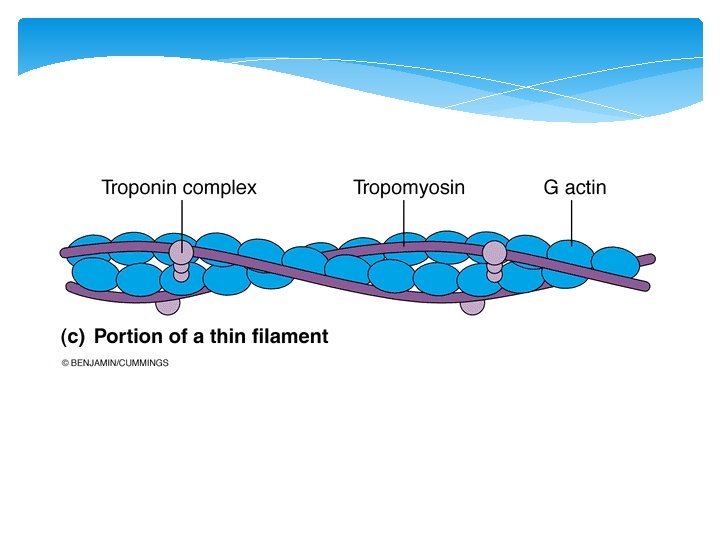
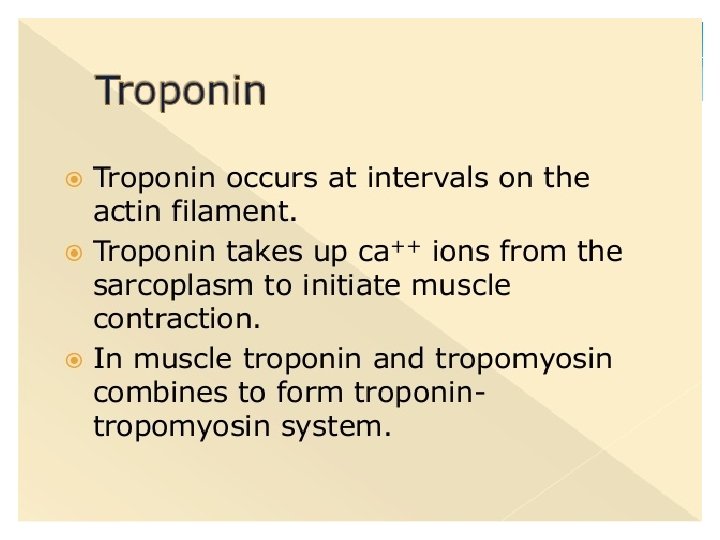
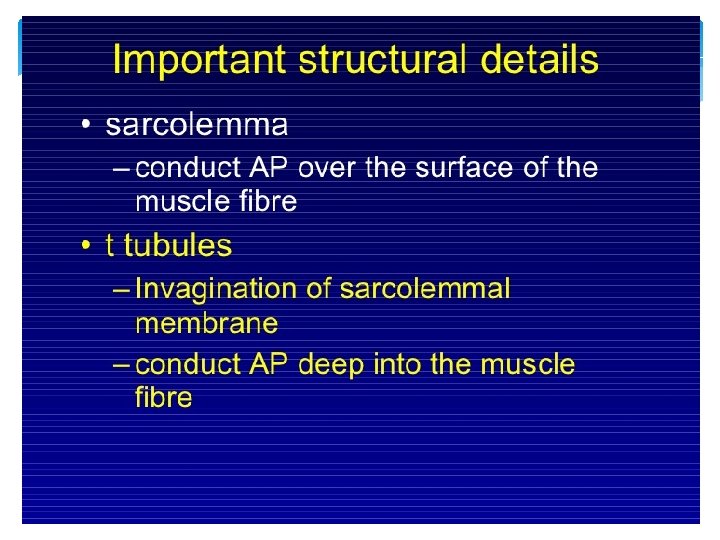
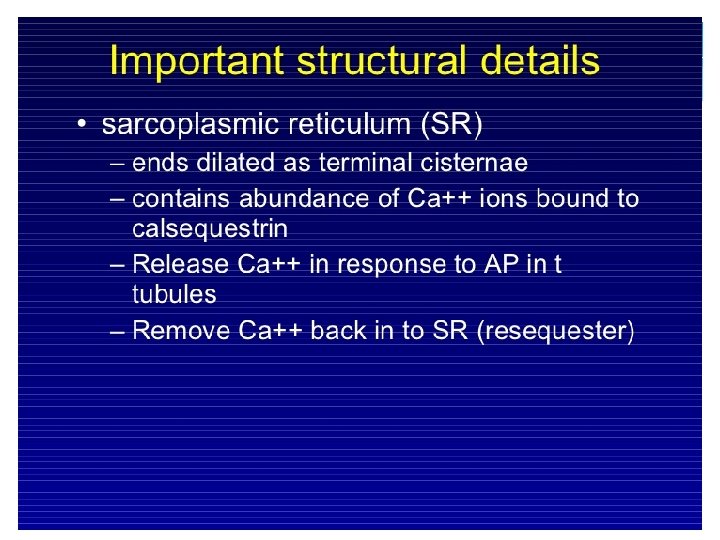
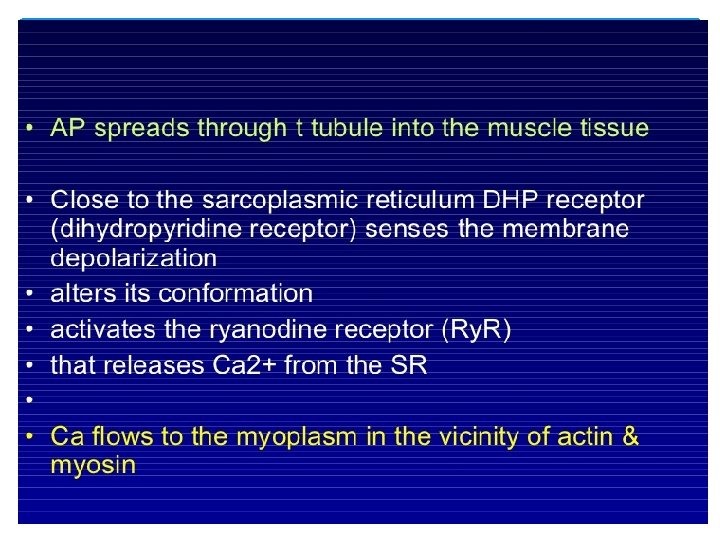
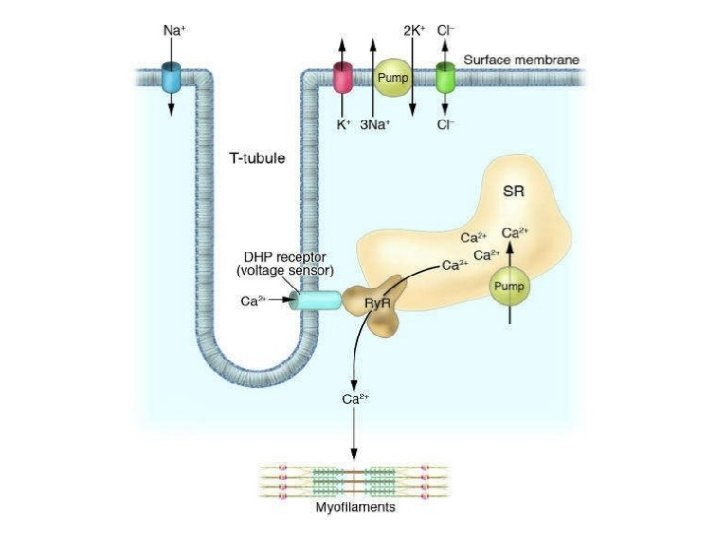
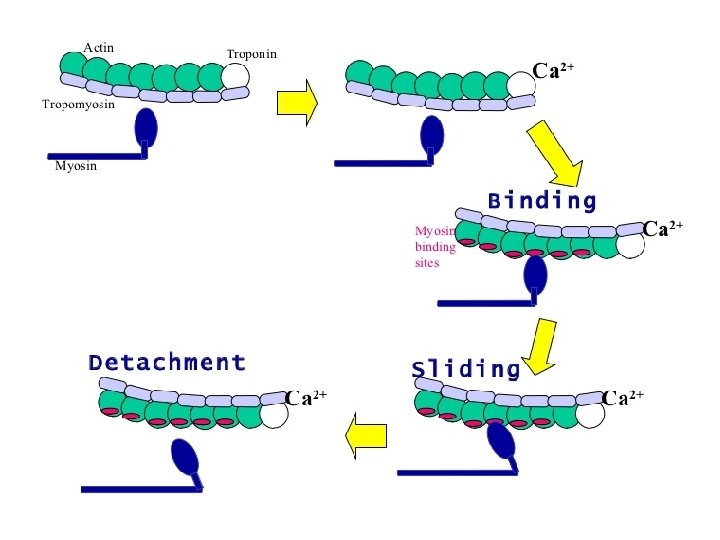
Muscle Contraction Continued • Action potential travels down T tubule • Sarcoplamic reticulum releases calcium • Calcium binds with troponin to move the troponin, tropomyosin complex • Binding sites in the actin filament are exposed
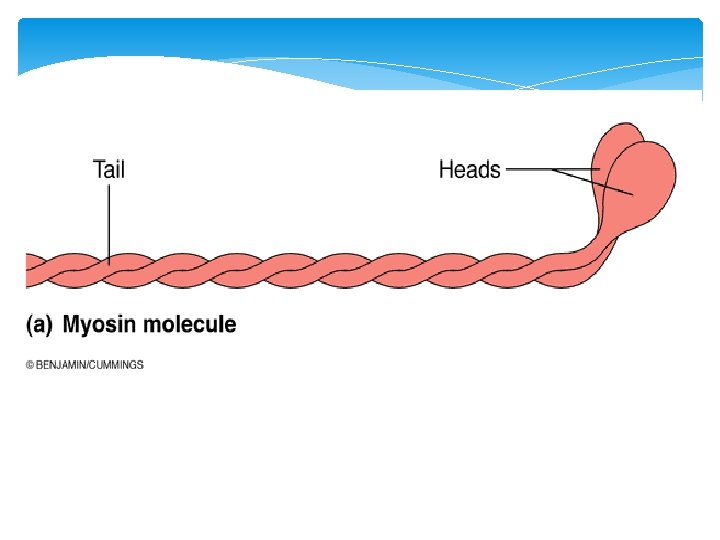
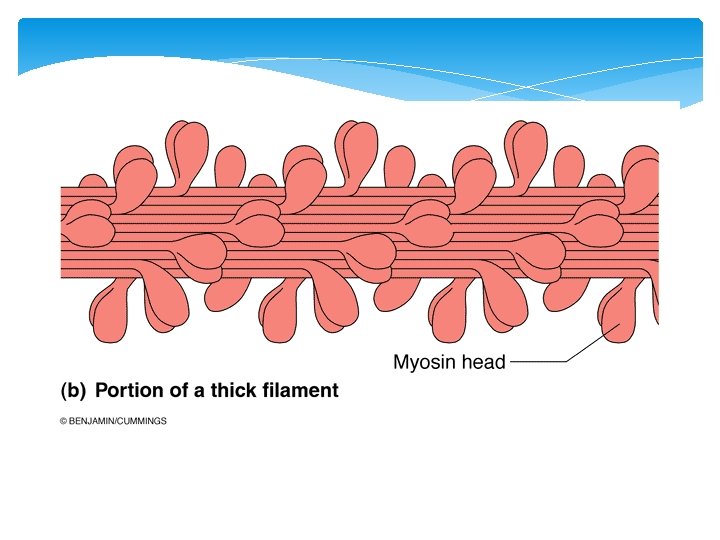
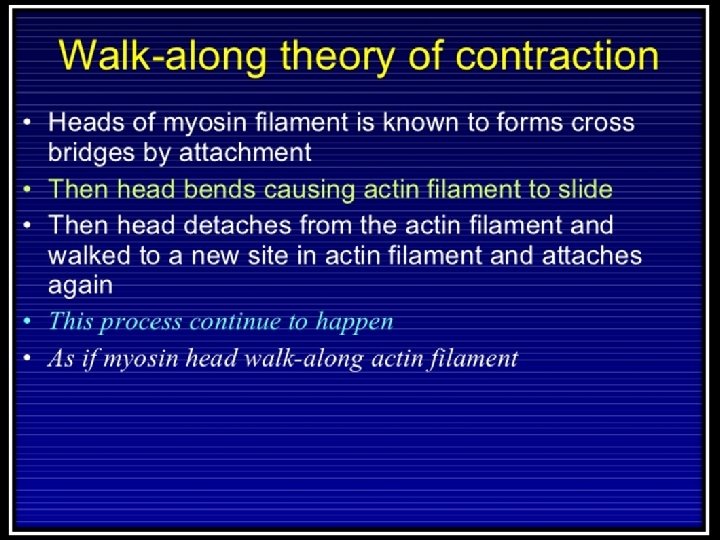
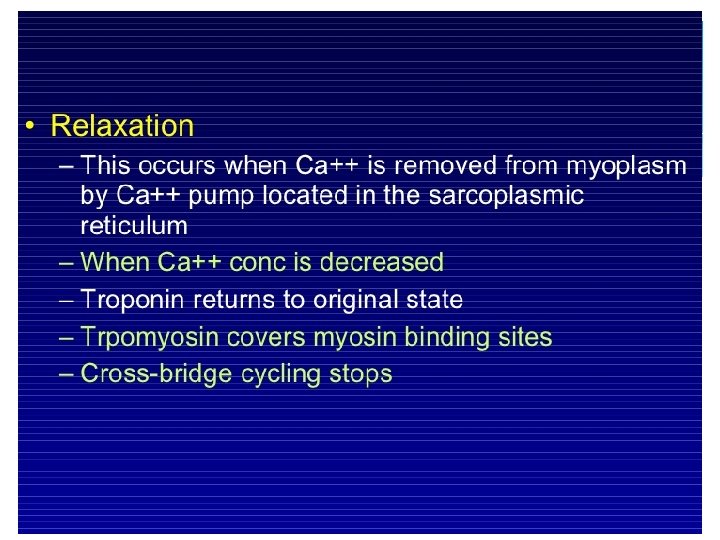
Muscle Contraction Continued • Myosin head attach to binding sites and create a power stroke • ATP detaches myosin heads and energizes them for another contaction • When action potentials cease the muscle stop contracting
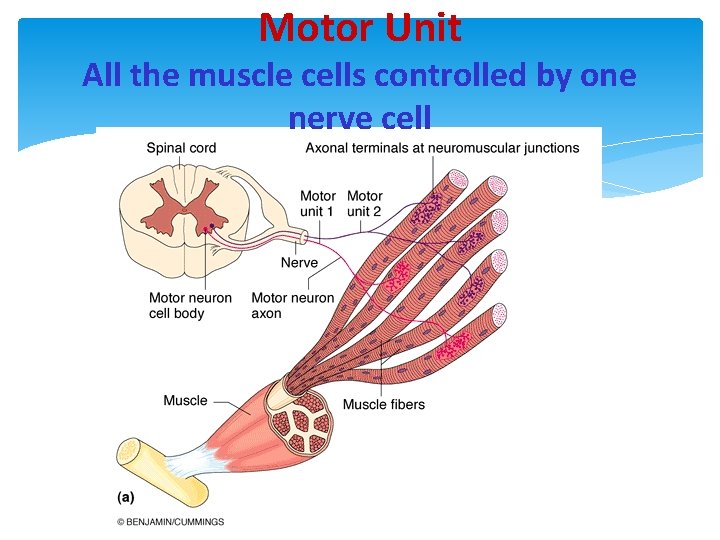
Motor Unit All the muscle cells controlled by one nerve cell
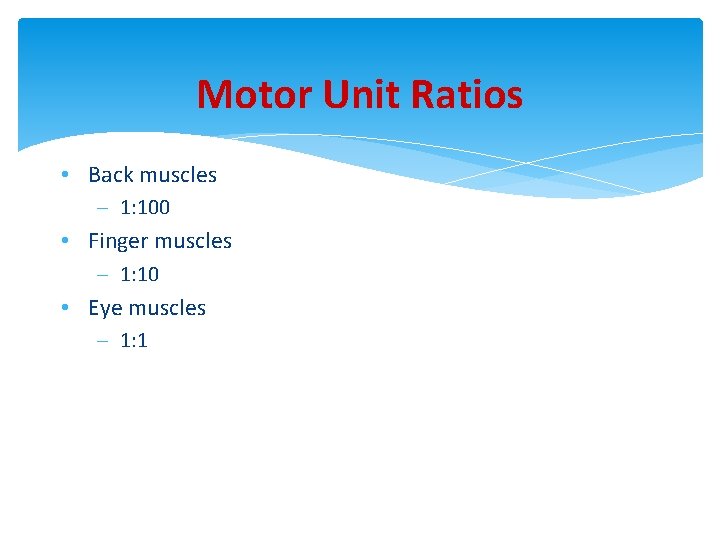
Motor Unit Ratios • Back muscles – 1: 100 • Finger muscles – 1: 10 • Eye muscles – 1: 1
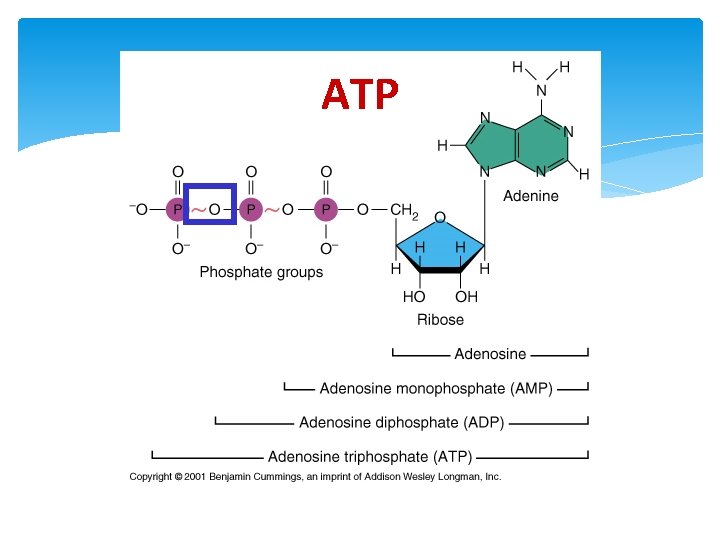
ATP
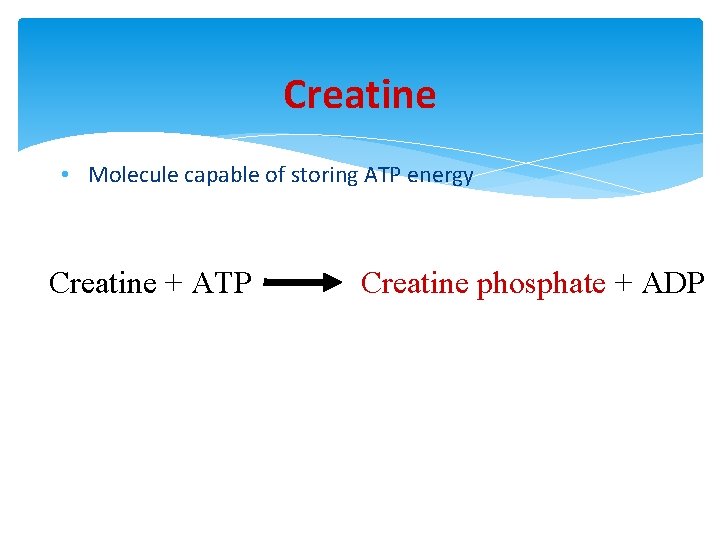
Creatine • Molecule capable of storing ATP energy Creatine + ATP Creatine phosphate + ADP
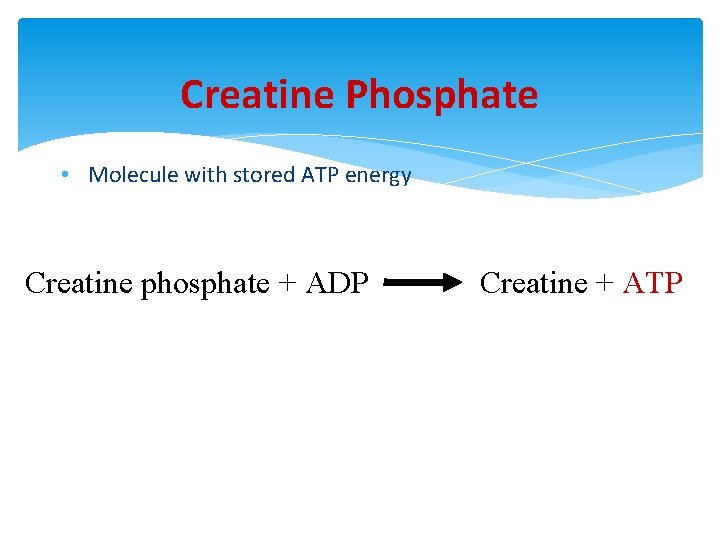
Creatine Phosphate • Molecule with stored ATP energy Creatine phosphate + ADP Creatine + ATP
Muscle Fatigue • Lack of oxygen causes ATP deficit • Lactic acid builds up from anaerobic respiration
Muscle Atrophy • Weakening and shrinking of a muscle • May be caused by – Immobilization – Loss of neural stimulation
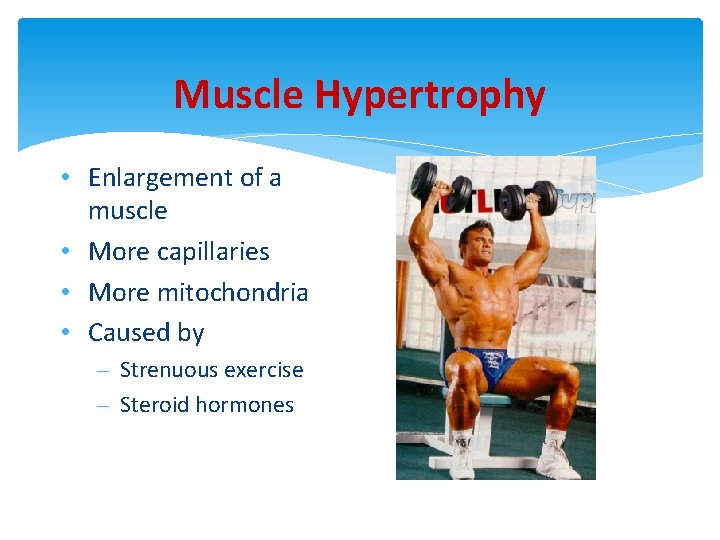
Muscle Hypertrophy • Enlargement of a muscle • More capillaries • More mitochondria • Caused by – Strenuous exercise – Steroid hormones
Steroid Hormones • Stimulate muscle growth and hypertrophy
Muscle Tonus • Tightness of a muscle • Some fibers always contracted
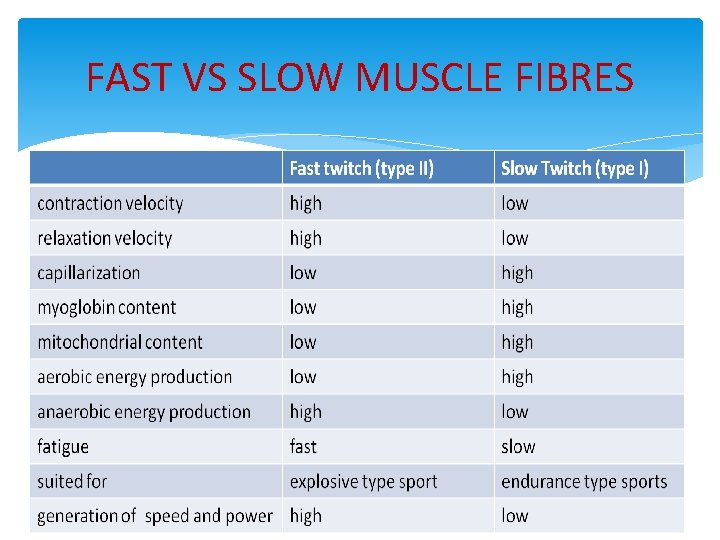
FAST VS SLOW MUSCLE FIBRES
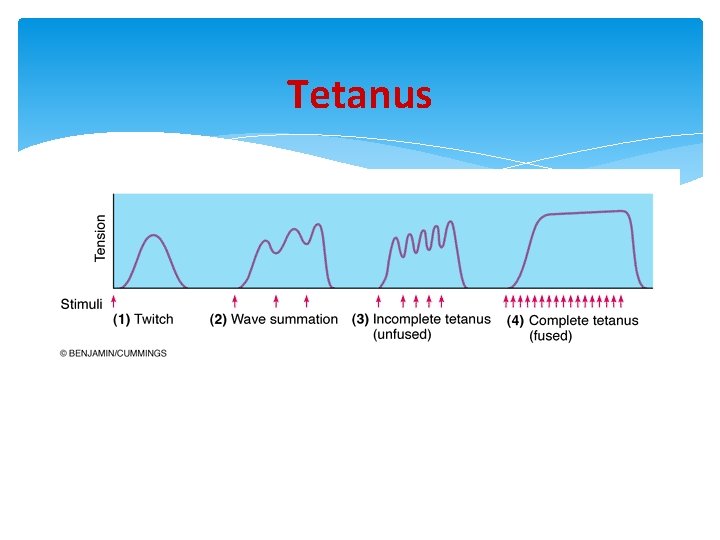
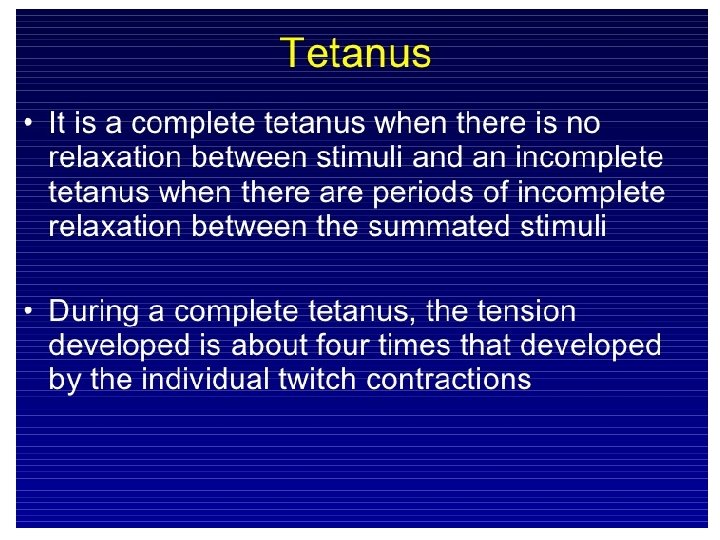
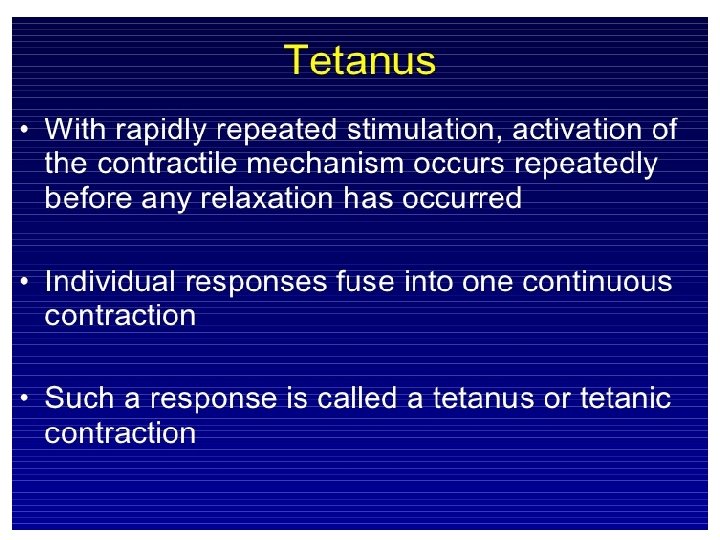
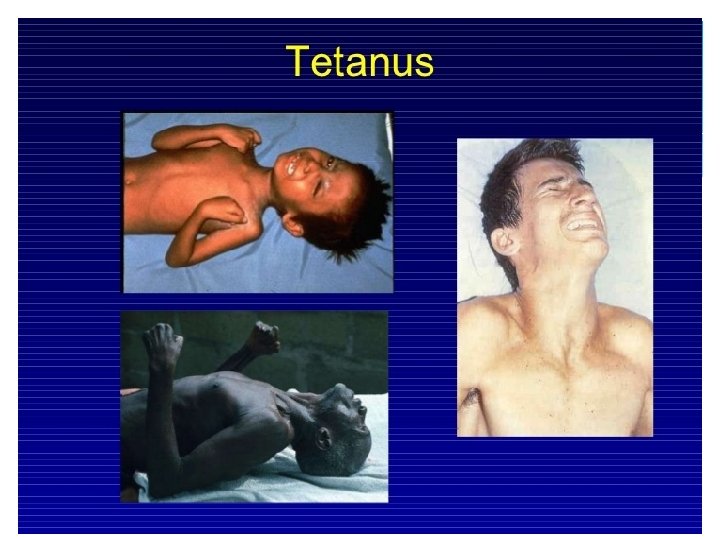
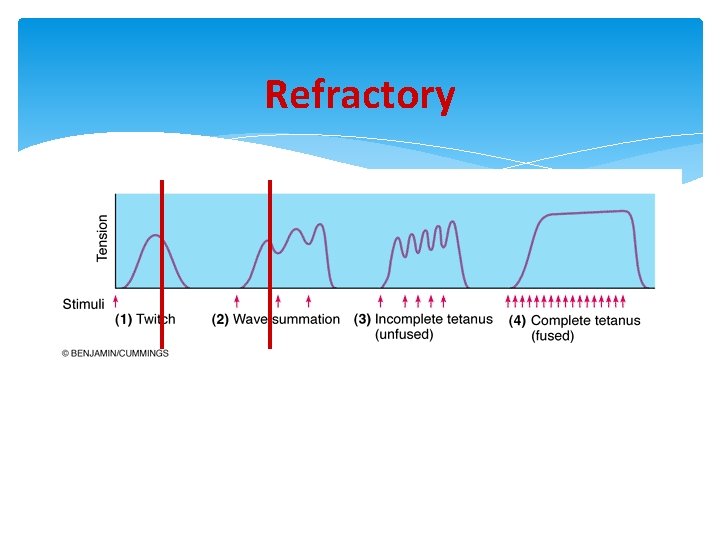
Tetany • Sustained contraction of a muscle • Result of a rapid succession of nerve impulses
Tetanus
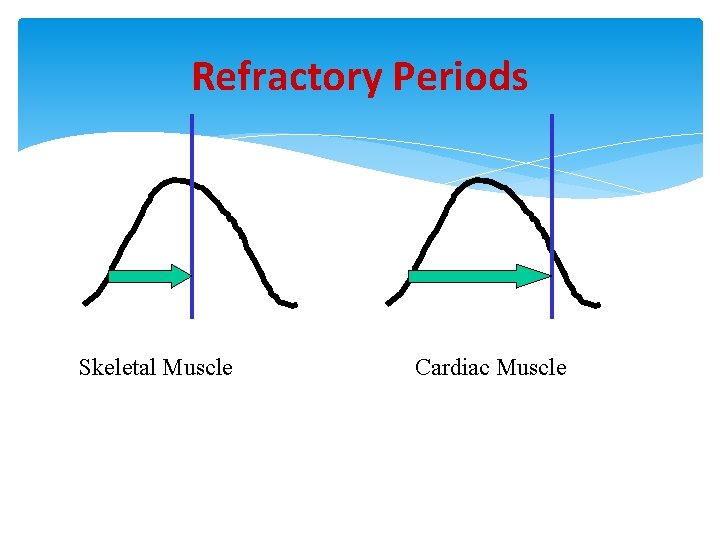
Refractory Period • Brief period of time in which muscle cells will not respond to a stimulus
Refractory
Refractory Periods Skeletal Muscle Cardiac Muscle
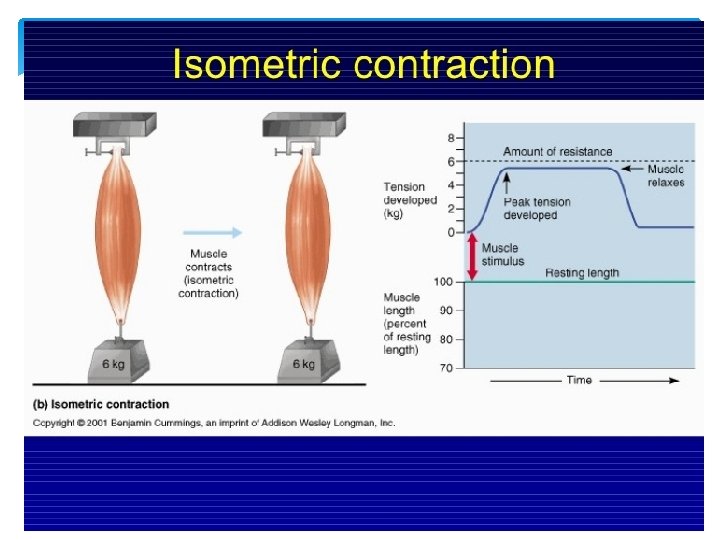
Isometric Contraction • Produces no movement • Used in – Standing – Sitting – Posture
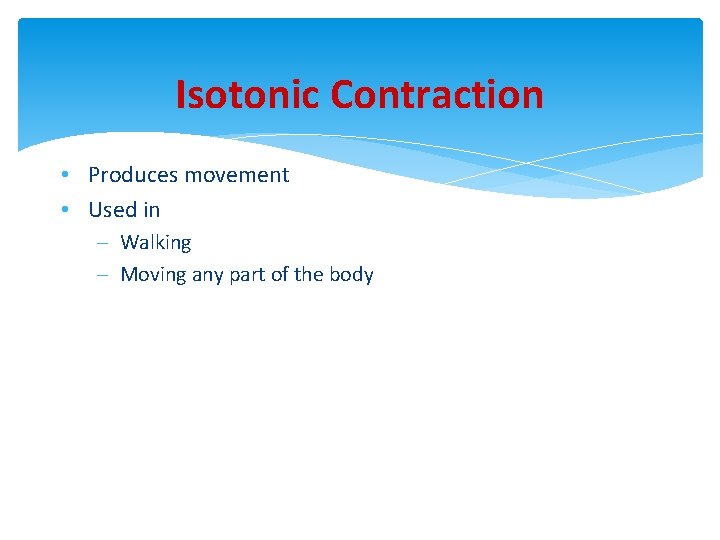
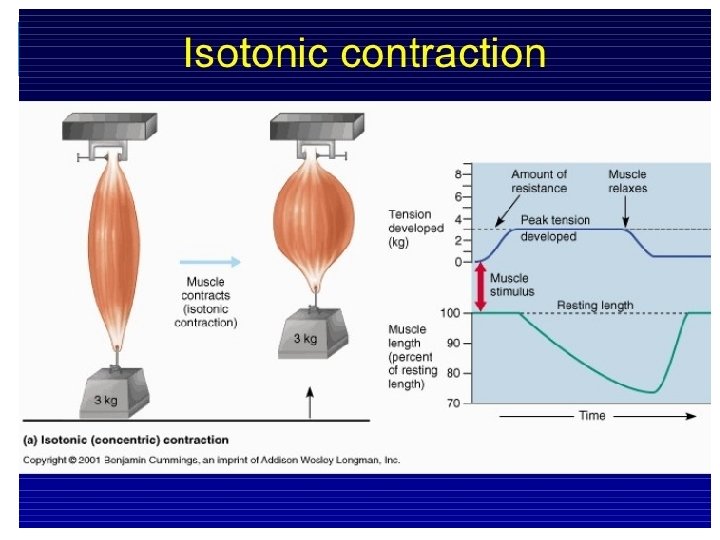
Isotonic Contraction • Produces movement • Used in – Walking – Moving any part of the body
THE START