
MUSCLE MOVEMENT AND DISORDERS Movement Muscles move bones
MUSCLE MOVEMENT AND DISORDERS

Movement Muscles move bones by pulling on them. As a muscle contracts, it pulls the insertion bone closer to the origin bone. Movement occurs at the joint between the origin and the insertion. Rule: A muscle’s insertion bone moves toward its origin bone. Groups of muscles usually contract to produce a single movement

Muscle Contraction MOTOR UNIT – a motor neuron plus all the muscle fibers it stimulates. NEUROMUSCULAR JUNCTION – the junction between the motor neuron’s fiber which transmits the impulse – and the muscle cell membrane. ACETYLCHOLINE – chemical neurotransmitter, diffuses across the synaptic cleft (carries impulse across synaptic cleft)

Muscle Conditions MUSCLE FATIGUE – caused by the accumulation of lactic acid in the muscles. OXYGEN DEBT – after exercise, the amount of oxygen needed by the muscle to change lactic acid back to glucose. MUSCLE TONE - When muscles are slightly contracted and ready to pull.
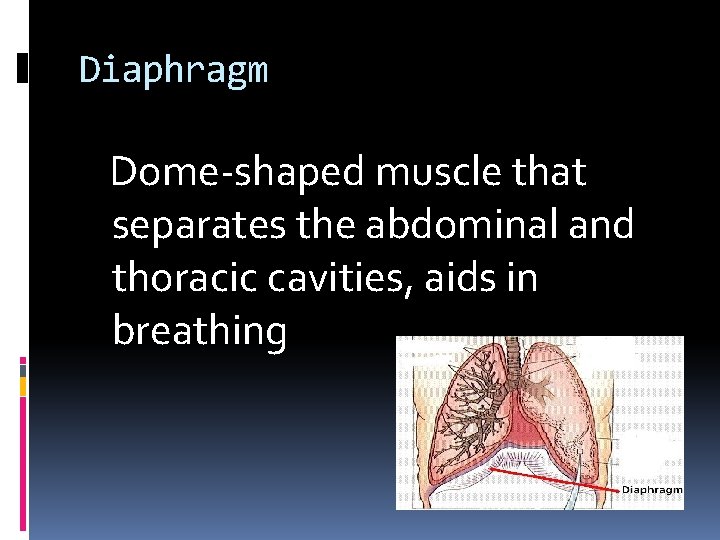
Diaphragm Dome-shaped muscle that separates the abdominal and thoracic cavities, aids in breathing
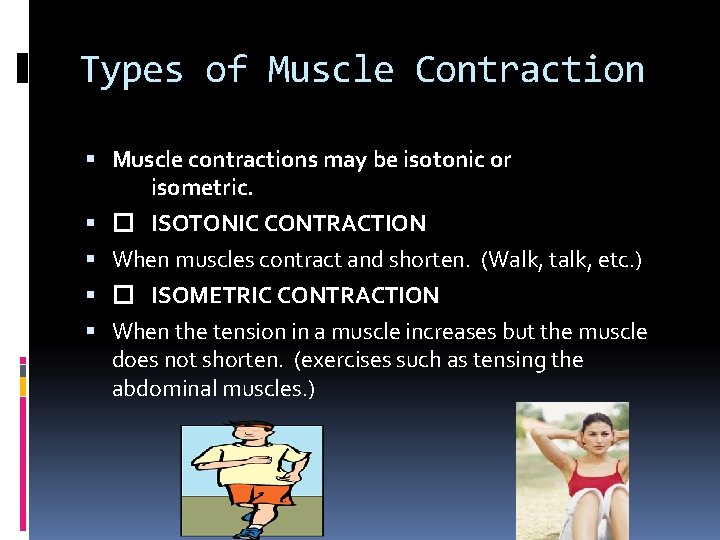
Types of Muscle Contraction Muscle contractions may be isotonic or isometric. � ISOTONIC CONTRACTION When muscles contract and shorten. (Walk, talk, etc. ) � ISOMETRIC CONTRACTION When the tension in a muscle increases but the muscle does not shorten. (exercises such as tensing the abdominal muscles. )

Muscular Disorders and Terms ATROPHY – wasting away of muscle due to lack of use. HYPERTROPHY – an increase in the size of the muscle cell (ex from weight lifting or a COPD patient’s chest muscles) STRAIN – tear in the muscle resulting from excessive use. Bleeding inside the muscle can result in pain and swelling. Ice packs will help stop bleeding and reduce swelling
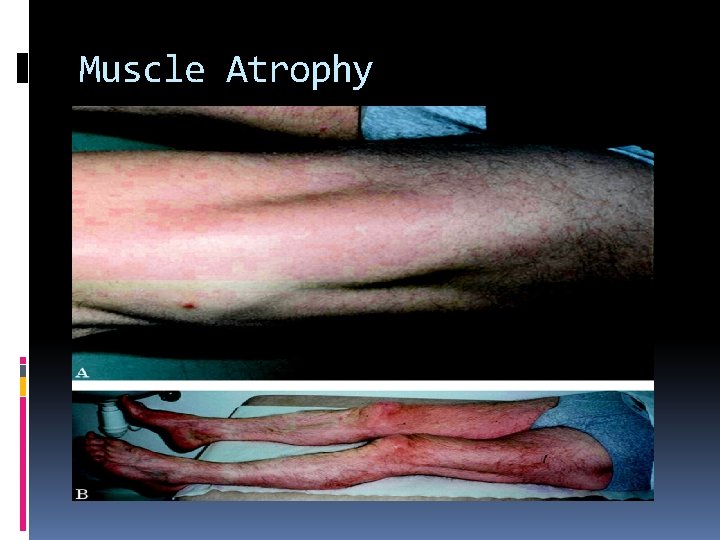
Muscle Atrophy

Muscle Hypertrophy
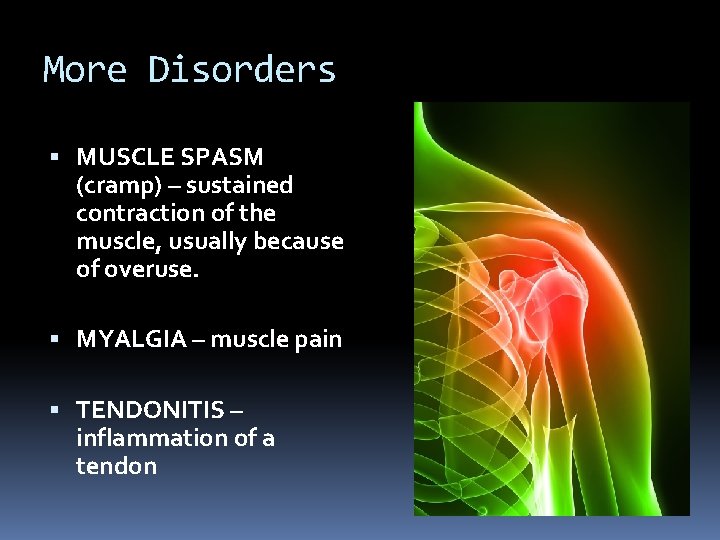
More Disorders MUSCLE SPASM (cramp) – sustained contraction of the muscle, usually because of overuse. MYALGIA – muscle pain TENDONITIS – inflammation of a tendon

Do you think he will experience some myalgia?
- Slides: 12