
MUSCLE CONTRACTIONS Year 11 ALPINE SKI HOUSE MUSCLE
- Slides: 6
MUSCLE CONTRACTIONS Year 11 ALPINE SKI HOUSE
MUSCLE CONTRACTIONS • Muscles contract in different ways to produce movement. • There are two types: 1. Isotonic = muscle contraction in which the muscle under tension shortens or lengthens. 2. Isometric = muscle contraction where the muscle is under tension but there is no movement. ALPINE SKI HOUSE
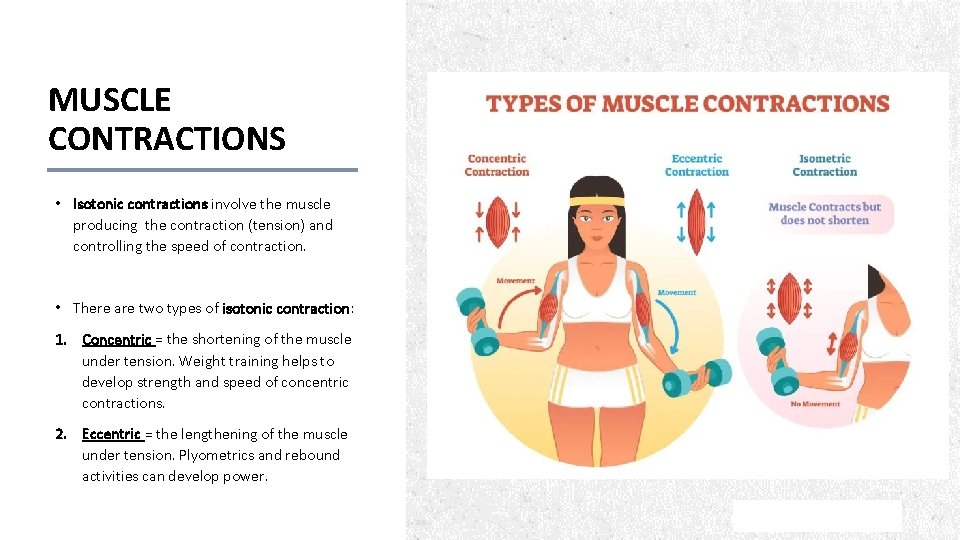
MUSCLE CONTRACTIONS • Isotonic contractions involve the muscle producing the contraction (tension) and controlling the speed of contraction. • There are two types of isotonic contraction: 1. Concentric = the shortening of the muscle under tension. Weight training helps to develop strength and speed of concentric contractions. 2. Eccentric = the lengthening of the muscle under tension. Plyometrics and rebound activities can develop power. ALPINE SKI HOUSE
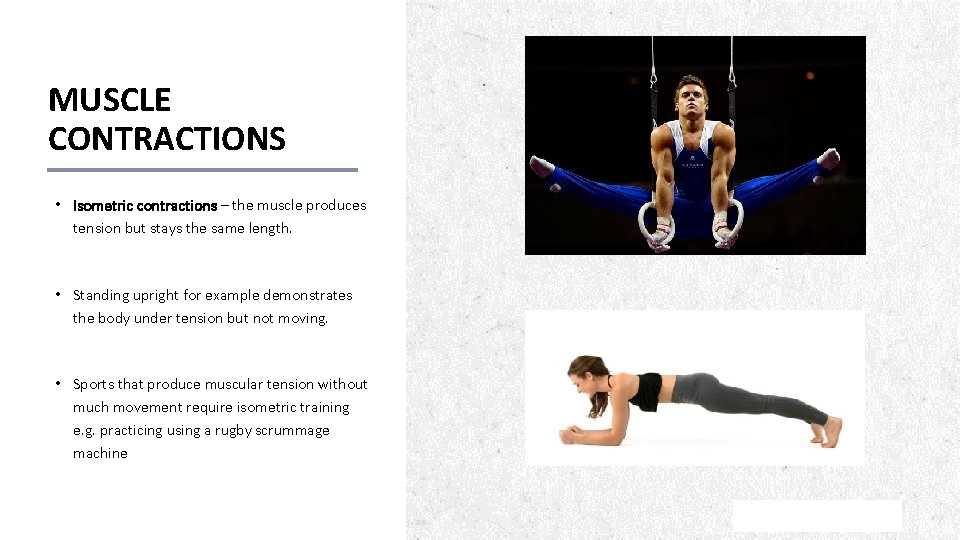
MUSCLE CONTRACTIONS • Isometric contractions – the muscle produces tension but stays the same length. • Standing upright for example demonstrates the body under tension but not moving. • Sports that produce muscular tension without much movement require isometric training e. g. practicing using a rugby scrummage machine ALPINE SKI HOUSE
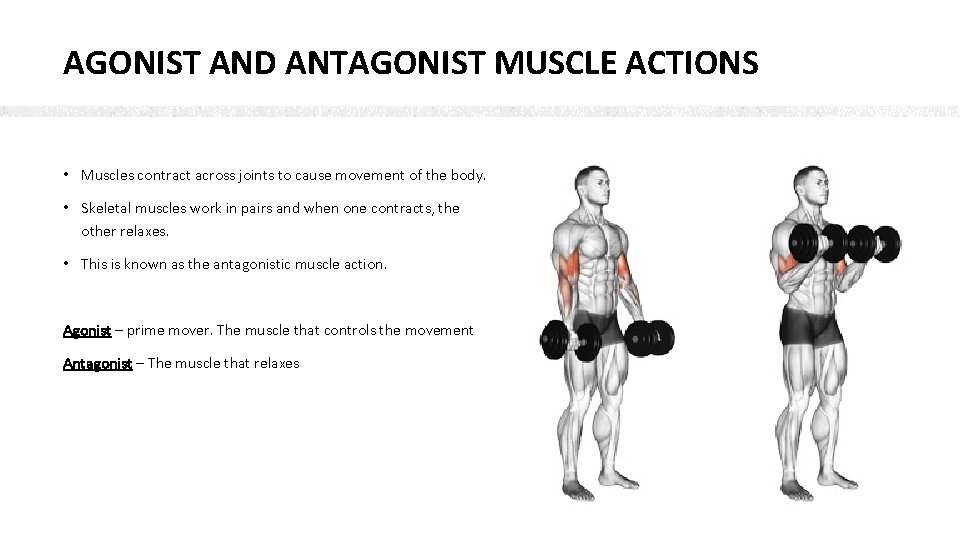
AGONIST AND ANTAGONIST MUSCLE ACTIONS • Muscles contract across joints to cause movement of the body. • Skeletal muscles work in pairs and when one contracts, the other relaxes. • This is known as the antagonistic muscle action. Agonist – prime mover. The muscle that controls the movement Antagonist – The muscle that relaxes ALPINE SKI HOUSE 5
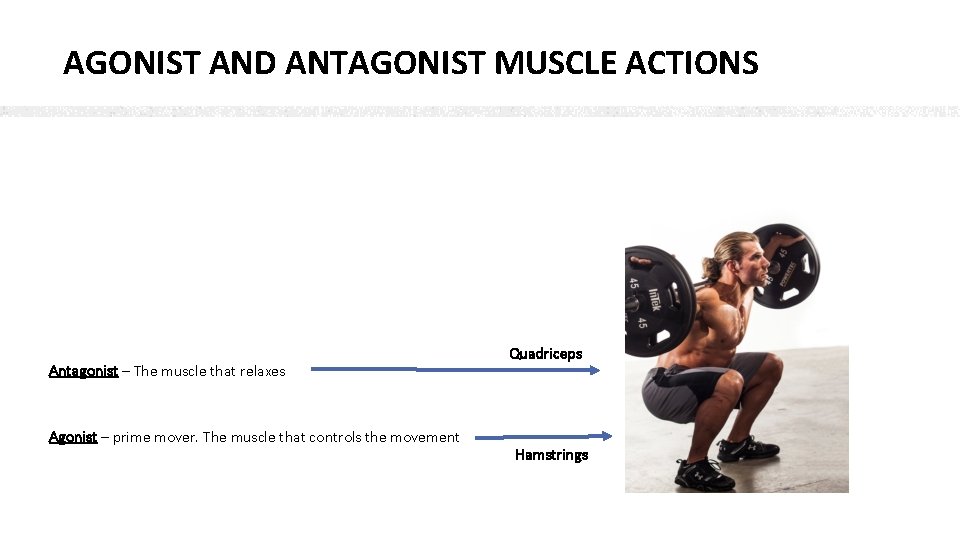
AGONIST AND ANTAGONIST MUSCLE ACTIONS Antagonist – The muscle that relaxes Agonist – prime mover. The muscle that controls the movement Quadriceps Hamstrings ALPINE SKI HOUSE 6