
Muscle Cells Muscle Fiber Contractions Packet Chapter 49
Muscle Cells & Muscle Fiber Contractions Packet # Chapter #49
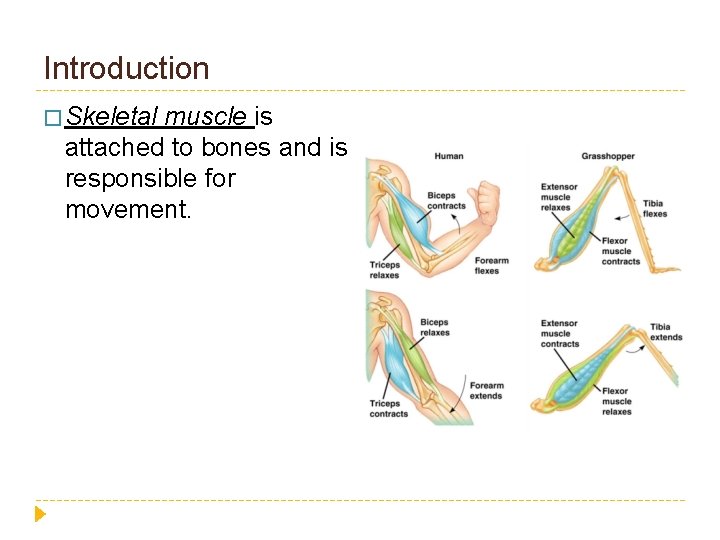
Introduction � Skeletal muscle is attached to bones and is responsible for movement.
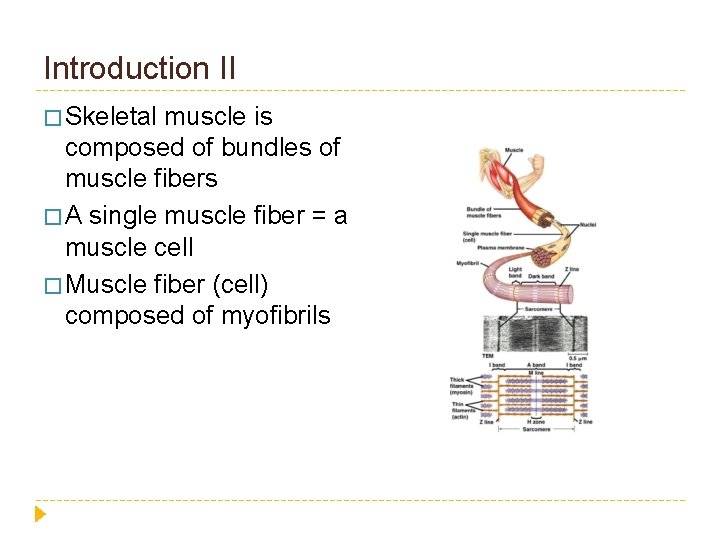
Introduction II � Skeletal muscle is composed of bundles of muscle fibers � A single muscle fiber = a muscle cell � Muscle fiber (cell) composed of myofibrils
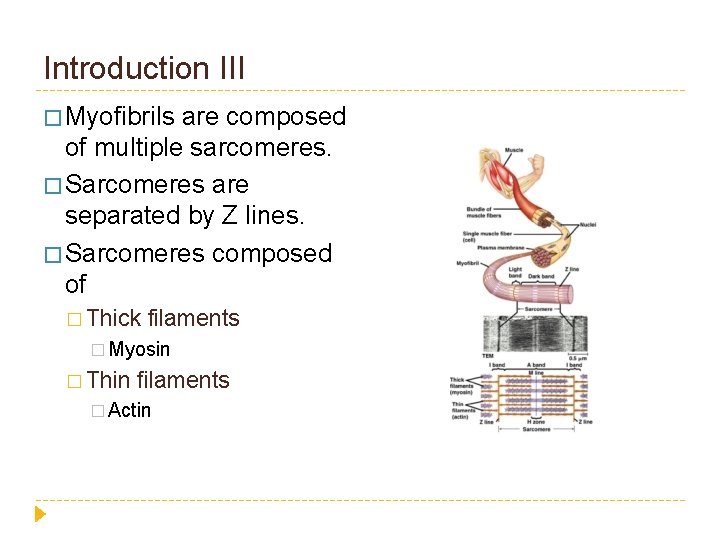
Introduction III � Myofibrils are composed of multiple sarcomeres. � Sarcomeres are separated by Z lines. � Sarcomeres composed of � Thick filaments � Myosin � Thin filaments � Actin
The Sliding Filament Model and Muscle Contraction How do muscle cells contract?
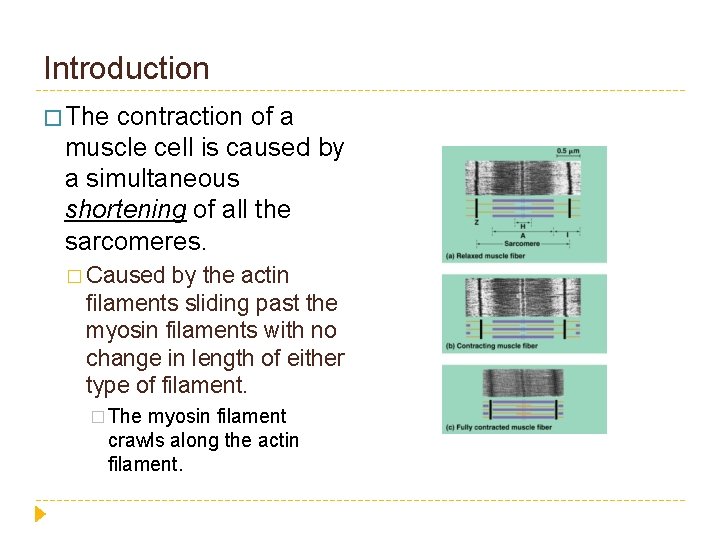
Introduction � The contraction of a muscle cell is caused by a simultaneous shortening of all the sarcomeres. � Caused by the actin filaments sliding past the myosin filaments with no change in length of either type of filament. � The myosin filament crawls along the actin filament.
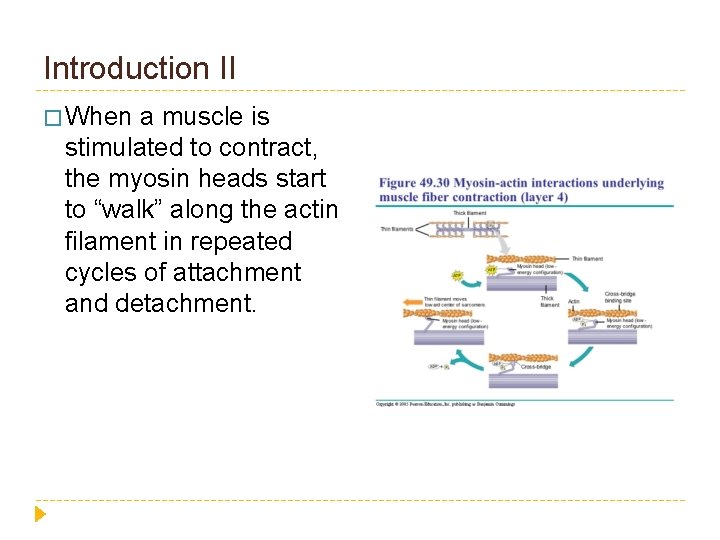
Introduction II � When a muscle is stimulated to contract, the myosin heads start to “walk” along the actin filament in repeated cycles of attachment and detachment.
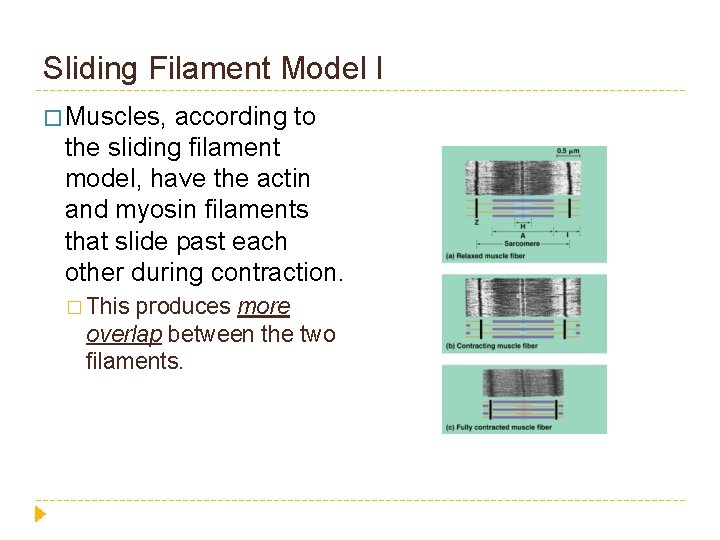
Sliding Filament Model I � Muscles, according to the sliding filament model, have the actin and myosin filaments that slide past each other during contraction. � This produces more overlap between the two filaments.
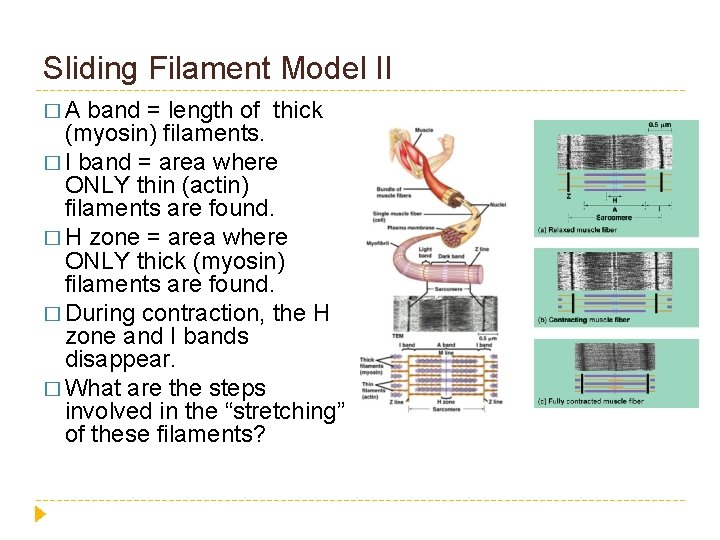
Sliding Filament Model II �A band = length of thick (myosin) filaments. � I band = area where ONLY thin (actin) filaments are found. � H zone = area where ONLY thick (myosin) filaments are found. � During contraction, the H zone and I bands disappear. � What are the steps involved in the “stretching” of these filaments?
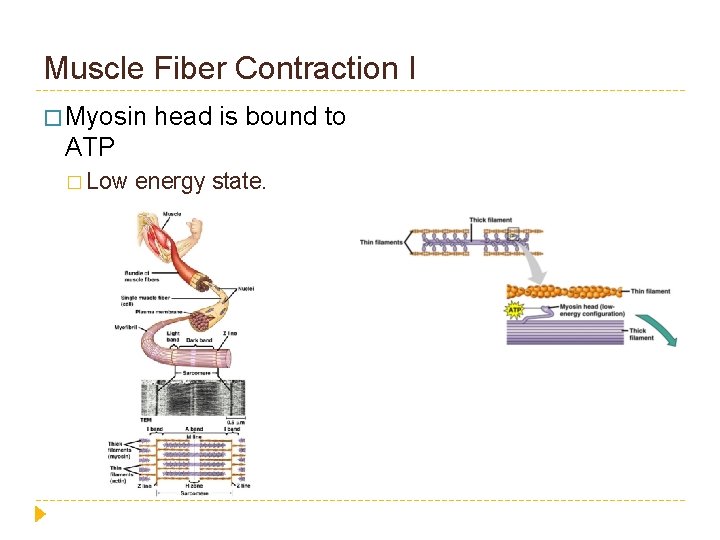
Muscle Fiber Contraction I � Myosin head is bound to ATP � Low energy state.
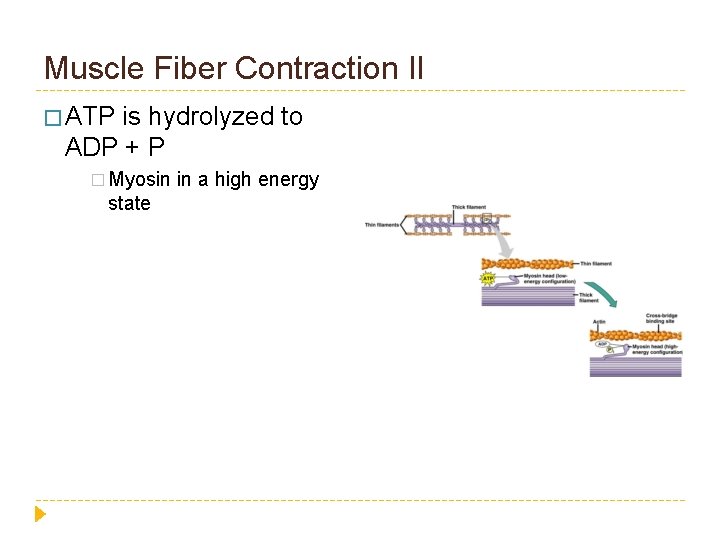
Muscle Fiber Contraction II � ATP is hydrolyzed to ADP + P � Myosin state in a high energy
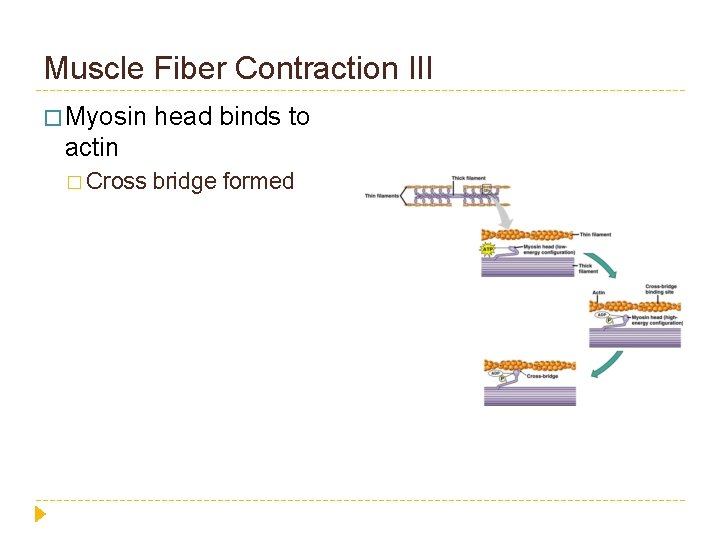
Muscle Fiber Contraction III � Myosin head binds to actin � Cross bridge formed
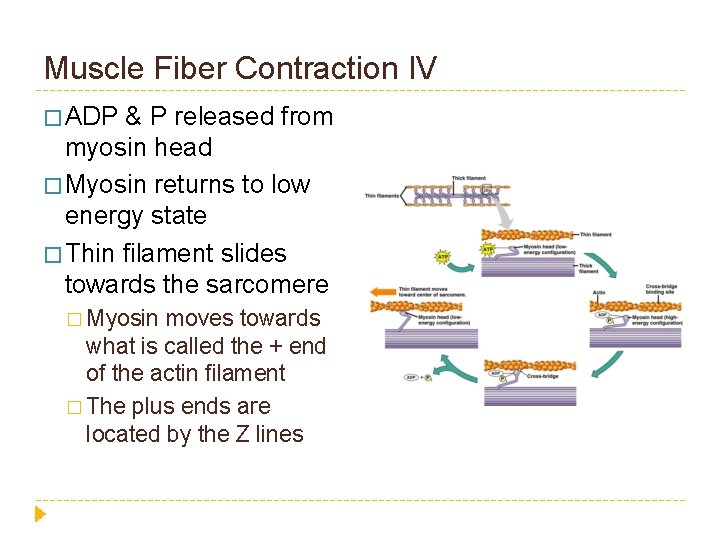
Muscle Fiber Contraction IV � ADP & P released from myosin head � Myosin returns to low energy state � Thin filament slides towards the sarcomere � Myosin moves towards what is called the + end of the actin filament � The plus ends are located by the Z lines
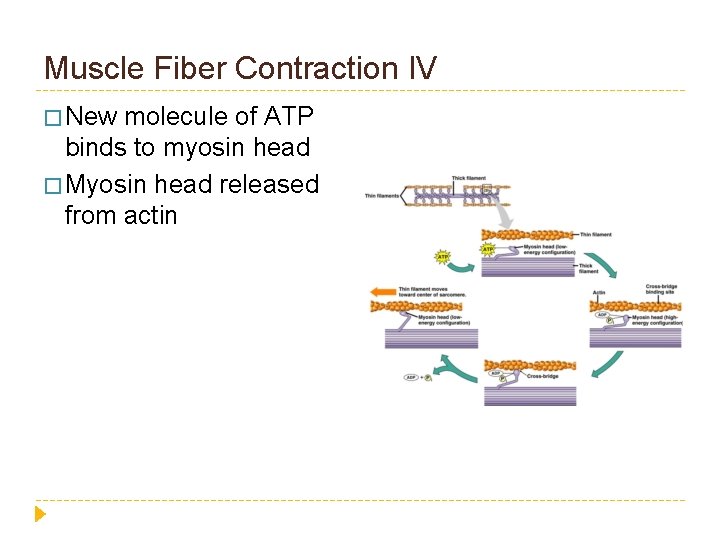
Muscle Fiber Contraction IV � New molecule of ATP binds to myosin head � Myosin head released from actin
Calcium & Regulatory Proteins
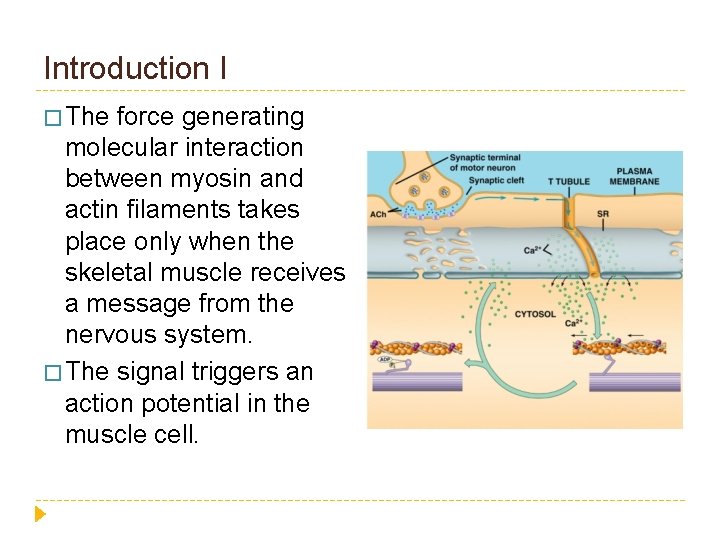
Introduction I � The force generating molecular interaction between myosin and actin filaments takes place only when the skeletal muscle receives a message from the nervous system. � The signal triggers an action potential in the muscle cell.
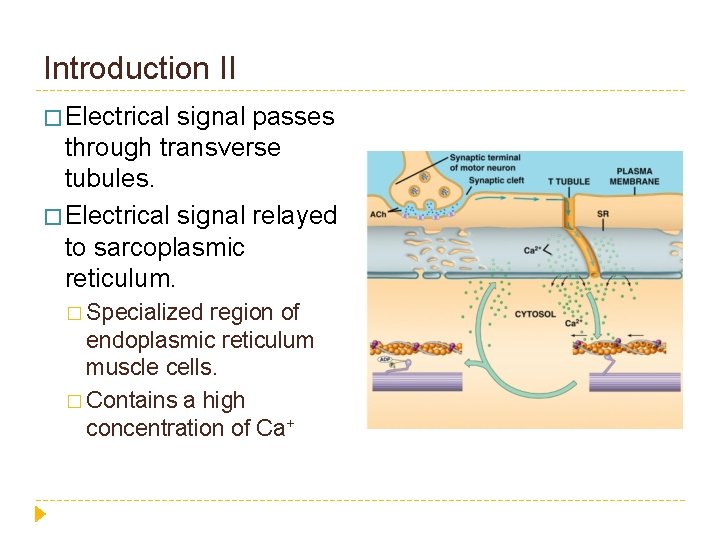
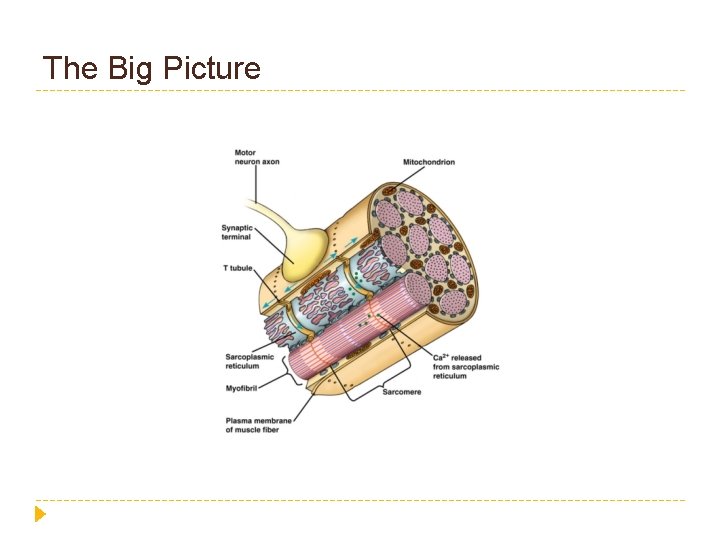
Introduction II � Electrical signal passes through transverse tubules. � Electrical signal relayed to sarcoplasmic reticulum. � Specialized region of endoplasmic reticulum muscle cells. � Contains a high concentration of Ca+
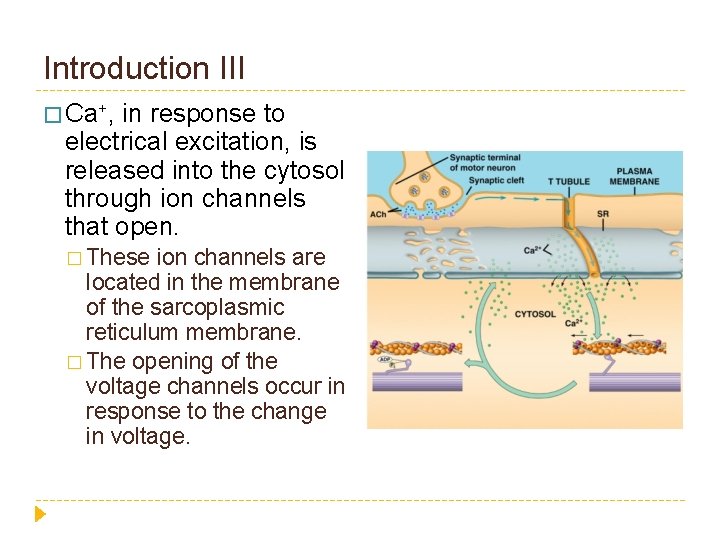
Introduction III � Ca+, in response to electrical excitation, is released into the cytosol through ion channels that open. � These ion channels are located in the membrane of the sarcoplasmic reticulum membrane. � The opening of the voltage channels occur in response to the change in voltage.
The Role of Calcium and Regulatory Proteins
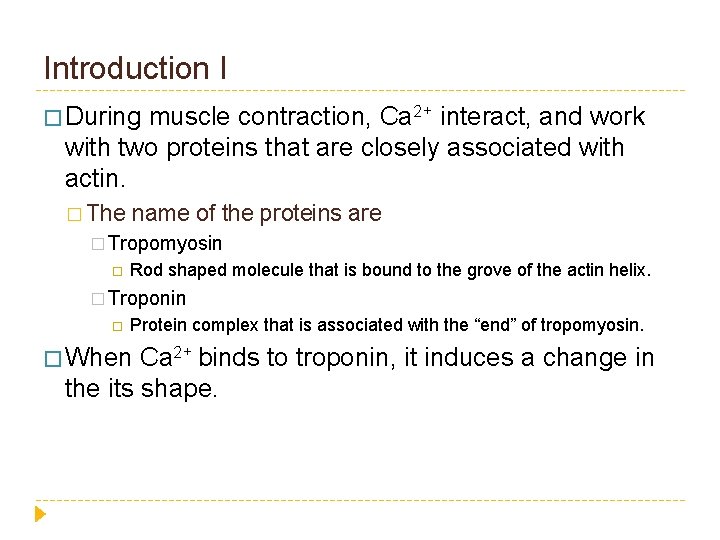
Introduction I � During muscle contraction, Ca 2+ interact, and work with two proteins that are closely associated with actin. � The name of the proteins are � Tropomyosin Rod shaped molecule that is bound to the grove of the actin helix. � Troponin Protein complex that is associated with the “end” of tropomyosin. � When Ca 2+ binds to troponin, it induces a change in the its shape.
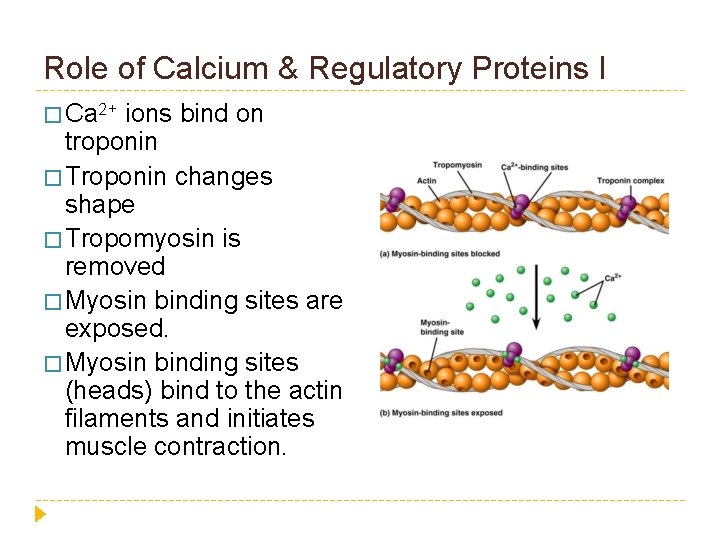
Role of Calcium & Regulatory Proteins I � Ca 2+ ions bind on troponin � Troponin changes shape � Tropomyosin is removed � Myosin binding sites are exposed. � Myosin binding sites (heads) bind to the actin filaments and initiates muscle contraction.
Role of Calcium & Regulatory Proteins II � The increase in Ca 2+ ions, within the cytosol, stops as soon as the nerve signal stops. � Ca 2+ is pumped back into the satcoplasmic reticulum.
Putting it Together Nerve and Muscle Cells
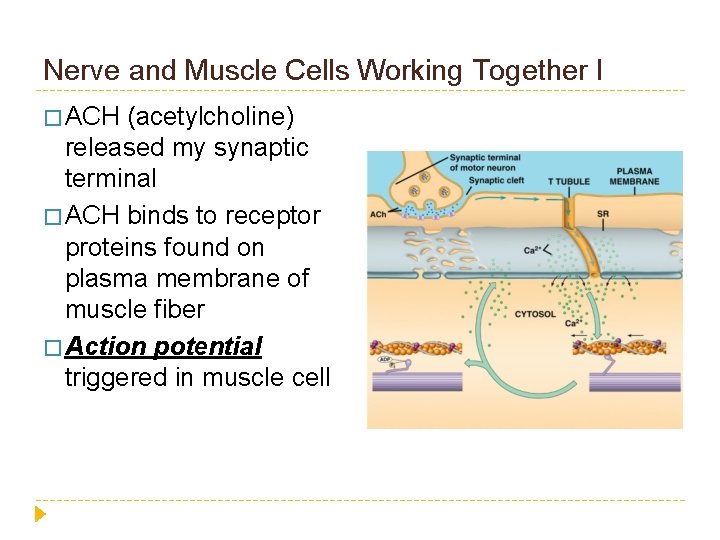
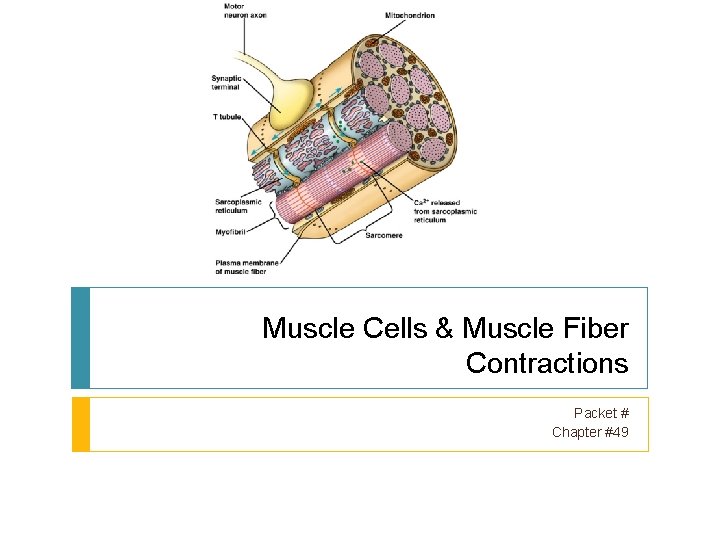
Nerve and Muscle Cells Working Together I � ACH (acetylcholine) released my synaptic terminal � ACH binds to receptor proteins found on plasma membrane of muscle fiber � Action potential triggered in muscle cell
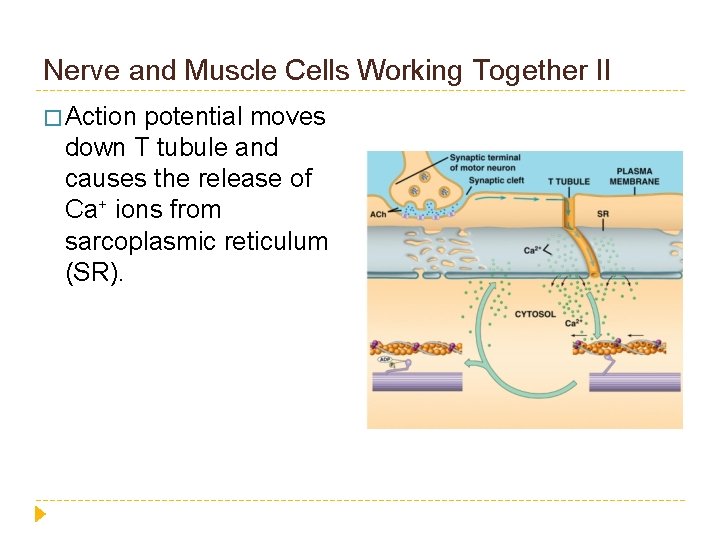
Nerve and Muscle Cells Working Together II � Action potential moves down T tubule and causes the release of Ca+ ions from sarcoplasmic reticulum (SR).
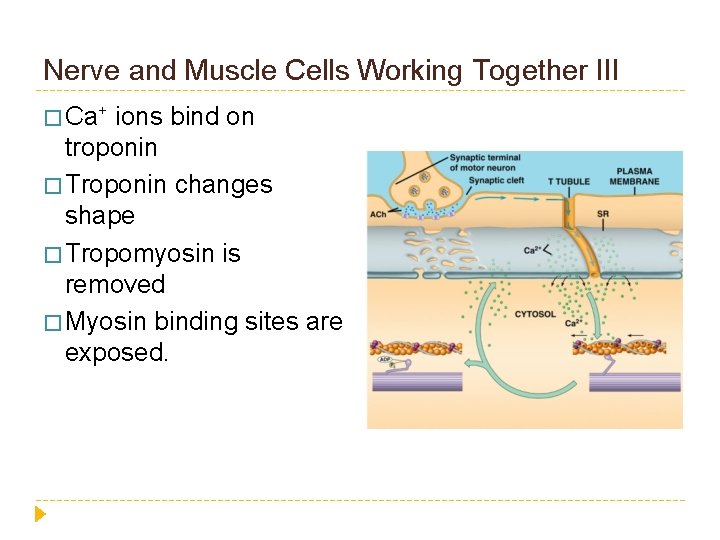
Nerve and Muscle Cells Working Together III � Ca+ ions bind on troponin � Troponin changes shape � Tropomyosin is removed � Myosin binding sites are exposed.
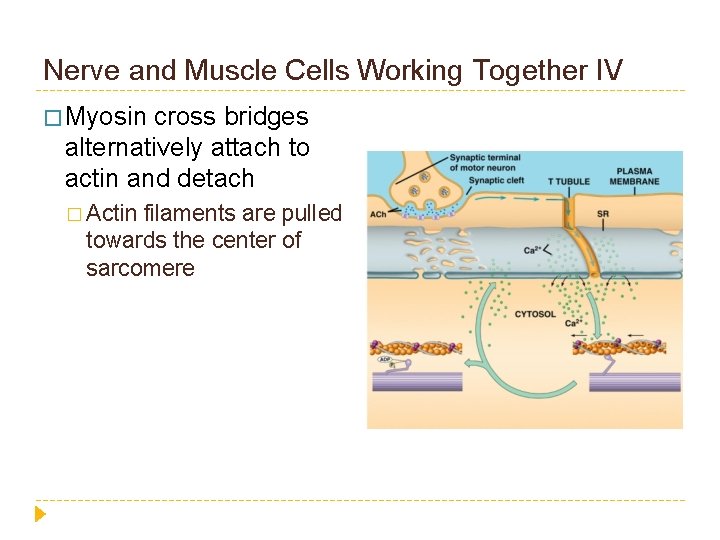
Nerve and Muscle Cells Working Together IV � Myosin cross bridges alternatively attach to actin and detach � Actin filaments are pulled towards the center of sarcomere
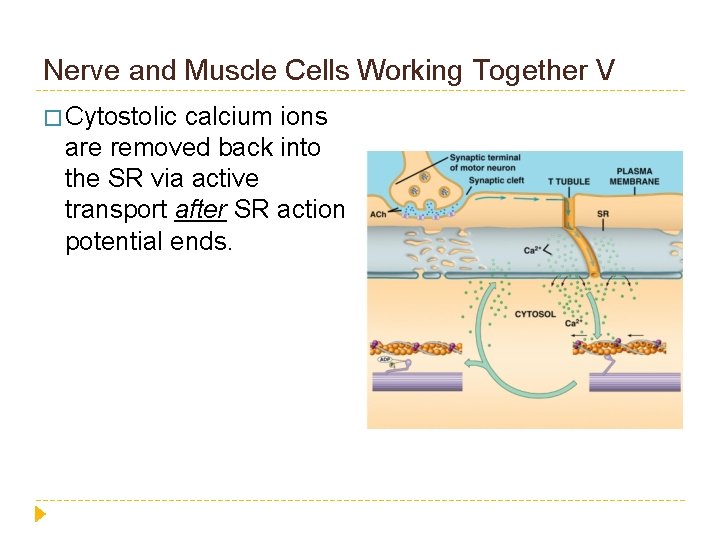
Nerve and Muscle Cells Working Together V � Cytostolic calcium ions are removed back into the SR via active transport after SR action potential ends.
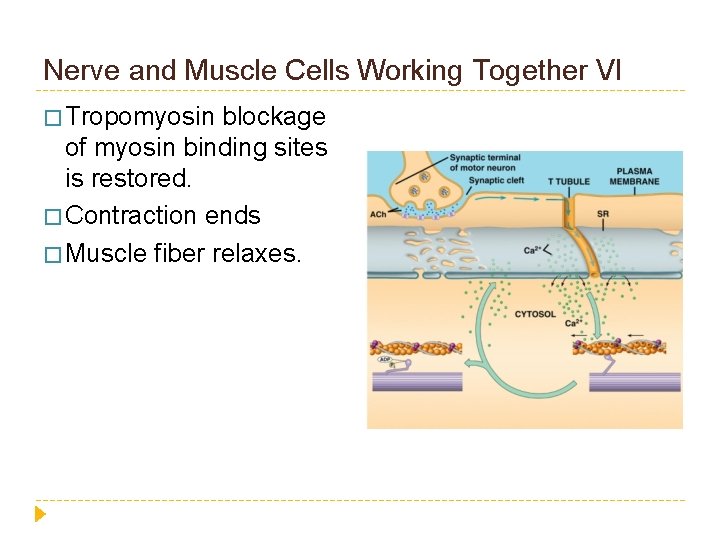
Nerve and Muscle Cells Working Together VI � Tropomyosin blockage of myosin binding sites is restored. � Contraction ends � Muscle fiber relaxes.
The Big Picture
Other Important Information
Types of Muscle � Skeletal Muscle Fibers � Slow oxidative � Fast glycolytic � Cardiac muscle � Heart � Smooth � Walls of hollow organs � Blood muscle vessels Arteries � Digestive tract
- Slides: 32