
MUSCLE AND TENDON INJURIES ELBOW FLEXOR STRAINS Strains
MUSCLE AND TENDON INJURIES: ELBOW FLEXOR STRAINS Strains to the flexor muscles are often caused by a loaded movement that includes both the elbow and shoulder The two-joint muscles---the muscles involved with creating movement at more than one joint---seem to be prone to strains The biceps muscle is a perfect example of a two-joint muscle; it flexes the elbow joint and the shoulder joint Minor elbow flexor strains are characterized by discomfort at the anterior aspect of the elbow and minimal swelling The athlete will also demonstrate some weakness and extra discomfort when elbow flexion is resisted A moderate elbow flexor strain will have mild to moderate amounts of swelling and marked weakness when tested for strength The initial treatment an AT may give is PRICES When the initial inflammation has subsided, the athlete can then perform mild stretching and strengthening exercises A moderate strain is treated the same, but progress is slower Complete muscle or tendon ruptures injuries should be referred to a team physician

MUSCLE AND TENDON INJURIES: ELBOW EXTENSOR STRAIN Excessive resistance to the triceps muscle often causes tissue damage to the elbow extensors This can happen if the athlete attempts to break a fall with an outstretched arm The injury needs to be assessed carefully because the triceps tendon can often pull a bit of bone away from the ulna at the point where the tendon attaches The characteristics of an extensor strain are the same as for a flexor injury, except the pain will be at the posterior aspect of the upper arm, and the athlete will often experience more pain when the AT resists elbow extension Treat with PRICES is recommended, and after inflammation has subsided, the elbow extensor should be stretched mildly and strengthened as tolerated
MUSCLE AND TENDON INJURIES: WRIST FLEXOR STRAIN Wrist flexor at the elbow often result in pain over the medial epicondyle of the humerus or the front of the forearm These strains can result from excessive resistance during wrist flexion movements or, more commonly, from overuse Initially, this condition should be treated with PRICES and activity should be modified Mild stretching can be performed by the athlete, and wrist curls and grip strengthening are helpful

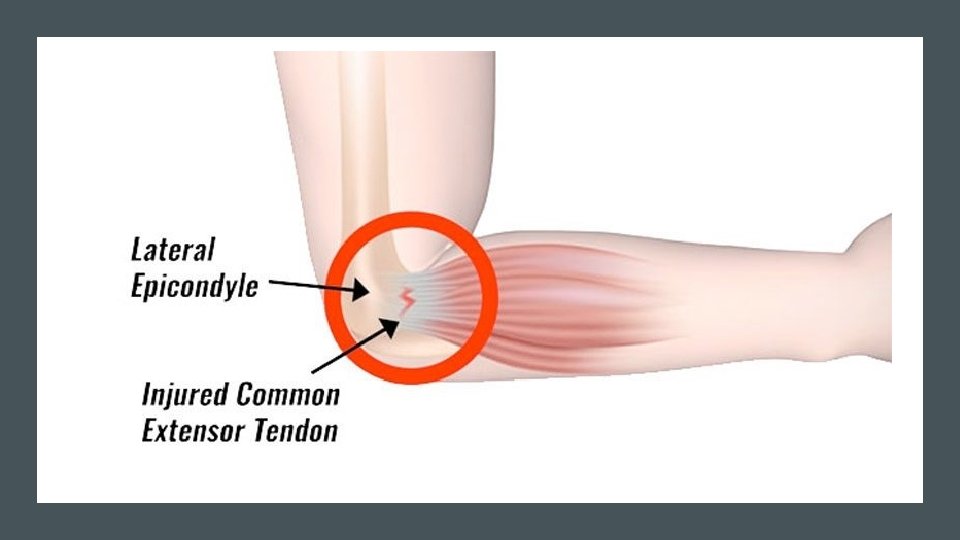
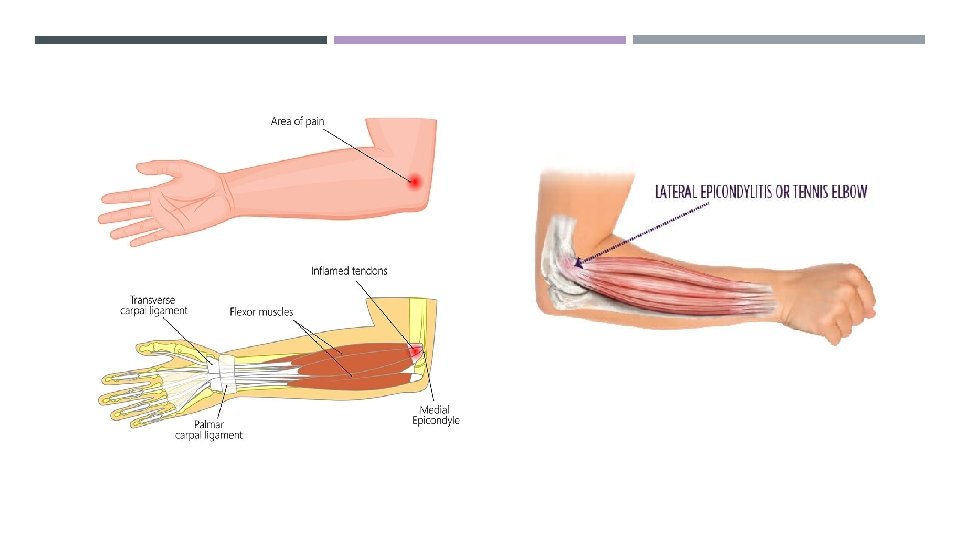
MUSCLE AND TENDON INJURIES: MEDIAL & LATERAL EPICONDYLITIS Elbow is prone to overuse conditions that create chronic inflammation, which frequently occurs at the medial and lateral epicondyles of the humerus These conditions are called medial epicondylitis and lateral epicondylitis (more common) As a result of poor mechanics and continual use over a long period of time, the wrist extensor tendons at the lateral epicondyle of the humerus can become chronically inflamed Because racquet sports are a common cause, this condition is called tennis elbow Tennis elbow: inflammation of the lateral epicondyle of the elbow, usually from overuse of the wrist extensor muscles In the industrial setting, daily use of equipment such as a hammer and any gripping and lifting activities can cause lateral elbow inflammation Lateral epicondylitis is characterized by pain over the lateral epicondyle of the humerus and minimal swelling is sometimes present Initially the AT should treat with PRICES and a support, usually in the form of a tennis elbow strap that is wrapped around the elbow Limiting the amount of activity that aggravates the condition is suggested Mild stretching of the extensor tendons is helpful, and muscular strength endurance should be improved as tolerated
MUSCLE AND TENDON INJURIES: MEDIAL & LATERAL EPICONDYLITIS CON'T The athlete should gradually be allowed to participate in further activity The AT may reduce the number of repetitions performed by the athlete and may also suggest the use of a two-handed backhand in racquet sports The team physician may choose to use medication to help resolve the condition Although not common as lateral epicondylitis, many athletes get medial epicondylitis as a result of repetitive throwing This condition involves inflammation of the wrist flexor tendons where they attach to the humerus Little League elbow: an injury to the medial aspect of the elbow in young throwing athletes, usually from overuse Is also suggest to be a separation of the epiphysis at the medial aspect of the humerus in younger athletes (usually between 9 -12) as a result of throwing
MUSCLE AND TENDON INJURIES: MEDIAL & LATERAL EPICONDYLITIS CON'T Treatment for medial epicondylitis is similar to that of lateral epicondylitis, PRICES The athlete needs to decrease the amount of throwing and strengthen the wrist flexor muscles The AT will monitor either condition and will also perform a thorough evaluation because compression of the ulnar nerve is possible at the elbow injury has occurred The AT will refer the athlete to a physician if a fracture is suspected or if the athlete is complaining of numbness, tingling, or excessive pain

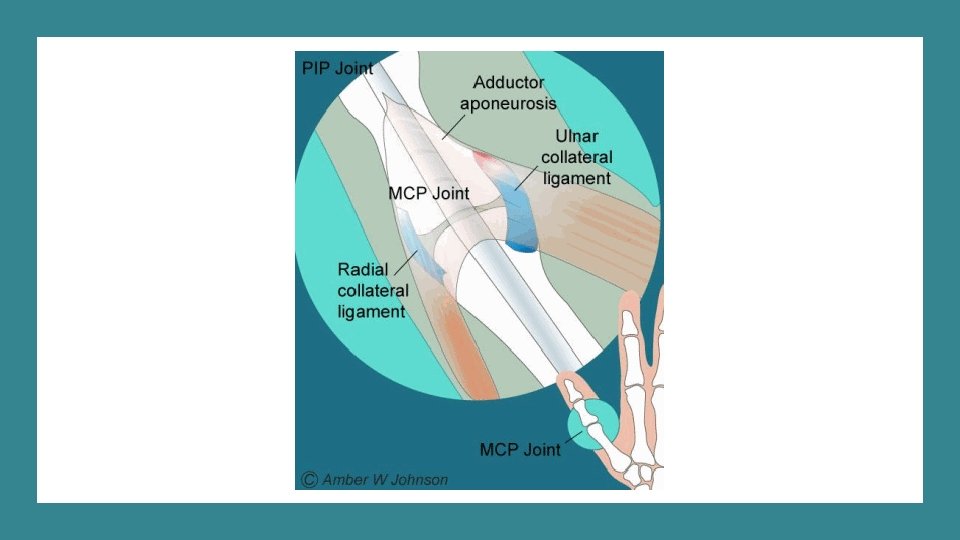
LIGAMENT INJURIES Sprains of the elbow, as with all sprains, are classified as first-, second-, and thirddegree Any of the elbow ligaments can be sprained, including the ulnar collateral ligaments and the radial collateral ligament
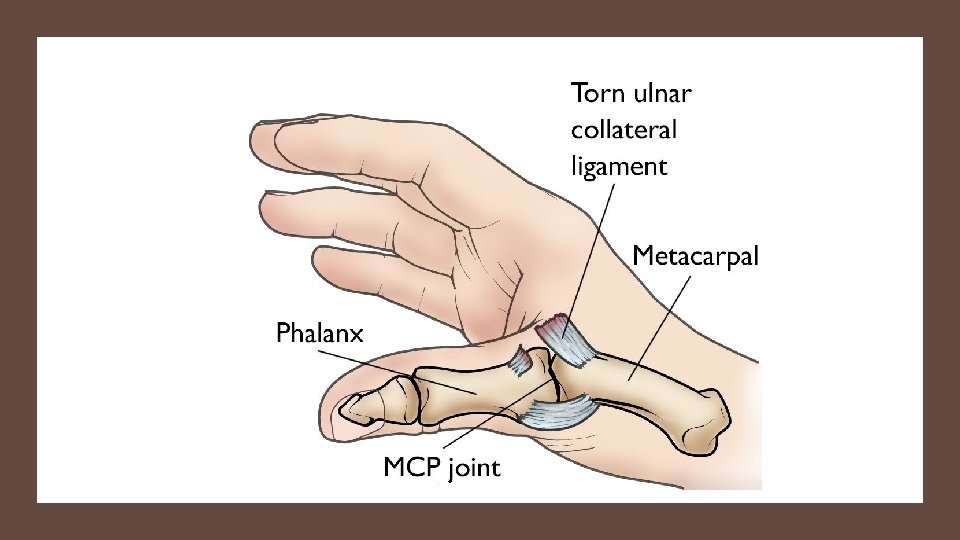
LIGAMENT INJURIES: ULNAR COLLATERAL LIGAMENT SPRAINS The ulnar collateral ligaments seem to be more prone to sprains, especially for athletes who throw This is due to the amount of stress placed on the inner aspect of the elbow Every time an athlete throws a baseball or hits a tennis ball, the medial aspect of the elbow is stretched Over time, this repetitive trauma may result in a ligament injury This mechanism can also cause injury to the muscles that cross the elbow joint; additionally, a blow may cause a disruption of the ulnar collateral ligament Valgus stress: forcing the medial aspect of the joint to separate A wrestler supporting his weight on one arm as his opponent rolls into the lateral aspect of his elbow Characterized by medial elbow pain and swelling, especially if the ligament has been partially torn When the AT tests the elbow, joint laxity may also be present Sprains need to be treated using PRICES; an elastic bandage works well for elbow swelling, and support A moderate or severe injury may need to be splinted and referral to a physician for further diagnostic tests
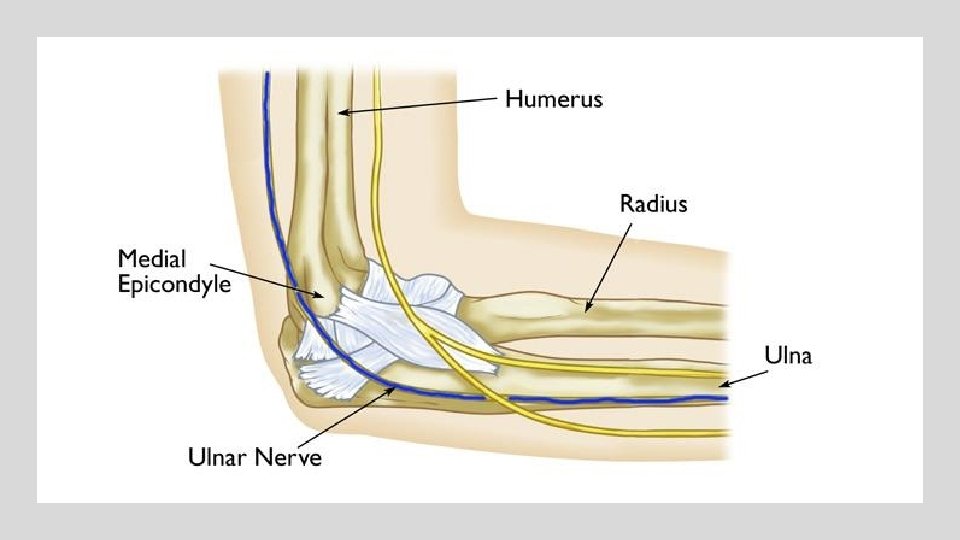
LIGAMENT INJURIES: ULNAR COLLATERAL LIGAMENT SPRAINS CON'T The elbow should be observed for any ulnar nerve damage The AT can tap on it just behind the medial epicondyle If the nerve is irritated, it will result in a flash of pain down to the hand Tinel's test: tapping on the nerve located in the medial epicondyle While rehabing injuries to the ulnar collateral ligament, it is essential to strengthen the wrist flexor muscles because they cross the medial aspect of the elbow and provide stability to the joint Exercises such as wrist curls and grip strengthening are helpful In severe cases, reconstructive surgery may be necessary Reconstruction is performed by an orthopedic surgeon Long recovery if surgery is necessary
LIGAMENT INJURIES: RADIAL COLLATERAL LIGAMENT SPRAINS Radial collateral ligament injuries to the elbow are rare The characteristics are the same for an ulnar collateral injury except that the pain is on the lateral aspect Rehabilitation considerations for this ligament sprain include focusing on the wrist extension musculature These muscles cross the joint line at the lateral elbow and can provide dynamic stability to an elbow that has suffered a sprain of the lateral collateral ligament
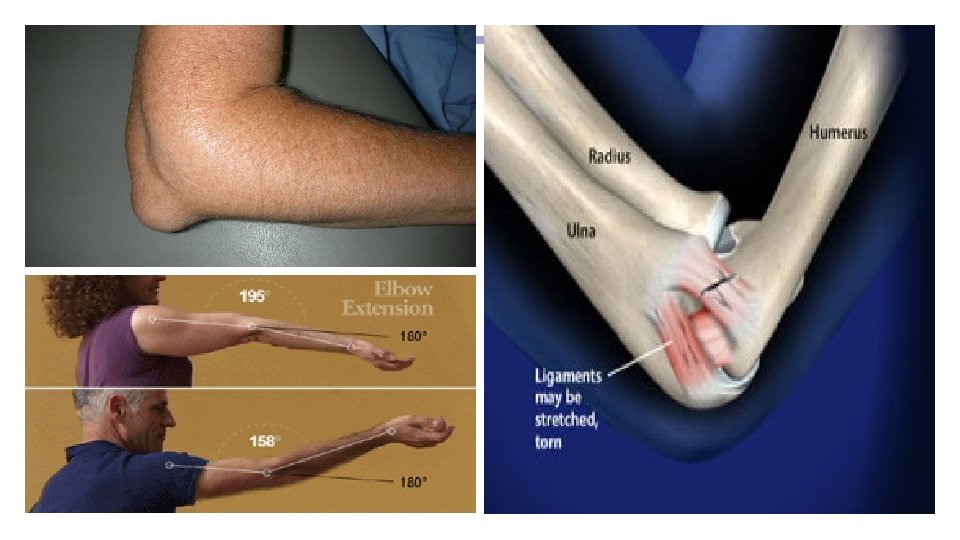
COMBINED HYPERFLEXION INJURIES An athlete will often fall on an outstretched arm or receive a blow that causes the elbow to be hyperextended This mechanism can result in a ligament sprain or muscle strain, although bony compression of the olecranon process as it impacts the humerus may occur A hyperextension causes these problems: sprain, strain, bony compression Initially treated with PRICES; more severe conditions are referred to a physician As condition improves, ROM should be reestablished, and strength of elbow flexor muscles be improved; the athlete may wear hyperextension tape The elbow is a bony joint with little natural padding making contusions very common---treated with PRICES and elbow pads If the olecranon process is contused, the bursa may become irritated and causing fluid buildup at the tip of the elbow Seldom disabling, but fluid buildup can reach the size of a golf ball Compression wraps applied by AT and if condition persists, team physician may drain the site; moving forward, elbow needs to be protected
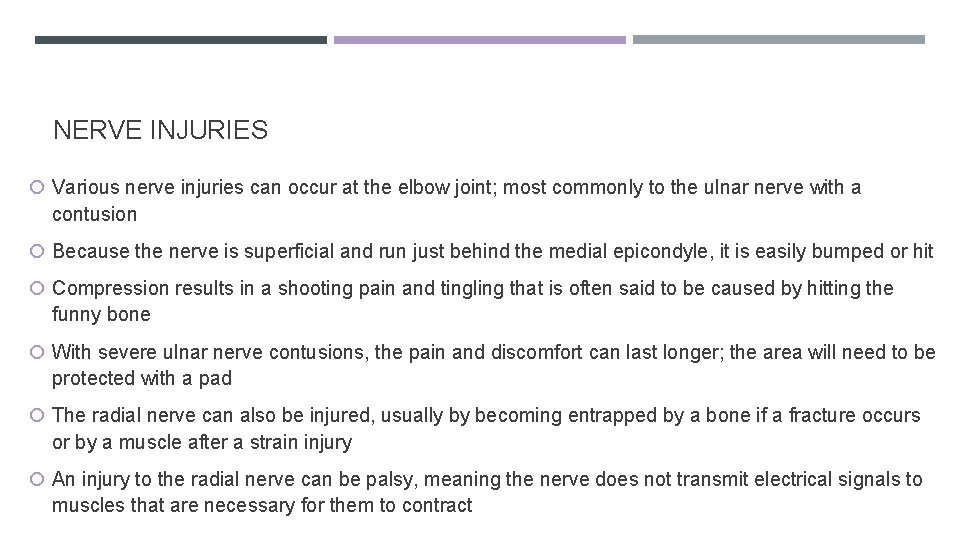
NERVE INJURIES Various nerve injuries can occur at the elbow joint; most commonly to the ulnar nerve with a contusion Because the nerve is superficial and run just behind the medial epicondyle, it is easily bumped or hit Compression results in a shooting pain and tingling that is often said to be caused by hitting the funny bone With severe ulnar nerve contusions, the pain and discomfort can last longer; the area will need to be protected with a pad The radial nerve can also be injured, usually by becoming entrapped by a bone if a fracture occurs or by a muscle after a strain injury An injury to the radial nerve can be palsy, meaning the nerve does not transmit electrical signals to muscles that are necessary for them to contract
REFERENCE Fundamentals of athletic training
- Slides: 21