
Muscle and Nervous Tissue Aims Describe the basic
Muscle and Nervous Tissue
Aims Describe the basic structure of muscle tissue Describe the functions of muscle tissue Describe the basic structure of nervous tissue Describe the functions of nervous tissue
There are 4 types of tissue we are going to look at a couple of the following: 1. ecsuml Muscle 2. thliealpei Epithelial 3. erousvn Nervous 4. nctnoveice Connective
Different types of muscle Cardiac Muscle Voluntary Muscles - Skeletal Involuntary Muscles - Smooth
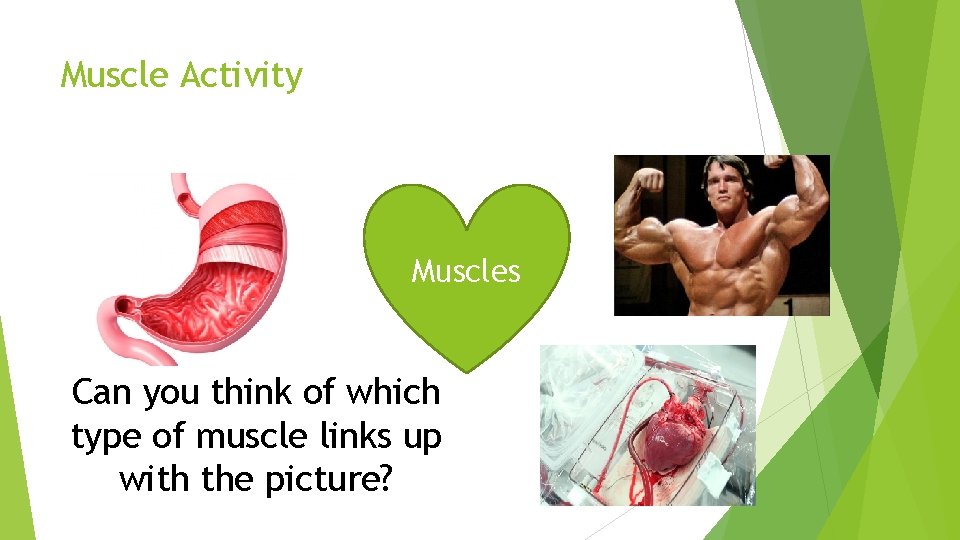
Muscle Activity Muscles Can you think of which type of muscle links up with the picture?
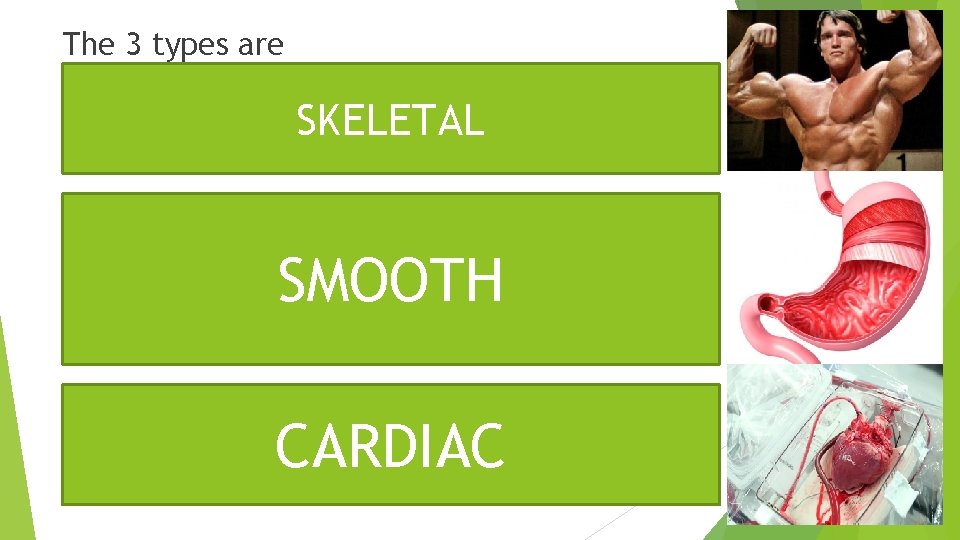
The 3 types are Skeletal- Skeletal muscle fibres are those which attach SKELETAL themselves to the skeleton. They have a striated shape made up of parallel bands of muscle fibres, and are under voluntary control. Smooth- Smooth muscles are located in the walls of organs which are hollow (except the heart), e. g. Stomach, Bladder, etc. Smooth muscles are also found in the walls of blood vessels and also in the iris of the SMOOTH eye. Smooth muscles have a fusiform shape (spindle like) which is tapered at each end. Smooth muscles are under involuntary control. Cardiac- Cardiac muscle as its name suggests is found in the CARDIAC heart. It is controlled involuntarily by the sinoatrial node, which causes it to contract. Cardiac muscle is striated in shape. Cardiac muscle does not fatigue.

Cardiac Muscles
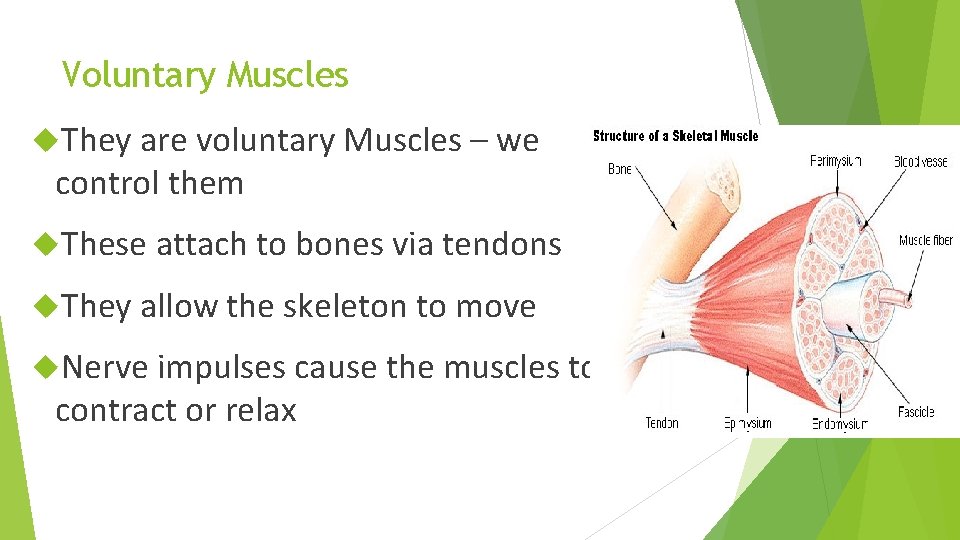
Voluntary Muscles They are voluntary Muscles – we control them These attach to bones via tendons They allow the skeleton to move Nerve impulses cause the muscles to contract or relax
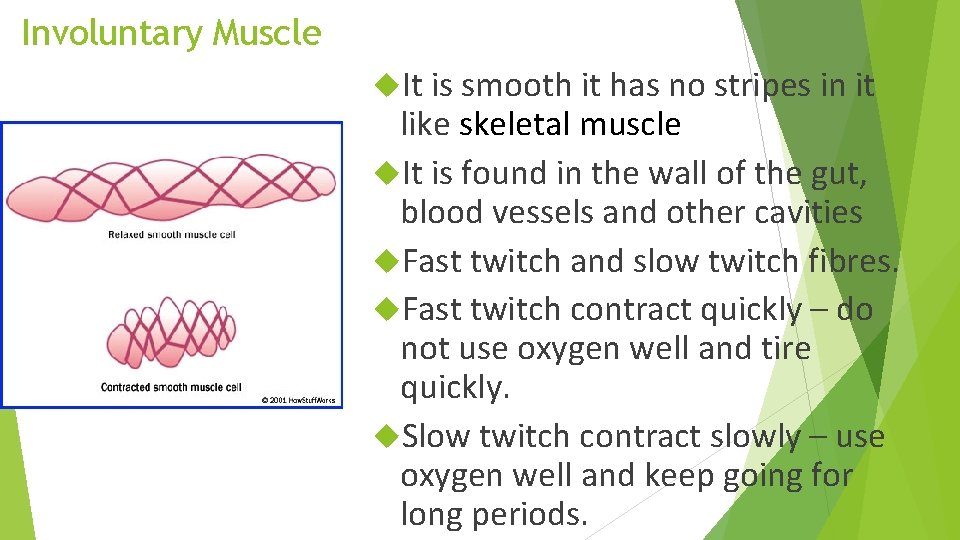
Involuntary Muscle It is smooth it has no stripes in it like skeletal muscle It is found in the wall of the gut, blood vessels and other cavities Fast twitch and slow twitch fibres. Fast twitch contract quickly – do not use oxygen well and tire quickly. Slow twitch contract slowly – use oxygen well and keep going for long periods.
Nervous Tissue Nervous tissue allows an organism to sense stimuli in both the internal and external environment. Nervous It system controls your actions co ordinates different parts of your body so that they work together and able to bring about the correct responses.
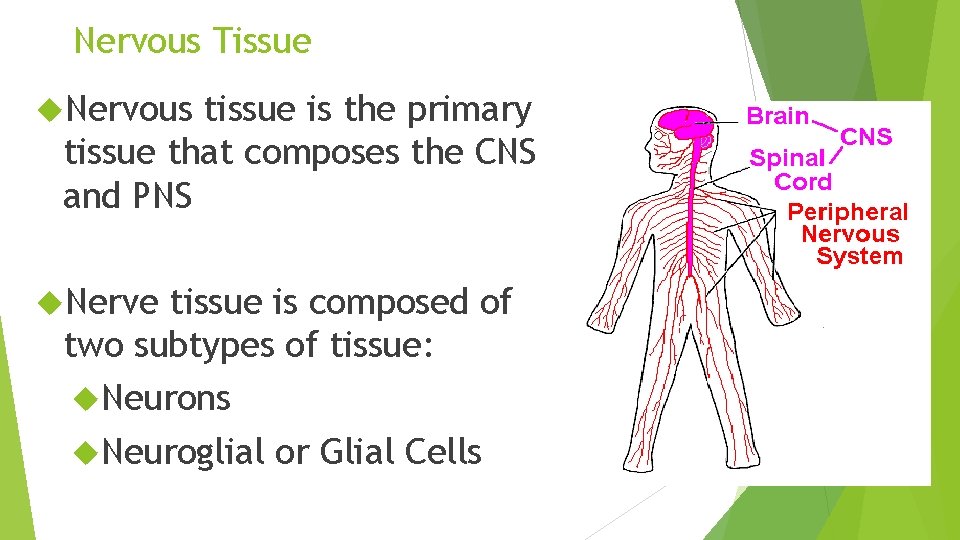
Nervous Tissue Nervous tissue is the primary tissue that composes the CNS and PNS Nerve tissue is composed of two subtypes of tissue: Neurons Neuroglial or Glial Cells
Nervous Tissue All living cells have the ability to react to stimuli but Nervous tissue is specialised to react to stimuli and to conduct impulses to various organs in the body which bring about a response to the stimulus.
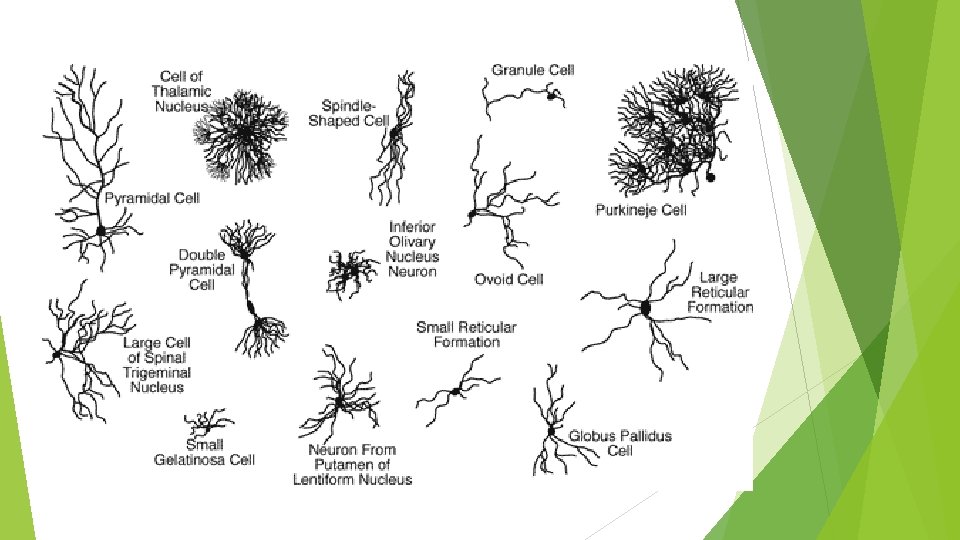
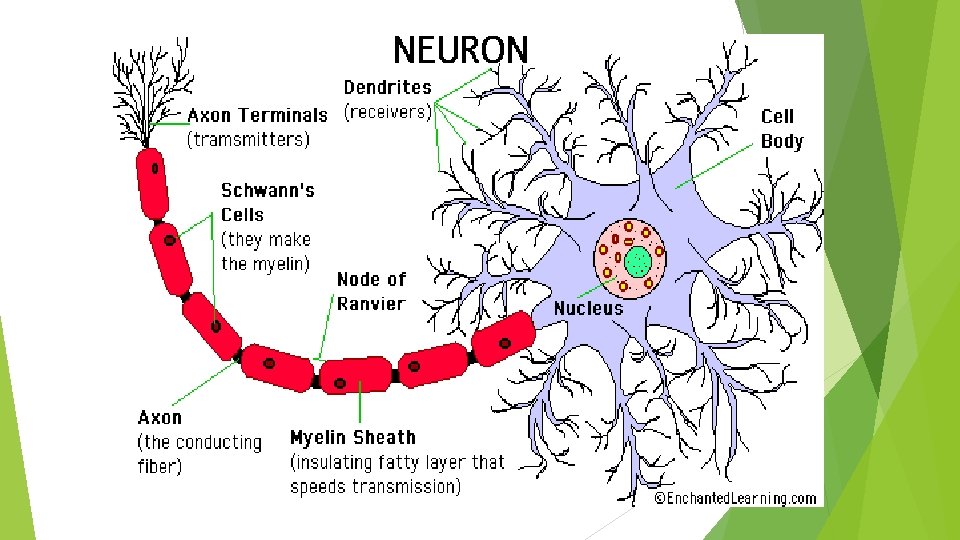
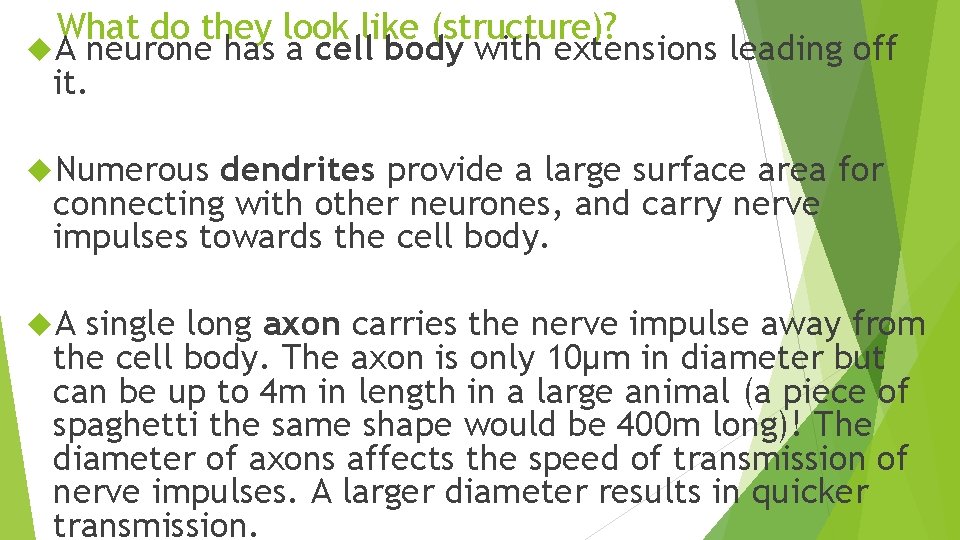
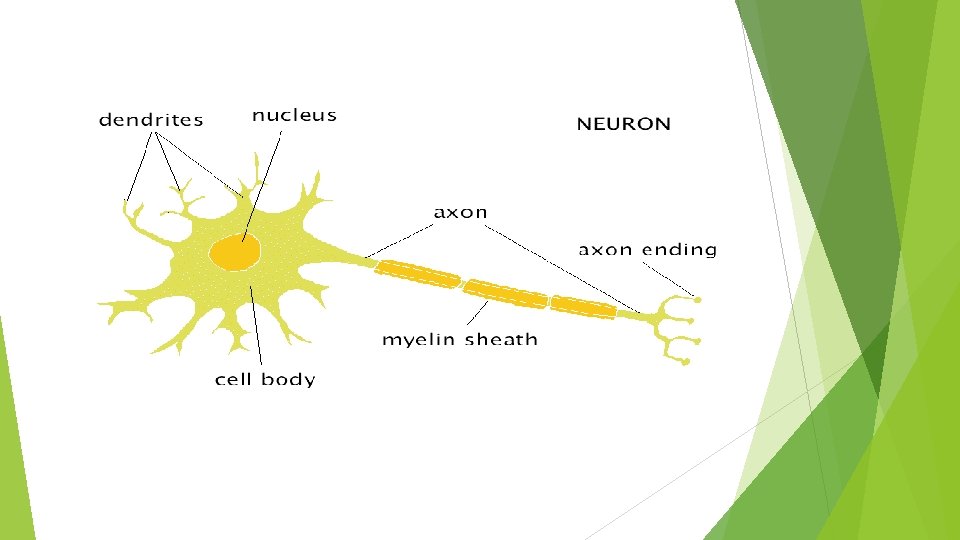
What do they look like (structure)? A neurone has a cell body with extensions leading off it. Numerous dendrites provide a large surface area for connecting with other neurones, and carry nerve impulses towards the cell body. A single long axon carries the nerve impulse away from the cell body. The axon is only 10µm in diameter but can be up to 4 m in length in a large animal (a piece of spaghetti the same shape would be 400 m long)! The diameter of axons affects the speed of transmission of nerve impulses. A larger diameter results in quicker transmission.
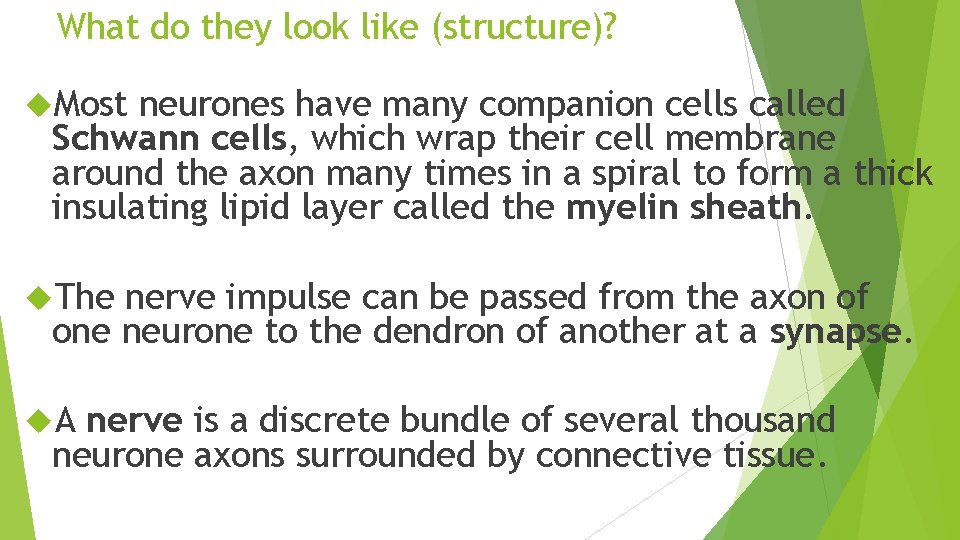
What do they look like (structure)? Most neurones have many companion cells called Schwann cells, which wrap their cell membrane around the axon many times in a spiral to form a thick insulating lipid layer called the myelin sheath. The nerve impulse can be passed from the axon of one neurone to the dendron of another at a synapse. A nerve is a discrete bundle of several thousand neurone axons surrounded by connective tissue.
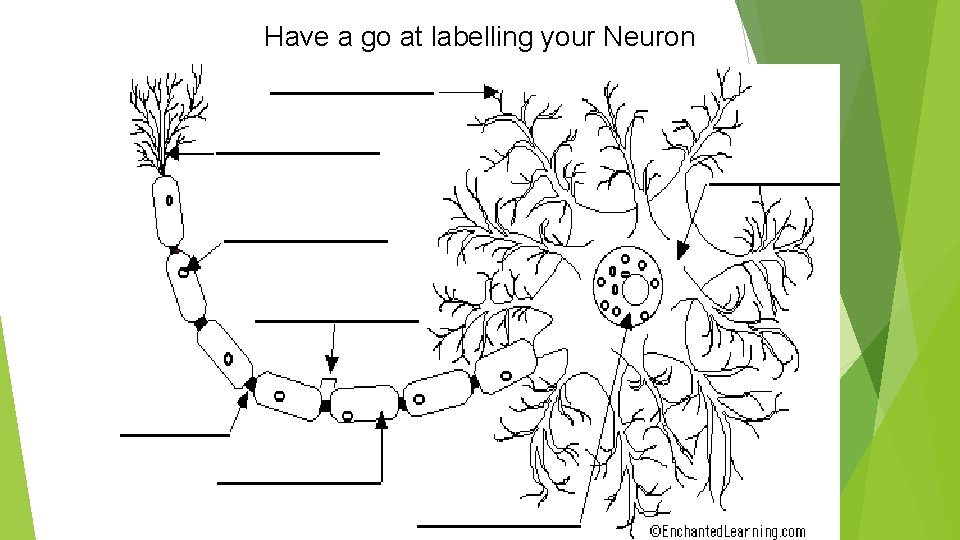
Have a go at labelling your Neuron
Structure of Neurons Nerve cells look different from other cells They have cell membrane, cytoplasm, and a nucleus but they are a different shape to other cells. Specialized cells called neurons receive stimuli and conduct impulses to and from all parts of the body; The messages they send are called Nerve impulses They are passed very quickly They are passed as electrical signals
Glial Cells Unlike bone nerve tissue has a wet noodle-like compactness Must be supported by connective tissue Some Glial cells support neurons in the brain and spinal cord, while others bind neurons to other connective tissue.
- Slides: 21