
MUs T and Dermal New Drug Applications Chinmay





- Slides: 37
MUs. T and Dermal New Drug Applications Chinmay Shukla, Ph. D. Division of Immune and Inflammation Pharmacology (DIIP) Office of Clinical Pharmacology (OCP) Office of Translational Sciences (OTS) Center for Drug Evaluation and Research Food and Drug Administration
Disclaimer: The presentation today are my views on the topic and should not be considered, in whole or in part as being statements of policy or recommendation by the US Food and Drug Administration. 2
Outline • Background – Regulatory considerations – PK studies for topical products – A historical perspective – Maximal usage trial design • Concepts of maximal usage - deconstructed – Biological factors – Formulation factors – Ontogenetic factors • Relevant literature for further reading • Summary 3
Background 4
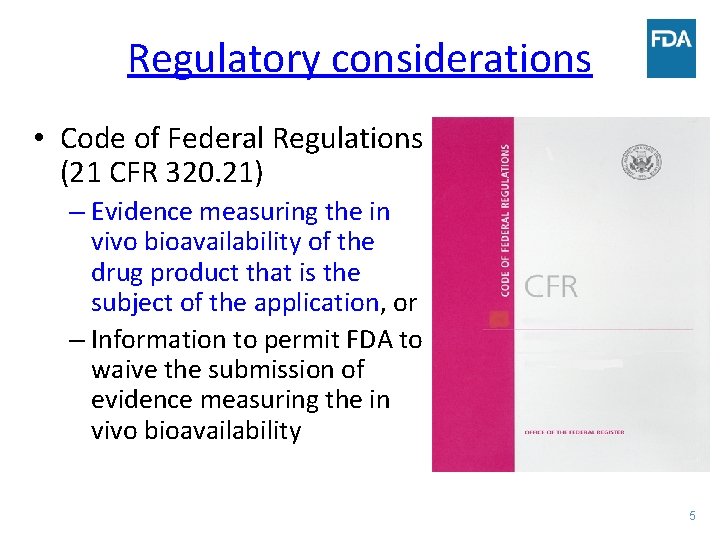
Regulatory considerations • Code of Federal Regulations (21 CFR 320. 21) – Evidence measuring the in vivo bioavailability of the drug product that is the subject of the application, or – Information to permit FDA to waive the submission of evidence measuring the in vivo bioavailability 5
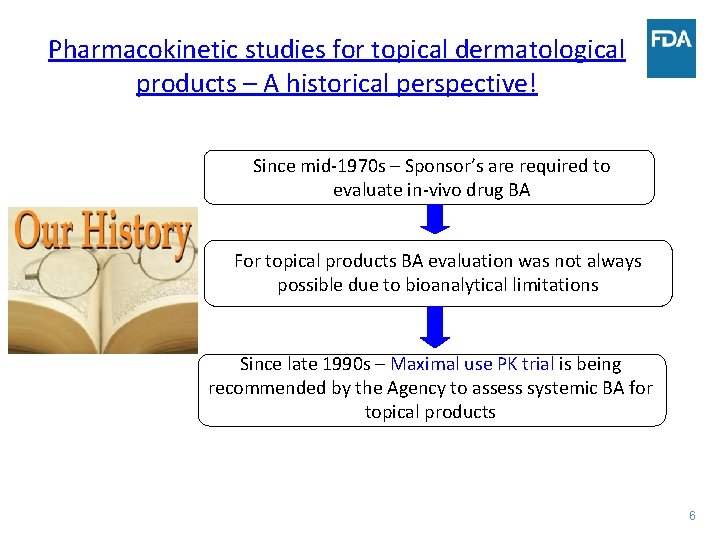
Pharmacokinetic studies for topical dermatological products – A historical perspective! Since mid-1970 s – Sponsor’s are required to evaluate in-vivo drug BA For topical products BA evaluation was not always possible due to bioanalytical limitations Since late 1990 s – Maximal use PK trial is being recommended by the Agency to assess systemic BA for topical products 6
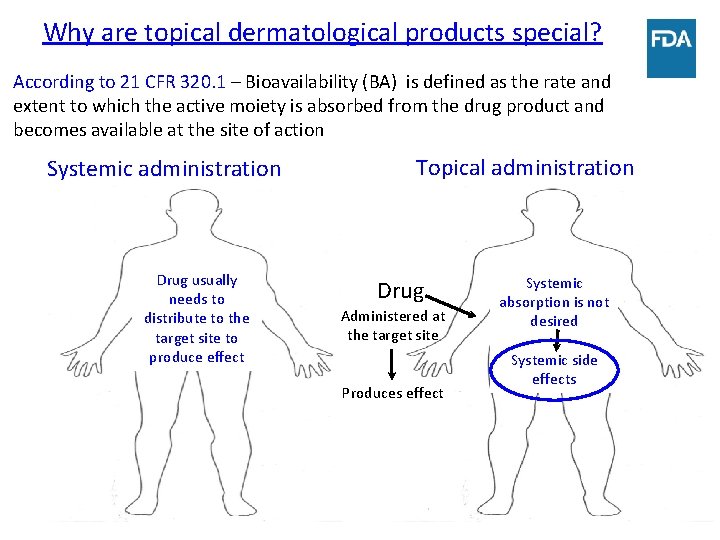
Why are topical dermatological products special? According to 21 CFR 320. 1 – Bioavailability (BA) is defined as the rate and extent to which the active moiety is absorbed from the drug product and becomes available at the site of action Systemic administration Drug usually needs to distribute to the target site to produce effect Topical administration Drug Administered at the target site Produces effect Systemic absorption is not desired Systemic side effects 7 7
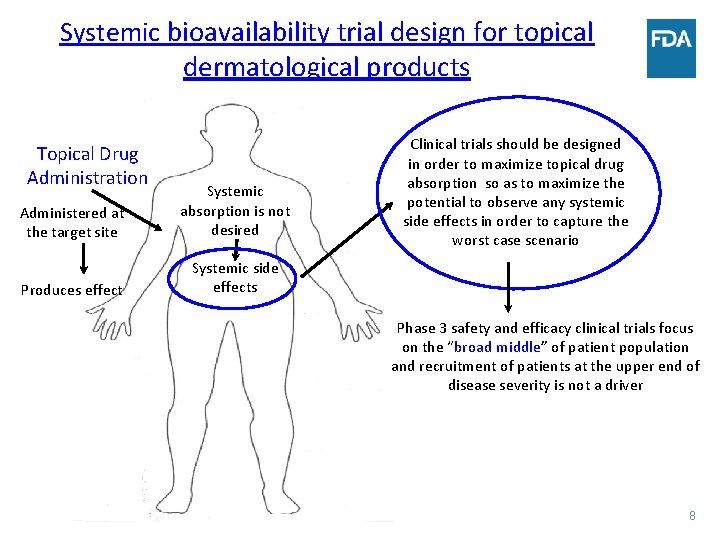
Systemic bioavailability trial design for topical dermatological products Topical Drug Administration Administered at the target site Systemic absorption is not desired Produces effect Systemic side effects Clinical trials should be designed in order to maximize topical drug absorption so as to maximize the potential to observe any systemic side effects in order to capture the worst case scenario Phase 3 safety and efficacy clinical trials focus on the “broad middle” of patient population and recruitment of patients at the upper end of disease severity is not a driver 8
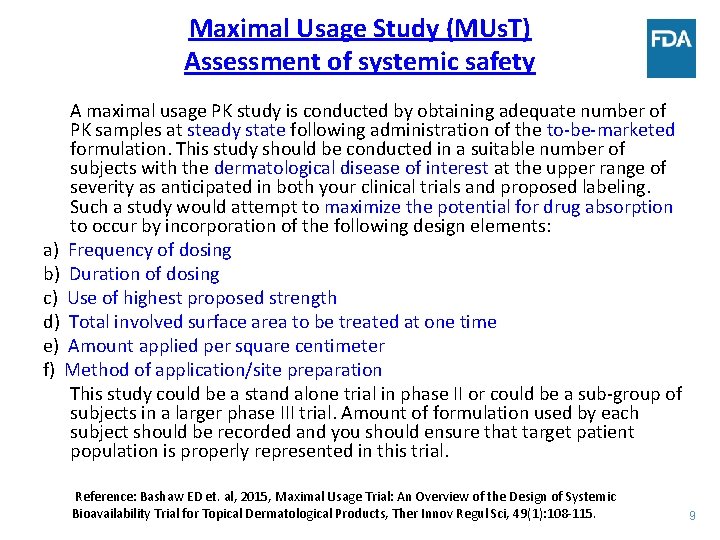
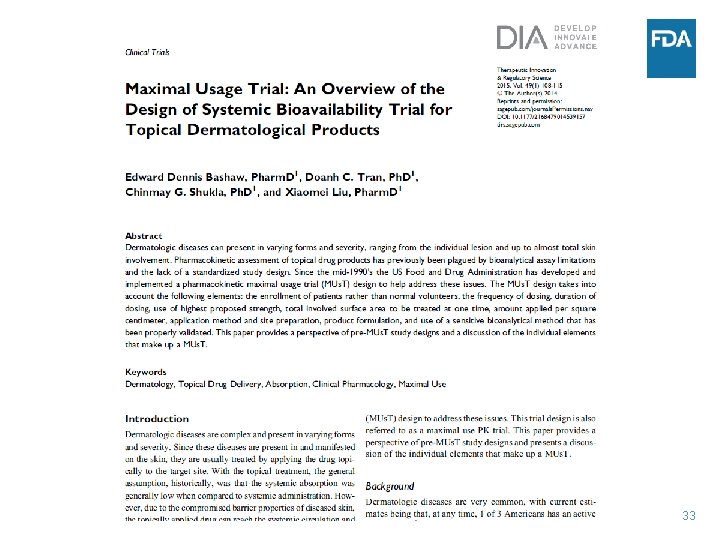
Maximal Usage Study (MUs. T) Assessment of systemic safety A maximal usage PK study is conducted by obtaining adequate number of PK samples at steady state following administration of the to-be-marketed formulation. This study should be conducted in a suitable number of subjects with the dermatological disease of interest at the upper range of severity as anticipated in both your clinical trials and proposed labeling. Such a study would attempt to maximize the potential for drug absorption to occur by incorporation of the following design elements: a) Frequency of dosing b) Duration of dosing c) Use of highest proposed strength d) Total involved surface area to be treated at one time e) Amount applied per square centimeter f) Method of application/site preparation This study could be a stand alone trial in phase II or could be a sub-group of subjects in a larger phase III trial. Amount of formulation used by each subject should be recorded and you should ensure that target patient population is properly represented in this trial. Reference: Bashaw ED et. al, 2015, Maximal Usage Trial: An Overview of the Design of Systemic Bioavailability Trial for Topical Dermatological Products, Ther Innov Regul Sci, 49(1): 108 -115. 9
Concepts of maximal usage deconstructed 10
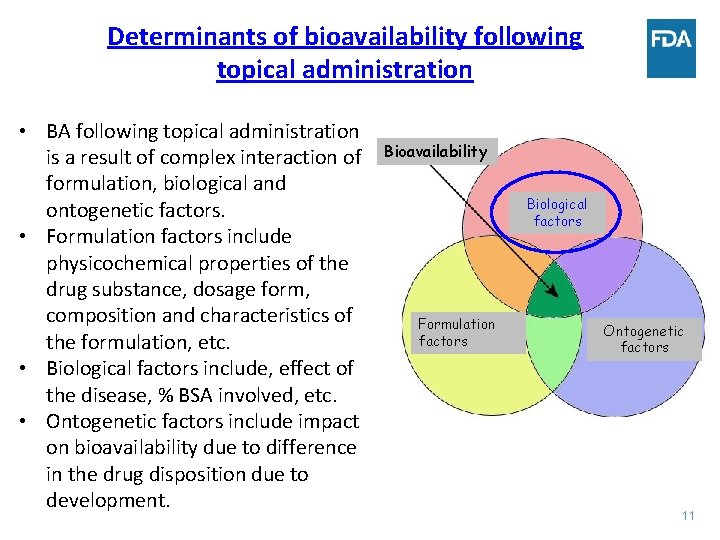
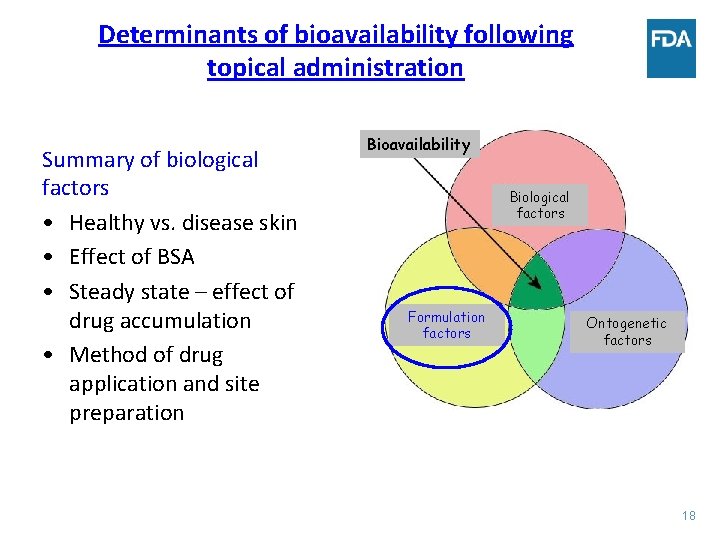
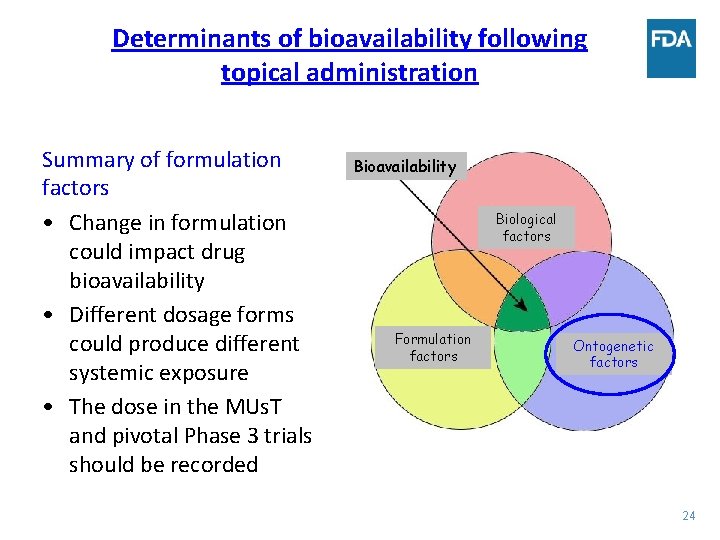
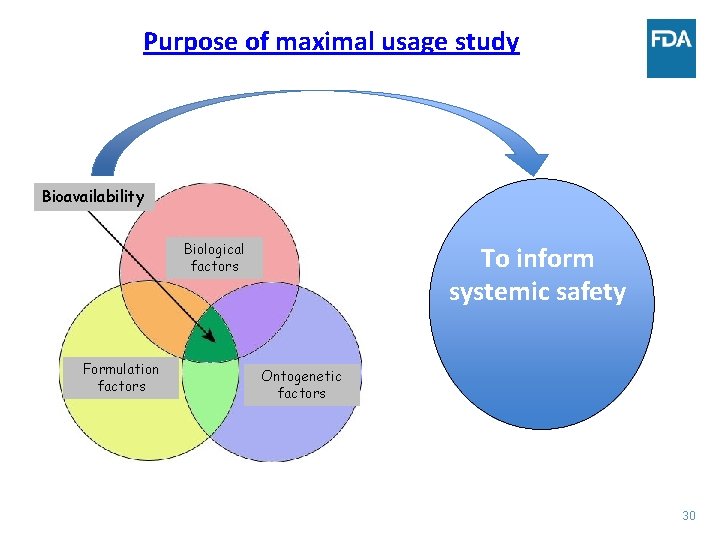
Determinants of bioavailability following topical administration • BA following topical administration is a result of complex interaction of formulation, biological and ontogenetic factors. • Formulation factors include physicochemical properties of the drug substance, dosage form, composition and characteristics of the formulation, etc. • Biological factors include, effect of the disease, % BSA involved, etc. • Ontogenetic factors include impact on bioavailability due to difference in the drug disposition due to development. Bioavailability Biological factors Formulation factors Ontogenetic factors 11
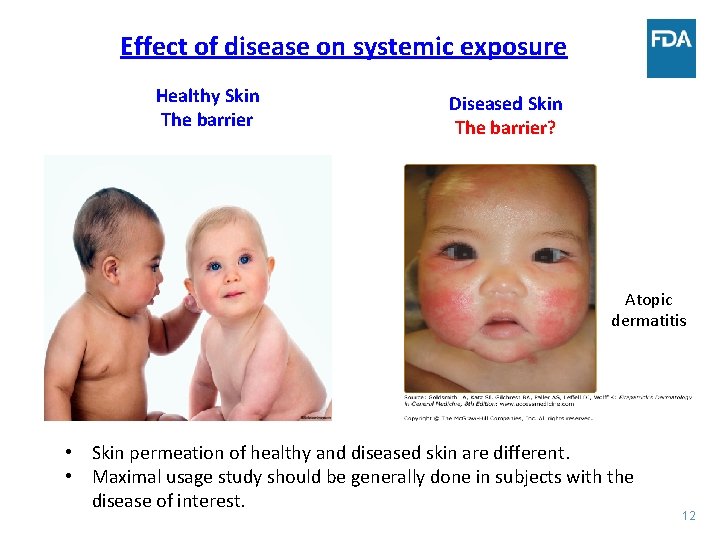
Effect of disease on systemic exposure Healthy Skin The barrier Diseased Skin The barrier? Atopic dermatitis • Skin permeation of healthy and diseased skin are different. • Maximal usage study should be generally done in subjects with the disease of interest. 12
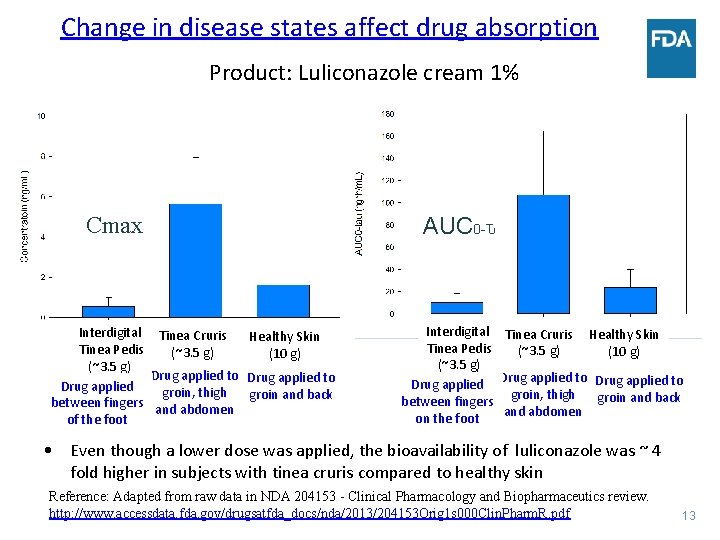
Change in disease states affect drug absorption Product: Luliconazole cream 1% Cmax Interdigital Tinea Cruris Healthy Skin Tinea Pedis (~3. 5 g) (10 g) (~3. 5 g) Drug applied to Drug applied groin, thigh groin and back between fingers and abdomen of the foot AUC 0 -Ԏ Interdigital Tinea Cruris Healthy Skin Tinea Pedis (~3. 5 g) (10 g) (~3. 5 g) Drug applied to Drug applied groin, thigh groin and back between fingers and abdomen on the foot • Even though a lower dose was applied, the bioavailability of luliconazole was ~ 4 fold higher in subjects with tinea cruris compared to healthy skin Reference: Adapted from raw data in NDA 204153 - Clinical Pharmacology and Biopharmaceutics review. http: //www. accessdata. fda. gov/drugsatfda_docs/nda/2013/204153 Orig 1 s 000 Clin. Pharm. R. pdf 13
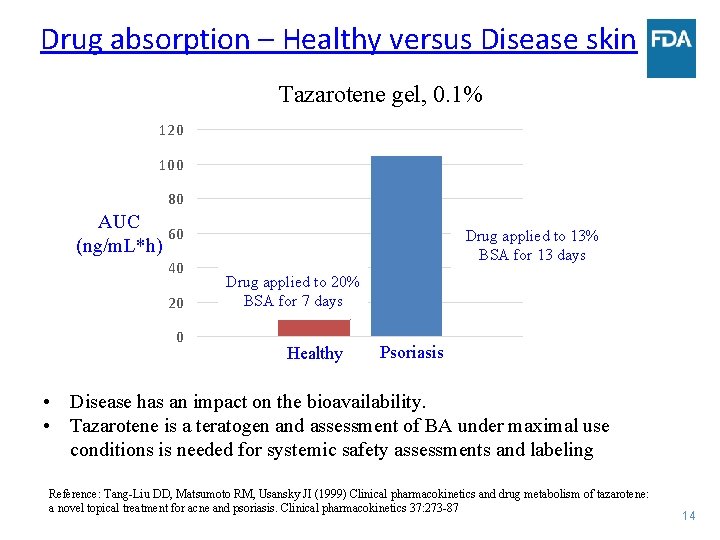
Drug absorption – Healthy versus Disease skin Tazarotene gel, 0. 1% 120 100 80 AUC 60 (ng/m. L*h) 40 20 0 Drug applied to 13% BSA for 13 days Drug applied to 20% BSA for 7 days Healthy Psoriasis • Disease has an impact on the bioavailability. • Tazarotene is a teratogen and assessment of BA under maximal use conditions is needed for systemic safety assessments and labeling Reference: Tang-Liu DD, Matsumoto RM, Usansky JI (1999) Clinical pharmacokinetics and drug metabolism of tazarotene: a novel topical treatment for acne and psoriasis. Clinical pharmacokinetics 37: 273 -87 14
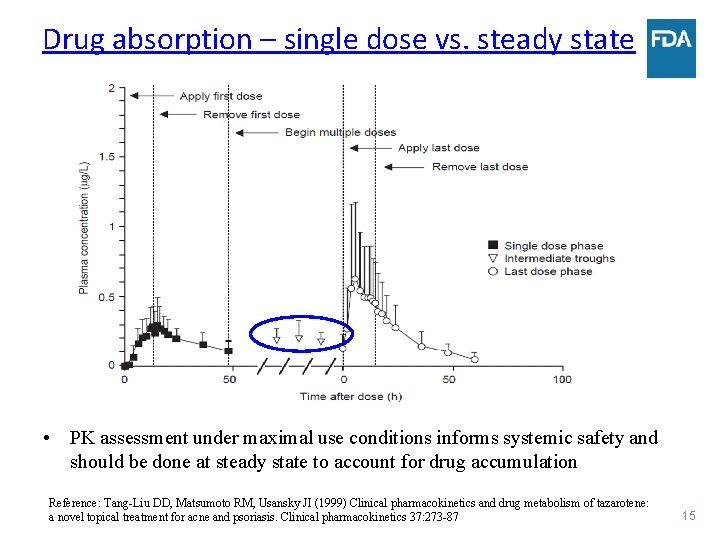
Drug absorption – single dose vs. steady state • PK assessment under maximal use conditions informs systemic safety and should be done at steady state to account for drug accumulation Reference: Tang-Liu DD, Matsumoto RM, Usansky JI (1999) Clinical pharmacokinetics and drug metabolism of tazarotene: a novel topical treatment for acne and psoriasis. Clinical pharmacokinetics 37: 273 -87 15
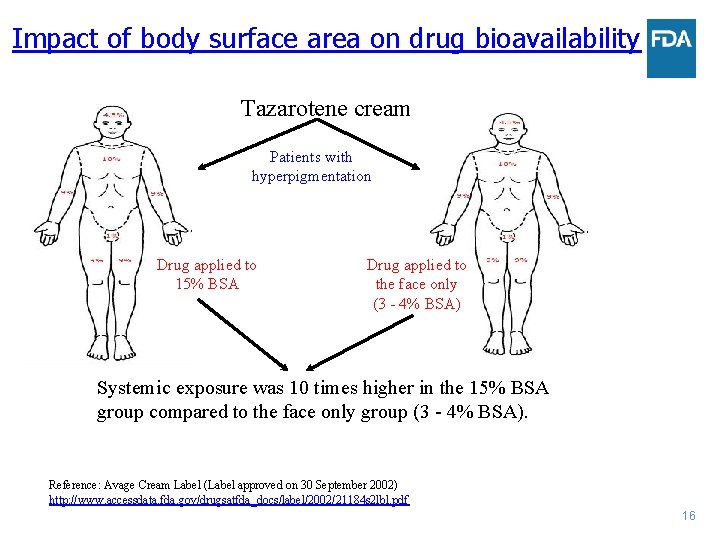
Impact of body surface area on drug bioavailability Tazarotene cream Patients with hyperpigmentation Drug applied to 15% BSA Drug applied to the face only (3 - 4% BSA) Systemic exposure was 10 times higher in the 15% BSA group compared to the face only group (3 - 4% BSA). Reference: Avage Cream Label (Label approved on 30 September 2002) http: //www. accessdata. fda. gov/drugsatfda_docs/label/2002/21184 s 2 lbl. pdf 16
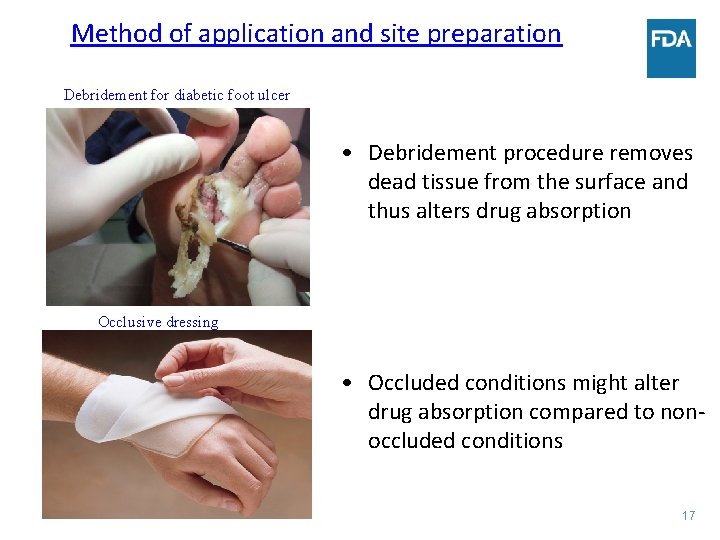
Method of application and site preparation Debridement for diabetic foot ulcer • Debridement procedure removes dead tissue from the surface and thus alters drug absorption Occlusive dressing • Occluded conditions might alter drug absorption compared to nonoccluded conditions 17
Determinants of bioavailability following topical administration Summary of biological factors • Healthy vs. disease skin • Effect of BSA • Steady state – effect of drug accumulation • Method of drug application and site preparation Bioavailability Biological factors Formulation factors Ontogenetic factors 18
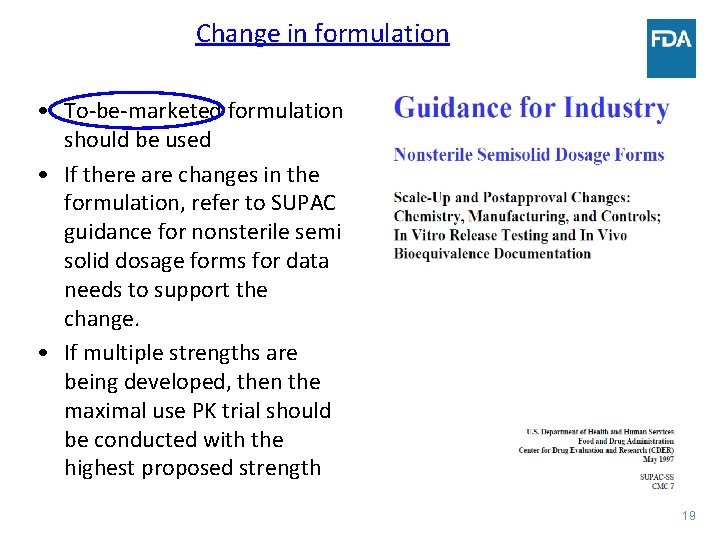
Change in formulation • To-be-marketed formulation should be used • If there are changes in the formulation, refer to SUPAC guidance for nonsterile semi solid dosage forms for data needs to support the change. • If multiple strengths are being developed, then the maximal use PK trial should be conducted with the highest proposed strength 19
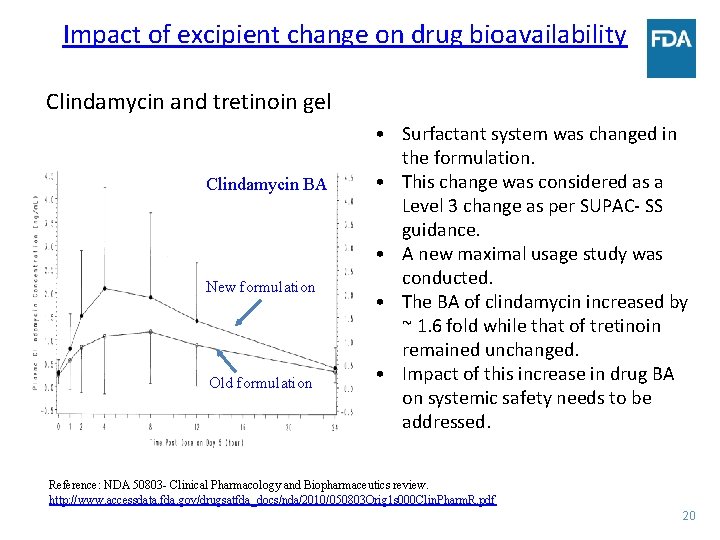
Impact of excipient change on drug bioavailability Clindamycin and tretinoin gel Clindamycin BA New formulation Old formulation • Surfactant system was changed in the formulation. • This change was considered as a Level 3 change as per SUPAC- SS guidance. • A new maximal usage study was conducted. • The BA of clindamycin increased by ~ 1. 6 fold while that of tretinoin remained unchanged. • Impact of this increase in drug BA on systemic safety needs to be addressed. Reference: NDA 50803 - Clinical Pharmacology and Biopharmaceutics review. http: //www. accessdata. fda. gov/drugsatfda_docs/nda/2010/050803 Orig 1 s 000 Clin. Pharm. R. pdf 20
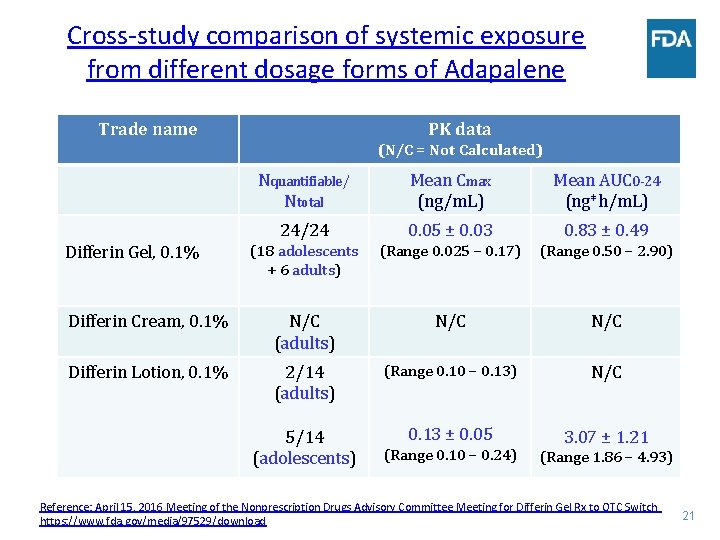
Cross-study comparison of systemic exposure from different dosage forms of Adapalene Trade name PK data (N/C = Not Calculated) Nquantifiable/ Ntotal Mean Cmax (ng/m. L) Mean AUC 0 -24 (ng*h/m. L) 24/24 0. 05 ± 0. 03 0. 83 ± 0. 49 (18 adolescents + 6 adults) (Range 0. 025 – 0. 17) (Range 0. 50 – 2. 90) Differin Cream, 0. 1% N/C (adults) N/C Differin Lotion, 0. 1% 2/14 (adults) (Range 0. 10 – 0. 13) N/C 5/14 (adolescents) 0. 13 ± 0. 05 3. 07 ± 1. 21 Differin Gel, 0. 1% (Range 0. 10 – 0. 24) (Range 1. 86 – 4. 93) Reference: April 15, 2016 Meeting of the Nonprescription Drugs Advisory Committee Meeting for Differin Gel Rx to OTC Switch https: //www. fda. gov/media/97529/download 21 21
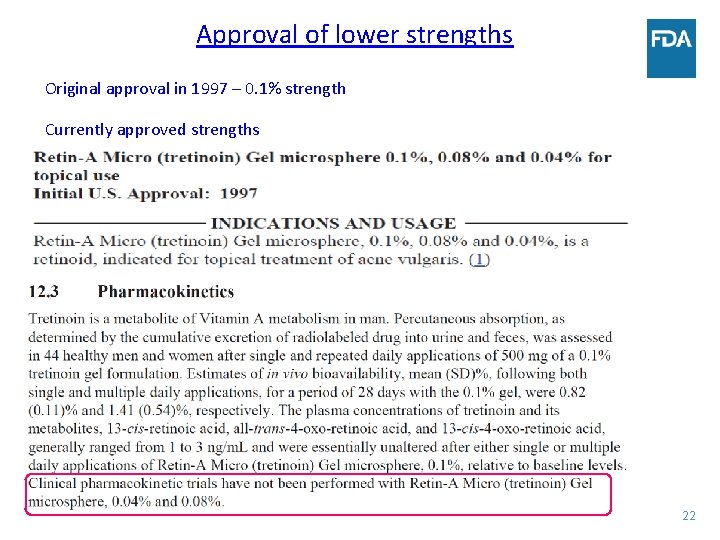
Approval of lower strengths Original approval in 1997 – 0. 1% strength Currently approved strengths 22
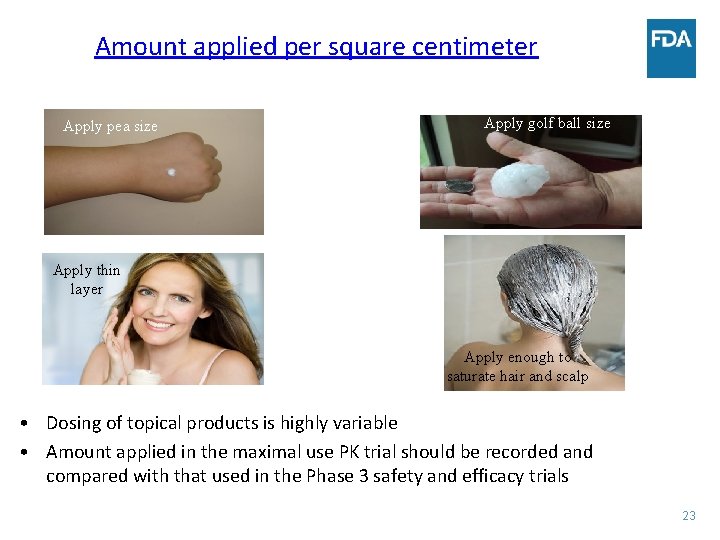
Amount applied per square centimeter Apply pea size Apply golf ball size Apply thin layer Apply enough to saturate hair and scalp • Dosing of topical products is highly variable • Amount applied in the maximal use PK trial should be recorded and compared with that used in the Phase 3 safety and efficacy trials 23
Determinants of bioavailability following topical administration Summary of formulation factors • Change in formulation could impact drug bioavailability • Different dosage forms could produce different systemic exposure • The dose in the MUs. T and pivotal Phase 3 trials should be recorded Bioavailability Biological factors Formulation factors Ontogenetic factors 24
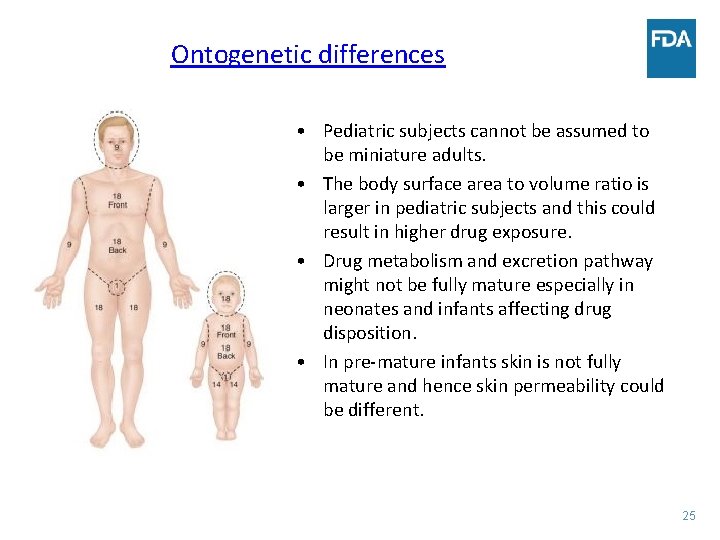
Ontogenetic differences • Pediatric subjects cannot be assumed to be miniature adults. • The body surface area to volume ratio is larger in pediatric subjects and this could result in higher drug exposure. • Drug metabolism and excretion pathway might not be fully mature especially in neonates and infants affecting drug disposition. • In pre-mature infants skin is not fully mature and hence skin permeability could be different. 25
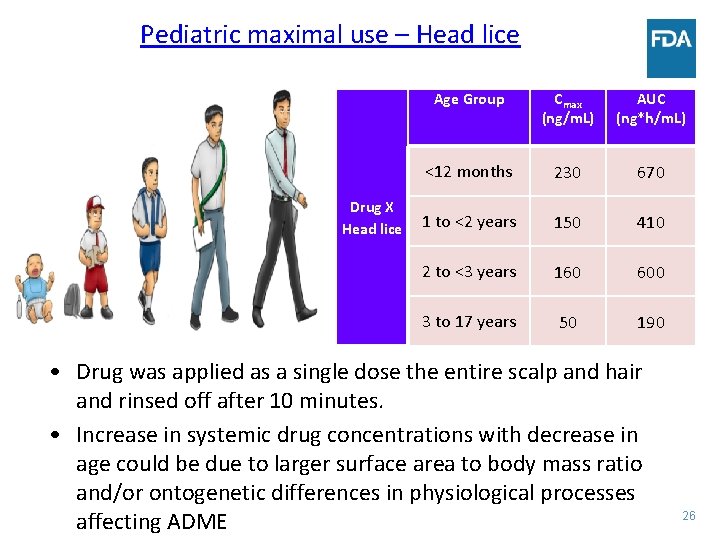
Pediatric maximal use – Head lice Drug X Head lice Age Group Cmax (ng/m. L) AUC (ng*h/m. L) <12 months 230 670 1 to <2 years 150 410 2 to <3 years 160 600 3 to 17 years 50 190 • Drug was applied as a single dose the entire scalp and hair and rinsed off after 10 minutes. • Increase in systemic drug concentrations with decrease in age could be due to larger surface area to body mass ratio and/or ontogenetic differences in physiological processes affecting ADME 26
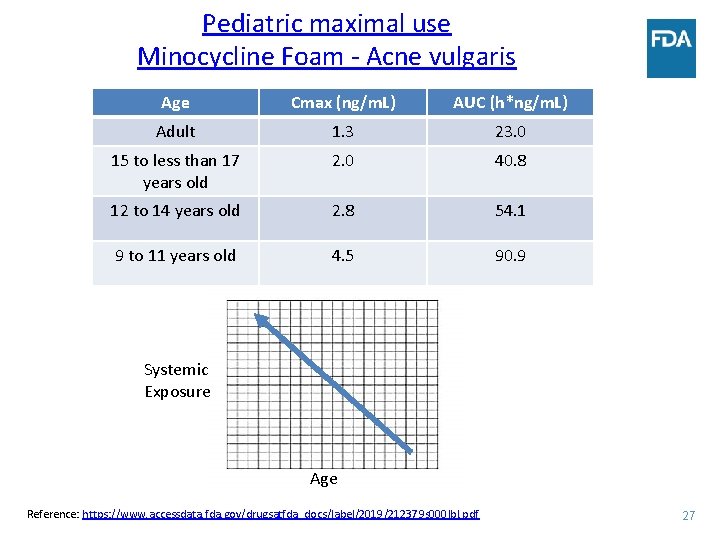
Pediatric maximal use Minocycline Foam - Acne vulgaris Age Cmax (ng/m. L) AUC (h*ng/m. L) Adult 1. 3 23. 0 15 to less than 17 years old 2. 0 40. 8 12 to 14 years old 2. 8 54. 1 9 to 11 years old 4. 5 90. 9 Systemic Exposure Age Reference: https: //www. accessdata. fda. gov/drugsatfda_docs/label/2019/212379 s 000 lbl. pdf 27
Pediatric maximal use Tazarotene Lotion - Acne vulgaris Reference: https: //www. accessdata. fda. gov/drugsatfda_docs/label/2019/211882 s 000 lbl. pdf 28
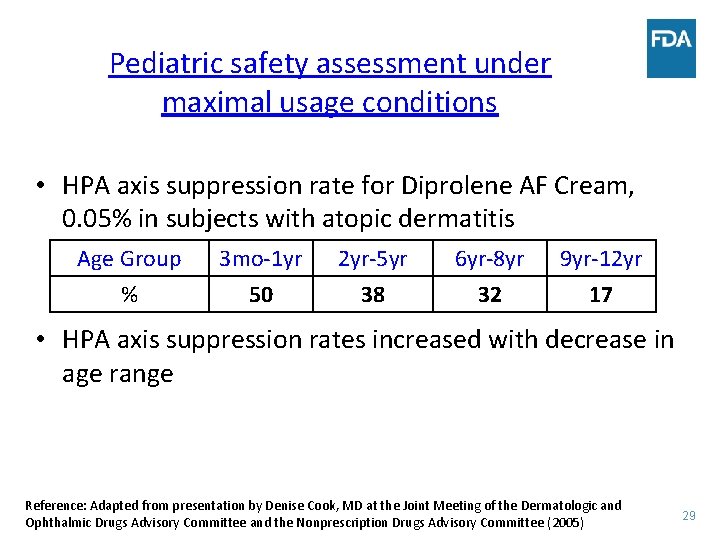
Pediatric safety assessment under maximal usage conditions • HPA axis suppression rate for Diprolene AF Cream, 0. 05% in subjects with atopic dermatitis Age Group 3 mo-1 yr 2 yr-5 yr 6 yr-8 yr 9 yr-12 yr % 50 38 32 17 • HPA axis suppression rates increased with decrease in age range Reference: Adapted from presentation by Denise Cook, MD at the Joint Meeting of the Dermatologic and Ophthalmic Drugs Advisory Committee and the Nonprescription Drugs Advisory Committee (2005) 29
Purpose of maximal usage study Bioavailability Biological factors Formulation factors To inform systemic safety Ontogenetic factors 30
Summary • This presentation looked into the components of maximal usage study which have been revised and refined following years of experience. • Although individual concepts impacting drug absorption were presented, the interplay between these components impact the systemic drug bioavailability of a topically administered drug. • Pediatric subjects should not be considered as miniature adults and assessment of systemic absorption under maximal usage conditions is critical to inform systemic safety in this population. • FDA encourages discussion of the design of the maximal usage study prior to initiation. 31
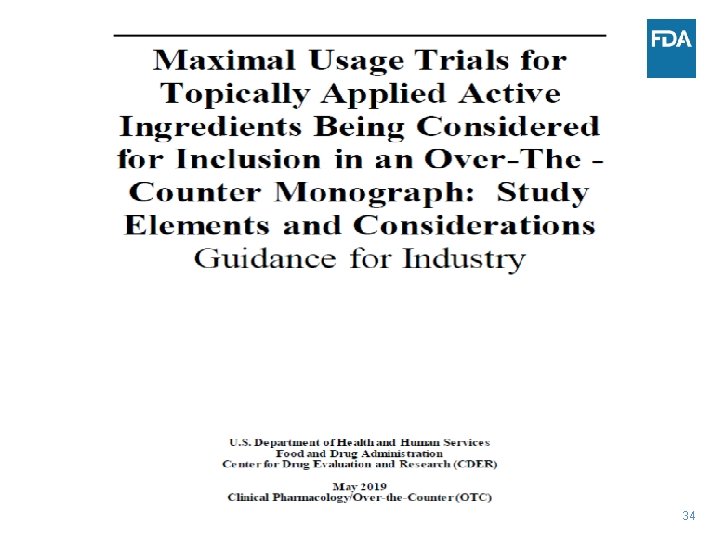
Relevant literature for further reading 32
33
34
Acknowledgements • • Edward Dennis Bashaw, Pharm. D. Chandrahas Sahajwalla, Ph. D. Suresh Doddapaneni, Ph. D. Clinical Pharmacology Review Team – – – Soo Hyeon Shin, Ph. D. Cindy Pan, Ph. D. Luke Oh, Ph. D. Da Zhang, Ph. D. Sojeong Yi, Ph. D. • Office of Clinical Pharmacology, OTS, CDER, FDA 35
Thank you for your attention! TO PROTECT AND PROMOTE THE HEALTH AND WELL BEING OF THE AMERICAN PEOPLE 36