
Murchison Widefield Array MWA Design and Status Divya



- Slides: 22
Murchison Widefield Array (MWA) : Design and Status Divya Oberoi, Lenoid Benkevitch MIT Haystack Observatory doberoi, benkev@haystack. mit. edu On behalf of the MWA Project
Partner Institutions and Sponsors
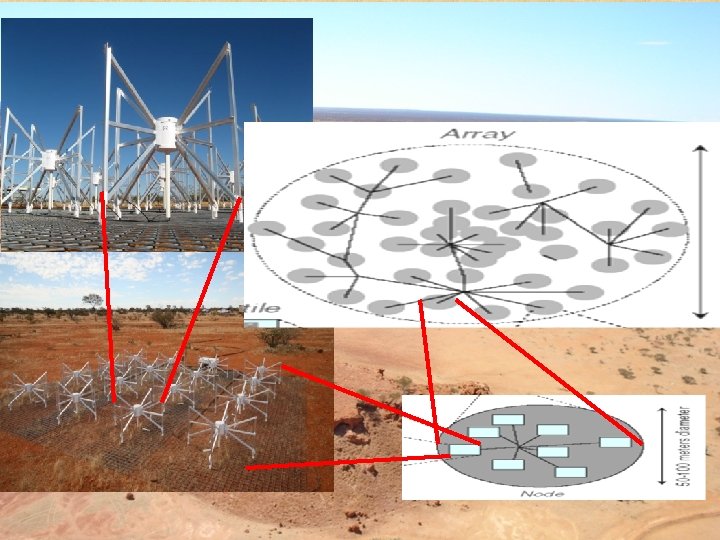
What is the MWA? • A low-frequency imaging array – 80 – 300 MHz • Wide Field of View (Fo. V) – Array elements – arrays of dipoles
The design approach Collaborators Ionosphere Funding Opportunities Politics Science Objectives Instrument performance requirements Instrument design Wide Fo. V Calib. & Mapping Technical Feasibility RFI Logistics Economic Feasibility
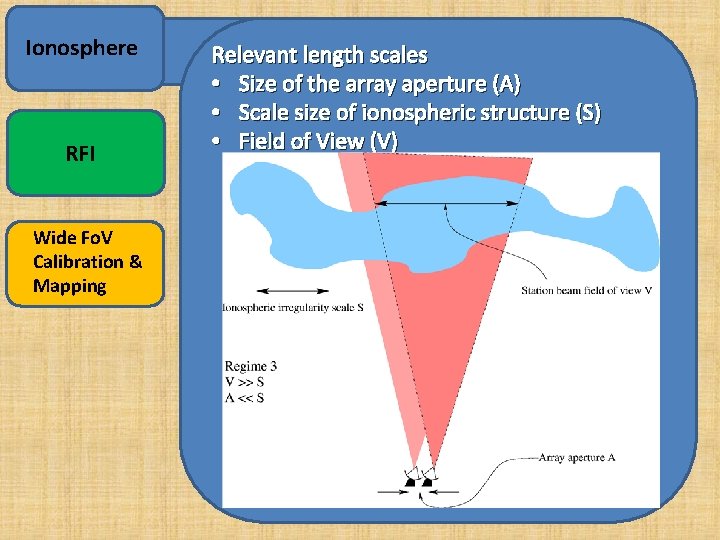
Ionosphere RFI Wide Fo. V Calibration & Mapping Relevant length scales • Size of the array aperture (A) • Scale size of ionospheric structure (S) • Field of View (V)
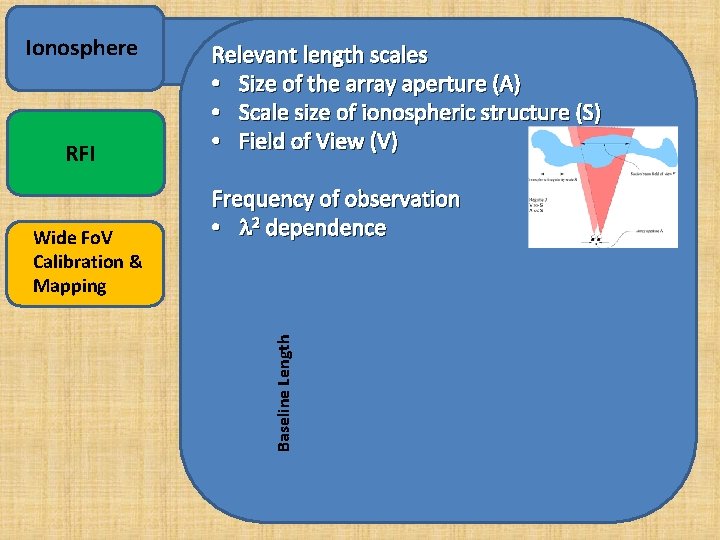
RFI Wide Fo. V Calibration & Mapping Relevant length scales • Size of the array aperture (A) • Scale size of ionospheric structure (S) • Field of View (V) Frequency of observation • 2 dependence Baseline Length Ionosphere
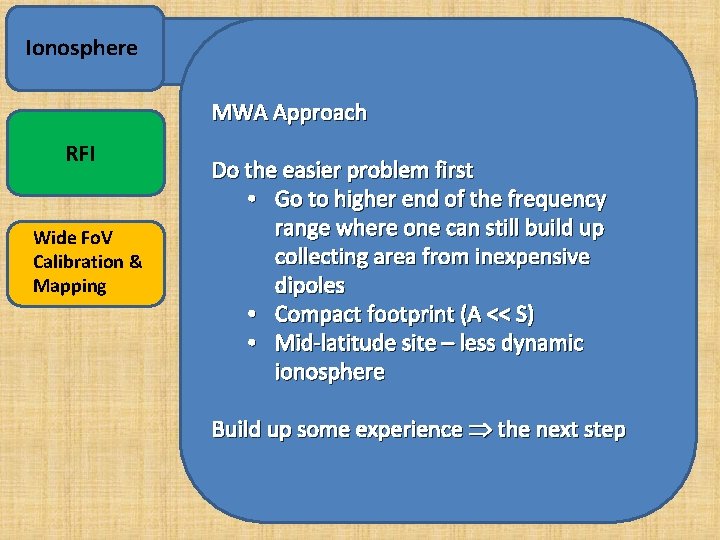
Ionosphere MWA Approach RFI Wide Fo. V Calibration & Mapping Do the easier problem first • Go to higher end of the frequency range where one can still build up collecting area from inexpensive dipoles • Compact footprint (A << S) • Mid-latitude site – less dynamic ionosphere Build up some experience the next step
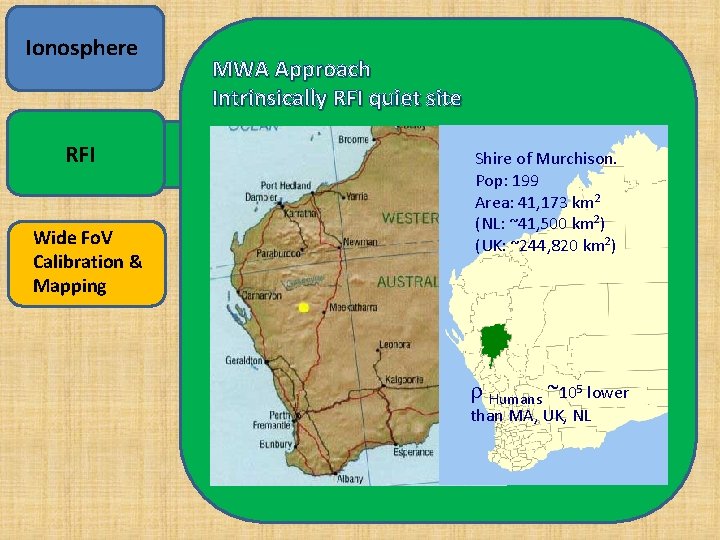
Ionosphere RFI Wide Fo. V Calibration & Mapping MWA Approach Intrinsically RFI quiet site Shire of Murchison. Pop: 199 Area: 41, 173 km 2 (NL: ~41, 500 km 2) (UK: ~244, 820 km 2) Humans ~105 lower than MA, UK, NL
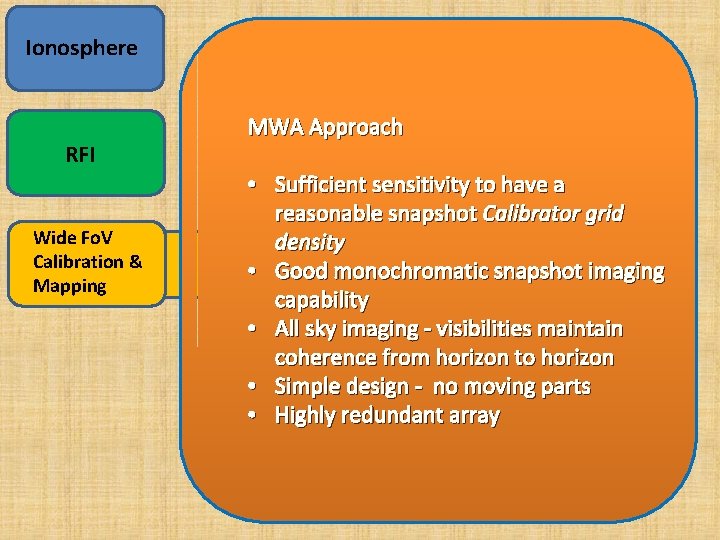
Ionosphere RFI Wide Fo. V Calibration & Mapping MWA Approach • Sufficient sensitivity to have a reasonable snapshot Calibrator grid density • Good monochromatic snapshot imaging capability • All sky imaging - visibilities maintain coherence from horizon to horizon • Simple design - no moving parts • Highly redundant array
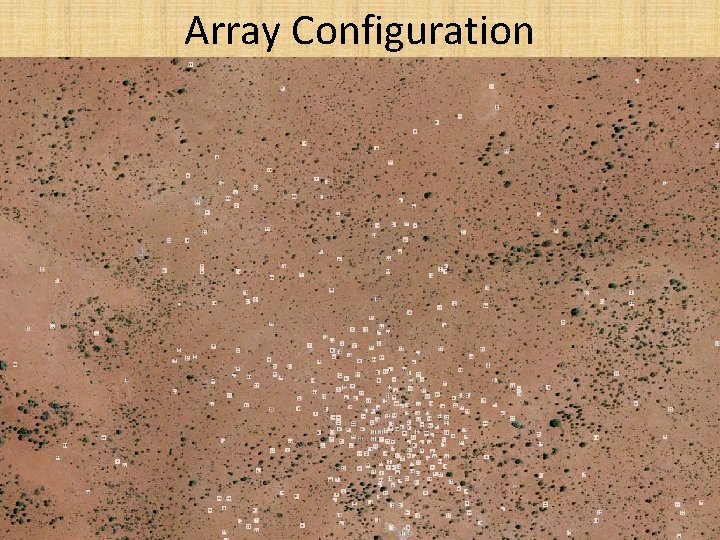
Array Configuration
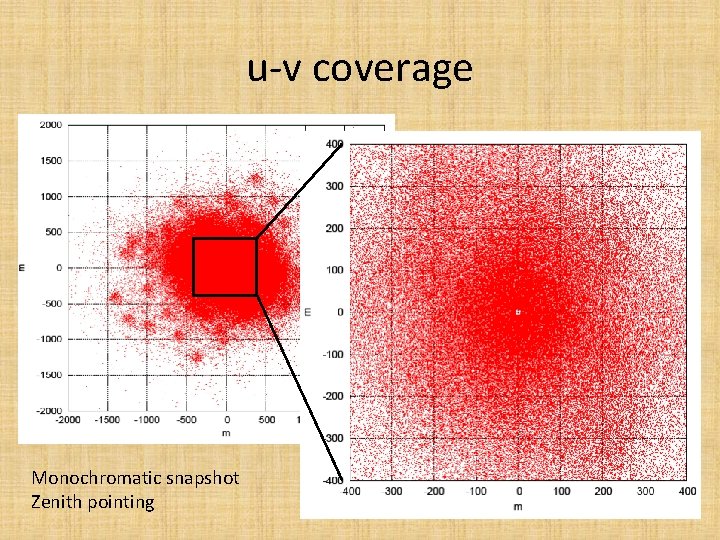
u-v coverage Monochromatic snapshot Zenith pointing
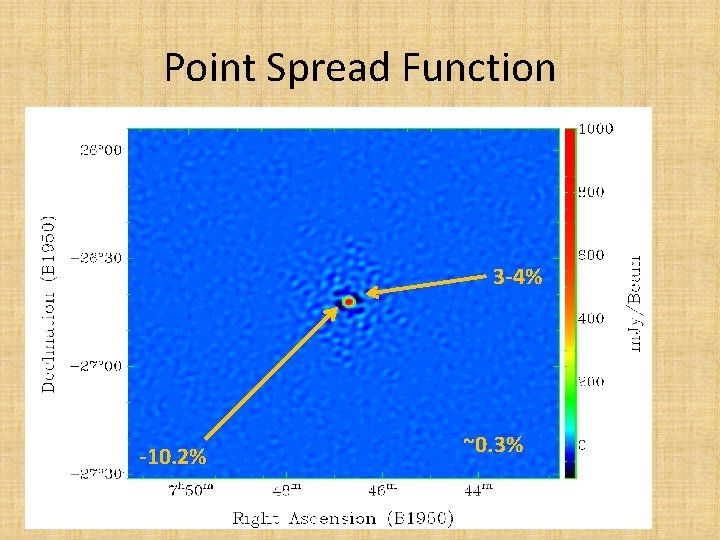
Point Spread Function 3 -4% -10. 2% ~0. 3%
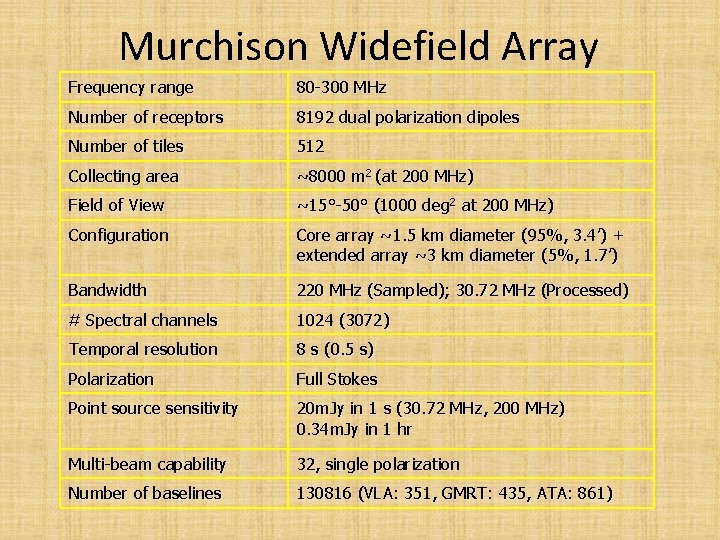
Murchison Widefield Array Frequency range 80 -300 MHz Number of receptors 8192 dual polarization dipoles Number of tiles 512 Collecting area ~8000 m 2 (at 200 MHz) Field of View ~15°-50° (1000 deg 2 at 200 MHz) Configuration Core array ~1. 5 km diameter (95%, 3. 4’) + extended array ~3 km diameter (5%, 1. 7’) Bandwidth 220 MHz (Sampled); 30. 72 MHz (Processed) # Spectral channels 1024 (3072) Temporal resolution 8 s (0. 5 s) Polarization Full Stokes Point source sensitivity 20 m. Jy in 1 s (30. 72 MHz, 200 MHz) 0. 34 m. Jy in 1 hr Multi-beam capability 32, single polarization Number of baselines 130816 (VLA: 351, GMRT: 435, ATA: 861)
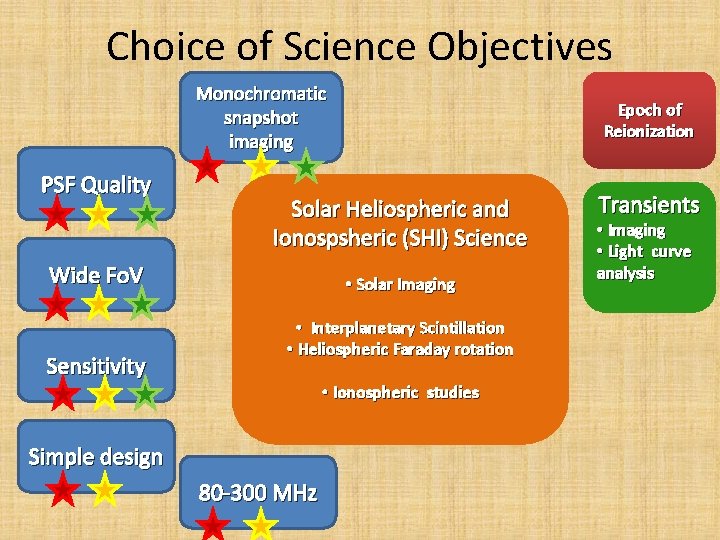
Choice of Science Objectives Monochromatic snapshot imaging PSF Quality Solar Heliospheric and Ionospsheric (SHI) Science Wide Fo. V Sensitivity Epoch of Reionization • Solar Imaging • Interplanetary Scintillation • Heliospheric Faraday rotation • Ionospheric studies Simple design 80 -300 MHz Transients • Imaging • Light curve analysis
Key Features of Interest • Magnetic field measurements in the corona and heliosphere via Faraday rotation observations – 1 source every 6 -9 deg 2 • Velocity, turbulence characteristics etc. via IPS – 32 independent beams and wide fields of view • Location and evolution of shocks via imaging of Type II bursts – Very good monochromatic snap-shot imaging capabilities – Sufficient time and spectral resolution
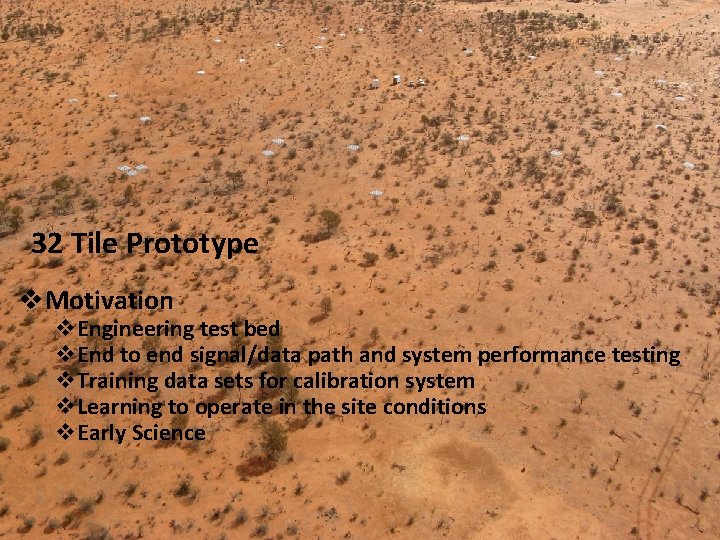
32 Tile Prototype v. Motivation v. Engineering test bed v. End to end signal/data path and system performance testing v. Training data sets for calibration system v. Learning to operate in the site conditions v. Early Science
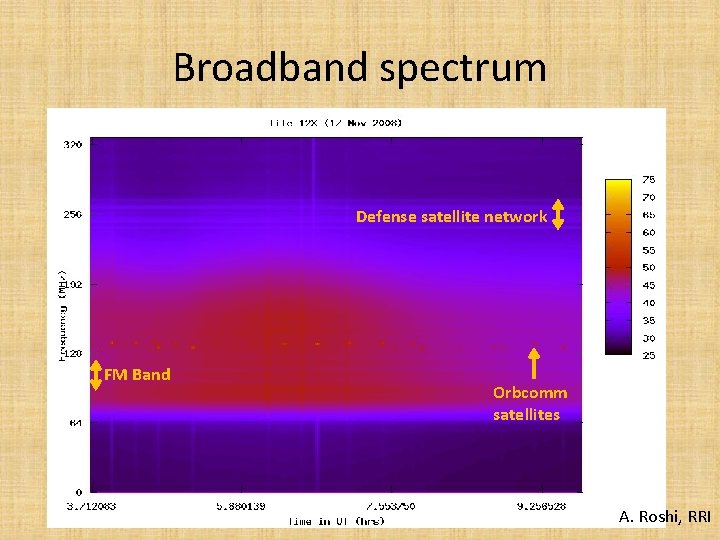
Broadband spectrum Defense satellite network FM Band Orbcomm satellites A. Roshi, RRI
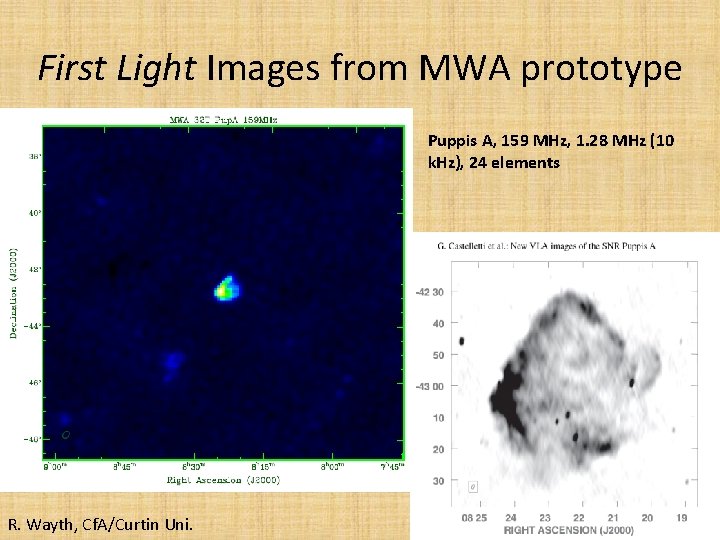
First Light Images from MWA prototype Puppis A, 159 MHz, 1. 28 MHz (10 k. Hz), 24 elements R. Wayth, Cf. A/Curtin Uni.
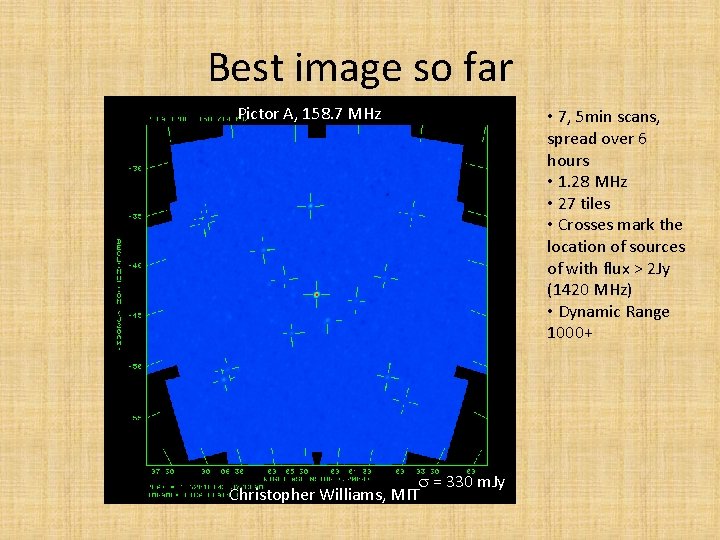
Best image so far Pictor A, 158. 7 MHz = 330 m. Jy Christopher Williams, MIT • 7, 5 min scans, spread over 6 hours • 1. 28 MHz • 27 tiles • Crosses mark the location of sources of with flux > 2 Jy (1420 MHz) • Dynamic Range 1000+
Status and Schedule • • Analog hardware for 32 T system in place Digital hardware (correlator) deployment - June 09 32 T performance testing - 4 Q 2009 End of build-out phase for the final system – 3 -4 Q 2010 • Science capabilities will slowly grow starting now – Remote operations started – Hardware correlator 30. 72 MHz – A strong possibility of an interim 128 T array, while we build out to 512 T.
Summary • MWA - optimized for calibration and imaging challenges at low frequencies • Needs of the key science applications and the instrument’s capabilities are very well matched • Data flow from the prototype array has commenced • Busy schedule and exciting times ahead • Stay tuned…