
Muon tomography for the monitoring of stored carbon
Muon tomography for the monitoring of stored carbon Jon Gluyas and Lee F. Thompson Muon Sources Workshop Huddersfield 12 th – 13 th January 2015
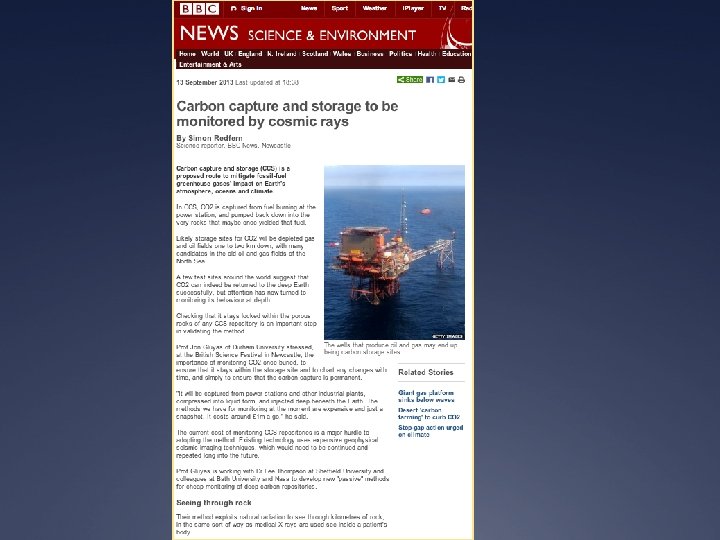
UK Policy on Carbon Capture credit: www. gov. uk One aspect of this is capturing and storing CO 2 ….
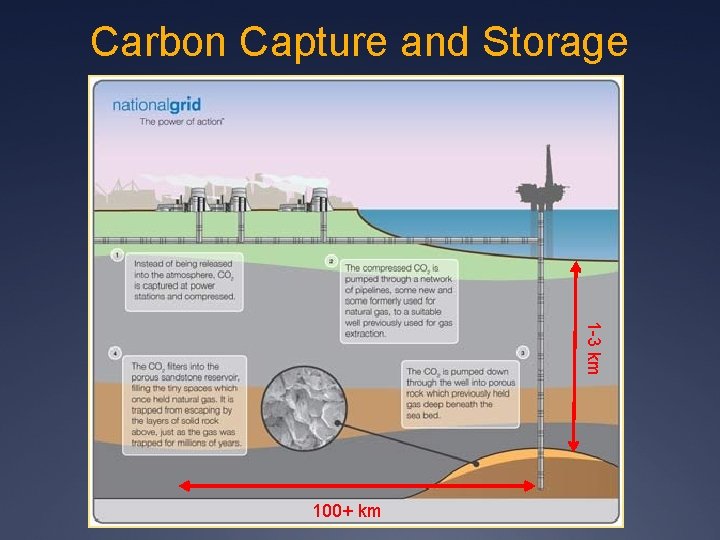
Carbon Capture and Storage 1 -3 km credit: www. nationalgrid. com 100+ km
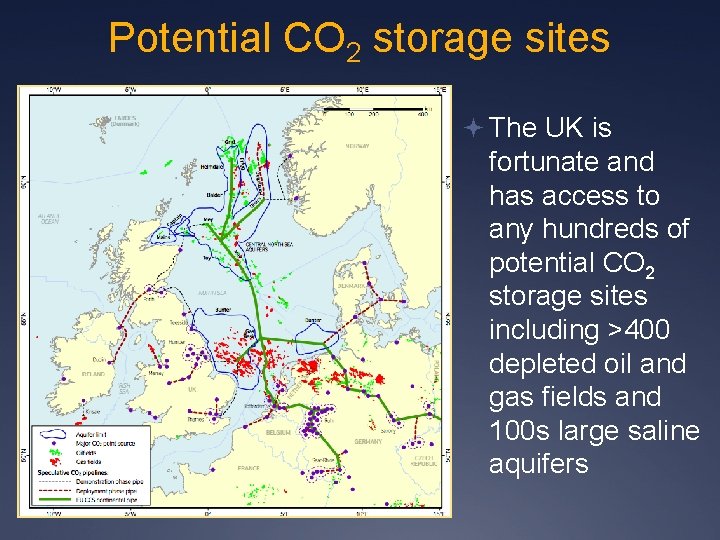
Potential CO 2 storage sites The UK is fortunate and has access to any hundreds of potential CO 2 storage sites including >400 depleted oil and gas fields and 100 s large saline aquifers
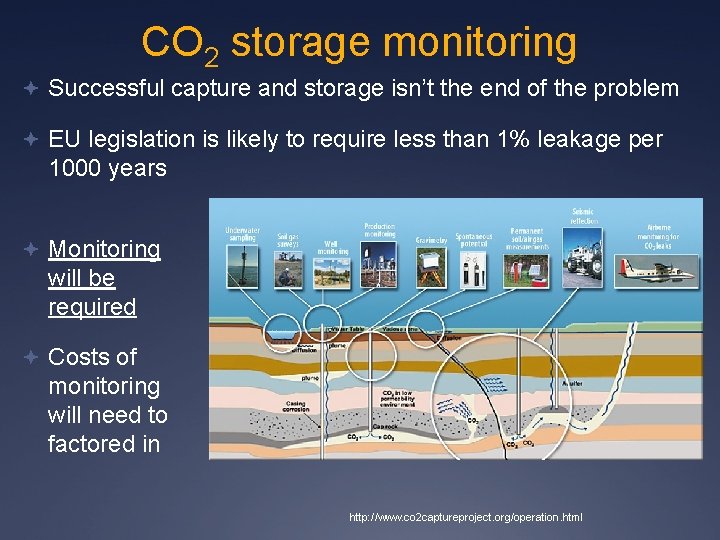
CO 2 storage monitoring Successful capture and storage isn’t the end of the problem EU legislation is likely to require less than 1% leakage per 1000 years Monitoring will be required Costs of monitoring will need to factored in http: //www. co 2 captureproject. org/operation. html
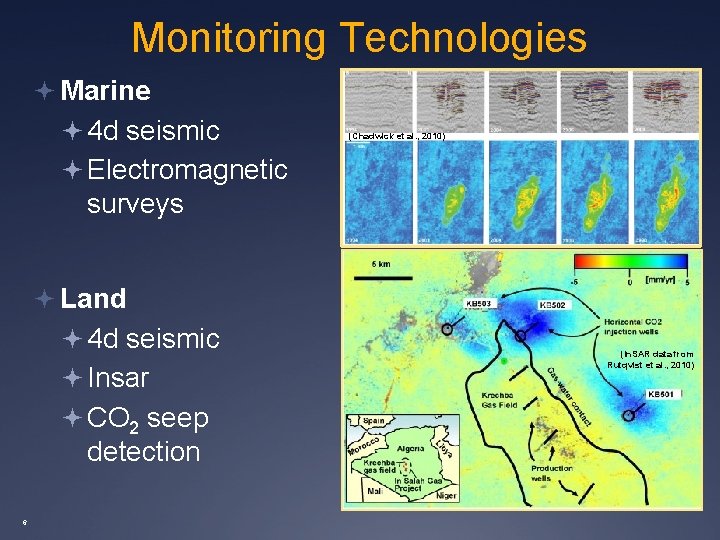
Monitoring Technologies Marine 4 d seismic (Chadwick et al. , 2010) Electromagnetic surveys Land 4 d seismic Insar CO 2 seep detection 6 (In. SAR data from Rutqvist et al. , 2010)
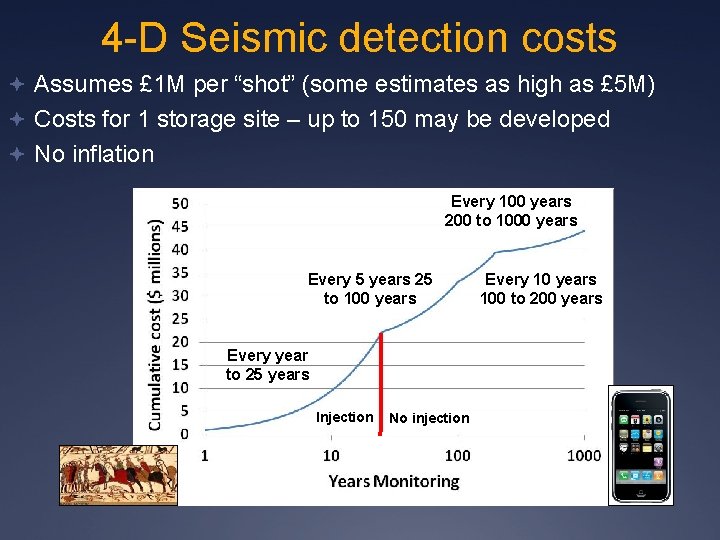
4 -D Seismic detection costs Assumes £ 1 M per “shot” (some estimates as high as £ 5 M) Costs for 1 storage site – up to 150 may be developed No inflation Every 100 years 200 to 1000 years Every 5 years 25 to 100 years Every year to 25 years Injection No injection Every 10 years 100 to 200 years
CCS monitoring 4 d seismic surveys are not the optimal tool for CCS monitoring, in particular they are episodic – what happens between surveys do not measure CO 2 density directly (measures acoustic contrast, f) An ideal monitoring methodology would be Are there inexpensive alternative continuous technologies passive that can address some directly sensitive to CO 2 density of these last for hundreds of years issues? ?

Muon Tomography - Techniques Overburden Muon Detectors Muon Tomography (Attenuation Method) Muon Radiography Muon Tomography (Scattering Method)
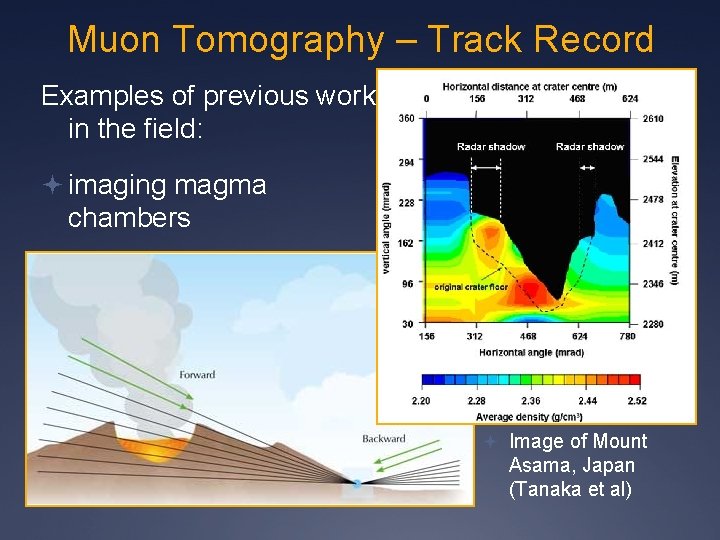
Muon Tomography – Track Record Examples of previous work in the field: imaging magma chambers Image of Mount Asama, Japan (Tanaka et al)
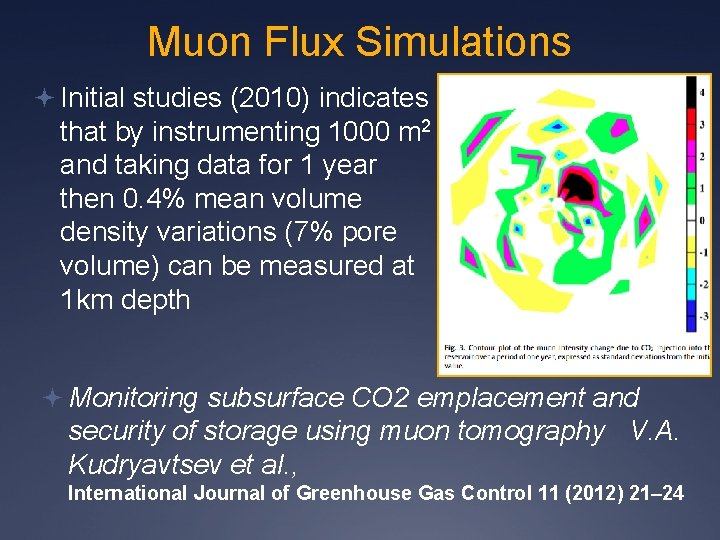
Muon Flux Simulations Initial studies (2010) indicates that by instrumenting 1000 m 2 and taking data for 1 year then 0. 4% mean volume density variations (7% pore volume) can be measured at 1 km depth Monitoring subsurface CO 2 emplacement and security of storage using muon tomography V. A. Kudryavtsev et al. , International Journal of Greenhouse Gas Control 11 (2012) 21– 24
Muon Tomography for CCS Monitoring Muon tomography offers a monitoring tool that is: Continuous – some methods are episodic, what happens between measurements? Passive Directly sensitive to CO 2 density – some methods do not measure CO 2 density directly Capable of delivering useful data for many years cost effective but there are challenges … Need to instrument below/around the volume of interest Restricted borehole geometry not well-suited Elevated temperatures
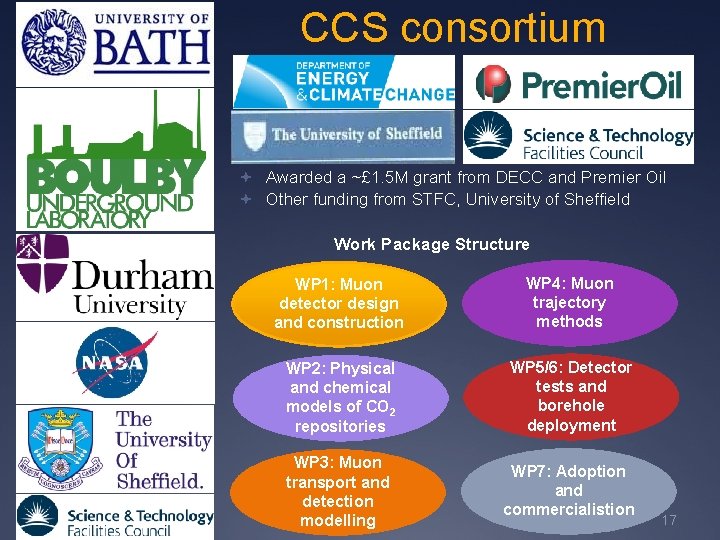
CCS consortium Awarded a ~£ 1. 5 M grant from DECC and Premier Oil Other funding from STFC, University of Sheffield Work Package Structure WP 1: Muon detector design and construction WP 4: Muon trajectory methods WP 2: Physical and chemical models of CO 2 repositories WP 5/6: Detector tests and borehole deployment WP 3: Muon transport and detection modelling WP 7: Adoption and commercialistion 17
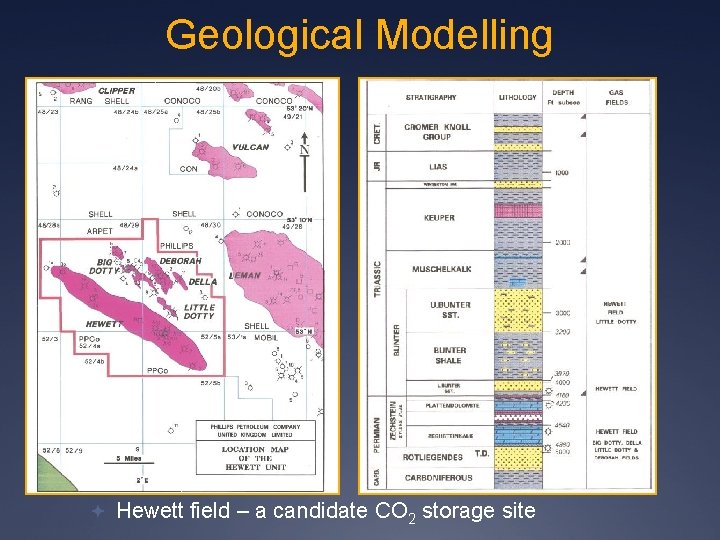
Geological Modelling Hewett field – a candidate CO 2 storage site
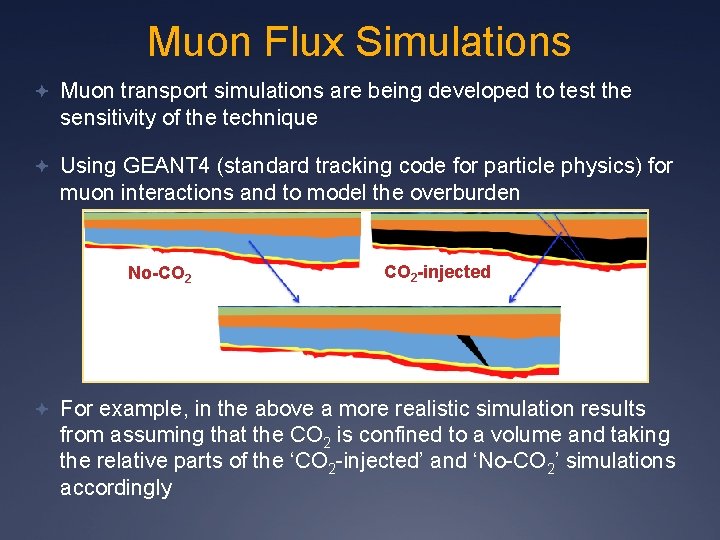
Muon Flux Simulations Muon transport simulations are being developed to test the sensitivity of the technique Using GEANT 4 (standard tracking code for particle physics) for muon interactions and to model the overburden No-CO 2 -injected For example, in the above a more realistic simulation results from assuming that the CO 2 is confined to a volume and taking the relative parts of the ‘CO 2 -injected’ and ‘No-CO 2’ simulations accordingly
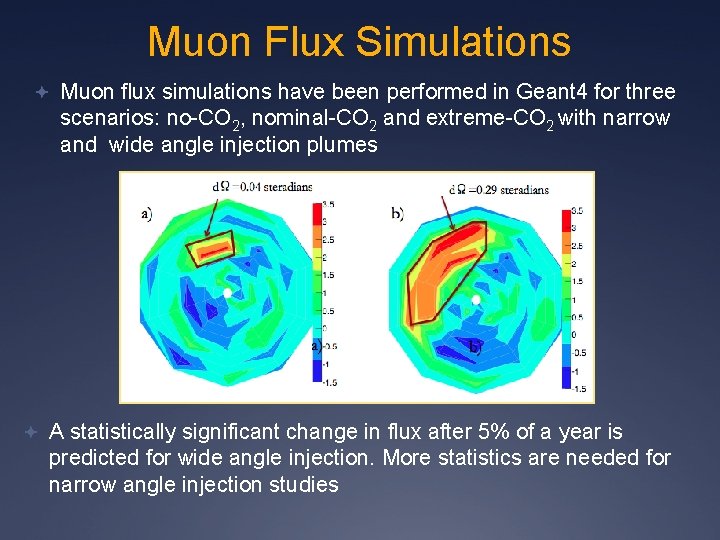
Muon Flux Simulations Muon flux simulations have been performed in Geant 4 for three scenarios: no-CO 2, nominal-CO 2 and extreme-CO 2 with narrow and wide angle injection plumes A statistically significant change in flux after 5% of a year is predicted for wide angle injection. More statistics are needed for narrow angle injection studies
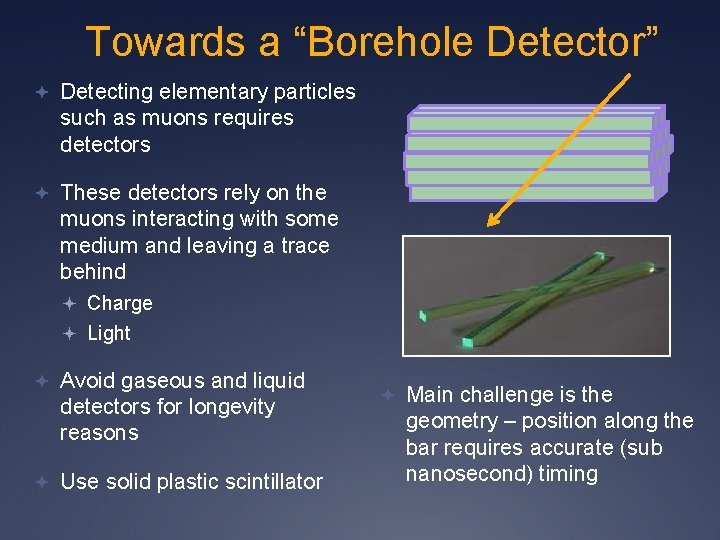
Towards a “Borehole Detector” Detecting elementary particles such as muons requires detectors These detectors rely on the muons interacting with some medium and leaving a trace behind Charge Light Avoid gaseous and liquid detectors for longevity reasons Use solid plastic scintillator Main challenge is the geometry – position along the bar requires accurate (sub nanosecond) timing
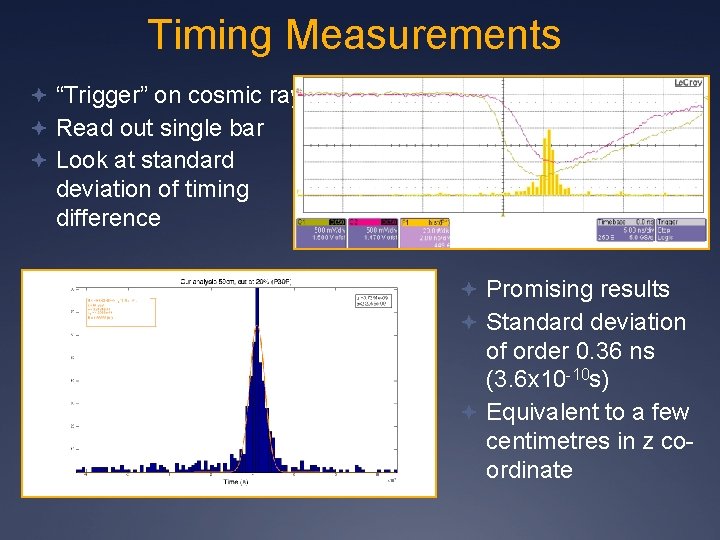
Timing Measurements “Trigger” on cosmic rays Read out single bar Look at standard deviation of timing difference Promising results Standard deviation of order 0. 36 ns (3. 6 x 10 -10 s) Equivalent to a few centimetres in z coordinate
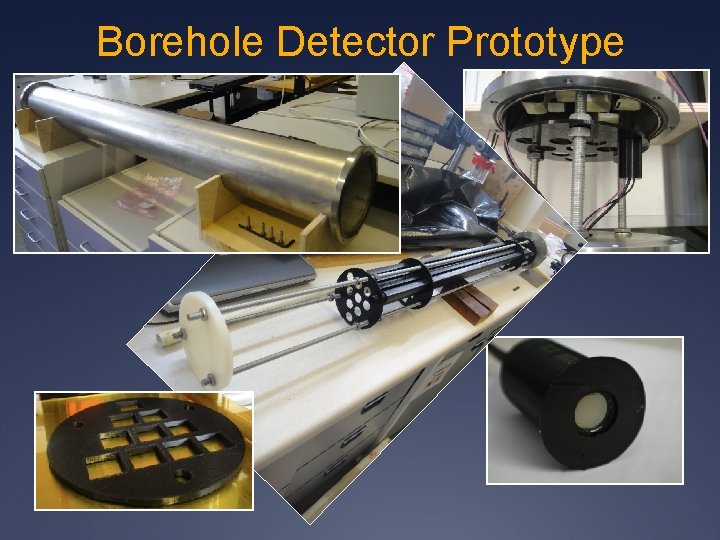
Borehole Detector Prototype
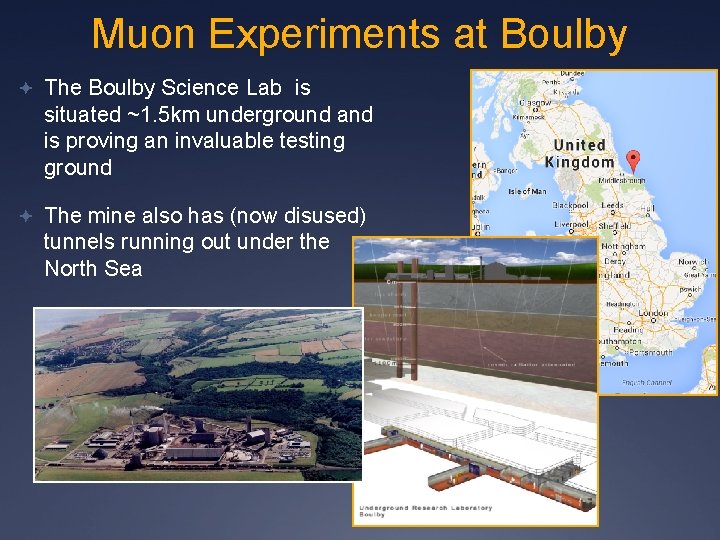
Muon Experiments at Boulby The Boulby Science Lab is situated ~1. 5 km underground and is proving an invaluable testing ground The mine also has (now disused) tunnels running out under the North Sea
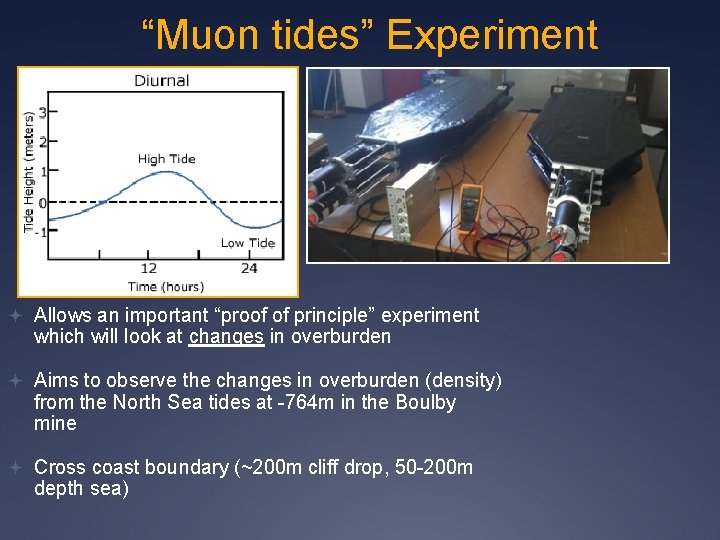
“Muon tides” Experiment Allows an important “proof of principle” experiment which will look at changes in overburden Aims to observe the changes in overburden (density) from the North Sea tides at -764 m in the Boulby mine Cross coast boundary (~200 m cliff drop, 50 -200 m depth sea)
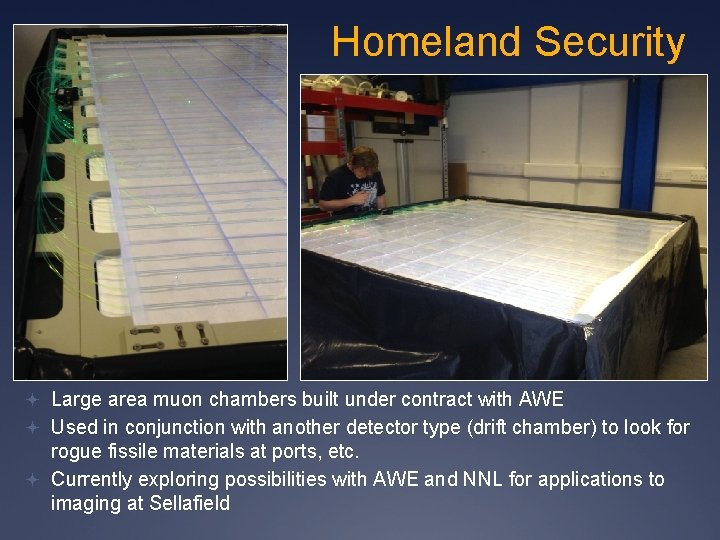
Homeland Security Large area muon chambers built under contract with AWE Used in conjunction with another detector type (drift chamber) to look for rogue fissile materials at ports, etc. Currently exploring possibilities with AWE and NNL for applications to imaging at Sellafield
Conclusions Muon tomography may prove a useful complementary tool to other technologies for the monitoring of carbon storage There are obvious challenges: Designing and operating effective muon detectors in the constrained borehole geometry Elevated temperatures in the borehole will clearly make this a difficult environment to work in “Proof of principle” work is taking place Plastic scintillator-based borehole detector Boulby “muon tides” detectors for overburden measurement Next steps Plans to operate the detector in a geothermal borehole in Newcastle There are other potentially interesting applications of muon tomography
- Slides: 24