
Munters DOAS and Chilled Beams Presented by Scott

Munters DOAS and Chilled Beams Presented by: Scott Mc. Ginnis Regional Sales Manager LEED® Associate Slide 1
Overview § Chilled Beam Systems § Moisture Control ● Munters Options Equipment


Whole Goal is to design a system where the Chilled Water temperatures throughout the building are consistent with the needs of the chilled beams and not driven by the OAU.

Active Chilled Beams

Neutral or Cold Air to Space Direct DOAS Design
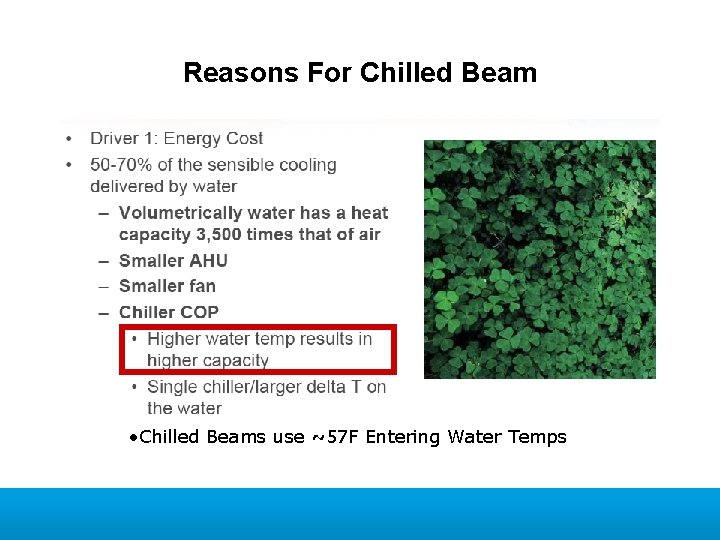
Reasons For Chilled Beam • Chilled Beams use ~57 F Entering Water Temps
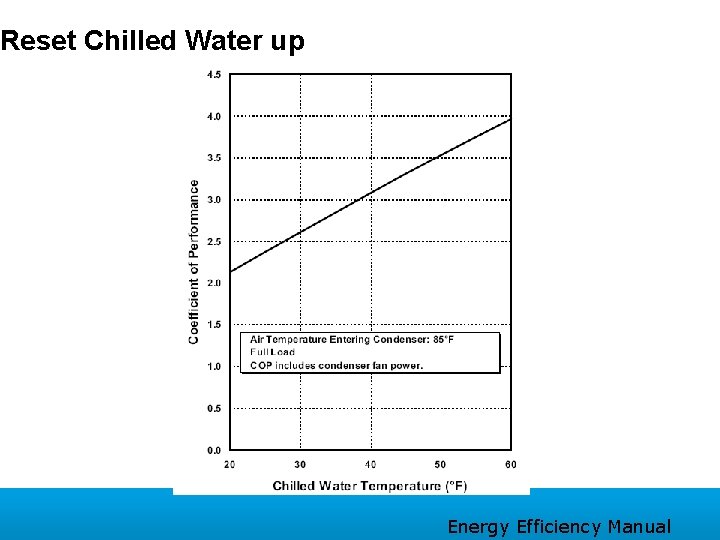
Reset Chilled Water up Energy Efficiency Manual
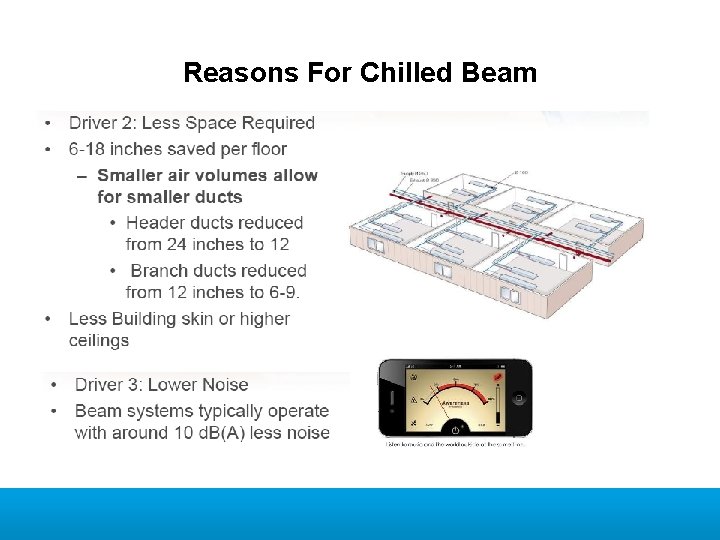
Reasons For Chilled Beam

Reasons For Chilled Beam
Calculating Building Moisture Load is More Important Size the DOAS to handle ALL the Internal Latent Load – Prevents Chilled Beams from Sweating • #1 Fear of Design Engineers I have spoken with • Provides proper space %rh – Delivered Sensible Temp to Beam effects the beams capacity
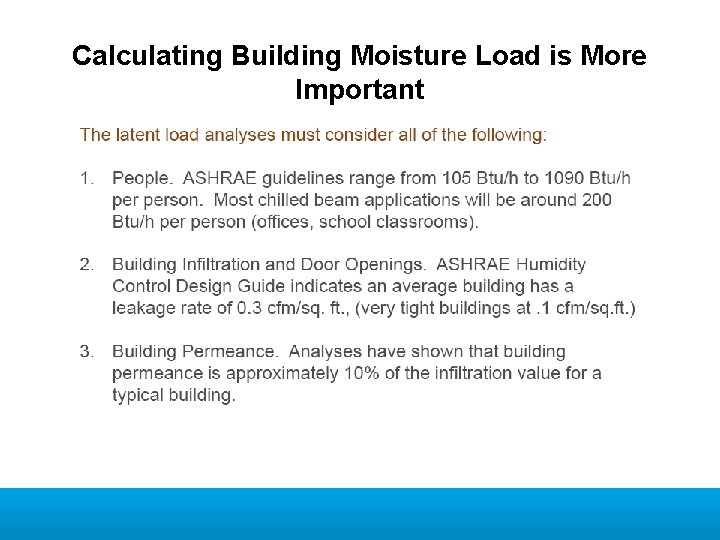
Calculating Building Moisture Load is More Important

Typical Buildings & DOAS Designs (does not handle the indoor humidity load) Building Space Served Dew Point Control Meeting Space Single 51 -55 F Loose Grocery Store Single 48 -52 F Medium Pharmaceutical Single 49 -56 F Tight Hotel / Condo. Multiple 54– 56 F Loose Office Multiple 52 -55 F Loose Classrooms Multiple 52 -55 F Loose Healthcare Depends 42 -52 F Depends
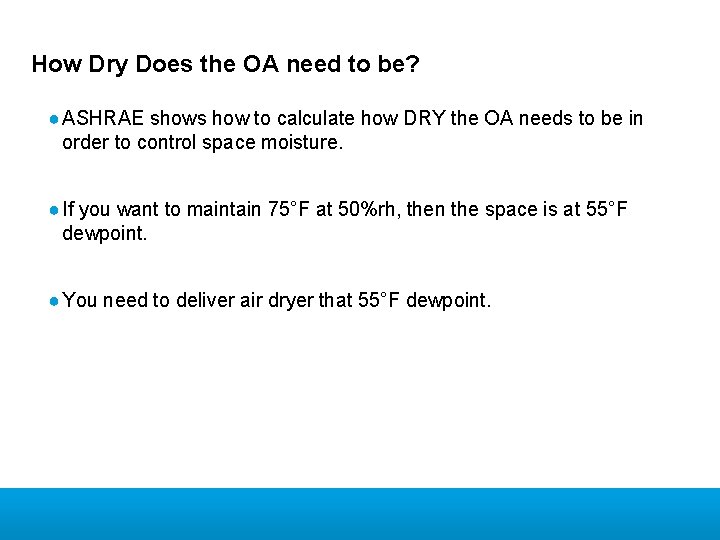
How Dry Does the OA need to be? ● ASHRAE shows how to calculate how DRY the OA needs to be in order to control space moisture. ● If you want to maintain 75°F at 50%rh, then the space is at 55°F dewpoint. ● You need to deliver air dryer that 55°F dewpoint.
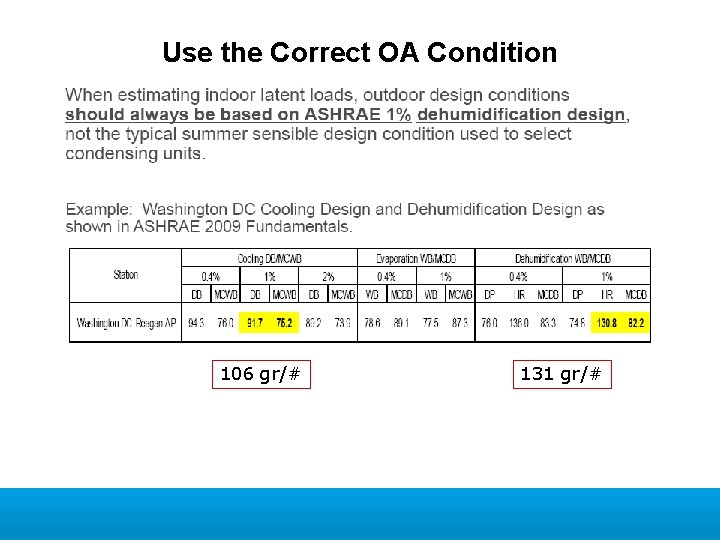
Use the Correct OA Condition 106 gr/# 131 gr/#
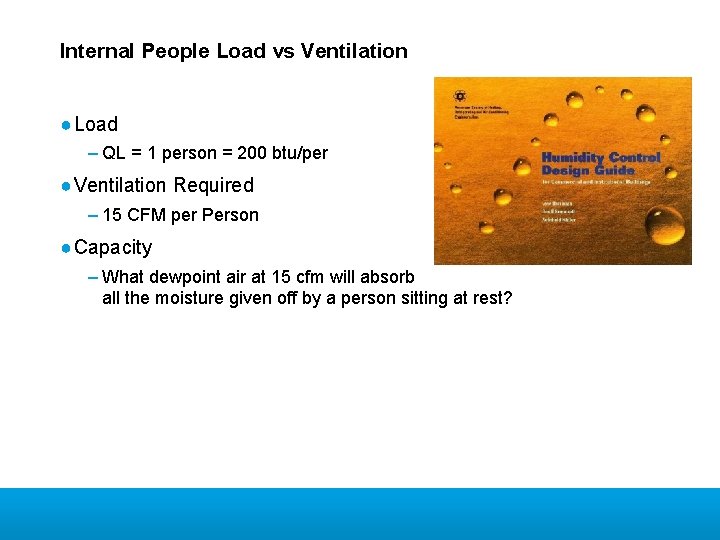
Internal People Load vs Ventilation ● Load – QL = 1 person = 200 btu/per ● Ventilation Required – 15 CFM per Person ● Capacity – What dewpoint air at 15 cfm will absorb all the moisture given off by a person sitting at rest?
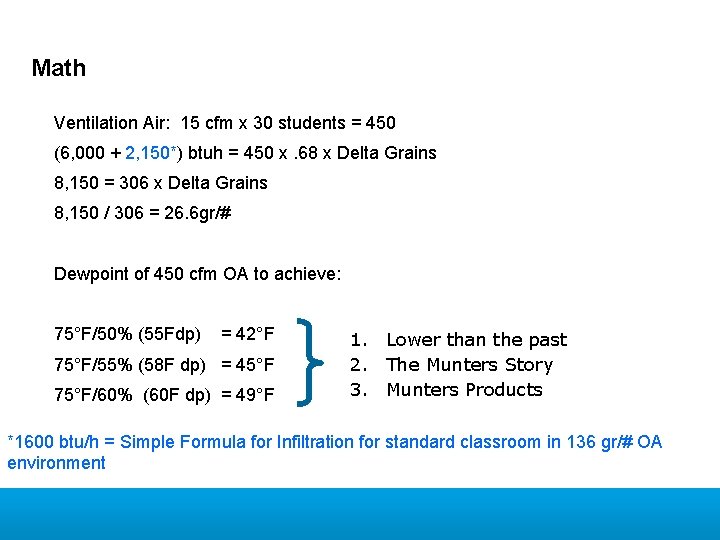
Math Ventilation Air: 15 cfm x 30 students = 450 (6, 000 + 2, 150*) btuh = 450 x. 68 x Delta Grains 8, 150 = 306 x Delta Grains 8, 150 / 306 = 26. 6 gr/# Dewpoint of 450 cfm OA to achieve: 75°F/50% (55 Fdp) = 42°F 75°F/55% (58 F dp) = 45°F 75°F/60% (60 F dp) = 49°F 1. Lower than the past 2. The Munters Story 3. Munters Products *1600 btu/h = Simple Formula for Infiltration for standard classroom in 136 gr/# OA environment
Amount of OA? ● The greater the amount of OA, the higher the dew point can be ● The lower the amount of OA, the lower the dewpoint ● If we mix RA with OA, then the same rules above apply
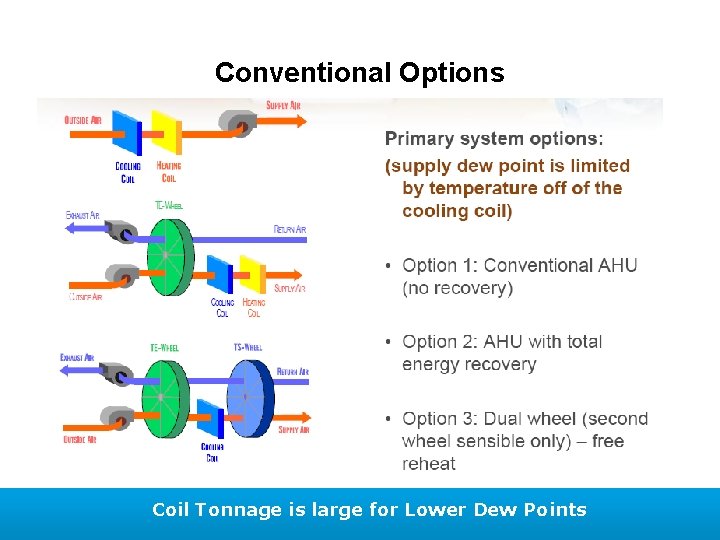
Conventional Options Coil Tonnage is large for Lower Dew Points
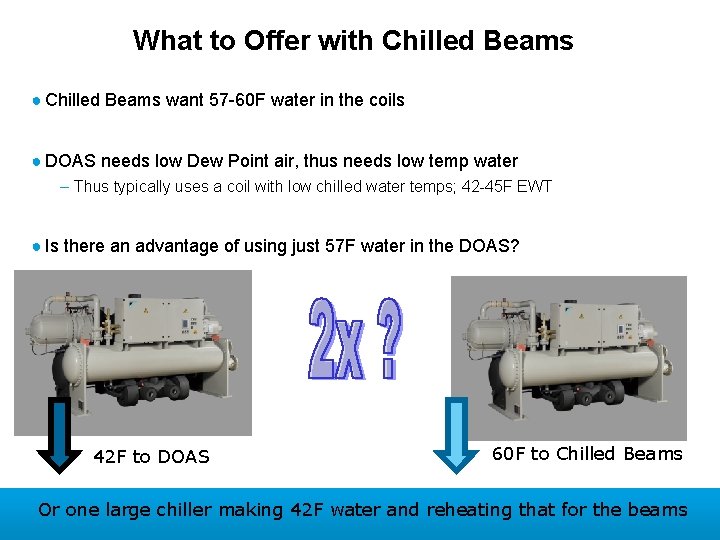
What to Offer with Chilled Beams ● Chilled Beams want 57 -60 F water in the coils ● DOAS needs low Dew Point air, thus needs low temp water – Thus typically uses a coil with low chilled water temps; 42 -45 F EWT ● Is there an advantage of using just 57 F water in the DOAS? 42 F to DOAS 60 F to Chilled Beams Or one large chiller making 42 F water and reheating that for the beams

ASHRAE Journal, Jan 2012
ASHRAE Journal, Jan 2012 Higher Space RH approach ● This approach is to use just a chilled water coil at standard coil conditions, maybe a little lower, i. e. 52 F off the coil ● To make this work, recommends raising space min % rh in order to raise the space dew point. Saying higher %rh is space = no need for lower delivered dew points – This seems to be as an attack on Desiccant, specifically Semco Pinnacle – FW owns Semco and thus have a package they promote ● I personally feel trying to convince engr to raise the %rh floor will only help stifle the grown of chilled beams
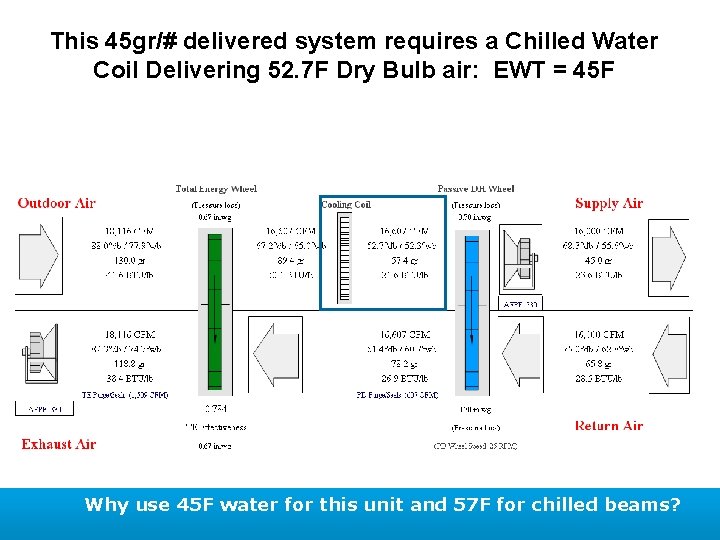
This 45 gr/# delivered system requires a Chilled Water Coil Delivering 52. 7 F Dry Bulb air: EWT = 45 F Why use 45 F water for this unit and 57 F for chilled beams?
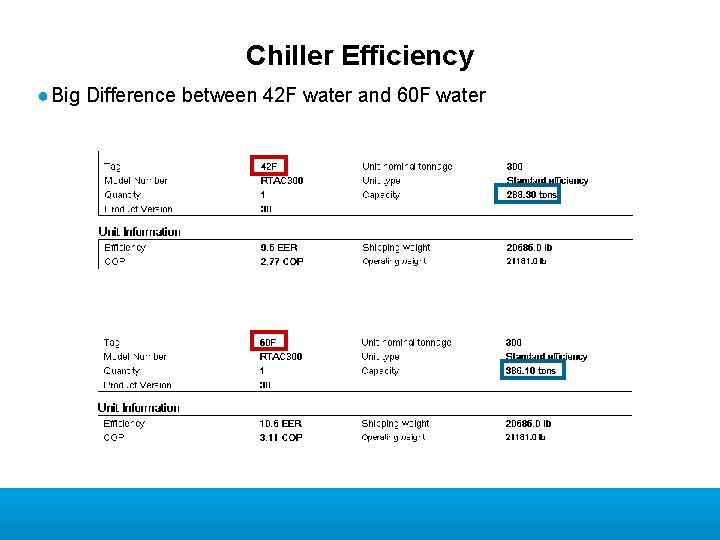
Chiller Efficiency ● Big Difference between 42 F water and 60 F water
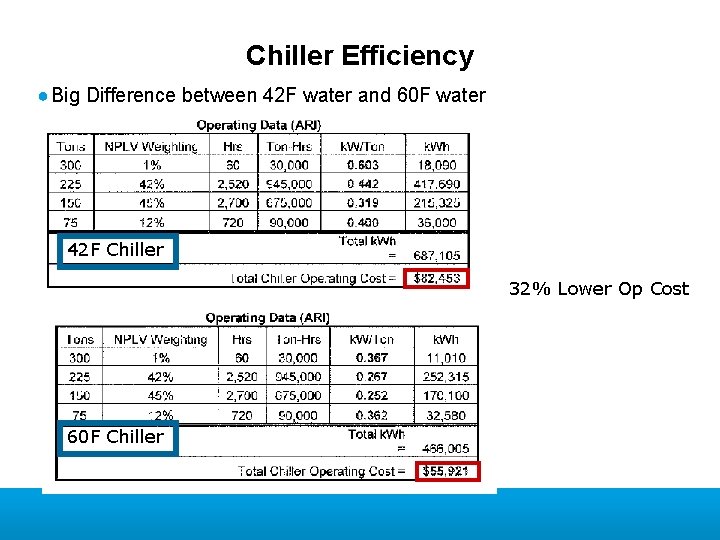
Chiller Efficiency ● Big Difference between 42 F water and 60 F water 42 F Chiller 32% Lower Op Cost 60 F Chiller
Show the benefit of using High Temp water in the OAU and the Beams ● Dry. Cool Process allows this – Dry. Cool Standard – Dry. Cool Plus – 3 Fan dry. Cool ERV – Custom Dry. Cool ● All systems above use no chilled water or water with equal temperatures to chilled beam coil water ● Saves on chiller tonnage, and operating cost
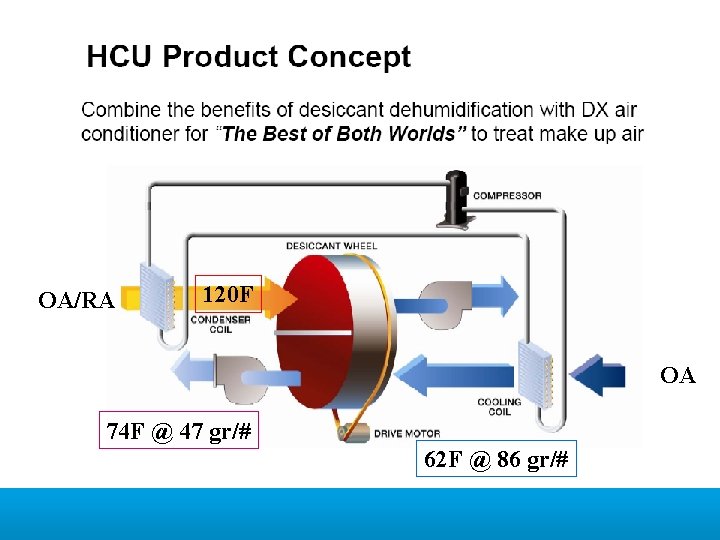
OA/RA 120 F OA 74 F @ 47 gr/# 62 F @ 86 gr/#
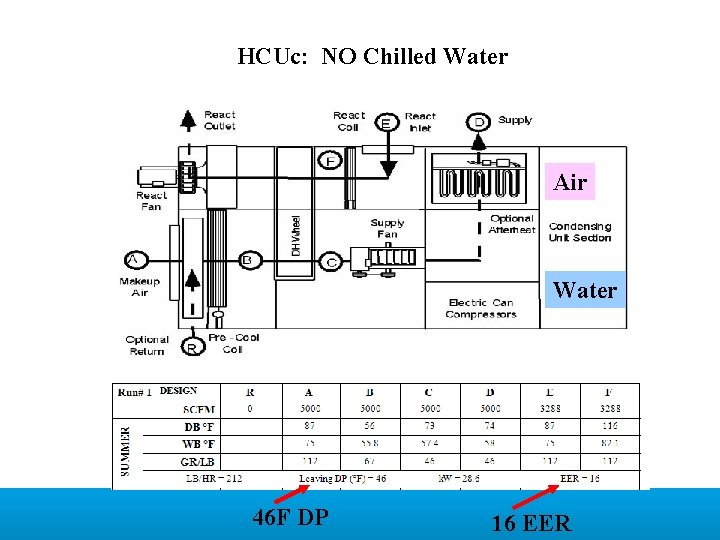
HCUc: NO Chilled Water Air Water 46 F DP 16 EER
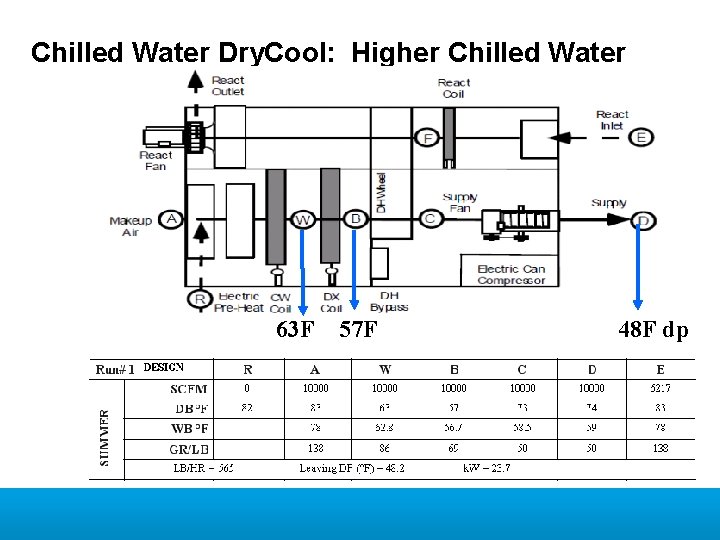
Chilled Water Dry. Cool: Higher Chilled Water 63 F 57 F 48 F dp
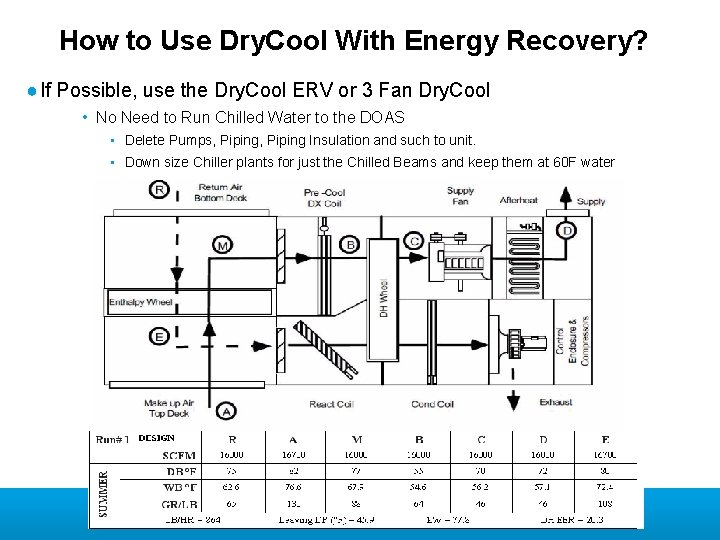
How to Use Dry. Cool With Energy Recovery? ● If Possible, use the Dry. Cool ERV or 3 Fan Dry. Cool • No Need to Run Chilled Water to the DOAS • Delete Pumps, Piping Insulation and such to unit. • Down size Chiller plants for just the Chilled Beams and keep them at 60 F water
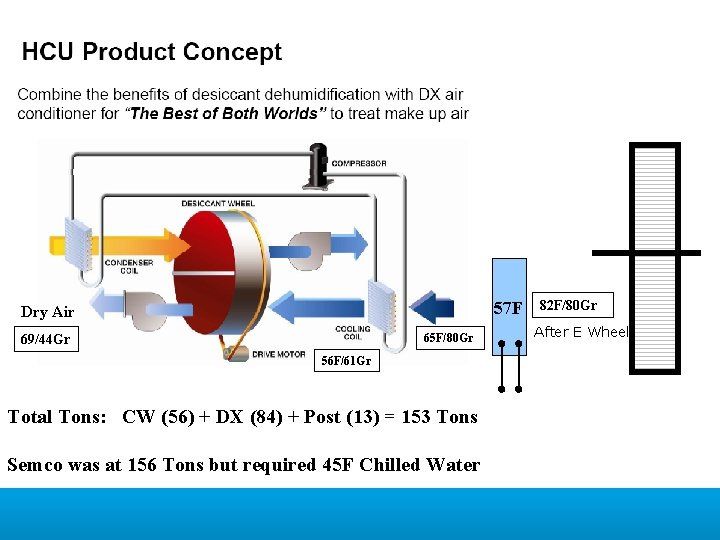
57 F Dry Air 65 F/80 Gr 69/44 Gr 56 F/61 Gr Total Tons: CW (56) + DX (84) + Post (13) = 153 Tons Semco was at 156 Tons but required 45 F Chilled Water 82 F/80 Gr After E Wheel
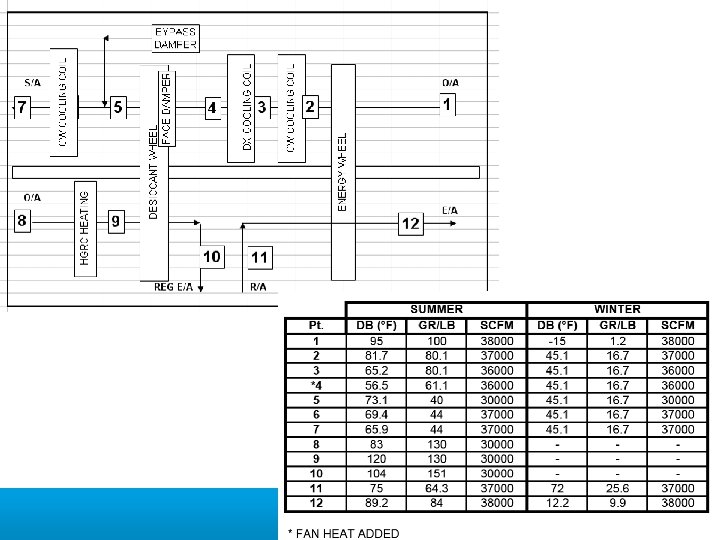
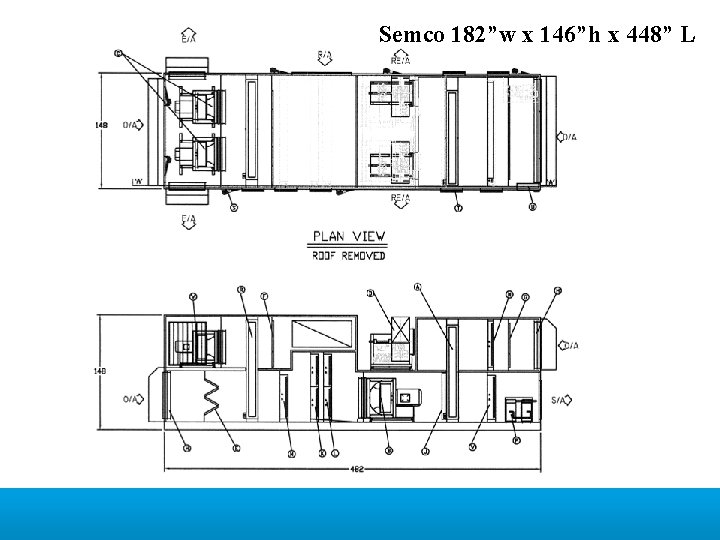
Semco 182”w x 146”h x 448” L

Enhanced Leaving Dew Point Control – Dry. Cool Standard and Dry. Cool ERV • Place a digital scroll compressor in the B position for modulating coil temp • Set a discharge are dew point control • Comp A is always on, but after that we can control pretty tight to DAT dew – Chilled Water HCU • By Modulating the Chilled Water coil we can control the leaving air Dew point – Space control • Monitor and control to the worse case space: • Unit staging will fluctuate, may be some risk if dramatic moisture swings
Leaving Air Post Cool Coil – Most cases the Dry. Cool system will deliver supply air warmer than wanted – Add a Chilled Water Post cool coil and set to leaving air conditions • Use Chilled Beam water temps • Munters can control
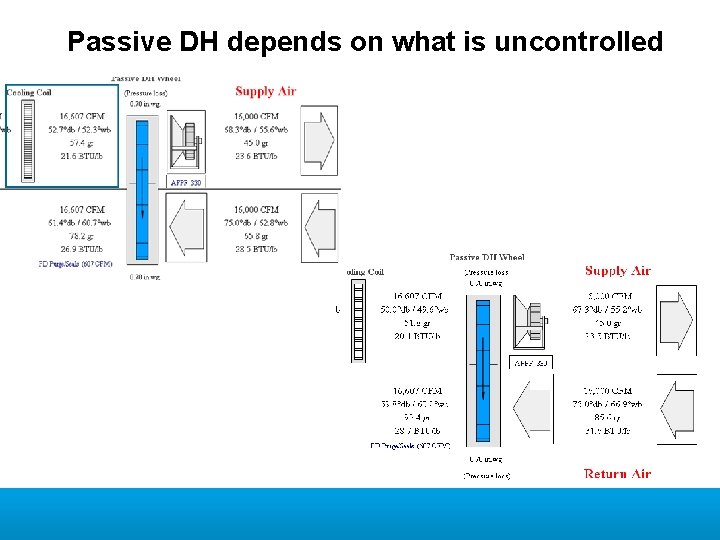
Passive DH depends on what is uncontrolled
Plan of Action for Chilled Beam 1. Calc latent loads: Add those items not typically included ● ● ● People, Infiltration, Permeance DOAS equipment should take care of entire latent load How much OA will be bring be processing? 2. Dry. Cool Process: Drive the Moisture out of the DH Wheel ● KEEP CHILLED WATER TEMP UP! ● Benefits of one simple chiller plant with 58 -60 F water ● ● By using all package DX By using Hybrid of Chilled Water and DX with Dry. Cool 3. Use a standard product if possible ● ● Quicker selection Better price points 4. Talk to factory about custom version to meet the engineers and owners needs ● ● Discharge air temps, control Layouts
Conclusion ● Chilled Beams do not need typical cold chiller water ● Use of Dry. Cool Process can eliminate or raise chilled water temps – Keeps chiller plant tonnage down – Keeps chiller electrical use down – Monitors and keeps Space moisture in check ● Small buildings (small section of buildings, additions, etc): – Dry. Cool Standard rio Dry. Cool ERV ● Medium Buildings – Dry. Cool ERV or Custom HCU ● Larger Buildings – Custom HCUs

Questions? ? ? Scott Mc. Ginnis Regional Sales Manager
- Slides: 39