
Municipal Water demand Municipal water demand includes the
- Slides: 12
Municipal Water demand:
• Municipal water demand includes the following: • 1. Domestic (residential) demand. 2. Commercial demand. 3. Industrial demand. 4. Public service demand. 5. System losses and leakage.
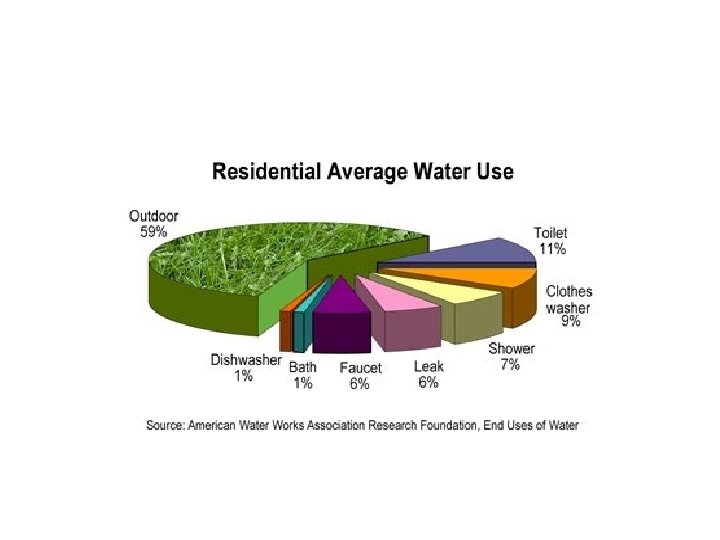
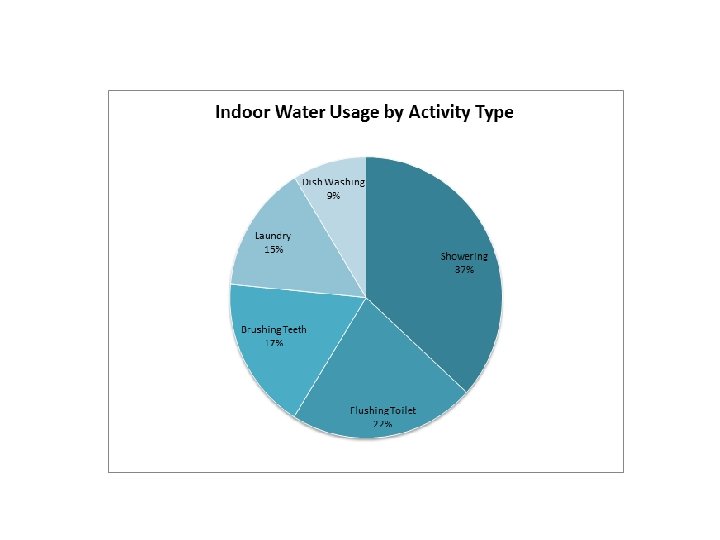
1. Domestic water demand: It is the portion of the municipal water that is used in homes. It includes toilet flush, coking, drinking, washing, bathing, watering lawn and other uses.
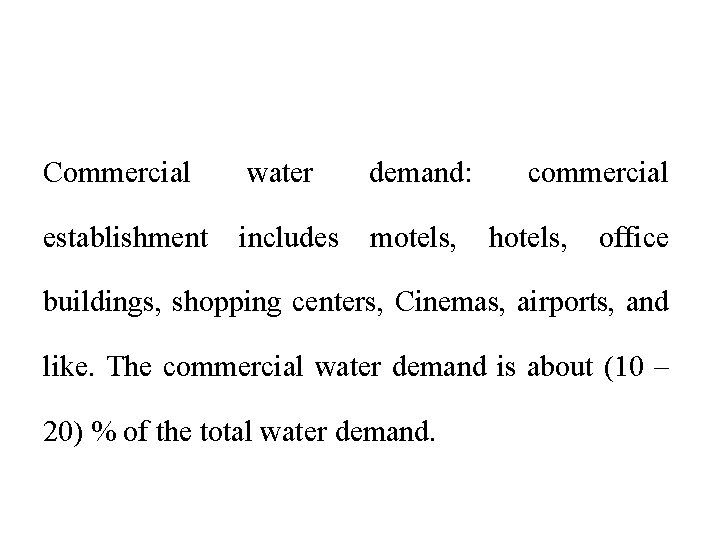
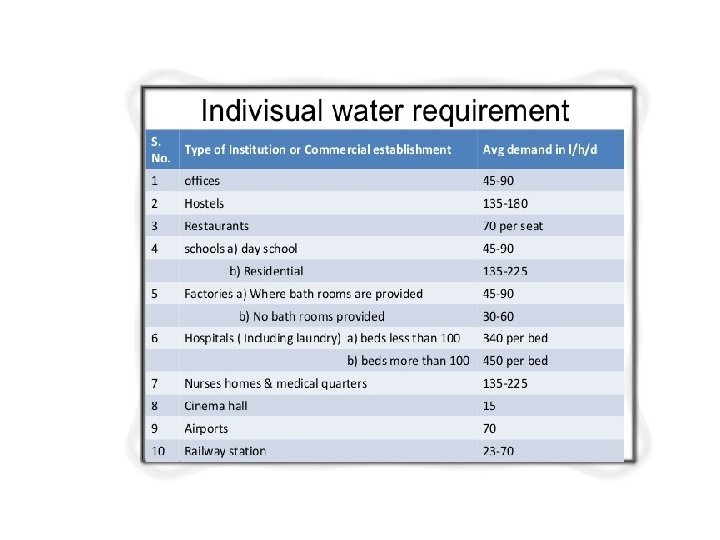
Commercial water demand: establishment includes motels, commercial hotels, office buildings, shopping centers, Cinemas, airports, and like. The commercial water demand is about (10 – 20) % of the total water demand.
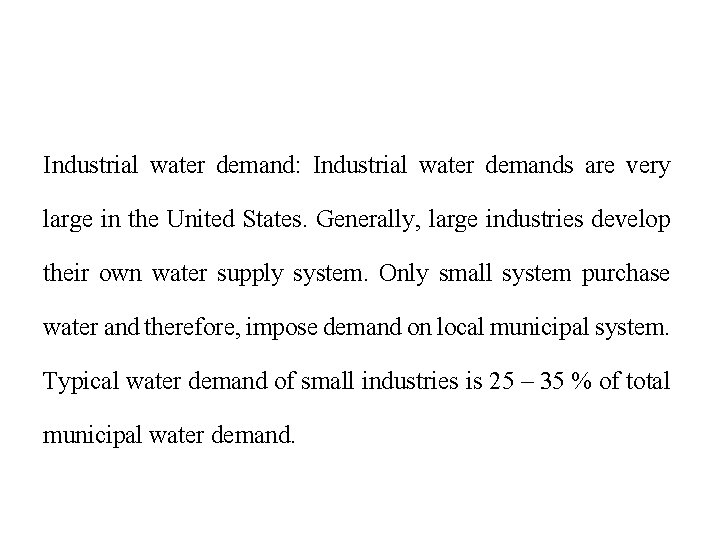
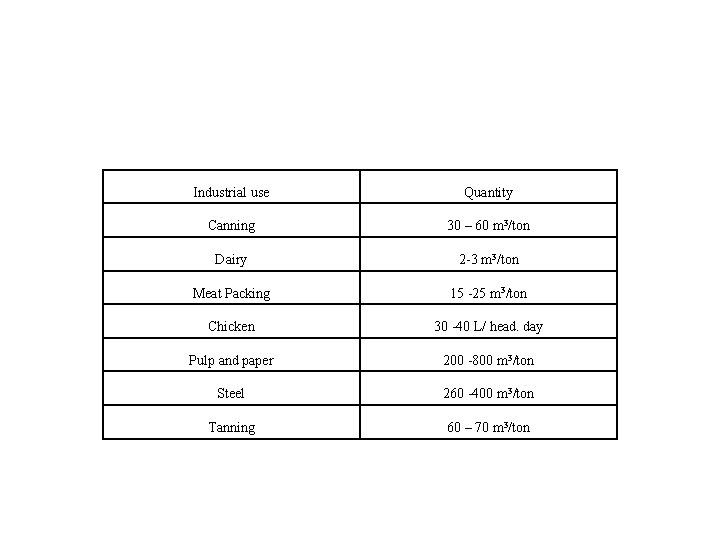
Industrial water demand: Industrial water demands are very large in the United States. Generally, large industries develop their own water supply system. Only small system purchase water and therefore, impose demand on local municipal system. Typical water demand of small industries is 25 – 35 % of total municipal water demand.
Industrial use Quantity Canning 30 – 60 m 3/ton Dairy 2 -3 m 3/ton Meat Packing 15 -25 m 3/ton Chicken 30 -40 L/ head. day Pulp and paper 200 -800 m 3/ton Steel 260 -400 m 3/ton Tanning 60 – 70 m 3/ton
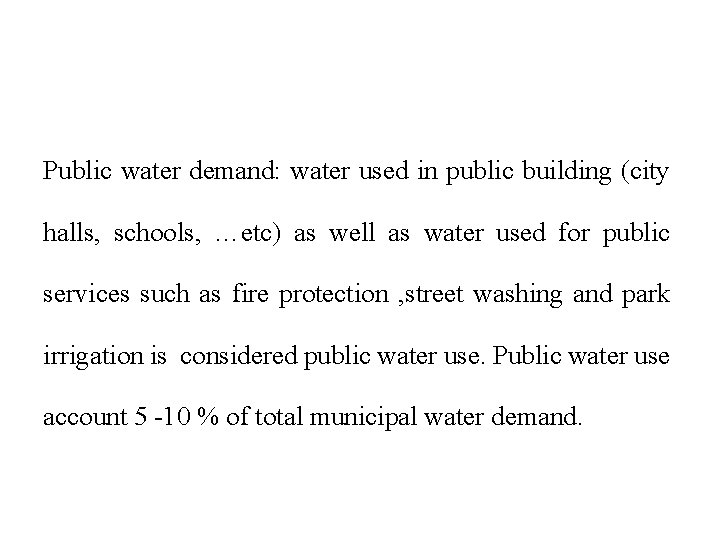
Public water demand: water used in public building (city halls, schools, …etc) as well as water used for public services such as fire protection , street washing and park irrigation is considered public water use. Public water use account 5 -10 % of total municipal water demand.
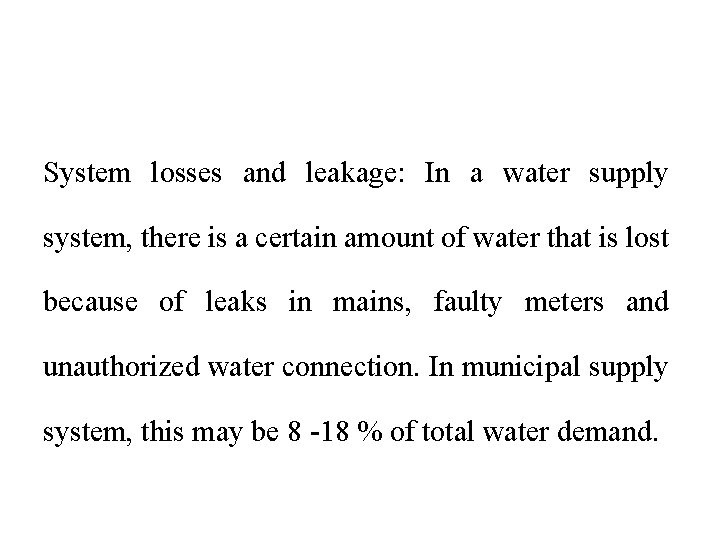
System losses and leakage: In a water supply system, there is a certain amount of water that is lost because of leaks in mains, faulty meters and unauthorized water connection. In municipal supply system, this may be 8 -18 % of total water demand.
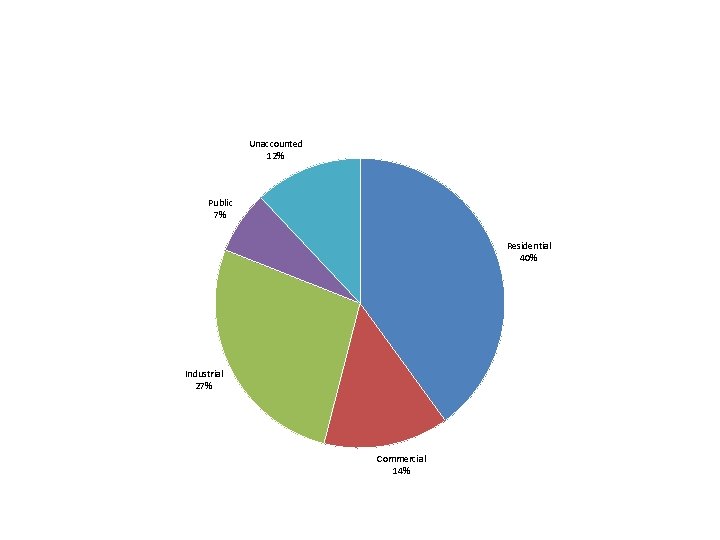
Unaccounted 12% Public 7% Residential 40% Industrial 27% Commercial 14%