
Municipal Solid Waste Generation Recycling and Disposal in

- Slides: 18
Municipal Solid Waste Generation, Recycling, and Disposal in the U. S. for 2006 U. S. EPA Office of Solid Waste November 2007
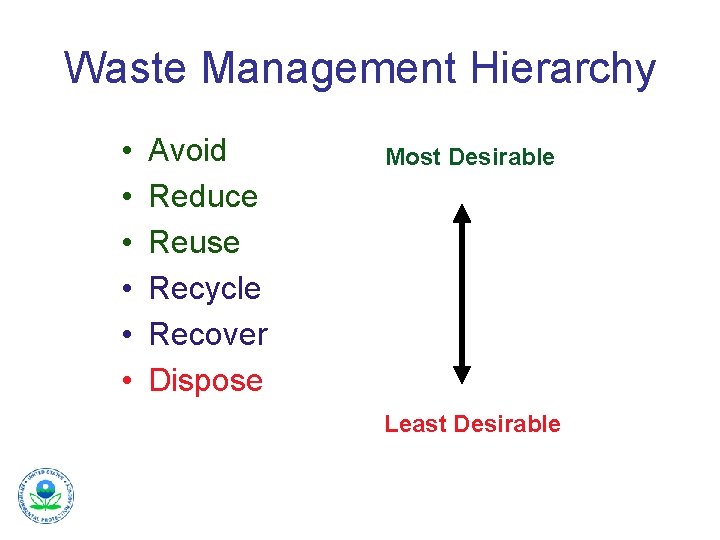
Waste Management Hierarchy • • • Avoid Reduce Reuse Recycle Recover Dispose Most Desirable Least Desirable
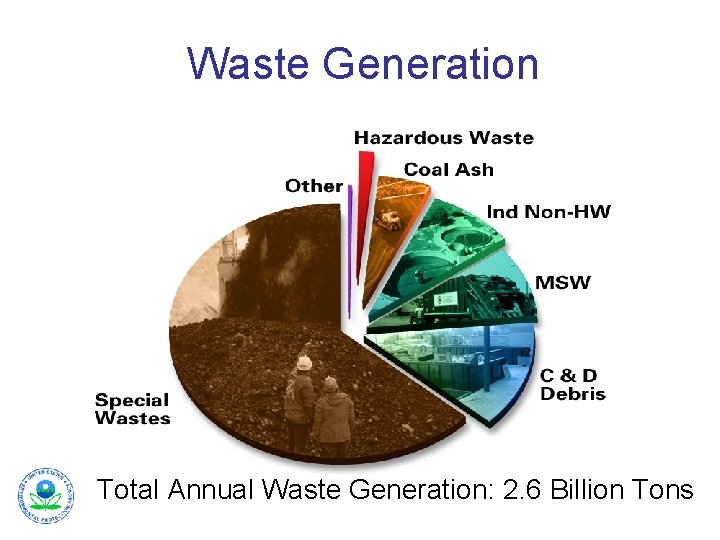
Waste Generation Total Annual Waste Generation: 2. 6 Billion Tons
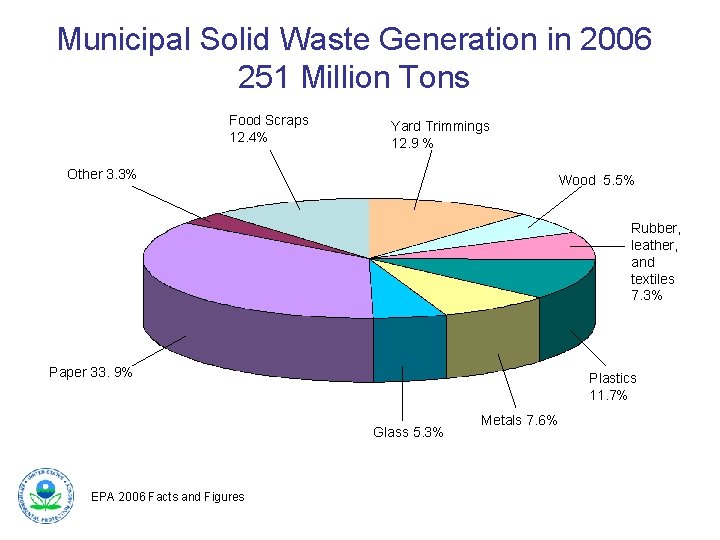
Municipal Solid Waste Generation in 2006 251 Million Tons Food Scraps 12. 4% Yard Trimmings 12. 9 % Other 3. 3% Wood 5. 5% Rubber, leather, and textiles 7. 3% Paper 33. 9% Plastics 11. 7% Glass 5. 3% EPA 2006 Facts and Figures Metals 7. 6%
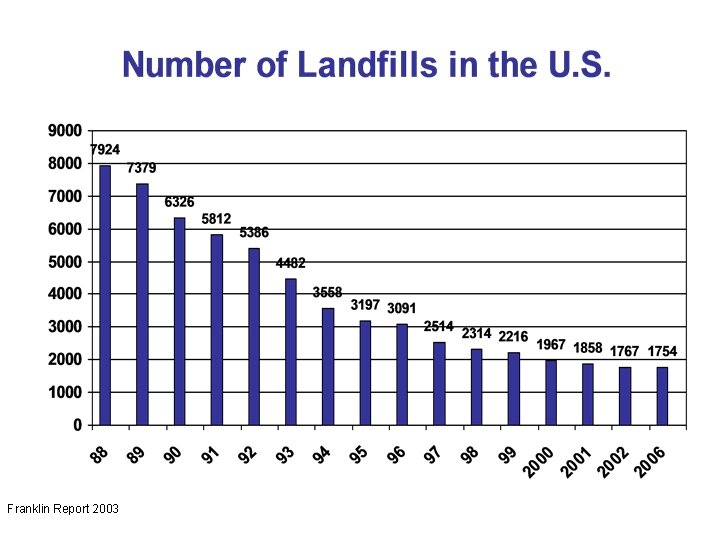
Franklin Report 2003
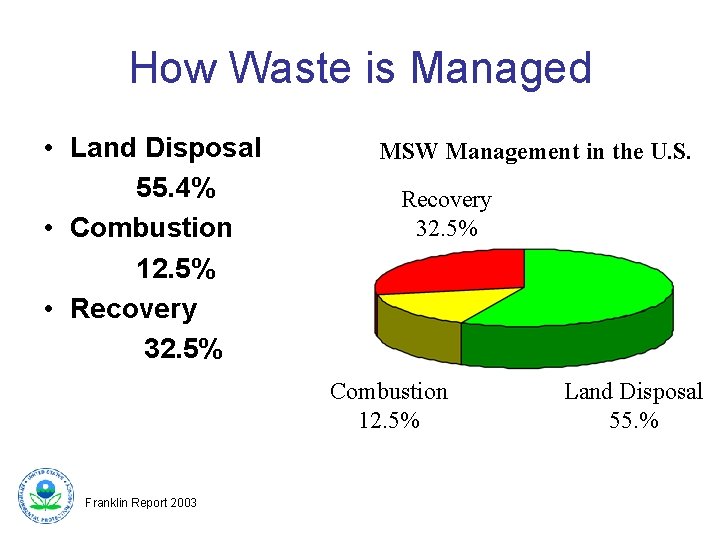
How Waste is Managed • Land Disposal 55. 4% • Combustion 12. 5% • Recovery 32. 5% MSW Management in the U. S. Recovery 32. 5% Combustion 12. 5% Franklin Report 2003 Land Disposal 55. %
Franklin Report 2003
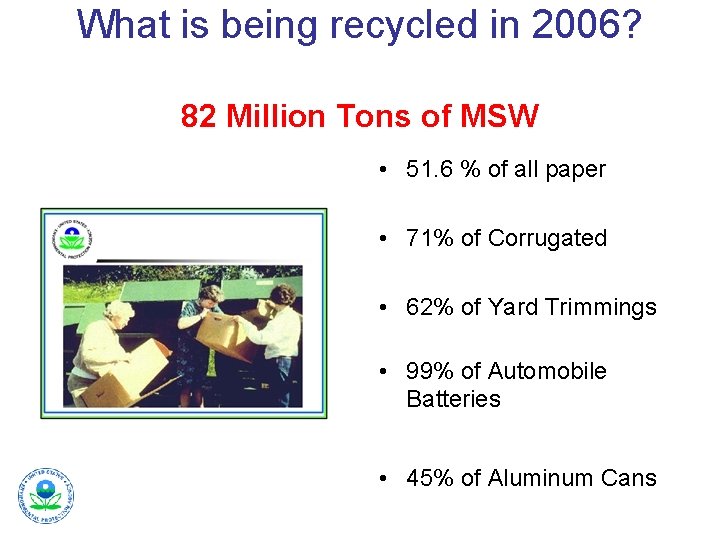
What is being recycled in 2006? 82 Million Tons of MSW • 51. 6 % of all paper • 71% of Corrugated • 62% of Yard Trimmings • 99% of Automobile Batteries • 45% of Aluminum Cans
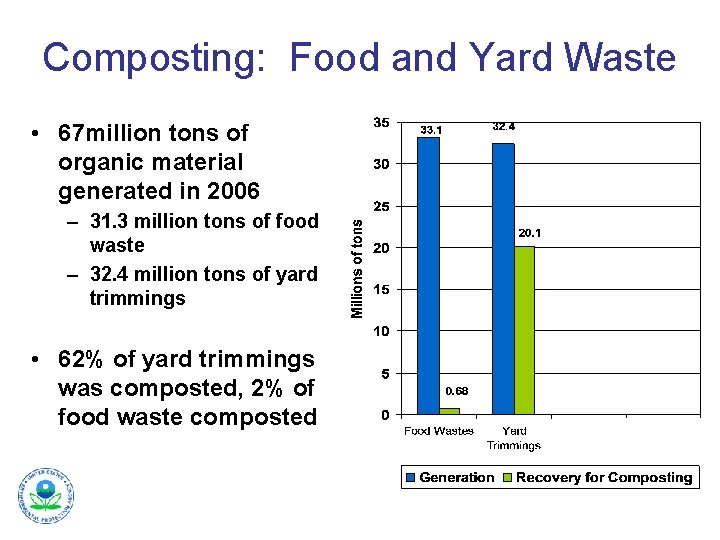
Composting: Food and Yard Waste • 67 million tons of organic material generated in 2006 – 31. 3 million tons of food waste – 32. 4 million tons of yard trimmings • 62% of yard trimmings was composted, 2% of food waste composted
Franklin Report 2003
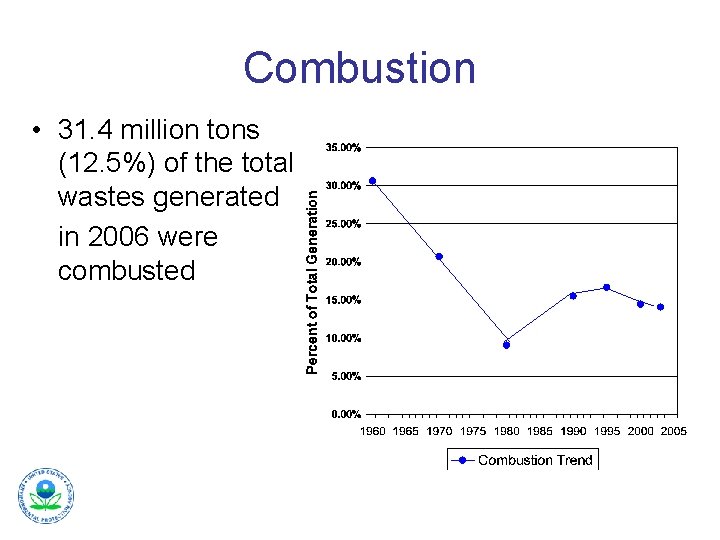
Combustion • 31. 4 million tons (12. 5%) of the total wastes generated in 2006 were combusted
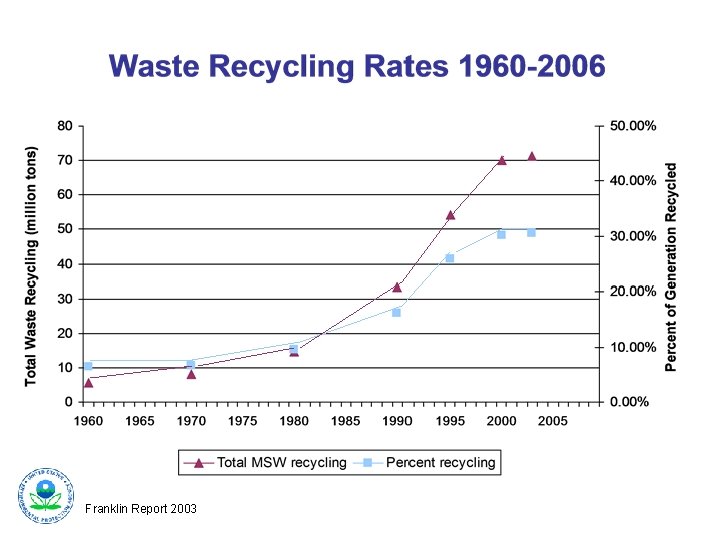
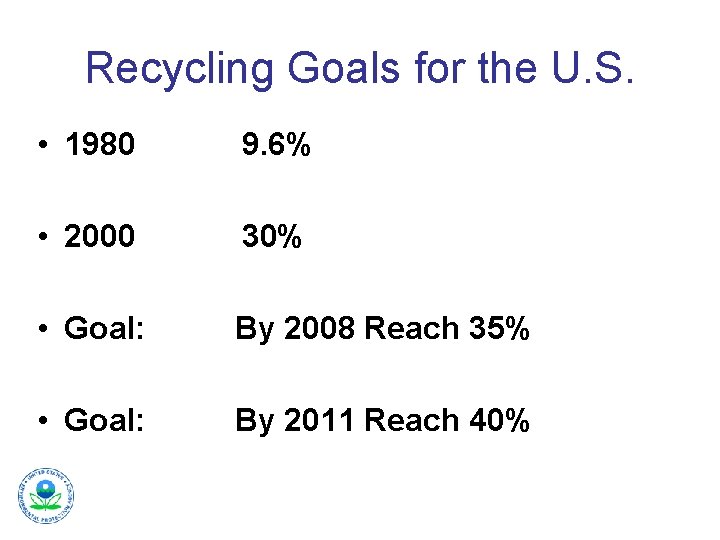
Recycling Goals for the U. S. • 1980 9. 6% • 2000 30% • Goal: By 2008 Reach 35% • Goal: By 2011 Reach 40%
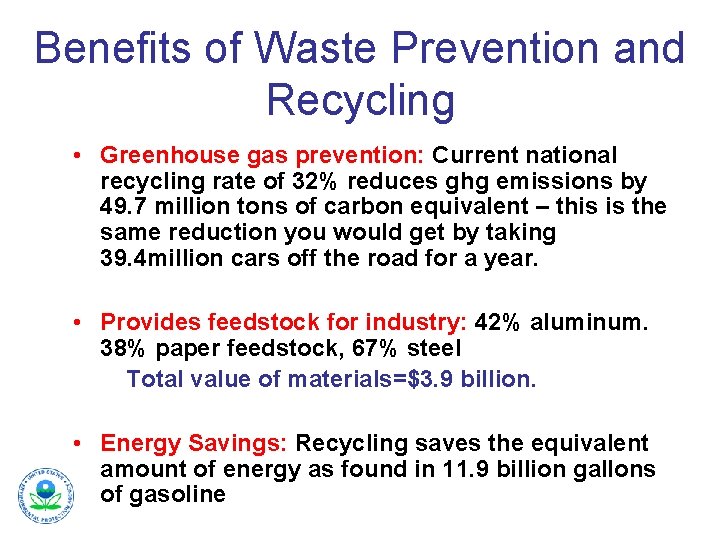
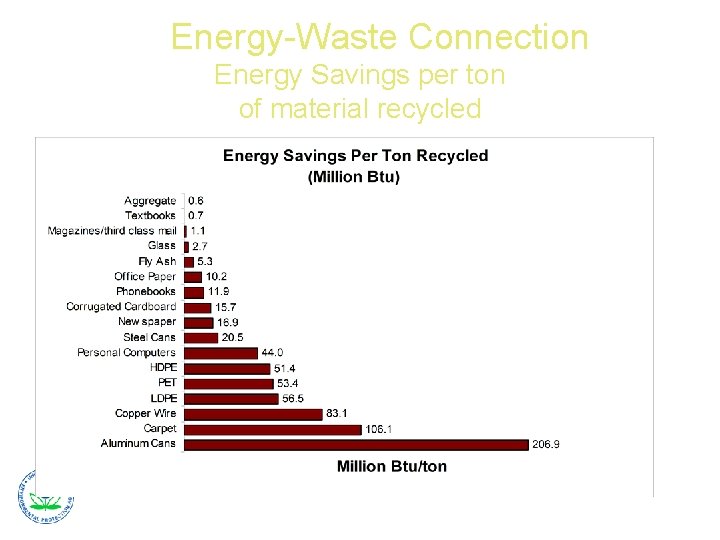
Benefits of Waste Prevention and Recycling • Greenhouse gas prevention: Current national recycling rate of 32% reduces ghg emissions by 49. 7 million tons of carbon equivalent – this is the same reduction you would get by taking 39. 4 million cars off the road for a year. • Provides feedstock for industry: 42% aluminum. 38% paper feedstock, 67% steel Total value of materials=$3. 9 billion. • Energy Savings: Recycling saves the equivalent amount of energy as found in 11. 9 billion gallons of gasoline
Energy-Waste Connection Energy Savings per ton of material recycled
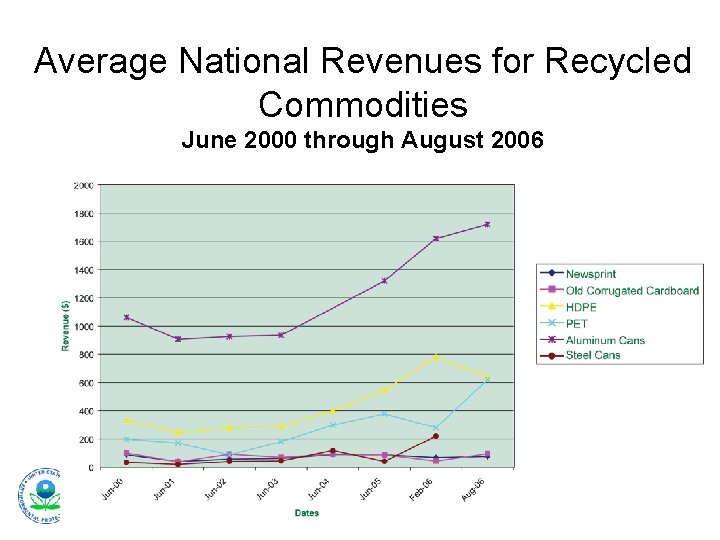
Average National Revenues for Recycled Commodities June 2000 through August 2006
Future Directions
U. S. 2020 Vision Goals 1. Reduce wastes and increase the efficient sustainable use of resources. 2. Prevent exposures to humans and ecosystems from the use of hazardous chemicals. 3. Manage wastes and clean up chemical releases in a safe, environmentally sound manner.
Benefits to Fulfilling the Vision • Human Health – Risk reductions – Improved living • Ecosystem Protection – Removing hazards – Restoring land • Material and Energy Savings – Sustainability – Conservation