
MUN Procedures Created by the superior Emily not
MUN Procedures Created by the superior Emily (not Evil Emily)
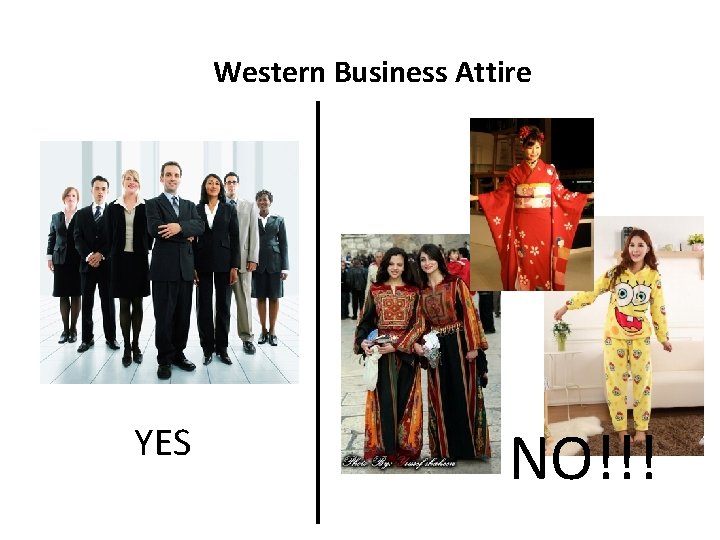
Western Business Attire YES NO!!!
General Behavior Guidelines Follow speaking procedure -NEVER INTERUPT -do not break speaking order/speak out of term Respect fellow delegates and countries -no verbal abuse, sexual harassment, general rudeness -just try not to offend people (it’s not that hard) Keep placards down (unless establishing a point) -basically unless you’re trying to get a speaking order, make a point of order/parliamentary point/point of preference, don’t raise it
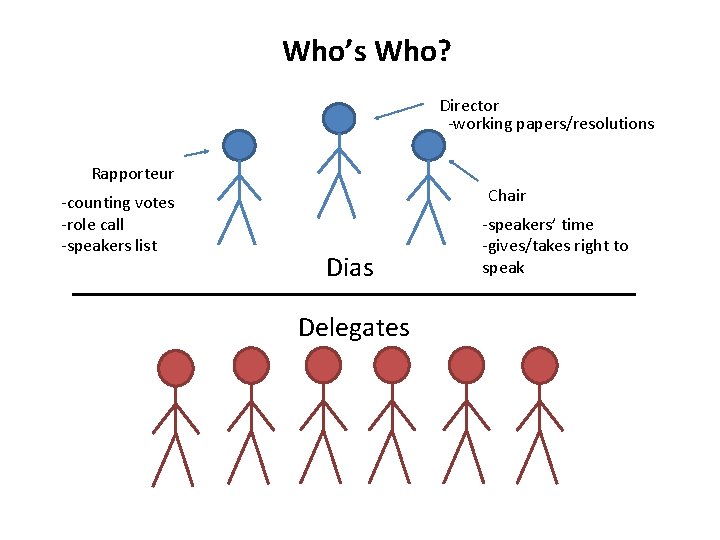
Who’s Who? Director -working papers/resolutions Rapporteur -counting votes -role call -speakers list Chair Dias Delegates -speakers’ time -gives/takes right to speak
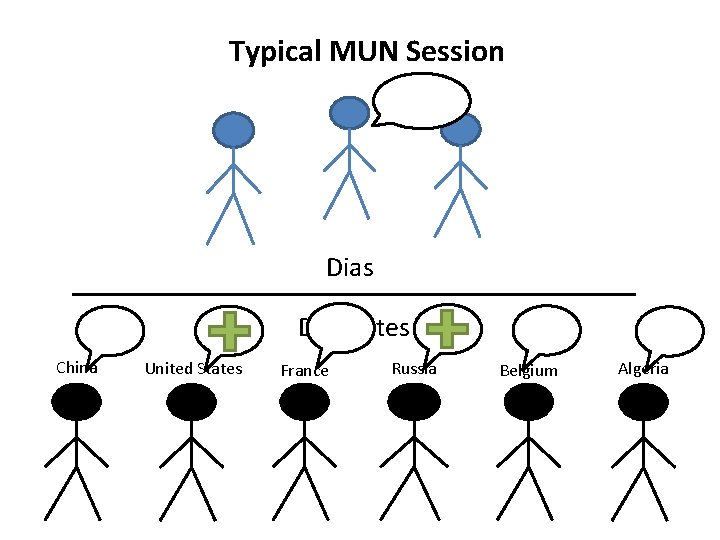
Typical MUN Session Dias Delegates China United States France Russia Belgium Algeria
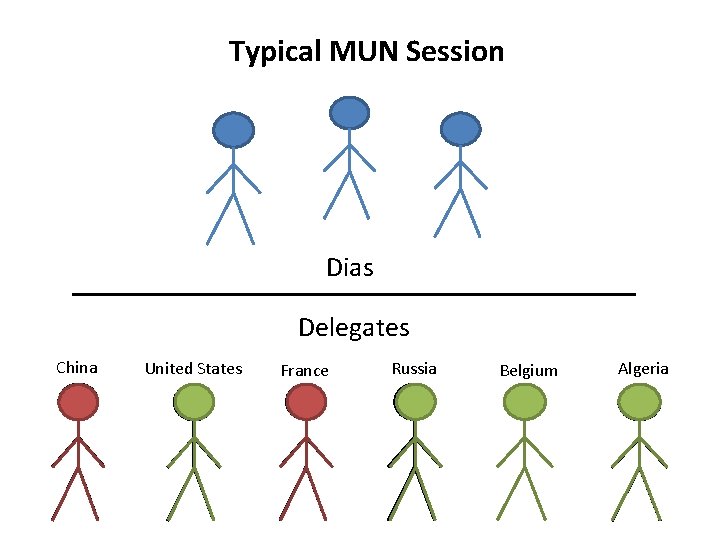
Typical MUN Session Dias Delegates China United States France Russia Belgium Algeria
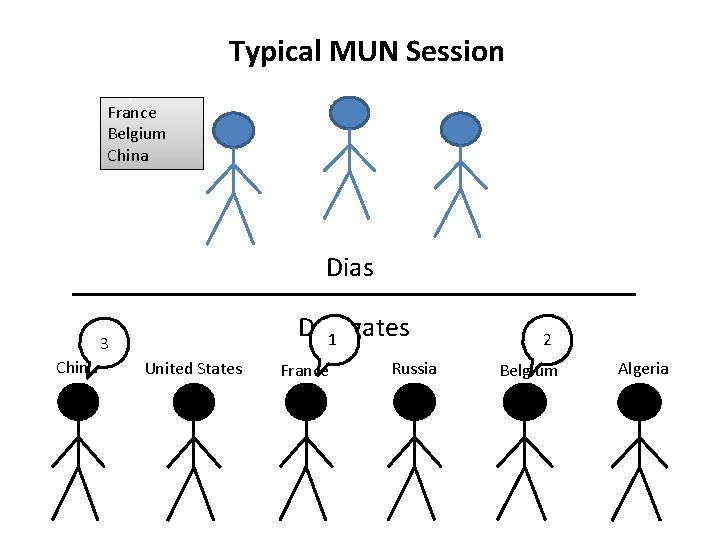
Typical MUN Session France Belgium China Dias Delegates 1 3 China United States France Russia 2 Belgium Algeria
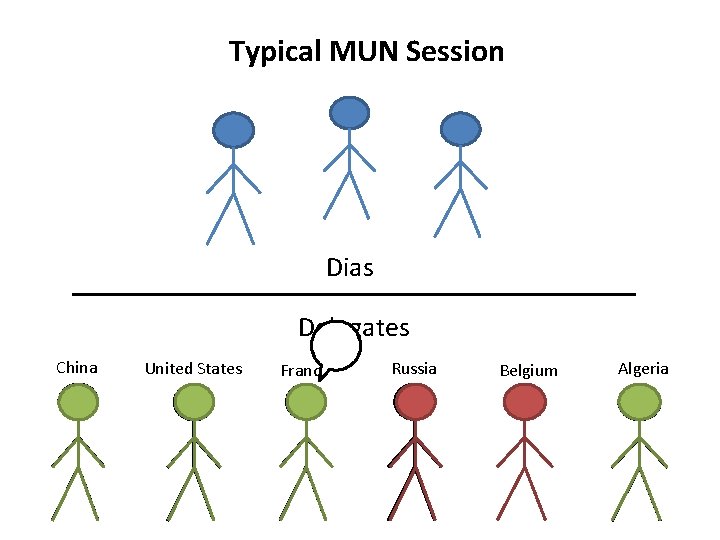
Typical MUN Session Dias Delegates China United States France Russia Belgium Algeria
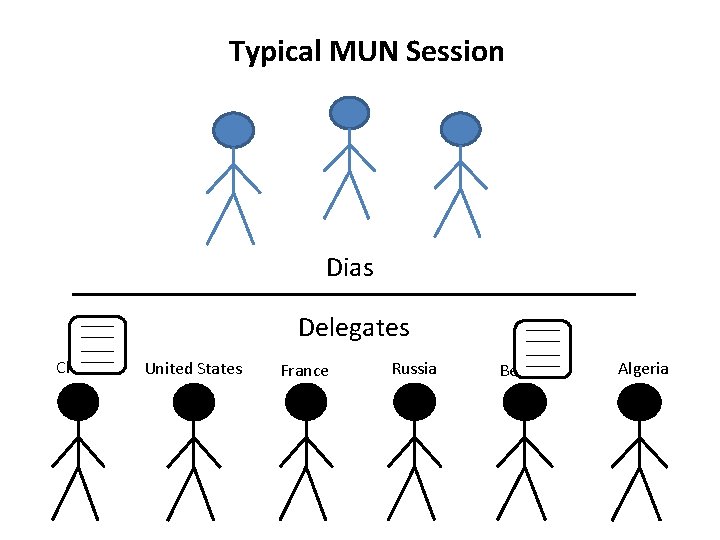
Typical MUN Session Dias Delegates China United States France Russia Belgium Algeria
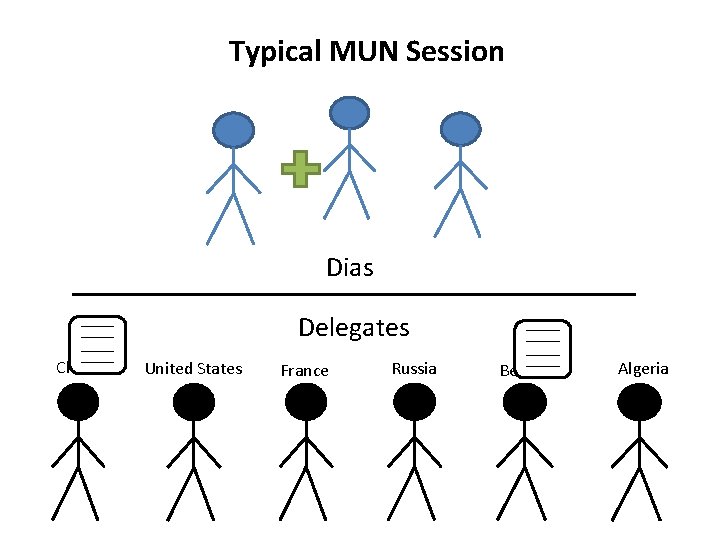
Typical MUN Session Dias Delegates China United States France Russia Belgium Algeria
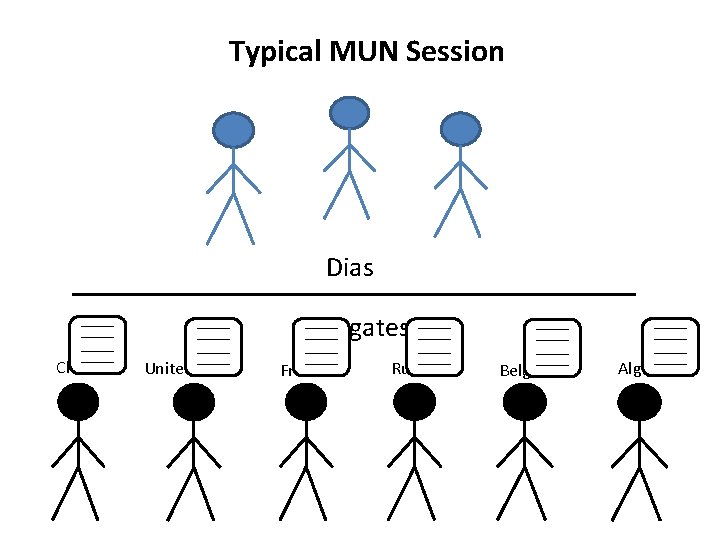
Typical MUN Session Dias Delegates China United States France Russia Belgium Algeria
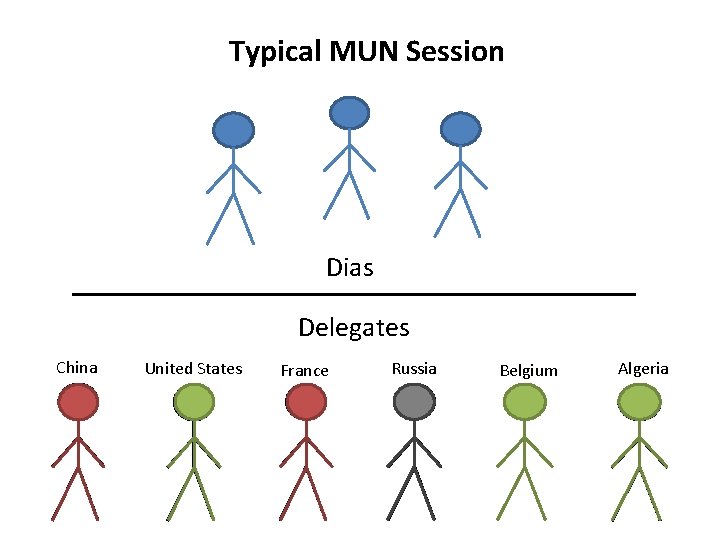
Typical MUN Session Dias Delegates China United States France Russia Belgium Algeria
Basic Structure • Role call – present of present + voting • Agenda (vote, no abstaining) – Speakers list established (rapporteur -> list, chair -> speaking rights) • Caucuses – Unmoderated = working papers, discussion, no real organization – Moderated= motion for speaker time, speakers list, speeches given (if applicable, yield time) • Director reviews/returns or approves working papers – Approved = copies to delegates – Voting procedure for points in resolution • Delegates not “present + voting” may abstain • NO ONE MUST ENTER/LEAVE THE ROOM!!!
Yields Only used during speeches (ie caucuses) Yield to Chair -most common -time “given” to chair… it disappears Yield to Questions -only speaker’s time for responses counts, questions don’t Yield to Delegate -give time to another speaker
More on Voting Motion for Previous Question -automatically moves into a vote on the topic -more commonly used than letting time/speakers run out -2/3 majority vote with 2 supporting nominations to pass Voting Procedure -No one leaves/enters, no notes passed, no talking Less Common Procedures: Division of Question -motion to separate clauses in a resolution -voting on each part of a division Role Call Vote -only for serious topics -goes to each individual delegate w/o need for second votes or placard waving
- Slides: 15