
Mumps Mumps What is mumps Infectious viral illness
- Slides: 10
Mumps
Mumps What is mumps? Infectious viral illness How do you catch mumps? Airborne/Droplet What is the incubation period? 17 days Can animals catch mumps? No How can mumps be prevented? Vaccination (MMR vaccine)
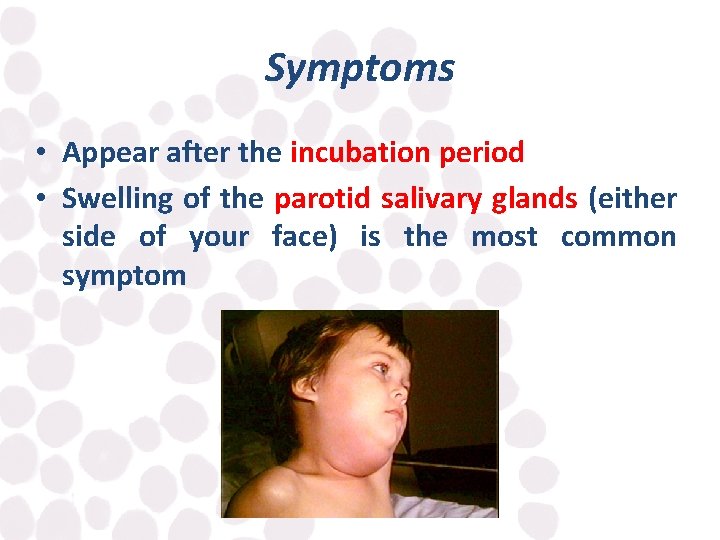
Symptoms • Appear after the incubation period • Swelling of the parotid salivary glands (either side of your face) is the most common symptom
Symptoms • Other symptoms: fever, lack of appetite, dry mouth, joint pains, tiredness, abdominal pain • 30% of people infected with mumps do not show any symptoms • Symptoms last up to 14 days
Complications • There are several complications of mumps, some which can be serious • Swollen testicles/ovaries if infected after puberty • Viral meningitis • Pancreatitis • Rare: encephalitis (1 in 1000 of those who develop viral meningitis) and permanent hearing loss (1 in 20, 000)
Treatment • There is no medication to treat mumps so selfcare techniques are used e. g. bed rest, painkillers, plenty of water, a compress for swollen glands and soft food • Good hygiene and staying away from others is important to prevent the spread of mumps
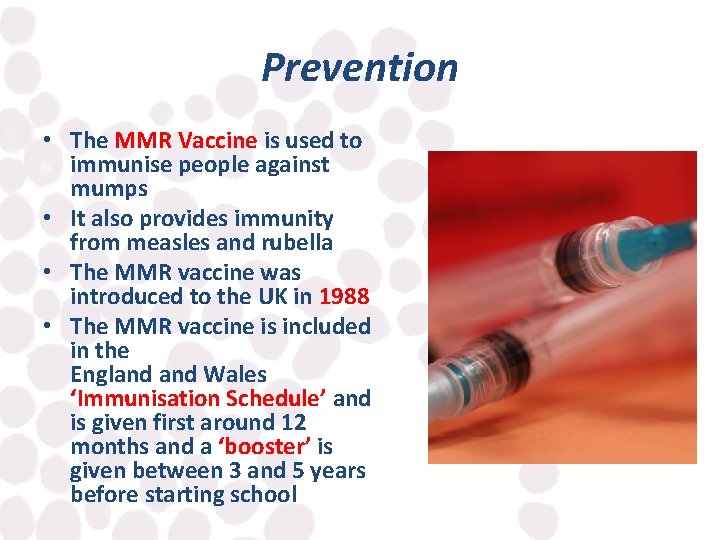
Prevention • The MMR Vaccine is used to immunise people against mumps • It also provides immunity from measles and rubella • The MMR vaccine was introduced to the UK in 1988 • The MMR vaccine is included in the England Wales ‘Immunisation Schedule’ and is given first around 12 months and a ‘booster’ is given between 3 and 5 years before starting school
Prevention • The MMR Vaccine is 95% effective after the first dose • The second dose gives immunity to almost all of those who were not immunised by the first dose • The MMR vaccine is safe and effective • To produce herd immunity, 90% of a population must be immunised against mumps.
Case Study • In 2008/09 there were outbreaks of mumps in universities • This was due to students missing out on MMR jabs as children, before the two-dose MMR campaign • Mumps was controlled by the two-dose MMR campaign, but this group remained susceptible • At university, mumps was able to quickly spread through the susceptible students
Summary • Mumps is a contagious viral infection • Mumps is spread by air/droplet transmission • Mumps is characterised by the swelling of the parotid salivary glands • Mumps can be prevented by the MMR vaccine, in addition to measles and rubella, all of which can also have serious complications • High vaccination coverage provides a ‘herd immunity’ effect which also protects those who are unable to be vaccinated