
Mumming Mumming Mumming began in ancient times all
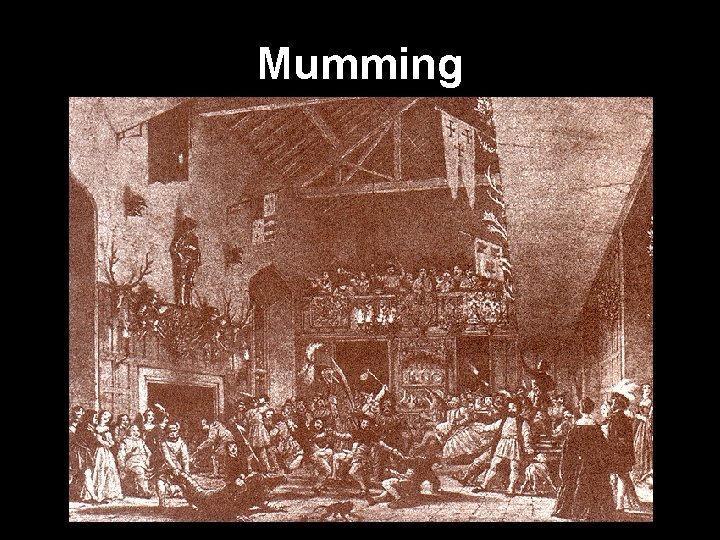
Mumming
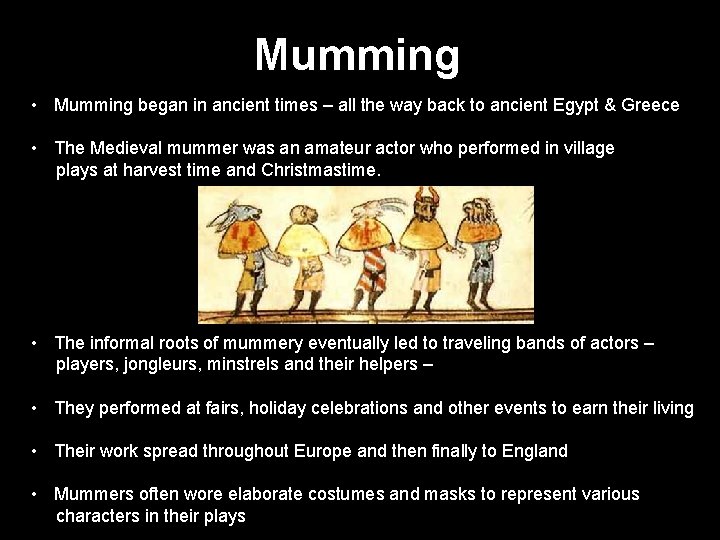
Mumming • Mumming began in ancient times – all the way back to ancient Egypt & Greece • The Medieval mummer was an amateur actor who performed in village plays at harvest time and Christmastime. • The informal roots of mummery eventually led to traveling bands of actors – players, jongleurs, minstrels and their helpers – • They performed at fairs, holiday celebrations and other events to earn their living • Their work spread throughout Europe and then finally to England • Mummers often wore elaborate costumes and masks to represent various characters in their plays

Mummer’s Plays • In the earliest years, mummers' plays portrayed ancient fertility rites. • Later, reenactments of legends like "St. George and the Dragon" became popular. • As Christianity spread, Bible stories were adapted into plays.
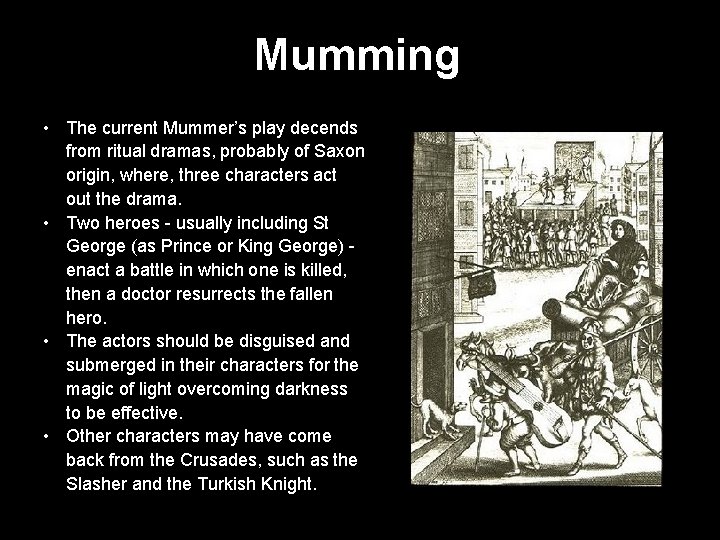
Mumming • The current Mummer’s play decends from ritual dramas, probably of Saxon origin, where, three characters act out the drama. • Two heroes - usually including St George (as Prince or King George) enact a battle in which one is killed, then a doctor resurrects the fallen hero. • The actors should be disguised and submerged in their characters for the magic of light overcoming darkness to be effective. • Other characters may have come back from the Crusades, such as the Slasher and the Turkish Knight.
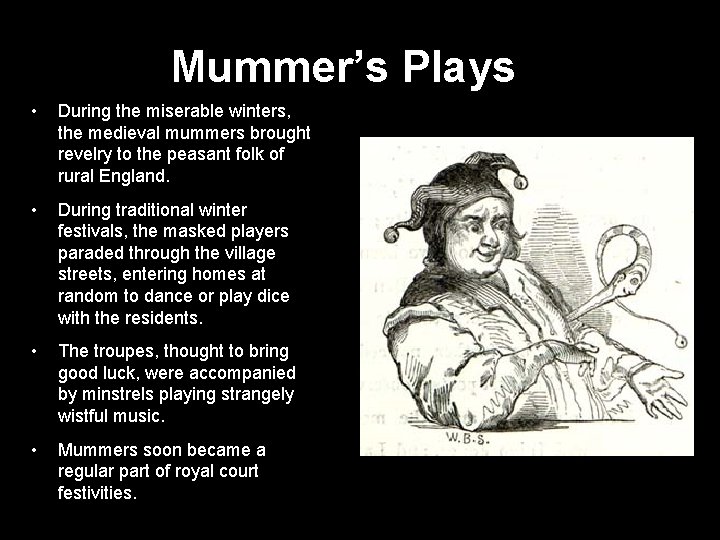
Mummer’s Plays • During the miserable winters, the medieval mummers brought revelry to the peasant folk of rural England. • During traditional winter festivals, the masked players paraded through the village streets, entering homes at random to dance or play dice with the residents. • The troupes, thought to bring good luck, were accompanied by minstrels playing strangely wistful music. • Mummers soon became a regular part of royal court festivities.

• For England's King Richard II, the mummers performed a traditional play which symbolically foretold the end of winter and the promise of renewed life in the spring. • When the colorfully dressed players finished their play, they began a procession which worked its way to the king's throne, increasing in revelry as it snaked through the court. • Once they reached the throne, the mummers invited the monarch to play dice with them. • Equally popular in the court of King Edward III, the mummer’s play with its delightful costumes and frivolity became a traditional part of the Christmas festivities. Mummer’s Plays
- Slides: 6