
Mummification and Adipocere The Optimum Conditions for Mummification
- Slides: 29
Mummification and Adipocere
The Optimum Conditions for Mummification dry & warm climate. Once the changes are complete, the body will remain in that condition indefinitely. No growth of microorganisms.
How does mummification occur? The natural mummification process usually happens in extremely dry environments that allow the fast dehydration of tissues, simultaneously slowing down or inhibiting the decomposition by bacteria and other microorganisms.
Mummification Results from drying of tissues under conditions of: high environmental temperature low humidity and good ventilation
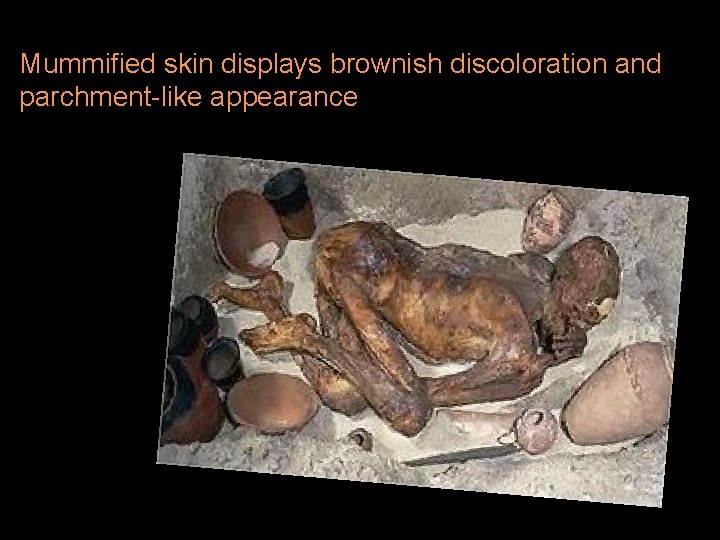
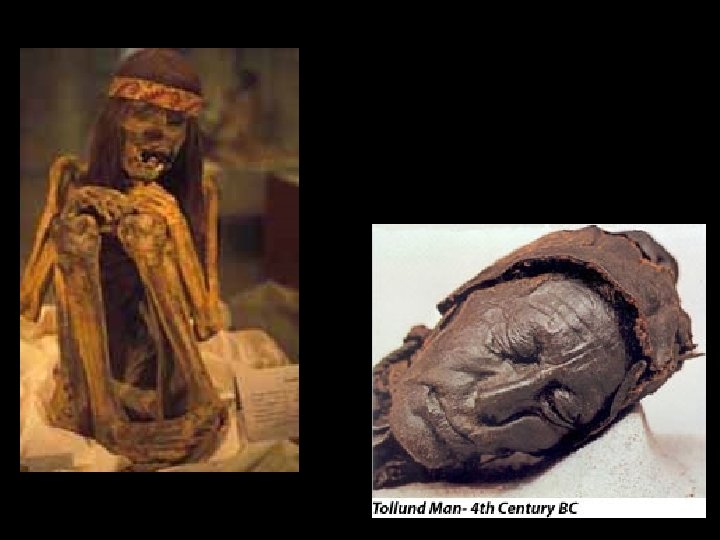
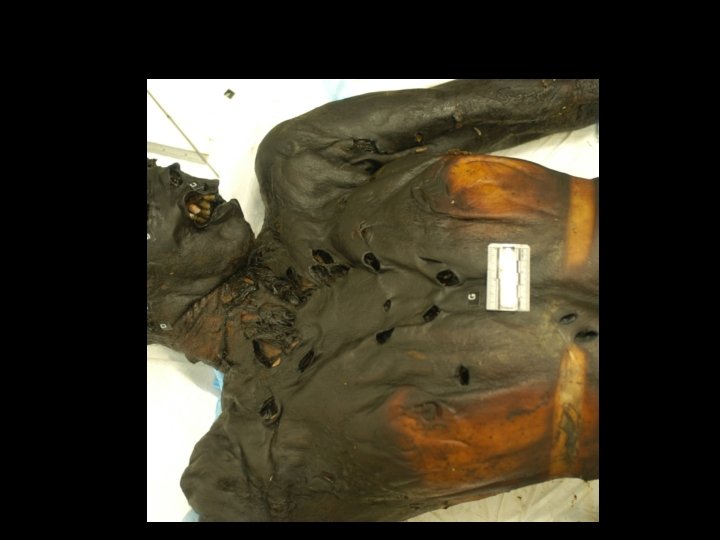
Mummified skin displays brownish discoloration and parchment-like appearance
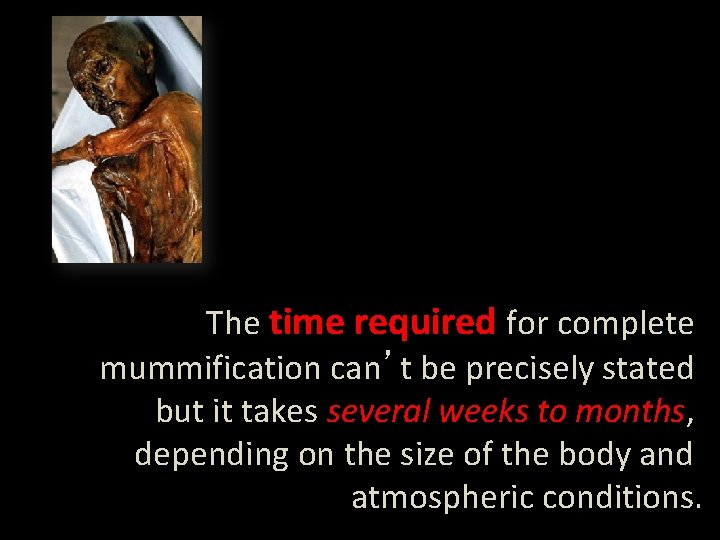
The time required for complete mummification can’t be precisely stated but it takes several weeks to months, depending on the size of the body and atmospheric conditions.
Medico-legal Importance of Mummification • • Identification Time estimation Cause of Death Can detect abnormal pathology inside deep organs
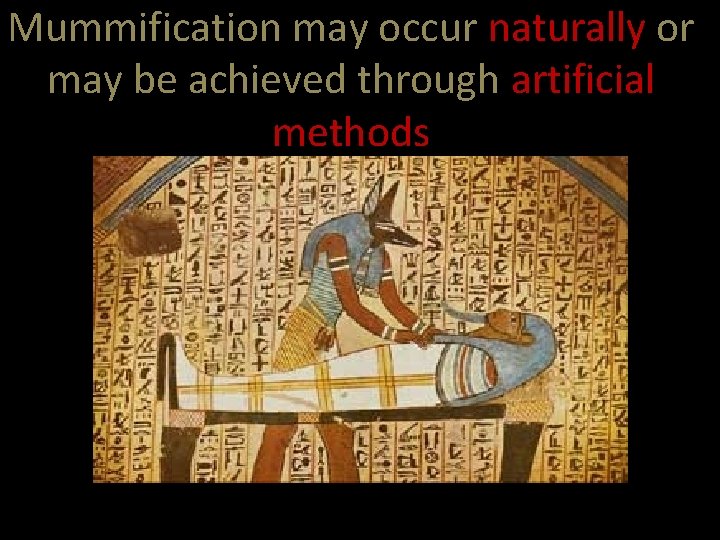
Mummification may occur naturally or may be achieved through artificial methods
Mummification
§ Age (it is more common in newborns) § Gender (occurs more often in female) § Cause of death (large hemorrhages, antemortem prolonged administration of antibiotics § Poisoning by arsenic and potassium cyanide Other Factors
Adipocere
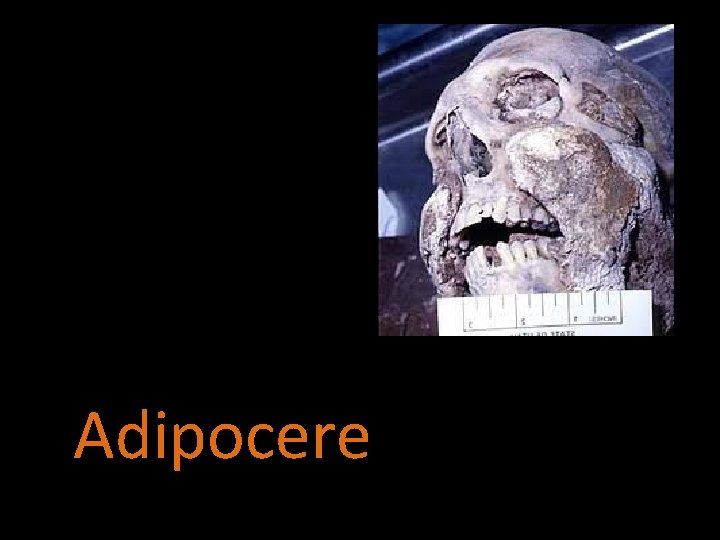
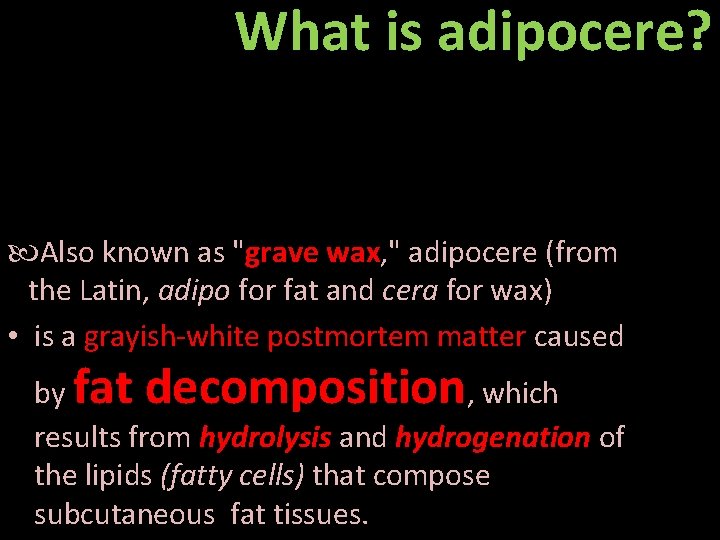
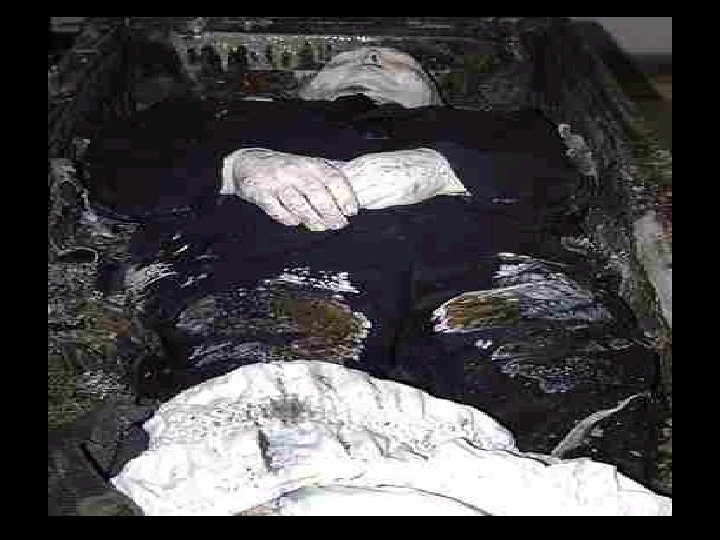
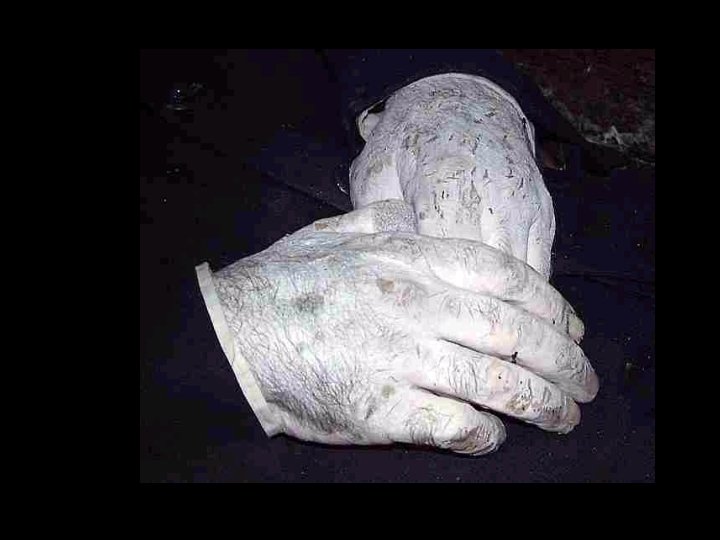
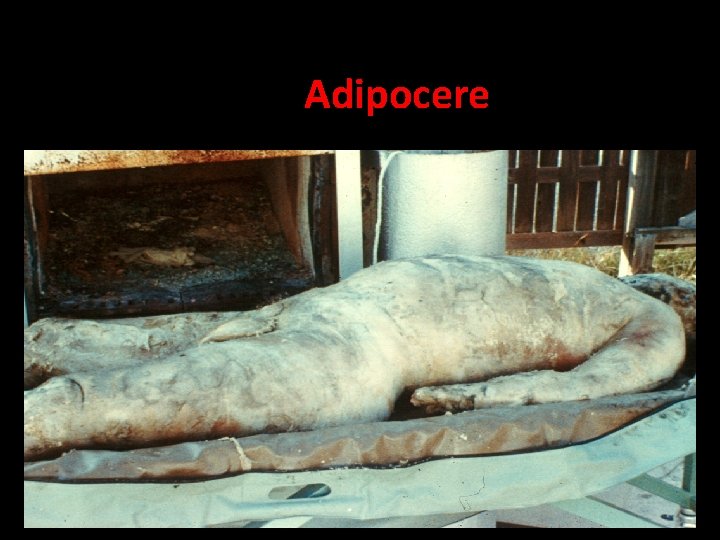
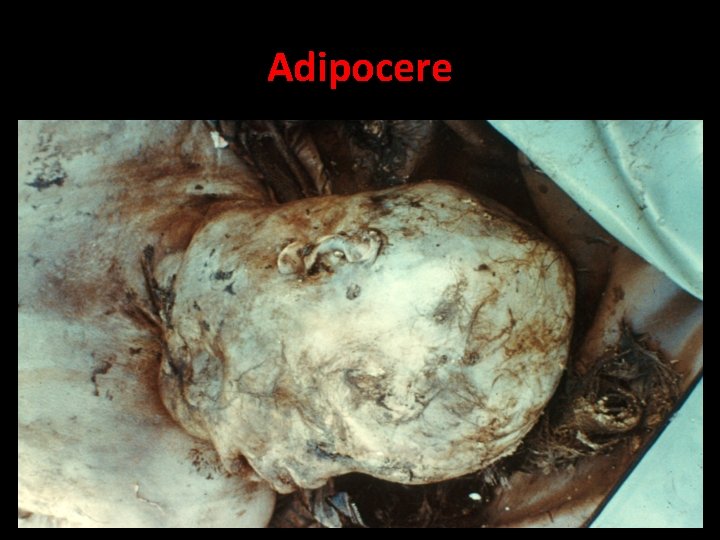
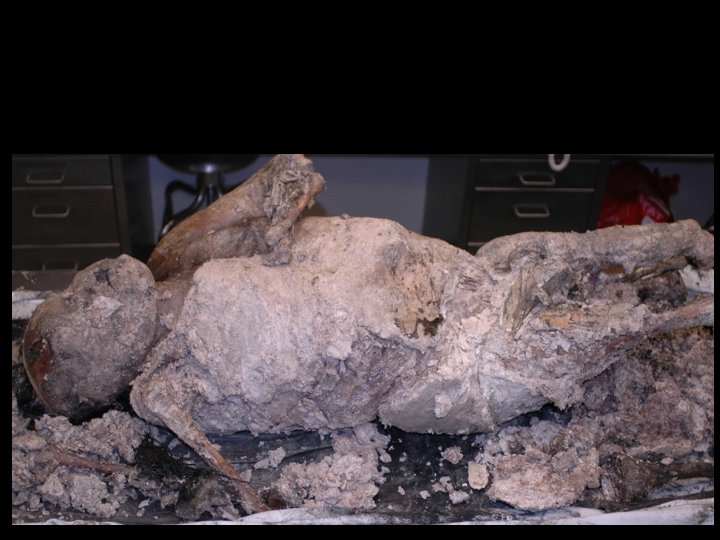
What is adipocere? Also known as "grave wax, " adipocere (from the Latin, adipo for fat and cera for wax) • is a grayish-white postmortem matter caused fat decomposition by , which results from hydrolysis and hydrogenation of the lipids (fatty cells) that compose subcutaneous fat tissues.
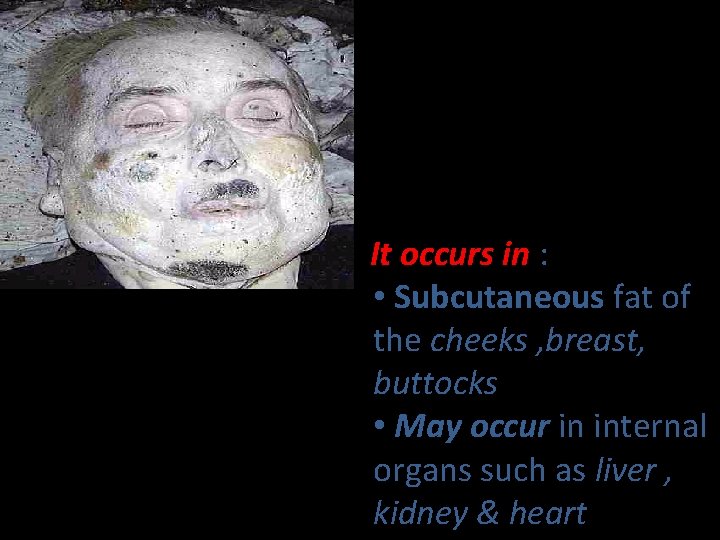
It occurs in : • Subcutaneous fat of the cheeks , breast, buttocks • May occur in internal organs such as liver , kidney & heart
Although decomposition of fatty tissues starts almost immediately after death, Adipocere formation time may vary from two weeks to one or two months, on average, due to several factors, such as temperature, embalming and burial conditions, and materials surrounding the corpse
Adipocere Formation Develops in high humidity and high environmental temperature The bacteria Clostridia is a thought to be responsible for adipocere formation Converts unsaturated liquid fats to saturated solid fats
Adipocere
The subcutaneous adipose tissue of corpses immersed in cold water or kept in plastic bags may undergo a uniform adipocere formation with the superficial layers of skin slipping off. Adipocere may be dry, brittle, & has an odor mostly smells like ammonia.
Adipocere
Medicolegal Importance of Adipocrere • Preserves the body, which can permit identification after death. • It may give conclusions about the cause of death. • It indicates that the time interval since death was at least weeks to several months.
Estimating the Time of Death 1. Core body temperature : – The best and the most commonly used – Mainly per rectum & by intra/sub-hepatic via an abdominal stab. 2. Rigor mortis 3. Hypostasis/Livor Mortis : – Complete after 6 hrs. 4. Biochemical investigation of the CSF : 1. Requires the determination of the amino acid content & lactic acid & non-protein nitrogen content of the CSF.
4. Eye pressure: Eye balls become softer, and less fluid pressure in the first 3 hrs 5. Gastric emptying: Depend on type of meal and emotional status.
6. The entomology of dead: – Studying insects & their maggots which infest the dead body for estimating the probable time of death. – Different types of insects infest the dead body at different stages after death occurs.
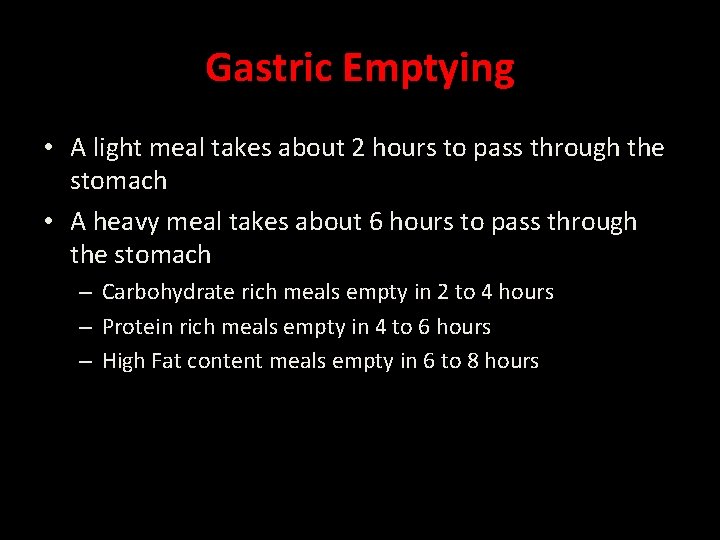
Gastric Emptying • A light meal takes about 2 hours to pass through the stomach • A heavy meal takes about 6 hours to pass through the stomach – Carbohydrate rich meals empty in 2 to 4 hours – Protein rich meals empty in 4 to 6 hours – High Fat content meals empty in 6 to 8 hours
Gastric Contents • Emptying rate changes due to – Type of food – Drug or medication intake – Prior medical and emotional conditions
7. K+ levels : – – – All electrolytes in the body change after death except K. Na+/K+ pump stops working. There is a linear relationship b/w K levels and time passed after death up to 120 hrs. Measured from vitreous humor When there is high urea concentration, there is an electrolyte imbalance and K can no longer be used as an indicator This is the most infrequently used method to determine post mortem interval. • • Many different opinions exist about its accuracy and ability to predict post mortem interval. Measurement of potassium levels in the eyes can vary greatly from left to right eyes in the same corpse in ideal conditions. From a medico-legal standpoint, this technique is frowned upon. This is typically thought of as a “last ditch effort”