
MULTITASK LEARNING WITH COMPRESSIBLE FEATURES FOR COLLABORATIVE INTELLIGENCE
MULTI-TASK LEARNING WITH COMPRESSIBLE FEATURES FOR COLLABORATIVE INTELLIGENCE Saeed Ranjbar Alvar and Ivan. V. Bajić School of Engineering Science Simon Fraser University Burnaby, BC, Canada
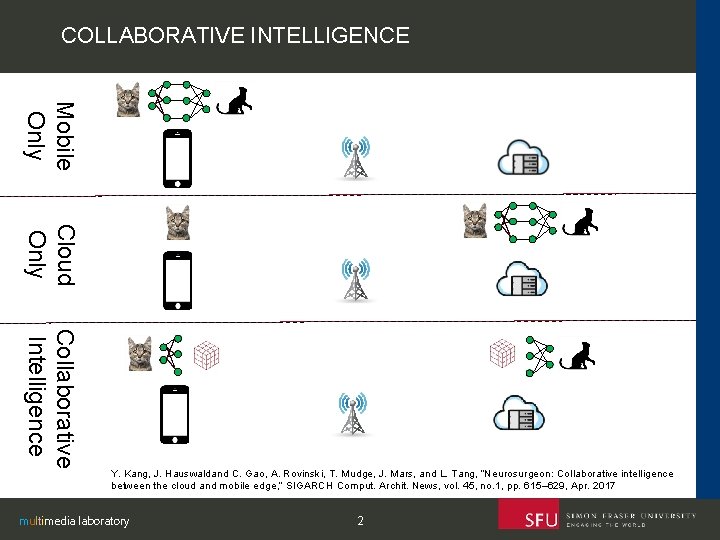
COLLABORATIVE INTELLIGENCE Mobile Only Cloud Only Collaborative Intelligence Y. Kang, J. Hauswaldand C. Gao, A. Rovinski, T. Mudge, J. Mars, and L. Tang, “Neurosurgeon: Collaborative intelligence between the cloud and mobile edge, ” SIGARCH Comput. Archit. News, vol. 45, no. 1, pp. 615– 629, Apr. 2017 multimedia laboratory 2

MULTI-TASK MODEL FOR COLLABORATIVE INTELLIGENCE • Encoder part on the mobile • Res. Net 34 • Inference tasks in the cloud 1. semantic segmentation 2. disparity map estimation 3. input reconstruction • Model 1, Model 2 and Model 3: • convolutional and transpose convolutional Multi-task model for collaborative intelligence multimedia laboratory 3
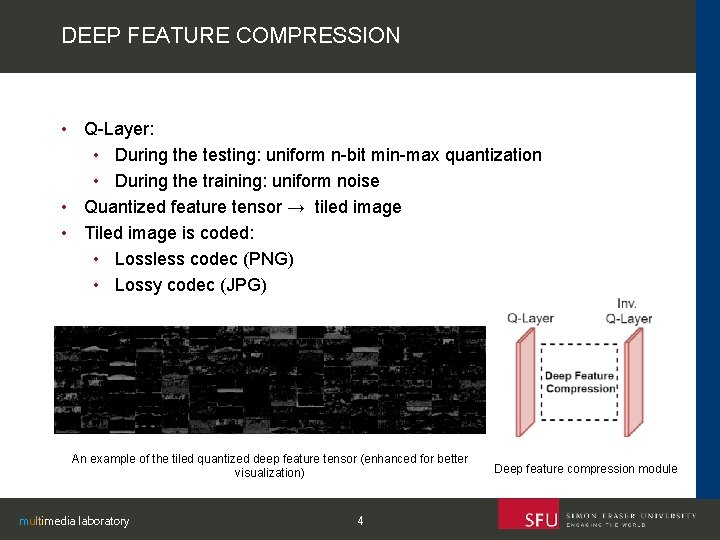
DEEP FEATURE COMPRESSION • Q-Layer: • During the testing: uniform n-bit min-max quantization • During the training: uniform noise • Quantized feature tensor → tiled image • Tiled image is coded: • Lossless codec (PNG) • Lossy codec (JPG) An example of the tiled quantized deep feature tensor (enhanced for better visualization) multimedia laboratory 4 Deep feature compression module
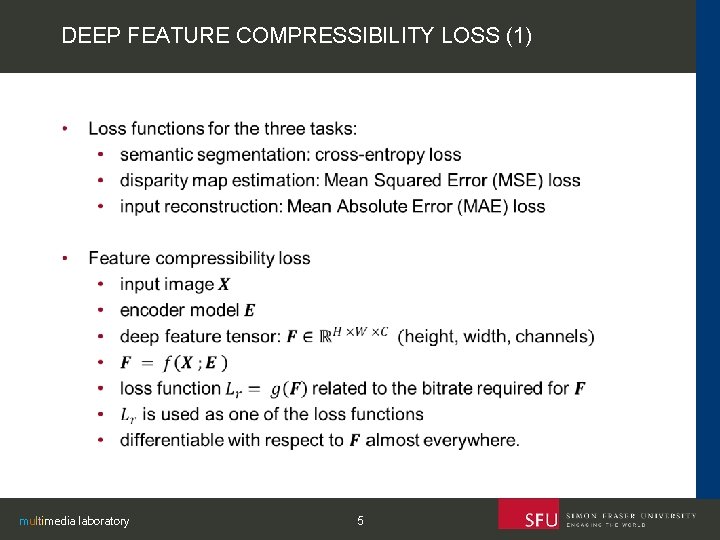
DEEP FEATURE COMPRESSIBILITY LOSS (1) multimedia laboratory 5
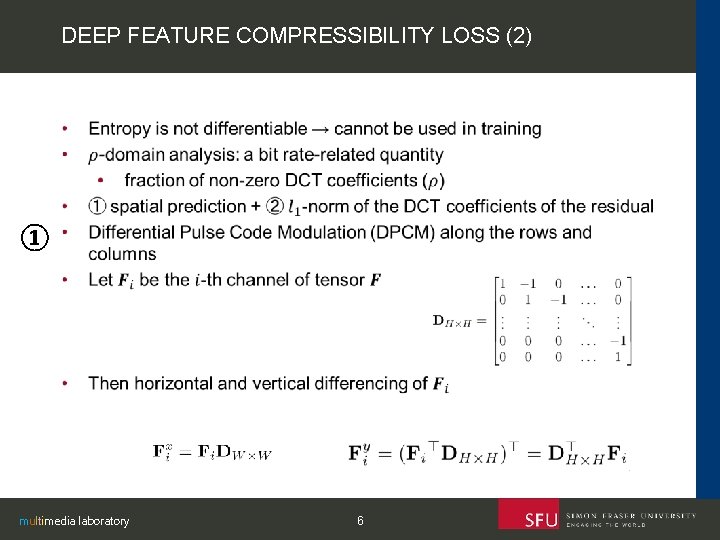
DEEP FEATURE COMPRESSIBILITY LOSS (2) ① multimedia laboratory 6
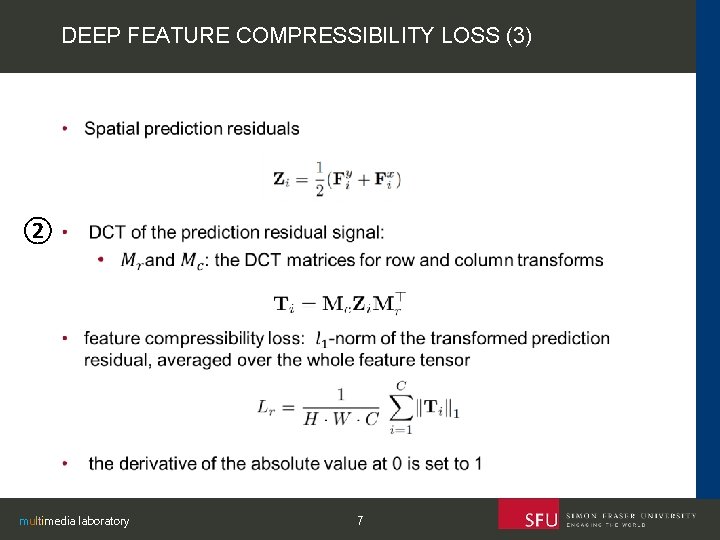
DEEP FEATURE COMPRESSIBILITY LOSS (3) ② multimedia laboratory 7
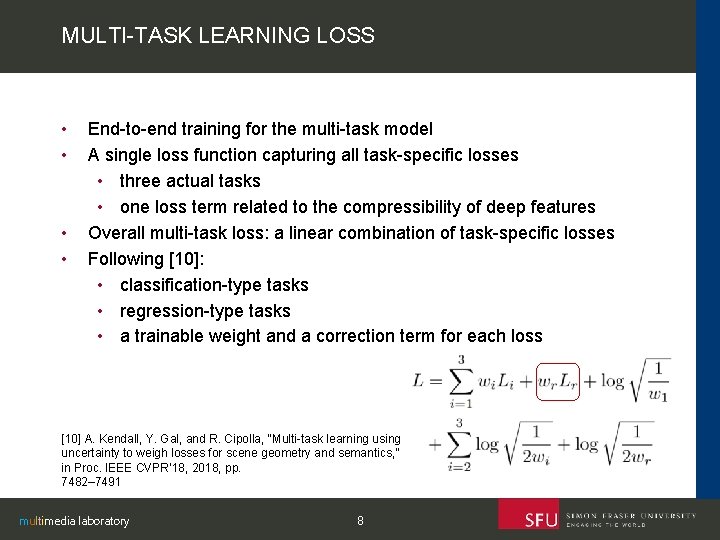
MULTI-TASK LEARNING LOSS • • End-to-end training for the multi-task model A single loss function capturing all task-specific losses • three actual tasks • one loss term related to the compressibility of deep features Overall multi-task loss: a linear combination of task-specific losses Following [10]: • classification-type tasks • regression-type tasks • a trainable weight and a correction term for each loss [10] A. Kendall, Y. Gal, and R. Cipolla, “Multi-task learning using uncertainty to weigh losses for scene geometry and semantics, ” in Proc. IEEE CVPR’ 18, 2018, pp. 7482– 7491 multimedia laboratory 8
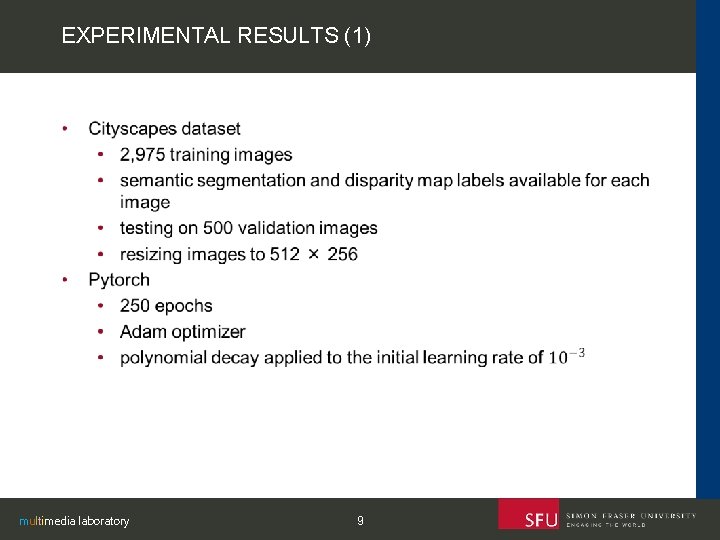
EXPERIMENTAL RESULTS (1) multimedia laboratory 9
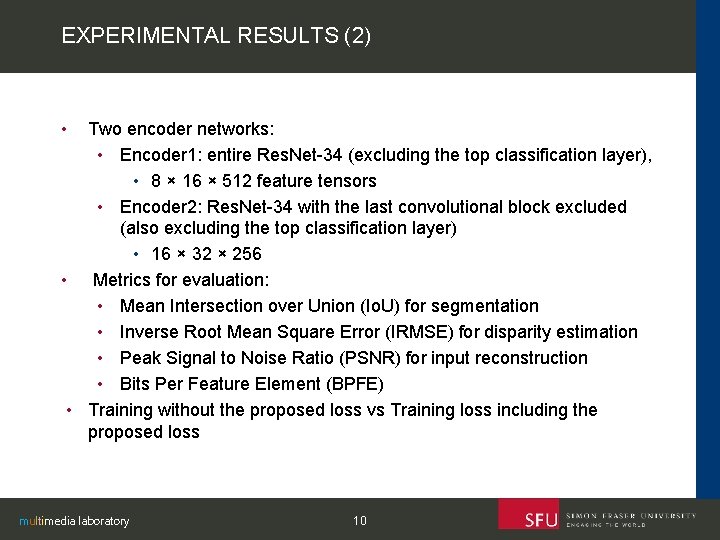
EXPERIMENTAL RESULTS (2) • Two encoder networks: • Encoder 1: entire Res. Net-34 (excluding the top classification layer), • 8 × 16 × 512 feature tensors • Encoder 2: Res. Net-34 with the last convolutional block excluded (also excluding the top classification layer) • 16 × 32 × 256 • Metrics for evaluation: • Mean Intersection over Union (Io. U) for segmentation • Inverse Root Mean Square Error (IRMSE) for disparity estimation • Peak Signal to Noise Ratio (PSNR) for input reconstruction • Bits Per Feature Element (BPFE) • Training without the proposed loss vs Training loss including the proposed loss multimedia laboratory 10
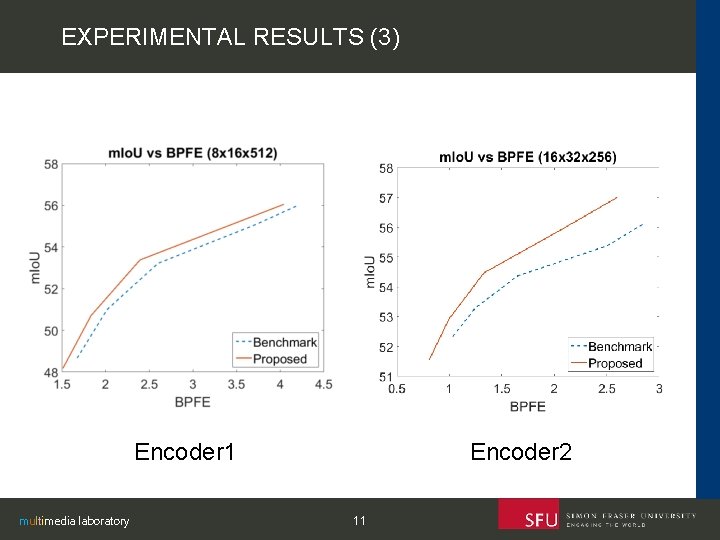
EXPERIMENTAL RESULTS (3) Encoder 1 multimedia laboratory Encoder 2 11
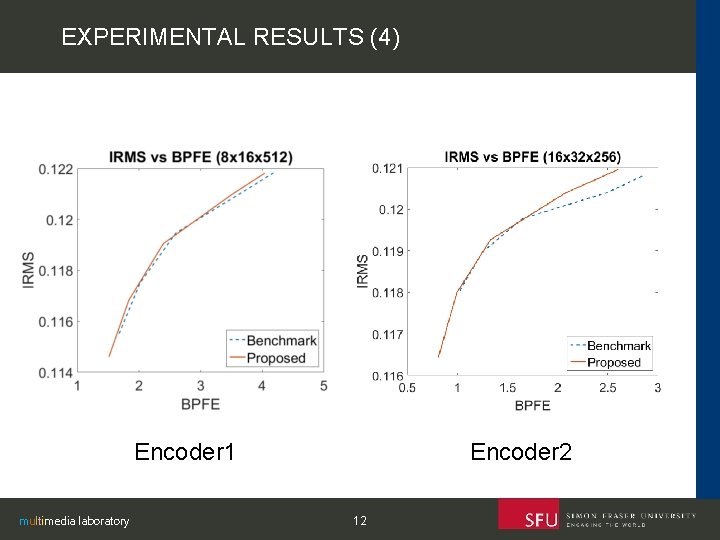
EXPERIMENTAL RESULTS (4) Encoder 1 multimedia laboratory Encoder 2 12
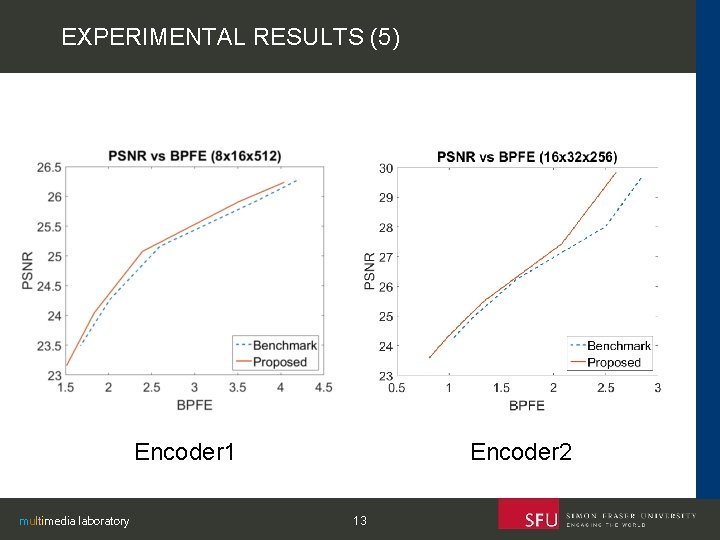
EXPERIMENTAL RESULTS (5) Encoder 1 multimedia laboratory Encoder 2 13
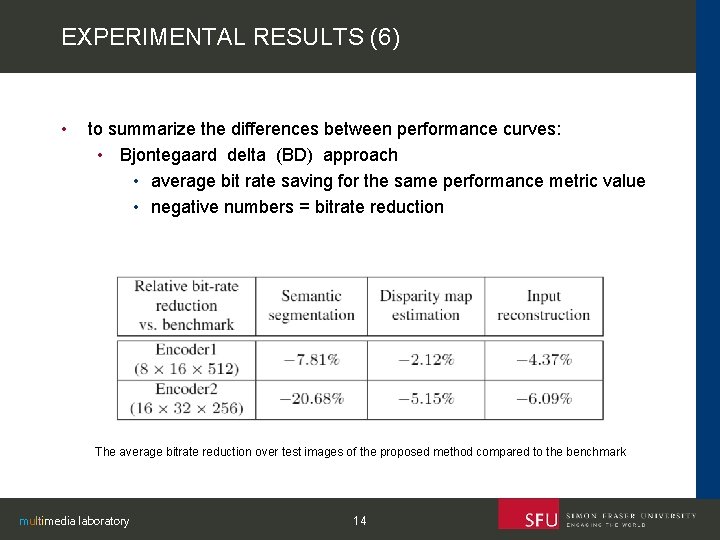
EXPERIMENTAL RESULTS (6) • to summarize the differences between performance curves: • Bjontegaard delta (BD) approach • average bit rate saving for the same performance metric value • negative numbers = bitrate reduction The average bitrate reduction over test images of the proposed method compared to the benchmark multimedia laboratory 14
Code, weights and the results are available at: https: //github. com/saeedranjbar 12/mtlcfci multimedia laboratory 15
Any Questions? multimedia laboratory 16
- Slides: 16