
MultiSystemic Therapy MST Katherine Mackay Debbie Thorp 12
Multi-Systemic Therapy (MST) Katherine Mackay / Debbie Thorp 12 August 2010 1
2/5 (two fifths) of children diagnosed with a behaviour disorder still have the same diagnosis 3 years later 2
Programme Description MST is an intensive family and community based intervention which targets the multiple causes of serious anti-social behaviour in young people. It is aimed at preventing antisocial and offending behaviour and resultant out of home placements 3
Programme Aims Ø Ø Ø 4 Enable young people to remain at home with their family Re-engage young people in an educational or vocational placement Enable young people to avoid offending behaviour and involvement with the Youth Justice System Reduce behavioural difficulties Increase the family’s ability to manage independently and reduce families involvement with multiple and costly intensive services Return young people to pro-social activities
Target Group Ø Ø Ø 5 Young people, 11 (secondary school age) to 17 years old, at imminent risk of out-of-home placement (in care, residential school or secure setting) due to anti-social or offending behaviours. Young People with behavioural difficulties who have complex social, educational and clinical needs Young people known to two services – CAMHS, Social Care, YOS, EWO
Typical Referral Behaviours Ø Ø Ø Ø 6 Truancy or school exclusion Verbal aggression and threats of harm Physical aggression (violence, fighting, property destruction) Offending behaviour Drug and alcohol problems Serious risk taking behaviour Association with anti-social peers
Income Grant for MST Ø Ø 7 Year 1 2 3 4 - £ 345, 000 £ 287, 000 £ 222, 000 £ 150, 000
Research Evidence Based In comparison with control groups, MST: Ø Ø Ø Ø 8 Higher consumer satisfaction Decreased long-term rates of re-arrest 25% to 70% 47% to 64% decreases in long-term rates of days in out-of-home placements Improved family relations and functioning Increased mainstream school attendance Decreased adolescent psychiatric symptoms Decreased adolescent substance use Cost effective compared to out-of-home placement
Cost Comparisons UK 9
Lessons Learnt So Far Ø Ø Ø 10 It takes time to develop a new service Initial referrals were the most complex in Trafford and this impacted on staff who were newly trained There was confusion for referrers with many similar new projects starting at the same time. There needs to be more work with schools. We needed to develop a system to improve through put and reduce assessment time.
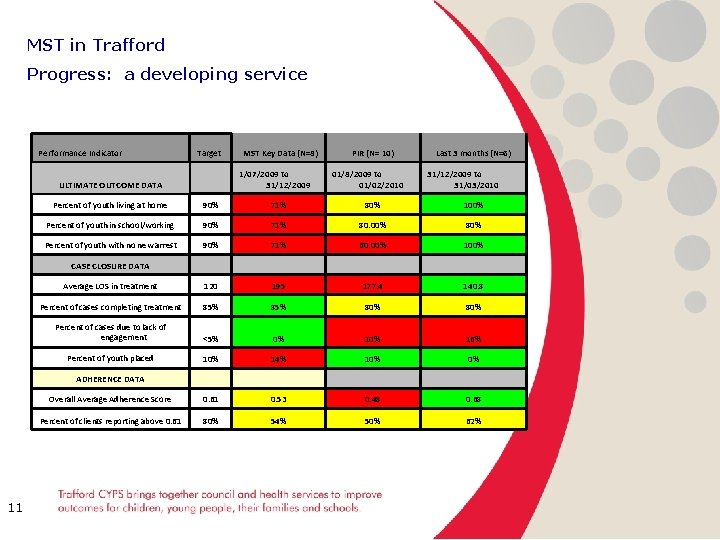
MST in Trafford Progress: a developing service Performance Indicator Target MST Key Data (N=8) 1/07/2009 to 31/12/2009 ULTIMATE OUTCOME DATA PIR (N= 10) 01/8/2009 to 01/02/2010 Last 3 months (N=6) 31/12/2009 to 31/03/2010 Percent of youth living at home 90% 71% 80% 100% Percent of youth in school/working 90% 71% 80. 00% 80% Percent of youth with no new arrest 90% 71% 60. 00% 100% Average LOS in treatment 120 195 177. 4 140. 8 Percent of cases completing treatment 85% 80% Percent of cases due to lack of engagement <5% 0% 16% Percent of youth placed 10% 14% 10% 0% Overall Average Adherence Score 0. 61 0. 53 0. 48 0. 68 Percent of clients reporting above 0. 61 80% 54% 50% 62% CASE CLOSURE DATA ADHERENCE DATA 11
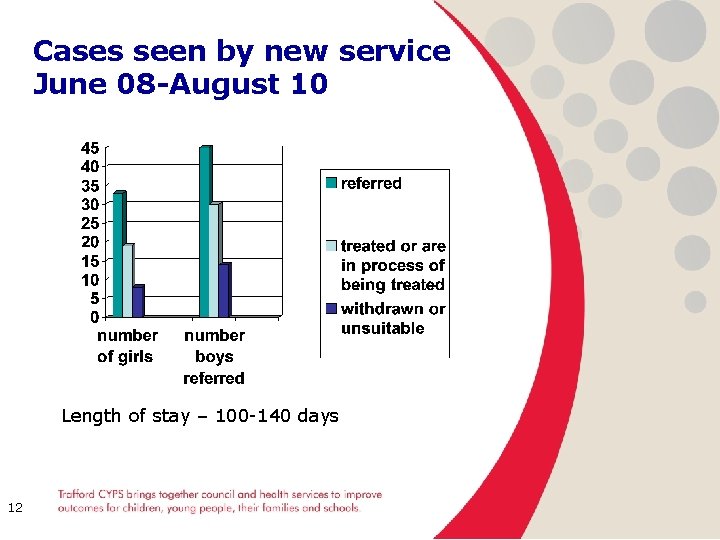
Cases seen by new service June 08 -August 10 Length of stay – 100 -140 days 12
6 months follow up : Trafford's first 8 ( T 2) (T 1 = at start of MST) Ø 13 5 completed treatment 2 young people placed in care § DM – transferred to Me 2 § KB - going through Care Proceedings § One went to custody for offense committed in first month of MST
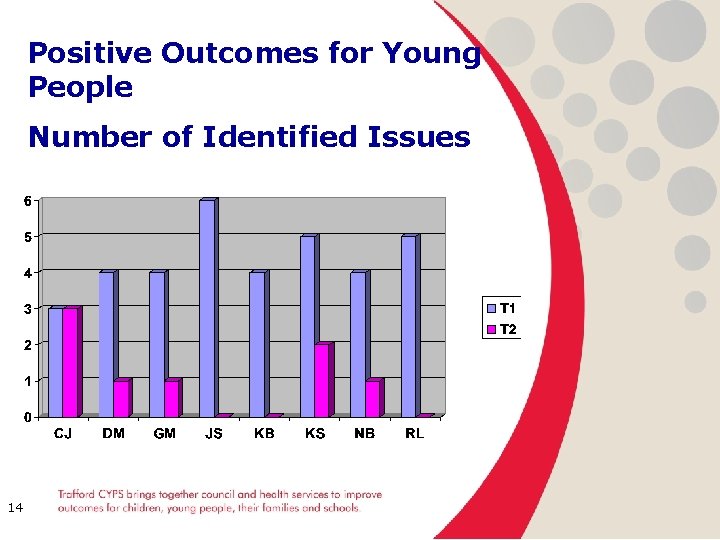
Positive Outcomes for Young People Number of Identified Issues 14
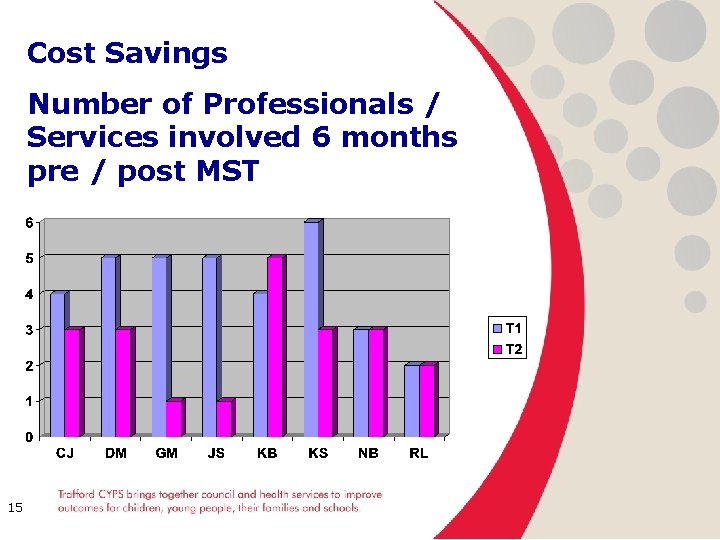
Cost Savings Number of Professionals / Services involved 6 months pre / post MST 15
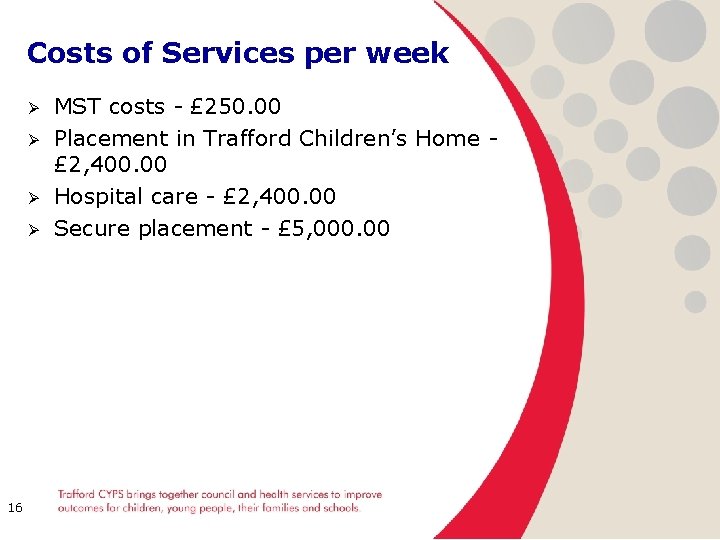
Costs of Services per week Ø Ø 16 MST costs - £ 250. 00 Placement in Trafford Children’s Home £ 2, 400. 00 Hospital care - £ 2, 400. 00 Secure placement - £ 5, 000. 00
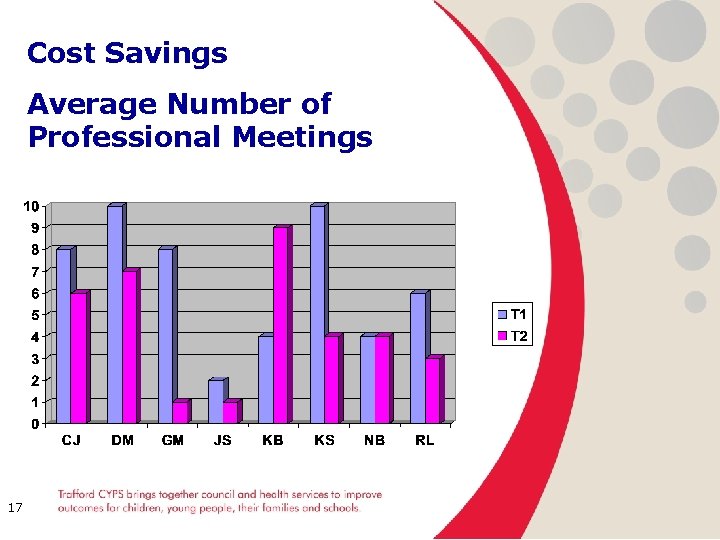
Cost Savings Average Number of Professional Meetings 17
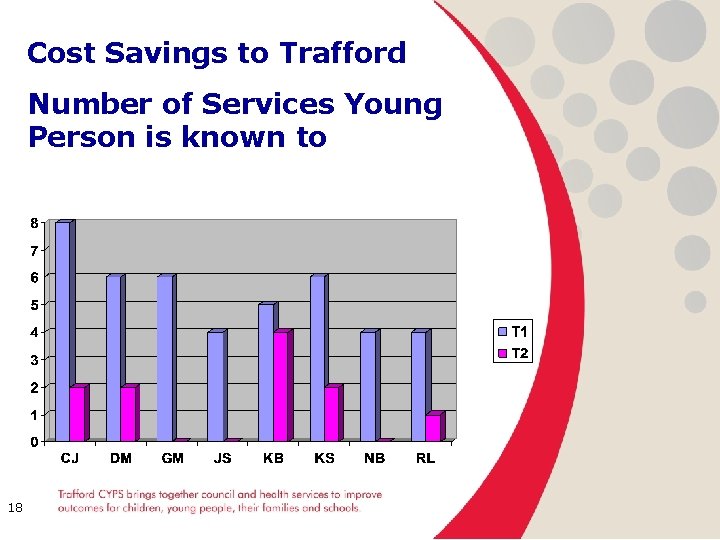
Cost Savings to Trafford Number of Services Young Person is known to 18
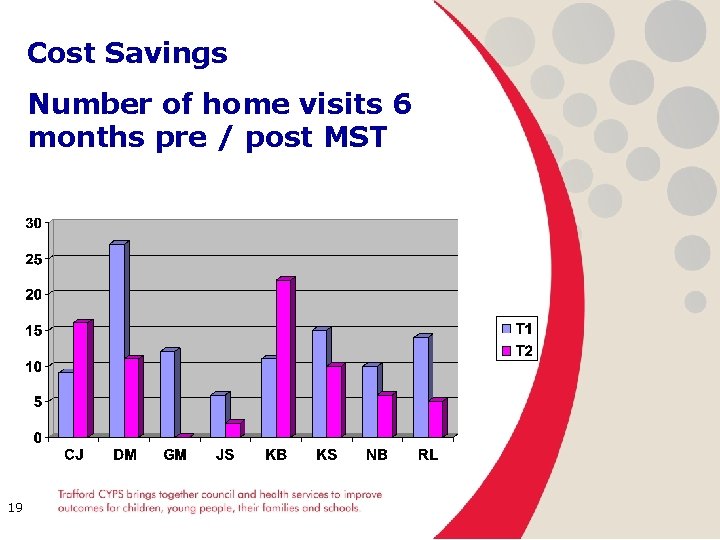
Cost Savings Number of home visits 6 months pre / post MST 19
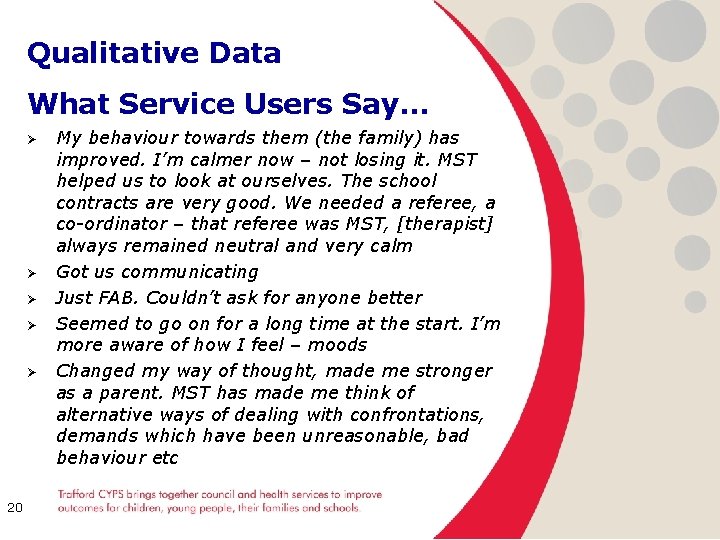
Qualitative Data What Service Users Say… Ø Ø Ø 20 My behaviour towards them (the family) has improved. I’m calmer now – not losing it. MST helped us to look at ourselves. The school contracts are very good. We needed a referee, a co-ordinator – that referee was MST, [therapist] always remained neutral and very calm Got us communicating Just FAB. Couldn’t ask for anyone better Seemed to go on for a long time at the start. I’m more aware of how I feel – moods Changed my way of thought, made me stronger as a parent. MST has made me think of alternative ways of dealing with confrontations, demands which have been unreasonable, bad behaviour etc
Successes Ø Ø Ø Ø Ø 21 Outcomes are improving with each ‘round’ of cases New protocols have been developed to improve efficiency Customer (referrers and families) satisfaction is extremely high Team adherence (our measure of effectively implemented MST) is increasing well above threshold Preparing to go into the research phase Good staff retention throughout the project so far Team up to capacity caseload Completion of work within specified time limit 3 -5 months Trafford has an internationally recognised ‘Gold Standard’ intensive intervention in MST
Current Focus Ø Ø Ø Ø 22 Established a Multi Agency MST Referral Panel Clearer referral pathway Completion of National Research Ongoing measurement of local statistics Wider Systemic change in the community Further promotion of MST Provisional Licensure replaced by full Licence ensuring effective service deliverance
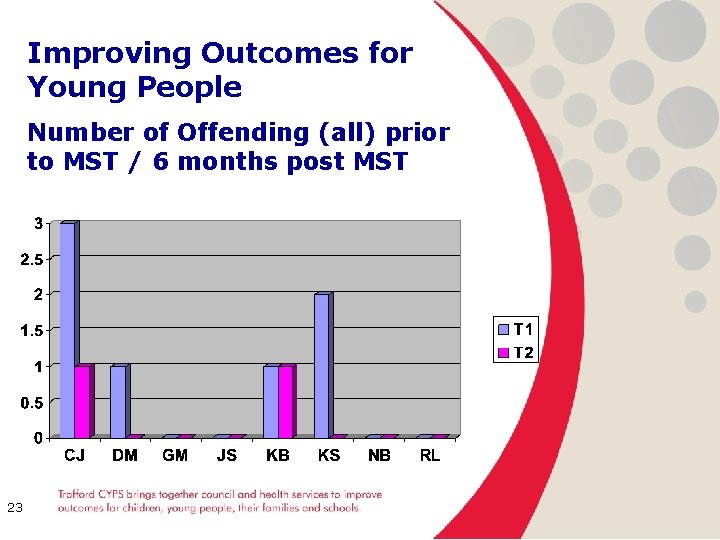
Improving Outcomes for Young People Number of Offending (all) prior to MST / 6 months post MST 23
Outcomes Nationally Cost effectiveness research on MST from Washington State Institute for Public Policy suggests that £ 5 is saved for every £ 1 invested in the programme. In the UK young people with conduct disorder currently cost public services 28 x the costs of young people without conduct disorder between the ages of 10 and 28 years (Scott and Knapp 2001) 24
- Slides: 24