
Multiservice Architecture Evolution of Network Architecture Keith Knightson


- Slides: 20
Multi-service Architecture: Evolution of Network Architecture Keith Knightson Khalid Ahmad Carrier Data Networks Nortel Networks, Canada IP-Networking/Mediacom Workshop, 24 -27 April 2001
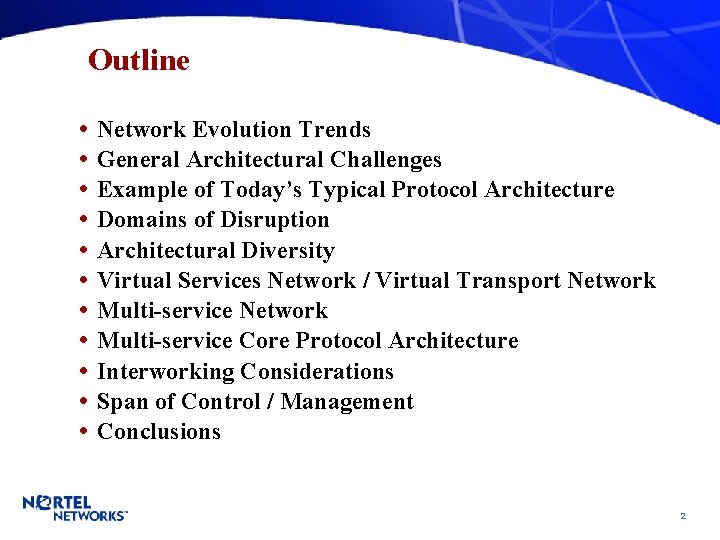
Outline • • • Network Evolution Trends General Architectural Challenges Example of Today’s Typical Protocol Architecture Domains of Disruption Architectural Diversity Virtual Services Network / Virtual Transport Network Multi-service Core Protocol Architecture Interworking Considerations Span of Control / Management Conclusions 2
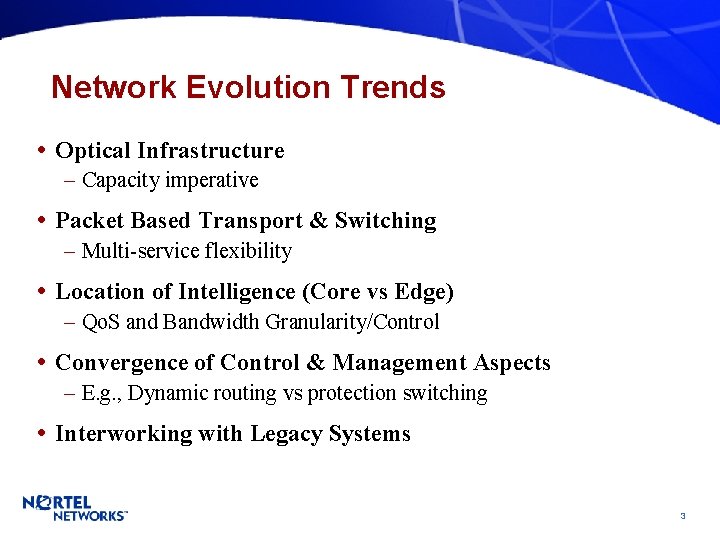
Network Evolution Trends • Optical Infrastructure – Capacity imperative • Packet Based Transport & Switching – Multi-service flexibility • Location of Intelligence (Core vs Edge) – Qo. S and Bandwidth Granularity/Control • Convergence of Control & Management Aspects – E. g. , Dynamic routing vs protection switching • Interworking with Legacy Systems 3
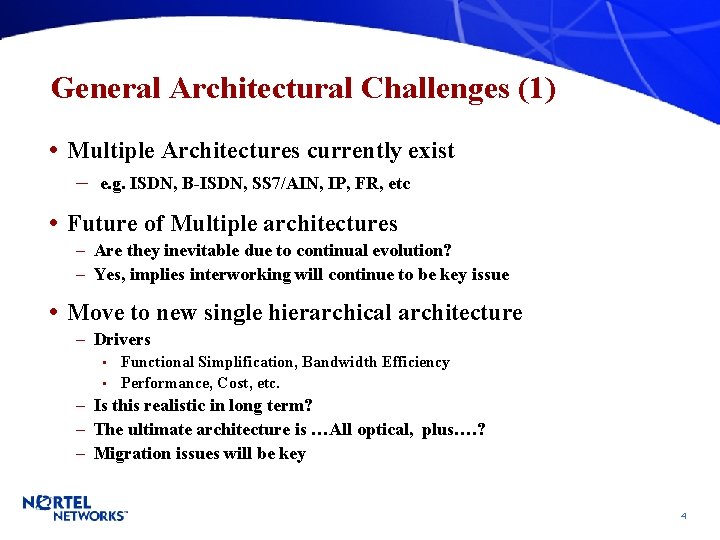
General Architectural Challenges (1) • Multiple Architectures currently exist – e. g. ISDN, B-ISDN, SS 7/AIN, IP, FR, etc • Future of Multiple architectures – Are they inevitable due to continual evolution? – Yes, implies interworking will continue to be key issue • Move to new single hierarchical architecture – Drivers • • Functional Simplification, Bandwidth Efficiency Performance, Cost, etc. – Is this realistic in long term? – The ultimate architecture is …All optical, plus…. ? – Migration issues will be key 4
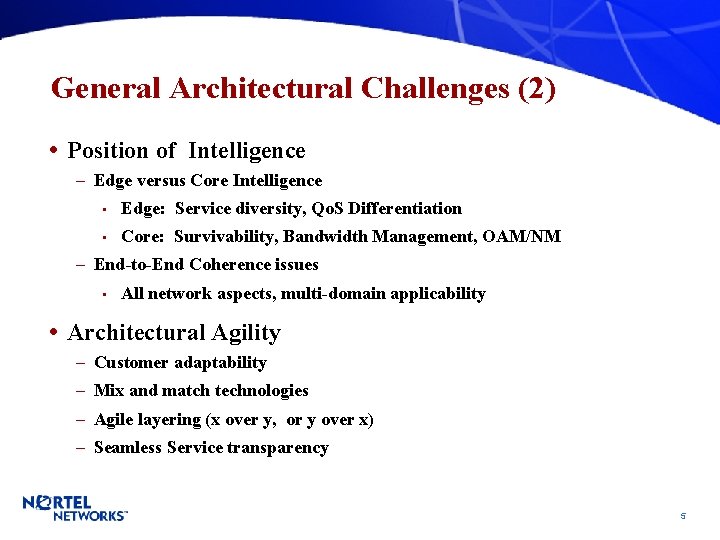
General Architectural Challenges (2) • Position of Intelligence – Edge versus Core Intelligence • Edge: Service diversity, Qo. S Differentiation • Core: Survivability, Bandwidth Management, OAM/NM – End-to-End Coherence issues • All network aspects, multi-domain applicability • Architectural Agility – Customer adaptability – Mix and match technologies – Agile layering (x over y, or y over x) – Seamless Service transparency 5
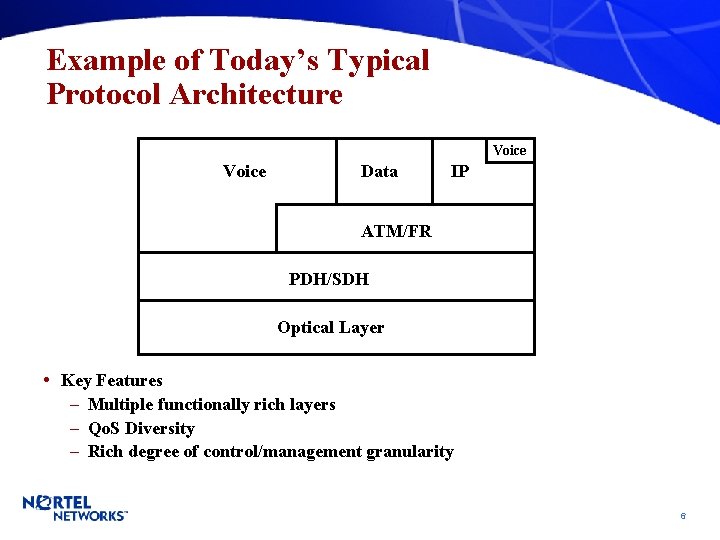
Example of Today’s Typical Protocol Architecture Voice Data IP ATM/FR PDH/SDH Optical Layer • Key Features – Multiple functionally rich layers – Qo. S Diversity – Rich degree of control/management granularity 6
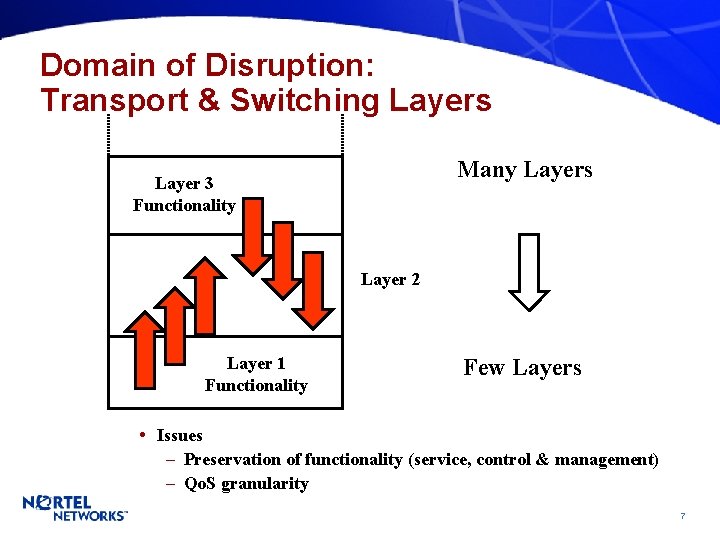
Domain of Disruption: Transport & Switching Layers Many Layers Layer 3 Functionality Layer 2 Layer 1 Functionality Few Layers • Issues – Preservation of functionality (service, control & management) – Qo. S granularity 7
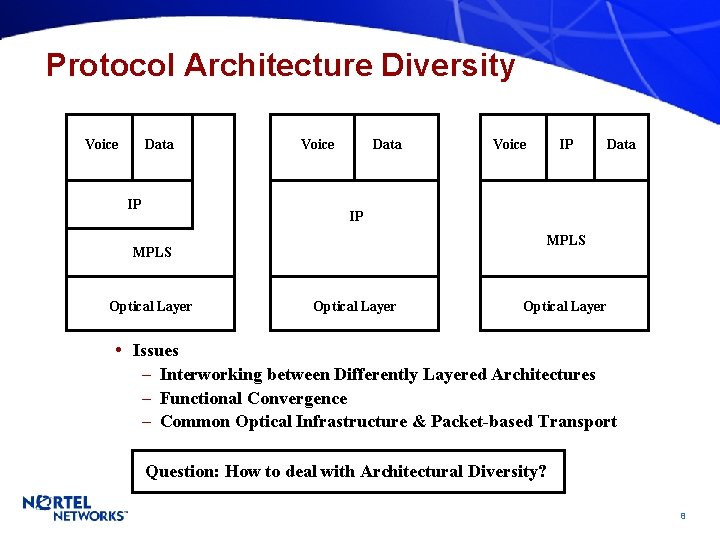
Protocol Architecture Diversity Voice Data IP Voice Data Voice IP Data IP MPLS Optical Layer • Issues – Interworking between Differently Layered Architectures – Functional Convergence – Common Optical Infrastructure & Packet-based Transport Question: How to deal with Architectural Diversity? 8
Virtual Services Network Virtual Transport Network Virtual Concepts: • Virtual Services Network – Customer Service Delivery Platforms Virtual Transport Network • Virtual Transport Network – Core Transport & Switching Platforms Y. 1311 uses these concepts to describe IP VPN Service Provision Services Answer: Decouple Customer Services from Transport Facilities 9
VSN/VTN Concepts Decoupling of services from Access & Transport technologies allows: • Mix and match of various services with any access and core technology • Exploitation of different types of technology • Agility of service provision and customization • Flexibility points for interdiction of interworking functions 10
Multi-Service Network: VSN/VTN Perspectives Virtual Service Network Virtual Transport Network ATM Packet (e. g. MPLS) Core FR IP I W F LSR L S R FR LSR All Optical Infrastructure L S R I W F IP LSR Voice IP Network VSN/VTN multi-service approach encompasses Network Evolution Trends 11
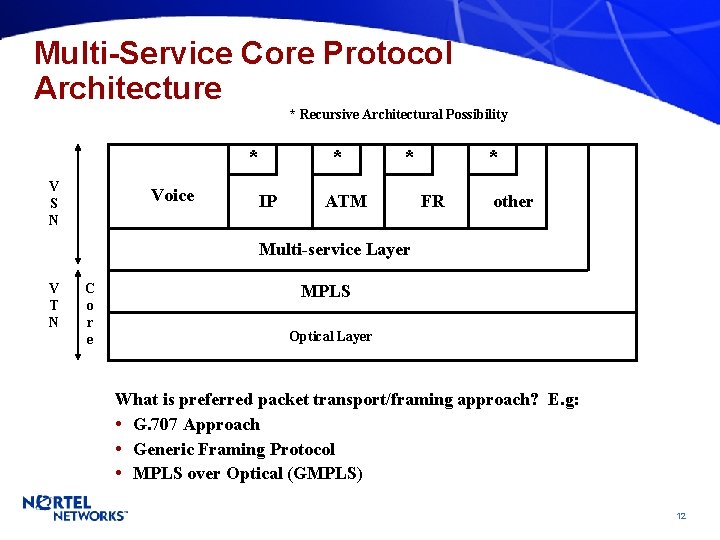
Multi-Service Core Protocol Architecture * Recursive Architectural Possibility * V S N Voice * IP * ATM * FR other Multi-service Layer V T N C o r e MPLS Optical Layer What is preferred packet transport/framing approach? E. g: • G. 707 Approach • Generic Framing Protocol • MPLS over Optical (GMPLS) 12
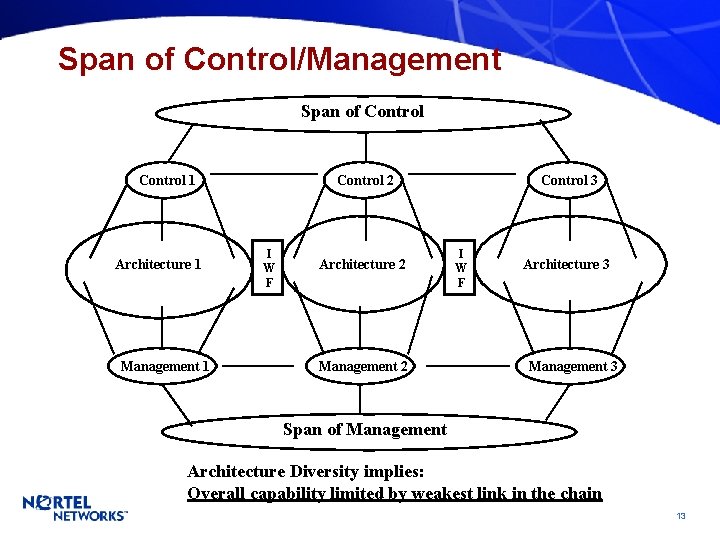
Span of Control/Management Span of Control 1 Architecture 1 Management 1 Control 2 I W F Architecture 2 Management 2 Control 3 I W F Architecture 3 Management 3 Span of Management Architecture Diversity implies: Overall capability limited by weakest link in the chain 13
Interworking Considerations • Customer investment/preference means multiple architectures • Multiple architectures mean interworking • Service mapping at equivalent service layers Issues arising: • End-to-end coherence (service features, addressing, Qo. S, security) • Coherent Span of Control (signaling, routing, etc) • Coherent Span of Management 14
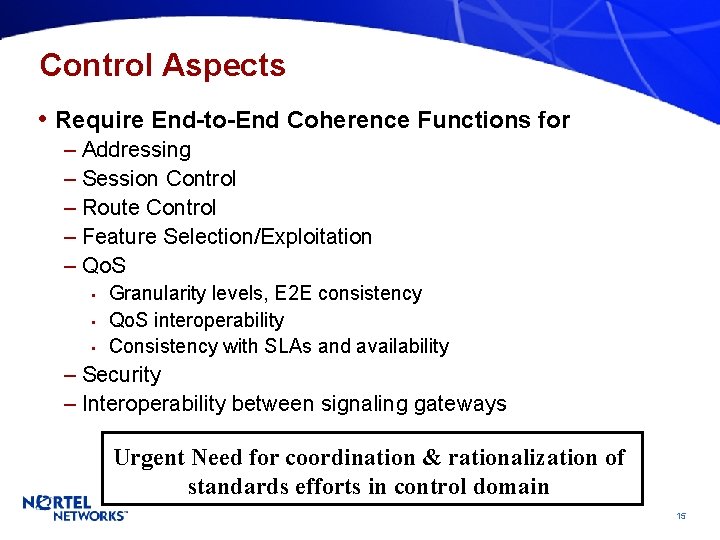
Control Aspects • Require End-to-End Coherence Functions for – Addressing – Session Control – Route Control – Feature Selection/Exploitation – Qo. S • • • Granularity levels, E 2 E consistency Qo. S interoperability Consistency with SLAs and availability – Security – Interoperability between signaling gateways Urgent Need for coordination & rationalization of standards efforts in control domain 15
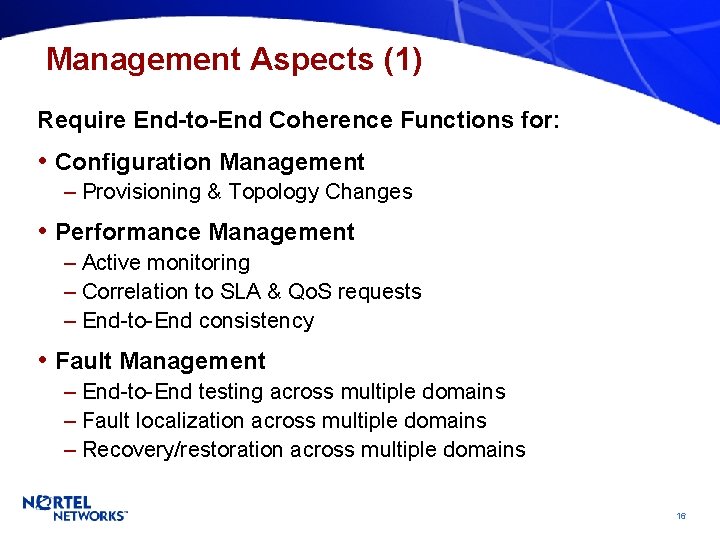
Management Aspects (1) Require End-to-End Coherence Functions for: • Configuration Management – Provisioning & Topology Changes • Performance Management – Active monitoring – Correlation to SLA & Qo. S requests – End-to-End consistency • Fault Management – End-to-End testing across multiple domains – Fault localization across multiple domains – Recovery/restoration across multiple domains 16
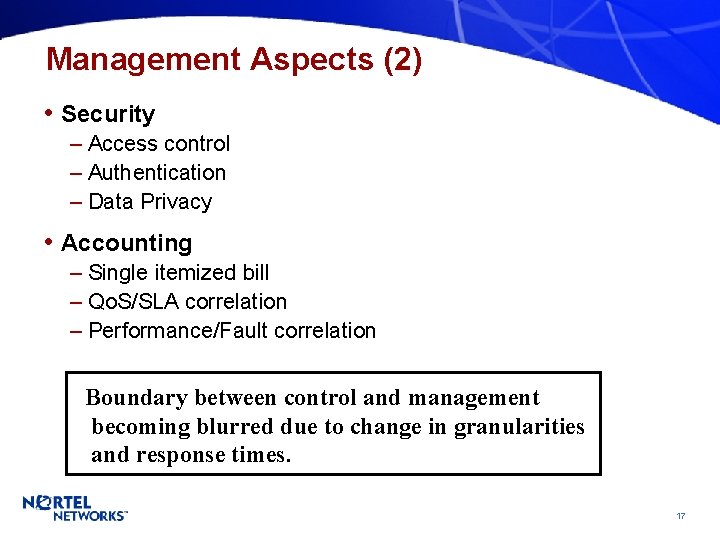
Management Aspects (2) • Security – Access control – Authentication – Data Privacy • Accounting – Single itemized bill – Qo. S/SLA correlation – Performance/Fault correlation Boundary between control and management becoming blurred due to change in granularities and response times. 17
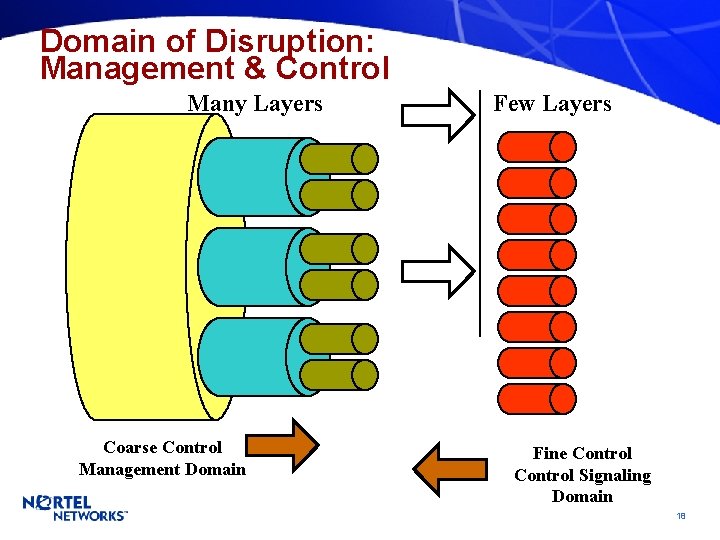
Domain of Disruption: Management & Control Many Layers Coarse Control Management Domain Few Layers Fine Control Signaling Domain 18
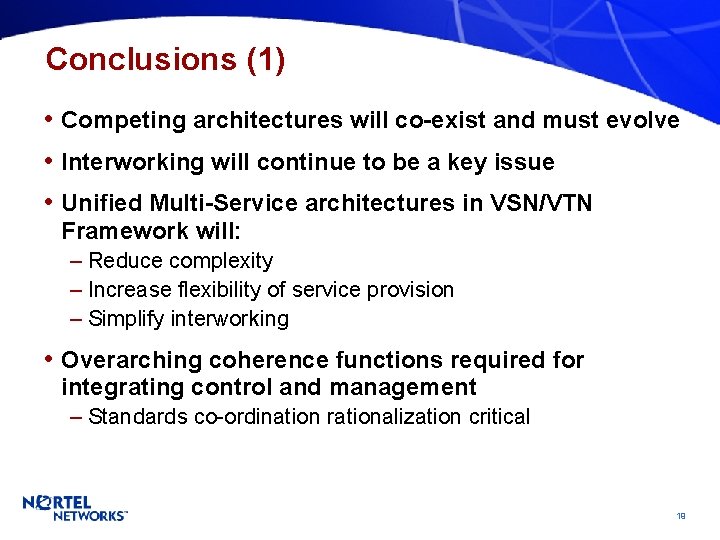
Conclusions (1) • Competing architectures will co-exist and must evolve • Interworking will continue to be a key issue • Unified Multi-Service architectures in VSN/VTN Framework will: – Reduce complexity – Increase flexibility of service provision – Simplify interworking • Overarching coherence functions required for integrating control and management – Standards co-ordination rationalization critical 19
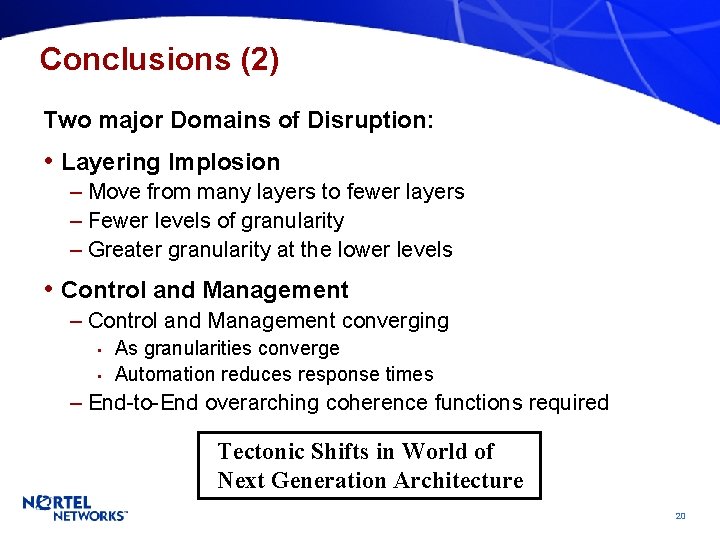
Conclusions (2) Two major Domains of Disruption: • Layering Implosion – Move from many layers to fewer layers – Fewer levels of granularity – Greater granularity at the lower levels • Control and Management – Control and Management converging • • As granularities converge Automation reduces response times – End-to-End overarching coherence functions required Tectonic Shifts in World of Next Generation Architecture 20