
Multiscale modeling of the silicon oxidation process Angelo
- Slides: 18
Multiscale modeling of the silicon oxidation process Angelo Bongiorno and Alfredo Pasquarello
Outline I. III. IV. V. Introduction Oxygen diffusion through the oxide layer Structure of the Si(100)-Si. O 2 interface Oxidation reaction at the interface Conclusion
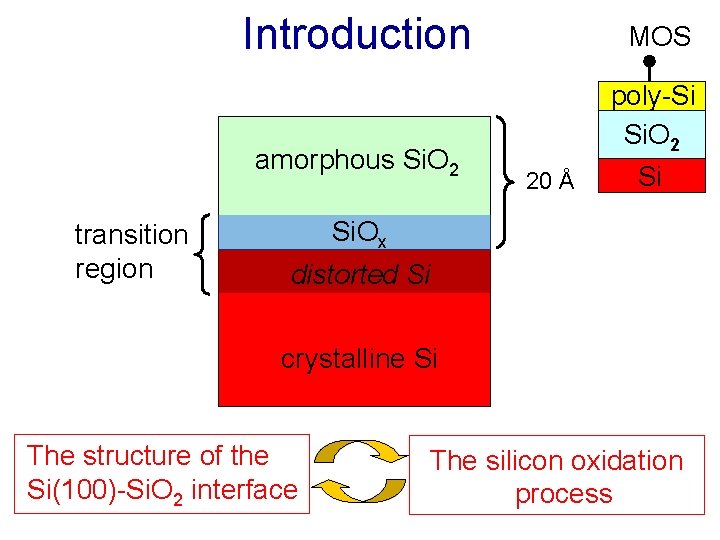
transition region Introduction MOS amorphous Si. O 2 poly-Si Si. O 2 Si 20 Å Si. Ox distorted Si crystalline Si The structure of the Si(100)-Si. O 2 interface The silicon oxidation process
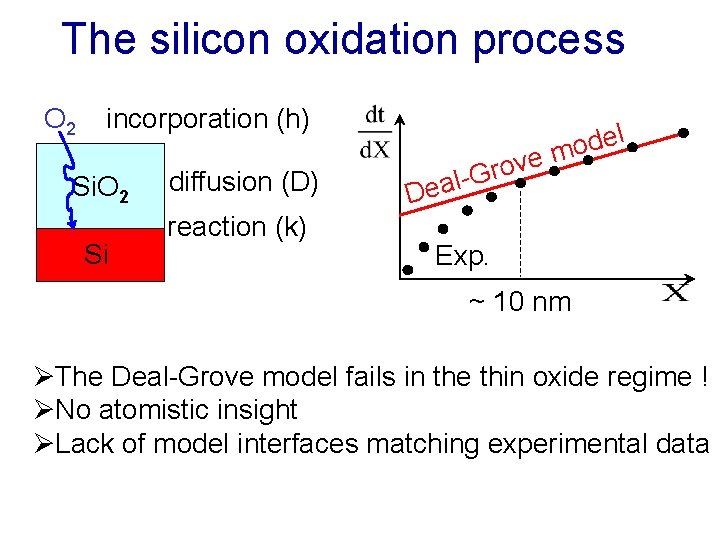
The silicon oxidation process O 2 incorporation (h) Si. O 2 Si diffusion (D) reaction (k) e v o r l-G l e d mo Dea Exp. ~ 10 nm ØThe Deal-Grove model fails in the thin oxide regime ! ØNo atomistic insight ØLack of model interfaces matching experimental data
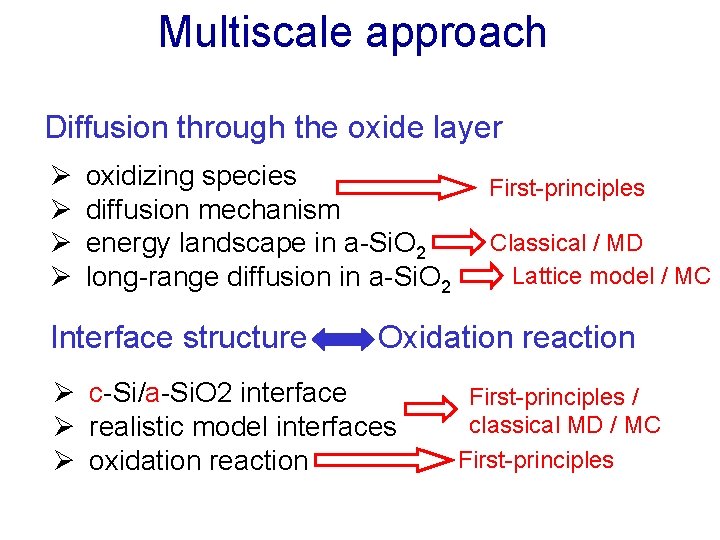
Multiscale approach Diffusion through the oxide layer Ø Ø oxidizing species diffusion mechanism energy landscape in a-Si. O 2 long-range diffusion in a-Si. O 2 Interface structure First-principles Classical / MD Lattice model / MC Oxidation reaction Ø c-Si/a-Si. O 2 interface Ø realistic model interfaces Ø oxidation reaction First-principles / classical MD / MC First-principles
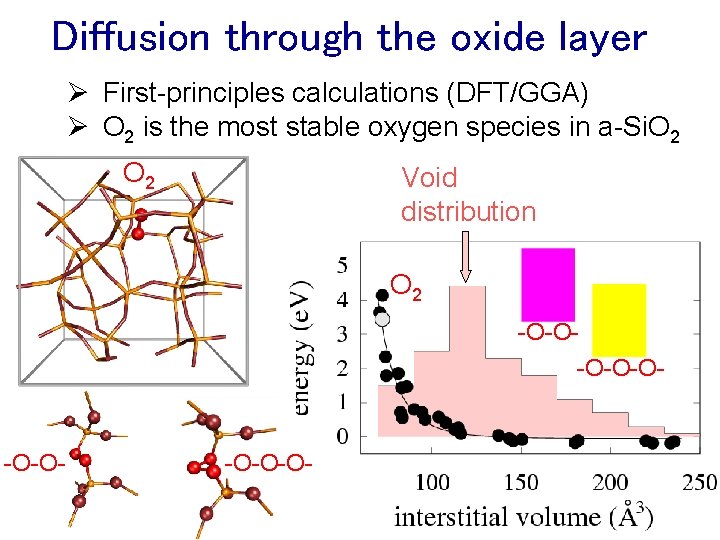
Diffusion through the oxide layer Ø First-principles calculations (DFT/GGA) Ø O 2 is the most stable oxygen species in a-Si. O 2 Void distribution O 2 -O-O-O-
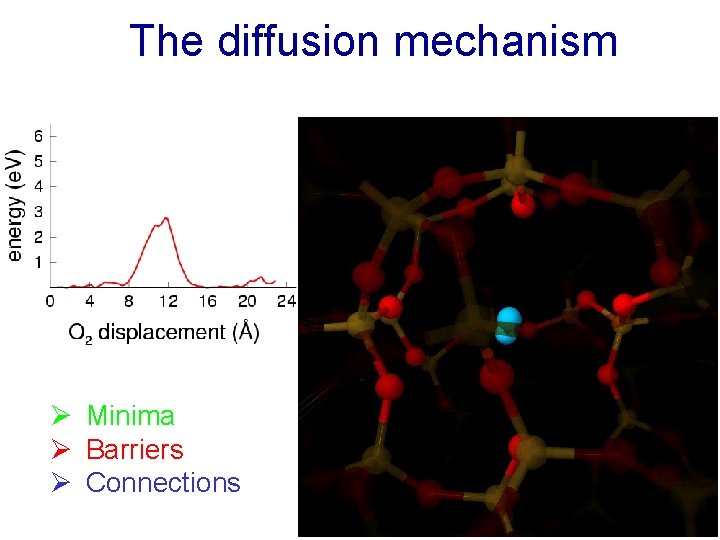
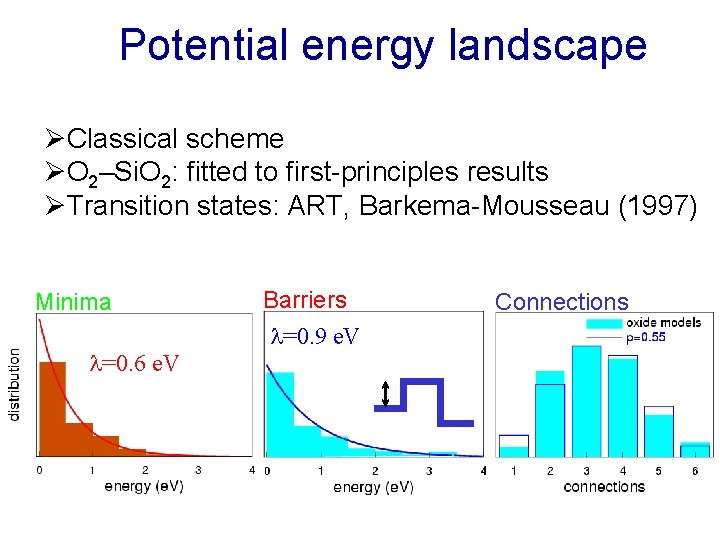
The diffusion mechanism Ø Minima Ø Barriers Ø Connections
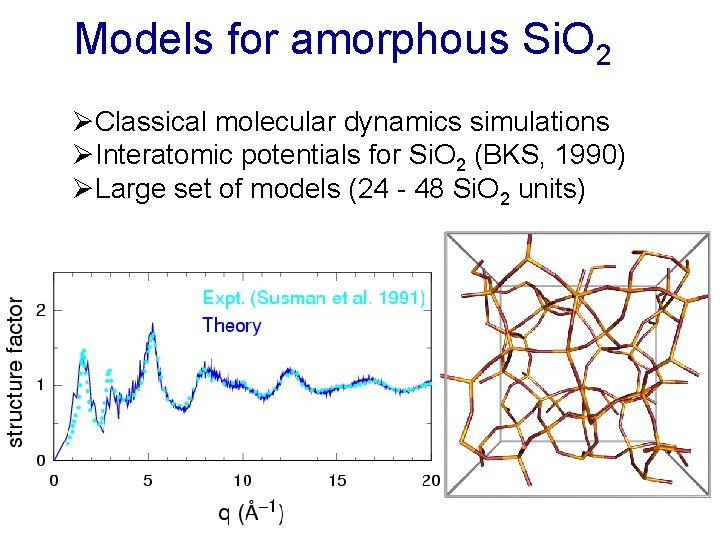
Models for amorphous Si. O 2 ØClassical molecular dynamics simulations ØInteratomic potentials for Si. O 2 (BKS, 1990) ØLarge set of models (24 - 48 Si. O 2 units)
Potential energy landscape ØClassical scheme ØO 2–Si. O 2: fitted to first-principles results ØTransition states: ART, Barkema-Mousseau (1997) Minima l=0. 6 e. V Barriers l=0. 9 e. V Connections
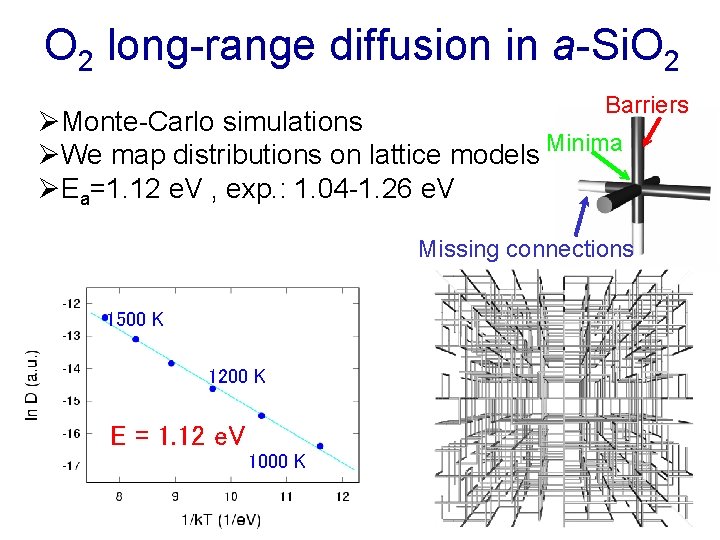
O 2 long-range diffusion in a-Si. O 2 Barriers ØMonte-Carlo simulations Minima ØWe map distributions on lattice models ØEa=1. 12 e. V , exp. : 1. 04 -1. 26 e. V Missing connections 1500 K 1200 K E = 1. 12 e. V 1000 K
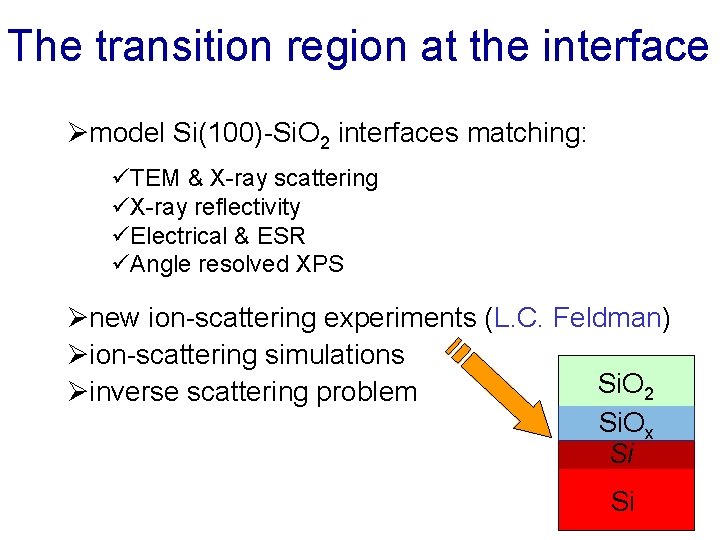
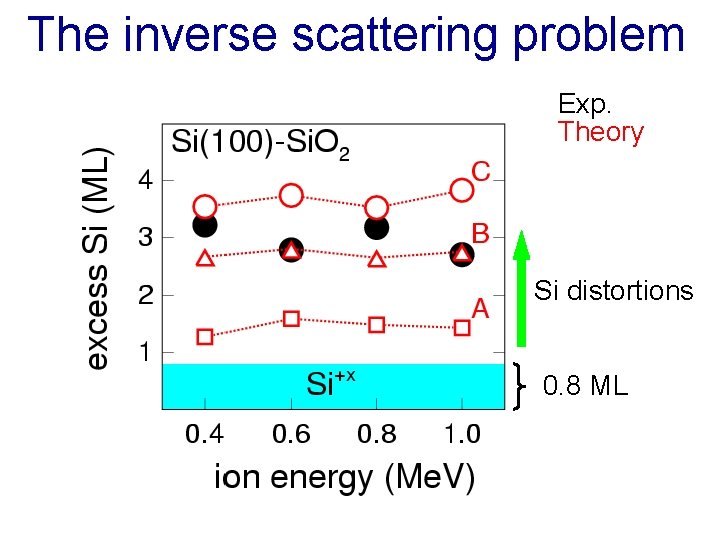
The transition region at the interface Ømodel Si(100)-Si. O 2 interfaces matching: üTEM & X-ray scattering üX-ray reflectivity üElectrical & ESR üAngle resolved XPS Ønew ion-scattering experiments (L. C. Feldman) Øion-scattering simulations Si. O 2 Øinverse scattering problem Si. Ox Si Si
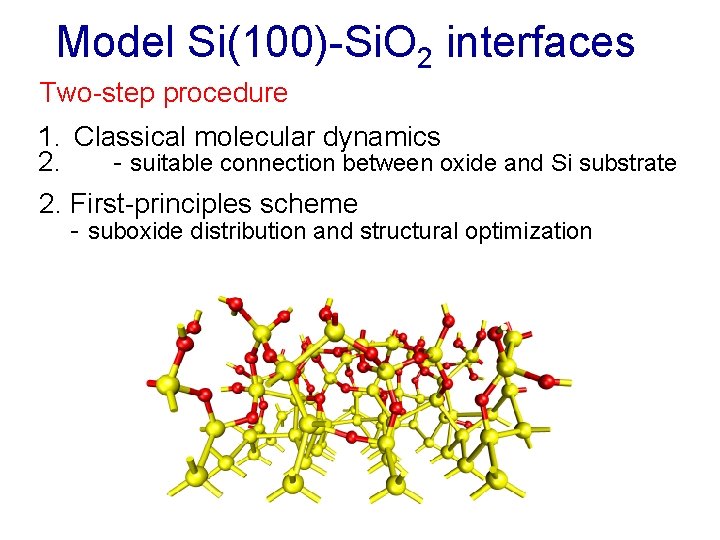
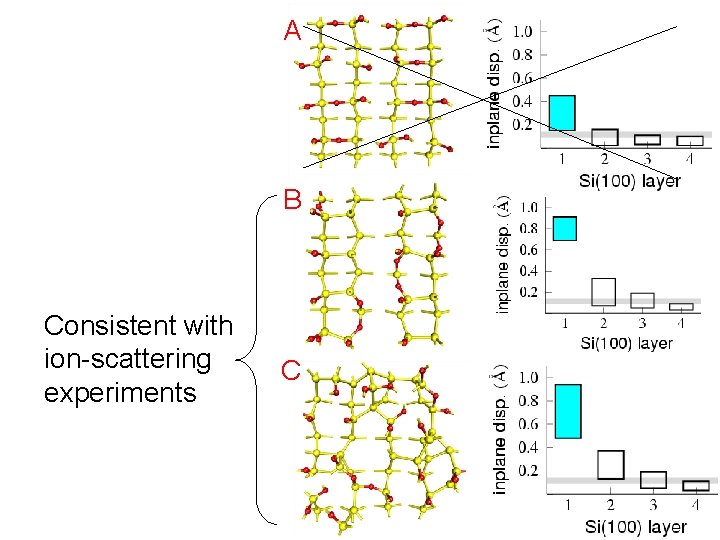
Model Si(100)-Si. O 2 interfaces Two-step procedure 1. Classical molecular dynamics 2. - suitable connection between oxide and Si substrate 2. First-principles scheme - suboxide distribution and structural optimization
The inverse scattering problem Exp. Theory Si distortions 0. 8 ML
A B Consistent with ion-scattering experiments C
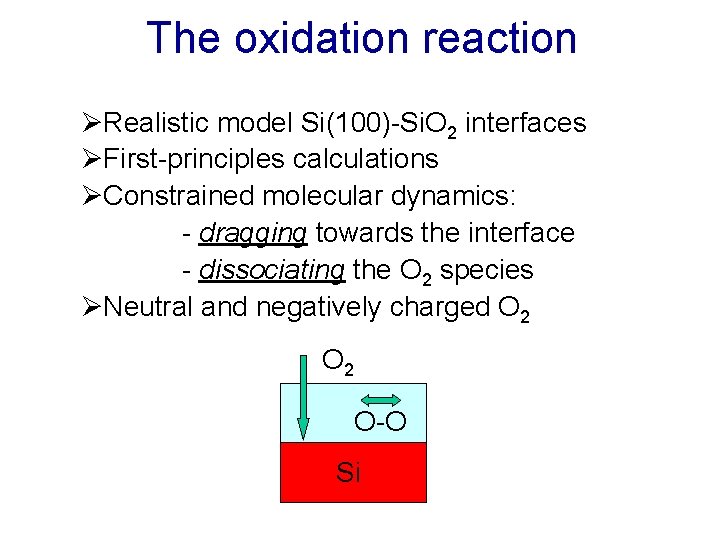
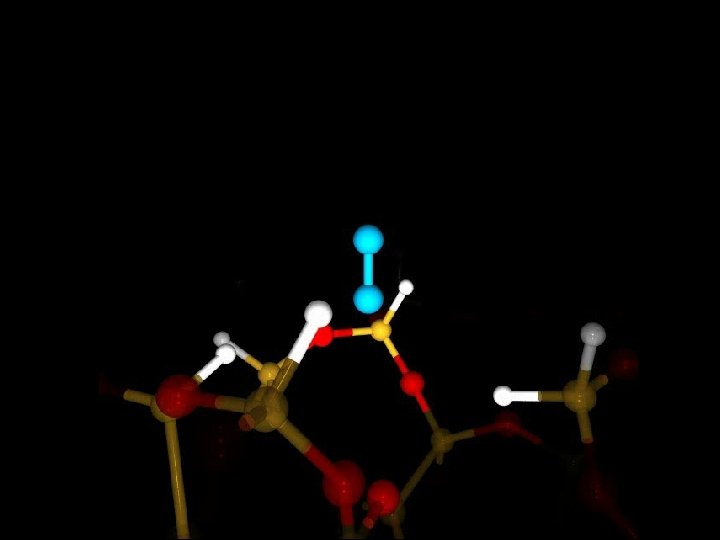
The oxidation reaction ØRealistic model Si(100)-Si. O 2 interfaces ØFirst-principles calculations ØConstrained molecular dynamics: - dragging towards the interface - dissociating the O 2 species ØNeutral and negatively charged O 2 O-O Si
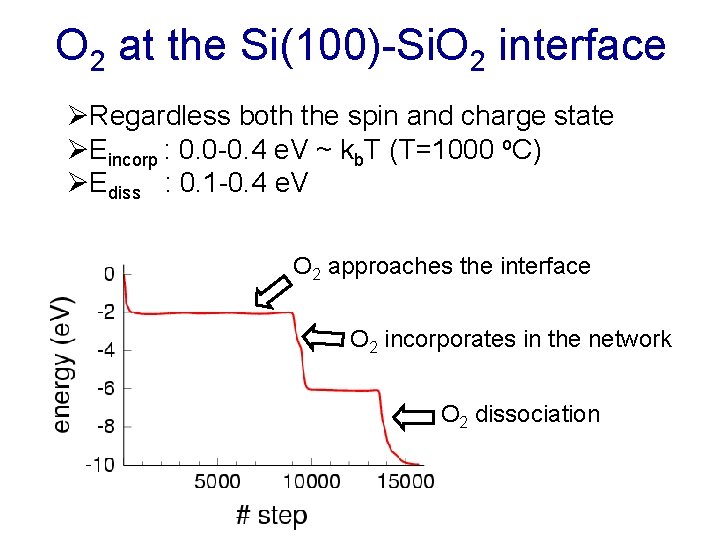
O 2 at the Si(100)-Si. O 2 interface ØRegardless both the spin and charge state ØEincorp : 0. 0 -0. 4 e. V ~ kb. T (T=1000 o. C) ØEdiss : 0. 1 -0. 4 e. V O 2 approaches the interface O 2 incorporates in the network O 2 dissociation
Conclusions The silicon oxidation process ØO 2 hops between nearest neighbours interstitials of the oxide network. ØThe long range diffusion is a percolation process with an activation energy of 1. 12 e. V. ØAt the interface the oxidation reaction is nearly spontaneous. The Si(100)-Si. O 2 interface ØRealistic model Si(100)-Si. O 2 interfaces ØThe bond pattern at the interface ØAmount of Si distortions in the substrate