
Multiscale Entanglement Renormalization Ansatz Andy Ferris International summer
- Slides: 74
Multiscale Entanglement Renormalization Ansatz Andy Ferris International summer school on new trends in computational approaches for many-body systems Orford, Québec (June 2012)
What will I talk about? • Part one (this morning) – Entanglement and correlations in many-body systems – MERA algorithms • Part two (this afternoon) – 2 D quantum systems – Monte Carlo sampling – Future directions…
Outline: Part 1 • • Entanglement, critical points, scale invariance Renormalization group and disentangling The MERA wavefunction Algorithms for the MERA – Extracting expectation values – Optimizing ground state wavefunctions – Extracting scaling exponents (conformal data)
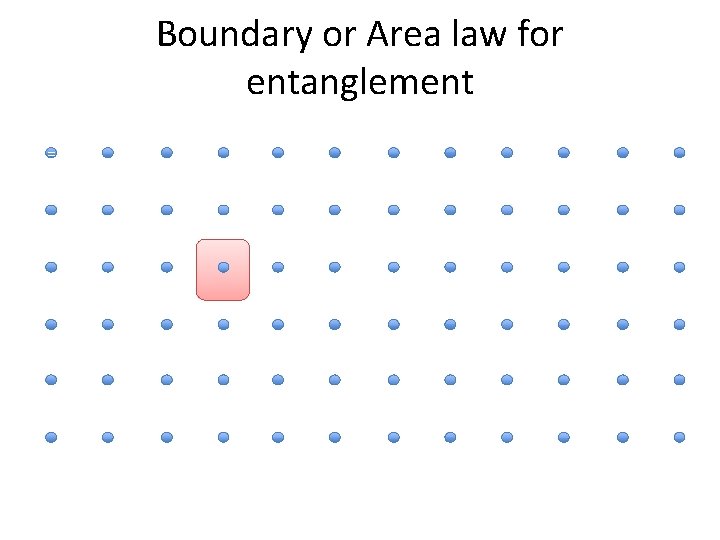
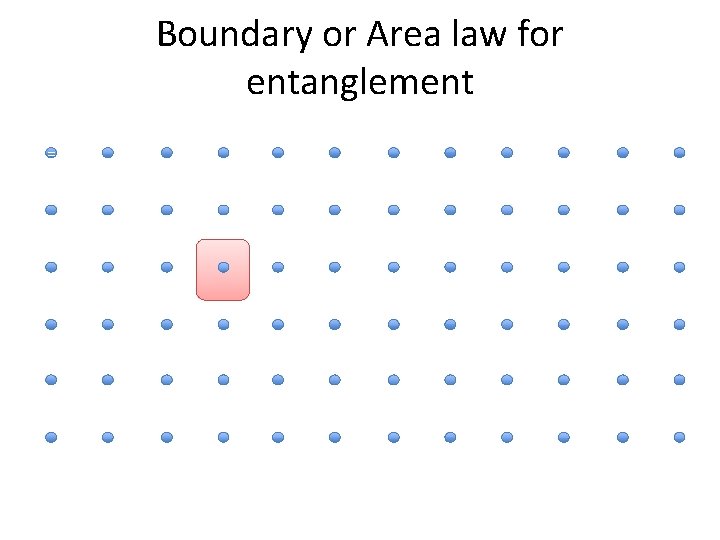
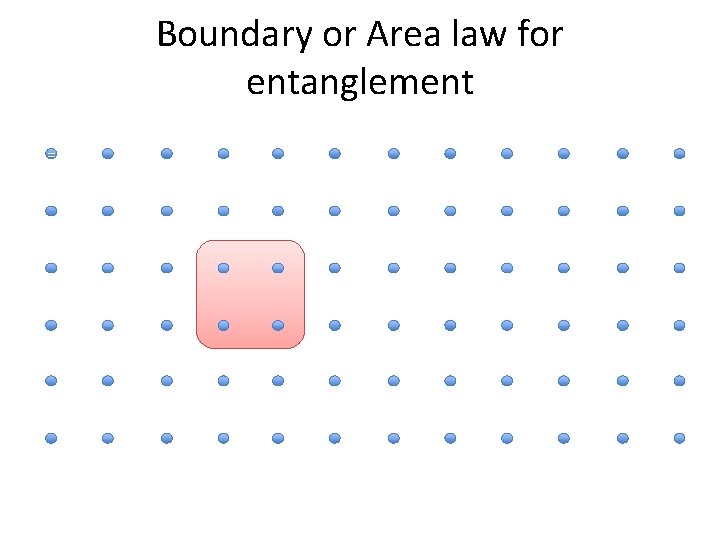
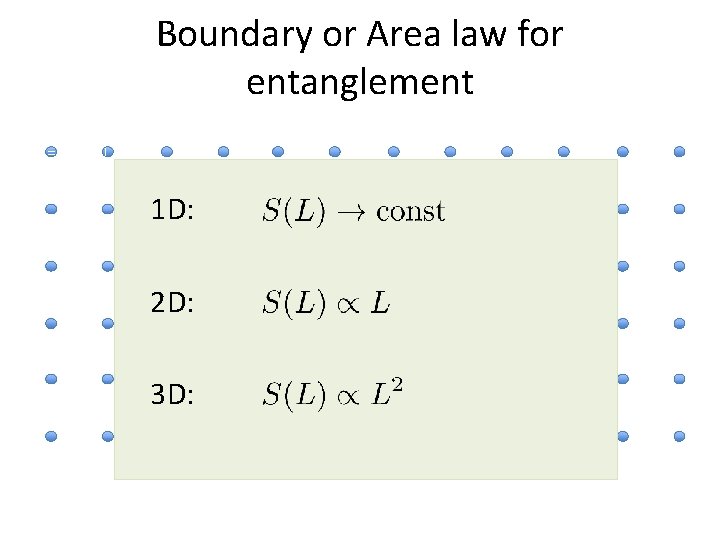
Entanglement in many-body systems • A general, entangled state requires exponentially many parameters to describe (in number of particles N or system size L) • However, most states of interest (e. g. ground states, etc) have MUCH less entanglement. • Explains success of many variational methods – DMRG/MPS for 1 D systems – and PEPS for 2 D systems – and now, MERA
Boundary or Area law for entanglement =
Boundary or Area law for entanglement =
Boundary or Area law for entanglement =
Boundary or Area law for entanglement = 1 D: 2 D: 3 D:
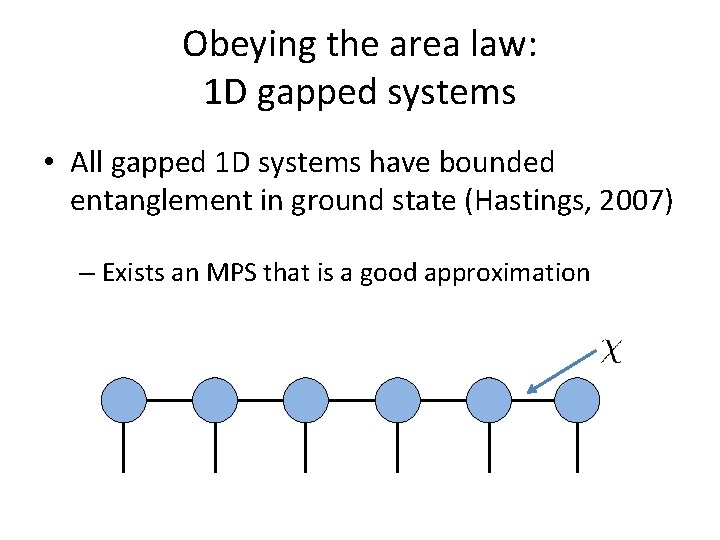
Obeying the area law: 1 D gapped systems • All gapped 1 D systems have bounded entanglement in ground state (Hastings, 2007) – Exists an MPS that is a good approximation
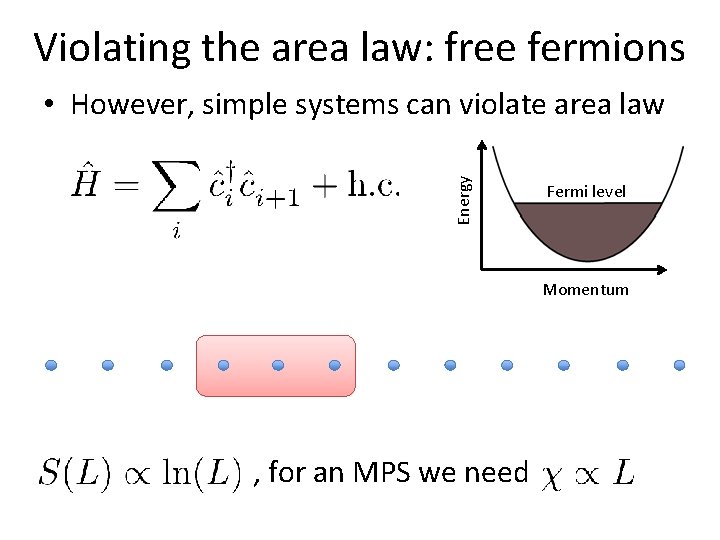
Violating the area law: free fermions Energy • However, simple systems can violate area law Fermi level Momentum , for an MPS we need
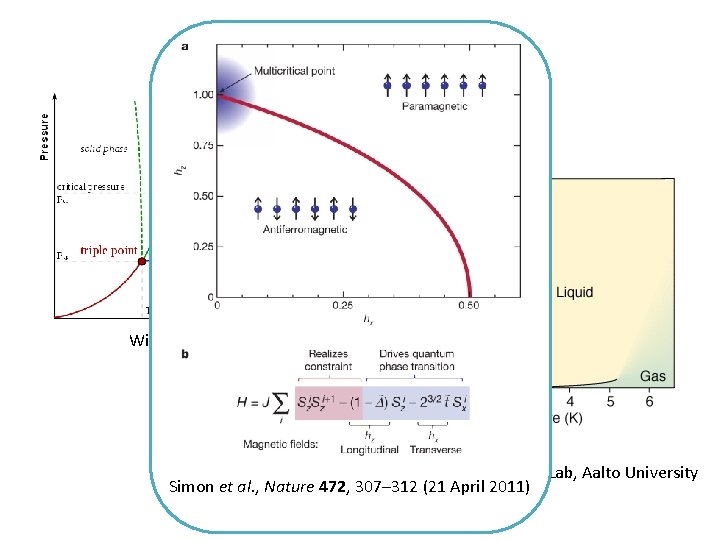
Critical points Wikipedia ltl. tkk. fi Low Temperature Lab, Aalto University Simon et al. , Nature 472, 307– 312 (21 April 2011)
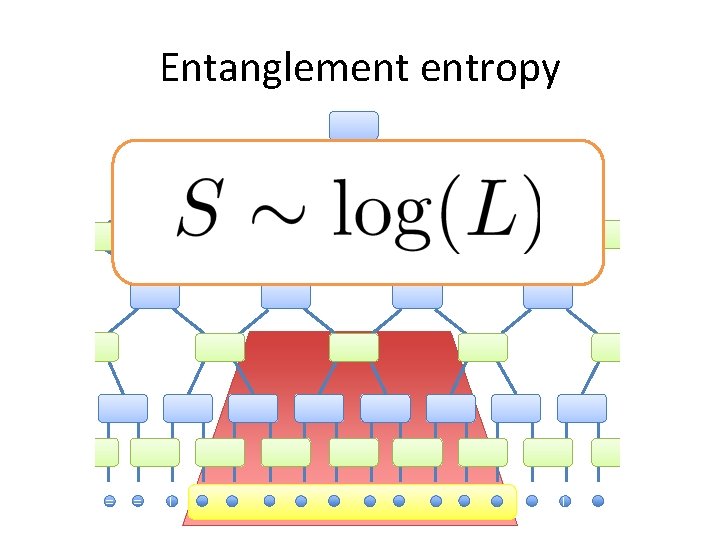
Violating the area law: critical systems • Correlation length diverges when approaching critical point • Naïve argument for area law (short range entanglement) fails. • Usually, we observe a logarithmic violation: • Again, MPS/DMRG might become challenging.
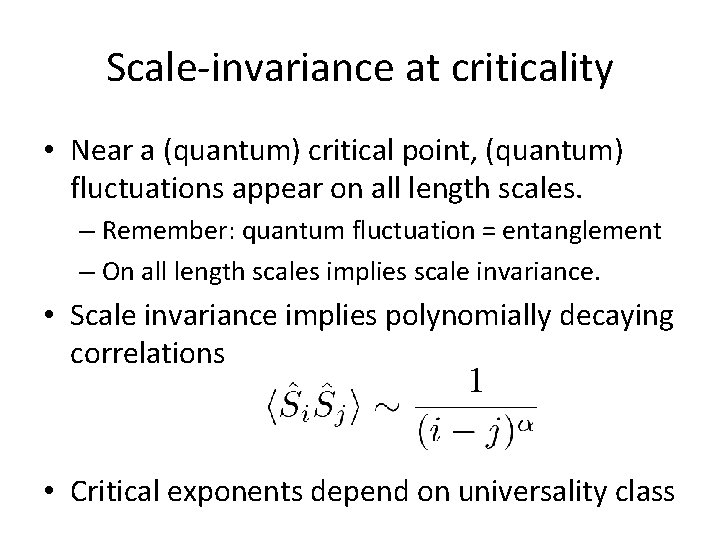
Scale-invariance at criticality • Near a (quantum) critical point, (quantum) fluctuations appear on all length scales. – Remember: quantum fluctuation = entanglement – On all length scales implies scale invariance. • Scale invariance implies polynomially decaying correlations • Critical exponents depend on universality class
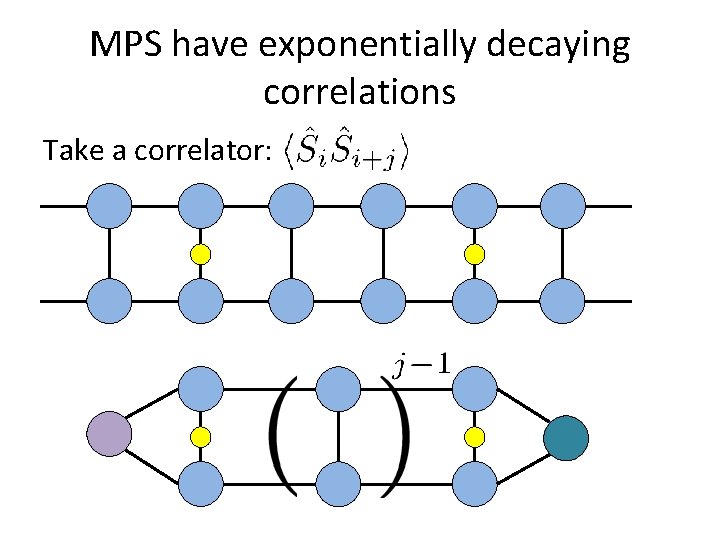
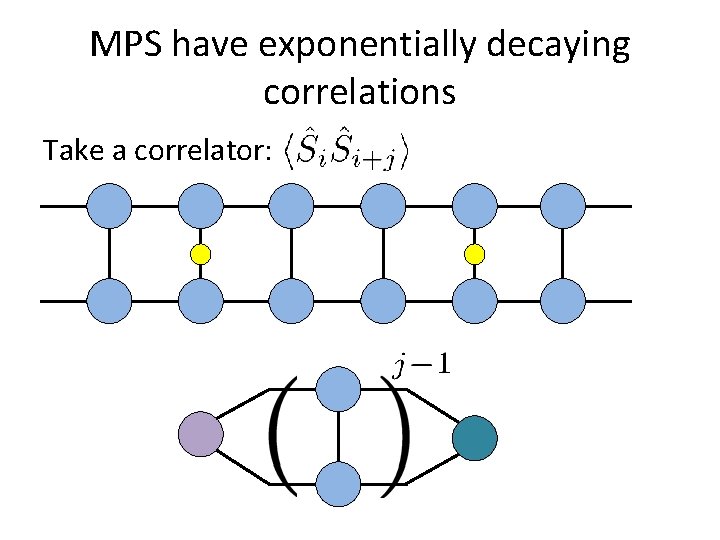
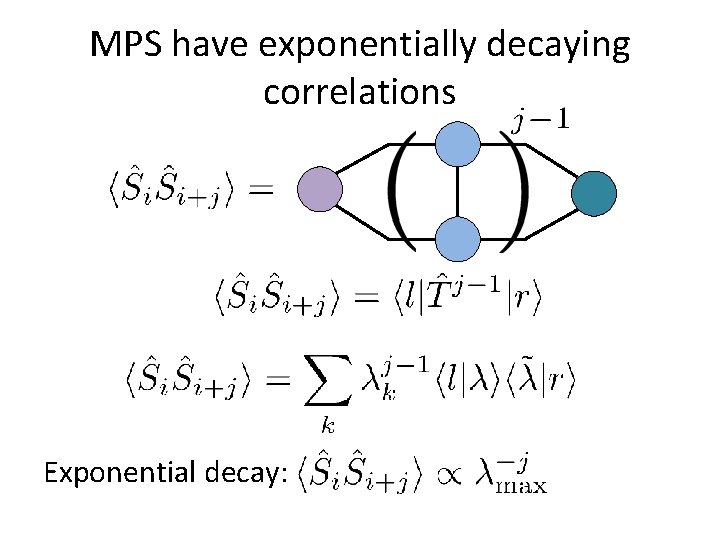
MPS have exponentially decaying correlations Take a correlator:
MPS have exponentially decaying correlations Take a correlator:
MPS have exponentially decaying correlations Exponential decay:
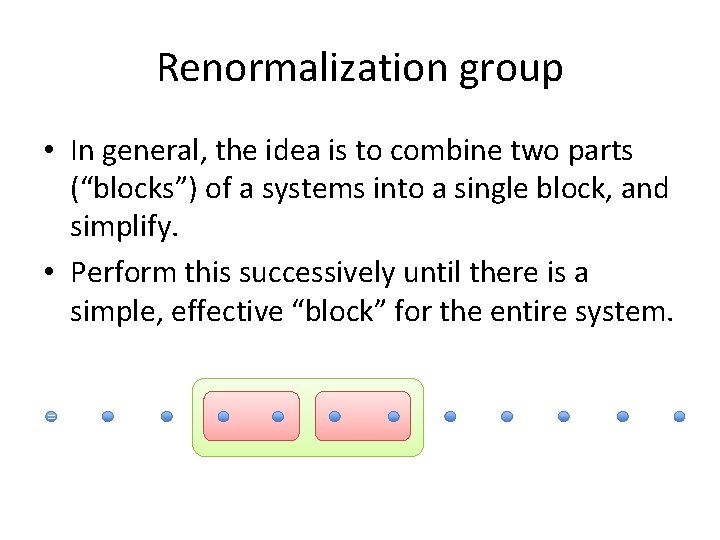
Renormalization group • In general, the idea is to combine two parts (“blocks”) of a systems into a single block, and simplify. • Perform this successively until there is a simple, effective “block” for the entire system. =
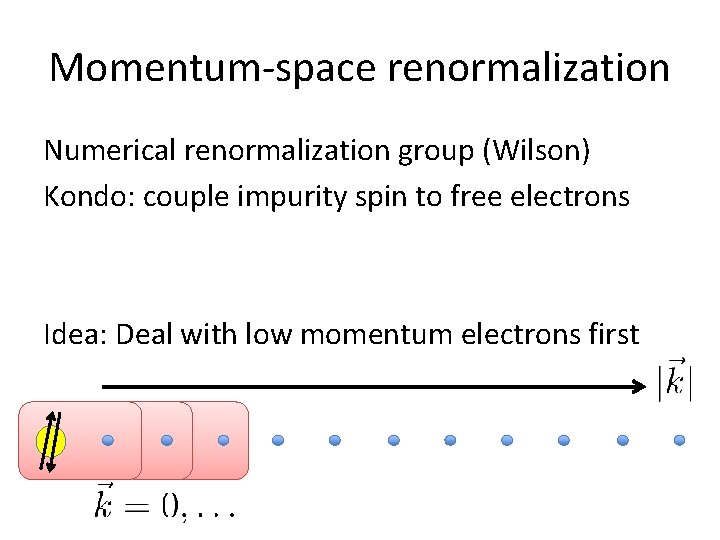
Momentum-space renormalization Numerical renormalization group (Wilson) Kondo: couple impurity spin to free electrons Idea: Deal with low momentum electrons first
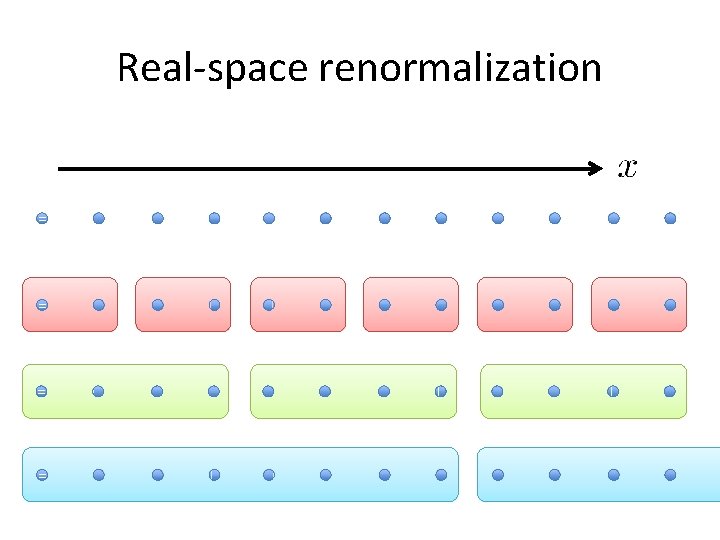
Real-space renormalization = =
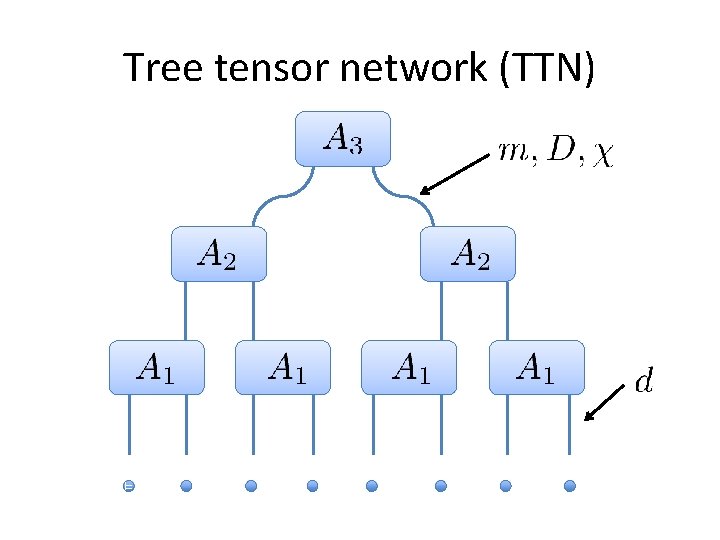
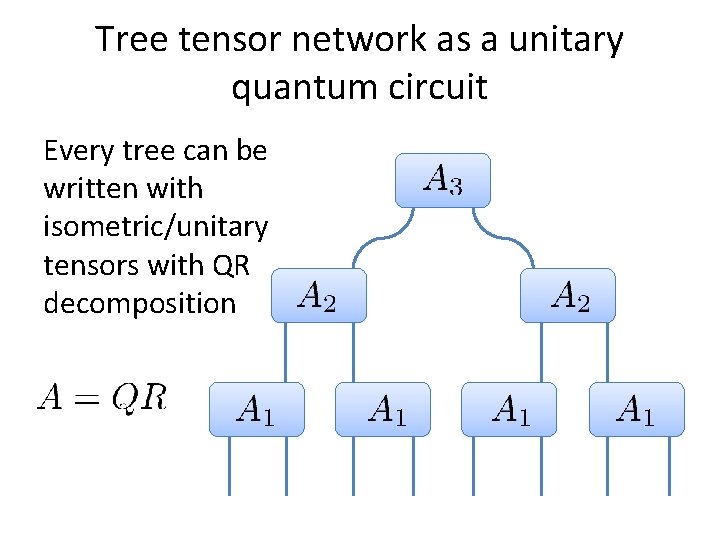
Tree tensor network (TTN) =
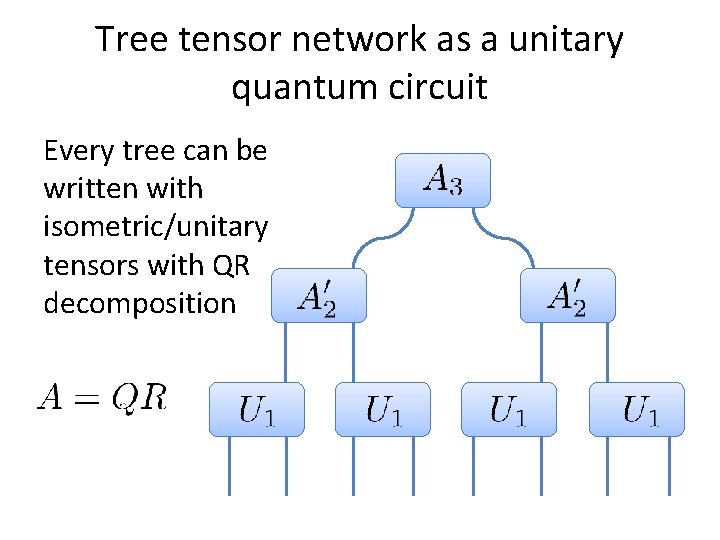
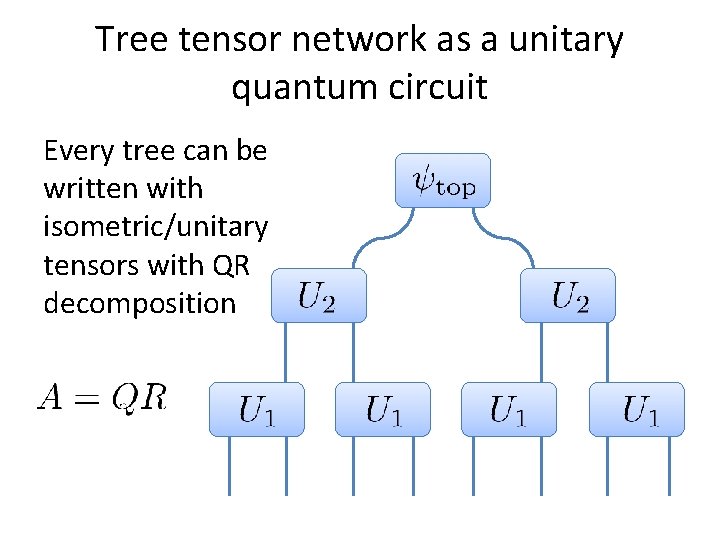
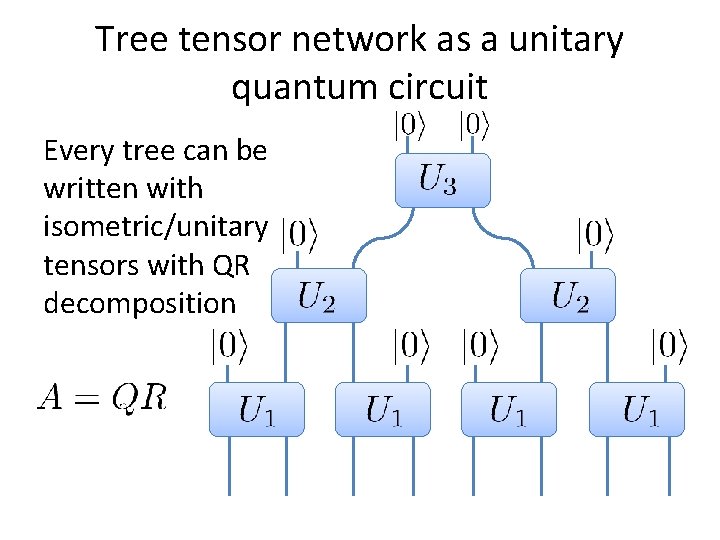
Tree tensor network as a unitary quantum circuit Every tree can be written with isometric/unitary tensors with QR decomposition
Tree tensor network as a unitary quantum circuit Every tree can be written with isometric/unitary tensors with QR decomposition
Tree tensor network as a unitary quantum circuit Every tree can be written with isometric/unitary tensors with QR decomposition
Tree tensor network as a unitary quantum circuit Every tree can be written with isometric/unitary tensors with QR decomposition
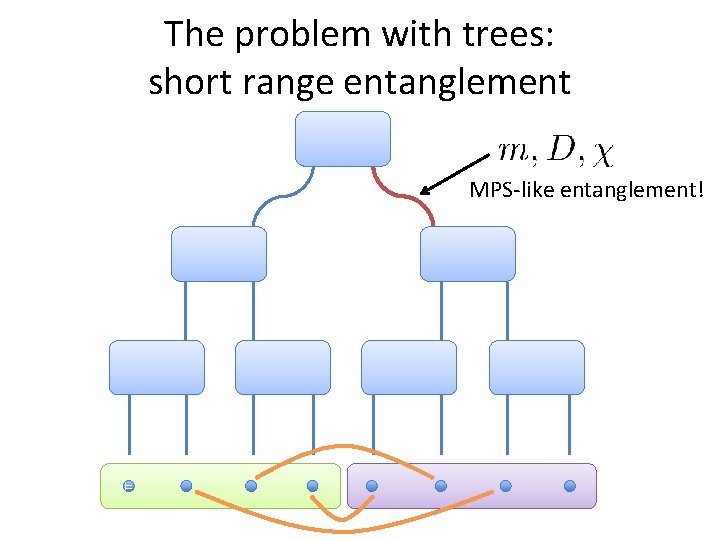
The problem with trees: short range entanglement MPS-like entanglement! =
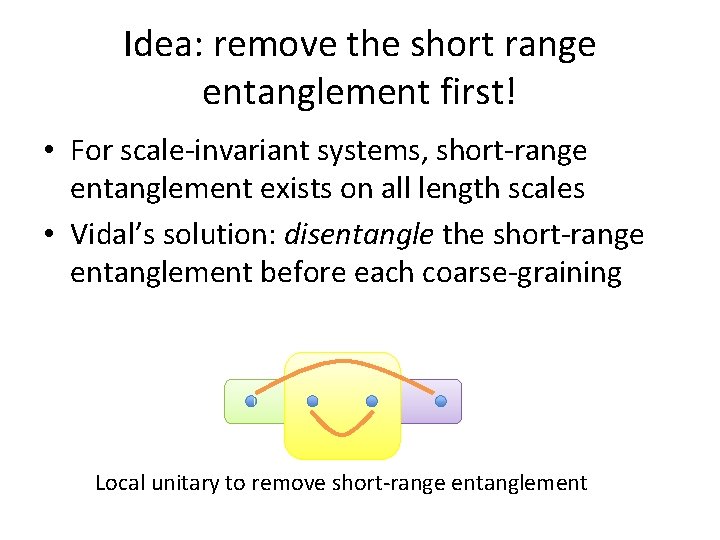
Idea: remove the short range entanglement first! • For scale-invariant systems, short-range entanglement exists on all length scales • Vidal’s solution: disentangle the short-range entanglement before each coarse-graining Local unitary to remove short-range entanglement
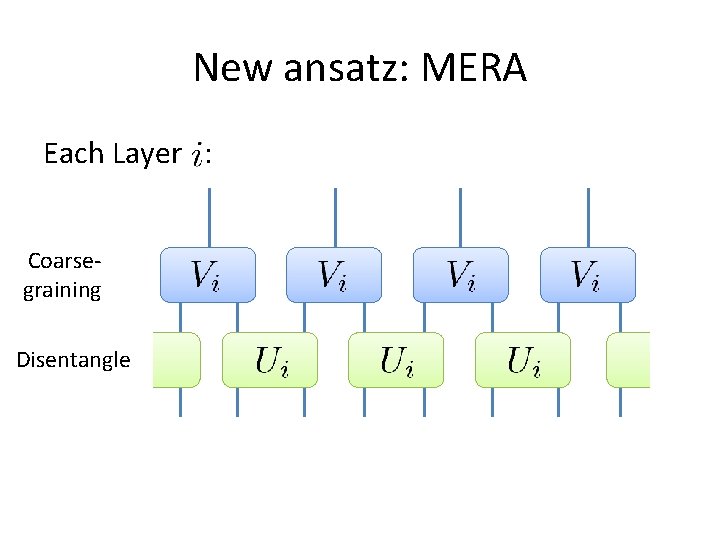
New ansatz: MERA Each Layer : Coarsegraining Disentangle
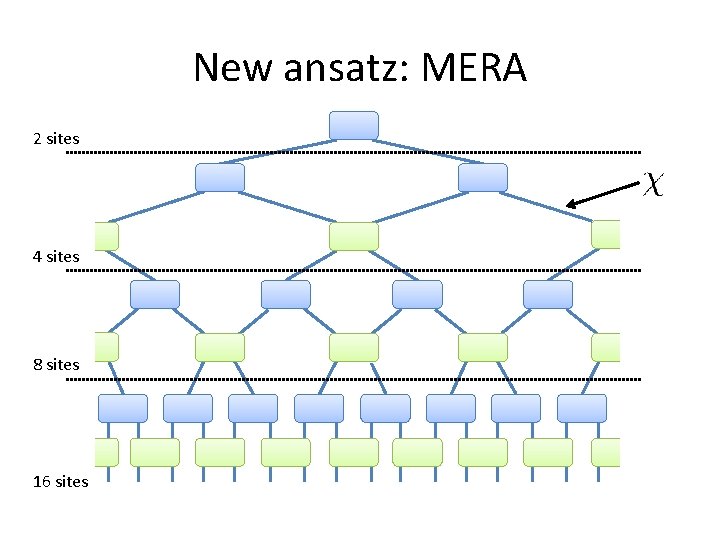
New ansatz: MERA 2 sites 4 sites 8 sites 16 sites
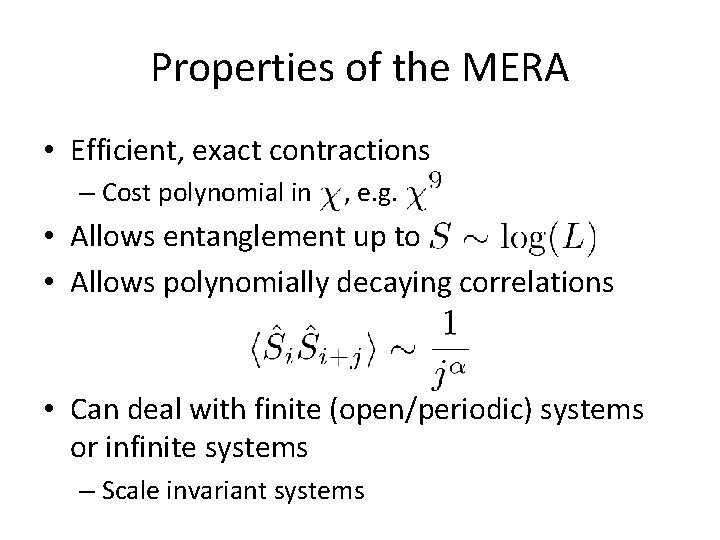
Properties of the MERA • Efficient, exact contractions – Cost polynomial in , e. g. • Allows entanglement up to • Allows polynomially decaying correlations • Can deal with finite (open/periodic) systems or infinite systems – Scale invariant systems
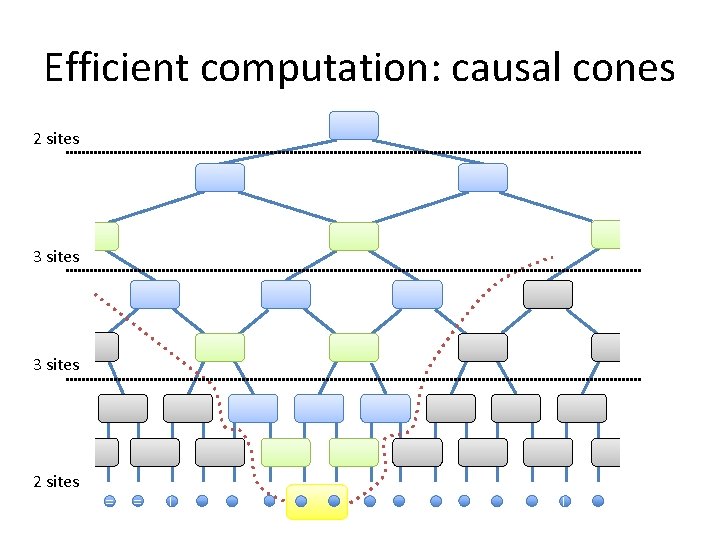
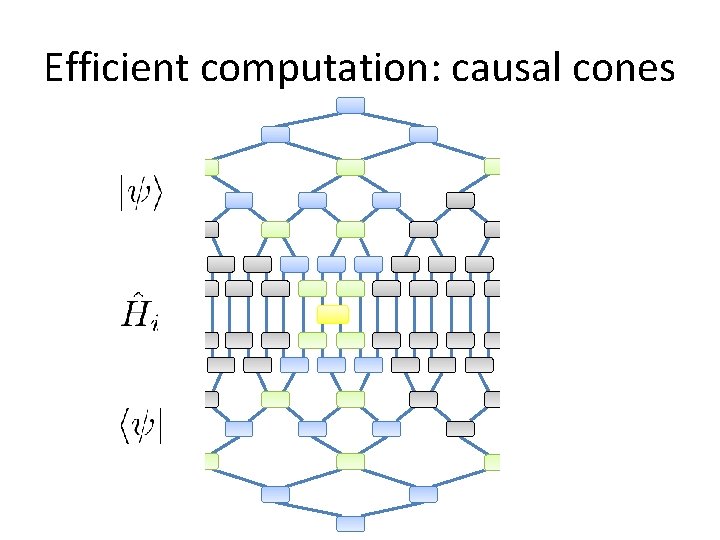
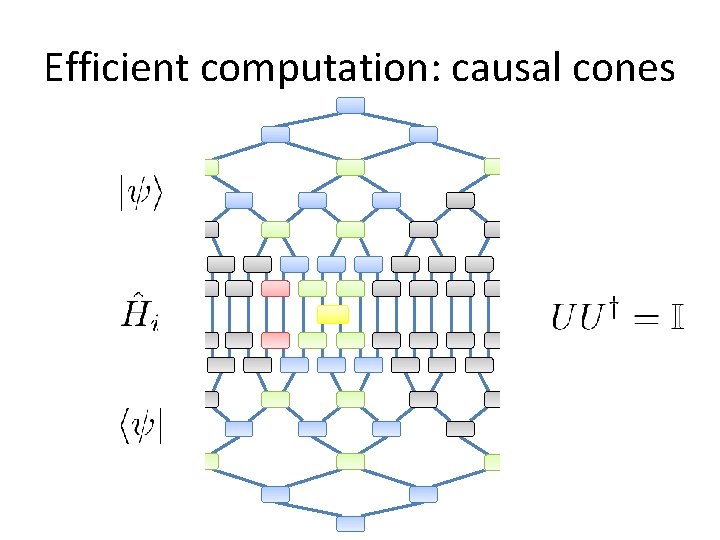
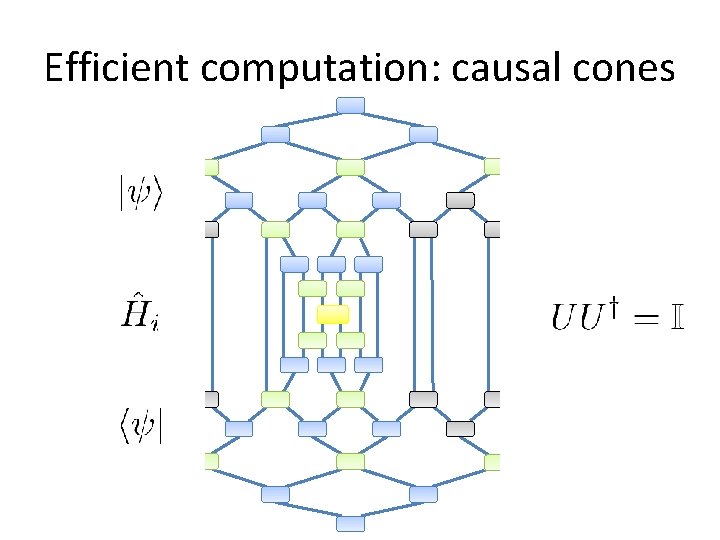
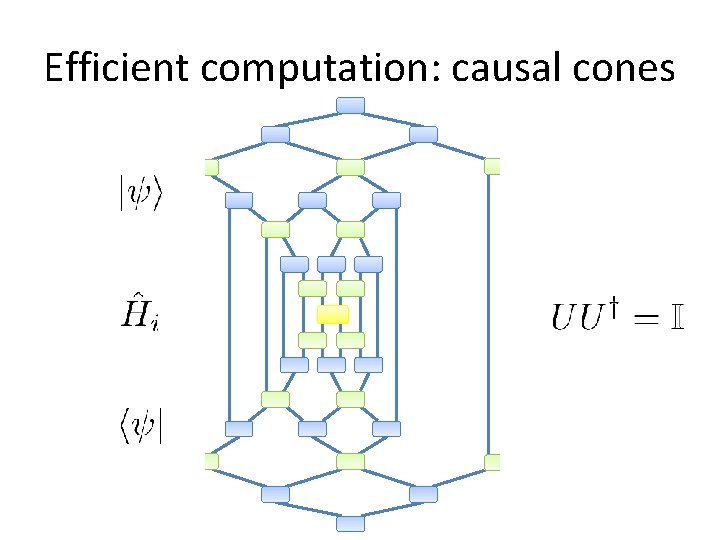
Efficient computation: causal cones 2 sites 3 sites 2 sites = =
Causal cone width • The width of the causal cone never grows greater than 3… • This makes all computations efficient!
Efficient computation: causal cones
Efficient computation: causal cones
Efficient computation: causal cones
Efficient computation: causal cones
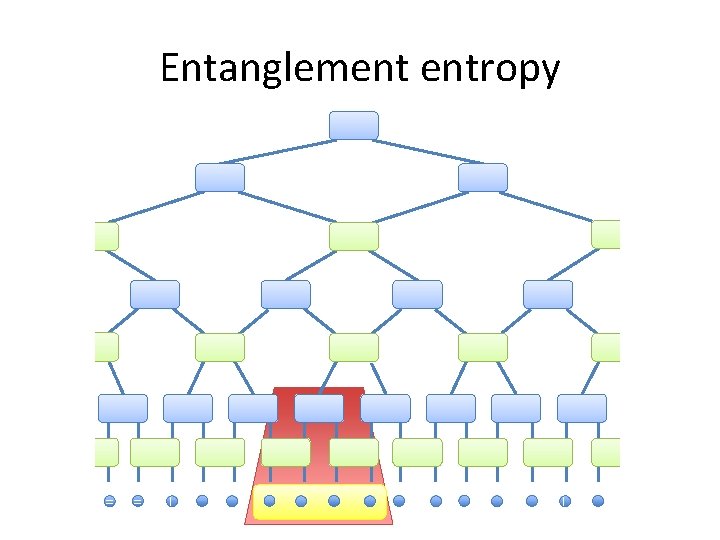
Entanglement entropy = =
Entanglement entropy = =
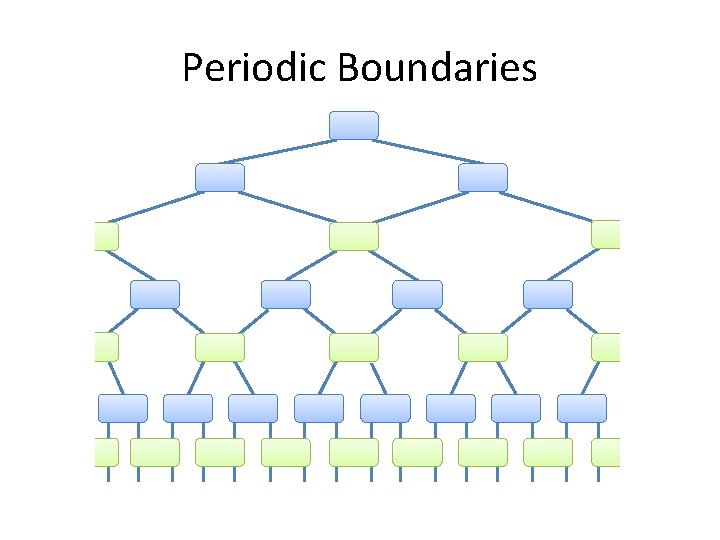
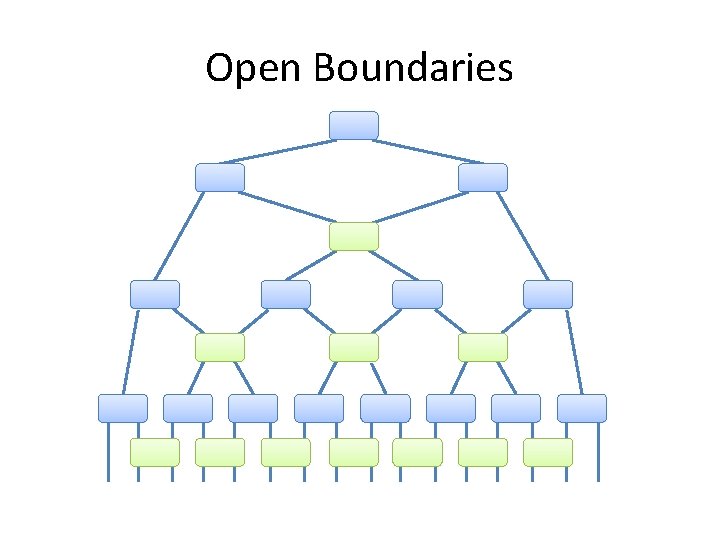
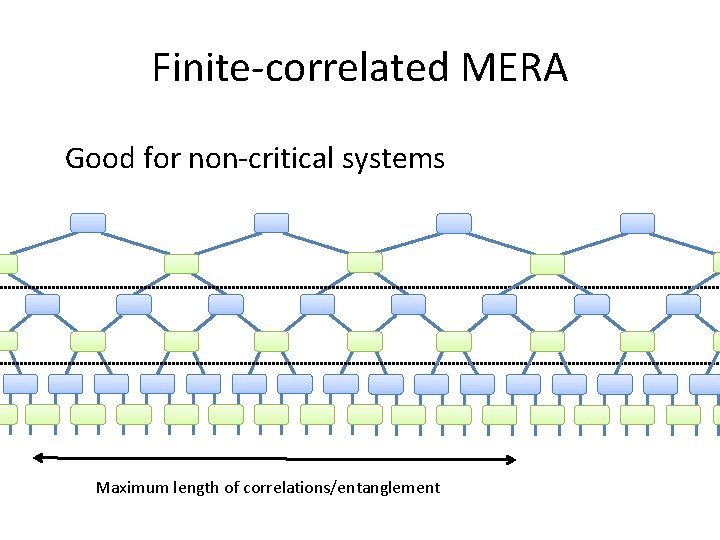
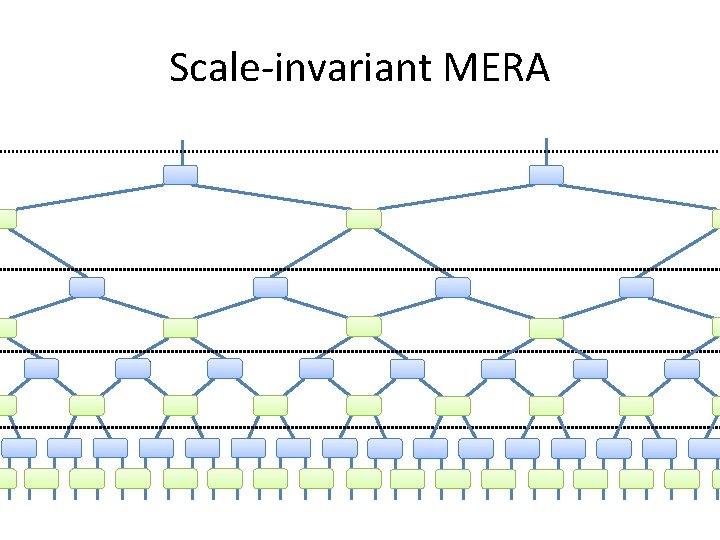
Other MERA structures • MERA can be modified to fit boundary conditions – Periodic – Open – Finite-correlated – Scale-invariant • Also, renormalization scheme can be modified – E. g. 3 -to-1 transformations = ternary MERA – Halve the number of disentanglers for efficiency
Periodic Boundaries
Open Boundaries
Finite-correlated MERA Good for non-critical systems Maximum length of correlations/entanglement
Scale-invariant MERA
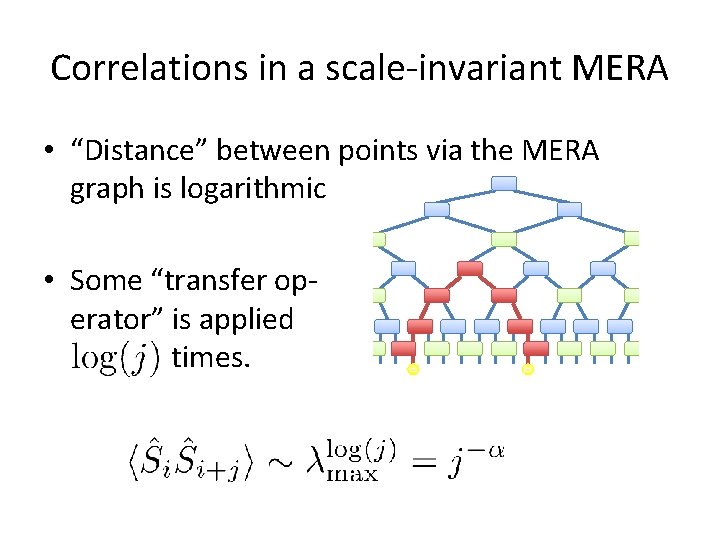
Correlations in a scale-invariant MERA • “Distance” between points via the MERA graph is logarithmic • Some “transfer operator” is applied times. = =
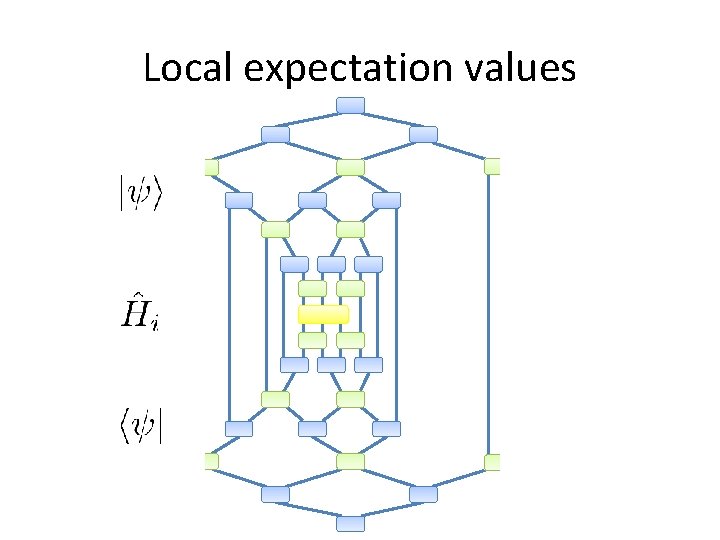
MERA algorithms Certain tasks are required to make use of the MERA: • Expectation values – Equivalently, reduced density matrices • Optimizing the tensor network (to find ground state) • Applying the renormalization procedure – Transform to longer or shorter length scales
Local expectation values
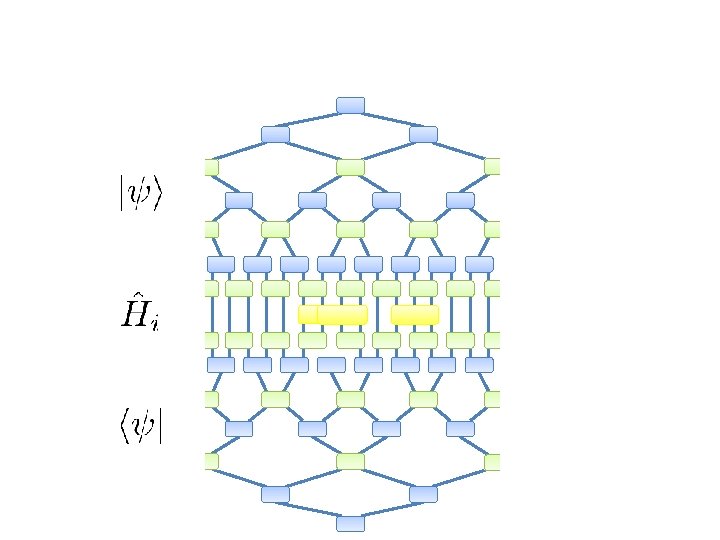
Global expectation values This if fine, but sometimes we want to take the expecation value of something translationally invariant, say a nearest-neighbour Hamiltonian. We can do this with cost (or with constant cost for the infinite scaleinvariant MERA).
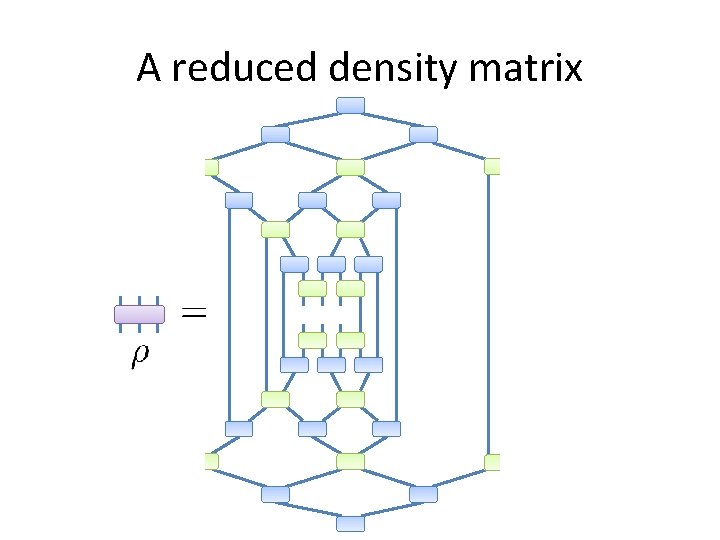
A reduced density matrix
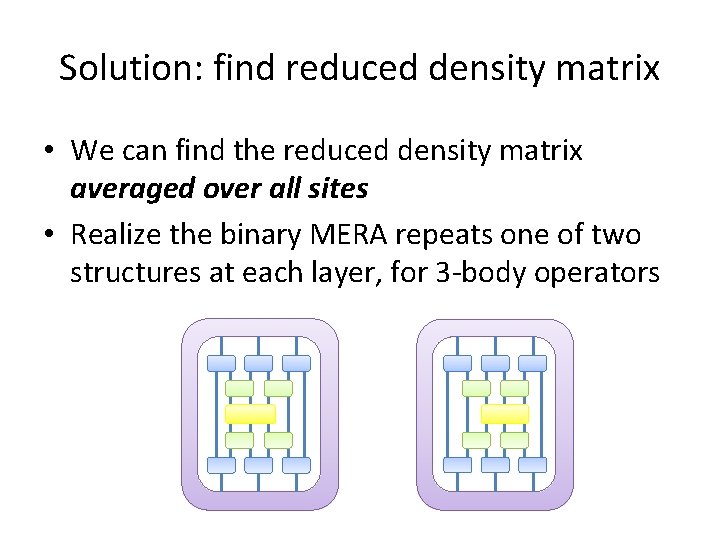
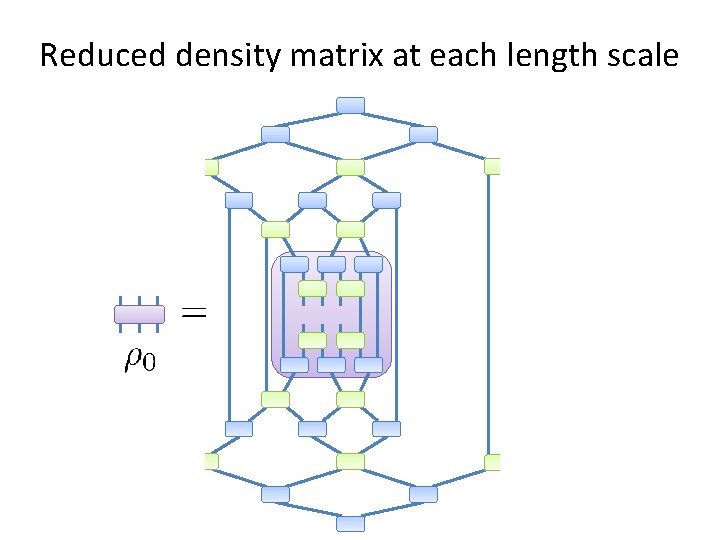
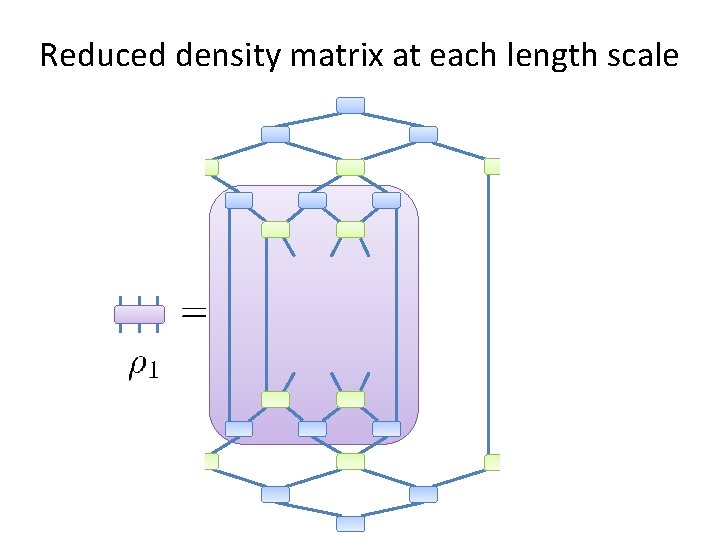
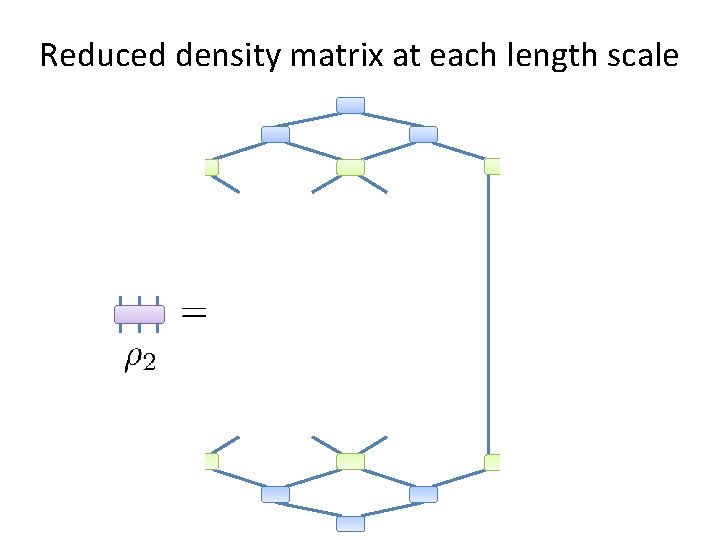
Solution: find reduced density matrix • We can find the reduced density matrix averaged over all sites • Realize the binary MERA repeats one of two structures at each layer, for 3 -body operators
Reduced density matrix at each length scale
Reduced density matrix at each length scale
Reduced density matrix at each length scale
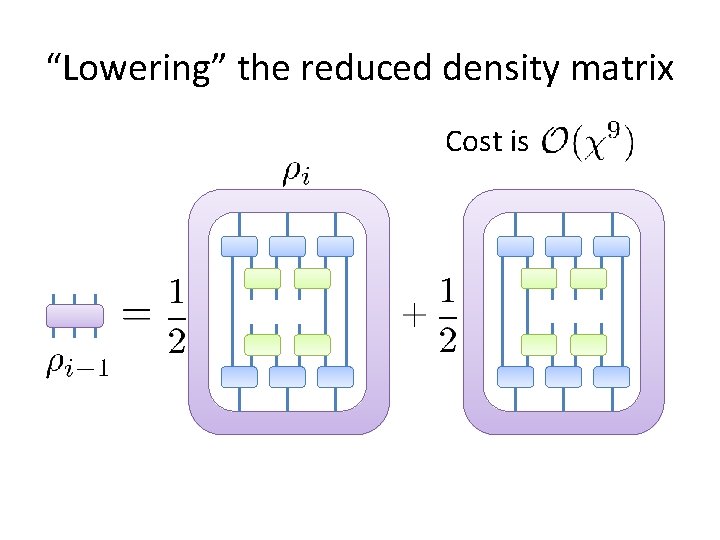
“Lowering” the reduced density matrix Cost is
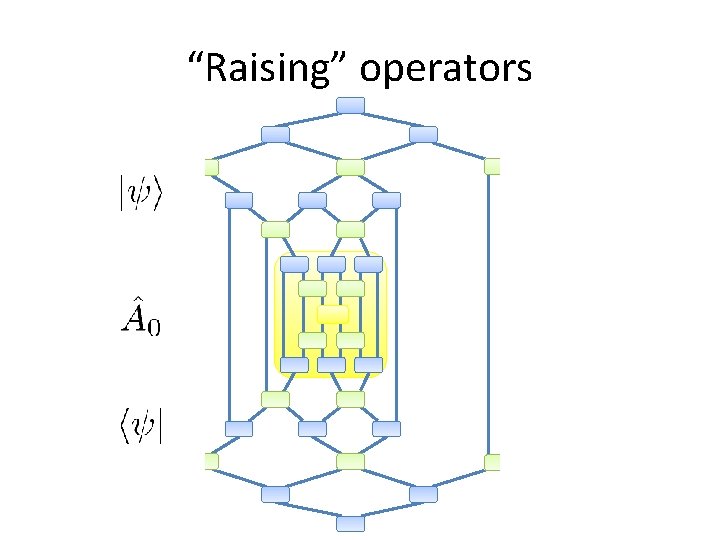
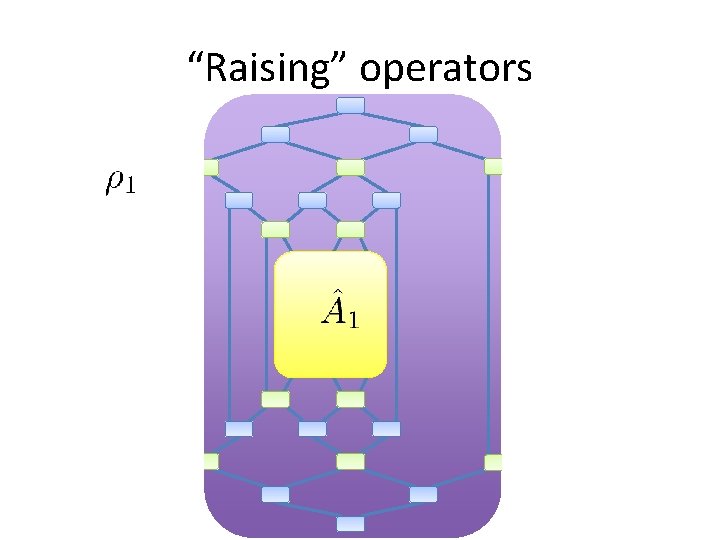
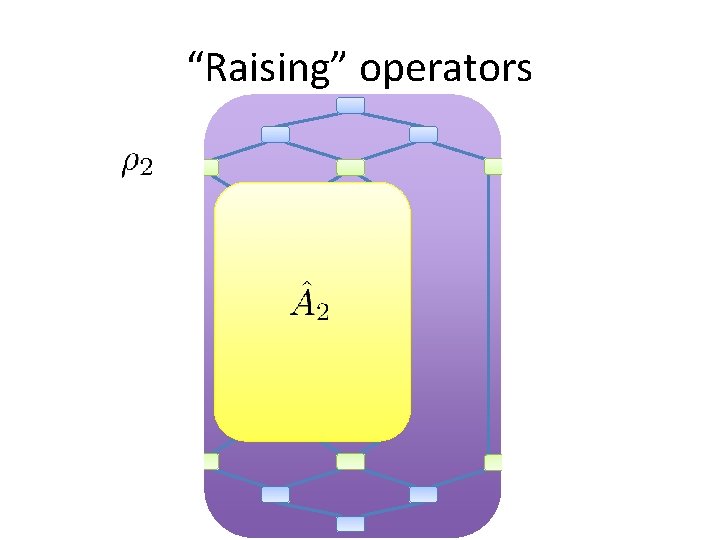
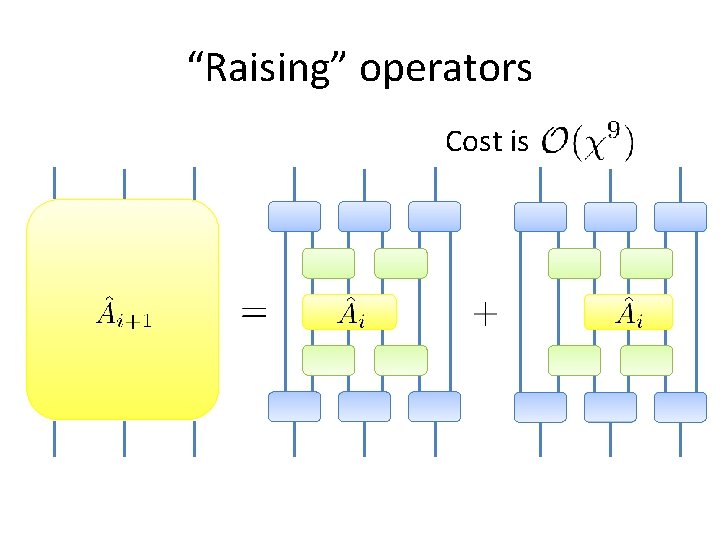
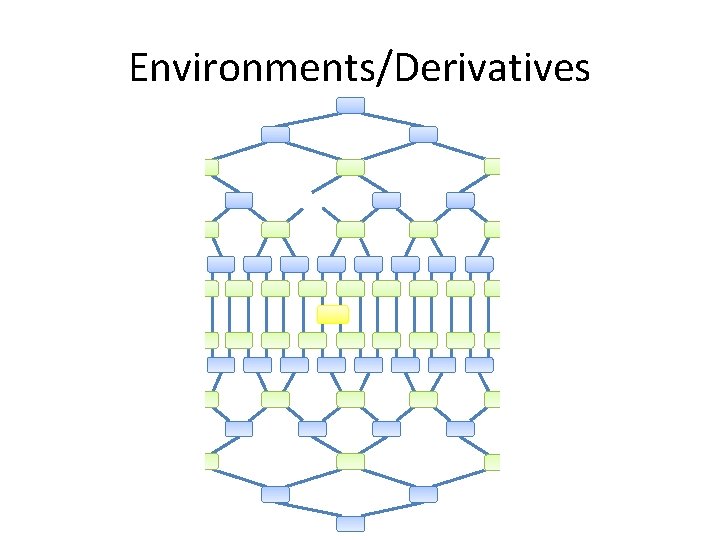
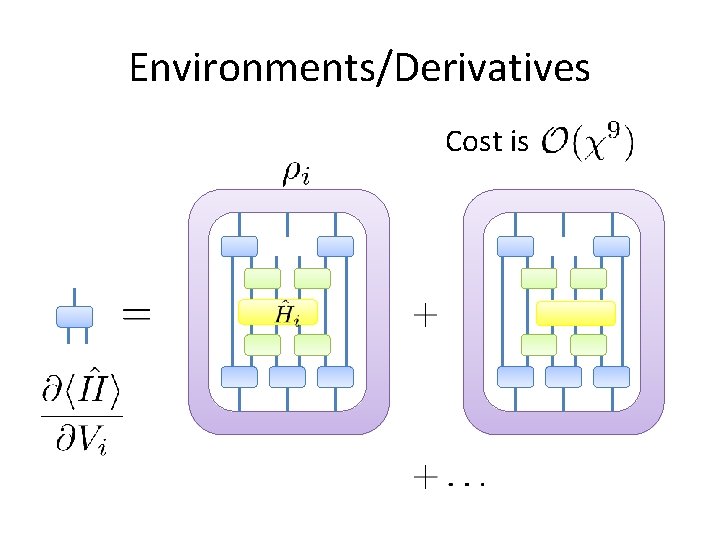
Optimizing the MERA • We need to minimize the energy. • Just like DMRG, we optimize one tensor at a time. • To do this, one needs the derivative of the energy with respect to the tensor, which we call the “environment” • BUT. . . We need one more ingredient first: raising operators
“Raising” operators
“Raising” operators
“Raising” operators
“Raising” operators Cost is
Environments/Derivatives
Environments/Derivatives Cost is
Single-operator updates: SVD • Question: which unitary minimizes the energy? • Answer: the singular-value decomposition gives the answer. • Thoughts: – Polar decomposition is more direct – Solving the quadratic problem could be more efficient – and more like the DMRG algorithm.
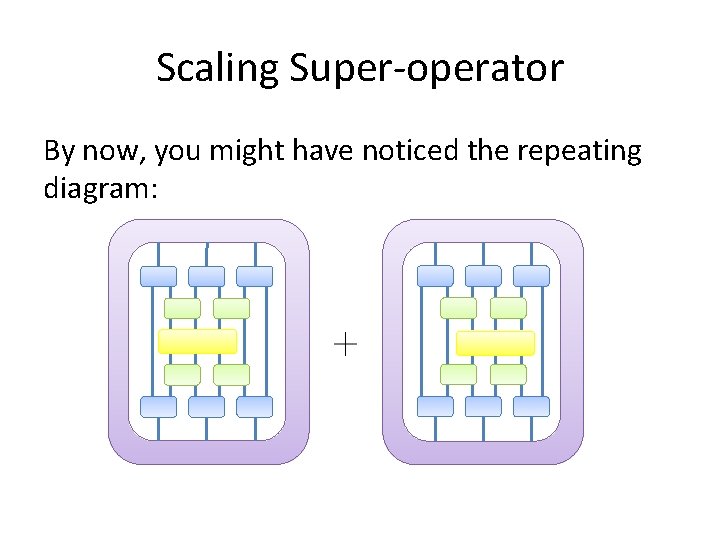
Scaling Super-operator By now, you might have noticed the repeating diagram:
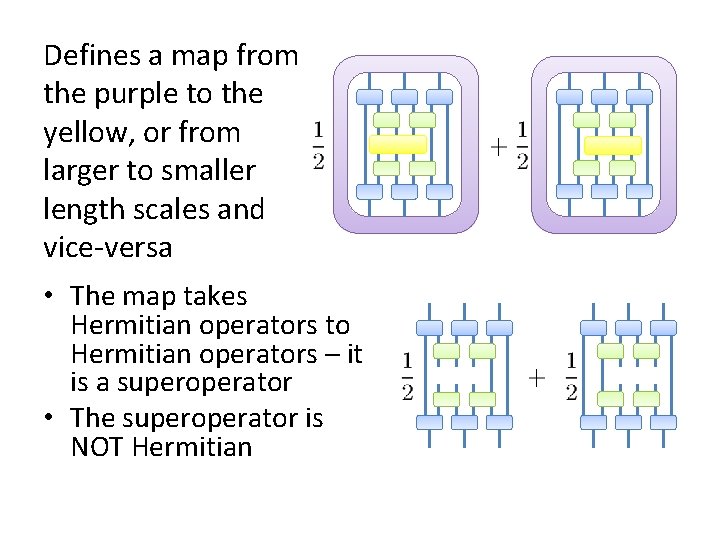
Defines a map from the purple to the yellow, or from larger to smaller length scales and vice-versa • The map takes Hermitian operators to Hermitian operators – it is a superoperator • The superoperator is NOT Hermitian
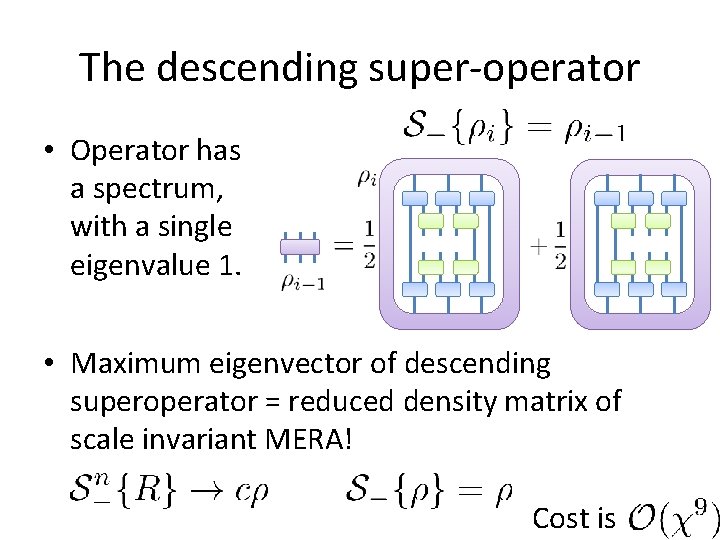
The descending super-operator • Operator has a spectrum, with a single eigenvalue 1. • Maximum eigenvector of descending superoperator = reduced density matrix of scale invariant MERA! Cost is
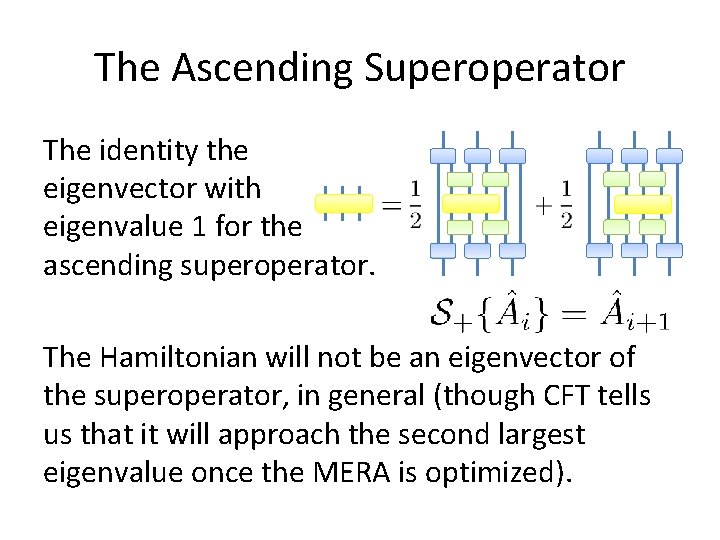
The Ascending Superoperator The identity the eigenvector with eigenvalue 1 for the ascending superoperator. The Hamiltonian will not be an eigenvector of the superoperator, in general (though CFT tells us that it will approach the second largest eigenvalue once the MERA is optimized).
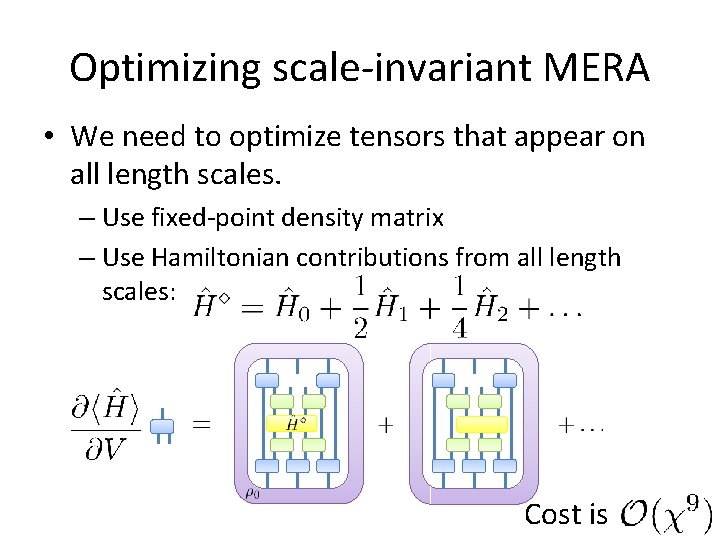
Optimizing scale-invariant MERA • We need to optimize tensors that appear on all length scales. – Use fixed-point density matrix – Use Hamiltonian contributions from all length scales: Cost is
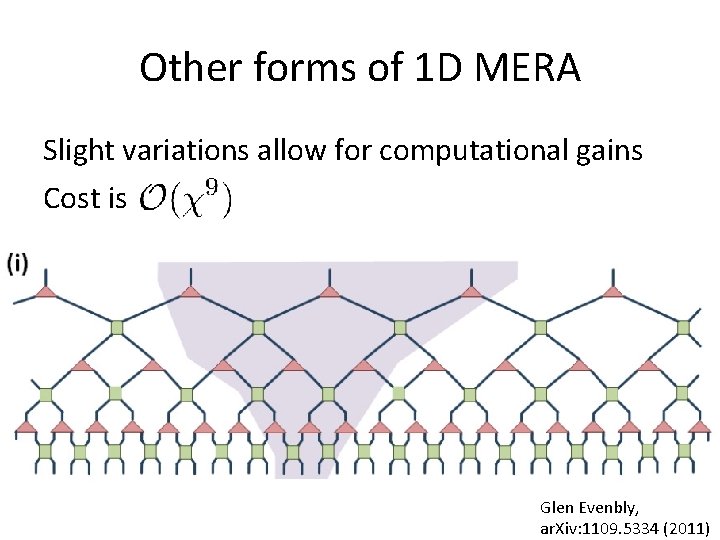
Other forms of 1 D MERA Slight variations allow for computational gains Cost is Glen Evenbly, ar. Xiv: 1109. 5334 (2011)
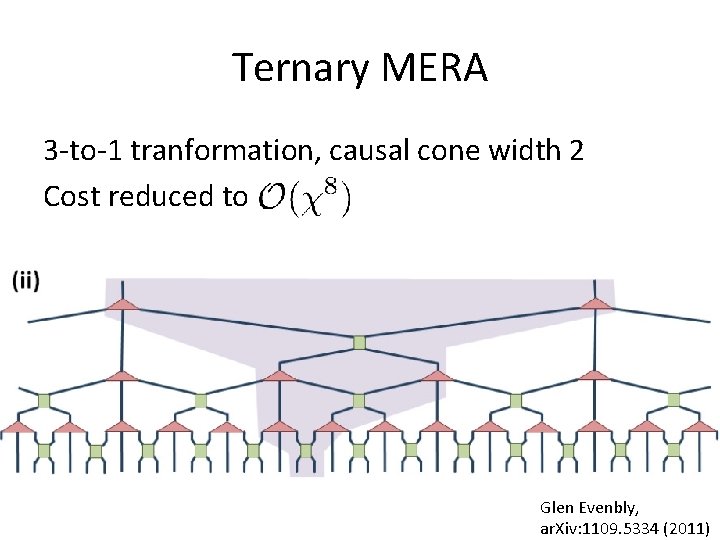
Ternary MERA 3 -to-1 tranformation, causal cone width 2 Cost reduced to Glen Evenbly, ar. Xiv: 1109. 5334 (2011)
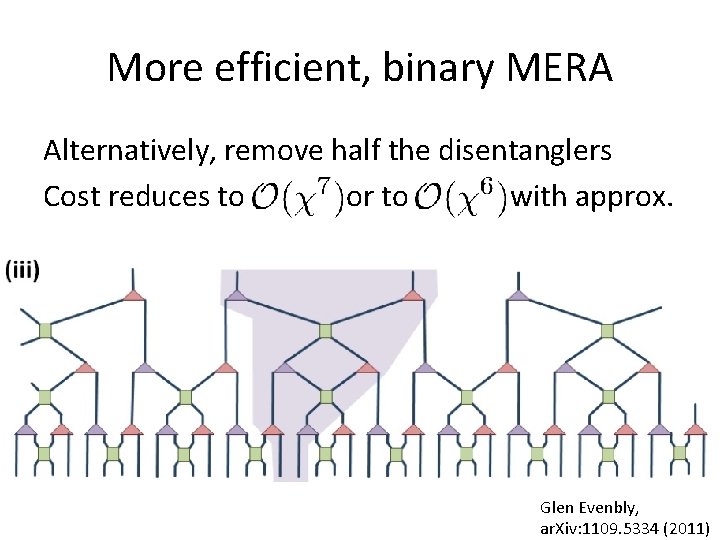
More efficient, binary MERA Alternatively, remove half the disentanglers Cost reduces to or to with approx. Glen Evenbly, ar. Xiv: 1109. 5334 (2011)
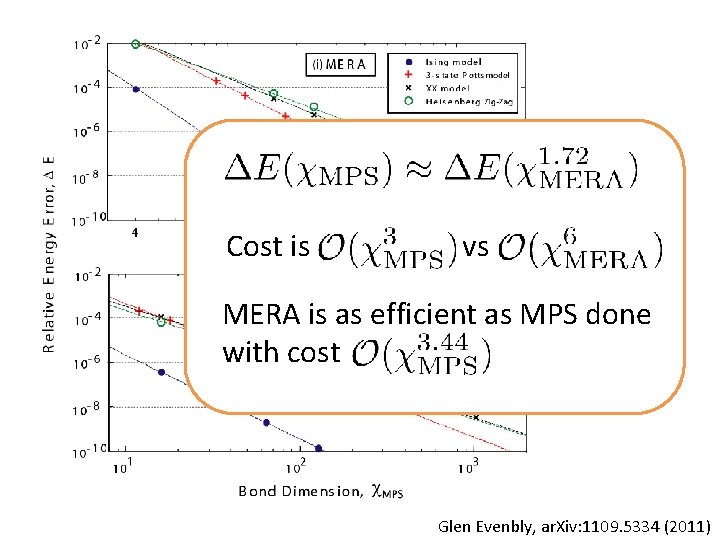
Scaling of cost Cost is vs MERA is as efficient as MPS done with cost Glen Evenbly, ar. Xiv: 1109. 5334 (2011)
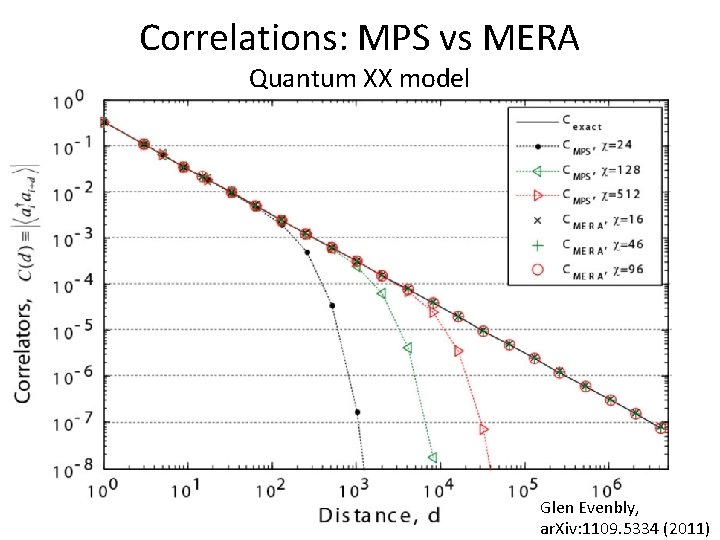
Correlations: MPS vs MERA Quantum XX model Glen Evenbly, ar. Xiv: 1109. 5334 (2011)
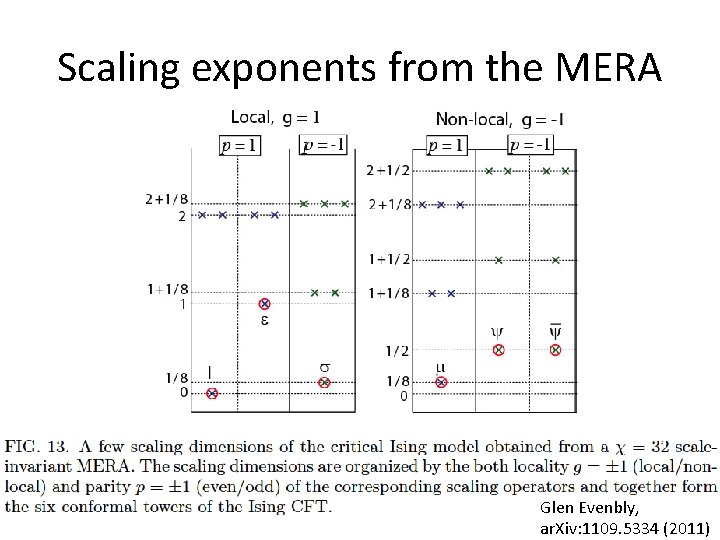
Brief intro to conformal field theory • Conformal field theory describes the universality class of the phase transition • Amongst other things, it gives a set of operators and their scaling dimensions • From scale-invariant MERA, we can extract both these scaling dimensions and the corresponding operators
Scaling exponents from the MERA Glen Evenbly, ar. Xiv: 1109. 5334 (2011)
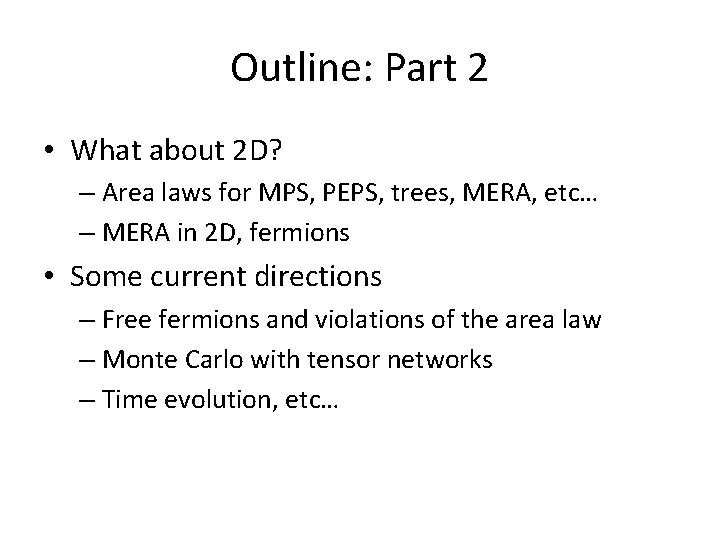
Outline: Part 2 • What about 2 D? – Area laws for MPS, PEPS, trees, MERA, etc… – MERA in 2 D, fermions • Some current directions – Free fermions and violations of the area law – Monte Carlo with tensor networks – Time evolution, etc…