
MultiRange Analog Ammeter MultiRange Multiple FullScale Values Ranges
- Slides: 9
Multi-Range Analog Ammeter • Multi-Range – Multiple Full-Scale Values – Ranges less than and/or greater than the device’s full-scale value – Measure 10 m. A with a 0 -1 m. A device • Analog Meter – Moving-pointer – Works by interaction of magnetic fields ECE 201 Circuit Theory I 1
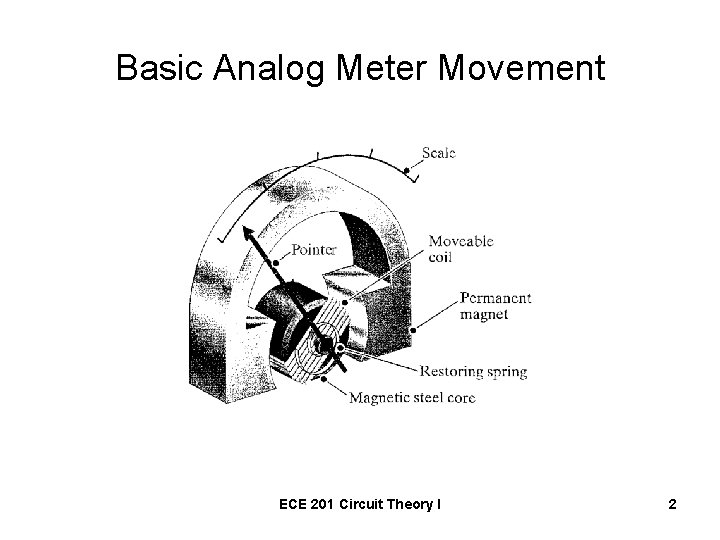
Basic Analog Meter Movement ECE 201 Circuit Theory I 2
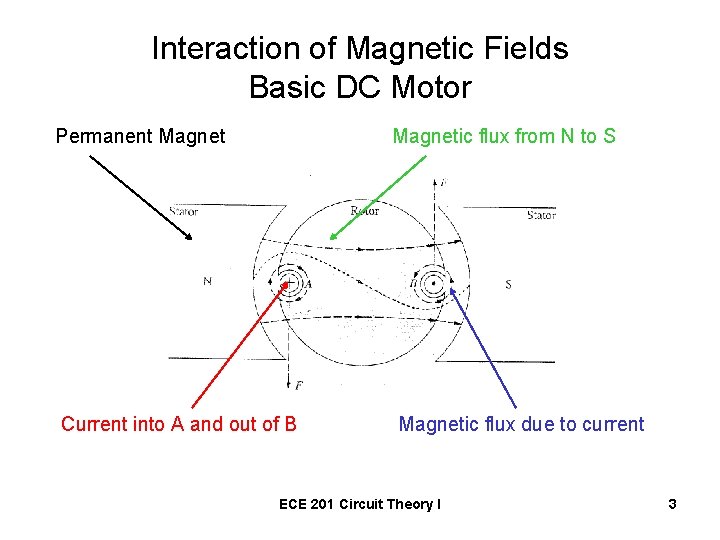
Interaction of Magnetic Fields Basic DC Motor Permanent Magnetic flux from N to S Current into A and out of B Magnetic flux due to current ECE 201 Circuit Theory I 3
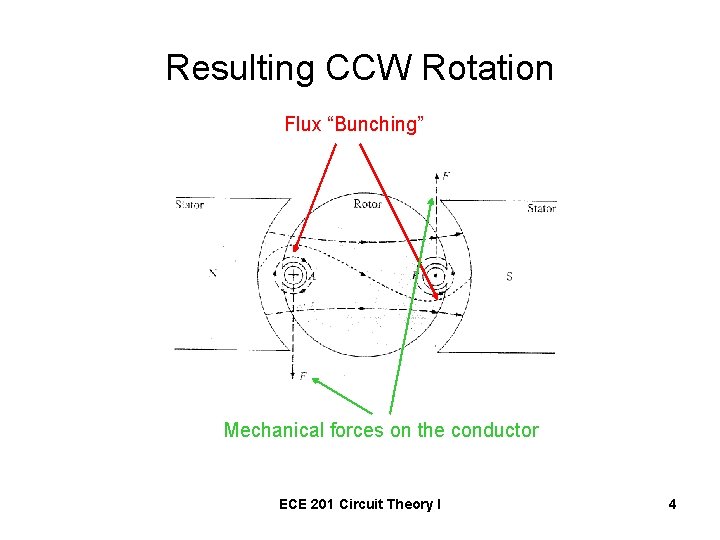
Resulting CCW Rotation Flux “Bunching” Mechanical forces on the conductor ECE 201 Circuit Theory I 4
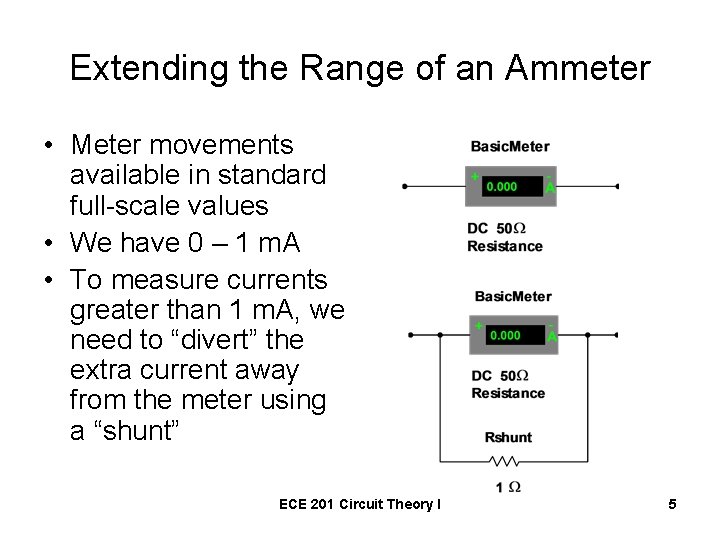
Extending the Range of an Ammeter • Meter movements available in standard full-scale values • We have 0 – 1 m. A • To measure currents greater than 1 m. A, we need to “divert” the extra current away from the meter using a “shunt” ECE 201 Circuit Theory I 5
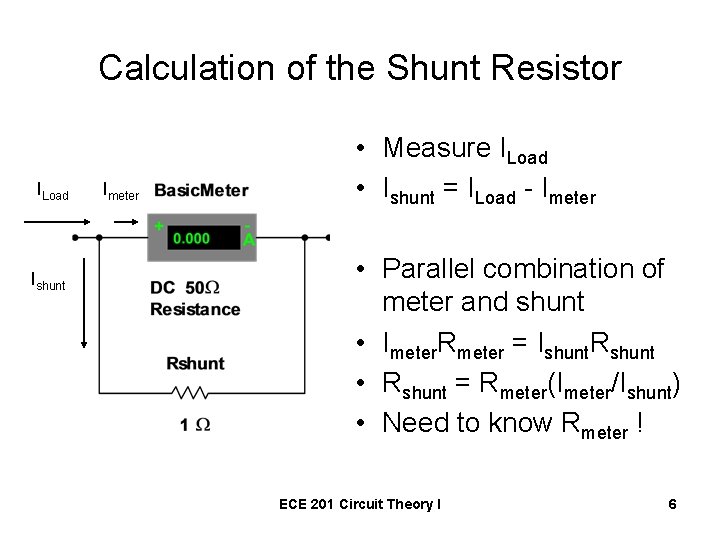
Calculation of the Shunt Resistor ILoad Ishunt Imeter • Measure ILoad • Ishunt = ILoad - Imeter • Parallel combination of meter and shunt • Imeter. Rmeter = Ishunt. Rshunt • Rshunt = Rmeter(Imeter/Ishunt) • Need to know Rmeter ! ECE 201 Circuit Theory I 6
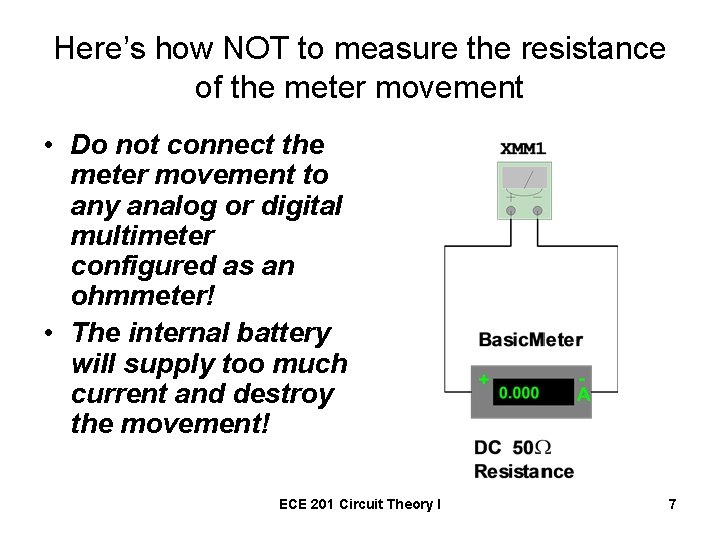
Here’s how NOT to measure the resistance of the meter movement • Do not connect the meter movement to any analog or digital multimeter configured as an ohmmeter! • The internal battery will supply too much current and destroy the movement! ECE 201 Circuit Theory I 7
Preliminary (Prelab) Work • Devise a non-destructive scheme to determine the internal resistance of the meter movement. • You may use any equipment or components (power supply, function generator, resistors, potentiometers, etc. ). • Have your method approved BEFORE you begin the experiment! ECE 201 Circuit Theory I 8
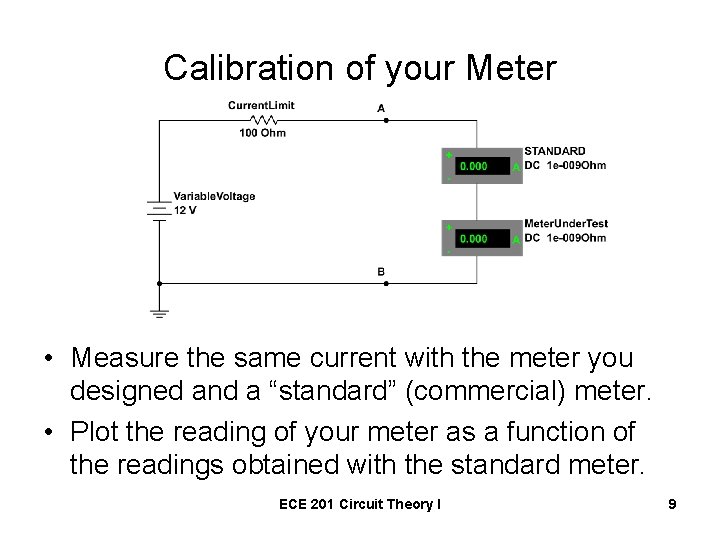
Calibration of your Meter • Measure the same current with the meter you designed and a “standard” (commercial) meter. • Plot the reading of your meter as a function of the readings obtained with the standard meter. ECE 201 Circuit Theory I 9