
Multiprocessor Architecture Basics Companion slides for The Art
Multiprocessor Architecture Basics Companion slides for The Art of Multiprocessor Programming by Maurice Herlihy & Nir Shavit
Multiprocessor Architecture • Abstract models are (mostly) OK to understand algorithm correctness and progress • To understand how concurrent algorithms actually perform • You need to understand something about multiprocessor architectures Art of Multiprocessor Programming 2
Pieces • • • Processors Threads Interconnect Memory Caches Art of Multiprocessor Programming 3
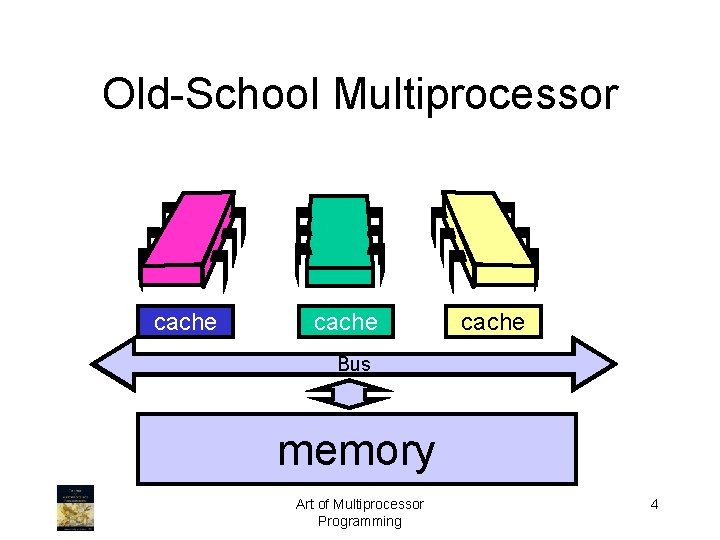
Old-School Multiprocessor cache Bus memory Art of Multiprocessor Programming 4
Old School • Processors on different chips • Processors share off chip memory resources • Communication between processors typically slow Art of Multiprocessor Programming 5
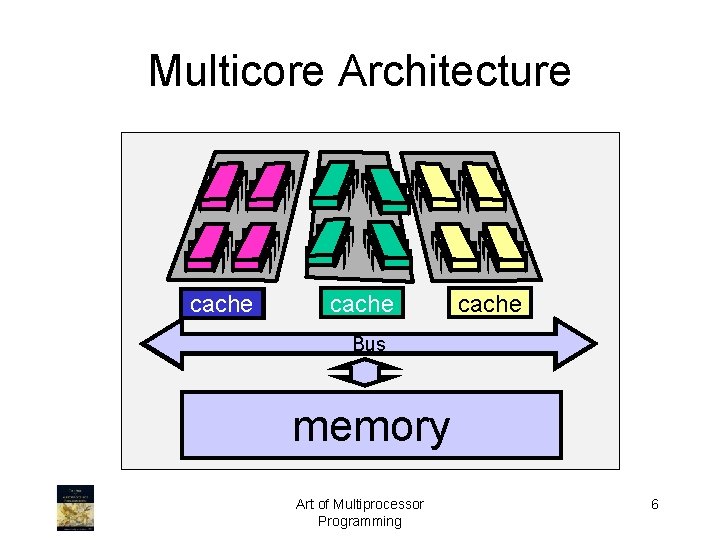
Multicore Architecture cache Bus memory Art of Multiprocessor Programming 6
Multicore • All Processors on same chip • Processors share on chip memory resources • Communication between processors now very fast Art of Multiprocessor Programming 7
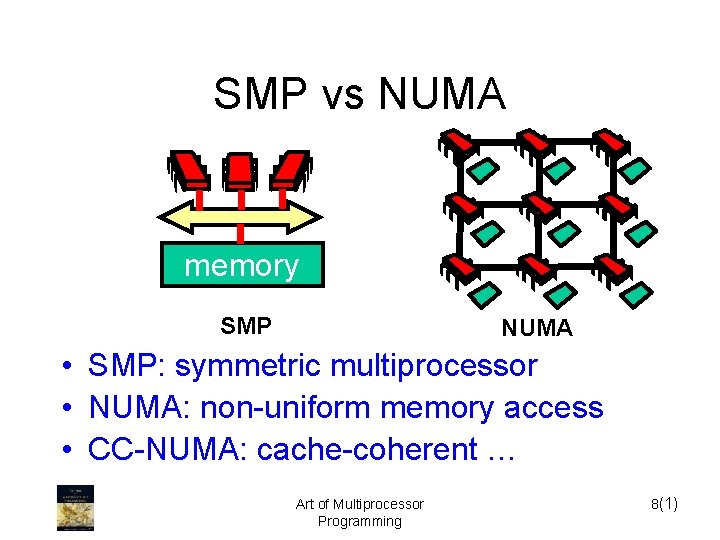
SMP vs NUMA memory SMP NUMA • SMP: symmetric multiprocessor • NUMA: non-uniform memory access • CC-NUMA: cache-coherent … Art of Multiprocessor Programming 8(1)
Future Multicores • Short term: SMP • Long Term: most likely a combination of SMP and NUMA properties Art of Multiprocessor Programming 9
Understanding the Pieces • Lets try to understand what the pieces that make the multiprocessor machine are • And how they fit together Art of Multiprocessor Programming 10
Processors • Cycle: – Fetch and execute one instruction • Cycle times change – 1980: 10 million cycles/sec – 2005: 3, 000 million cycles/sec Art of Multiprocessor Programming 11
Computer Architecture • Measure time in cycles – Absolute cycle times change • Memory access: ~100 s of cycles – Changes slowly – Mostly gets worse Art of Multiprocessor Programming 12
Threads • • Execution of a sequential program Software, not hardware A processor can run a thread Put it aside – Thread does I/O – Thread runs out of time • Run another thread Art of Multiprocessor Programming 13
Analogy • You work in an office • When you leave for lunch, someone else takes over your office. • If you don’t take a break, a security guard shows up and escorts you to the cafeteria. • When you return, you may get a different office Art of Multiprocessor Programming 14
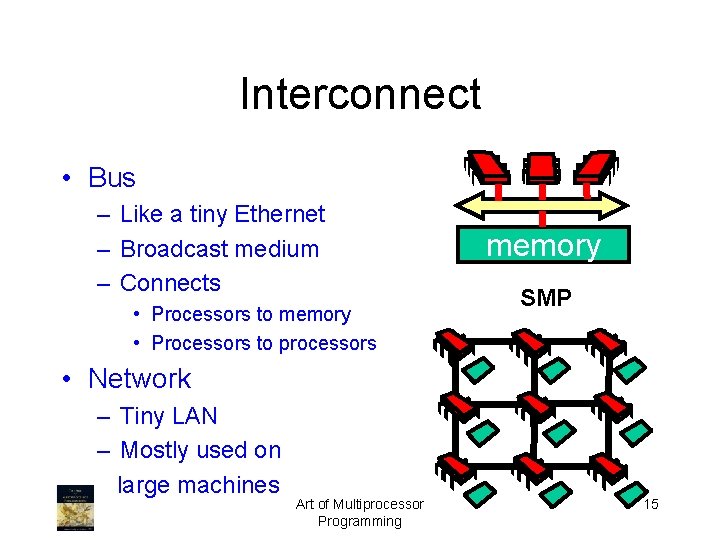
Interconnect • Bus – Like a tiny Ethernet – Broadcast medium – Connects • Processors to memory • Processors to processors memory SMP • Network – Tiny LAN – Mostly used on large machines Art of Multiprocessor Programming 15
Interconnect • Interconnect is a finite resource • Processors can be delayed if others are consuming too much • Avoid algorithms that use too much bandwidth Art of Multiprocessor Programming 16
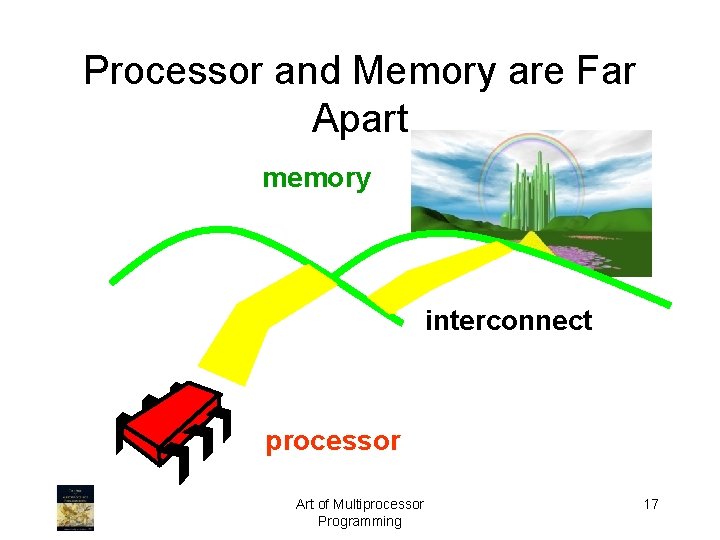
Processor and Memory are Far Apart memory interconnect processor Art of Multiprocessor Programming 17
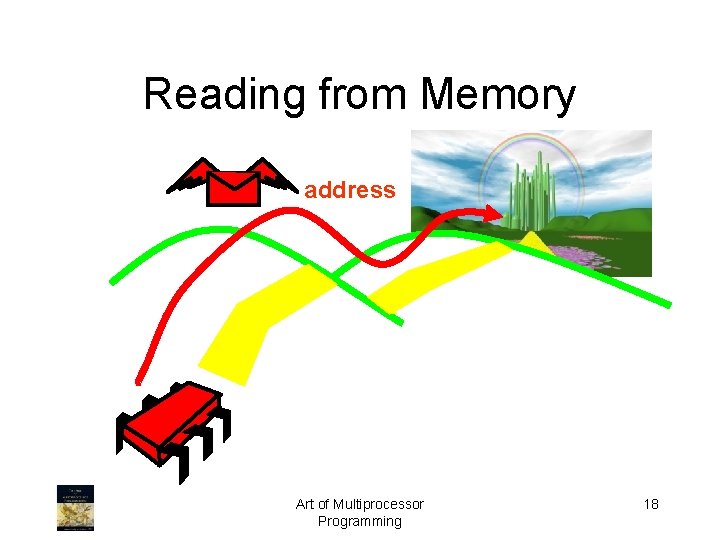
Reading from Memory address Art of Multiprocessor Programming 18
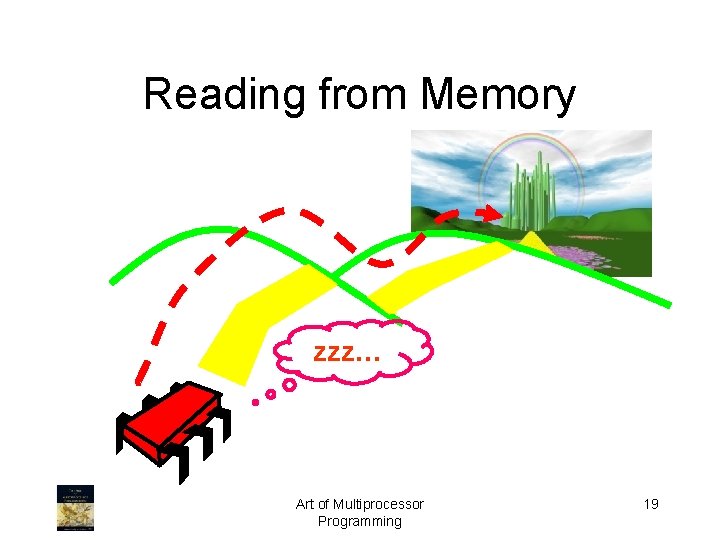
Reading from Memory zzz… Art of Multiprocessor Programming 19
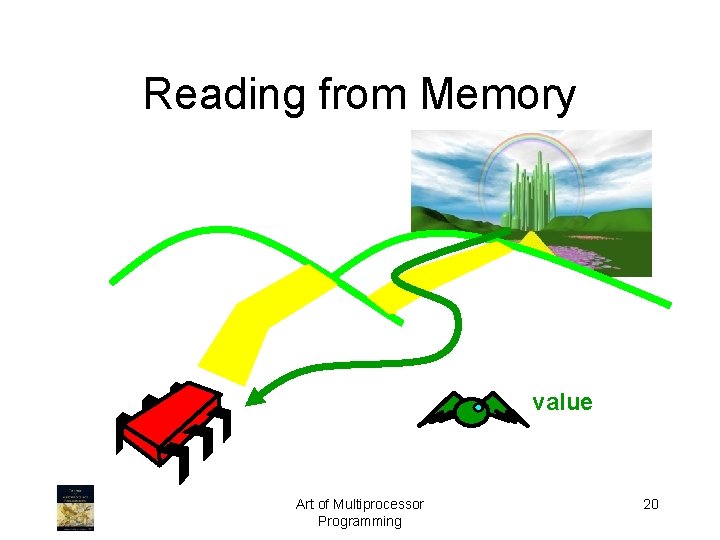
Reading from Memory value Art of Multiprocessor Programming 20
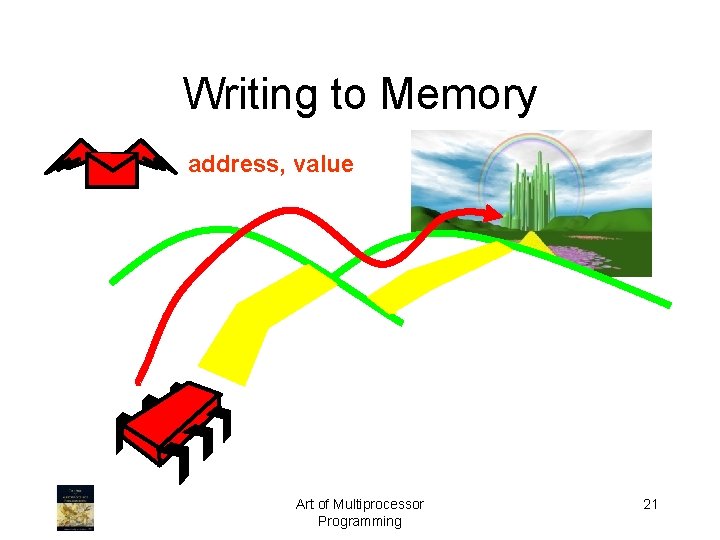
Writing to Memory address, value Art of Multiprocessor Programming 21
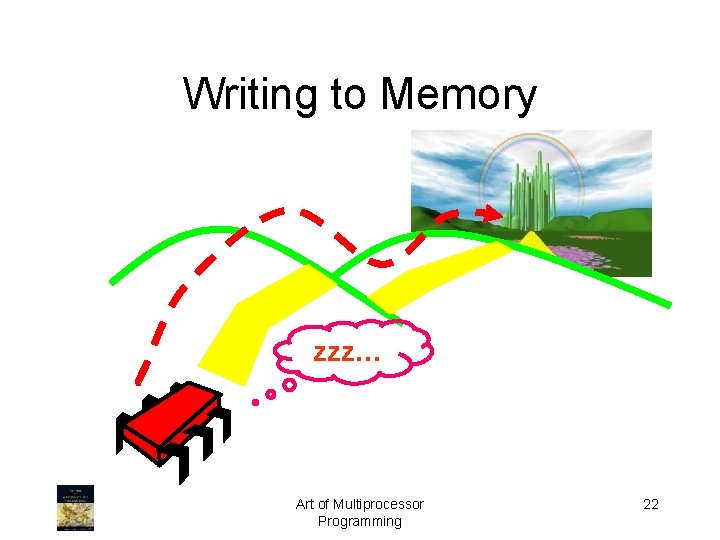
Writing to Memory zzz… Art of Multiprocessor Programming 22
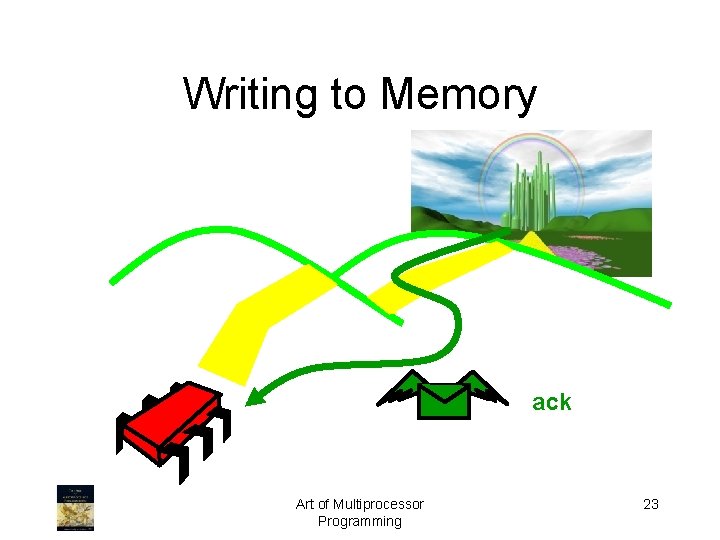
Writing to Memory ack Art of Multiprocessor Programming 23
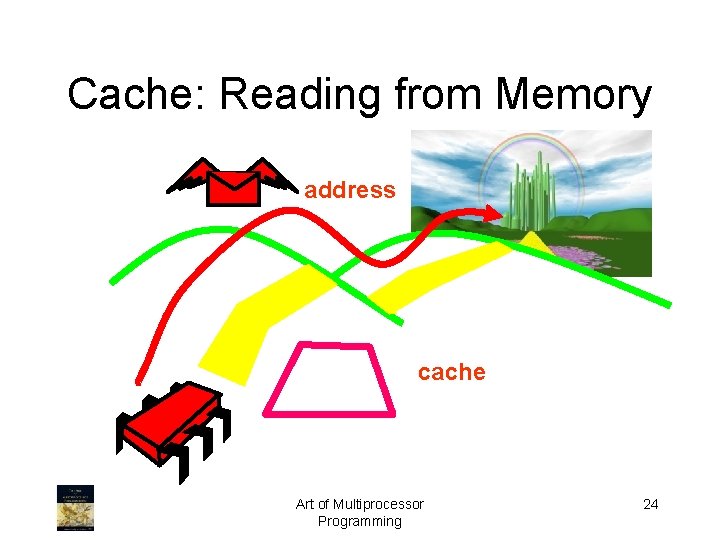
Cache: Reading from Memory address cache Art of Multiprocessor Programming 24
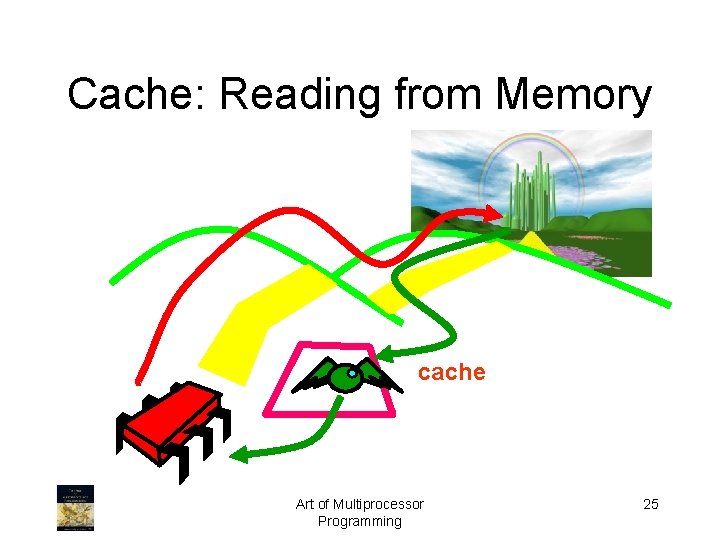
Cache: Reading from Memory cache Art of Multiprocessor Programming 25
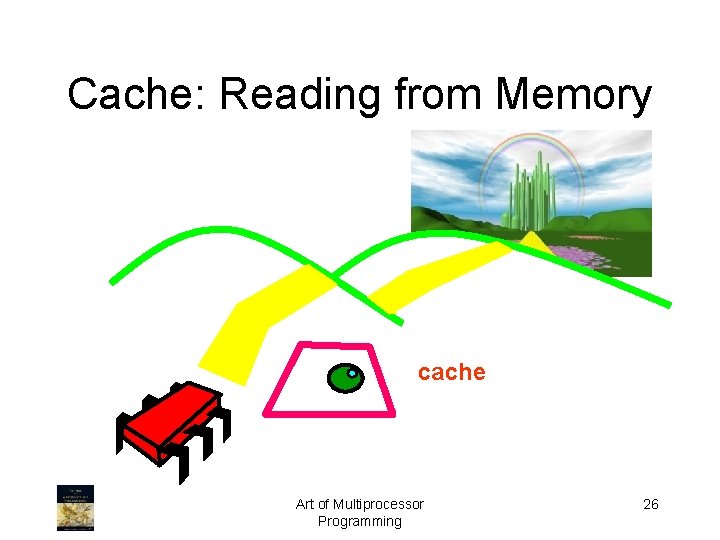
Cache: Reading from Memory cache Art of Multiprocessor Programming 26
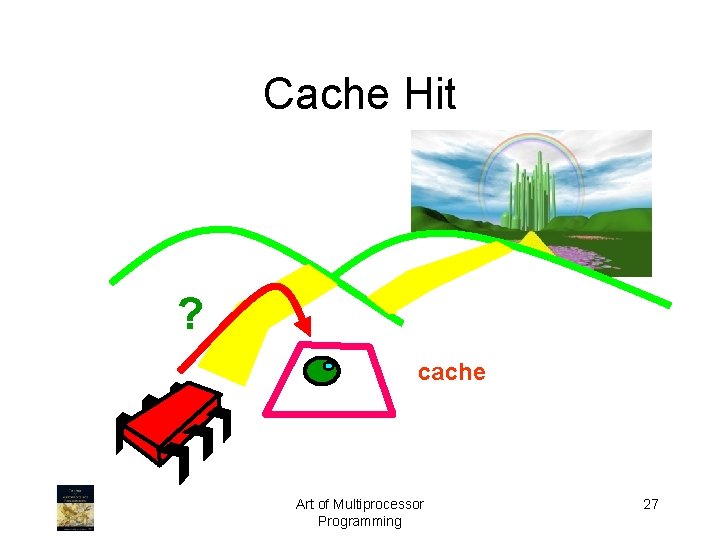
Cache Hit ? cache Art of Multiprocessor Programming 27
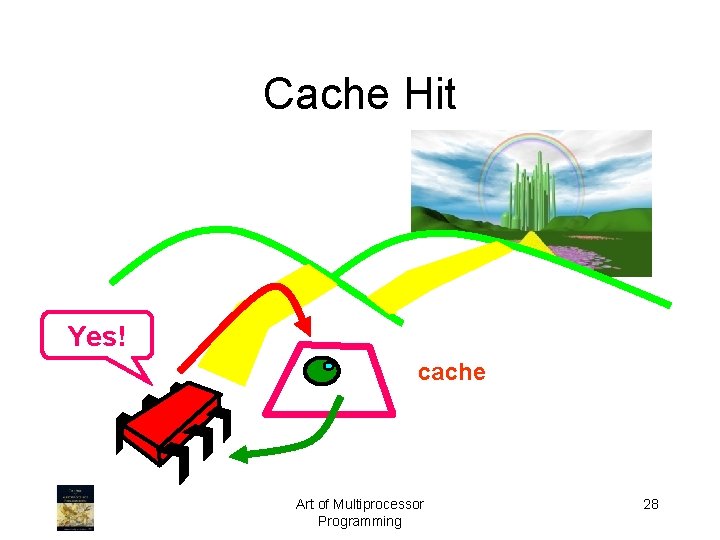
Cache Hit Yes! cache Art of Multiprocessor Programming 28
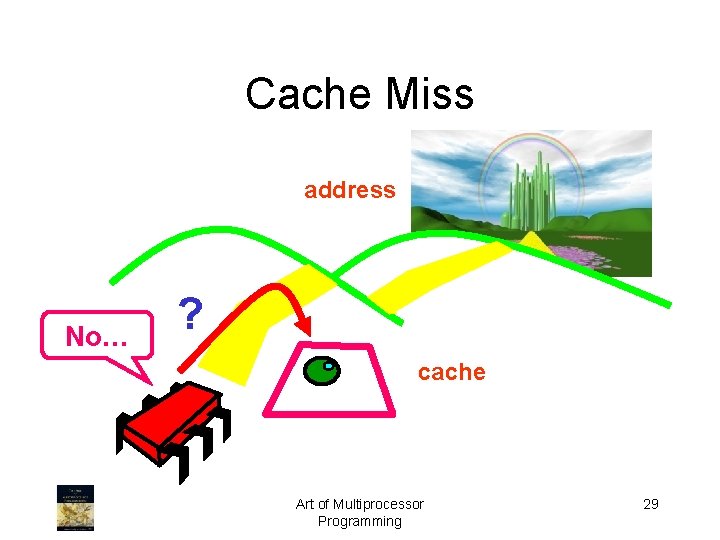
Cache Miss address No… ? cache Art of Multiprocessor Programming 29
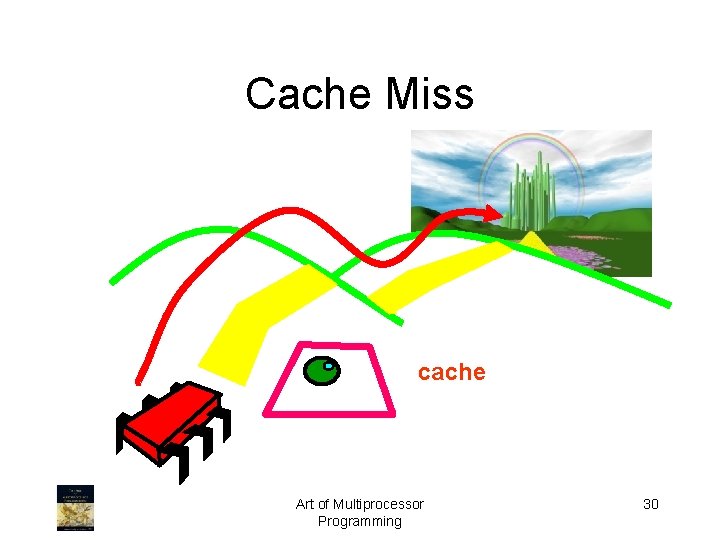
Cache Miss cache Art of Multiprocessor Programming 30
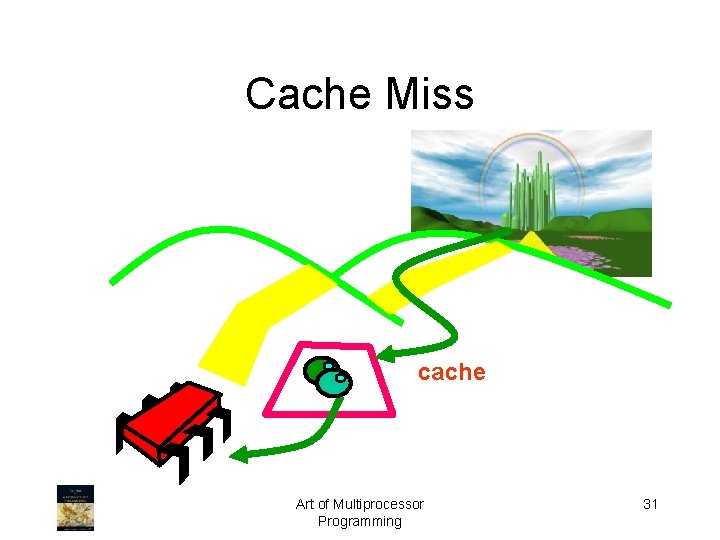
Cache Miss cache Art of Multiprocessor Programming 31
Local Spinning • With caches, spinning becomes practical • First time – Load flag bit into cache • As long as it doesn’t change – Hit in cache (no interconnect used) • When it changes – One-time cost – See cache coherence below Art of Multiprocessor Programming 32
Granularity • Caches operate at a larger granularity than a word • Cache line: fixed-size block containing the address (today 64 or 128 bytes) Art of Multiprocessor Programming 33
Locality • If you use an address now, you will probably use it again soon – Fetch from cache, not memory • If you use an address now, you will probably use a nearby address soon – In the same cache line Art of Multiprocessor Programming 34
Hit Ratio • Proportion of requests that hit in the cache • Measure of effectiveness of caching mechanism • Depends on locality of application Art of Multiprocessor Programming 35
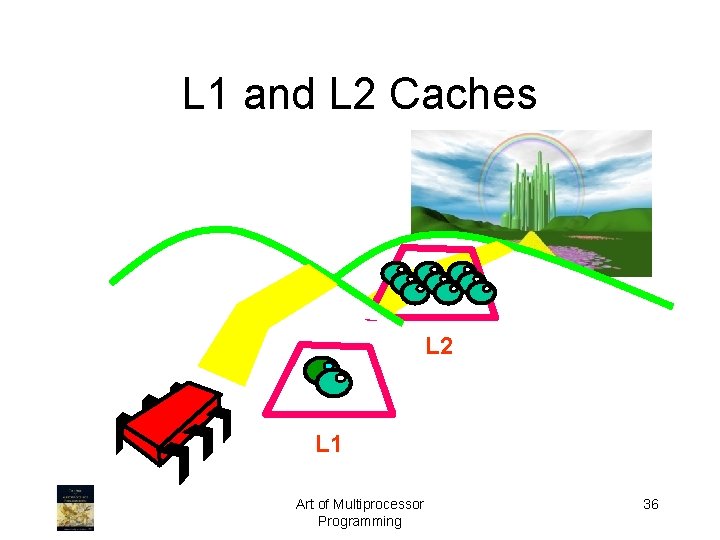
L 1 and L 2 Caches L 2 L 1 Art of Multiprocessor Programming 36
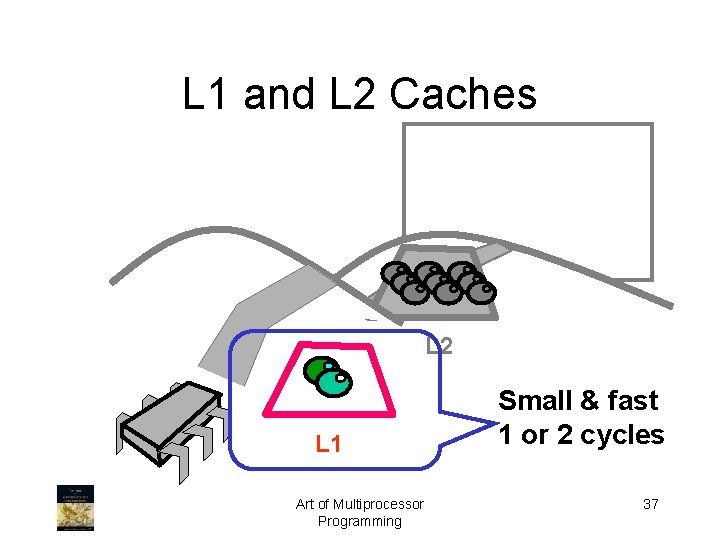
L 1 and L 2 Caches L 2 L 1 Art of Multiprocessor Programming Small & fast 1 or 2 cycles 37
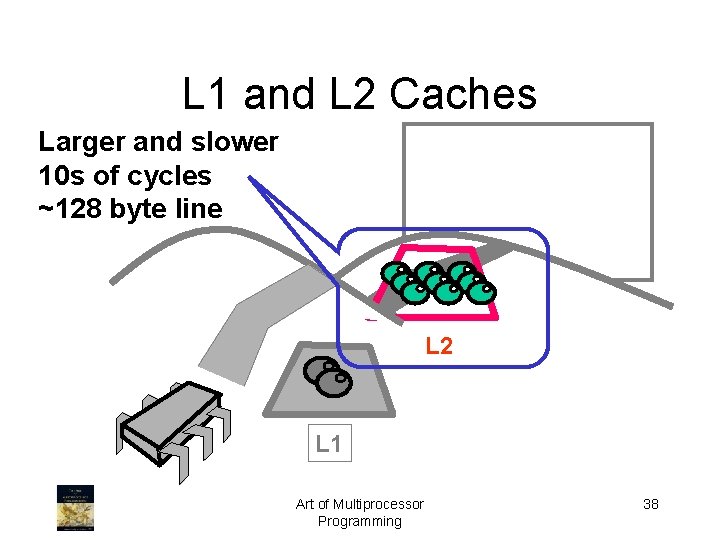
L 1 and L 2 Caches Larger and slower 10 s of cycles ~128 byte line L 2 L 1 Art of Multiprocessor Programming 38
When a Cache Becomes Full… • Need to make room for new entry • By evicting an existing entry • Need a replacement policy – Usually some kind of least recently used heuristic Art of Multiprocessor Programming 39
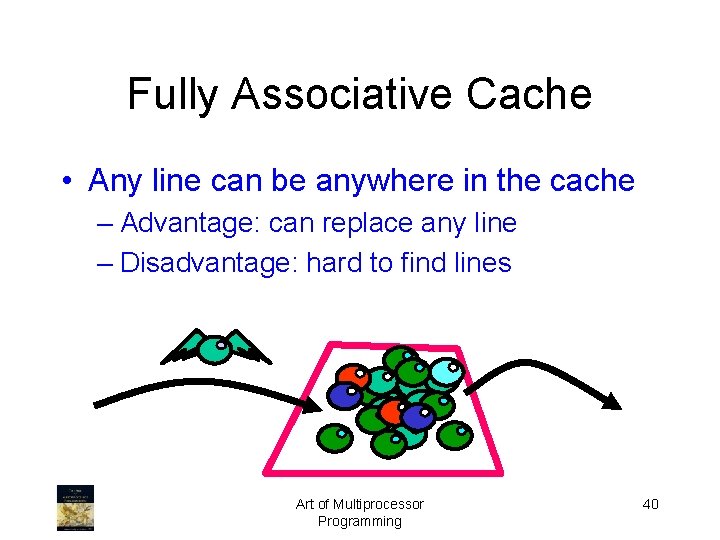
Fully Associative Cache • Any line can be anywhere in the cache – Advantage: can replace any line – Disadvantage: hard to find lines Art of Multiprocessor Programming 40
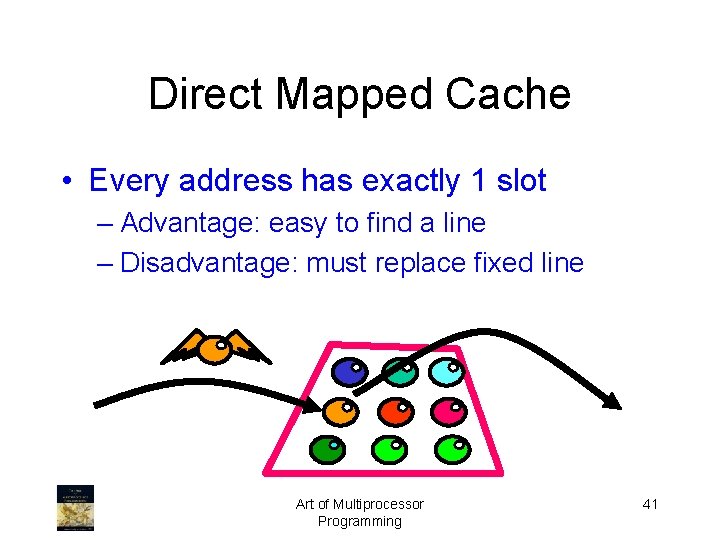
Direct Mapped Cache • Every address has exactly 1 slot – Advantage: easy to find a line – Disadvantage: must replace fixed line Art of Multiprocessor Programming 41
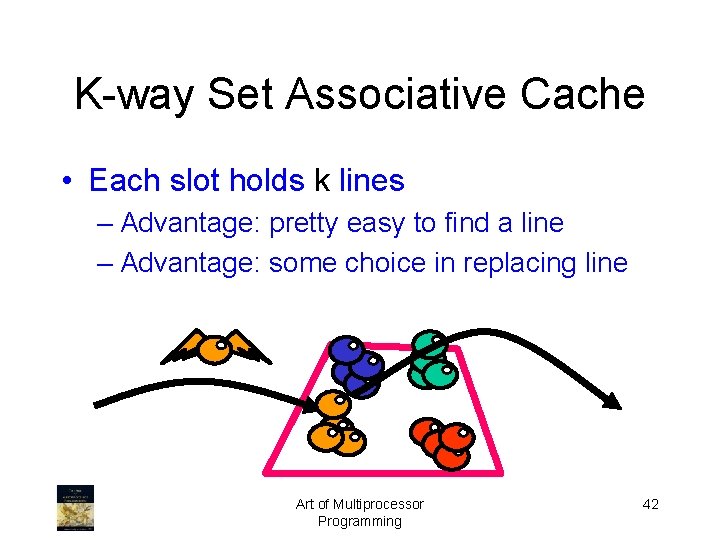
K-way Set Associative Cache • Each slot holds k lines – Advantage: pretty easy to find a line – Advantage: some choice in replacing line Art of Multiprocessor Programming 42
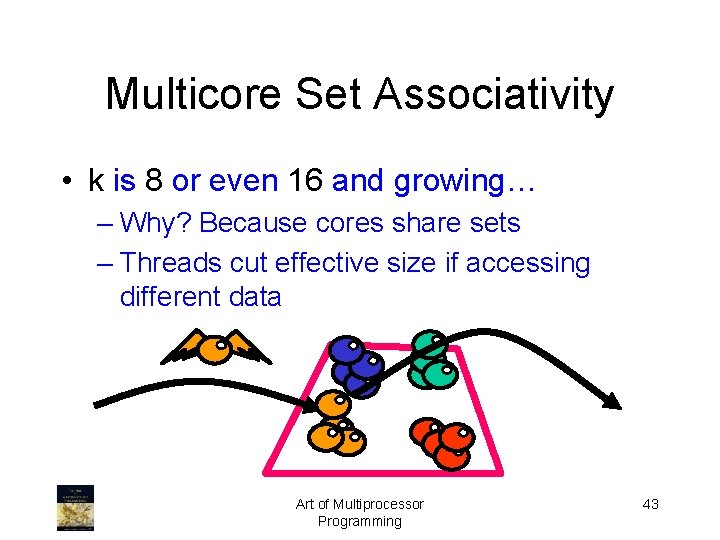
Multicore Set Associativity • k is 8 or even 16 and growing… – Why? Because cores share sets – Threads cut effective size if accessing different data Art of Multiprocessor Programming 43
Cache Coherence • A and B both cache address x • A writes to x – Updates cache • How does B find out? • Many cache coherence protocols in literature Art of Multiprocessor Programming 44
MESI • Modified – Have modified cached data, must write back to memory Art of Multiprocessor Programming 45
MESI • Modified – Have modified cached data, must write back to memory • Exclusive – Not modified, I have only copy Art of Multiprocessor Programming 46
MESI • Modified – Have modified cached data, must write back to memory • Exclusive – Not modified, I have only copy • Shared – Not modified, may be cached elsewhere Art of Multiprocessor Programming 47
MESI • Modified – Have modified cached data, must write back to memory • Exclusive – Not modified, I have only copy • Shared – Not modified, may be cached elsewhere • Invalid – Cache contents not meaningful Art of Multiprocessor Programming 48
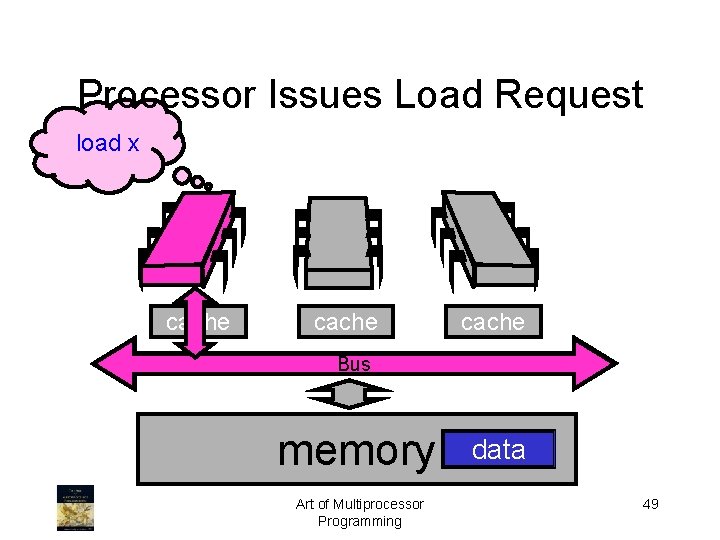
Processor Issues Load Request load x cache Bus memory Art of Multiprocessor Programming data 49
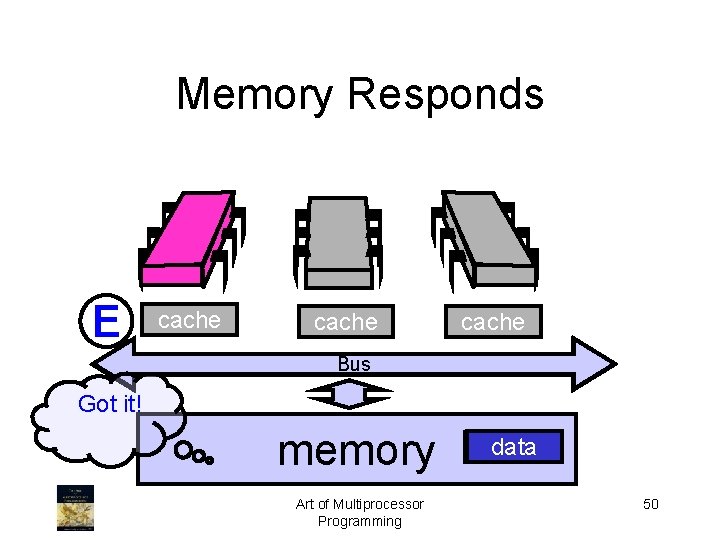
Memory Responds E cache Bus Got it! memory Art of Multiprocessor Programming data 50
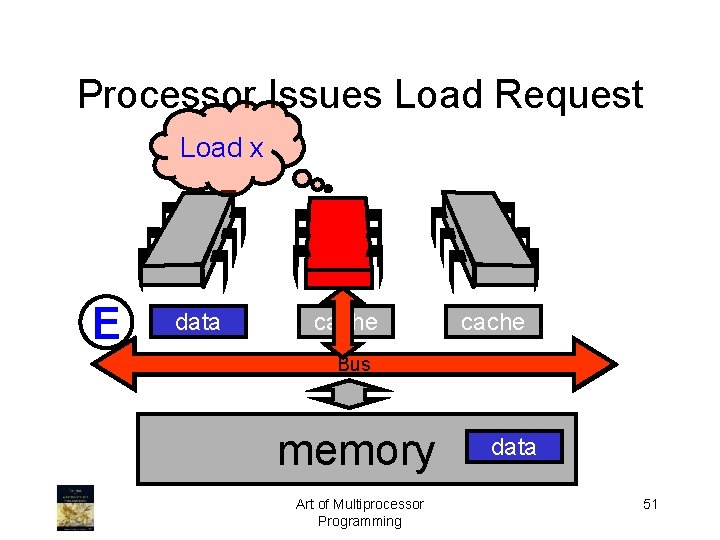
Processor Issues Load Request Load x E data cache Bus memory Art of Multiprocessor Programming data 51
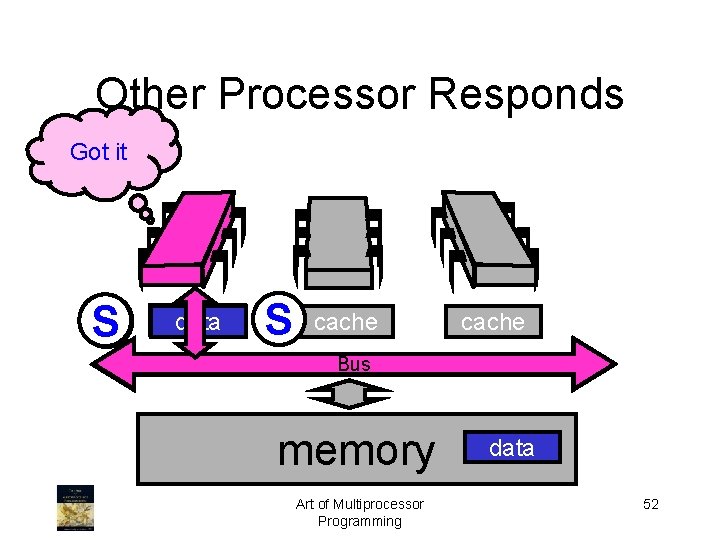
Other Processor Responds Got it S E data S cache Bus memory Art of Multiprocessor Programming Bus data 52
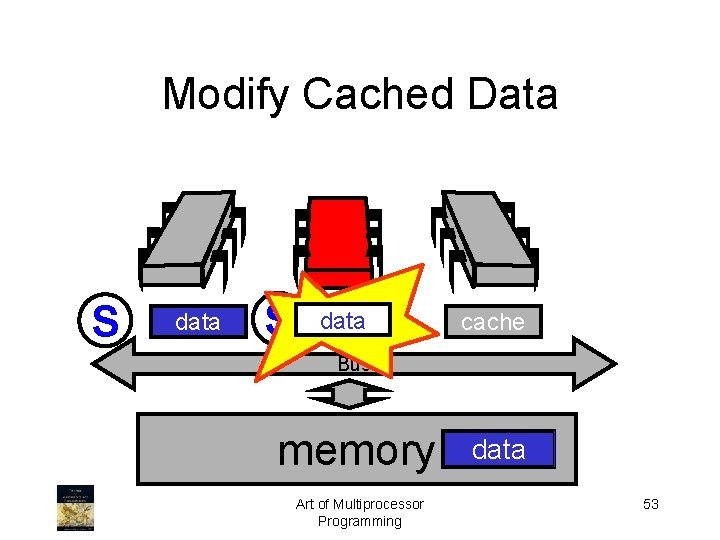
Modify Cached Data S data cache Bus memory Art of Multiprocessor Programming data 53
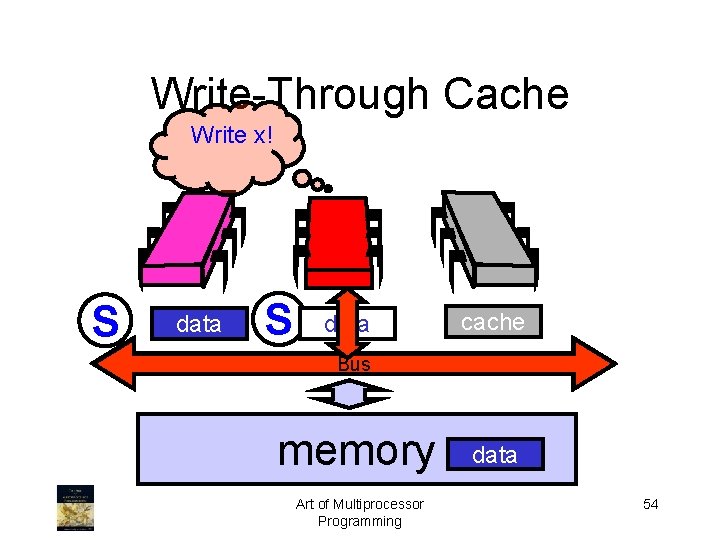
Write-Through Cache Write x! S data cache Bus memory Art of Multiprocessor Programming data 54
Write-Through Caches • Immediately broadcast changes • Good – Memory, caches always agree – More read hits, maybe • Bad – Bus traffic on all writes – Most writes to unshared data – For example, loop indexes … Art of Multiprocessor Programming 55
Write-Through Caches • Immediately broadcast changes • Good “show stoppers” – Memory, caches always agree – More read hits, maybe • Bad – Bus traffic on all writes – Most writes to unshared data – For example, loop indexes … Art of Multiprocessor Programming 56
Write-Back Caches • Accumulate changes in cache • Write back when line evicted – Need the cache for something else – Another processor wants it Art of Multiprocessor Programming 57
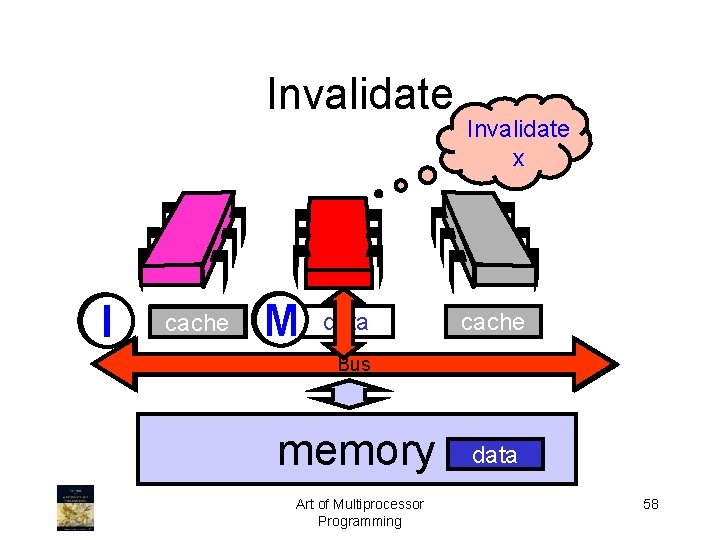
Invalidate SI data cache S M data Invalidate x cache Bus memory Art of Multiprocessor Programming data 58
Recall: Real Memory is Relaxed • Remember the flag principle? – Alice and Bob’s flag variables false • Alice writes true to her flag and reads Bob’s • Bob writes true to his flag and reads Alice’s • One must see the other’s flag true Art of Multiprocessor Programming 59
Not Necessarily So • Sometimes the compiler reorders memory operations • Can improve – cache performance – interconnect use • But unexpected concurrent interactions Art of Multiprocessor Programming 60
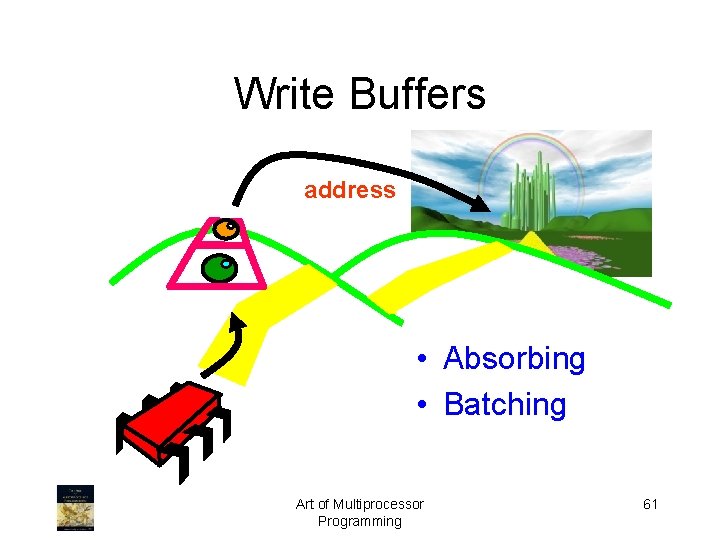
Write Buffers address • Absorbing • Batching Art of Multiprocessor Programming 61
Volatile • In Java, if a variable is declared volatile, operations won’t be reordered • Write buffer always spilled to memory before thread is allowed to continue a write • Expensive, so use it only when needed Art of Multiprocessor Programming 62
This work is licensed under a Creative Commons Attribution. Share. Alike 2. 5 License. • You are free: – to Share — to copy, distribute and transmit the work – to Remix — to adapt the work • Under the following conditions: – Attribution. You must attribute the work to “The Art of Multiprocessor Programming” (but not in any way that suggests that the authors endorse you or your use of the work). – Share Alike. If you alter, transform, or build upon this work, you may distribute the resulting work only under the same, similar or a compatible license. • For any reuse or distribution, you must make clear to others the license terms of this work. The best way to do this is with a link to – http: //creativecommons. org/licenses/by-sa/3. 0/. • Any of the above conditions can be waived if you get permission from the copyright holder. • Nothing in this license impairs or restricts the author's moral rights. Art of Multiprocessor Programming 63
- Slides: 63