
MULTIPLYING BY 3 NUMBERS LESSON 6 6 COMMON

MULTIPLYING BY 3 NUMBERS LESSON 6 -6 COMMON CORE STANDARDS 3. OA. 3 3. OA. 5 3. OA. 8
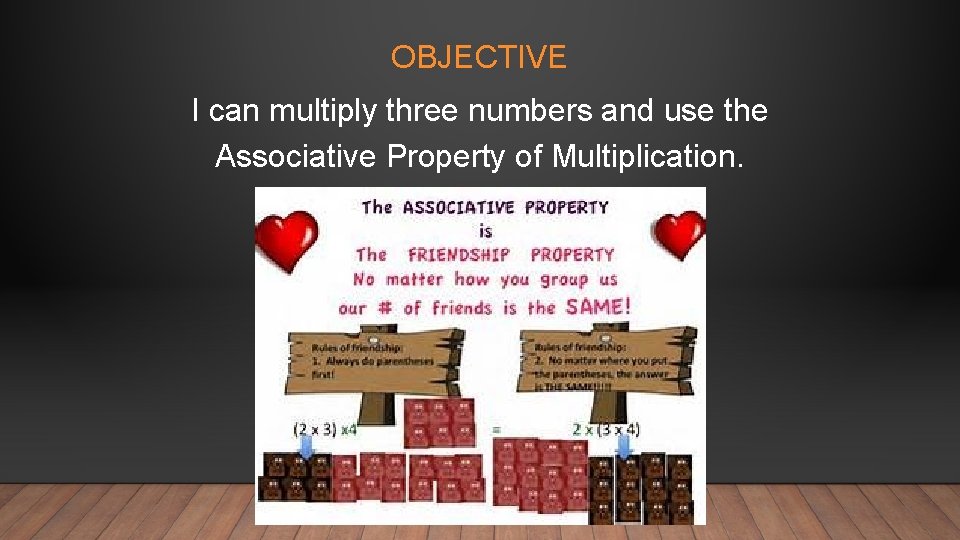
OBJECTIVE I can multiply three numbers and use the Associative Property of Multiplication.
VOCABULARY ASSOCIATIVE PROPERTY OF MULTIPLICATION The Associative Property of Multiplication says that you can change the grouping of the factors or the order you multiply them and still get the same product. Examples: 3 X 4 X 2=2 X 4 X 3 (3 x 4) x 2 = 3 x (4 x 2)

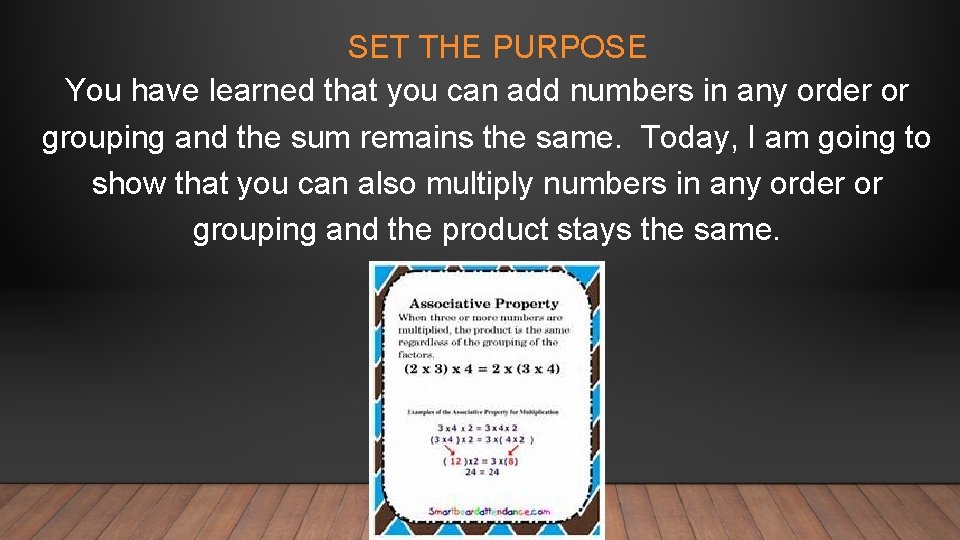
SET THE PURPOSE You have learned that you can add numbers in any order or grouping and the sum remains the same. Today, I am going to show that you can also multiply numbers in any order or grouping and the product stays the same.
CONNECT • When might you need to multiply three numbers? • Fruit drinks in 3 boxes with 2 rows that have 6 drinks in each row. • The total number of students in 2 buses with 8 rows and 4 seats in each row.
POSE THE PROBLEM Gina has 2 quilt sections. Each section has 5 rows with 3 squares in each row. How many squares are in both sections? • How would you solve this? Would Drawing a picture help? • Record what you did on your recording sheet. Include number sentences in your work.
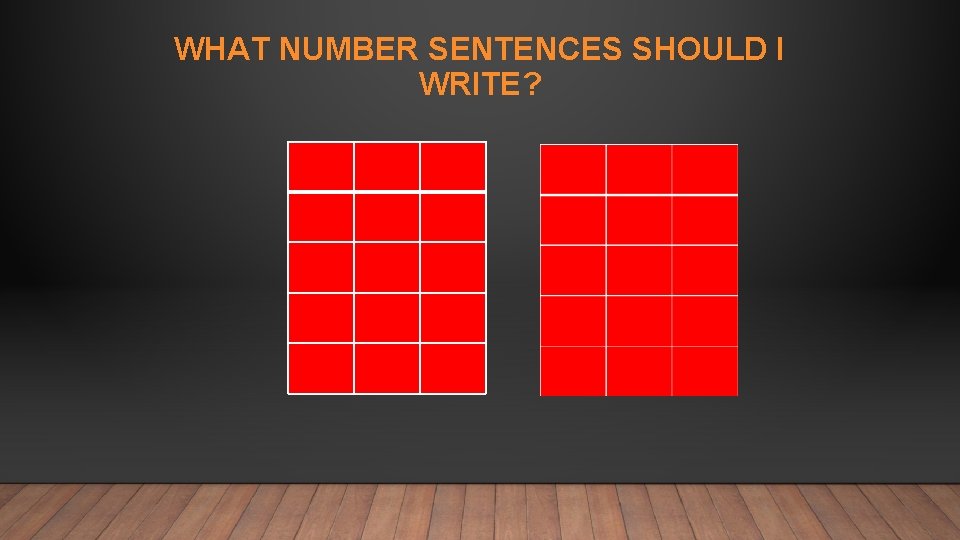
WHAT NUMBER SENTENCES SHOULD I WRITE?
SOLVING THE PROBLEM 2 x 5 x 3 How many quilt sections are there? 2 sections How many rows are in each quilt section? 5 rows So how many rows are there in all? 10 rows in all with 3 squares in each row How many squares are there in all? 30 squares
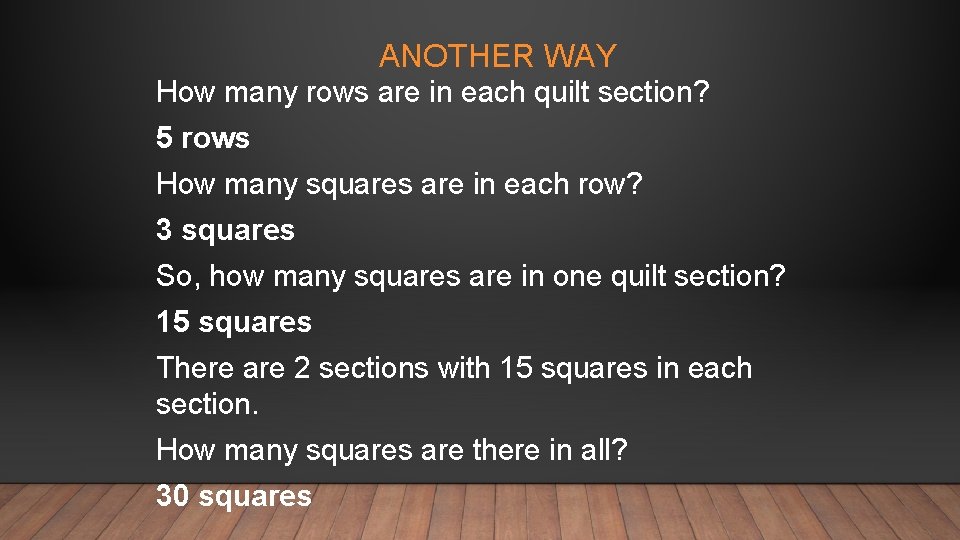
ANOTHER WAY How many rows are in each quilt section? 5 rows How many squares are in each row? 3 squares So, how many squares are in one quilt section? 15 squares There are 2 sections with 15 squares in each section. How many squares are there in all? 30 squares
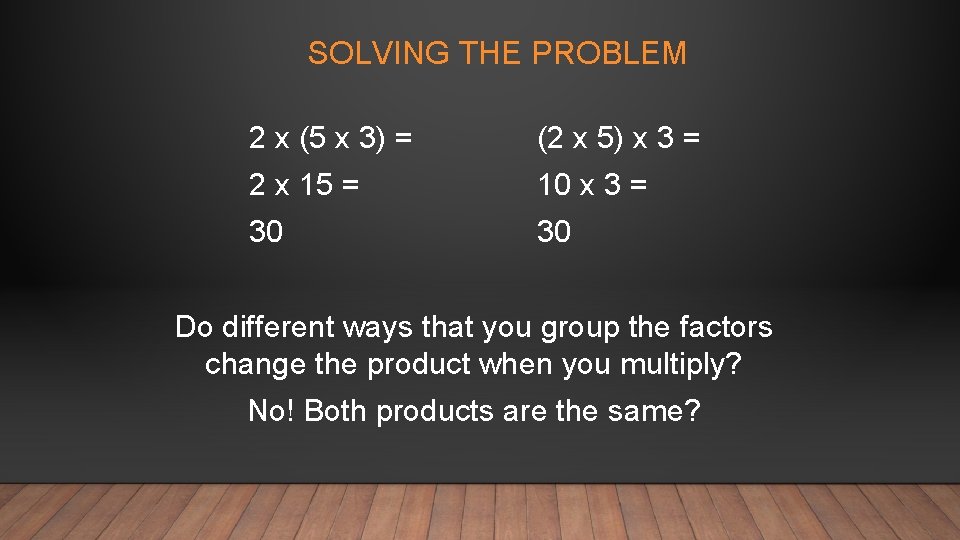
SOLVING THE PROBLEM 2 x (5 x 3) = (2 x 5) x 3 = 2 x 15 = 10 x 3 = 30 30 Do different ways that you group the factors change the product when you multiply? No! Both products are the same?
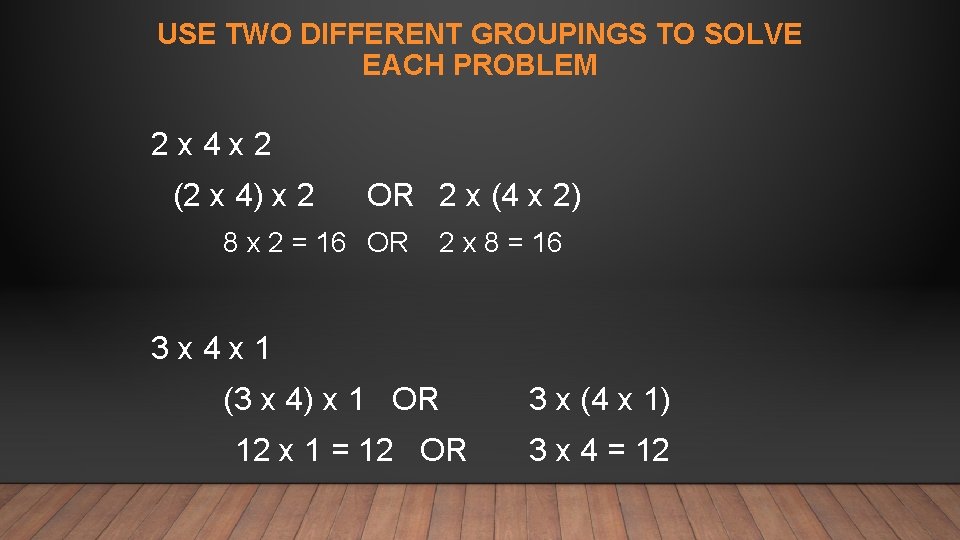
USE TWO DIFFERENT GROUPINGS TO SOLVE EACH PROBLEM 2 x 4 x 2 (2 x 4) x 2 OR 2 x (4 x 2) 8 x 2 = 16 OR 2 x 8 = 16 3 x 4 x 1 (3 x 4) x 1 OR 12 x 1 = 12 OR 3 x (4 x 1) 3 x 4 = 12
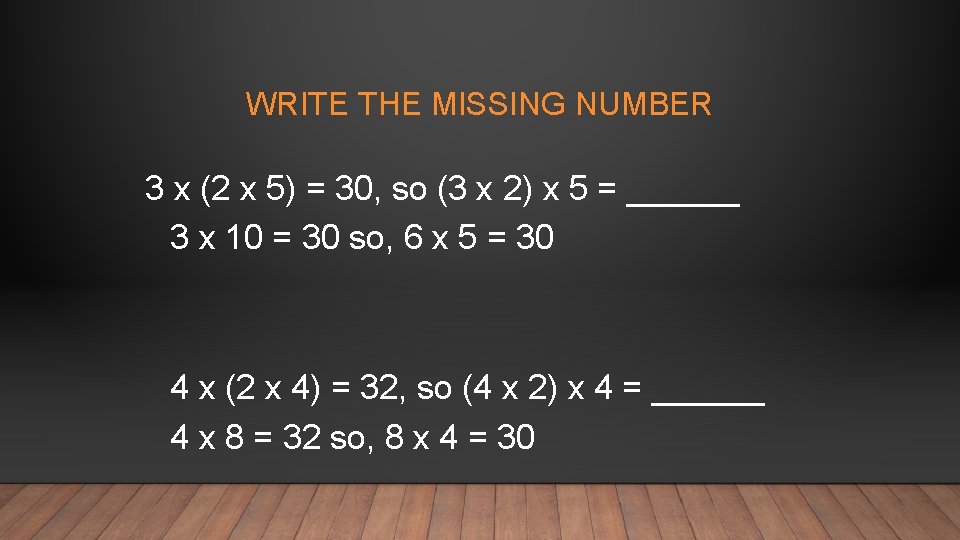
WRITE THE MISSING NUMBER 3 x (2 x 5) = 30, so (3 x 2) x 5 = ______ 3 x 10 = 30 so, 6 x 5 = 30 4 x (2 x 4) = 32, so (4 x 2) x 4 = ______ 4 x 8 = 32 so, 8 x 4 = 30
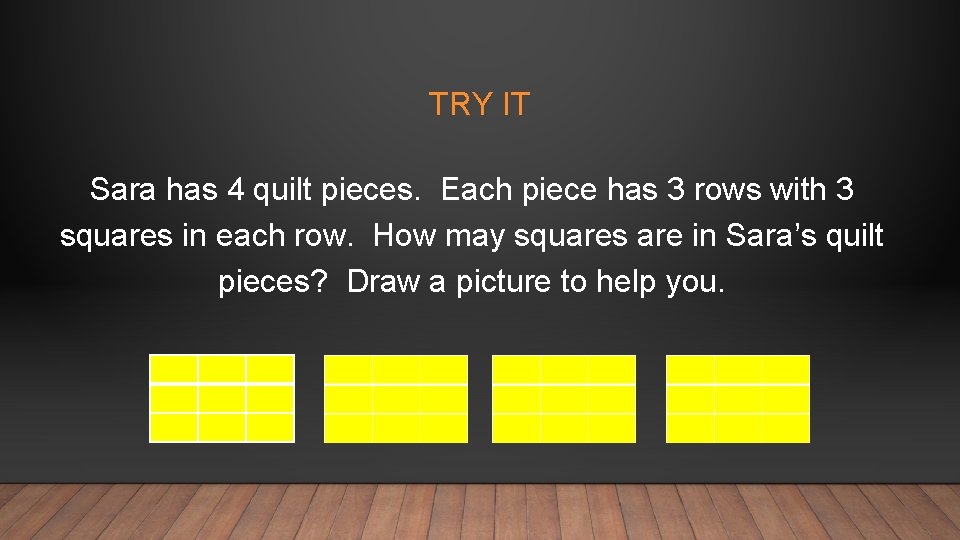
TRY IT Sara has 4 quilt pieces. Each piece has 3 rows with 3 squares in each row. How may squares are in Sara’s quilt pieces? Draw a picture to help you.
WRITING TO EXPLAIN David says that the Associative (Grouping) Property of Multiplication is just like the Associative (Grouping) Property of Addition. Explain David’s thinking. Give examples to show these two properties work in similar ways.
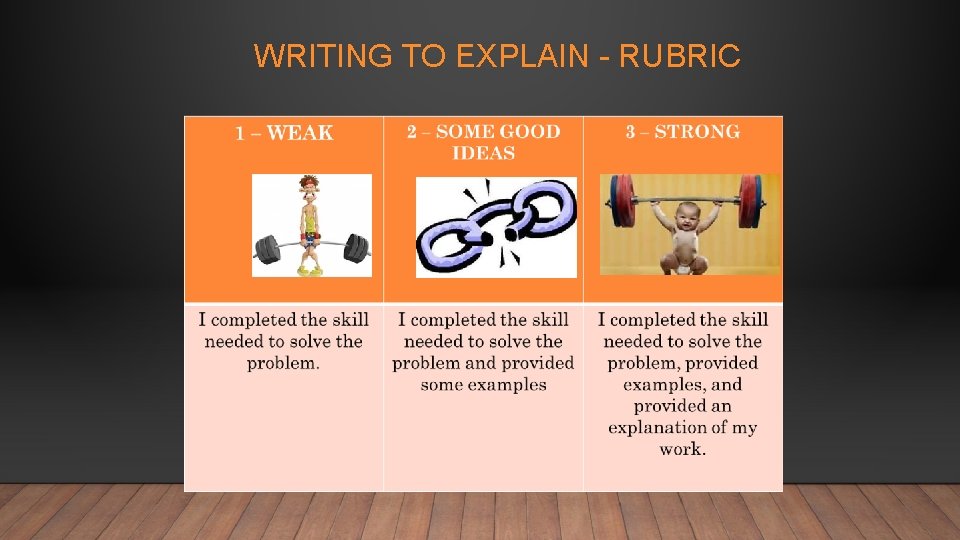
WRITING TO EXPLAIN - RUBRIC
1 POINT - WEAK The Grouping Property lets you multiply factors any way you want. It works for adding, too. You can do 5 x 3 x 1 as 5 x 3, then x 1, or 5 x 1, then x 3 or 3 x 1, then x 5. Same with adding. (You gave examples of one or both of the properties, with or without an explanation. )
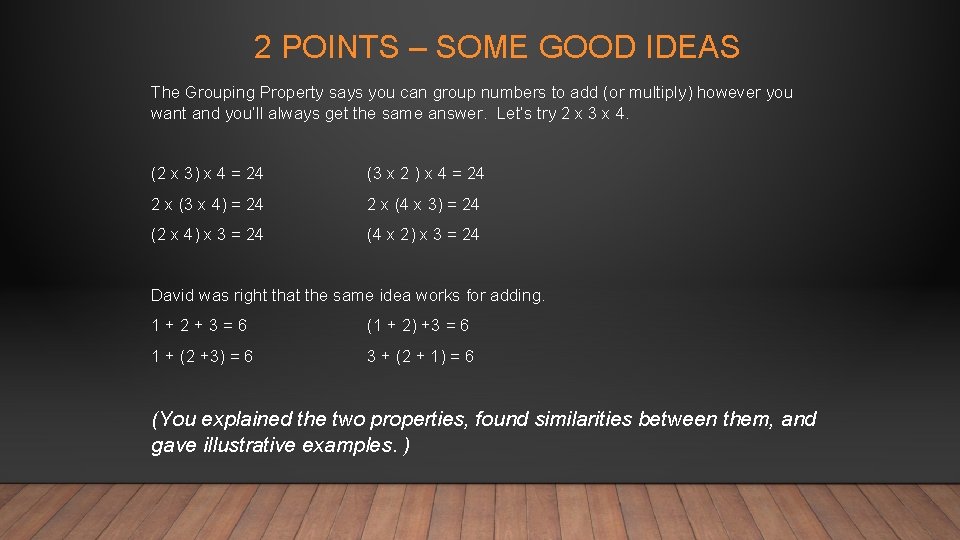
2 POINTS – SOME GOOD IDEAS The Grouping Property says you can group numbers to add (or multiply) however you want and you’ll always get the same answer. Let’s try 2 x 3 x 4. (2 x 3) x 4 = 24 (3 x 2 ) x 4 = 24 2 x (3 x 4) = 24 2 x (4 x 3) = 24 (2 x 4) x 3 = 24 (4 x 2) x 3 = 24 David was right that the same idea works for adding. 1+2+3=6 (1 + 2) +3 = 6 1 + (2 +3) = 6 3 + (2 + 1) = 6 (You explained the two properties, found similarities between them, and gave illustrative examples. )
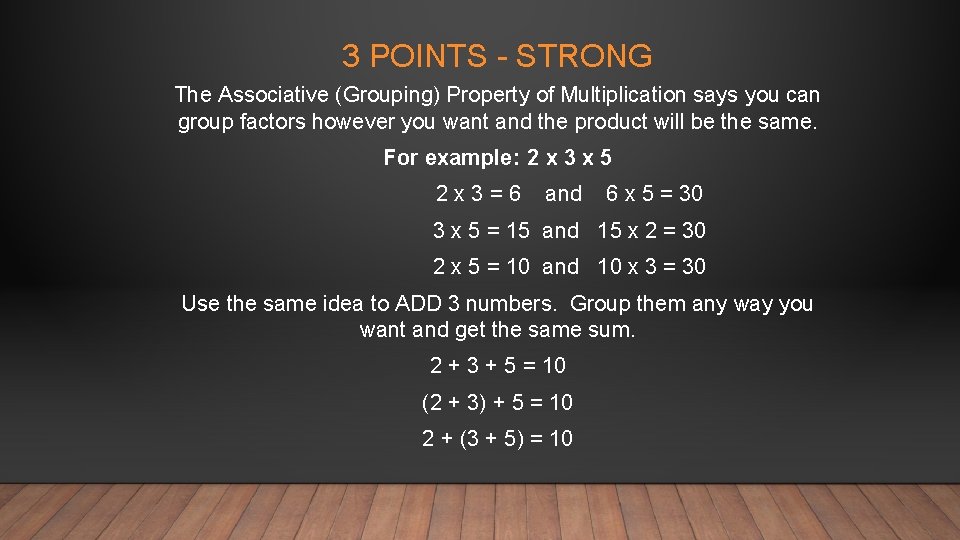
3 POINTS - STRONG The Associative (Grouping) Property of Multiplication says you can group factors however you want and the product will be the same. For example: 2 x 3 x 5 2 x 3=6 and 6 x 5 = 30 3 x 5 = 15 and 15 x 2 = 30 2 x 5 = 10 and 10 x 3 = 30 Use the same idea to ADD 3 numbers. Group them any way you want and get the same sum. 2 + 3 + 5 = 10 (2 + 3) + 5 = 10 2 + (3 + 5) = 10
- Slides: 20