
MultiplicationDivision Arrays and Repeated Subtraction in Key Stage
Multiplication/Division, Arrays and Repeated Subtraction in Key Stage 1 National Curriculum – Year 1 Solve one step problems involving multiplication and division, by calculating the answer using concrete objects, pictorial representations and arrays with the support of the teacher. National Curriculum – Year 2 Recall and use multiplication and division facts for the 2, 5 and 10 times tables, including recognising odd and even numbers. Calculate mathematical statements for multiplication and division within the multiplication tables and write them using the multiplication (×), division (÷) and equals (=) signs. Show that the multiplication of two numbers can be done in any order (commutative) and division of one number by another cannot. solve problems involving multiplication and division, using materials, arrays, repeated addition, mental methods, and multiplication and division facts, including problems in contexts.
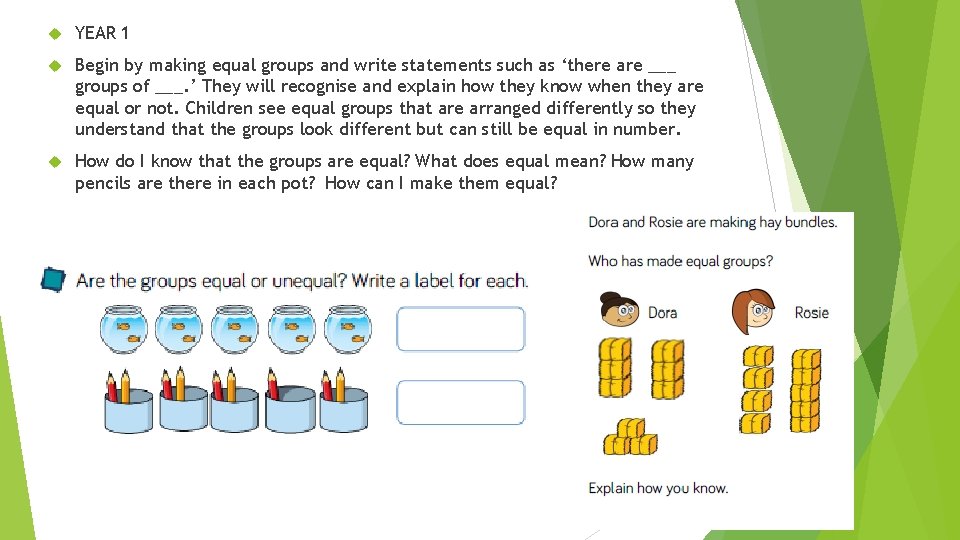
YEAR 1 Begin by making equal groups and write statements such as ‘there are ___ groups of ___. ’ They will recognise and explain how they know when they are equal or not. Children see equal groups that are arranged differently so they understand that the groups look different but can still be equal in number. How do I know that the groups are equal? What does equal mean? How many pencils are there in each pot? How can I make them equal?
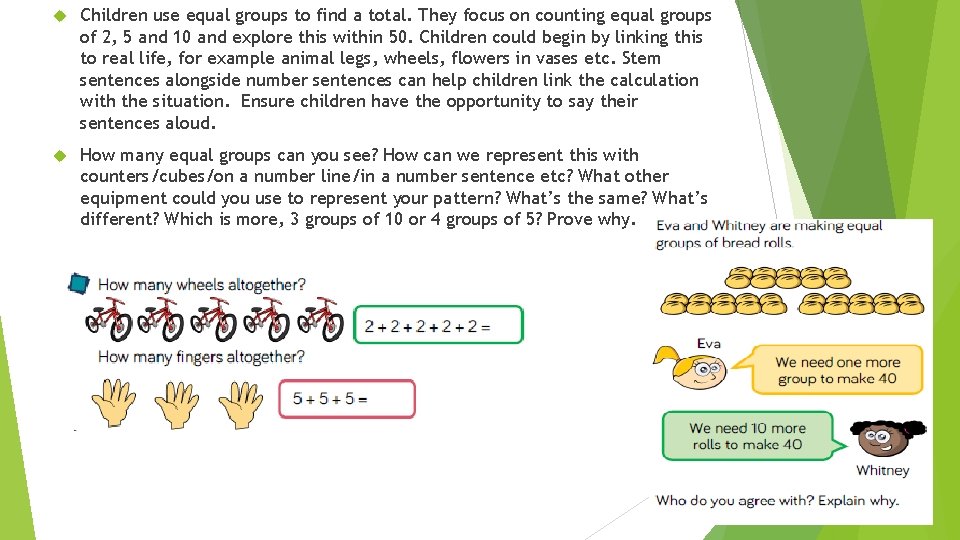
Children use equal groups to find a total. They focus on counting equal groups of 2, 5 and 10 and explore this within 50. Children could begin by linking this to real life, for example animal legs, wheels, flowers in vases etc. Stem sentences alongside number sentences can help children link the calculation with the situation. Ensure children have the opportunity to say their sentences aloud. How many equal groups can you see? How can we represent this with counters/cubes/on a number line/in a number sentence etc? What other equipment could you use to represent your pattern? What’s the same? What’s different? Which is more, 3 groups of 10 or 4 groups of 5? Prove why.
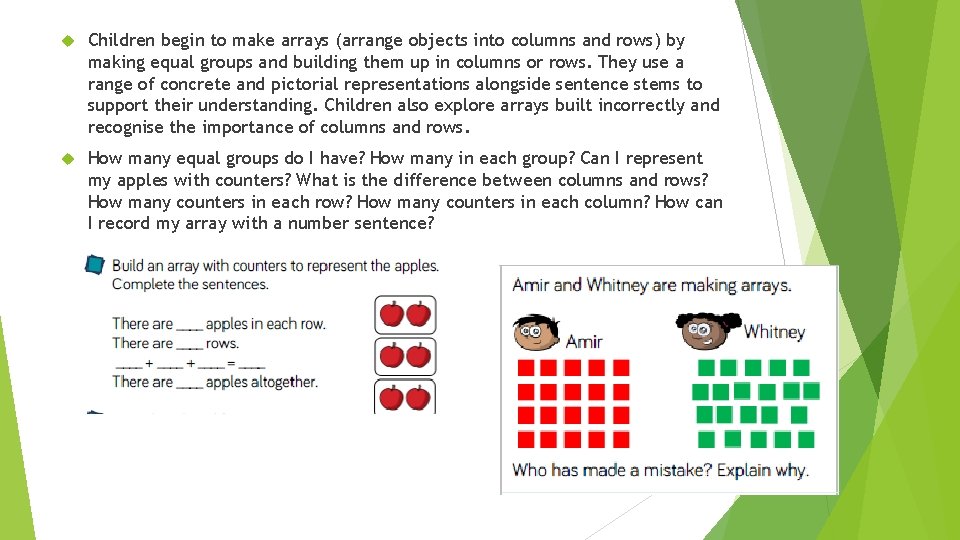
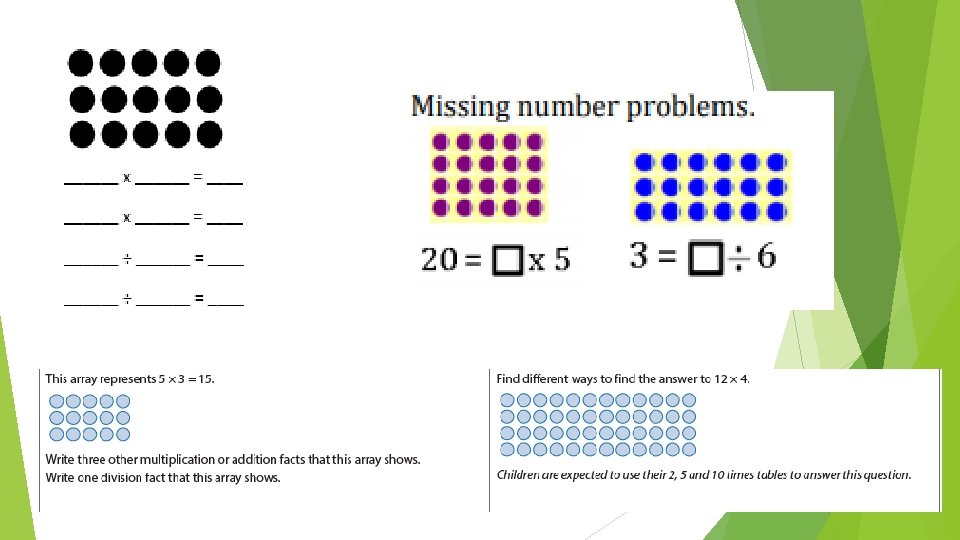
Children begin to make arrays (arrange objects into columns and rows) by making equal groups and building them up in columns or rows. They use a range of concrete and pictorial representations alongside sentence stems to support their understanding. Children also explore arrays built incorrectly and recognise the importance of columns and rows. How many equal groups do I have? How many in each group? Can I represent my apples with counters? What is the difference between columns and rows? How many counters in each row? How many counters in each column? How can I record my array with a number sentence?
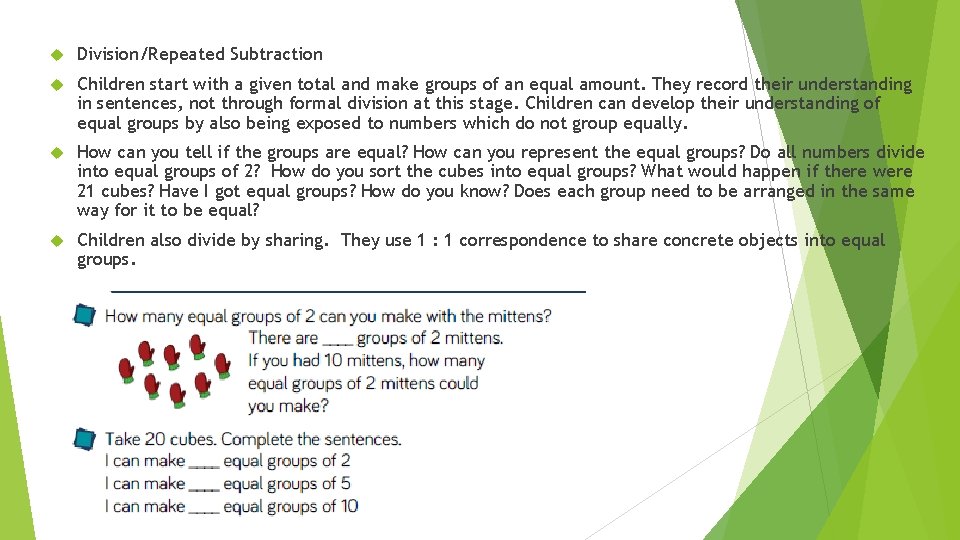
Division/Repeated Subtraction Children start with a given total and make groups of an equal amount. They record their understanding in sentences, not through formal division at this stage. Children can develop their understanding of equal groups by also being exposed to numbers which do not group equally. How can you tell if the groups are equal? How can you represent the equal groups? Do all numbers divide into equal groups of 2? How do you sort the cubes into equal groups? What would happen if there were 21 cubes? Have I got equal groups? How do you know? Does each group need to be arranged in the same way for it to be equal? Children also divide by sharing. They use 1 : 1 correspondence to share concrete objects into equal groups.
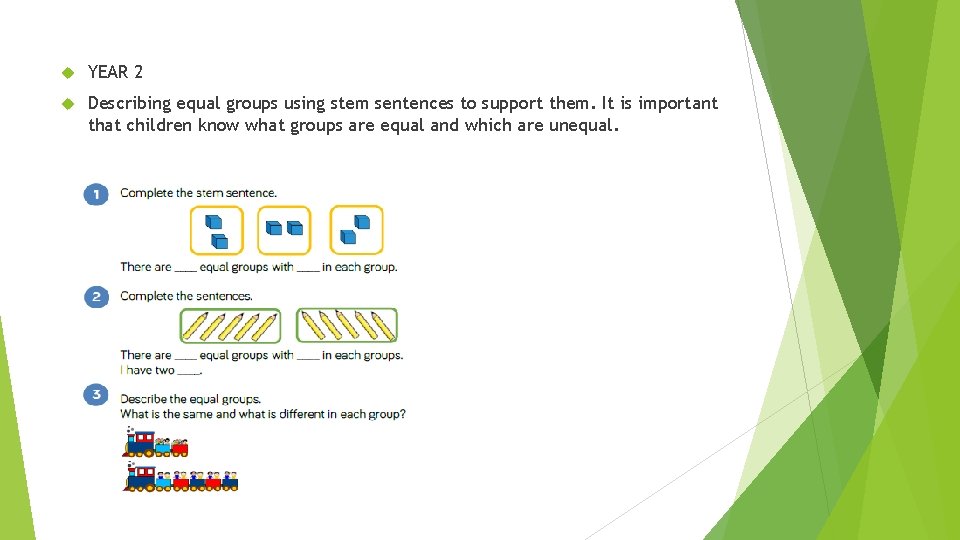
YEAR 2 Describing equal groups using stem sentences to support them. It is important that children know what groups are equal and which are unequal.
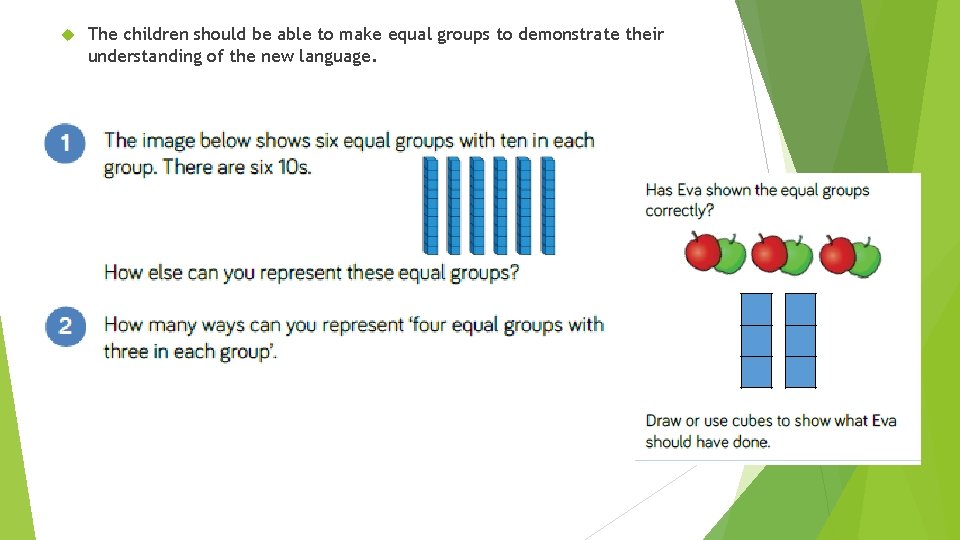
The children should be able to make equal groups to demonstrate their understanding of the new language.
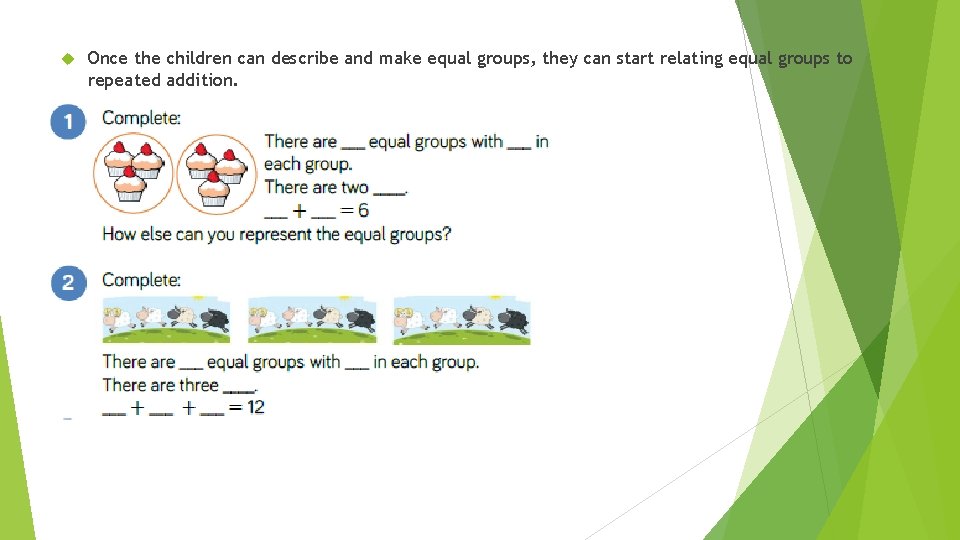
Once the children can describe and make equal groups, they can start relating equal groups to repeated addition.
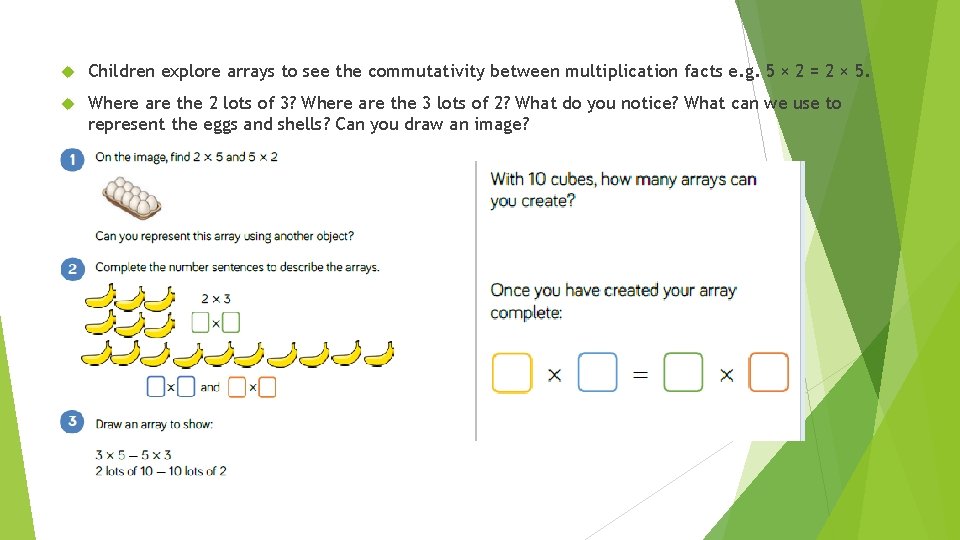
Children explore arrays to see the commutativity between multiplication facts e. g. 5 × 2 = 2 × 5. Where are the 2 lots of 3? Where are the 3 lots of 2? What do you notice? What can we use to represent the eggs and shells? Can you draw an image?
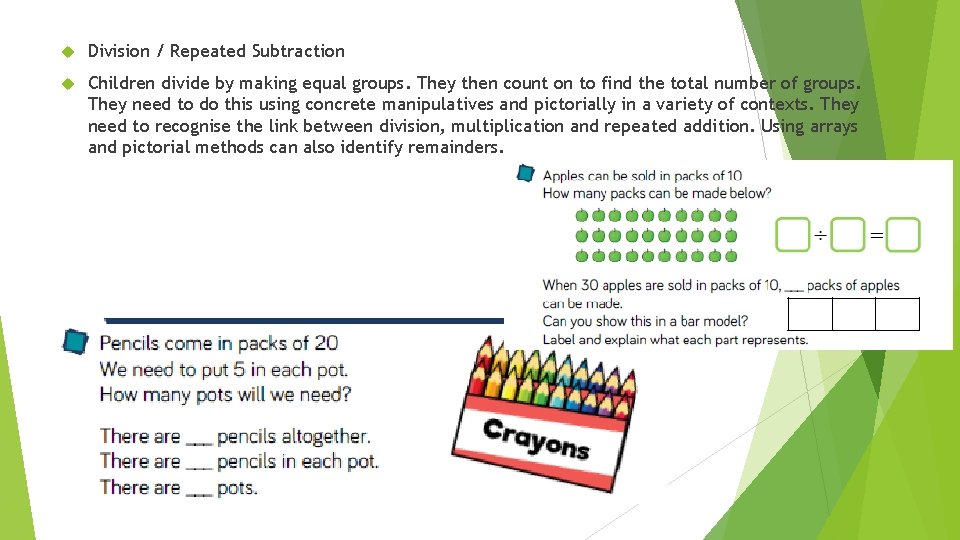
Division / Repeated Subtraction Children divide by making equal groups. They then count on to find the total number of groups. They need to do this using concrete manipulatives and pictorially in a variety of contexts. They need to recognise the link between division, multiplication and repeated addition. Using arrays and pictorial methods can also identify remainders.
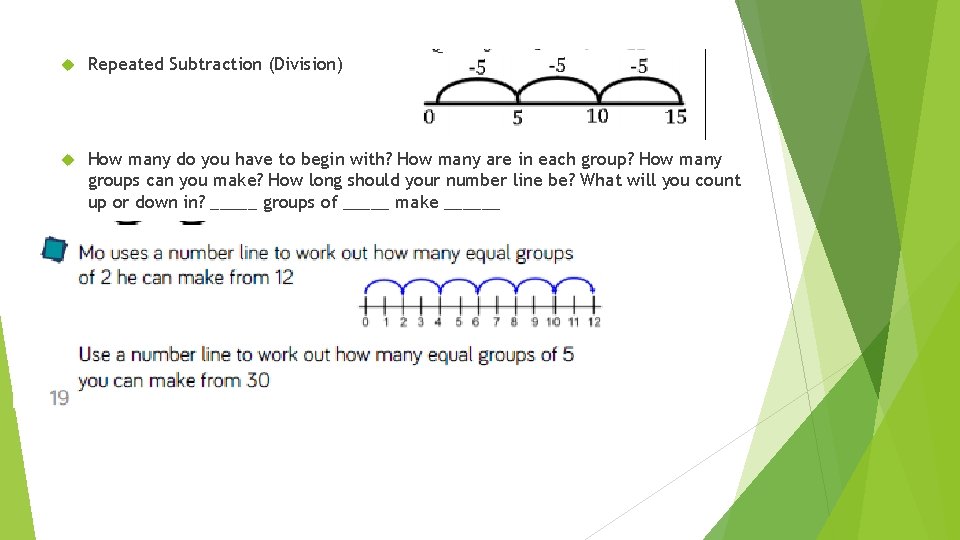
Repeated Subtraction (Division) How many do you have to begin with? How many are in each group? How many groups can you make? How long should your number line be? What will you count up or down in? _____ groups of _____ make ______
- Slides: 12