
Multiple Routing Configurations for Fast IP Networks Recovery









- Slides: 26
Multiple Routing Configurations for Fast IP Networks Recovery Page 1
ABSTRACT • As the Internet takes an increasingly central role in our communications infrastructure, the slow convergence of routing protocols after a network failure becomes a growing problem. • To assure fast recovery from link and node failures in IP networks, we present a new recovery scheme called Multiple Routing Configurations (MRC). • It can be implemented with only minor changes to existing solutions. Page 2
• In this paper we present MRC, and analyze its performance with respect to scalability, backup path lengths, and load distribution after a failure. • We also show an estimate of the traffic demands in the network can be used to improve the distribution of the recovered traffic, and thus reduce the chances of congestion when MRC is used. Page 3
EXISTING SYSTEM • The Internet has been transformed from a special purpose network to an ubiquitous platform for a wide range of everyday communication services. The demands on Internet reliability and availability have increased accordingly. • A disruption of a link in central parts of a network has the potential to affect hundreds of thousands of phone conversations or TCP connections, with obvious adverse effects. The ability to recover from failures has always been a central design goal in the Internet. Page 4
• IP networks are intrinsically robust, since IGP routing protocols like OSPF are designed to update the forwarding information based on the changed topology after a failure. This reconvergence assumes full distribution of the new link state to all routers in the network domain. When the new state information is distributed, each router individually calculates new valid routing tables. Page 5
PROPOSED SYSTEM • To assure fast recovery from link and node failures in IP networks, we present a new recovery scheme called Multiple Routing Configurations (MRC). Our proposed scheme guarantees recovery in all single failure scenarios, using a single mechanism to handle both link and node failures, and without knowing the root cause of the failure. • MRC is strictly connectionless, and assumes only destination based hop-by-hop forwarding. MRC is based on keeping additional routing information in the routers, and allows packet forwarding to continue on an alternative output link immediately after the detection of a failure. Page 6
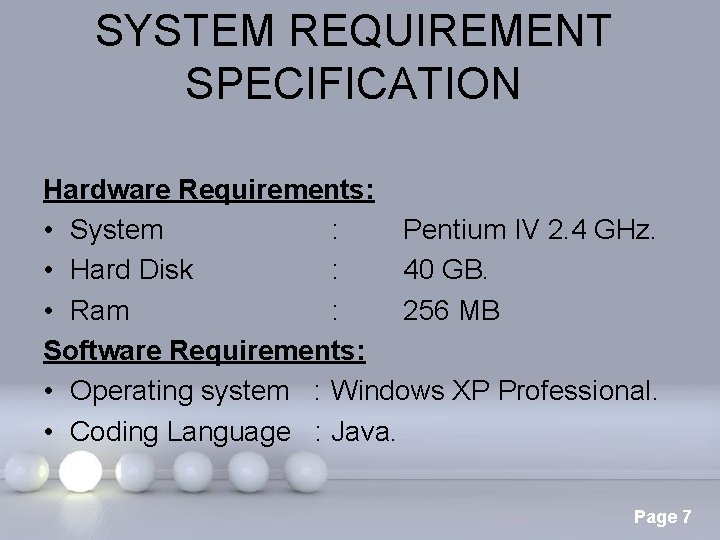
SYSTEM REQUIREMENT SPECIFICATION Hardware Requirements: • System : Pentium IV 2. 4 GHz. • Hard Disk : 40 GB. • Ram : 256 MB Software Requirements: • Operating system : Windows XP Professional. • Coding Language : Java. Page 7
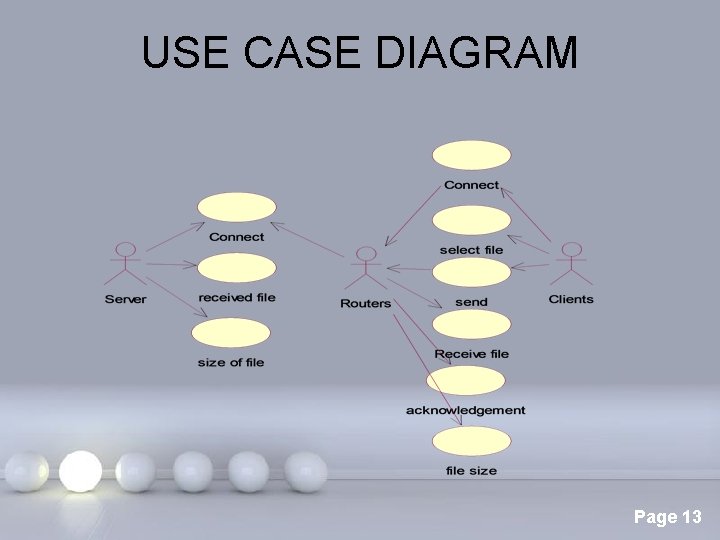
MODULES v. Client v. Routers v. Sever Page 8
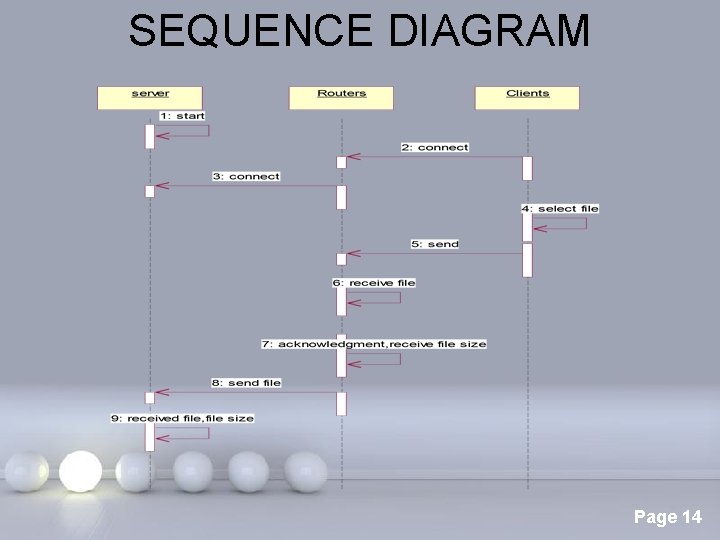
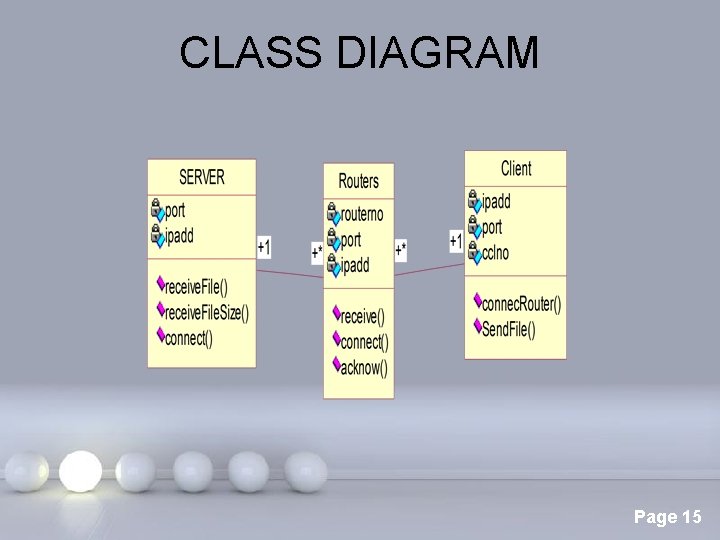
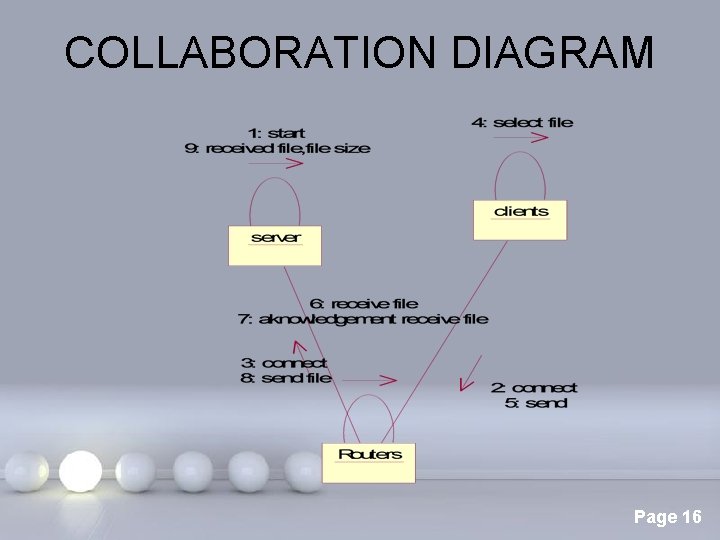
Client v. This module is used to send the data to server through routers v. It will provide user friendly interface to send the data to the required destination Page 9
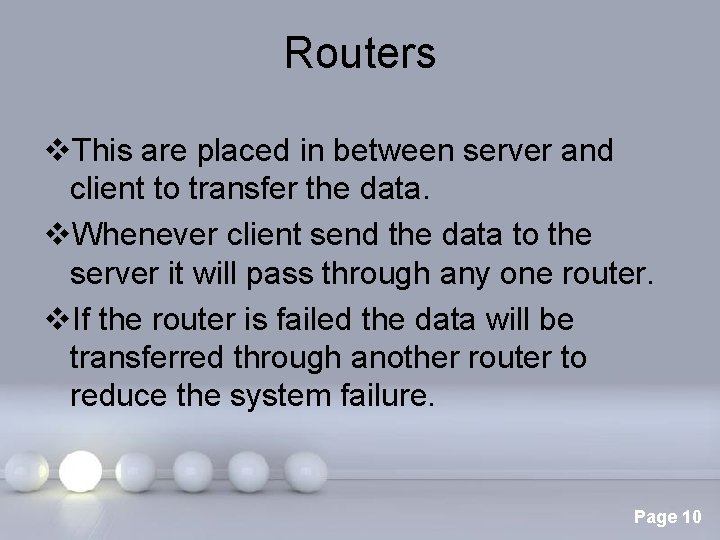
Routers v. This are placed in between server and client to transfer the data. v. Whenever client send the data to the server it will pass through any one router. v. If the router is failed the data will be transferred through another router to reduce the system failure. Page 10
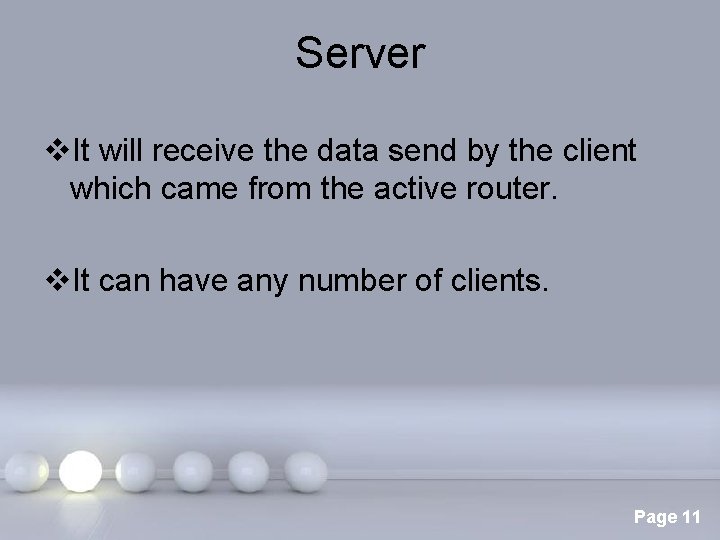
Server v. It will receive the data send by the client which came from the active router. v. It can have any number of clients. Page 11
UML DIAGRAMS v. Use case Diagram v. Sequence Diagram v. Class Diagram v. Collaboration Diagram v. Activity Diagram Page 12
USE CASE DIAGRAM Page 13
SEQUENCE DIAGRAM Page 14
CLASS DIAGRAM Page 15
COLLABORATION DIAGRAM Page 16
ACTIVITY DIAGRAM Page 17
SCREEN SHOTS Page 18
Screen Shot for Client 1 Page 19
Screen Shots for Client 2 Page 20
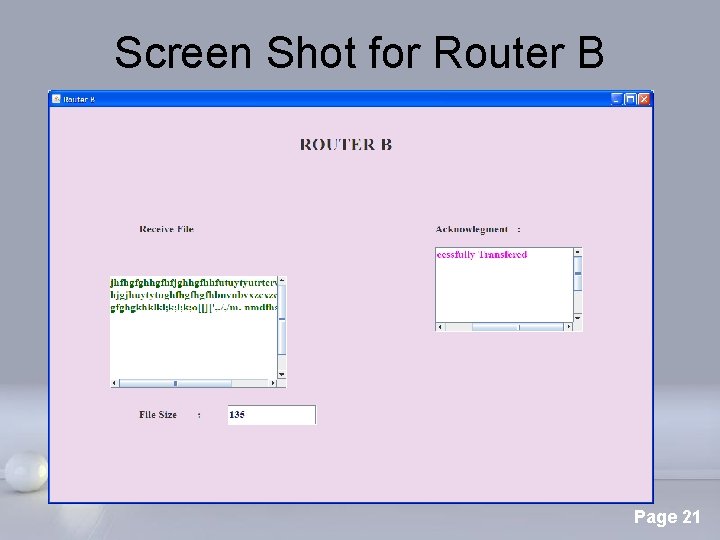
Screen Shot for Router B Page 21
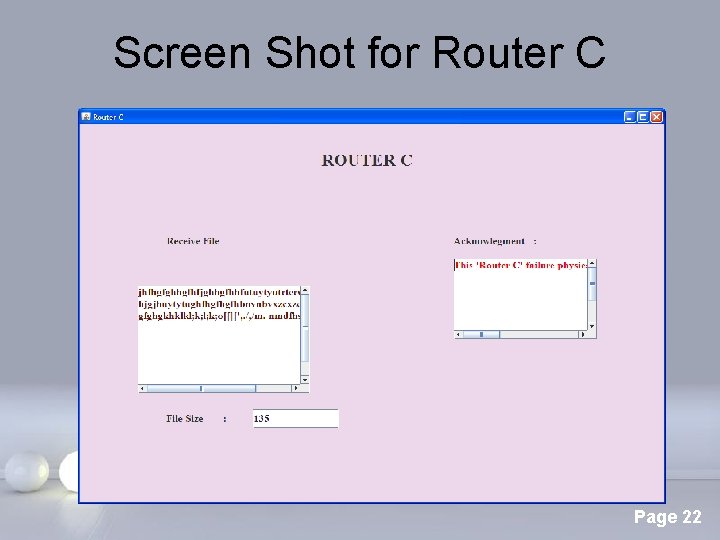
Screen Shot for Router C Page 22
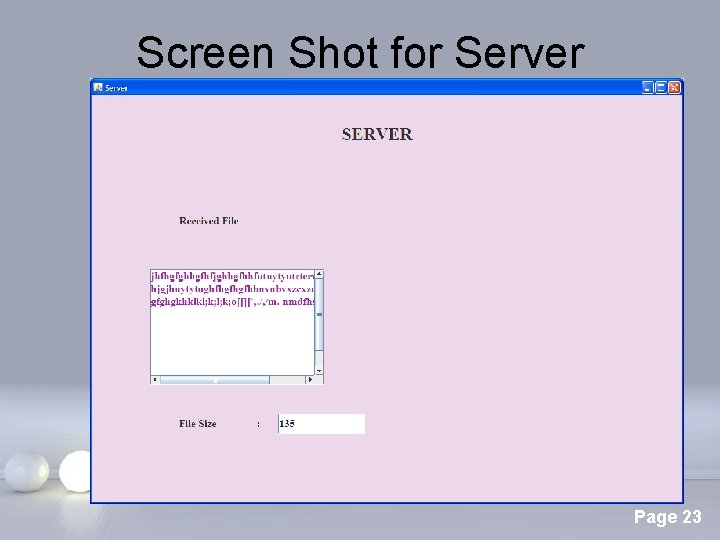
Screen Shot for Server Page 23
CONCLUSION • MRC operates without knowing the root cause of failure, i. e. , whether the forwarding disruption is caused by a node or link failure. This is achieved by using careful link weight assignment according to the rules we have described. The link weight assignment rules also provide basis for the specification of a forwarding procedure that successfully solves the last hop problem. • The performance of the algorithm and the forwarding mechanism has been evaluated using simulations. We have shown that MRC scales well: 3 or 4 backup configurations is typically enough to isolate all links and nodes in our test topologies. Page 24
• MRC backup path lengths are comparable to the optimal backup path lengths—MRC backup paths are typically zero to two hops longer. We have evaluated the effect MRC has on the load distribution in the network while traffic is routed in the backup configurations, and we have proposed a method that minimizes the risk of congestion after a link failure if we have an estimate of the demand matrix. In the network, this approach gave a maximum link load after the worst case link failure that was even lower than after a full IGP reconvergence on the altered topology. MRC thus achieves fast recovery with a very limited performance penalty. Page 25
THANK YOU Page 26