
MULTIPLE MYELOMA SUPERVISED BE DR MOHAMMAD ALANI DONE
MULTIPLE MYELOMA SUPERVISED BE DR. MOHAMMAD ALANI DONE BY : MOHAMMAD DARADKEH AND ZAID ALRABADI
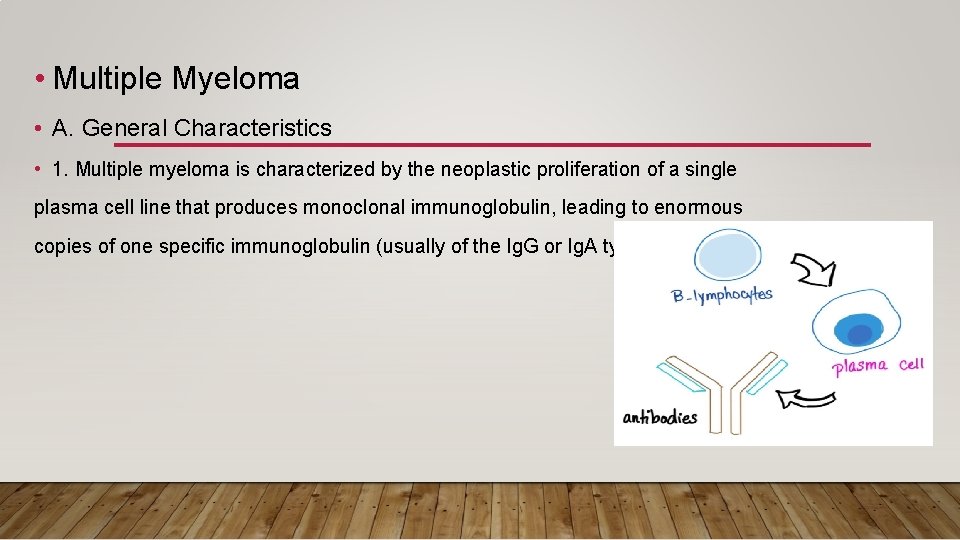
• Multiple Myeloma • A. General Characteristics • 1. Multiple myeloma is characterized by the neoplastic proliferation of a single plasma cell line that produces monoclonal immunoglobulin, leading to enormous copies of one specific immunoglobulin (usually of the Ig. G or Ig. A type)
ETIOLOGY : UNKNOWN • Incidence is increased after age 50 • it is twice as common in African-American patients as in Caucasian patients
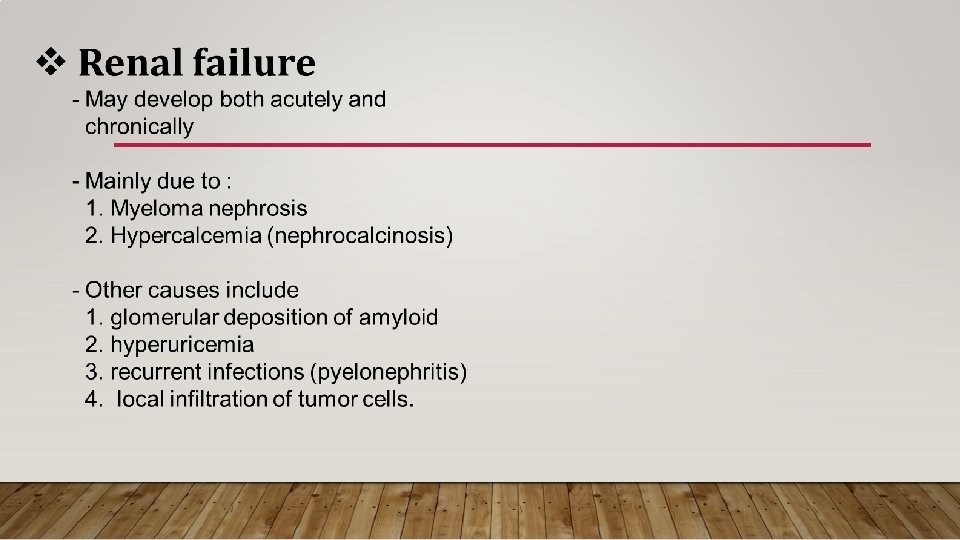
CLINICAL FEATURES (CRAB) • Lytic bone lesions : significant bone pain (especially in the low back, chest, and jaw), • Anemia : present in most patients due to bone marrow infiltration and renal failure • spinal Cord compression—may occur secondary to fractured bone fragment • Renal failure : myeloma nephrosis (immunoglobulin precipitation in renatubules • Hyper Calcemia: osteoclastic activity on bone • Recurrent infections : most common cause of death, due to lack of normal immunoglobulins

LYTIC BONE LESIONS • Lytic bone lesions is caused by the increased osteoclastic activity 1 - Malignant plasma cells 2 - Stimulate osteoclasts net bone resorption : which cause bone pain, fractures and hypercalcemia
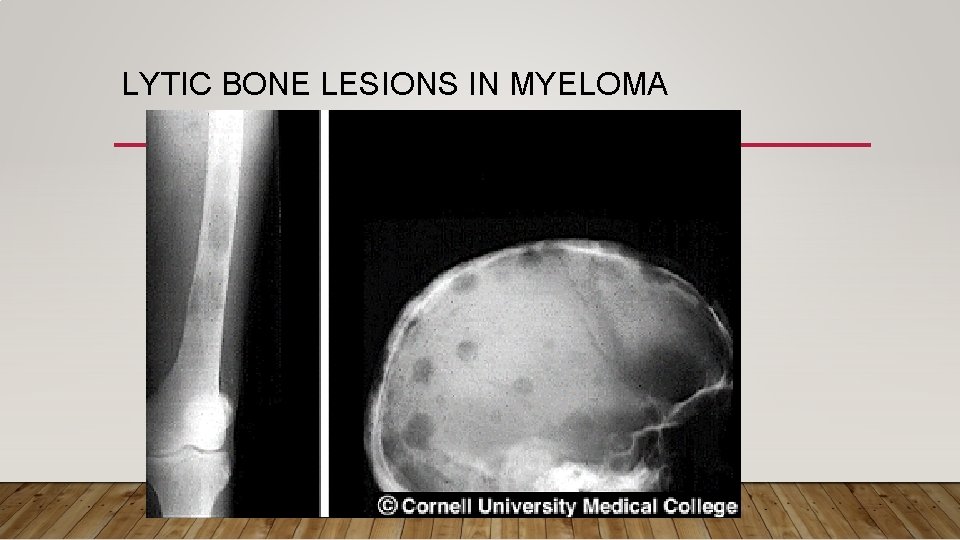
LYTIC BONE LESIONS IN MYELOMA
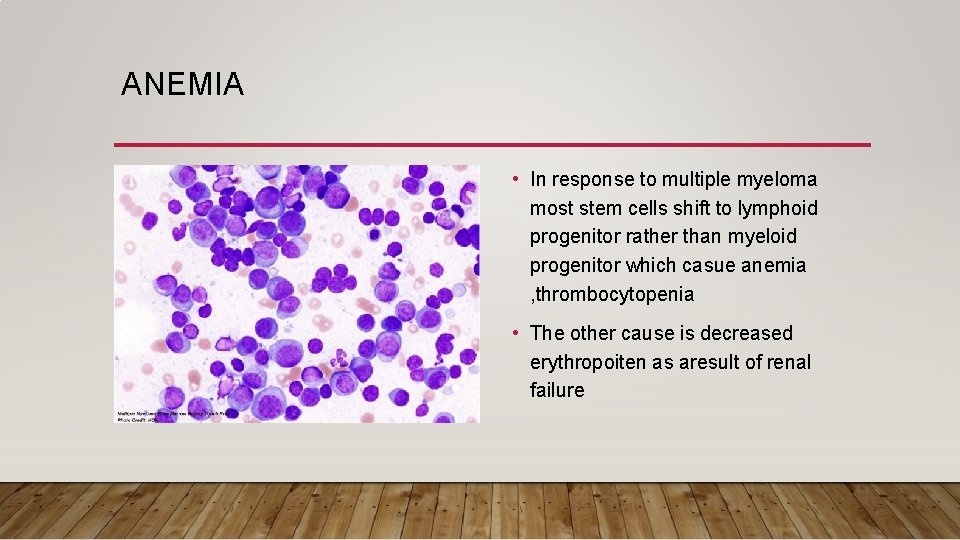
ANEMIA • In response to multiple myeloma most stem cells shift to lymphoid progenitor rather than myeloid progenitor which casue anemia , thrombocytopenia • The other cause is decreased erythropoiten as aresult of renal failure
RECURRENT INFECTION ? WHY ? • Despite the increased serum antibody , they are useless !!!! • Antibodies in multiple myeloma are made by the same type of plasma cells which mean they lack diversity • Infection usually in the lung or urinary tract • It is the most common cause of death in multiple myeloma
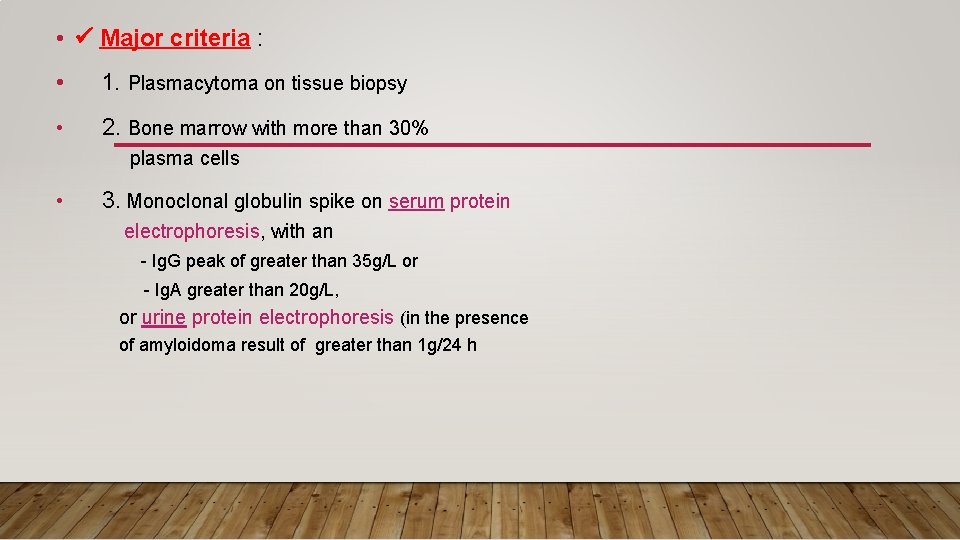
• Major criteria : • 1. Plasmacytoma on tissue biopsy • 2. Bone marrow with more than 30% plasma cells • 3. Monoclonal globulin spike on serum protein electrophoresis, with an - Ig. G peak of greater than 35 g/L or - Ig. A greater than 20 g/L, or urine protein electrophoresis (in the presence of amyloidoma result of greater than 1 g/24 h
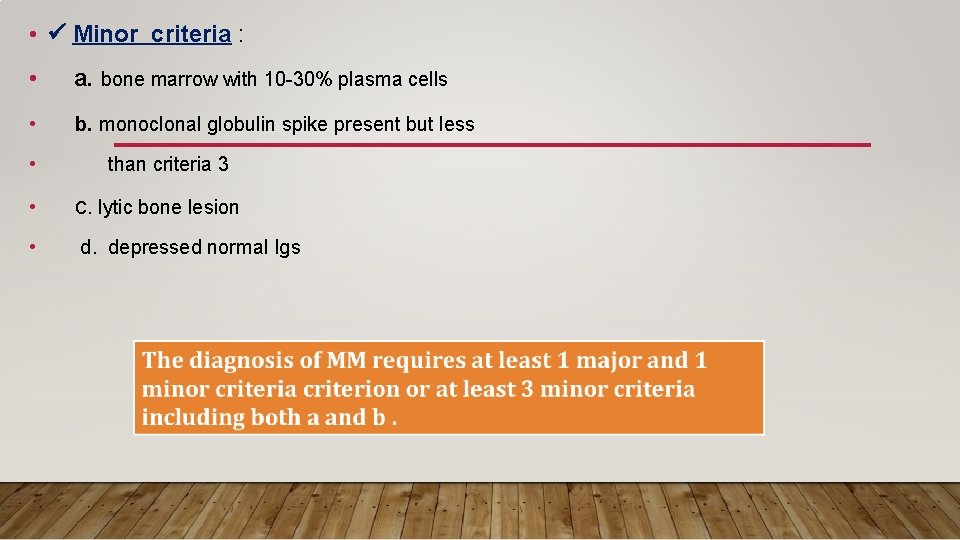
• Minor criteria : • a. bone marrow with 10 -30% plasma cells • b. monoclonal globulin spike present but less • than criteria 3 • c. lytic bone lesion • d. depressed normal Igs

DIAGNOSIS • 1 -Serum protein electrophoresis (SPEP/UPEP)—reveals monoclonal protein spike (M-spike) due to a malignant clone of plasma cells synthesizing asingle Ig • 2 - urine protein electrophoresis • 3 -CT, or MRI—reveal lytic bone lesions • 4 -Hypercalcemia—due to bone destruction • 5. Elevated serum total protein—due to paraproteins in blood (hyperglobulinemia) • 6. Elevated creatinine—due to renal damage
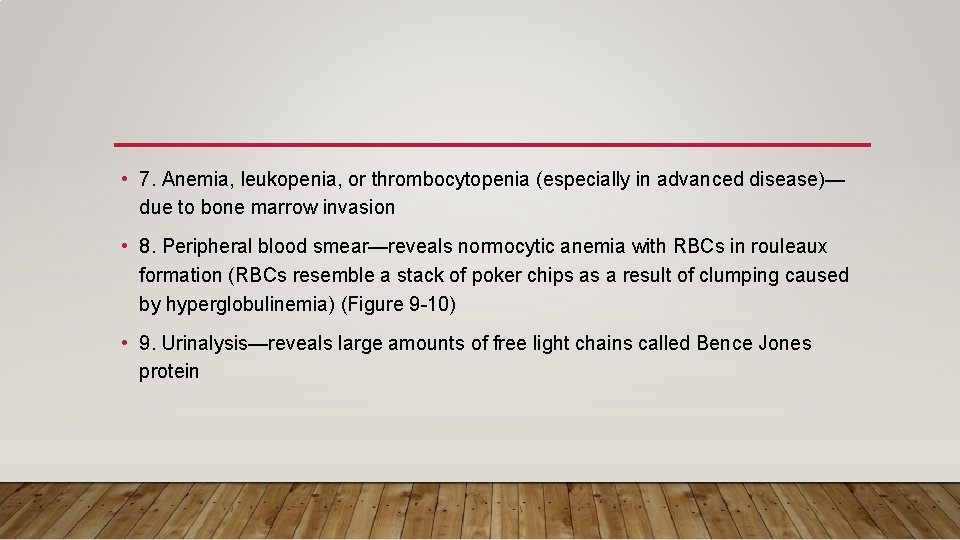
• 7. Anemia, leukopenia, or thrombocytopenia (especially in advanced disease)— due to bone marrow invasion • 8. Peripheral blood smear—reveals normocytic anemia with RBCs in rouleaux formation (RBCs resemble a stack of poker chips as a result of clumping caused by hyperglobulinemia) (Figure 9 -10) • 9. Urinalysis—reveals large amounts of free light chains called Bence Jones protein
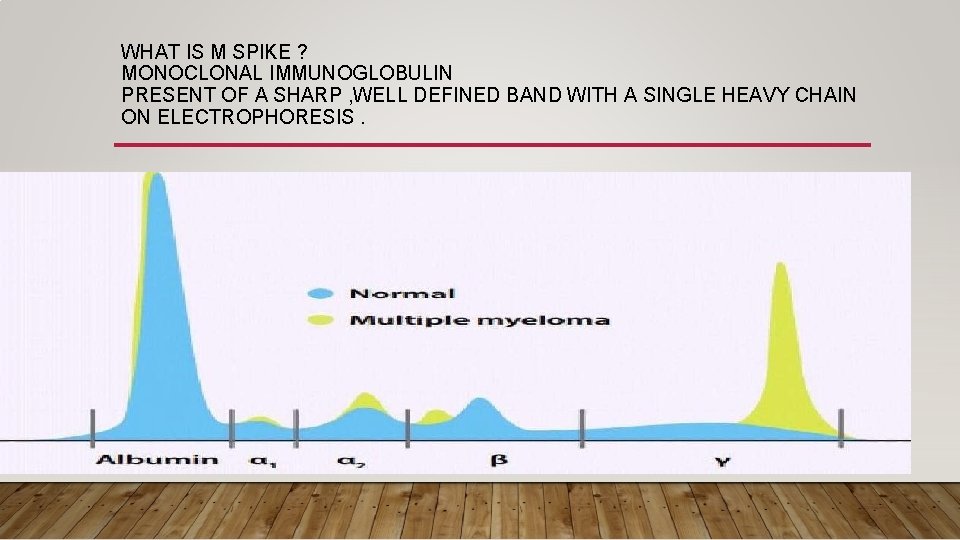
WHAT IS M SPIKE ? MONOCLONAL IMMUNOGLOBULIN PRESENT OF A SHARP , WELL DEFINED BAND WITH A SINGLE HEAVY CHAIN ON ELECTROPHORESIS.

ROULEAUX FORMATION
• Multiple myeloma has a poor prognosis with a median survival of 2 to 4 years with treatment (and only a few • months without treatment). The 5 -year survival rate is about 10%.
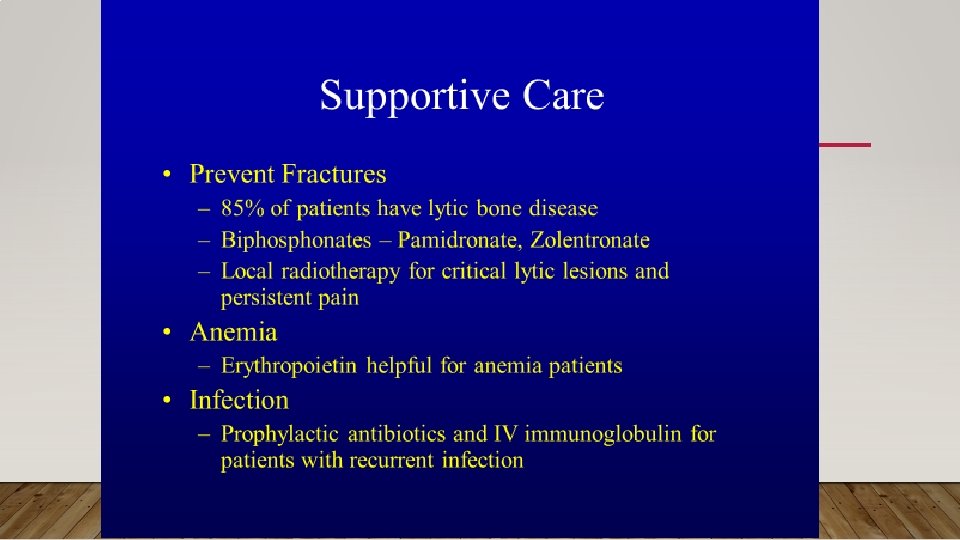
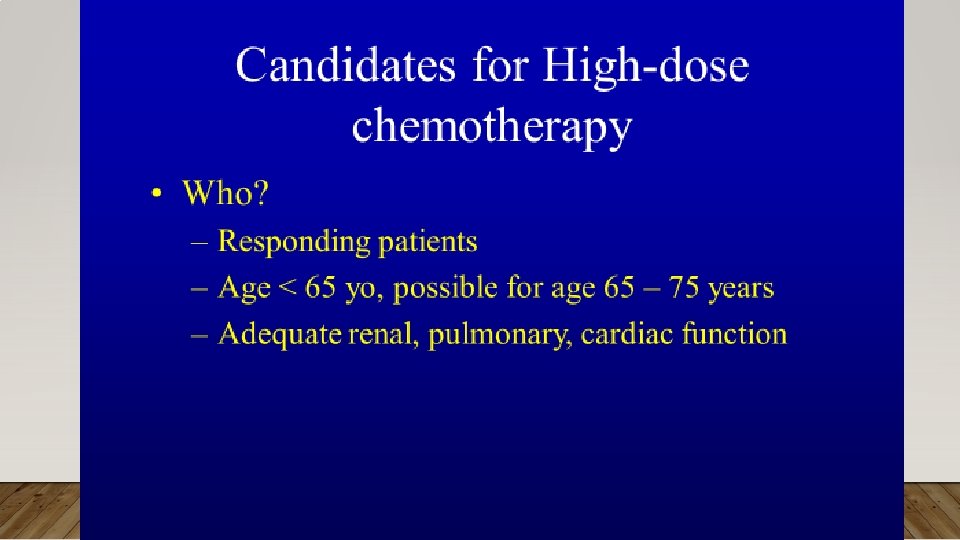
TREATMENT • The preferred treatment is high-dose chemotherapy with autologous hematopoietic cell transplantation (HCT) -Bisphonates for patients with one or more skeletal lesions -autologous bone marrow transplantation is the curative option but not aplicaple with all patients High dose chemotherapy is not given to elderly
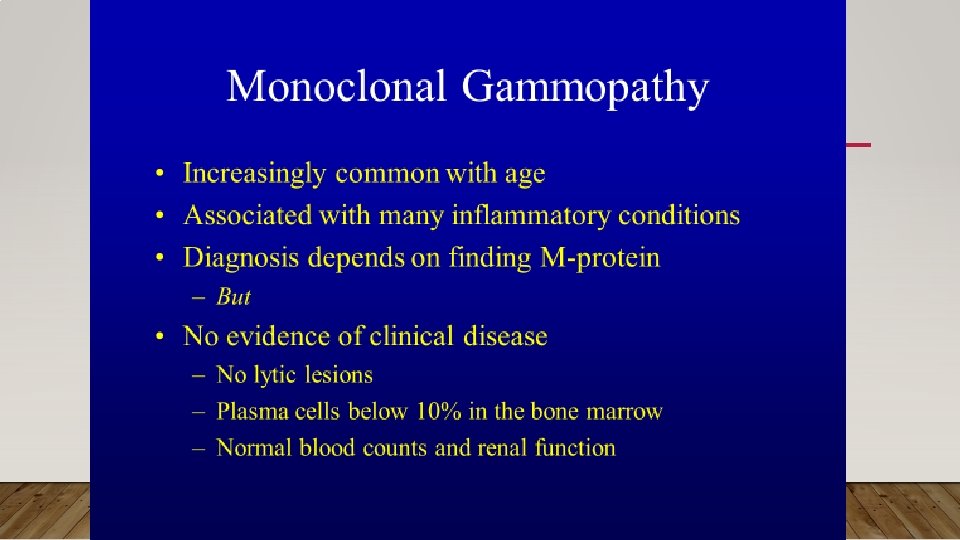
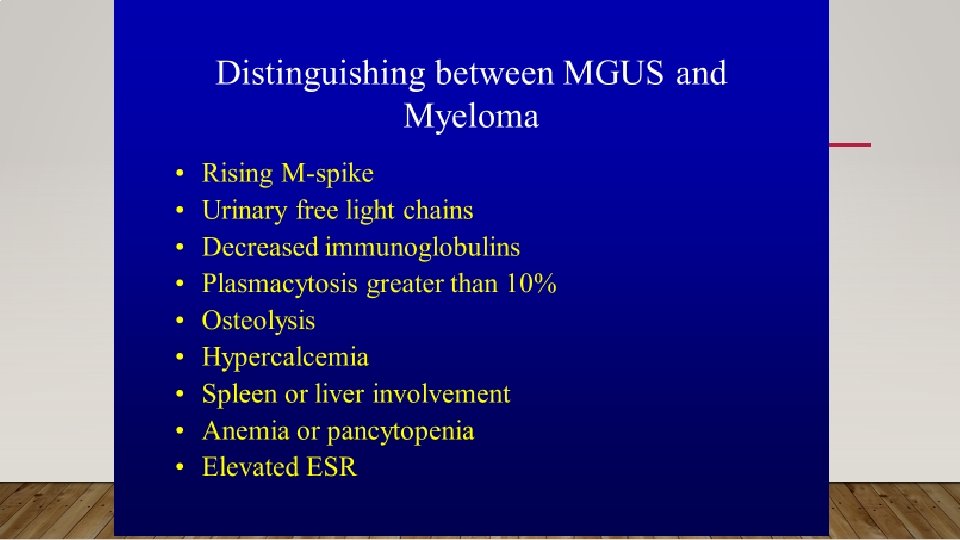
• 1 % of patients with MGUS develop multiple myeloma each year • Every multiple myeloma patient has MGUS at first then it progress to multiple myeloma • So we can say MGUS is premalignant to multiple myeloma
REFERENCES: • Benjamin, et al. “USMLE Step 1 and Medical Course Review. ” Pathoma, www. pathoma. com/. • Step Up to medicine Series 5 th edition • Hasudungan, A. (Director). (2015, July 26). Medicine - Multiple Myeloma [Video file]. Retrieved 2020, from https: //www. youtube. com/watch? v=ghvo. Khp. Ac 64 • Academy, K. (Director). (2014). What is multiple myeloma? | Hematologic System Diseases | NCLEX-RN | Khan Academy [Video file]. Retrieved 2020, from https: //www. youtube. com/watch? v=jdytg. W 5 w. Ka 4

• Thank you • MOHAMMAD DARADKEH • ZAID ALRABADI
- Slides: 24