
Multiple Myeloma and Understanding your Labs Matthew Ware
Multiple Myeloma and Understanding your Labs Matthew Ware PA-C Hematology/Oncology, BMT Froedtert and the Medical College of Wisconsin Cancer Center
Disclosures �None
Objectives �Understand basic labs �Interpreting myeloma labs �Imaging and its role �Diagnosing myeloma
Topics for Discussion �What is myeloma �Hematopoiesis �Monoclonal proteins and detection �Cytogenetics �CRAB �Diagnosing �Responses
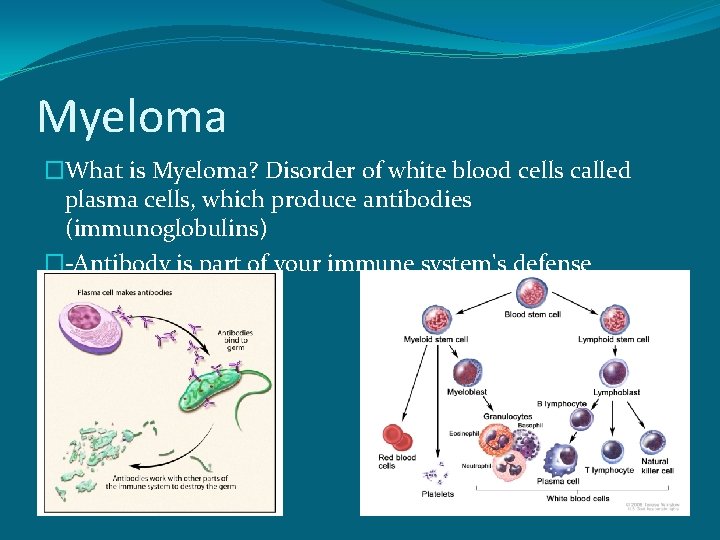
Myeloma �What is Myeloma? Disorder of white blood cells called plasma cells, which produce antibodies (immunoglobulins) �-Antibody is part of your immune system's defense
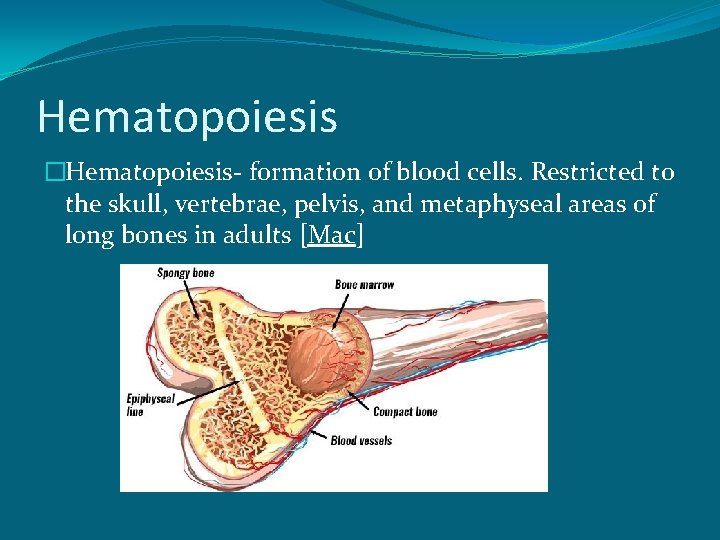
Hematopoiesis �Hematopoiesis- formation of blood cells. Restricted to the skull, vertebrae, pelvis, and metaphyseal areas of long bones in adults [Mac]
White Blood Cells (Leukocytes) �WBCs are involved in fighting infections and foreign invaders �Two major categories �Agranulocytes �Granulocytes
WBCs- Agranulocytes �No granules in their cytoplasm and one lobe nucleus. Also called mononuclear leukocytes �Two types: �Lymphocytes �Monocytes
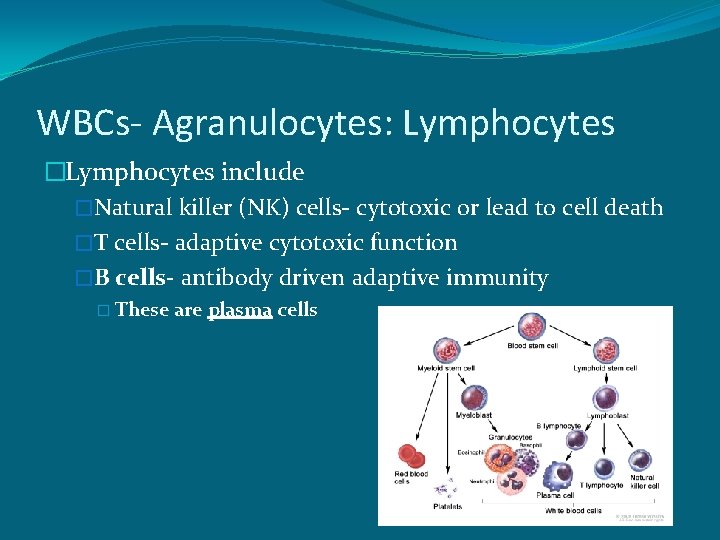
WBCs- Agranulocytes: Lymphocytes �Lymphocytes include �Natural killer (NK) cells- cytotoxic or lead to cell death �T cells- adaptive cytotoxic function �B cells- antibody driven adaptive immunity � These are plasma cells
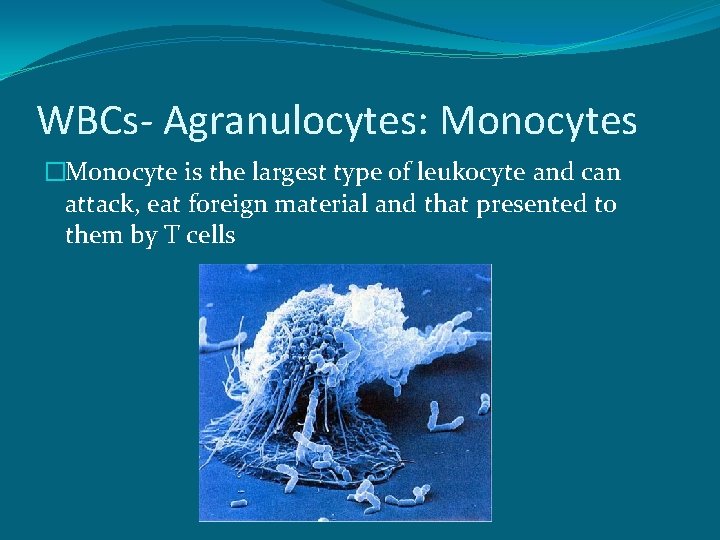
WBCs- Agranulocytes: Monocytes �Monocyte is the largest type of leukocyte and can attack, eat foreign material and that presented to them by T cells
WBCs- Granulocytes �Granules in their cytoplasm and differing shape of their nucleus also call polymorphonuclear leukocytes (PML or PMN) �Three major categories �Neutrophils are 40 -70% of WBCs. Elevated with inflammation or infection and fight infection �Eosinophils fight parasites and can be elevated in allergic reactions �Basophils seen in inflammatory responses, acute and chronic
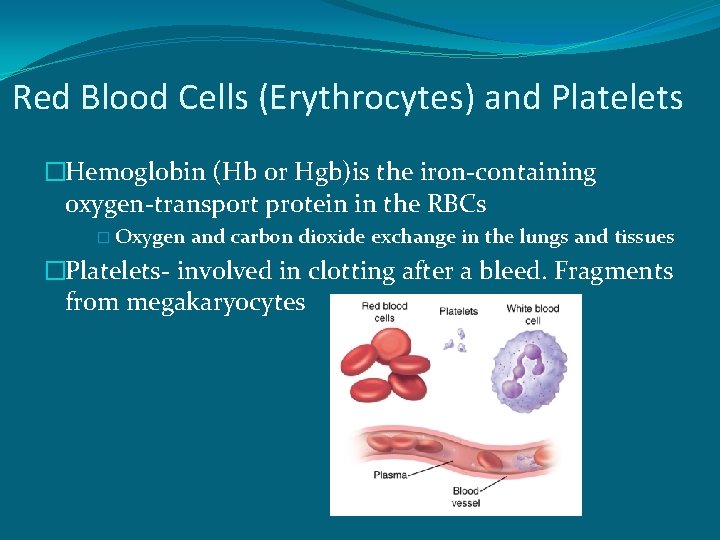
Red Blood Cells (Erythrocytes) and Platelets �Hemoglobin (Hb or Hgb)is the iron-containing oxygen-transport protein in the RBCs � Oxygen and carbon dioxide exchange in the lungs and tissues �Platelets- involved in clotting after a bleed. Fragments from megakaryocytes
Diagnosing Myeloma �Lab results � CBC and chemistry panel � Protein evaluation (blood and urine) � Immunoglobulin (antibodies) levels- Ig. G, Ig. A, Ig. M �Imaging � Bone lesions: X-ray (bone survey), CT, MRI, PET �Pathology � Bone marrow biopsy and cytogenetics
Monoclonal Protein �Present in majority of patients and 97% have a monoclonal or M protein � Made by non-functioning plasma cell seen in serum and/or 24 hour urine. Termed paraprotein �Testing- serum protein electropheresis (SPEP) or urine protein electopheresis (UPEP) �No detectable protein in 3% (non-secretory)
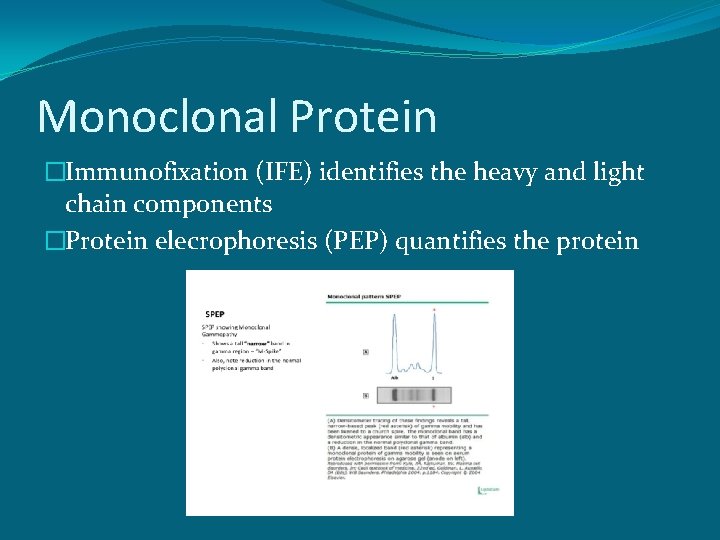
Monoclonal Protein �Immunofixation (IFE) identifies the heavy and light chain components �Protein elecrophoresis (PEP) quantifies the protein
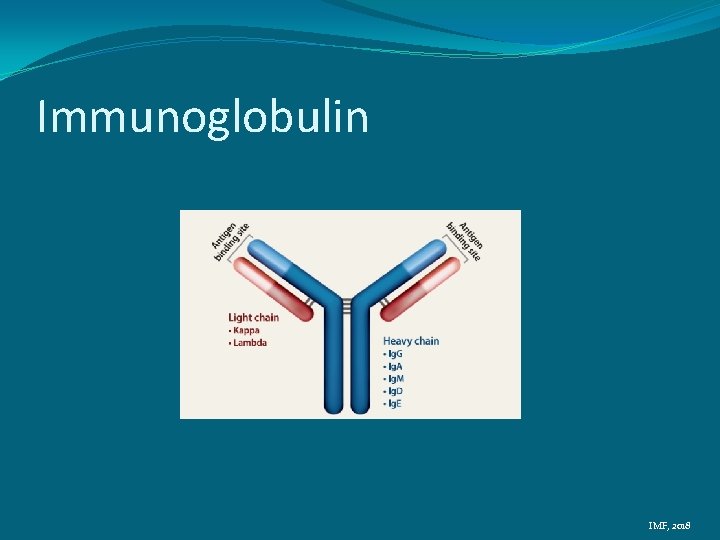
Immunoglobulin IMF, 2018
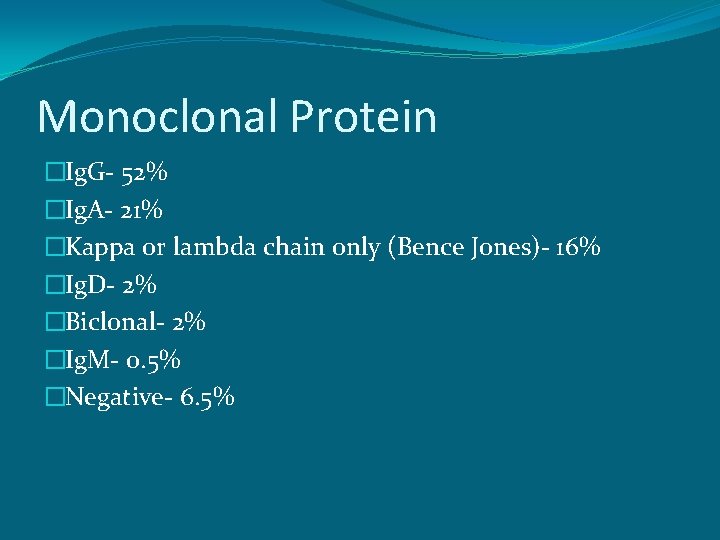
Monoclonal Protein �Ig. G- 52% �Ig. A- 21% �Kappa or lambda chain only (Bence Jones)- 16% �Ig. D- 2% �Biclonal- 2% �Ig. M- 0. 5% �Negative- 6. 5%
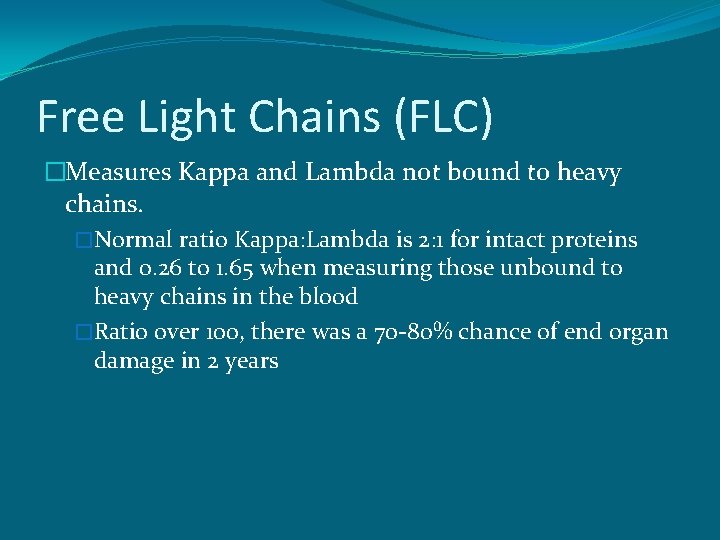
Free Light Chains (FLC) �Measures Kappa and Lambda not bound to heavy chains. �Normal ratio Kappa: Lambda is 2: 1 for intact proteins and 0. 26 to 1. 65 when measuring those unbound to heavy chains in the blood �Ratio over 100, there was a 70 -80% chance of end organ damage in 2 years
Serum Immunoglobulins �Ig. G, Ig. A, Ig. M �Reduction in uninvolved immunoglobulins � 90% to have reduction in one � 70% to have both reduced
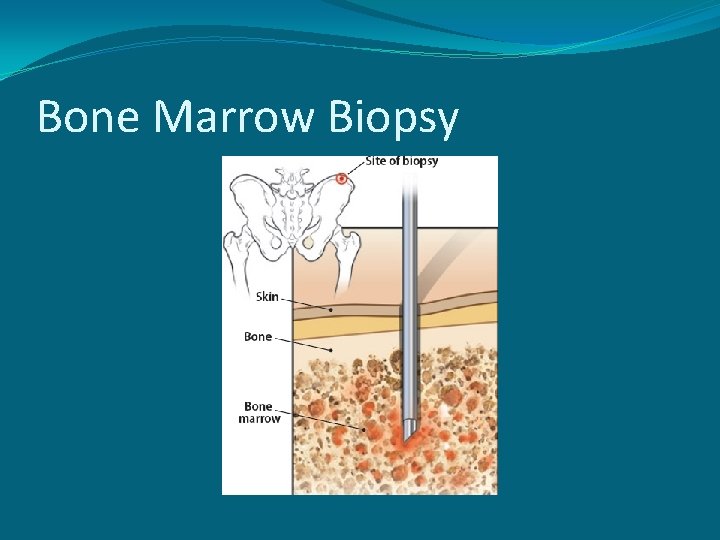
Bone Marrow Biopsy

Bone Marrow Biopsy �Percentage of plasma cells- Normal range is 1 -2% �Morphology- mature, immature, atypical � Mature is better prognosis �Can derive kappa/lambda ratio from here or serum �Cytogenetics- Chromosomal abnormalities IMF, 2018
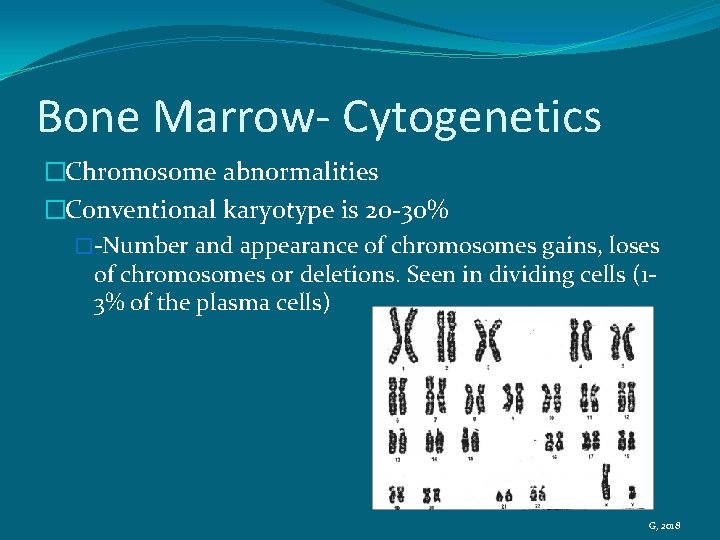
Bone Marrow- Cytogenetics �Chromosome abnormalities �Conventional karyotype is 20 -30% �-Number and appearance of chromosomes gains, loses of chromosomes or deletions. Seen in dividing cells (13% of the plasma cells) G, 2018
Bone Marrow- FISH �Fluorescent in situ hybridization (FISH)- Fluorescent labeled DNA sequences that find a complement on the plasma cells �Detects changes regardless of plasma cells growth �Chromosome- Long (q) and short (p) arm make up a chromatid
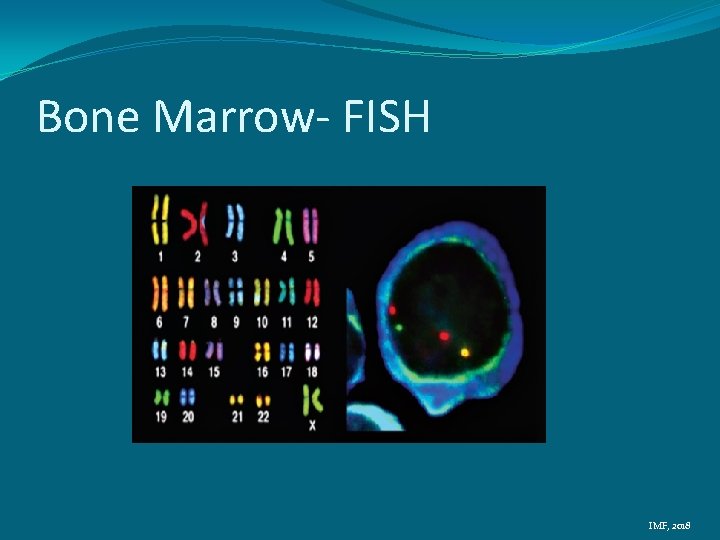
Bone Marrow- FISH IMF, 2018
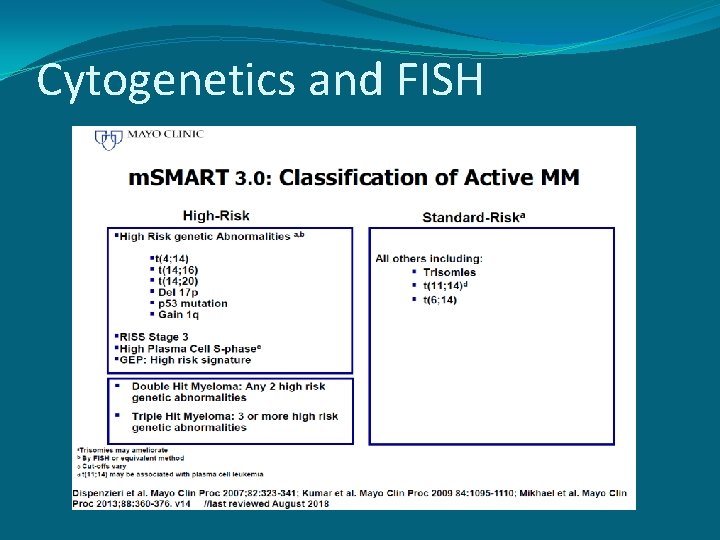
Cytogenetics and FISH
Presenting Symptoms �CRAB �Calcium (elevated) �Renal (kidney) Failure �Anemia �Bone Lesions
CRAB �Calcium (elevated)- Hypercalcemia � Results from bone break down � Symptoms of nausea, constipation, poor appetite, confusion, thirst � Seen in 28% of patients on presentation
CRAB �Renal (kidney) Failure or Dysfunction � Creatinine is a waste product from normal muscle breakdown, filtered by kidneys and excreted � Increased by monoclonal proteins and high calcium � Symptoms of confusion, weakness, nausea, fatigue, fluid retention, decreased urine output � Elevated creatinine in 48% on presentation
CRAB �Anemia � Lower red blood cells (hemoglobin) � Marrow replaced by cancer cells � Present with fatigue, weakness, lightheadedness, slowed thinking � Seen in 73% patients on diagnosis
CRAB �Bone Lesions � Pain, commonly seen in ribs and spinal cord � Bone breakdown can lead to fractures (broken bones), which release calcium into the bloodstream (hypercalcemia) � Compression fractures � Seen in 58% on presentation
Imaging �X-ray or bone survey �CT �MRI �PET/CT �PET/MRI
X-ray or Bone (skeletal) survey �Thinning of bone or lytic lesions (holes in bone) and/or fractures �Limitation: 30% or more of trabecular (cancellous or spongy) bone must be missing to be seen on x-ray and 50 -75% from lumbar vertebra before visible �Appearance may not change following therapy �Not best for determining cause of pain �Not sensitive for focal lesions in bone marrow
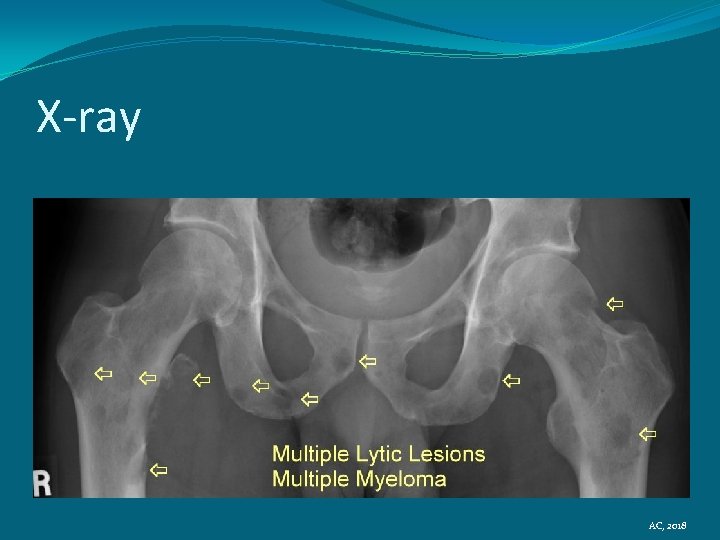
X-ray AC, 2018
![CT (Computed [axial] Tomography) �Cross sectional x-ray �Detection in up to 25% of those](http://slidetodoc.com/presentation_image_h/0970b111a03a47c353b16450459e783d/image-34.jpg "CT (Computed [axial] Tomography) �Cross sectional x-ray �Detection in up to 25% of those")
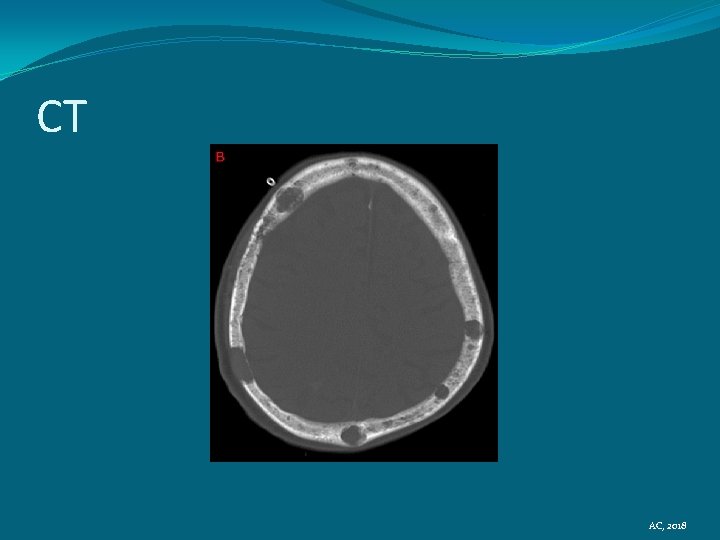
CT (Computed [axial] Tomography) �Cross sectional x-ray �Detection in up to 25% of those with negative x-ray �Soft tissue masses seen compared to x-ray �Quicker than x-ray �Not as sensitive as MRI in detecting lesions outside bone marrow �Contrast �More expensive than x-ray
CT AC, 2018
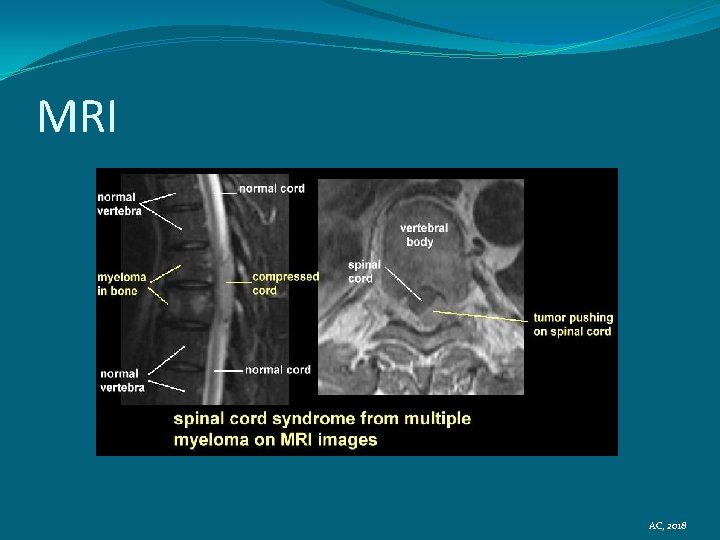
MRI (Magnetic Resonance Imaging) �Picks up bone marrow involvement �Preferred for spinal cord assessment (compression) �Osteoporosis vs vertebral fractures � 52% had normal x-rays �Limitations: expensive, time consuming, implants (metal), pacemakers, claustrophobia, contrast and kidney function � 9 month lag time of active disease
MRI AC, 2018
PET/CT (Positron Emission Tomography) �Radiolabeled glucose, uptaken by cancer cells (actively dividing), muscle and brain �FDG- fluorodeoxyglucose �Find a mass where there is no bone lesion �Extramedullary disease (Non-secretory) �Three or more lesions poorer OS and PFS �Expensive �Inflammation �Skull lesions missed due to FDG avidity of brain �Medicare covers 1 PET scan �May cover additional during relapse, non-secretory additional malignancy
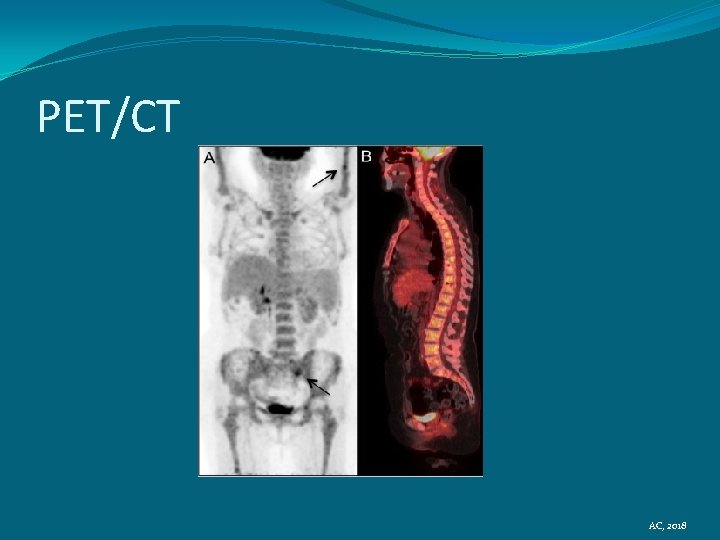
PET/CT AC, 2018
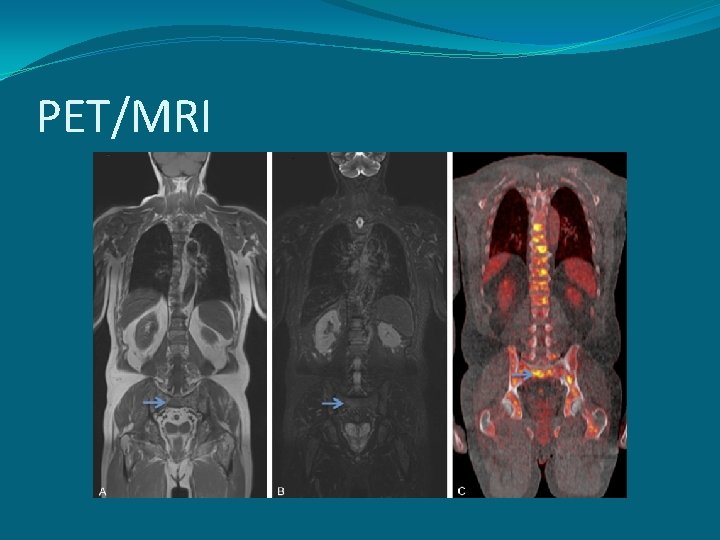
PET/MRI �Equivalent to superior than PET/CT �Up to 80% reduction in radiation �Comparable cost �Newly diagnosed patients as first imaging modality
PET/MRI
Additional Labs �Beta-2 microglobulin- (B 2 M) is a protein on the cell surface of most cells. Shed into bloodstream. Commonly seen on B lymphocytes and tumor �Total protein- albumin and globulin. M-protein increases blood globulin �Albumin- Most abundant protein in blood plasma �LDH (Lactate dehydrogenase)- enzyme in almost every cell and involved in fueling cells. Seen when cells are rapidly dividing and dying
RISS (Revised International Staging System) �Based on blood work �Amount of albumin �Beta-2 microglobulin �LDH �Cytogenetics (bone marrow) � 3 stages
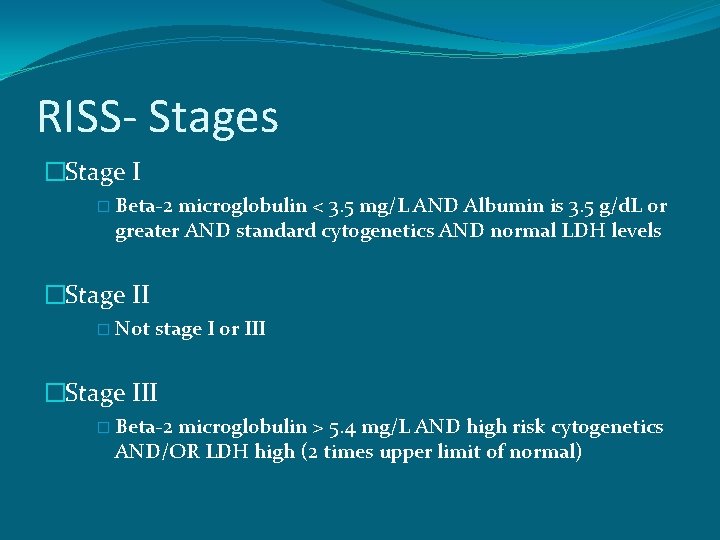
RISS- Stages �Stage I � Beta-2 microglobulin < 3. 5 mg/L AND Albumin is 3. 5 g/d. L or greater AND standard cytogenetics AND normal LDH levels �Stage II � Not stage I or III �Stage III � Beta-2 microglobulin > 5. 4 mg/L AND high risk cytogenetics AND/OR LDH high (2 times upper limit of normal)
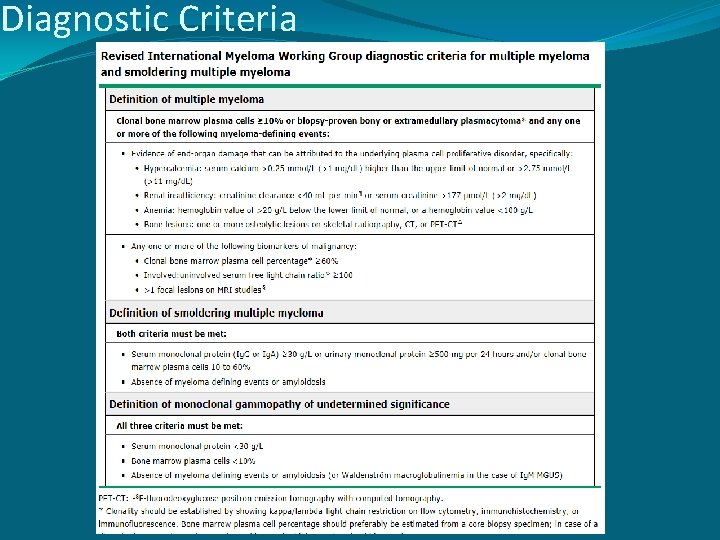
Diagnostic Criteria
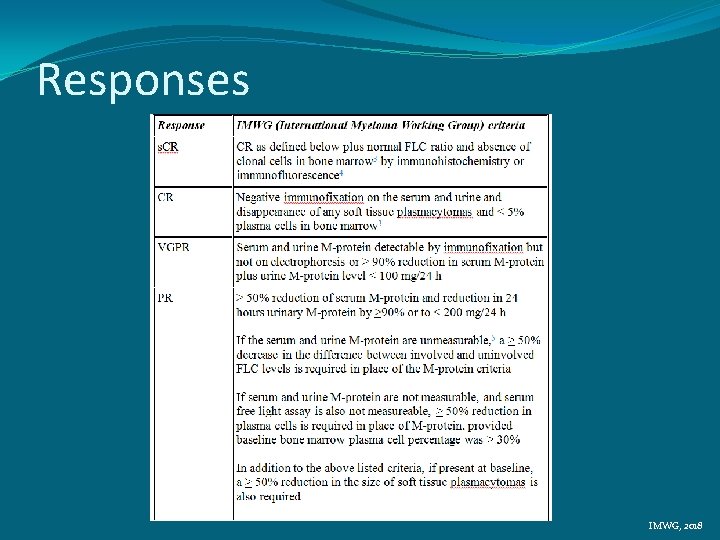
Responses IMWG, 2018
- Slides: 46