
Multiple Intelligences Its not HOW smart you are

- Slides: 14
Multiple Intelligences It’s not HOW smart you are, it’s HOW you are smart
Why Learn This? • Different people learn different ways. • Many students can comprehend information if given to them in a way they can understand. • It is important to know HOW you learn so that you can be successful in high school.
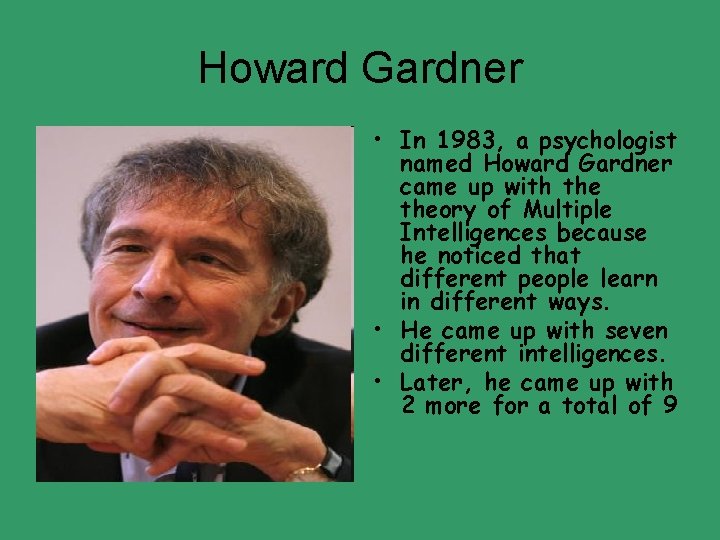
Howard Gardner • In 1983, a psychologist named Howard Gardner came up with theory of Multiple Intelligences because he noticed that different people learn in different ways. • He came up with seven different intelligences. • Later, he came up with 2 more for a total of 9
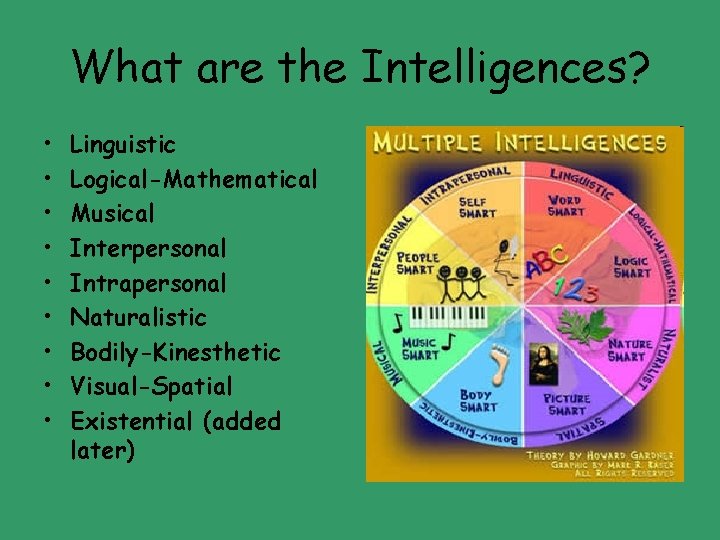
What are the Intelligences? • • • Linguistic Logical-Mathematical Musical Interpersonal Intrapersonal Naturalistic Bodily-Kinesthetic Visual-Spatial Existential (added later)
Linguistic • People who score high in the Linguistic Intelligence are considered Word Smart • These are the people who like to learn vocabulary, speak, write, and read. • They learn best when they can read the material
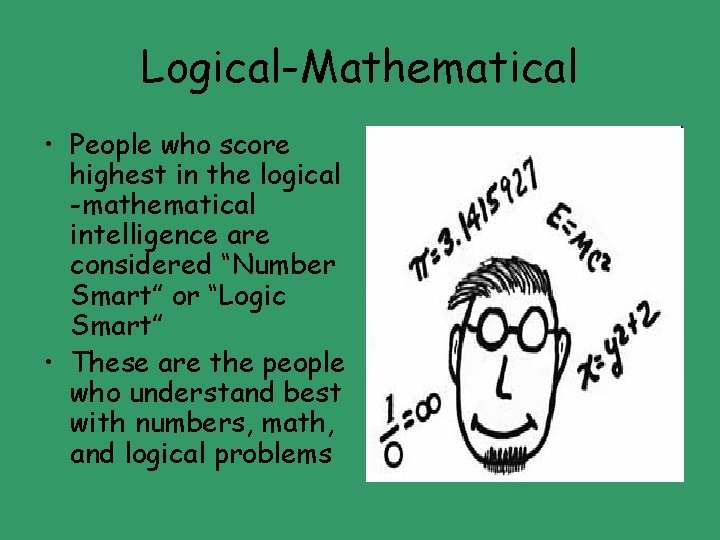
Logical-Mathematical • People who score highest in the logical -mathematical intelligence are considered “Number Smart” or “Logic Smart” • These are the people who understand best with numbers, math, and logical problems
Musical • People who score high in the musical intelligence are considered “Music Smart” • These are people who can read, play, and write music, and learn best in rhythms
Interpersonal • People who score high in the Interpersonal Intelligence are considered “People Smart” • These are people who learn best by interacting with other people, working in teams, listening and talking to others
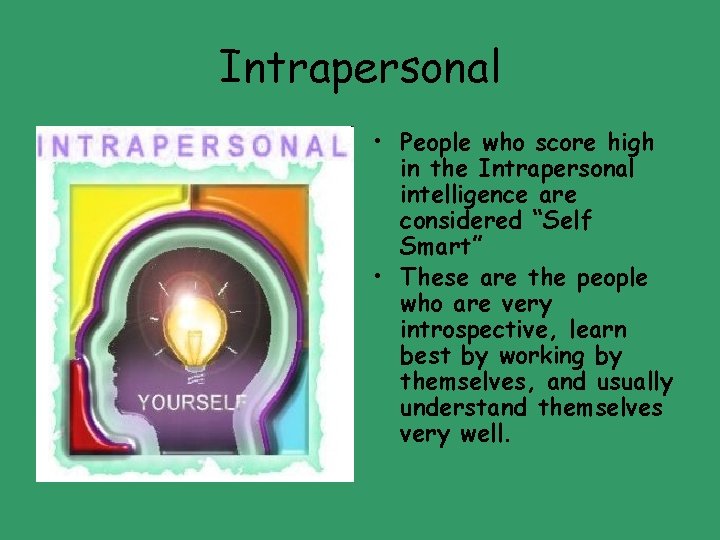
Intrapersonal • People who score high in the Intrapersonal intelligence are considered “Self Smart” • These are the people who are very introspective, learn best by working by themselves, and usually understand themselves very well.
Naturalistic • People who score high in the naturalistic intelligence are considered “Nature Smart” • These are people who are highly interested in nature, zoology, biology, marine biology, and astronomy
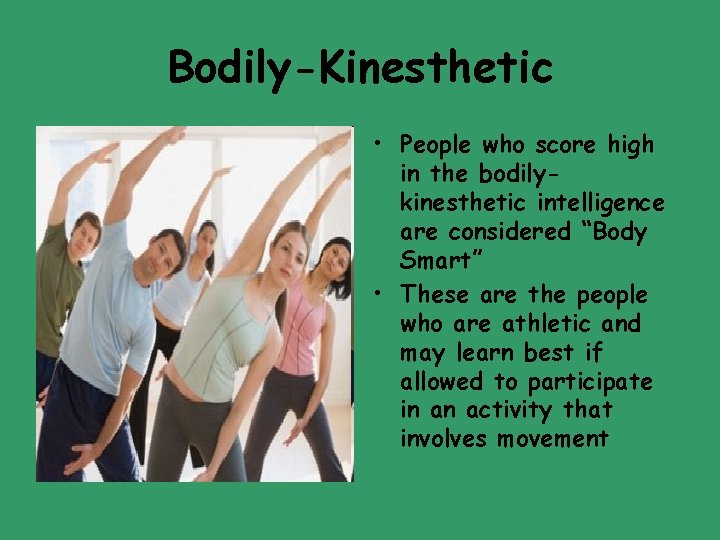
Bodily-Kinesthetic • People who score high in the bodilykinesthetic intelligence are considered “Body Smart” • These are the people who are athletic and may learn best if allowed to participate in an activity that involves movement
Visual-Spatial • People who score high in the spatial intelligence are considered “Picture Smart” • These are people who understand by seeing pictures, shapes, sizes (geometry) and art
Existential • People who score high in the existential intelligence are considered “Deep Question Smart” • These are people who like to contemplate philosophical questions (if a tree falls in a forest, does it make a sound? )