
MULTIPLE HATS FOR COLLABORATIVE PROFESSIONALS AND MEDIATORS Working
MULTIPLE HATS FOR COLLABORATIVE PROFESSIONALS AND MEDIATORS Working with Interdisciplinary Neutrals and Co-Mediators IACP 20 th Annual Networking and Educational Forum October 27, 2019

Welcome, and thank you for joining us! Zanita Zacks-Gabriel, Esq. Erie, PA Robert (Bob) Merlin, Esq. Coral Gables, FL
Workshop Overview I. Traditional Mediation II. Interdisciplinary Mediation III. Co-Mediation
Poll Group • Are you an attorney, mental health professional, financial professional, or something else? • Are you a mediator? • Evaluative • Facilitative • Transformational • Are you a collaborative practitioner? • How many of you have brought in a mediator at impasse?

TRADITIONAL MEDIATION
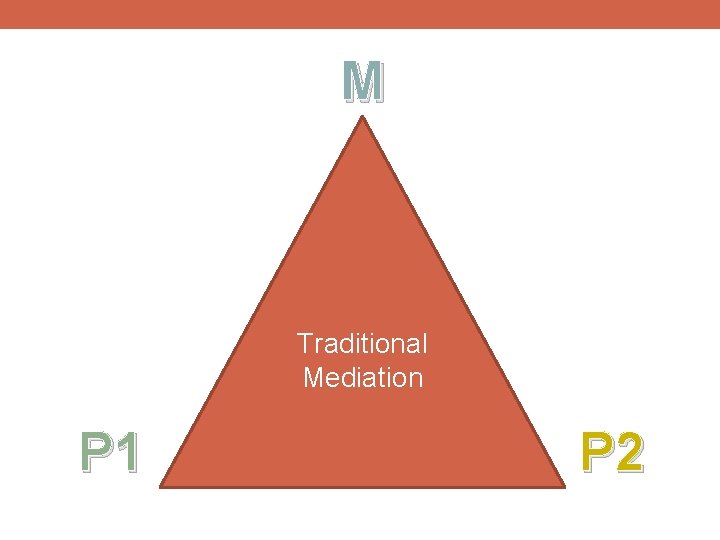
M Traditional Mediation P 1 P 2
Traditional Types of Mediation • Evaluative • Facilitative • Transformational
Group Exercise: Discuss the efficacy and the Pros and Cons of each model of Traditional Mediation
Are we generally happy with the results of traditional mediation?
INTERDISCIPLINARY MEDIATION
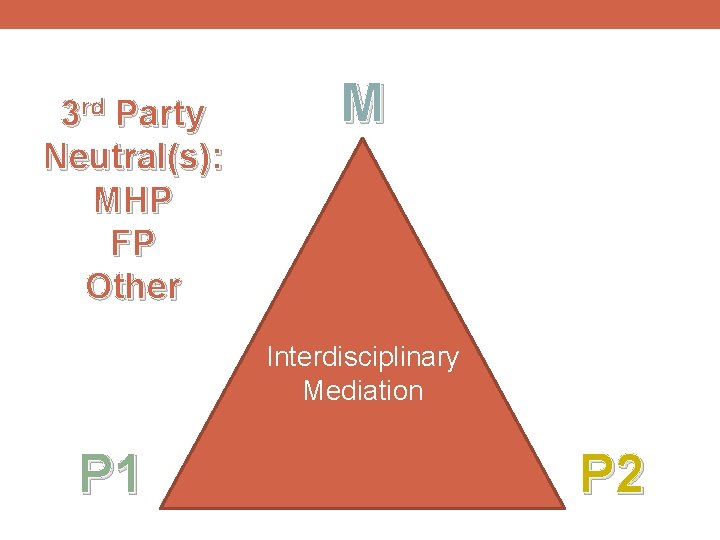
3 rd Party Neutral(s): MHP FP Other M Interdisciplinary Mediation P 1 P 2
Working with Interdisciplinary Neutrals • Mental Health Professionals: • Facilitative Coaches • Child Specialists • Financial Professionals • Other Experts
Advantages of Interdisciplinary Mediation: Third party neutrals can bring… • a fresh, new perspective • unique expertise Which can lead to… • the ability to defuse conflict • the ability to manage difficult conversations • the ability to manage financial perspectives and options Resulting in… • an enhanced opportunity to resolve conflict in a healthier and mutually beneficial manner • a greater probability of reaching good short-term solutions • promoting durable long-term solutions and relationships
Disadvantages of Interdisciplinary Mediation: • Potential increase in cost*, by using more professionals * However, the benefit of their expertise, and the fact that their fees are generally split by the parties, may outweigh the burden of the increased costs, and the result is still likely to be much faster and cheaper than litigation • Attempts by parties to single out and alienate a third party neutral
Poll Group • What are the benefits of working with collaborative counsel in a mediation? • What are the possibilities of working with non- collaborative counsel in a mediation?
CO-MEDIATION
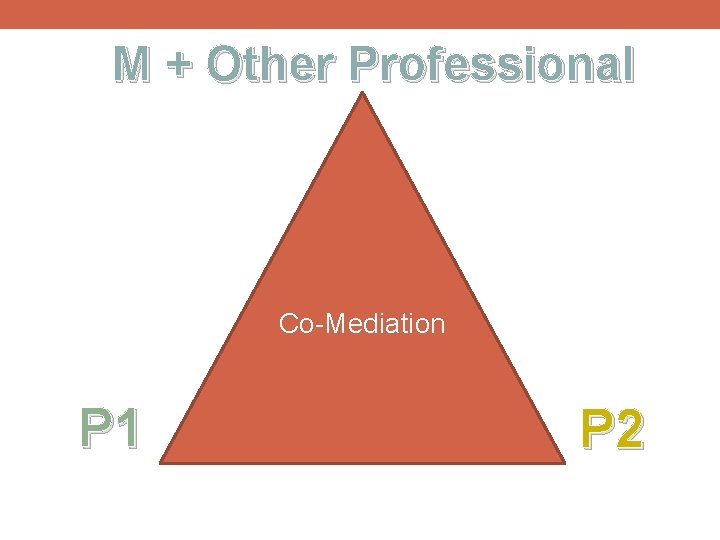
M + Other Professional Co-Mediation P 1 P 2
Advantages of Co-Mediation: More than one professional means… • multiple sets of ears miss less • more insight, which widens the diagnostic range to observe more data • ability to feed and build upon each other’s skill and experience • Co-Mediators can be fantastic role models/mentors for less experienced professionals Parties get the benefit of… • Co-Mediators can provide more attention to each individual, which can help people to feel heard better, and help to level the playing field for the parties • Co-Mediators can generate more options to better fit the parties’ needs • Efficient and cost-effective - generally shorter and faster-paced than litigation, as well as other methods of alternative dispute resolution
Advantages of Co-Mediation (continued): • Division of work before, during, and if necessary, after mediation • One can focus on detail and the other on the big picture • One can focus on emotional needs and the other on substantive matters • Both mediators step up their game • Potentially increased racial, ethnic, and cultural diversity, as well as representation in terms of sex/gender
Disadvantages of Co-Mediation: • Potential for conflict between the mediators • Increased cost* * To combat this issue, consider the following: • Blending • Mediation is STILL faster, more efficient, and cheaper than litigation
Requirements for Success • Pick a good partner who shares vision, goals, and process • Careful planning and preparation, including consulting with each other before making decisions, for effective teamwork • Assign specific tasks • Good communication between Mediators, and with Parties • Maintain a unified focus • Have a fall-back position • Be flexible • Debrief • Support each other
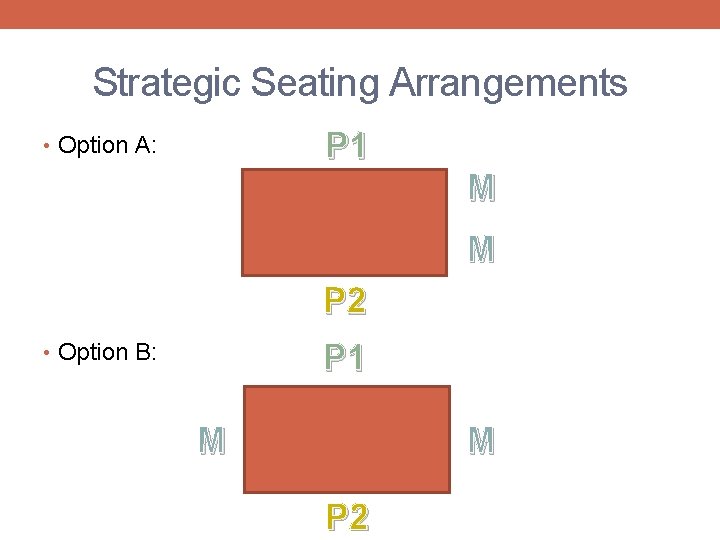
Strategic Seating Arrangements P 1 • Option A: M M P 2 P 1 • Option B: M M P 2
Alternatives to Co-Mediation • Con-joint co-mediation: either all together, or in separate meetings • Collaborative co-mediation • Interdisciplinary co-mediation teams • Issue allocation
Where Co-Mediation is Best Used • High level of conflict or manipulation • Power imbalance • Complex assets • Informational consultation • Non-mutual decision to separate
Why multiple hats are a great and trendy thing, and what it means for your practice… • Creation of non-traditional peacemaking services in order to create not only broader client base but more satisfied clients • More hats equals an expansion of your practice, and therefore, your profits

Surprise Guest! Melissa Sulkowski, R. N. , M. A. , LPC
List of References • “Co-Mediation to Collaborative Mediation: A Case Study In Client-Focused Dispute • • • Resolution”, by Adam Cordover, Tampa and Rachel Mosowitz, Tampa, The Florida Bar Family Law Section Commentator, Volume XXX, No. 3, Summer 2017 “The Complete Guide to Mediation: The Cutting Edge Approach to Family Law Practice”, by Forrest S. Mosten, Chapter 11, Co-Mediation, Section of Family Law, American Bar Association “Mediation: A Practice Guide for Mediators, Lawyers, and Other Professionals”, by David A. Hoffman and Boston Law Collaborative, LLC, MCLE New England “Mediation Career Guide – A Strategic Approach to Building a Successful Practice”, “Practice Guidelines for Co-Mediation: Making Certain That ‘Two Heads Are Better Than One’”, by Lela P. Love, Joseph B. Stulberg, Mediation Quarterly, Vol. 13, No. 3, Spring 1996 “What is Co-Mediation, and When Should it be Used? ”, Alona M. Gottfried’s Mediation Blog, Feb. 2, 2009 “Co-Mediation: When 2 heads are better than 1”, by Lynn Duryee and Jean Struck, Los Angeles & San Francisco Daily Journal, Friday, June 23, 2017 “Co-Mediation: Not Just for Family Law or Personal Injury Cases”, by Deborah Gage Haude, Esq. , LAW. COM “Co-Mediation”, by Joe Epstein and Susan Epstein, The Colorado Lawyer, Vol. 35, No. 6 / 21, June 2006 “Co-Mediation: When Two Heads Are Better Than One”, by Lynn Duryee, JAMS ADR Blog by Chris Poole, June 2017
Special Thanks to: All sources cited Special Guest, Melissa Sulkowski Andona Zacks-Jordan, for technical assistance in preparing this presentation …AND to each of you for joining us and participating so generously!
- Slides: 28