
Multiple choice 10 questions Choose the BEST answer


§ Multiple choice- 10 questions. § Choose the BEST answer.
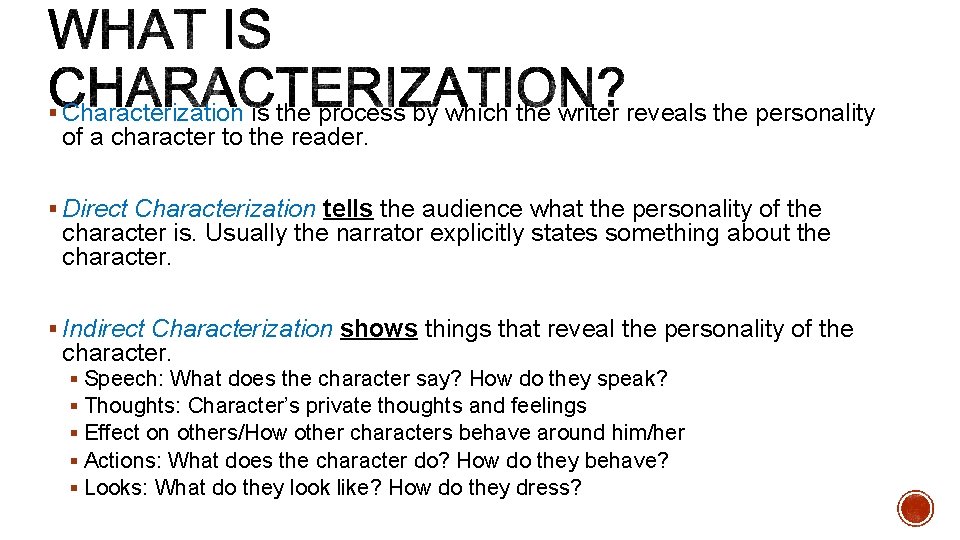
§ Characterization is the process by which the writer reveals the personality of a character to the reader. § Direct Characterization tells the audience what the personality of the character is. Usually the narrator explicitly states something about the character. § Indirect Characterization shows things that reveal the personality of the character. § Speech: What does the character say? How do they speak? § Thoughts: Character’s private thoughts and feelings § Effect on others/How other characters behave around him/her § Actions: What does the character do? How do they behave? § Looks: What do they look like? How do they dress?
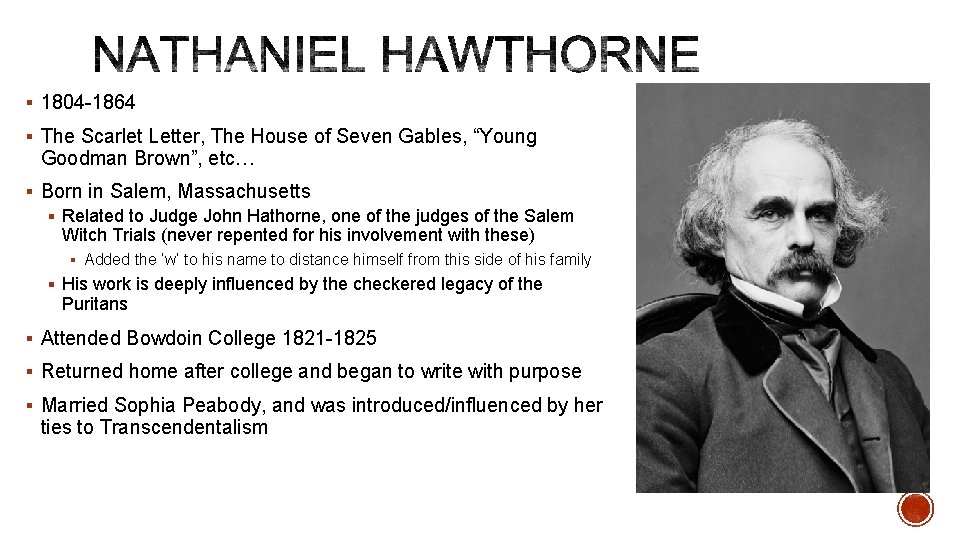
§ 1804 -1864 § The Scarlet Letter, The House of Seven Gables, “Young Goodman Brown”, etc… § Born in Salem, Massachusetts § Related to Judge John Hathorne, one of the judges of the Salem Witch Trials (never repented for his involvement with these) § Added the ‘w’ to his name to distance himself from this side of his family § His work is deeply influenced by the checkered legacy of the Puritans § Attended Bowdoin College 1821 -1825 § Returned home after college and began to write with purpose § Married Sophia Peabody, and was introduced/influenced by her ties to Transcendentalism
§ Keep passing the sheet around! One person shouldn’t be doing all the grading. § Participate! §Don’t be shady! § Be respectful of everyone § Use evidence from the text to support your ideas § Invite others in who are not speaking
1. How would you characterize Hawthorne’s writing style based on 2. 3. 4. 5. 6. the ideas and techniques you see within “The Minister’s Black Veil” ? Why does Mr. Hooper wear the veil? What does the black veil symbolize? How does Hawthorne characterize Mr. Hooper? Why does he choose to characterize him in this way? How would you characterize the townspeople? As time passes, how do people treat Mr. Hooper? Consider the actions of children and of the dying. Why do you think they treat him that way? Why do you think Mr. Hooper will not remove the veil, even as he is dying? What is the true purpose of the veil? Why can’t the townspeople see it? Or do the townspeople see it?
§ People often go through five stages when they must deal with loss or change. § Can you find an example of each one in the story as people try to understand the change in Mr. Hooper? §Denial §Anger §Bargaining §Depression §Acceptance
§ For each quote, you will be examining the CONTEXT surrounding the quote & analyzing the SIGNIFICANCE of the quote. § CONTEXT: What is happening at the time in the story? Which characters are involved? SHOW ME THAT YOU READ WITH SPECIFIC DETAIL FOR WHAT’S HAPPENING AT THE TIME OF THE QUOTE. § SIGNIFICANCE: What makes your quote important for understanding author’s purpose? What is the author trying to do here and why? Are there any prevalent techniques at work within the quote? What is the effect of those techniques? This is the ANALYSIS piece.
§ 1. “She must have died game, however; for it is said Tom noticed many prints of cloven feet stamped upon the tree, and found handfuls of hair that looked as if they had been plucked from the coarse black shock of the wood-man”. § 2. “He prayed loudly and strenuously, as if heaven were to be taken by force of lungs. Indeed, one might always tell when he had sinned most during the week, by the clamor of his Sunday devotion”.
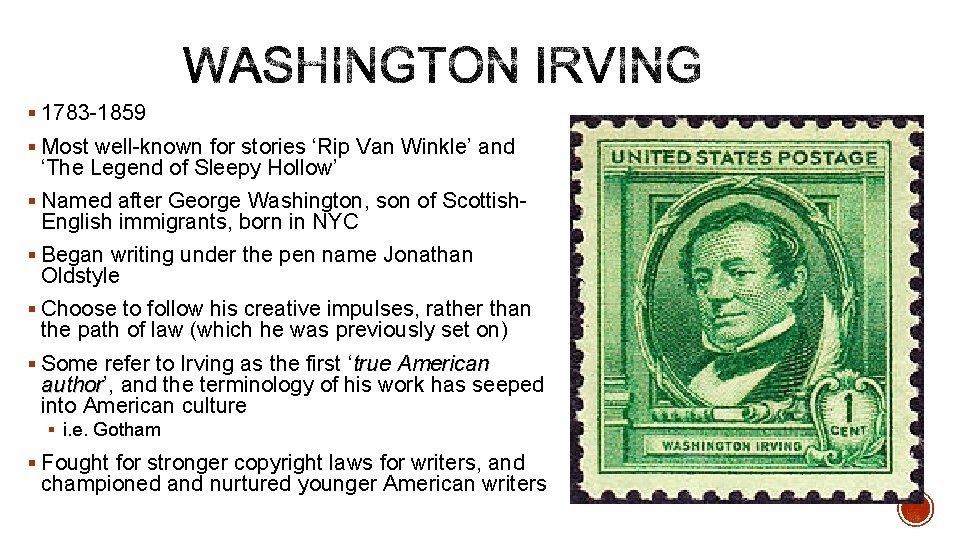
§ 1783 -1859 § Most well-known for stories ‘Rip Van Winkle’ and ‘The Legend of Sleepy Hollow’ § Named after George Washington, son of Scottish- English immigrants, born in NYC § Began writing under the pen name Jonathan Oldstyle § Choose to follow his creative impulses, rather than the path of law (which he was previously set on) § Some refer to Irving as the first ‘true American author’, author and the terminology of his work has seeped into American culture § i. e. Gotham § Fought for stronger copyright laws for writers, and championed and nurtured younger American writers
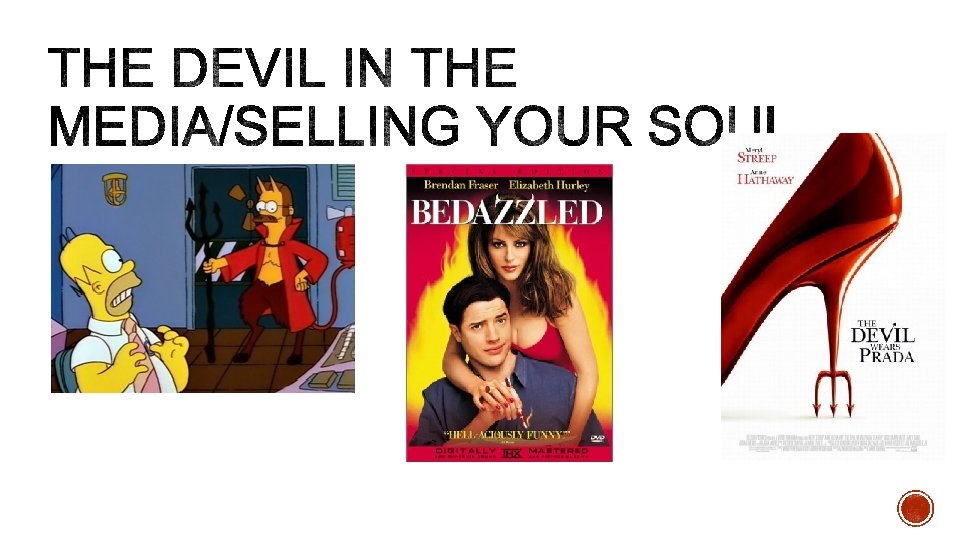
§Discuss: What do you picture when you hear the word “devil”? Why do you picture that?
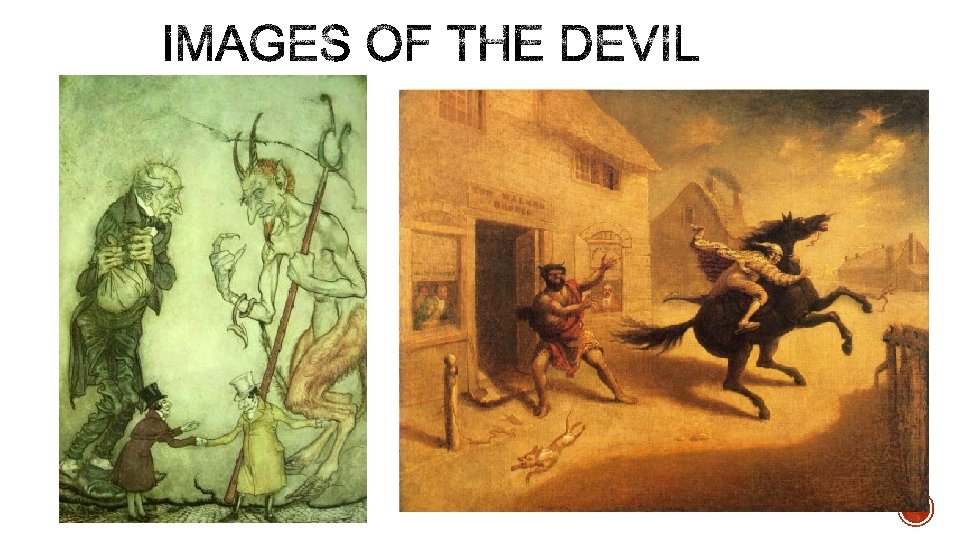
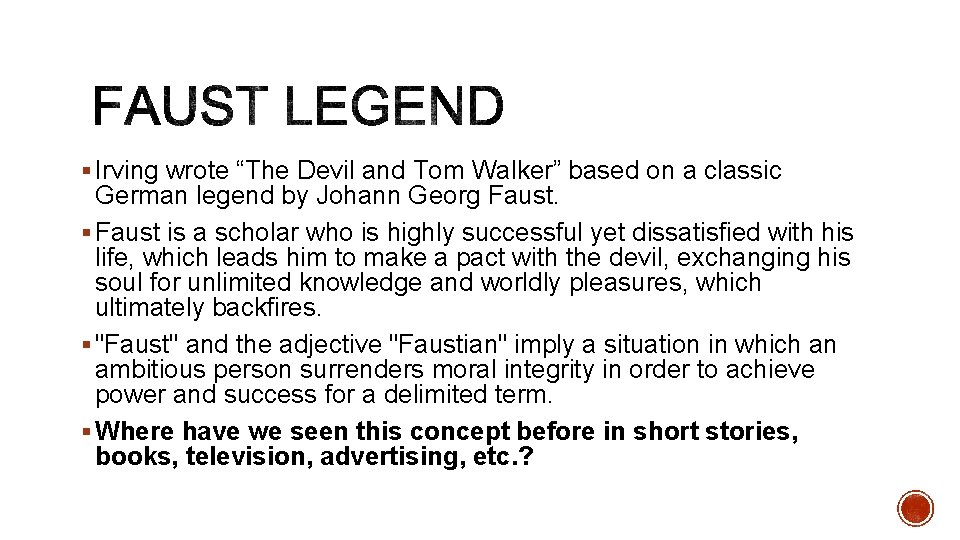
§ Irving wrote “The Devil and Tom Walker” based on a classic German legend by Johann Georg Faust. § Faust is a scholar who is highly successful yet dissatisfied with his life, which leads him to make a pact with the devil, exchanging his soul for unlimited knowledge and worldly pleasures, which ultimately backfires. § "Faust" and the adjective "Faustian" imply a situation in which an ambitious person surrenders moral integrity in order to achieve power and success for a delimited term. § Where have we seen this concept before in short stories, books, television, advertising, etc. ?
§ Choose 2 quotes from “The Devil & Tom Walker” that you feel are significant that you can analyze in your journal. Write out each quote completely and save space below for analysis. § Then, underneath each quote, you will focus on analyzing the context & significance of the quote: § Context- what’s happening in the story? (Summarize briefly…don’t waste too much time talking about plot…you need depth) § Elements of author’s craft: What techniques are at work in this quote? How do they work? How do they connect to larger themes or ideas? (If you can’t find techniques, your quote is not good) § Significance- what is the impact of the quote on the work? What’s the effect on the reader? How do the techniques used contribute to the effect on the reader? (If this one is a struggle, your quote is not good).
§ 1. Which two quotes did you choose for your journal write? Describe the context and significance of each. Dig into your analysis! § 2. How would you characterize Irving’s writing style? How is his writing style different from Hawthorne’s? § 3. How does Irving use satire to create an effect in this work? Find evidence from the text of Irving being satirical. What is Irving making fun of and how do you know? What is the effect of the humor? What area does his criticism seem more intense? § 4. Why is the concept of “selling your soul to the devil” still something referenced today? Where else have you seen this in the media? § 5. What characteristics of Romanticism do we see at work within this story? How do these characteristics differ from “The Minister’s Black Veil”? (Go back to your 5 “I”s)

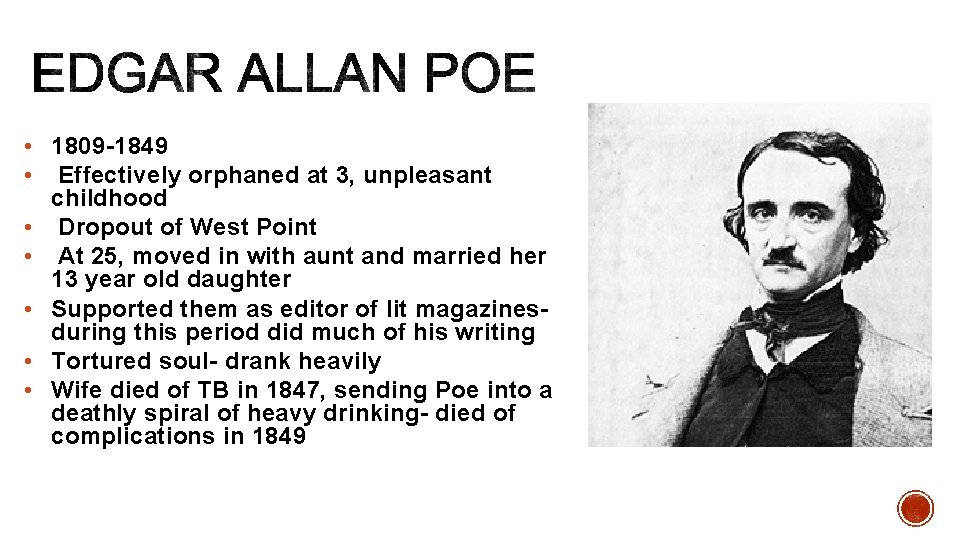
• 1809 -1849 • Effectively orphaned at 3, unpleasant childhood • Dropout of West Point • At 25, moved in with aunt and married her 13 year old daughter • Supported them as editor of lit magazinesduring this period did much of his writing • Tortured soul- drank heavily • Wife died of TB in 1847, sending Poe into a deathly spiral of heavy drinking- died of complications in 1849
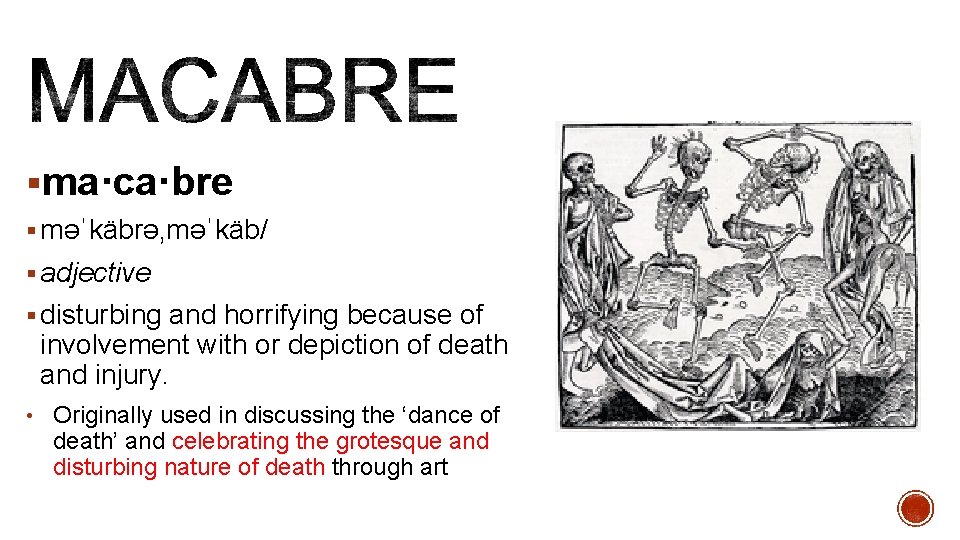
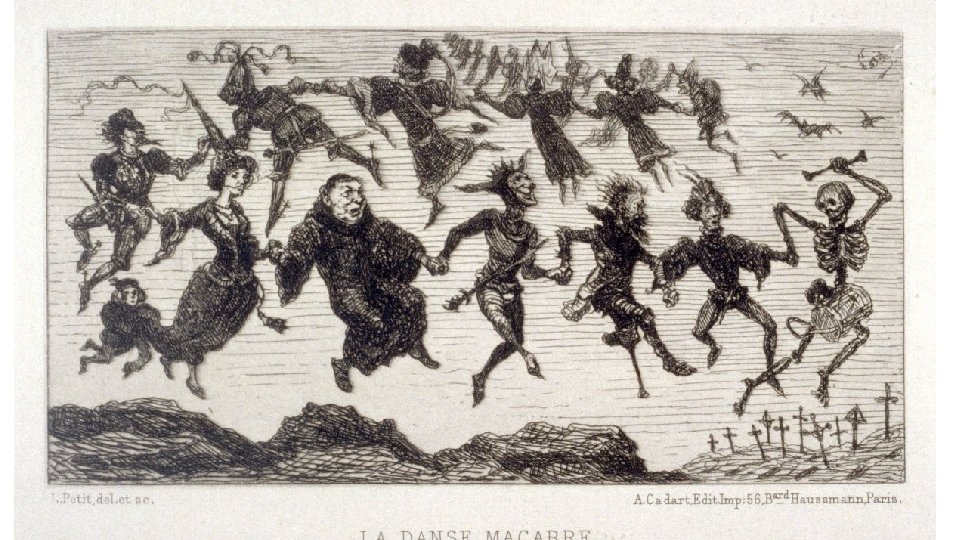
§ma·ca·bre § məˈkäbrə, məˈkäb/ § adjective § disturbing and horrifying because of involvement with or depiction of death and injury. • Originally used in discussing the ‘dance of death’ and celebrating the grotesque and disturbing nature of death through art
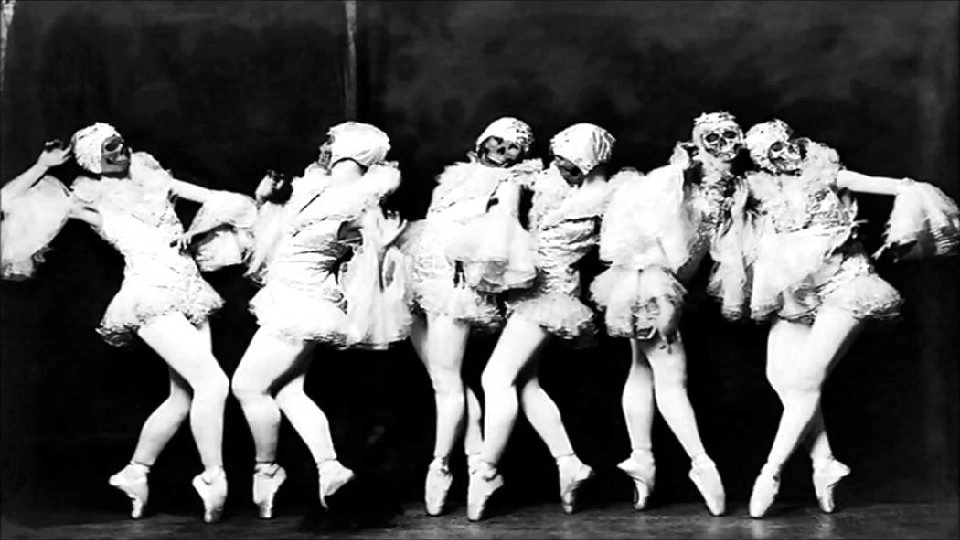
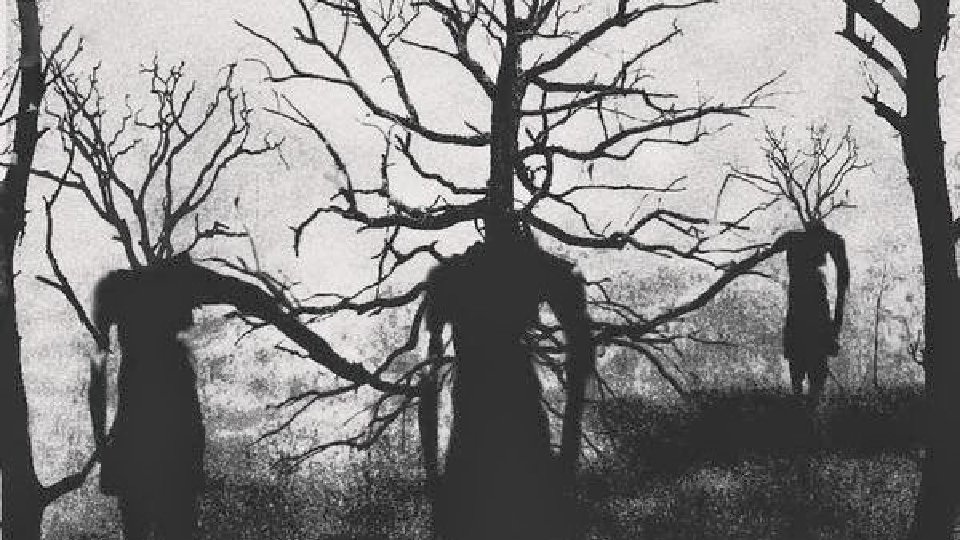
§ What is the purpose of a film trailer? § Film trailers are a form of advertising. Trailers are structured to include relevant parts of a film to encourage as many people to see the film at the cinema. They are also designed to help audiences understand the GENRE of a film. § As you watch the Burton trailers, look for two things: 1) How do you know that this film is dark romanticism? 2) What elements go in to making up a film trailer?
§ You and a group of 4 will put together a film trailer for your story. Your trailer must be between 2 -3 minutes, and demonstrate an understanding of the story, as well as the elements of dark romanticism that you see within the story. §You will have all day in class tomorrow as a work day. §Your trailers are DUE Monday night at midnight § Email Fowler your trailer, submit your script to turnitin
- Slides: 26