
Multiphysics Shock Modeling with ALEGRA and Student Contributions
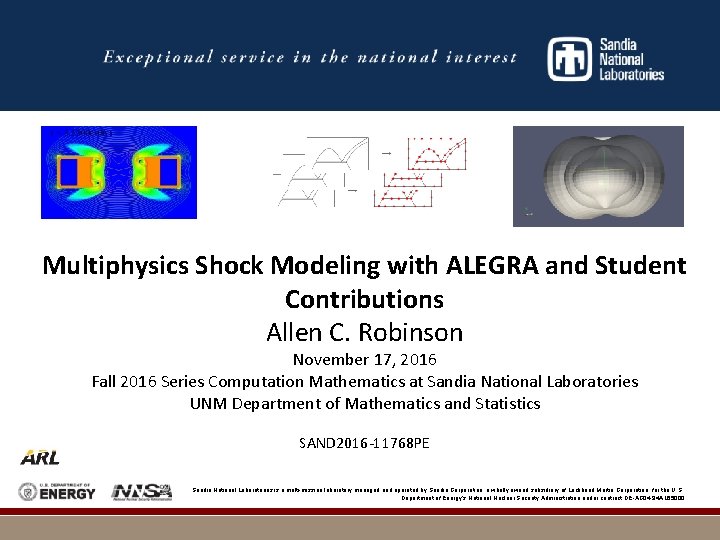
Multiphysics Shock Modeling with ALEGRA and Student Contributions Allen C. Robinson November 17, 2016 Fall 2016 Series Computation Mathematics at Sandia National Laboratories UNM Department of Mathematics and Statistics SAND 2016 -11768 PE Sandia National Laboratories is a multi-mission laboratory managed and operated by Sandia Corporation, a wholly owned subsidiary of Lockheed Martin Corporation, for the U. S. Department of Energy’s National Nuclear Security Administration under contract DE-AC 04 -94 AL 85000.
Outline § Provide an overview of ALEGRA multiphysics capabilities and a discussion of some algorithmic approaches. § Highlight a few undergraduate level student contributions to ALEGRA. § Give insight into potential collaborative scope and a view into production code development challenges. 2
Acknowledgments § ALEGRA development team includes many contributors over 20+ years of development. § My contributions focus around the areas of MHD and electromechanics. My interests are now moving toward multi-fluid and generalized Ohm’s Law modeling. § Key Users: e. g. Ray Lemke, Steve Montgomery, Chris Garasi, John Niederhaus, … § Uncertain Tabular EOS: John Carpenter, Bert Debusschere § Recent Students: Chace Ashcraft, Brad Hanks, Koa Fischer 3
Science based engineering is the only possible way to compete in the future. It is a multidisciplinary, multi-scale, multi-physics enterprise. 4
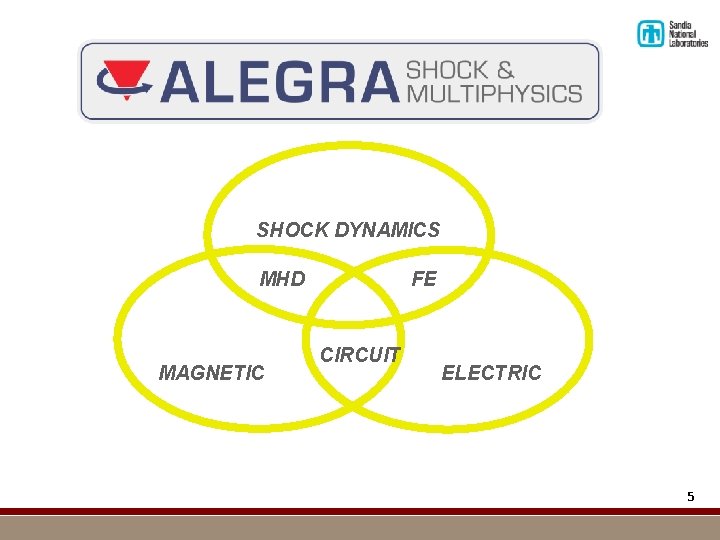
SHOCK DYNAMICS MHD MAGNETIC FE CIRCUIT ELECTRIC 5
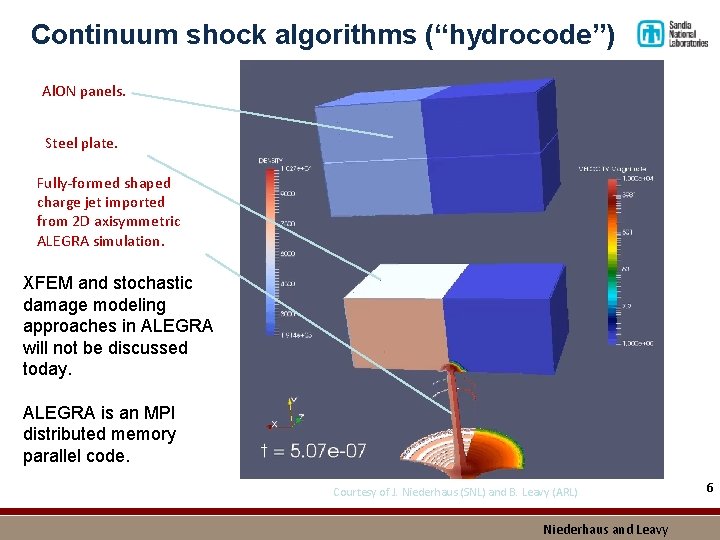
Continuum shock algorithms (“hydrocode”) Al. ON panels. Steel plate. Fully-formed shaped charge jet imported from 2 D axisymmetric ALEGRA simulation. XFEM and stochastic damage modeling approaches in ALEGRA will not be discussed today. ALEGRA is an MPI distributed memory parallel code. Courtesy of J. Niederhaus (SNL) and B. Leavy (ARL) Niederhaus and Leavy 6
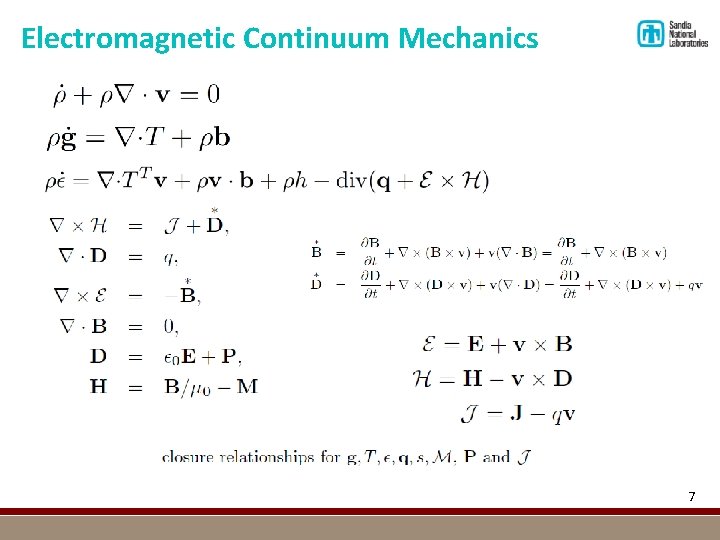
Electromagnetic Continuum Mechanics 7
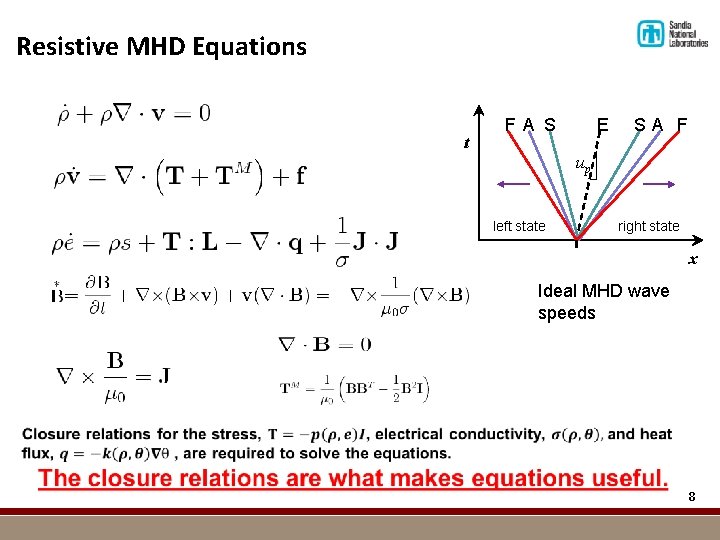
Resistive MHD Equations t F A S E SA F up left state right state x Ideal MHD wave speeds 8
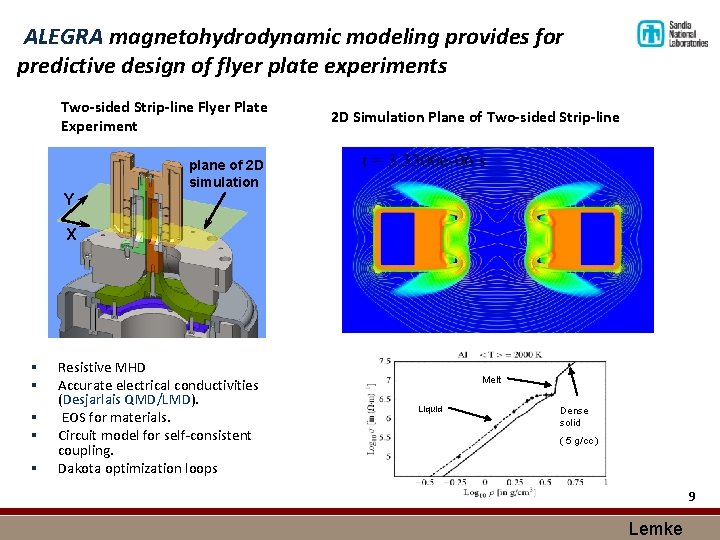
ALEGRA magnetohydrodynamic modeling provides for predictive design of flyer plate experiments Two-sided Strip-line Flyer Plate Experiment 2 D Simulation Plane of Two-sided Strip-line plane of 2 D simulation Y X § § § Resistive MHD Accurate electrical conductivities (Desjarlais QMD/LMD). EOS for materials. Circuit model for self-consistent coupling. Dakota optimization loops Melt Liquid Dense solid ( 5 g/cc ) 9 Lemke
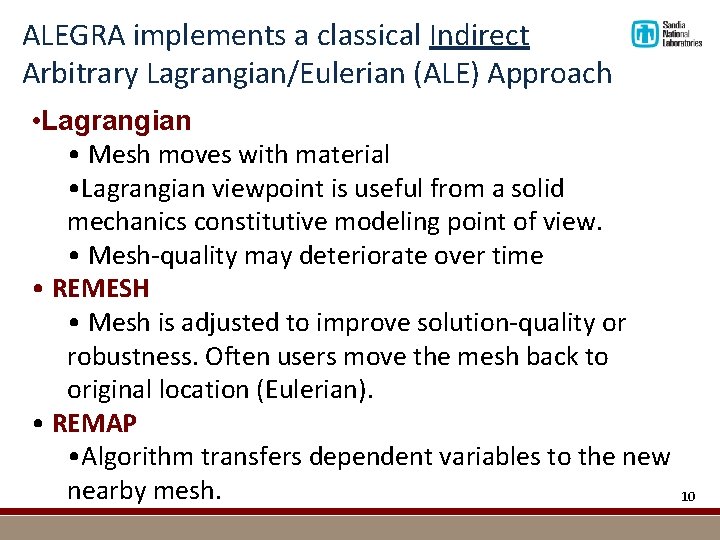
ALEGRA implements a classical Indirect Arbitrary Lagrangian/Eulerian (ALE) Approach • Lagrangian • Mesh moves with material • Lagrangian viewpoint is useful from a solid mechanics constitutive modeling point of view. • Mesh-quality may deteriorate over time • REMESH • Mesh is adjusted to improve solution-quality or robustness. Often users move the mesh back to original location (Eulerian). • REMAP • Algorithm transfers dependent variables to the new nearby mesh. 10
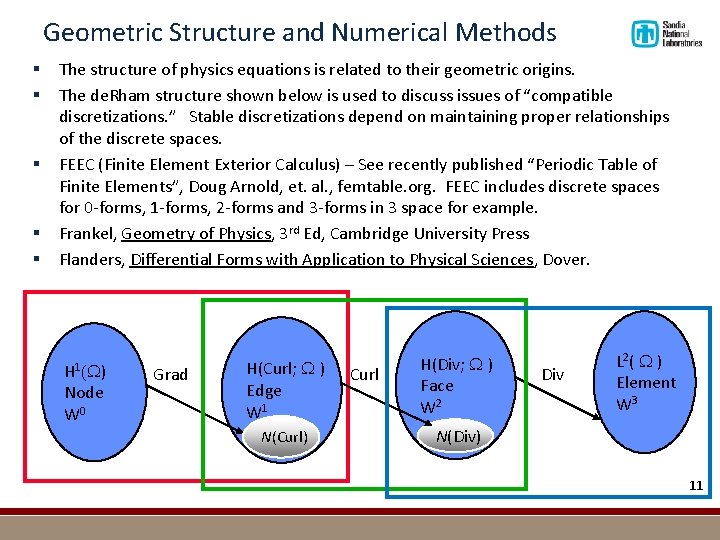
Geometric Structure and Numerical Methods § § § The structure of physics equations is related to their geometric origins. The de. Rham structure shown below is used to discuss issues of “compatible discretizations. ” Stable discretizations depend on maintaining proper relationships of the discrete spaces. FEEC (Finite Element Exterior Calculus) – See recently published “Periodic Table of Finite Elements”, Doug Arnold, et. al. , femtable. org. FEEC includes discrete spaces for 0 -forms, 1 -forms, 2 -forms and 3 -forms in 3 space for example. Frankel, Geometry of Physics, 3 rd Ed, Cambridge University Press Flanders, Differential Forms with Application to Physical Sciences, Dover. H 1( ) Node W 0 Grad H(Curl; ) Edge W 1 N(Curl) Curl H(Div; ) Face W 2 Div L 2( ) Element W 3 N(Div) 11

Lie Derivative and Transport Theorems Stoke’s Theorem in Differential Form notation Classical Transport Formulas in Vector Notation Lie Derivative and Cartan’s Magic Formula • Generalized Stokes Theorem • Lie Derivative and Transport Theorems 12
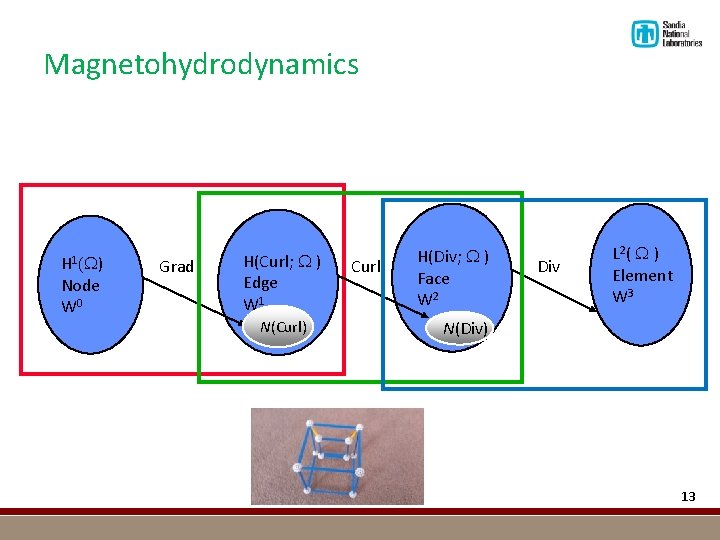
Magnetohydrodynamics H 1( ) Node W 0 Grad H(Curl; ) Edge W 1 N(Curl) Curl H(Div; ) Face W 2 Div L 2( ) Element W 3 N(Div) 13
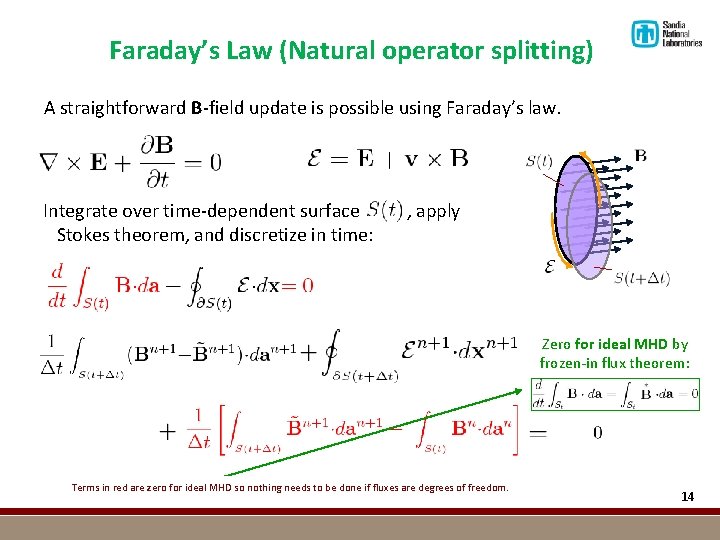
Faraday’s Law (Natural operator splitting) A straightforward B-field update is possible using Faraday’s law. Integrate over time-dependent surface oooo, apply Stokes theorem, and discretize in time: Zero for ideal MHD by frozen-in flux theorem: Terms in red are zero for ideal MHD so nothing needs to be done if fluxes are degrees of freedom. 14
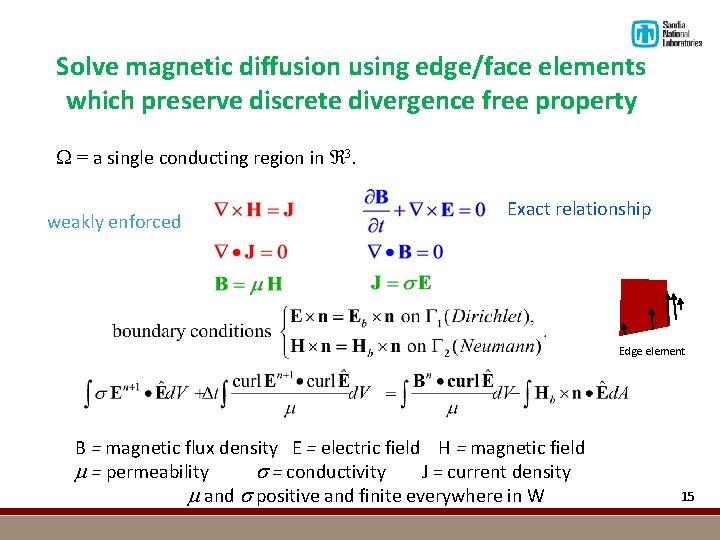
Solve magnetic diffusion using edge/face elements which preserve discrete divergence free property = a single conducting region in 3. weakly enforced Exact relationship Edge element B = magnetic flux density E = electric field H = magnetic field = permeability = conductivity J = current density and positive and finite everywhere in W 15
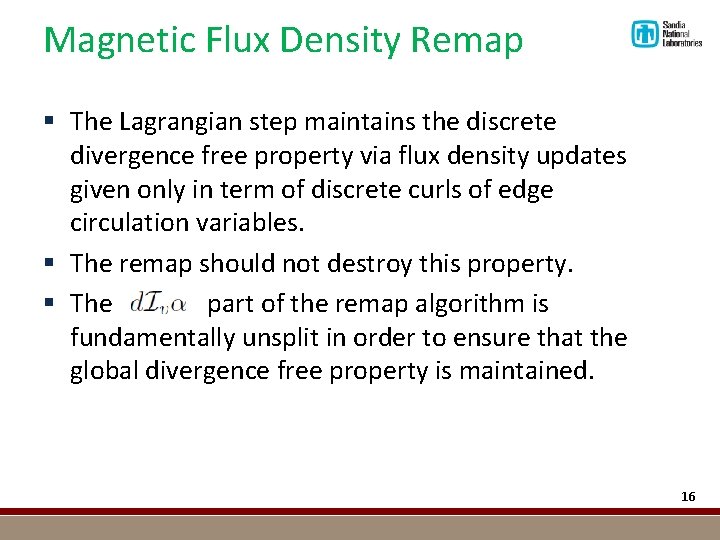
Magnetic Flux Density Remap § The Lagrangian step maintains the discrete divergence free property via flux density updates given only in term of discrete curls of edge circulation variables. § The remap should not destroy this property. § The part of the remap algorithm is fundamentally unsplit in order to ensure that the global divergence free property is maintained. 16

Flux remap step 17
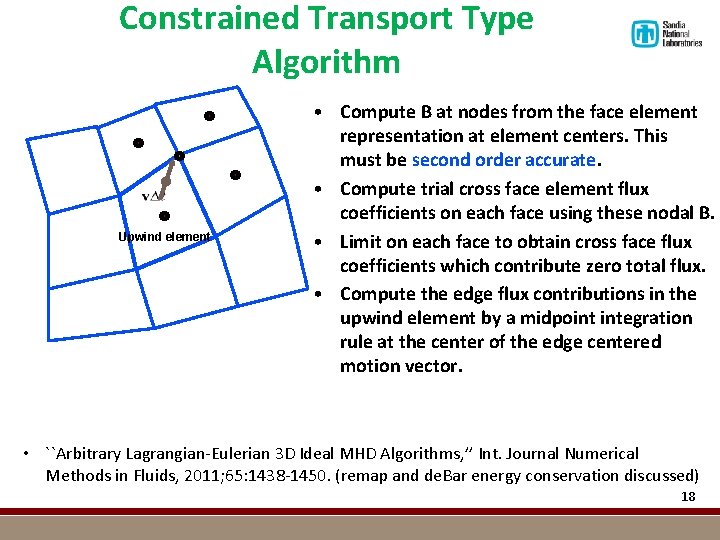
Constrained Transport Type Algorithm Upwind element • Compute B at nodes from the face element representation at element centers. This must be second order accurate. • Compute trial cross face element flux coefficients on each face using these nodal B. • Limit on each face to obtain cross face flux coefficients which contribute zero total flux. • Compute the edge flux contributions in the upwind element by a midpoint integration rule at the center of the edge centered motion vector. • ``Arbitrary Lagrangian-Eulerian 3 D Ideal MHD Algorithms, ’’ Int. Journal Numerical Methods in Fluids, 2011; 65: 1438 -1450. (remap and de. Bar energy conservation discussed) 18
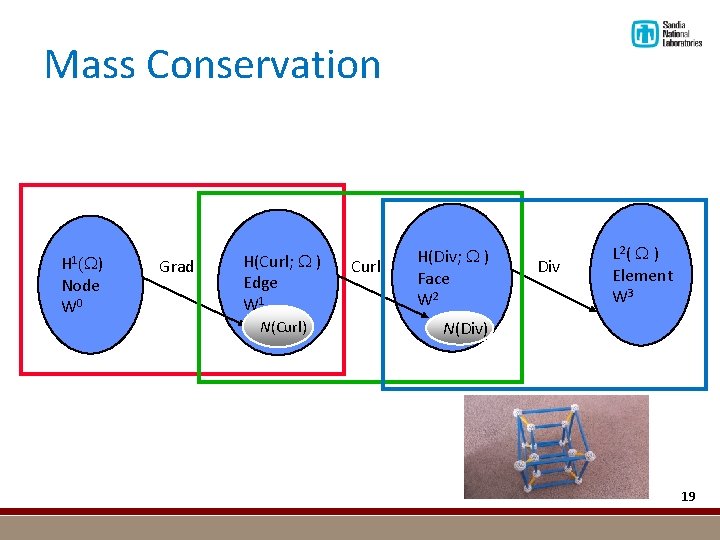
Mass Conservation H 1( ) Node W 0 Grad H(Curl; ) Edge W 1 N(Curl) Curl H(Div; ) Face W 2 Div L 2( ) Element W 3 N(Div) 19
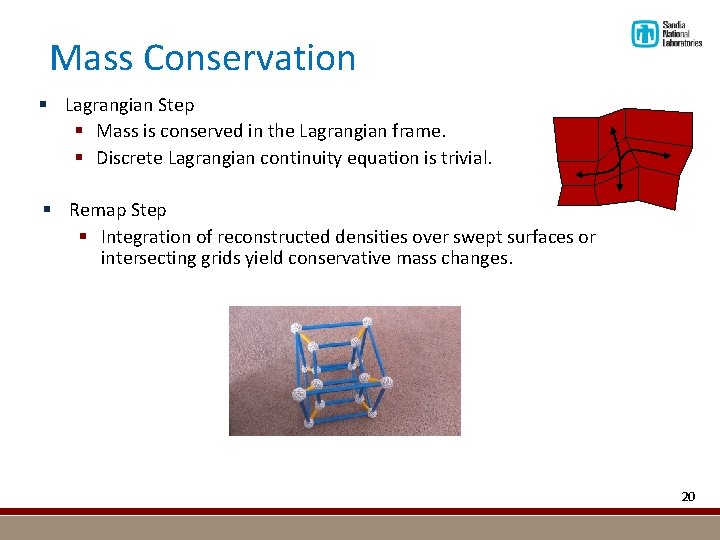
Mass Conservation § Lagrangian Step § Mass is conserved in the Lagrangian frame. § Discrete Lagrangian continuity equation is trivial. § Remap Step § Integration of reconstructed densities over swept surfaces or intersecting grids yield conservative mass changes. 20
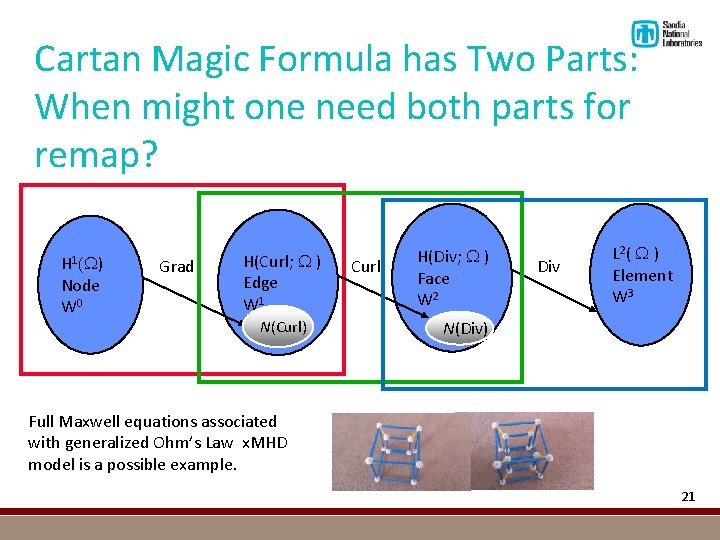
Cartan Magic Formula has Two Parts: When might one need both parts for remap? H 1( ) Node W 0 Grad H(Curl; ) Edge W 1 N(Curl) Curl H(Div; ) Face W 2 Div L 2( ) Element W 3 N(Div) Full Maxwell equations associated with generalized Ohm’s Law x. MHD model is a possible example. 21
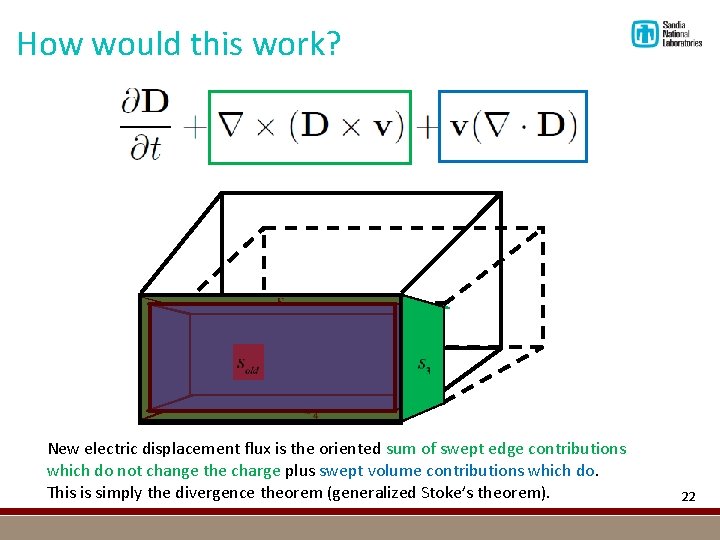
How would this work? New electric displacement flux is the oriented sum of swept edge contributions which do not change the charge plus swept volume contributions which do. This is simply the divergence theorem (generalized Stoke’s theorem). 22
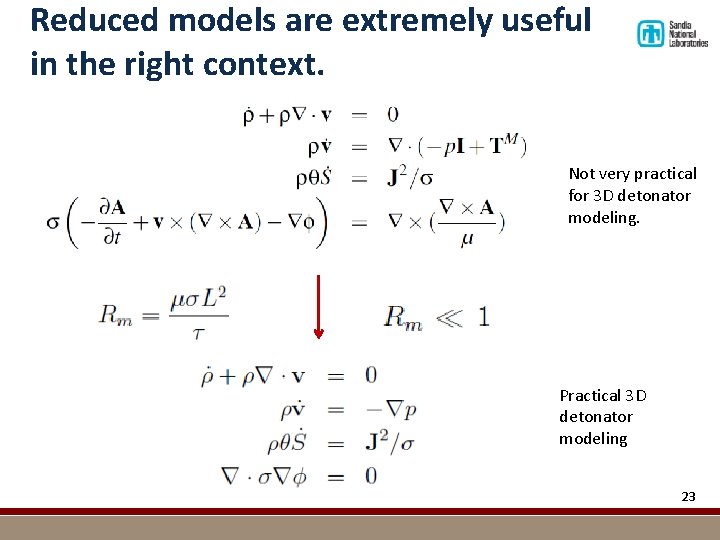
Reduced models are extremely useful in the right context. Not very practical for 3 D detonator modeling. Practical 3 D detonator modeling 23
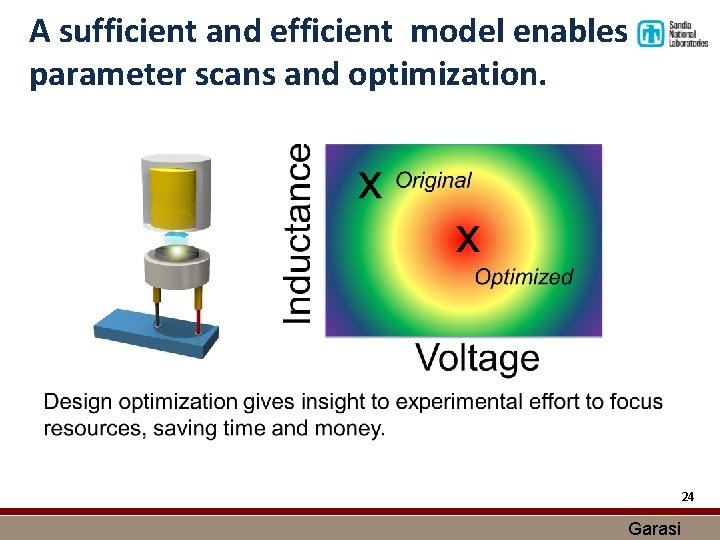
A sufficient and efficient model enables parameter scans and optimization. 24 Garasi
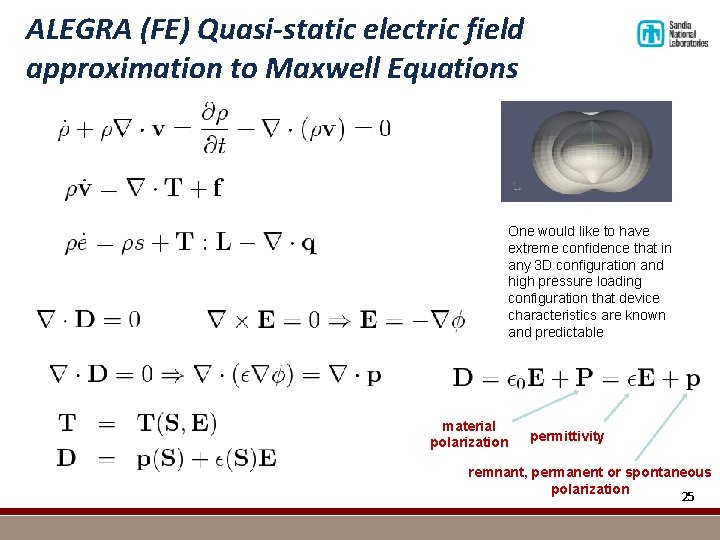
ALEGRA (FE) Quasi-static electric field approximation to Maxwell Equations One would like to have extreme confidence that in any 3 D configuration and high pressure loading configuration that device characteristics are known and predictable material polarization permittivity remnant, permanent or spontaneous polarization 25

ALEGRA (FE) electromechanical analysis provides for Fuze/ Power Supply Modeling § Coupled mechanical/electric field based modeling § Circuit coupling essential § Advanced hydrodynamic ALE techniques are important. § Excellent coordination between experimental data acquisition and material modeling expertise is required. Simulation of Impact Fuze Operation with Electric Field Lines Shown Movie shows an example simulation of a shock actuated power supply. 26 Montgomery
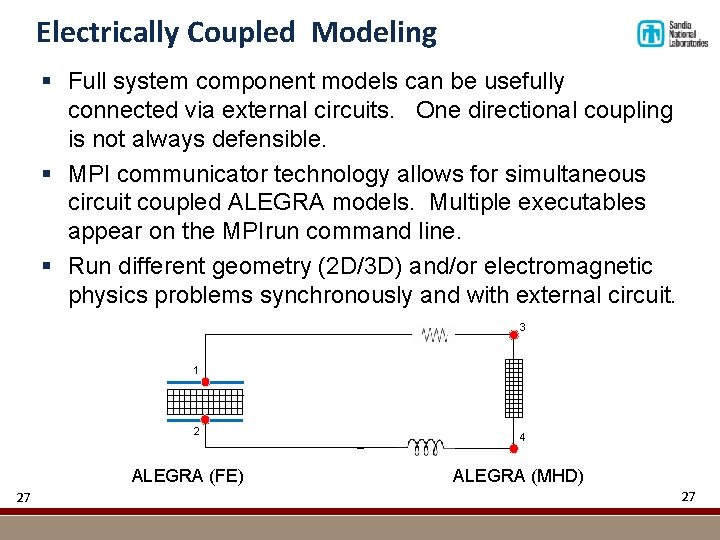
Electrically Coupled Modeling § Full system component models can be usefully connected via external circuits. One directional coupling is not always defensible. § MPI communicator technology allows for simultaneous circuit coupled ALEGRA models. Multiple executables appear on the MPIrun command line. § Run different geometry (2 D/3 D) and/or electromagnetic physics problems synchronously and with external circuit. 3 1 2 ALEGRA (FE) 27 4 ALEGRA (MHD) 27
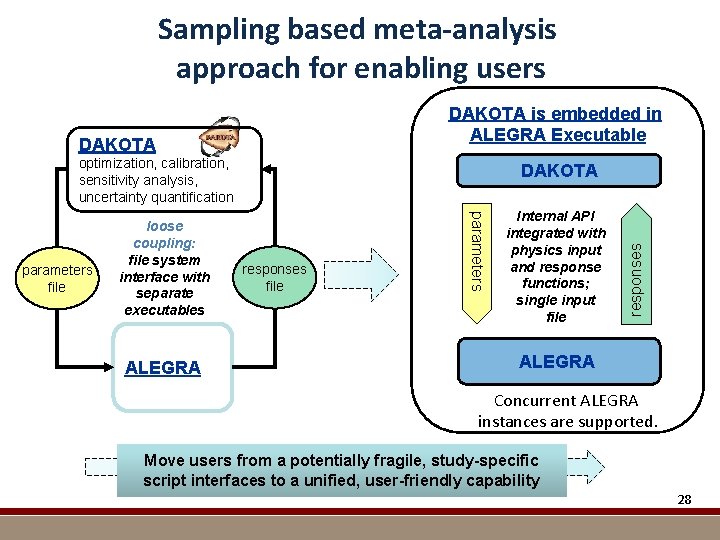
Sampling based meta-analysis approach for enabling users DAKOTA is embedded in ALEGRA Executable DAKOTA optimization, calibration, sensitivity analysis, uncertainty quantification ALEGRA Internal API integrated with physics input and response functions; single input file responses file parameters file loose coupling: file system interface with separate executables DAKOTA ALEGRA Concurrent ALEGRA instances are supported. Move users from a potentially fragile, study-specific script interfaces to a unified, user-friendly capability 28
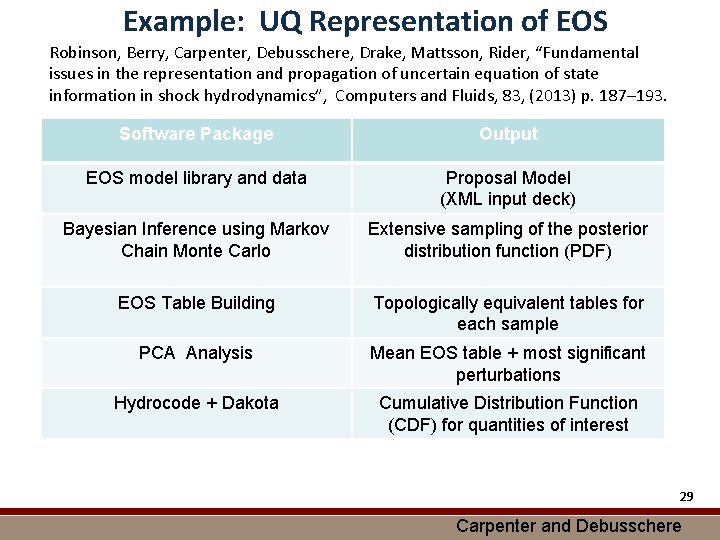
Example: UQ Representation of EOS Robinson, Berry, Carpenter, Debusschere, Drake, Mattsson, Rider, “Fundamental issues in the representation and propagation of uncertain equation of state information in shock hydrodynamics”, Computers and Fluids, 83, (2013) p. 187– 193. Software Package Output EOS model library and data Proposal Model (XML input deck) Bayesian Inference using Markov Chain Monte Carlo Extensive sampling of the posterior distribution function (PDF) EOS Table Building Topologically equivalent tables for each sample PCA Analysis Mean EOS table + most significant perturbations Hydrocode + Dakota Cumulative Distribution Function (CDF) for quantities of interest 29 Carpenter and Debusschere
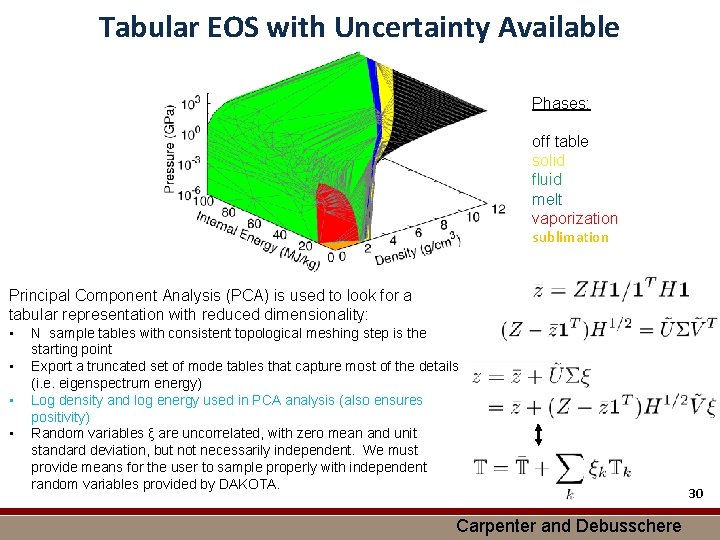
Tabular EOS with Uncertainty Available Phases: off table solid fluid melt vaporization sublimation Principal Component Analysis (PCA) is used to look for a tabular representation with reduced dimensionality: • • N sample tables with consistent topological meshing step is the starting point Export a truncated set of mode tables that capture most of the details (i. e. eigenspectrum energy) Log density and log energy used in PCA analysis (also ensures positivity) Random variables ξ are uncorrelated, with zero mean and unit standard deviation, but not necessarily independent. We must provide means for the user to sample properly with independent random variables provided by DAKOTA. Carpenter and Debusschere 30
Undergraduate Students § Undergraduate student can be extremely helpful and they also benefit tremendously from Sandia internship program. § Contributions generally focus on verification related activities. I will mention only 3 examples: § Chace Ashcraft – Transient magnetics verification § Brad Hanks – Testing of ALEGRA in a difficult 2 D isentropic flow test problem. § Koa Fischer – Forced shock Burger’s QOI’s. 31
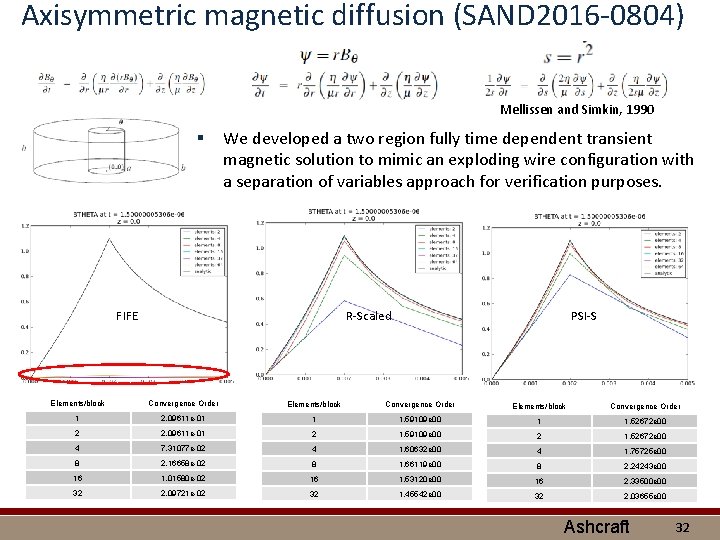
Axisymmetric magnetic diffusion (SAND 2016 -0804) Mellissen and Simkin, 1990 § We developed a two region fully time dependent transient magnetic solution to mimic an exploding wire configuration with a separation of variables approach for verification purposes. FIFE R-Scaled PSI-S Elements/block Convergence Order 1 2. 09611 e-01 1 1. 59109 e 00 1 1. 52672 e 00 2 2. 09611 e-01 2 1. 59109 e 00 2 1. 52672 e 00 4 7. 31077 e-02 4 1. 60632 e 00 4 1. 75725 e 00 8 2. 16658 e-02 8 1. 66119 e 00 8 2. 24243 e 00 16 1. 01580 e-02 16 1. 53120 e 00 16 2. 33500 e 00 32 2. 09721 e-02 32 1. 45542 e 00 32 2. 03655 e 00 Ashcraft 32
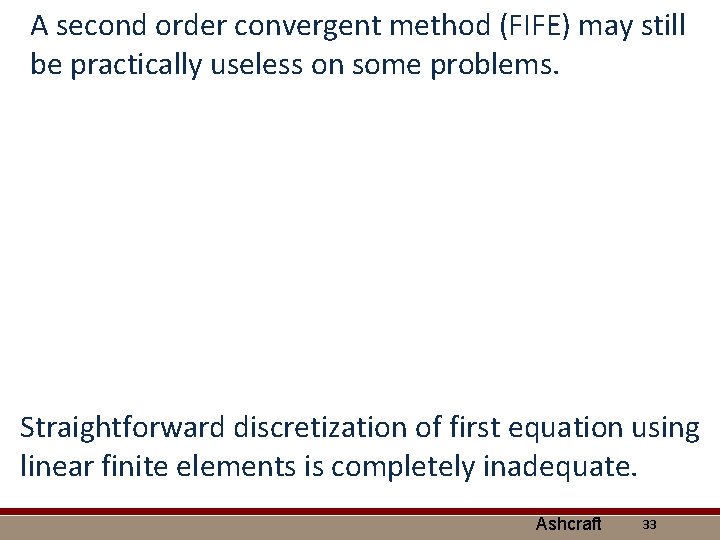
A second order convergent method (FIFE) may still be practically useless on some problems. Straightforward discretization of first equation using linear finite elements is completely inadequate. Ashcraft 33
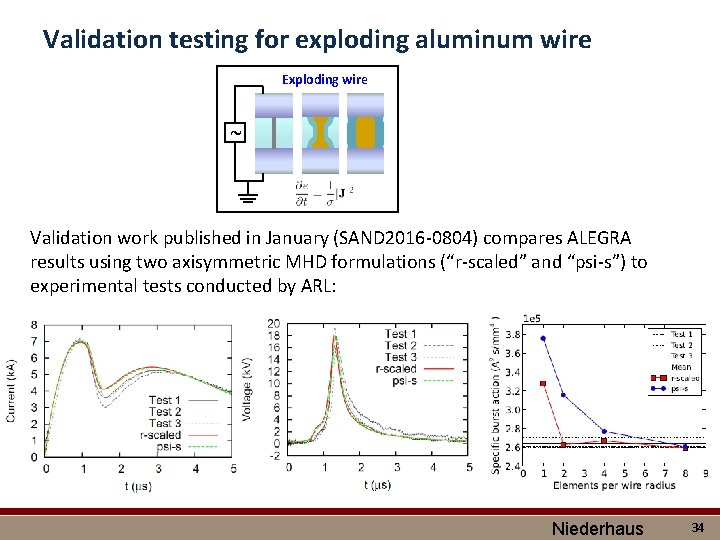
Validation testing for exploding aluminum wire Exploding wire ~ Validation work published in January (SAND 2016 -0804) compares ALEGRA results using two axisymmetric MHD formulations (“r-scaled” and “psi-s”) to experimental tests conducted by ARL: Niederhaus 34
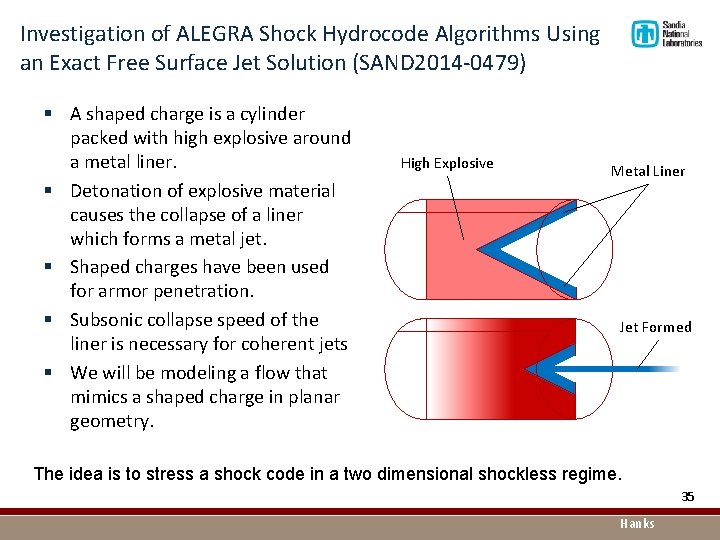
Investigation of ALEGRA Shock Hydrocode Algorithms Using an Exact Free Surface Jet Solution (SAND 2014 -0479) § A shaped charge is a cylinder packed with high explosive around a metal liner. § Detonation of explosive material causes the collapse of a liner which forms a metal jet. § Shaped charges have been used for armor penetration. § Subsonic collapse speed of the liner is necessary for coherent jets § We will be modeling a flow that mimics a shaped charge in planar geometry. High Explosive Metal Liner Jet Formed The idea is to stress a shock code in a two dimensional shockless regime. 35 Hanks
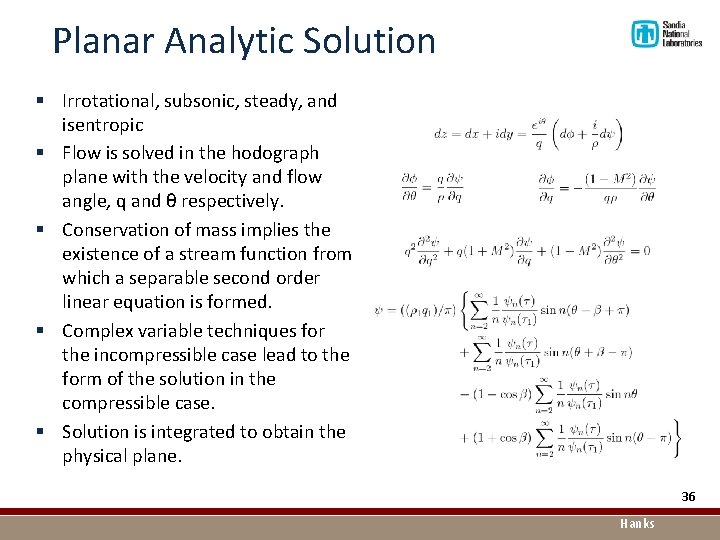
Planar Analytic Solution § Irrotational, subsonic, steady, and isentropic § Flow is solved in the hodograph plane with the velocity and flow angle, q and θ respectively. § Conservation of mass implies the existence of a stream function from which a separable second order linear equation is formed. § Complex variable techniques for the incompressible case lead to the form of the solution in the compressible case. § Solution is integrated to obtain the physical plane. 36 Hanks
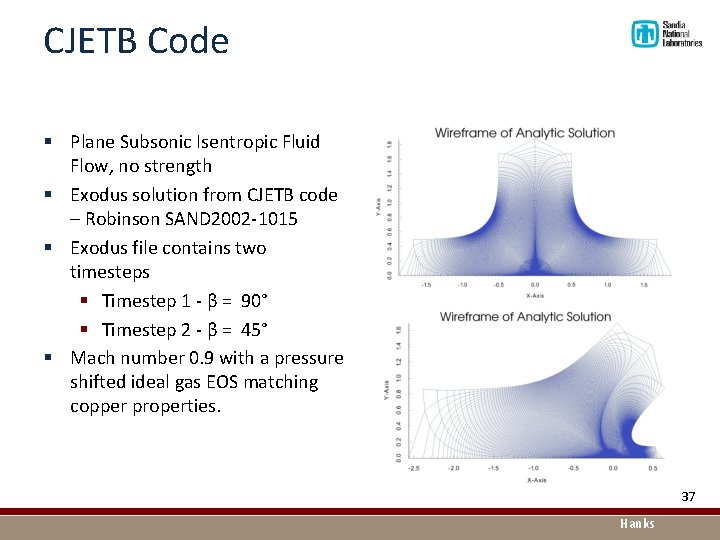
CJETB Code § Plane Subsonic Isentropic Fluid Flow, no strength § Exodus solution from CJETB code – Robinson SAND 2002 -1015 § Exodus file contains two timesteps § Timestep 1 - β = 90° § Timestep 2 - β = 45° § Mach number 0. 9 with a pressure shifted ideal gas EOS matching copper properties. 37 Hanks
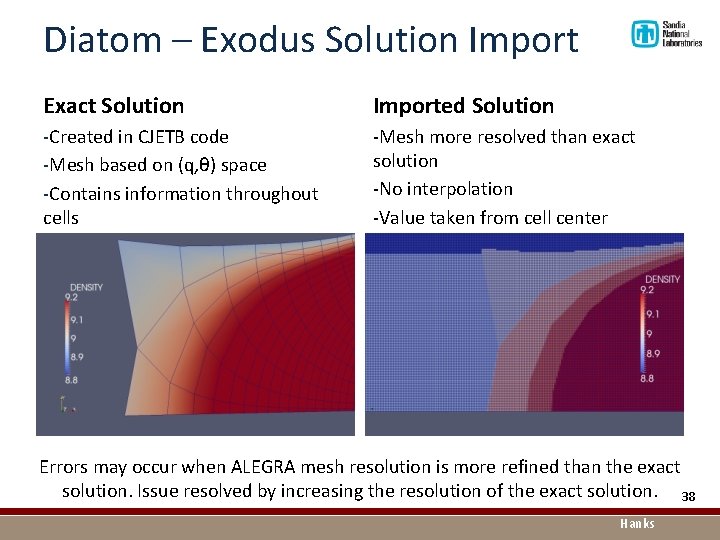
Diatom – Exodus Solution Import Exact Solution Imported Solution -Created in CJETB code -Mesh based on (q, θ) space -Contains information throughout cells -Mesh more resolved than exact solution -No interpolation -Value taken from cell center Errors may occur when ALEGRA mesh resolution is more refined than the exact solution. Issue resolved by increasing the resolution of the exact solution. 38 Hanks
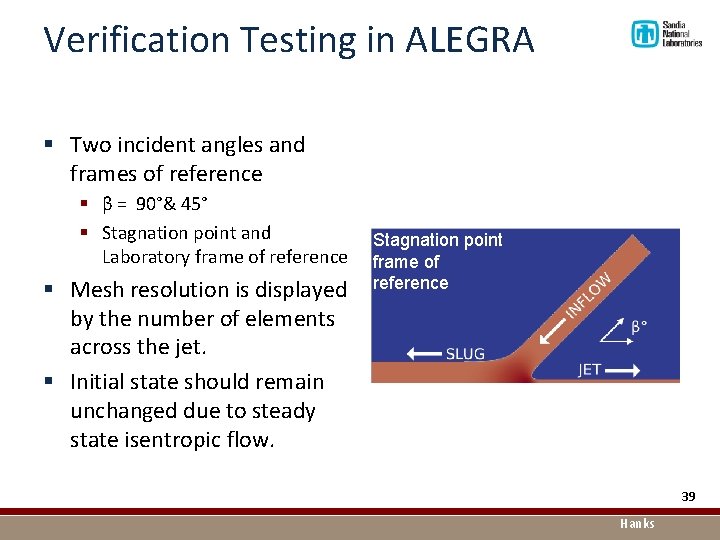
Verification Testing in ALEGRA § Two incident angles and frames of reference § β = 90°& 45° § Stagnation point and Laboratory frame of reference § Mesh resolution is displayed by the number of elements across the jet. § Initial state should remain unchanged due to steady state isentropic flow. Stagnation point frame of reference 39 Hanks
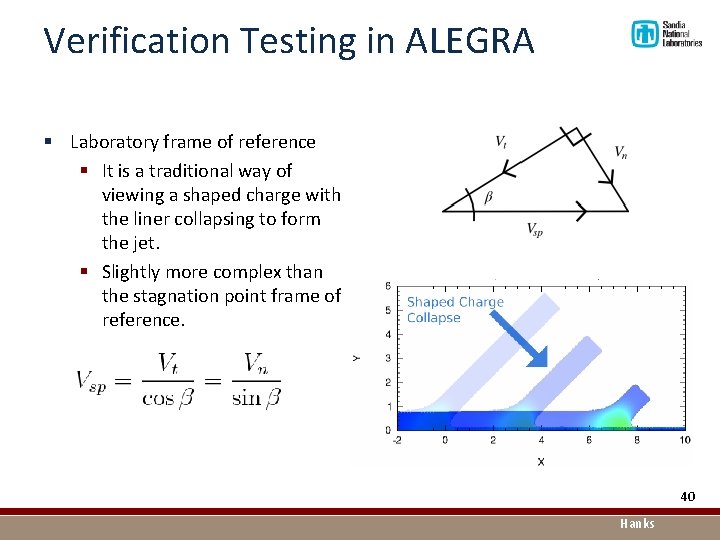
Verification Testing in ALEGRA § Laboratory frame of reference § It is a traditional way of viewing a shaped charge with the liner collapsing to form the jet. § Slightly more complex than the stagnation point frame of reference. 40 Hanks
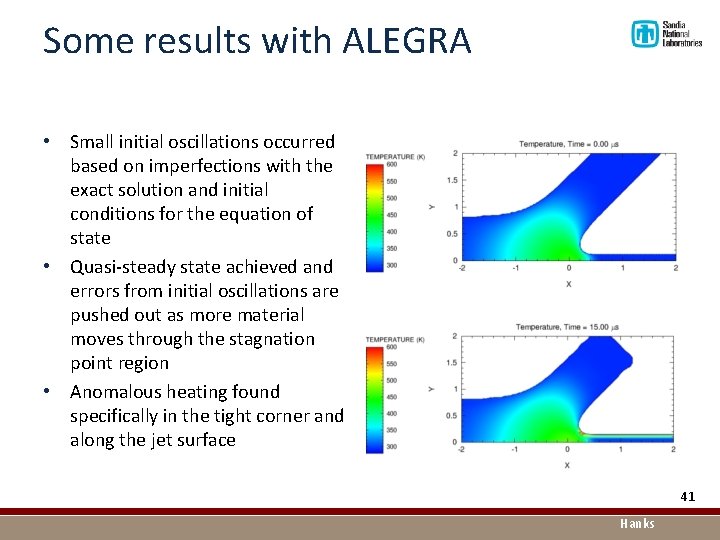
Some results with ALEGRA • Small initial oscillations occurred based on imperfections with the exact solution and initial conditions for the equation of state • Quasi-steady state achieved and errors from initial oscillations are pushed out as more material moves through the stagnation point region • Anomalous heating found specifically in the tight corner and along the jet surface 41 Hanks
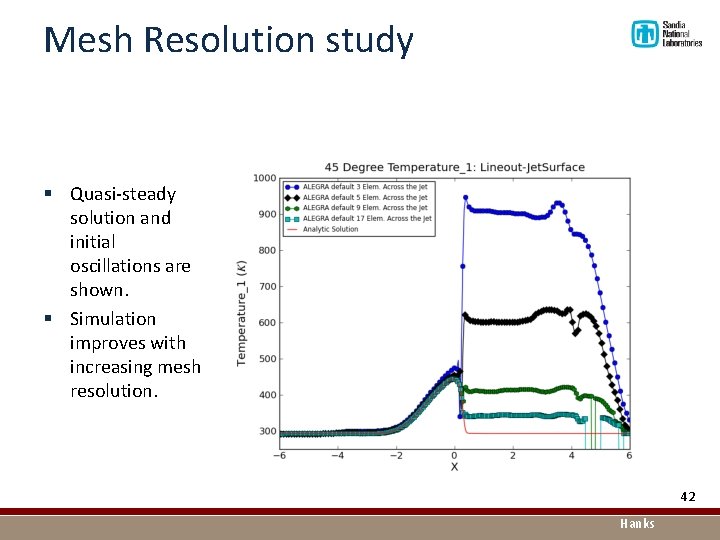
Mesh Resolution study § Quasi-steady solution and initial oscillations are shown. § Simulation improves with increasing mesh resolution. 42 Hanks
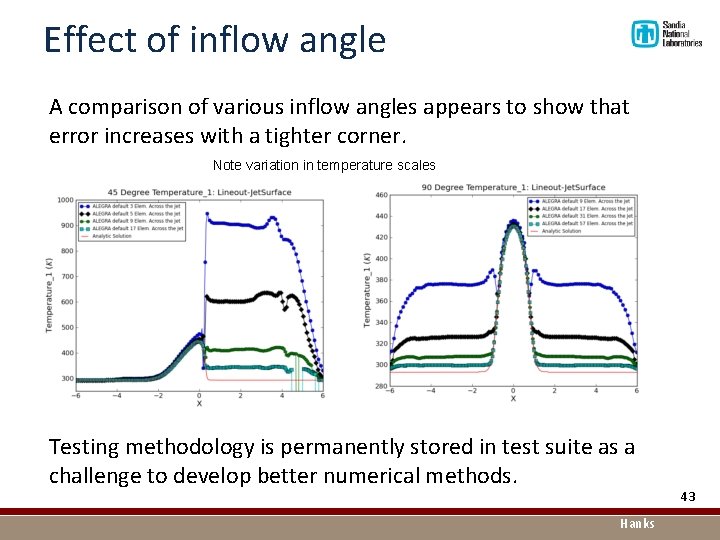
Effect of inflow angle A comparison of various inflow angles appears to show that error increases with a tighter corner. Note variation in temperature scales Testing methodology is permanently stored in test suite as a challenge to develop better numerical methods. Hanks 43
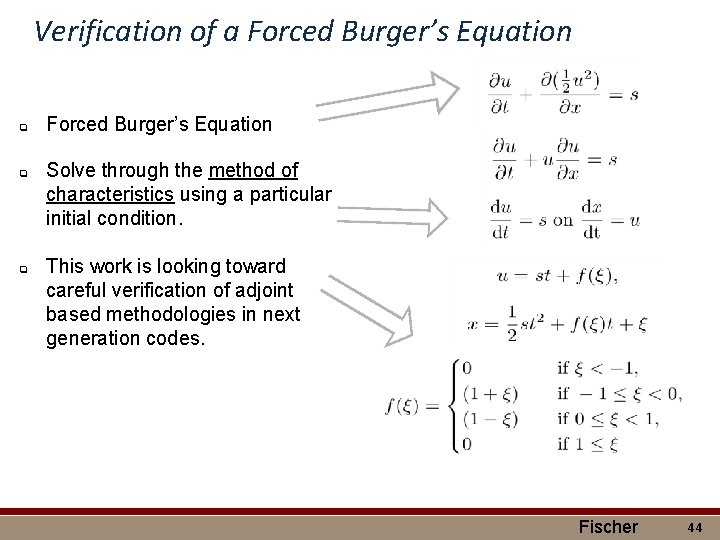
Verification of a Forced Burger’s Equation q q q Forced Burger’s Equation Solve through the method of characteristics using a particular initial condition. This work is looking toward careful verification of adjoint based methodologies in next generation codes. Fischer 44
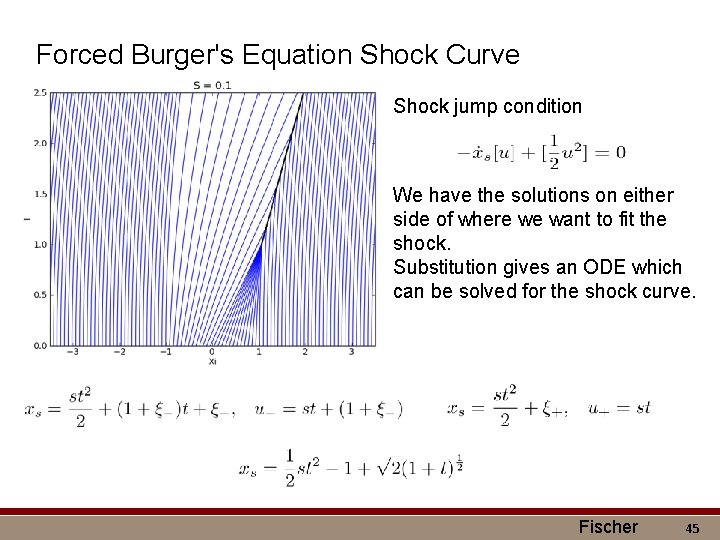
Forced Burger's Equation Shock Curve Shock jump condition We have the solutions on either side of where we want to fit the shock. Substitution gives an ODE which can be solved for the shock curve. Fischer 45
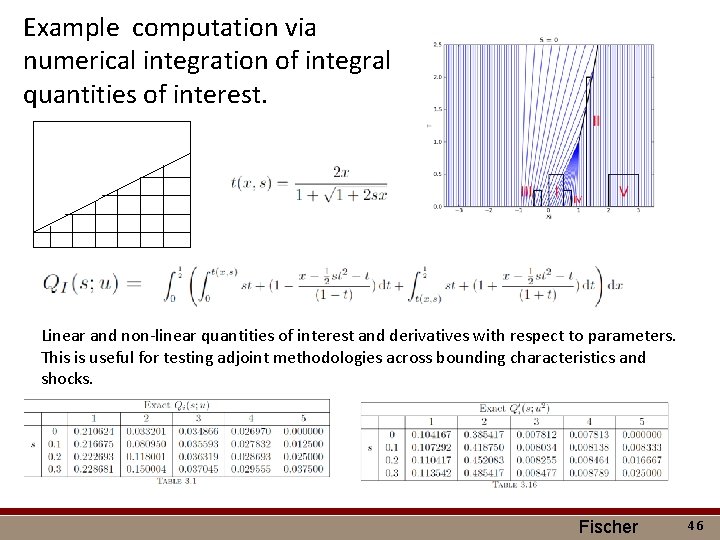
Example computation via numerical integration of integral quantities of interest. Linear and non-linear quantities of interest and derivatives with respect to parameters. This is useful for testing adjoint methodologies across bounding characteristics and shocks. Fischer 46
What are useful skill sets for students? § Classical applied math/physics (E&M)/engineering § Programming skills, e. g. Python, C++, … § Concepts in linear and non-linear wave propagation and PDEs. § Numerical analysis and methods for ODE and PDE. § Abilities to work well with others and communicate effectively. § Test Driven Development, Source Code Management and code quality concepts 47
Principles for a Successful Multiphysics Production Code § Pay attention to user’s needs and keep your paying customers happy. § Pay attention to getting the physics right (Closure properties) § Algorithmic robustness and quality is important. § A general code leads to many software libraries and multiple initial, boundary condition, circuit coupling, algorithmic choices approaches. Software quality will catch up to you. § Code team culture/disciplined software process is key. Use a team software platform effectively (e. g. Teamforge, Git. Hub, Git. Lab) § Commitment to high quality testing and a clean comprehensive test suite is essential. § You can’t do it alone. Value everyone’s strengths. § A team ethic of continuous improvement will serve you well. 48
Summary § ALEGRA is an arbitrary Lagrangian-Eulerian multiphysics code able to deal with difficult and sophisticated applications. § Modern compatible discretization concepts fit naturally and effectively fit into an ALE multiphysics approach. § Representing uncertainties in closure properties are being considered and meta analysis can be effectively enabled. § Extensive V&V and continual code improvement is the natural permanent state for both developers and users. § Undergraduate students can play an important and valued part of this process. 49
- Slides: 49