
Multinational Cash Management Chapter Nineteen Copyright 2012 by

Multinational Cash Management Chapter Nineteen Copyright © 2012 by the Mc. Graw-Hill Companies, Inc. All rights reserved.
Chapter Outline § The Management of Multinational Cash Balances § Bilateral Netting of Internal and External Net Cash Flows § Reduction in Precautionary Cash Flows § Cash Management Systems in Practice 19 -2
The Management of International Cash Balances § The size of cash balances § The currency denomination § Where these cash balances are located 19 -3

The Size of Cash Balances § The optimal size of the firm’s cash balances depend upon: – The cost of keeping “too much” cash on hand. • i. e. , the opportunity costs of holding cash. – The cost of not keeping enough cash on hand. • i. e. , the trading costs associated with having too little cash. – The variability of cash flows. 19 -4
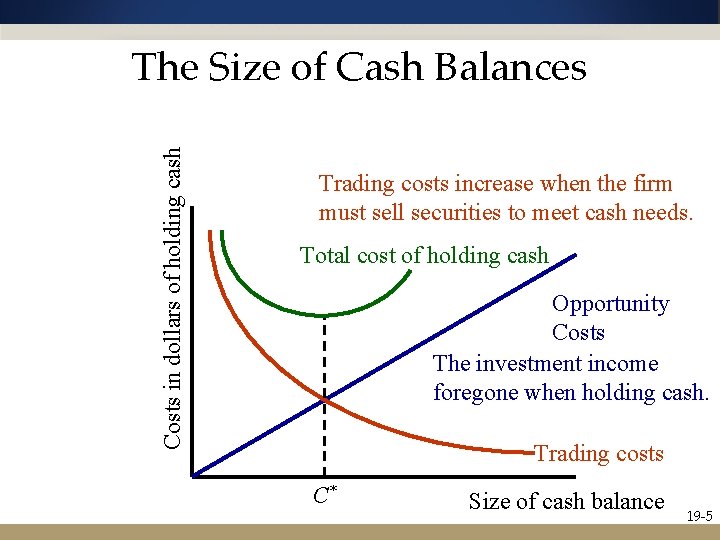
Costs in dollars of holding cash The Size of Cash Balances Trading costs increase when the firm must sell securities to meet cash needs. Total cost of holding cash Opportunity Costs The investment income foregone when holding cash. Trading costs C* Size of cash balance 19 -5
Choice of Currency § By maintaining cash balances in a particular currency, the MNC is essentially speculating (or hedging? ) in that currency. 19 -6

Where Cash Balances are Located § Should the firm have centralized cash management in the home country? § Should the firm let each affiliate handle it locally? § Where are borrowing costs lowest and investment returns highest? 19 -7
Netting: Bilateral and Multilateral § Multilateral netting is an efficient and costeffective mechanism for settling interaffiliate foreign exchange transactions. § Not all countries allow MNCs to net payments. – By limiting netting, more unnecessary foreign exchange transactions flow through the local banking system. 19 -8
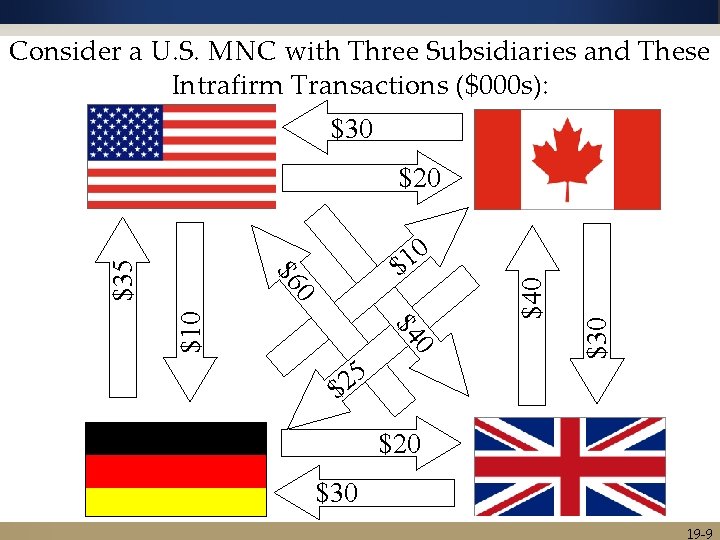
Consider a U. S. MNC with Three Subsidiaries and These Intrafirm Transactions ($000 s): $30 $10 0 $4 5 2 $ $40 0 1 $ 0 $6 $35 $20 $30 19 -9
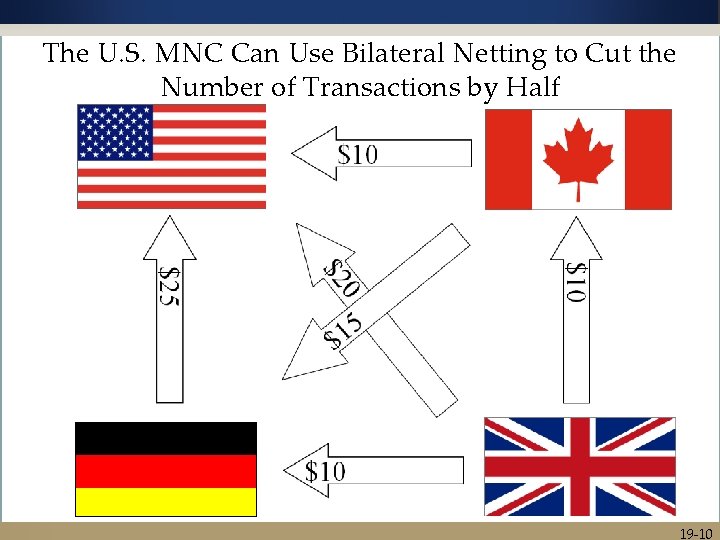
The U. S. MNC Can Use Bilateral Netting to Cut the Number of Transactions by Half $30 $40 $30 0 5 1 $ 5 2 $ $4 $10 0 1 $ 0 $2 0 $6 $35 $20 $30 19 -10
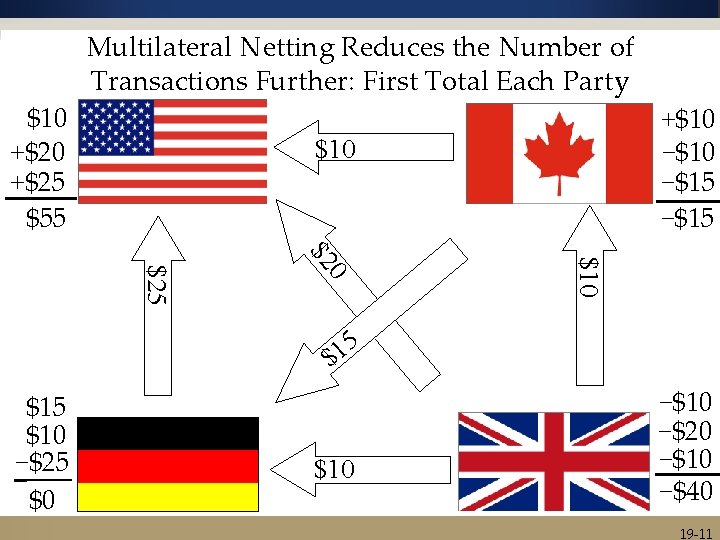
$10 +$20 +$25 $55 Multilateral Netting Reduces the Number of of Transactions Further: First Total Each Party $10 +$10 −$10 −$15 $10 00 $$22 $25 5 5 1 $$1 $15 $10 −$25 $0 −$0− $10 −$10 −$20 −$10 −$40 19 -11
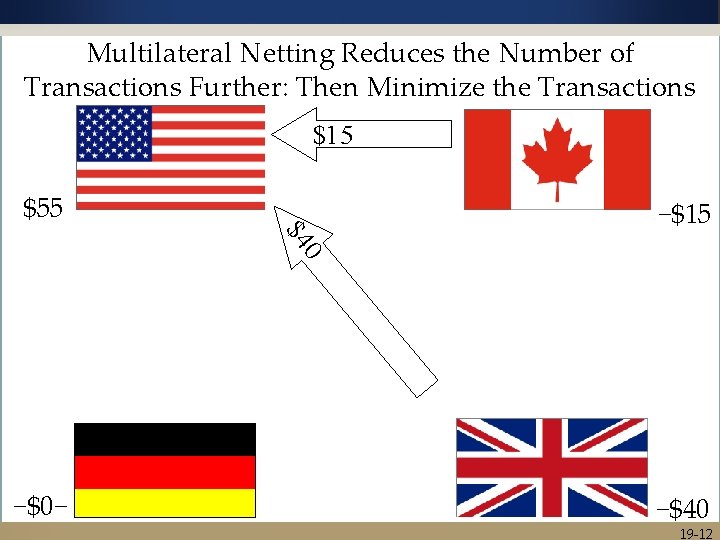
0 $10 0 $1 $3 $10 $25 $15 0 2$04 0$ $4 Multilateral Netting Reduces the Number of Transactions Further: Then Minimize the Transactions $10 +$10 $15 −$10 +$20 −$15 +$25 $55 −$15 5 1 $ $15 $10 −$25 −$0− $10 −$20 −$10 −$40 19 -12
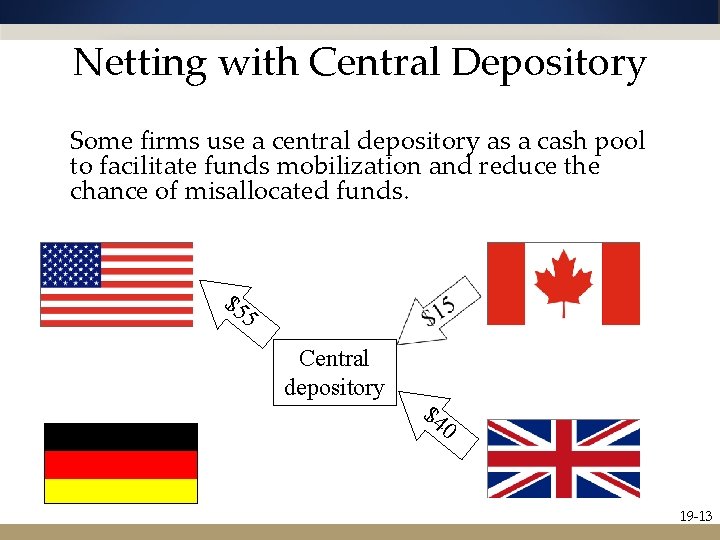
Netting with Central Depository Some firms use a central depository as a cash pool to facilitate funds mobilization and reduce the chance of misallocated funds. $5 5 Central depository $4 0 19 -13
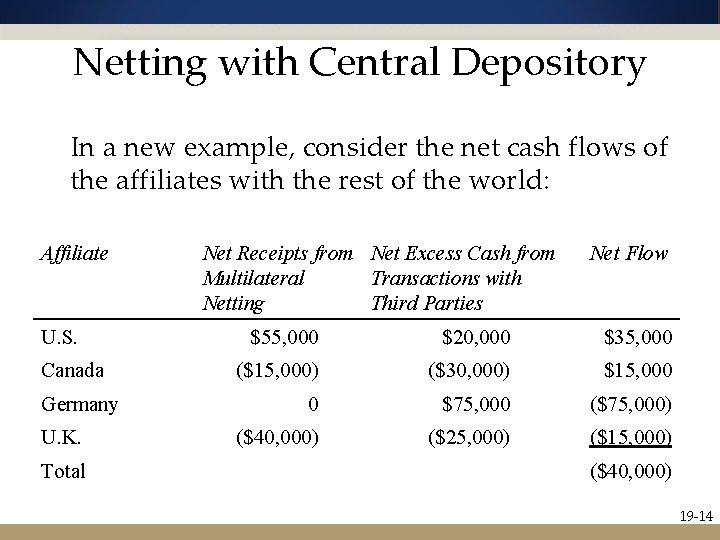
Netting with Central Depository In a new example, consider the net cash flows of the affiliates with the rest of the world: Affiliate U. S. Canada Germany U. K. Total Net Receipts from Net Excess Cash from Multilateral Transactions with Netting Third Parties Net Flow $55, 000 $20, 000 $35, 000 ($15, 000) ($30, 000) $15, 000 0 $75, 000 ($75, 000) ($40, 000) ($25, 000) ($15, 000) ($40, 000) 19 -14
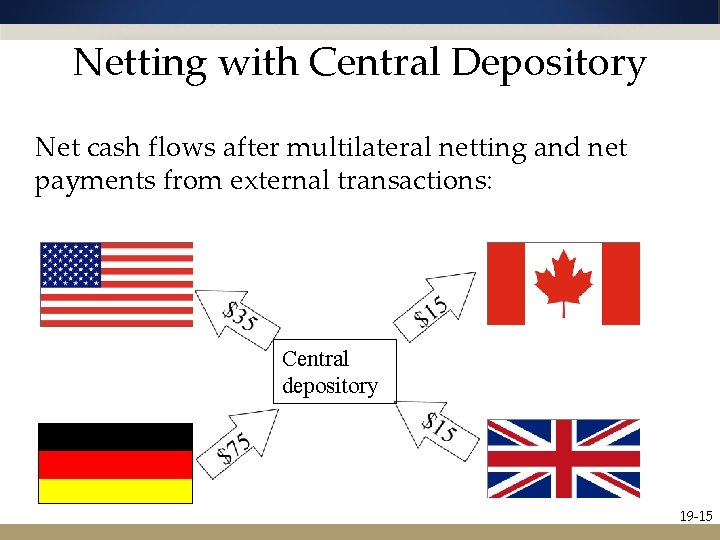
Netting with Central Depository Net cash flows after multilateral netting and net payments from external transactions: Central depository 19 -15
Reduction in Precautionary Cash Balances § An additional benefit of a centralized cash depository is that the MNC’s investment in precautionary cash balances can be substantially reduced without a decline in its ability to cover unforeseen expenses. § In the above examples, suppose that each affiliate had to have the cash on hand to make disbursements before it received what it was owed—that would result in a big cash drain on the firm. 19 -16
Cash Management Systems in Practice § The most frequently cited benefits of a multilateral netting system are: – The decrease in the expense associated with funds transfer, which in some cases can be over $1, 000 for a large international transfer of foreign exchange. – The reduction in the number of foreign exchange transactions and the associated reduced cost of making fewer (but larger) transactions. – The reduction in intracompany float, which is frequently as high as five days even for wire transfers. – The savings in administrative time. – The benefits that accrue from the establishment of a formal information system, which serves as the foundation for centrally managing transaction exposure and the investment of excess funds. 19 -17
Exposure Netting with Multiple Currencies § Many multinational firms use a reinvoice center, which is a financial subsidiary that nets out the intrafirm transactions. § Once the residual exposure is determined, then the firm implements hedging. § In the following slides, a firm faces the following exchange rates: £ 1. 00 = $2. 00 € 1. 00 = $1. 50 SFr 1. 00 = $0. 90 19 -18
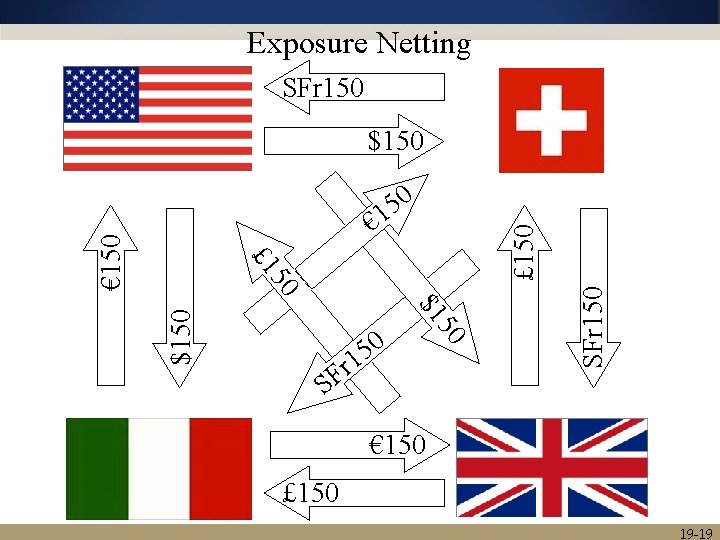
Exposure Netting SFr 150 SF SFr 150 0 5 r 1 50 $1 $150 50 £ 1 € 150 0 5 € 1 £ 150 $150 € 150 £ 150 19 -19
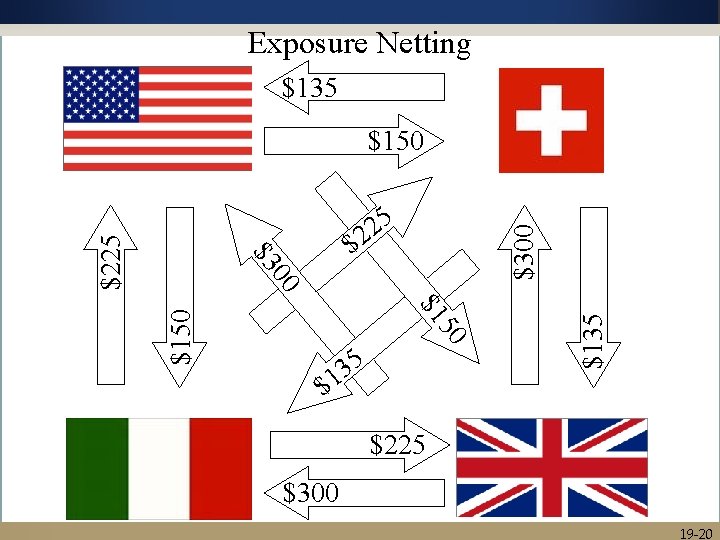
Exposure Netting SFr 150 $135 = $135 SFr 150 $135 =$135 50 $1 00 0 5 15 r 3 $S 1 F $ 5 3 1 $300 £ 150 $2 $300 0 5 1 5 € 2 =2 $ 5 2 $3 $150 0 1050 $£ 3 € 150 $225 = $225 $150 € 150 $225 = $225 £ 150 $300 = $300 19 -20
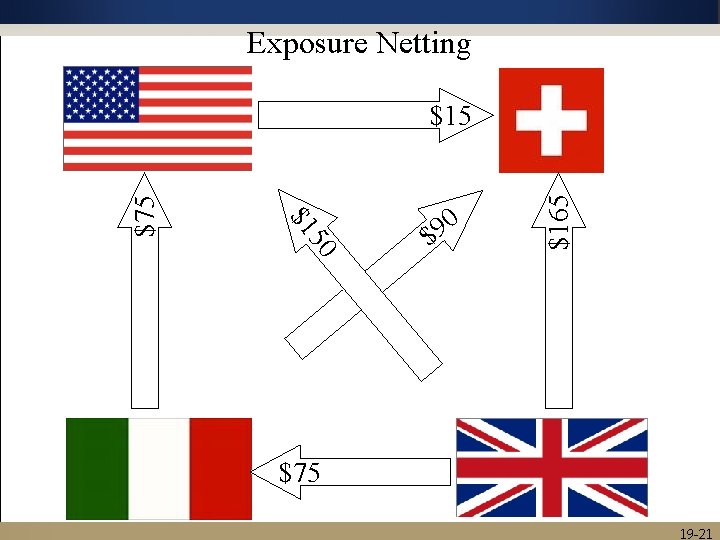
Exposure Netting 0 9 $ 50 $1 $150 00 5 3 1 $135 5 2 $2 $3 50 $1 $225 $75 $150 $15 $300 $165 $135 $ $75 $300 $225 19 -21
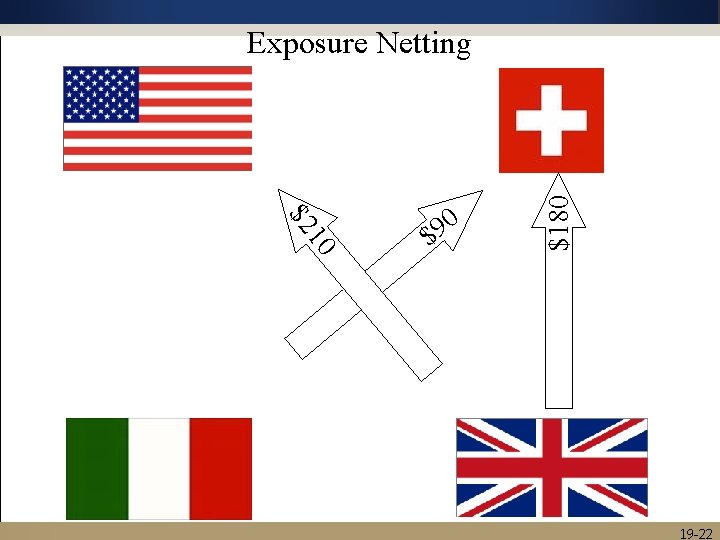
Exposure Netting 510= $72 5 $21 +$2 $165 $180 = $165 +$180 $15 0 9 $ += 51205 $12 $75 $15 $75 19 -22

Exposure Netting: How to Double Check Your Answer § It’s always good practice to check your work. § It’s better for you to find your mistakes than your professor (or the boss). § You can check your work in exposure netting by adding up each subsidiary’s debits and credits. § When you’re done, check that you haven’t destroyed or “created” any money. § A new example follows to practice checking your work. 19 -23
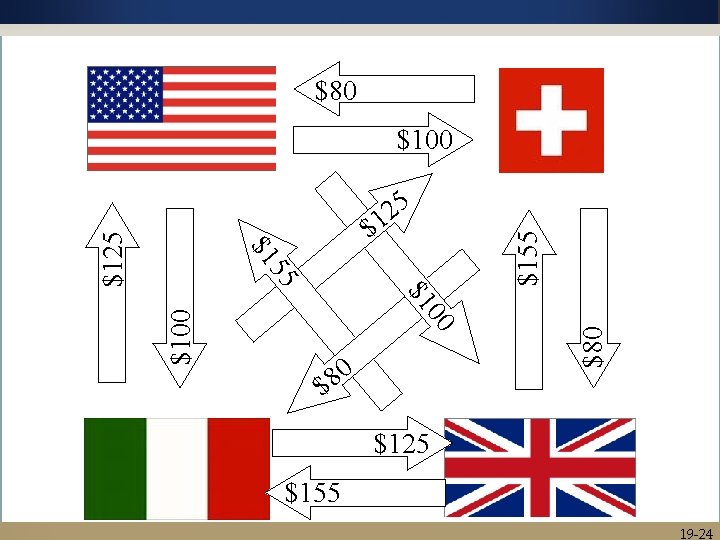
$125 +$80 +$155 –$300 $60 $80 $100 00 $1 0 8 $ $125 $155 $80 $125 5 2 $1 $155 $100 55 $1 $100 +$80 +$155 –$375 –$40 $100 +$125 +$155 –$240 $140 $80 +$100 +$125 –$465 –$160 19 -24
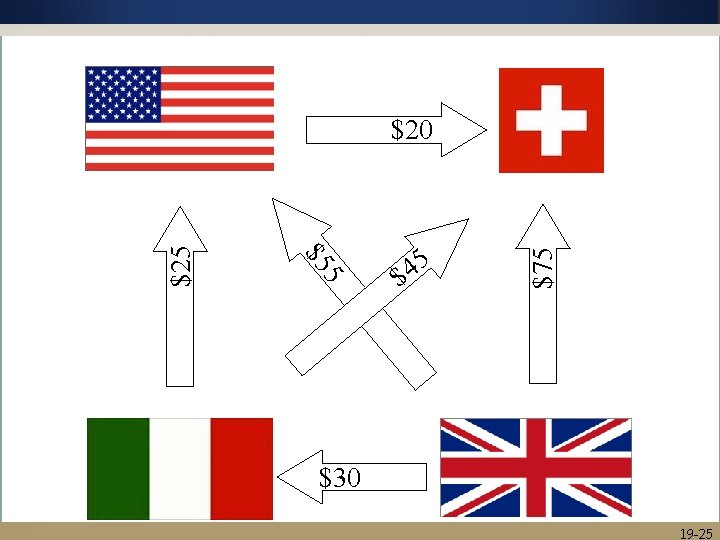
$25 +$55 –$20 $60 $30 55 4 $$4 $75 $25 $20 5 $5 +$30 –$45 –$25 –$40 $20 +$45 +$75 $140 –$30 –$75 –$55 –$160 19 -25
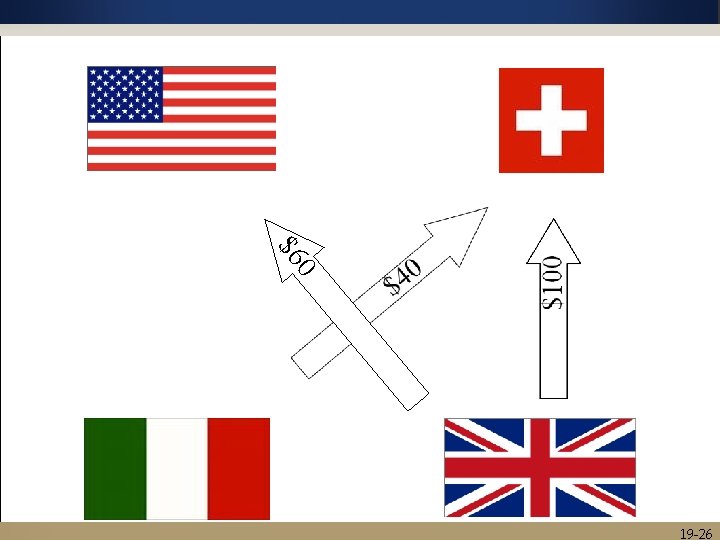
$100 +$40 $140 0 $6 –$40 0 4 $ $100 $60 –$100 –$60 –$160 19 -26
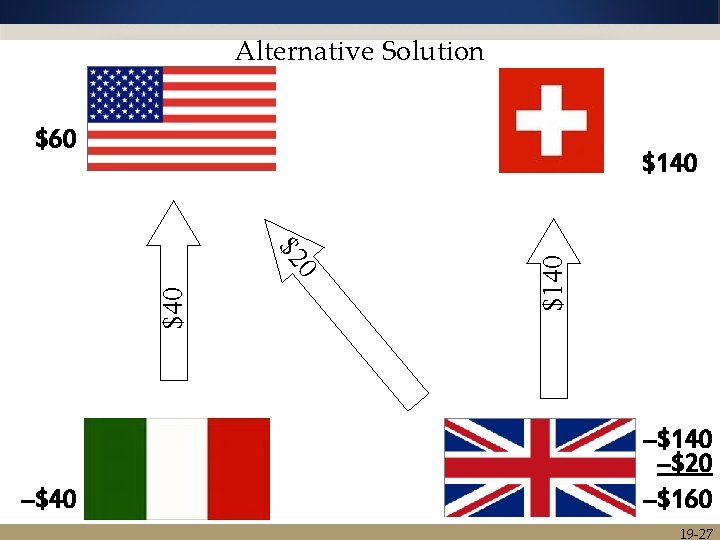
Alternative Solution $60 $40 0 $2 –$40 $140 –$140 –$20 –$160 19 -27
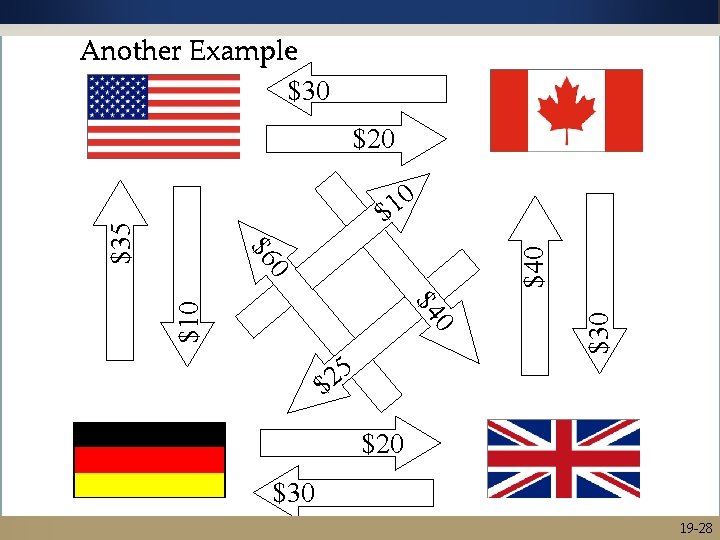
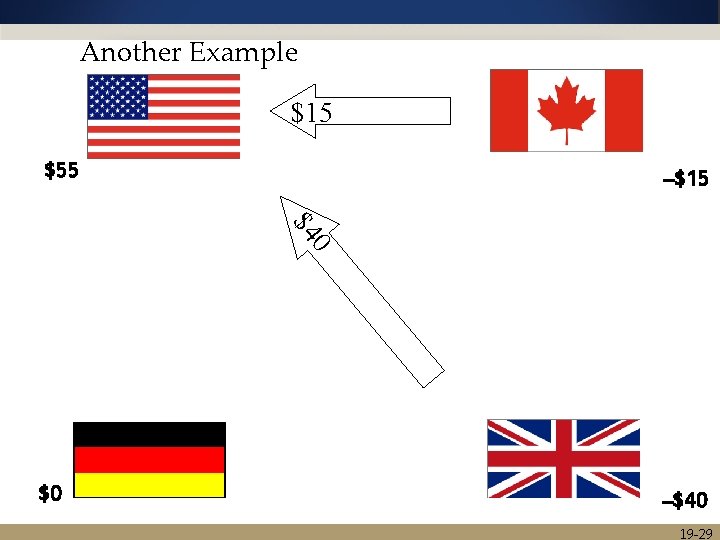
$20 $30 $10 5 2 $ $30 $20 +$10 +$40 –$30 –$25 –$30 –$15 $40 0 1 $ 0 $4 $25 +$30 +$10 –$35 –$20 –$10 $0 √√: $55–$15 –$40=$0 0 $6 $35 $30 Another Example +$60 $30 +$35 –$10 –$40 –$20 $55 $20 +$30 +$40 –$30 –$60 –$40 19 -28
Another Example $15 $55 –$15 0 $4 $0 –$40 19 -29
- Slides: 29