
MULTIHAZARD EARLY WARNING SYSTEMS A CHECKLIST Revised 2018

- Slides: 10
MULTI-HAZARD EARLY WARNING SYSTEMS: A CHECKLIST (Revised 2018)
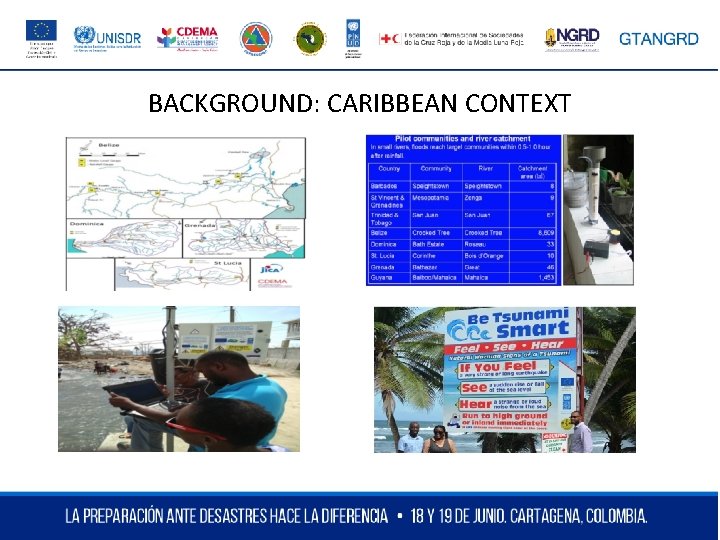
BACKGROUND: CARIBBEAN CONTEXT
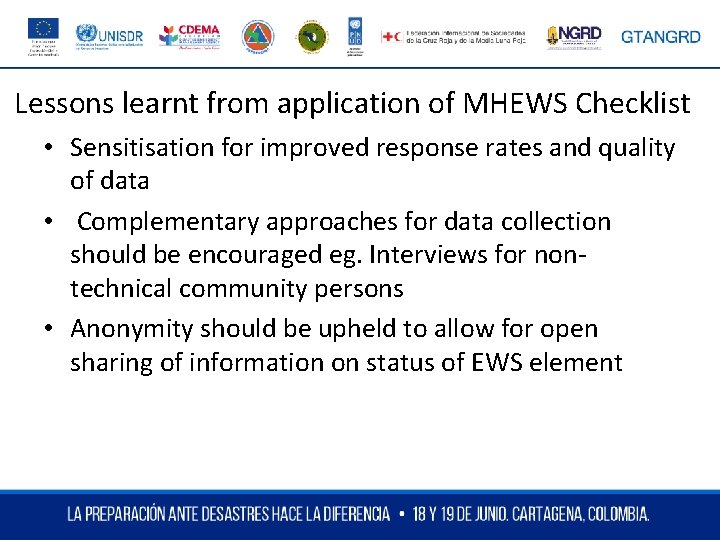
The MHEWS Checklist: Application and Outcomes • Standardized approach to assessing MHEWS in the Caribbean • Improved understanding of status of MHEWS in 6 countries resulting in: – National gap analyses - Dominican Republic, Saint Lucia, Saint Vincent and the Grenadines, Antigua & Barbuda, Dominica and Cuba – Draft Inputs for National MHEWS Roadmaps • Broad stakeholder engagement in national MHEWS assessment process – 250 responses from agencies at national and local levels across the five countries
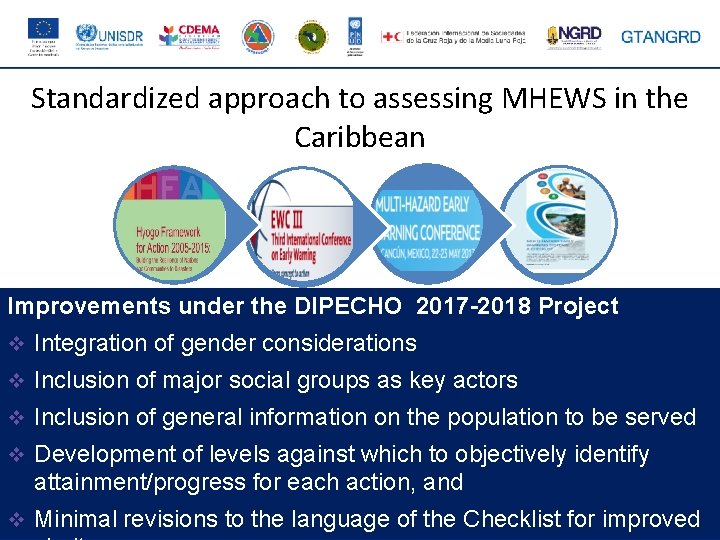
Standardized approach to assessing MHEWS in the Caribbean Improvements under the DIPECHO 2017 -2018 Project v Integration of gender considerations v Inclusion of major social groups as key actors v Inclusion of general information on the population to be served v Development of levels against which to objectively identify attainment/progress for each action, and v Minimal revisions to the language of the Checklist for improved
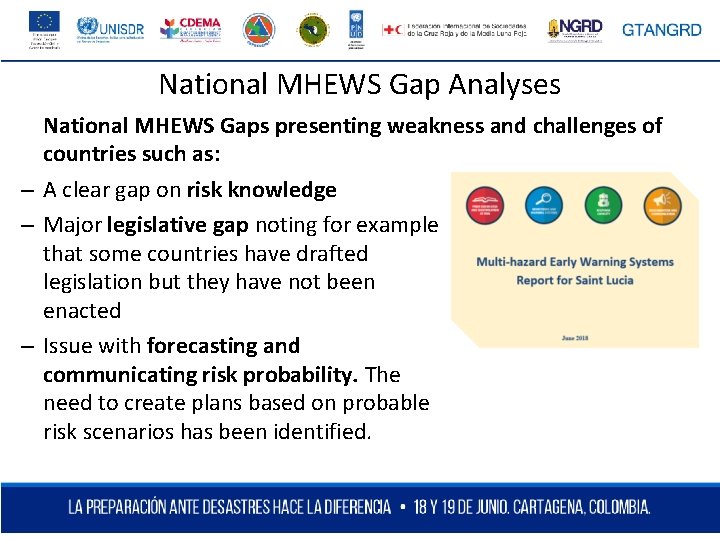
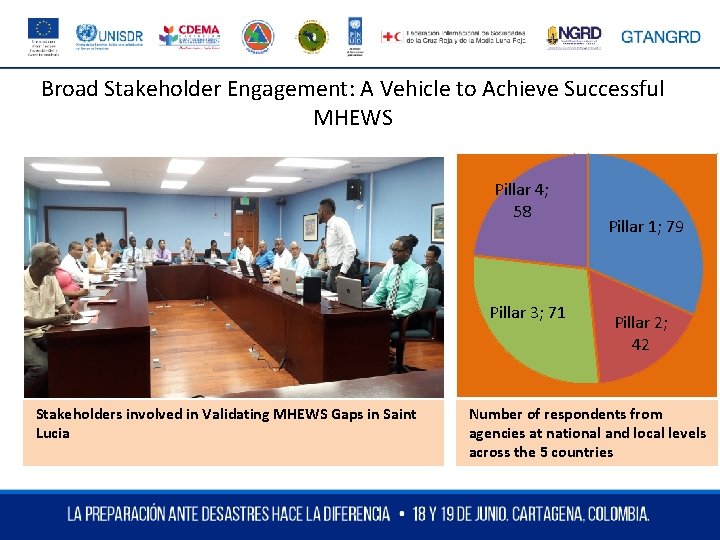
National MHEWS Gap Analyses National MHEWS Gaps presenting weakness and challenges of countries such as: – A clear gap on risk knowledge – Major legislative gap noting for example that some countries have drafted legislation but they have not been enacted – Issue with forecasting and communicating risk probability. The need to create plans based on probable risk scenarios has been identified.
National MHEWS Roadmaps: Path to Successful MHEWS – Opportunities for internal national and regional programming to improve systems – Opportunities for targeted donor support noting the Caribbean context
Broad Stakeholder Engagement: A Vehicle to Achieve Successful MHEWS Pillar 4; 58 Pillar 3; 71 Stakeholders involved in Validating MHEWS Gaps in Saint Lucia Pillar 1; 79 Pillar 2; 42 Number of respondents from agencies at national and local levels across the 5 countries
Lessons learnt from application of MHEWS Checklist • Sensitisation for improved response rates and quality of data • Complementary approaches for data collection should be encouraged eg. Interviews for nontechnical community persons • Anonymity should be upheld to allow for open sharing of information on status of EWS element
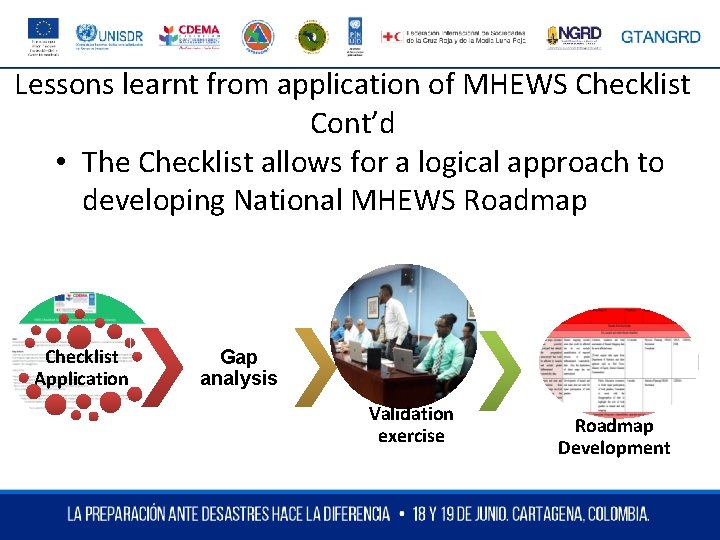
Lessons learnt from application of MHEWS Checklist Cont’d • The Checklist allows for a logical approach to developing National MHEWS Roadmap Checklist Application Gap analysis Validation exercise Roadmap Development