
MultiDisciplinary Approach of Public Health Bakibillah DPH DIU
Multi-Disciplinary Approach of Public Health Bakibillah DPH, DIU
Learning Outcomes On completion of this Course, the successful student will be able to: comprehend the major disciplines of Public Health like nutrition, reproductive health, sociology, anthropology, epidemiology, mental health, reproductive health, family health, environmental health, research etc.

Multi-disciplinary Approach A multidisciplinary approach involves drawing appropriately from multiple disciplines to redefine problems outside of normal boundaries and reach solutions based on a new understanding of complex situations.

……. Continued. Multidisciplinary: people from different disciplines working together, each drawing on their disciplinary knowledge. Interdisciplinary: integrating knowledge and methods from different disciplines, using a real synthesis of approaches.
…………Continued The development of public health research out of social medicine in the 1950 s was multidisciplinary. Public health campaigning, separate from public health professionals, has also been multidisciplinary since the 1970 s. Public health as an occupation has been preoccupied with its professional positioning
Nutrition q Nutrition is the science of food, the nutrients and other substances therein, their action, interaction and balance in relation to health and disease.
……. Nutrition is the study of how food and drink affects our bodies with a special regard to the essential nutrients necessary to support human health. It looks at the physiological and biochemical processes involved in nourishment and how substances in food provide energy or are converted into body tissues. These nutrients which are the source of energy for our bodies are classed as: carbohydrates, fats, fibre, minerals, proteins, vitamins, and water.
…. . Nutrition Good nutrition means obtaining the right amount of nutrients from healthy foods in the right combinations. An important part of the study of nutrition is looking at the diseases that can result from malnutrition and the role food plays in the development of chronic disease.
Reproductive Health q Reproductive health is a state of complete physical, mental and social being not only absence of disease or infirmity, in all matters relating to reproductive system and to its functions and process.
Reproductive Health Reproductive health is a state of complete physical, mental and social well-being and not merely the absence of disease or infirmity, in all matters relating to the reproductive system and to its functions and processes. Reproductive health implies that people are able to have a satisfying and safe sex life and that they have the capability to reproduce and the freedom to decide if, when and how often to do so.
………Continued Around 25% of maternal deaths could be averted if all women wishing to avoid pregnancy could use modern methods of contraception (WHO) More than 1 million sexually transmitted infections (STIs) are acquired every day worldwide. Every day in 2017, approximately 810 women died from preventable causes related to pregnancy and childbirth.
Environmental Health The World Health Organization (WHO) defines environment, as it relates to health, as “all the physical, chemical, and biological factors external to a person, and all the related behaviors. ” Environmental health consists of preventing or controlling disease, injury, and disability related to the interactions between people and their environment.
6 Themes of Environmental Health Outdoor air quality Surface and ground water quality Toxic substances and hazardous wastes Homes and communities Infrastructure and surveillance Global environmental health
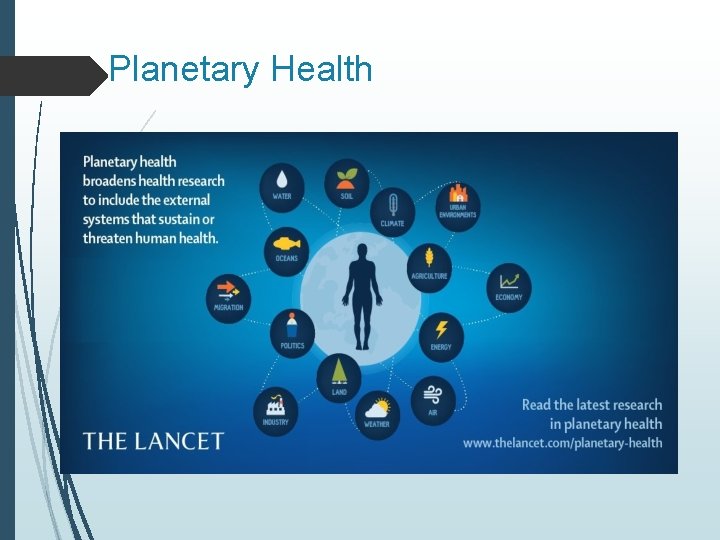
Planetary Health
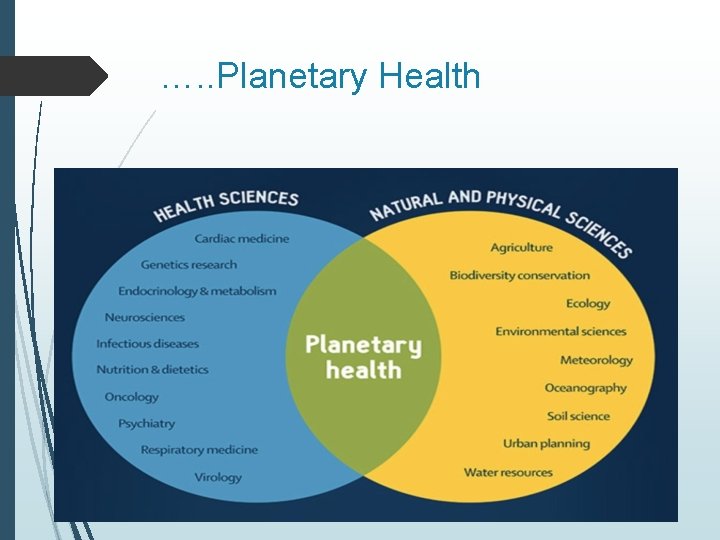
…. . Planetary Health
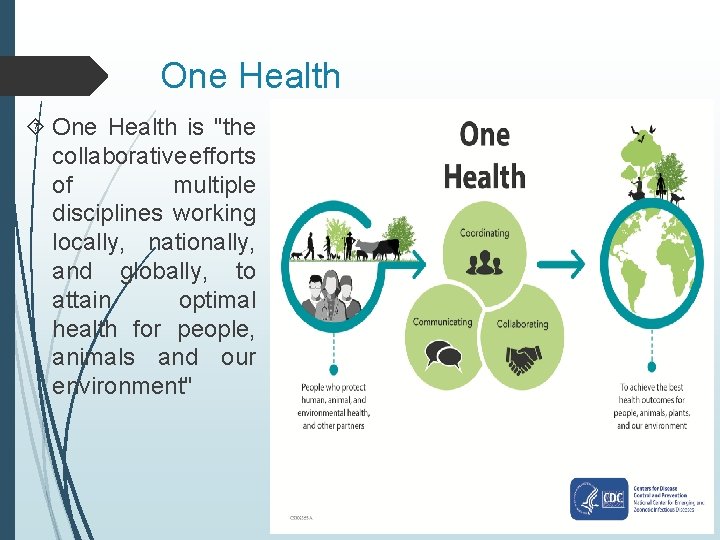
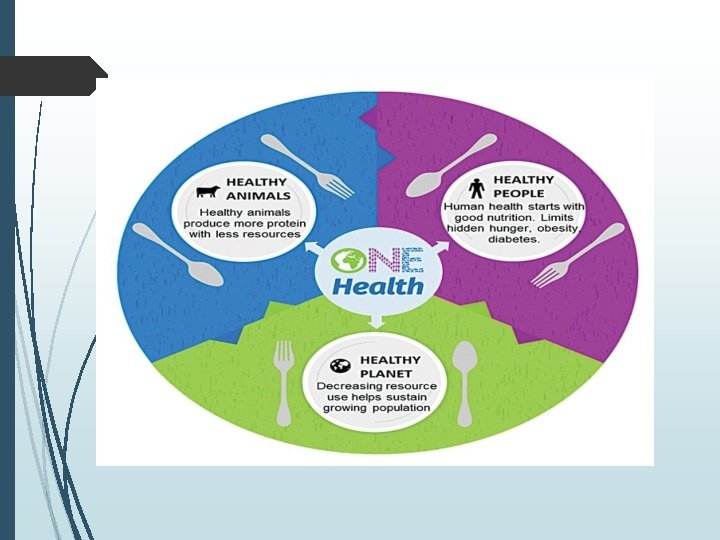
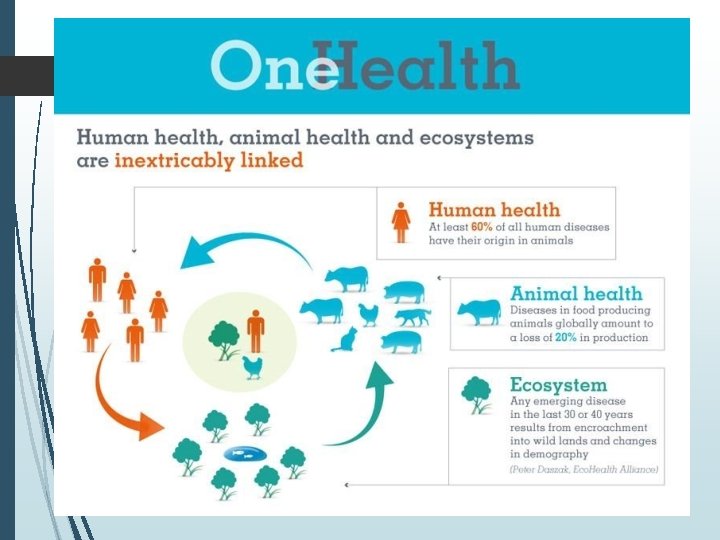
One Health is "the collaborative efforts of multiple disciplines working locally, nationally, and globally, to attain optimal health for people, animals and our environment"
Epidemiology is the study of frequency, distribution, and determinants of diseases and other related states or events in specified populations. The application of this study to the promotion of health and to the prevention and control of health problems is evident.
Health Economics is concerned with the alternative uses of resources in the health services sector and with the efficient utilization of economic resources such as manpower, material and financial resources
Biostatistics is the application of statistics to biological problems; application of statistics especially to medical problems, but its real meaning is broader.
Ecology is the study of relationship among living organisms and their environment. It is the science, which deals with the interrelationships between the various organisms living in an area and their relationship with the physical environment. Human ecology means the study of human groups as influenced by environmental factors, including social and behavioral factors.
Sociology is the study of society, patterns of social relationships, social interaction and culture of everyday life. It is a social science that uses various methods of empirical investigation and critical analysis to develop a body of knowledge about social order, acceptance, and change or social evolution. For example, one aspect of sociology is the study of social institutions, which are major structures made up of groups or ideas that influence people's daily lives, views of the world, or integration into society. Examples are religion and schools.
Demography is the study of population, especially with reference to size and density, fertility, mortality, growth, age distribution, migration, and the interaction of all those with social and economic conditions.

Questions ?

- Slides: 28